

Visiting a Himba Village in Namibia With Kids (and Meeting the San People)
Of everything we did during our two months in Namibia, visiting a Himba village and spending time with a San community are the two experiences our son still talks about. He was seven at the time. He learned how Himba women bathe without water, why their skin and hair are covered in red ochre, how to make fire without matches, and what it feels like to fire a bow made by the people who still hunt with them.
They were also the experiences we thought hardest about before going. Visiting an indigenous community as a tourist raises real questions, and those questions feel even bigger when you bring a child. So this is our honest guide to visiting the Himba and the San in Namibia with kids: what the visits were actually like, what we would bring, and how to make sure your visit is respectful and benefits the people you meet.
Some of the links below are affiliate links. If you book through them we may earn a small commission at no extra cost to you. We only recommend things we would use ourselves.
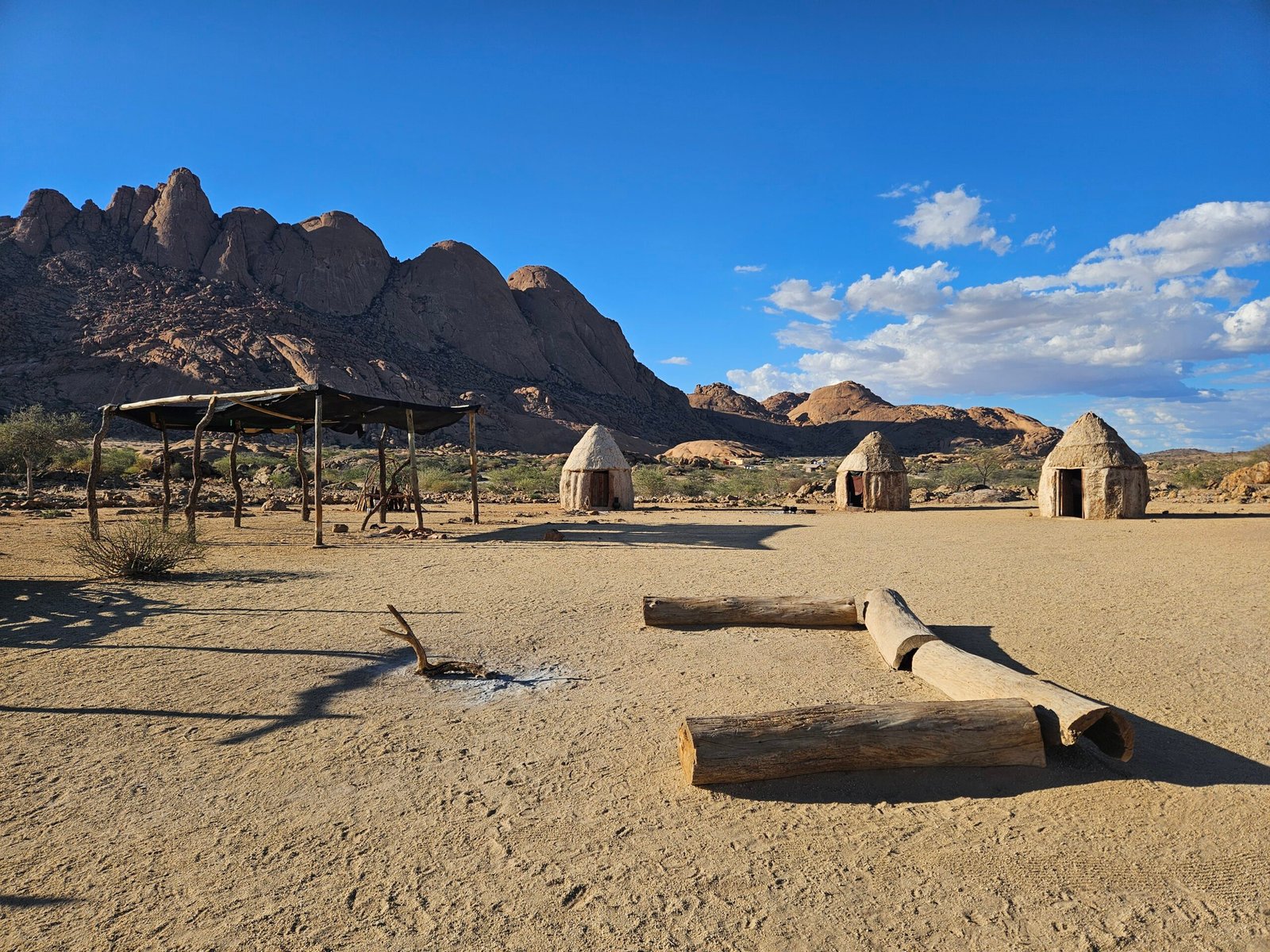
If you’re planning the rest of your trip, our Namibia with kids itinerary covers the rest of our trip, including the Spitzkoppe weekend where we did both of these visits.
Our Himba and San Visits at a Glance
| When | April |
| Our son’s age | 7 |
| Himba visit | A Himba village our guide took us to as part of our Spitzkoppe tour |
| San visit | A San community in the Spitzkoppe area, also arranged by our guide |
| How we booked | Through Quest Transfer, who added the Himba visit to our tour |
| Cost | Included in our tour price, so ask your operator whether visits are included or priced separately |
| Highlights | The smoke bath demonstration, the red ochre, firing a San bow |
Who Are the Himba?
The Himba, or OvaHimba, are a semi-nomadic pastoralist people who live mainly in the Kunene region of northwestern Namibia, with some communities across the border in Angola. Cattle and goats are central to their way of life, and their remote location has helped preserve many of their traditions.
It’s important not to think of the Himba as a people frozen in the past, though. Modern life, education, technology and tourism all affect Himba communities, and different families make different choices about how much they follow a traditional way of life. That was one of the first things we talked about with our son before the visit.
What Visiting a Himba Village Is Like With Kids
The famous red ochre
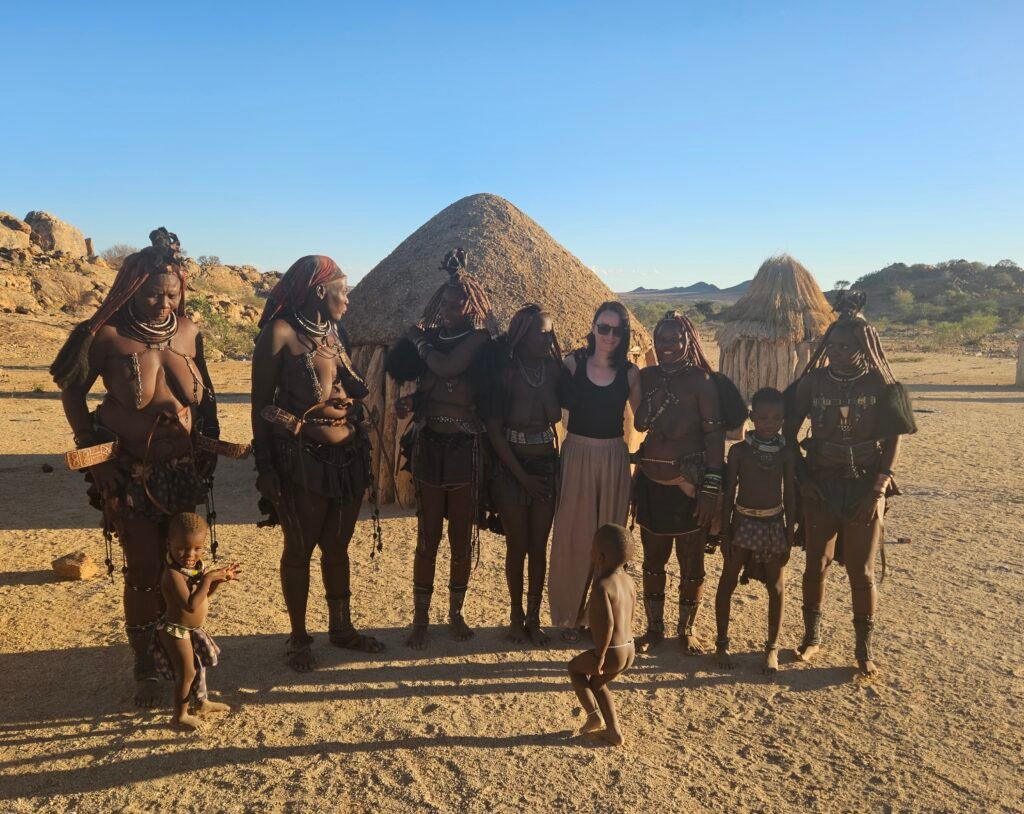
One of the first things you’ll notice about Himba women is their distinctive reddish skin and hair.
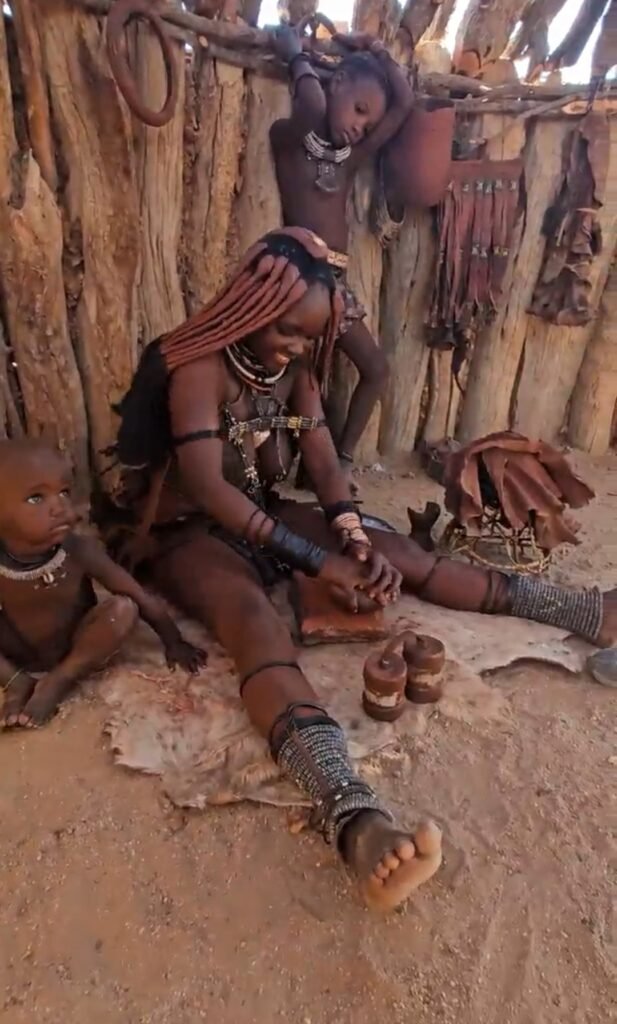
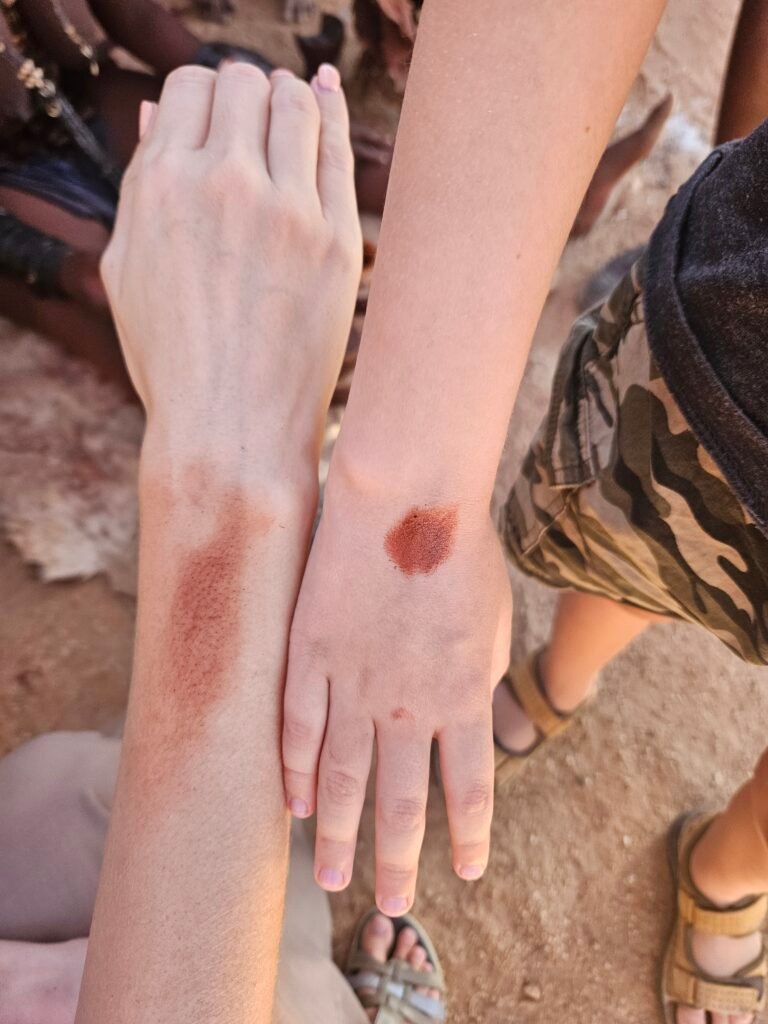
This comes from otjize, a paste made from butterfat and red ochre, a natural earth pigment, often perfumed with the aromatic resin of a local shrub. Applying it is an important part of Himba identity and beauty, and it’s also a practical adaptation to a harsh, dry environment: it helps protect the skin from the sun and repels insects. The women showed us how they prepare and use it.
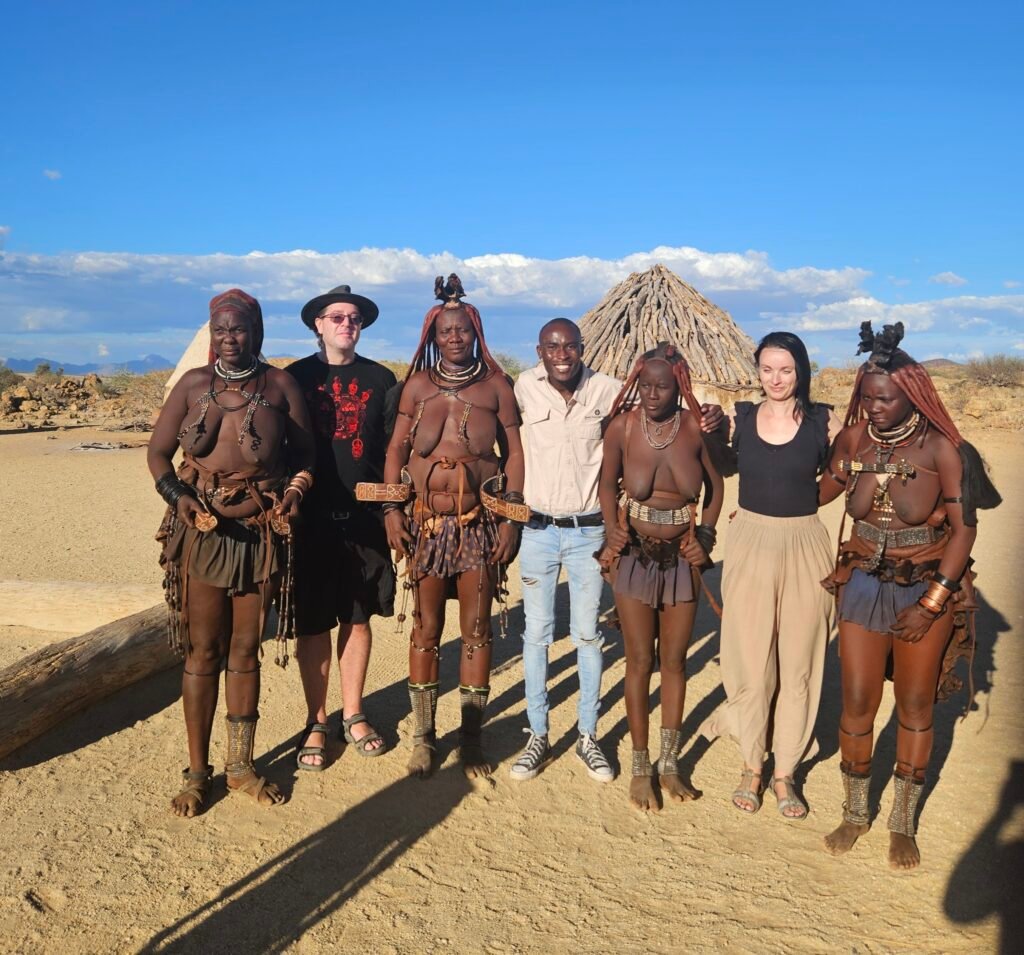
The women also wear elaborate jewellery made from metal, leather and beads. Jewellery, hairstyles and headdresses can show a person’s age, marital status and social position. Our son was fascinated by all of this, because it was so different from anything he had seen before.
How Himba women bathe without water
This was probably the most memorable demonstration of the whole visit.
The Himba conserve water very carefully, and women don’t wash with water the way we do. Instead, we were shown how they place aromatic plant material on hot coals and use the fragrant smoke around their bodies to cleanse and perfume themselves. It’s sometimes called a “smoke bath”, and it makes complete sense in a place where water is so scarce.
Seeing it demonstrated stayed with our son far longer than reading about it would have. It also led to one of those great worldschooling conversations: what would you do if you lived somewhere water was extremely hard to get? Something that seems strange at first makes a lot of sense once you understand the environment people have adapted to. It also helped him appreciate the comforts he usually takes for granted.
Jewellery, clothing and dancing
We were able to see the traditional jewellery and clothing up close, and there was singing and dancing too. That made the visit feel much more interactive than simply walking around looking at someone’s home, which matters a lot when you’re visiting with a child.
Should You Bring Gifts for the Children?
We were keen to bring something for the children we met, and it’s worth thinking about before your visit. But ask your guide or the community what would actually be useful, rather than turning up with bags of sweets, money or random toys.
Our guide suggested fruit, because it’s hard for the community to get, and he stopped at a supermarket on the way so we could buy some. Basic food staples are a common request too.
There’s an important reason for this. In some areas, handing gifts directly to children has encouraged begging along tourist routes, and responsible travel advice is to avoid giving sweets or money to children. If the community has asked for particular supplies, bringing those is a lovely way to contribute. Otherwise, the best ways to support people are through the visit itself:
- Use a local guide or a community-run experience
- Pay the agreed fee for the visit
- Buy jewellery and crafts directly from the people who made them
That way the money becomes part of a genuine local economy, rather than teaching children that approaching tourists leads to gifts.

Is Visiting a Himba Village Ethical?
This is worth talking about honestly, especially when you’re travelling with children.
Visiting an indigenous community as a tourist can feel uncomfortable. Are we learning about another culture, or treating people’s lives as an attraction? We think how you visit makes a huge difference.
Namibia has a significant community-based tourism sector, and its tourism ministry has a policy designed to help rural communities benefit from tourism through guiding, crafts, accommodation and cultural experiences. Many Himba families now take part in tourism, earning extra income from cultural visits and from selling their jewellery and crafts. It’s part of a complicated balance between keeping traditions alive and taking part in the modern economy.
That doesn’t mean every Himba village tour is automatically ethical. Some villages close to the main tourist routes exist largely for visitors, and a Himba “village” is often a single family’s homestead, which can move as they do. Ask your operator who you will be visiting and how the family is paid.
We would look for a visit that:
- Uses a Himba guide or a reputable local operator
- Keeps groups small
- Explains beforehand what you can photograph
- Lets people choose whether they want to take part
- Pays the community fairly
- Encourages buying locally made crafts rather than imported souvenirs
- Doesn’t treat people as props for photographs
- Doesn’t encourage handing out money or sweets to children
And always ask before taking a photo. Being allowed to take photos in general doesn’t mean everyone you meet wants to be photographed. It’s a good habit to teach children too.
Meeting the San People
Who are the San?
The San are not one single tribe. They are a collection of Indigenous peoples across southern Africa, with different languages, cultures and traditions, and they are often described as some of the world’s oldest surviving hunter-gatherer populations. That doesn’t make them “people from prehistoric times”. They are living cultures, with histories in southern Africa that stretch back thousands of years.
Traditionally, many San communities lived by hunting and gathering, with an extraordinarily detailed knowledge of animal tracks, animal behaviour and which plants could be eaten or used as medicine. The rock paintings at Bushmen Paradise near Spitzkoppe were made by San hunter-gatherers, so visiting both made a lovely pair for our son.
Fire, bows and bush medicine
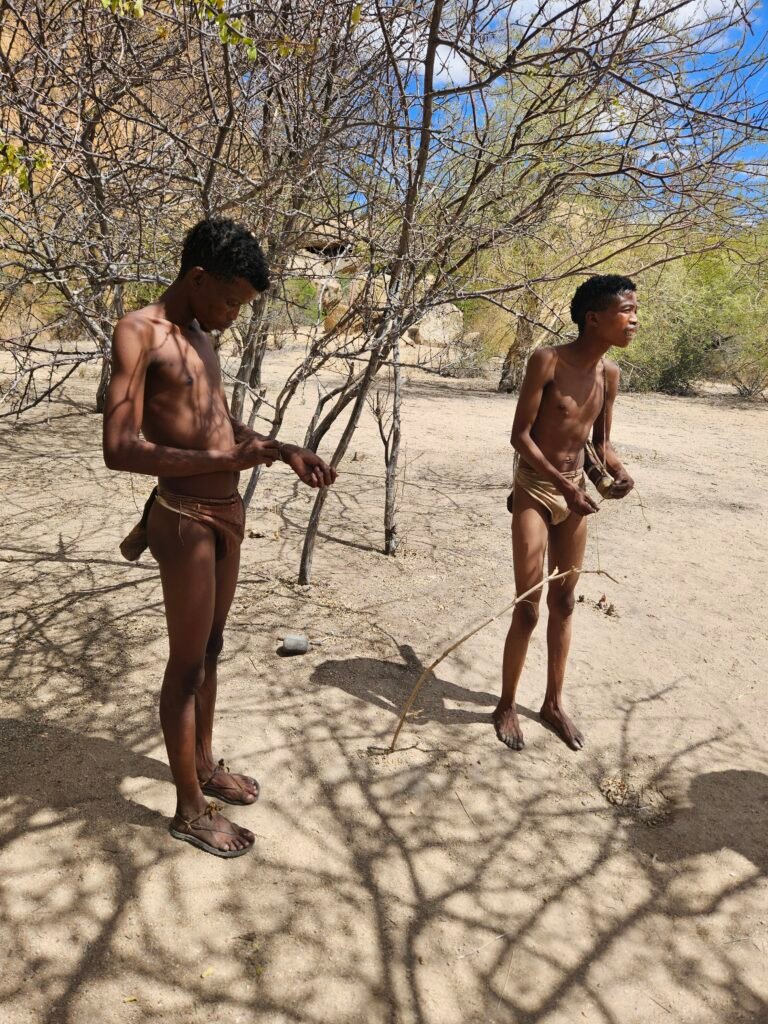
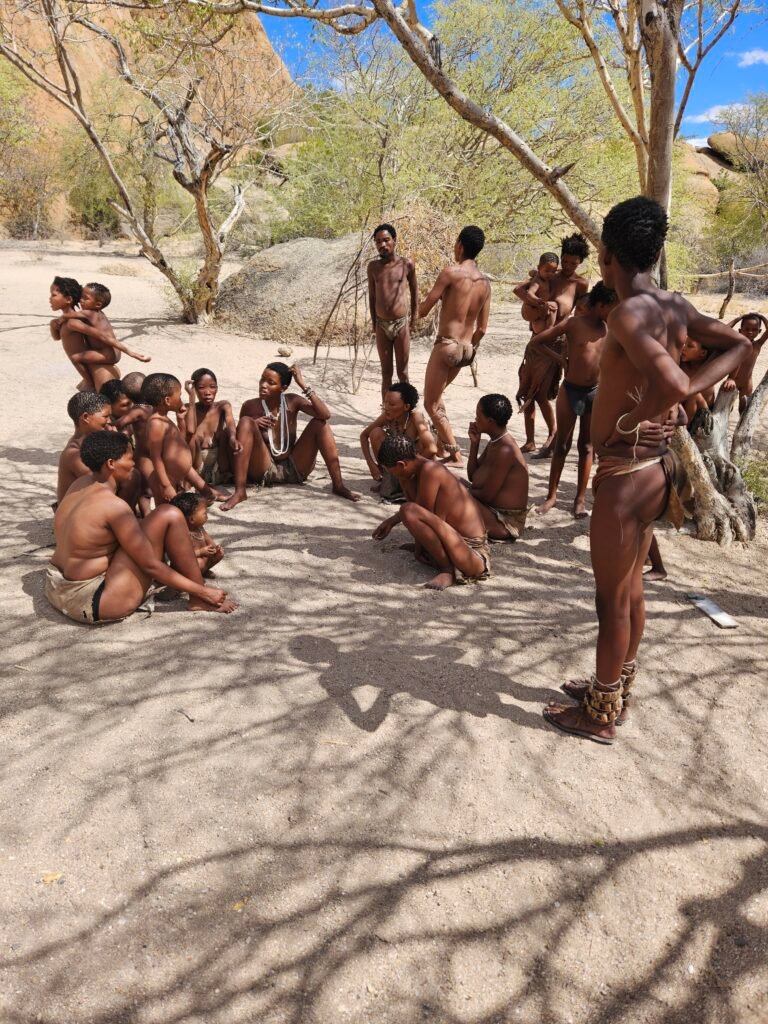
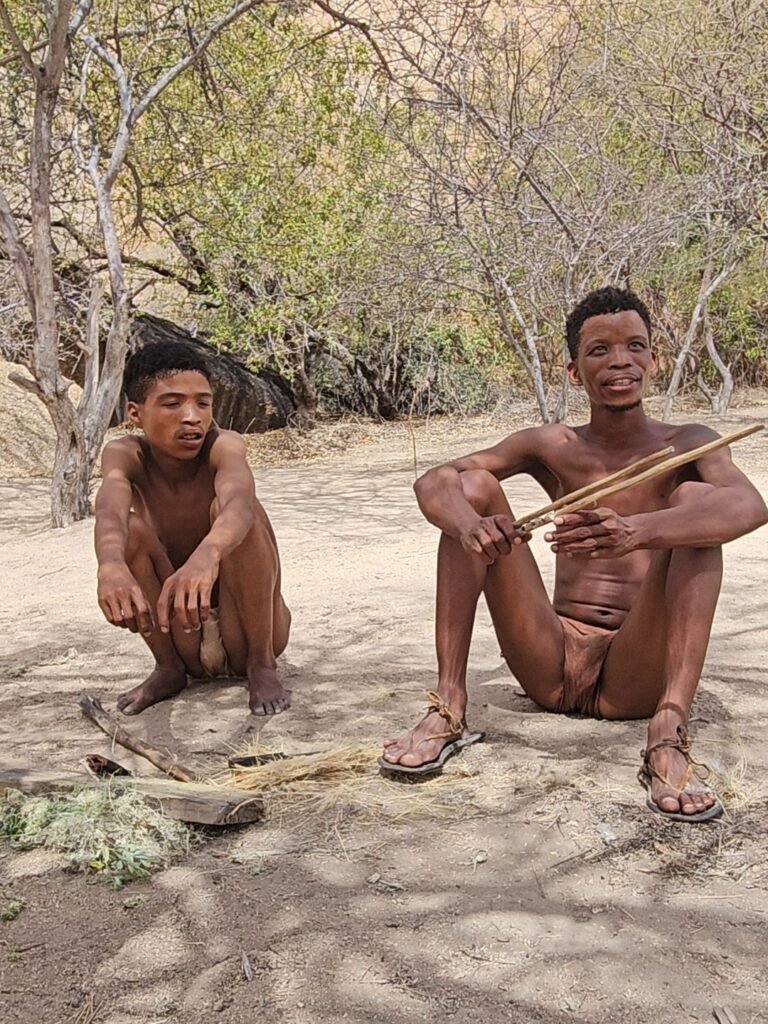
The community we visited in the Spitzkoppe area showed us some of the traditional skills San people relied on to survive. They made fire, demonstrated hunting techniques, and explained how they identify plants and make medicines from what grows around them.
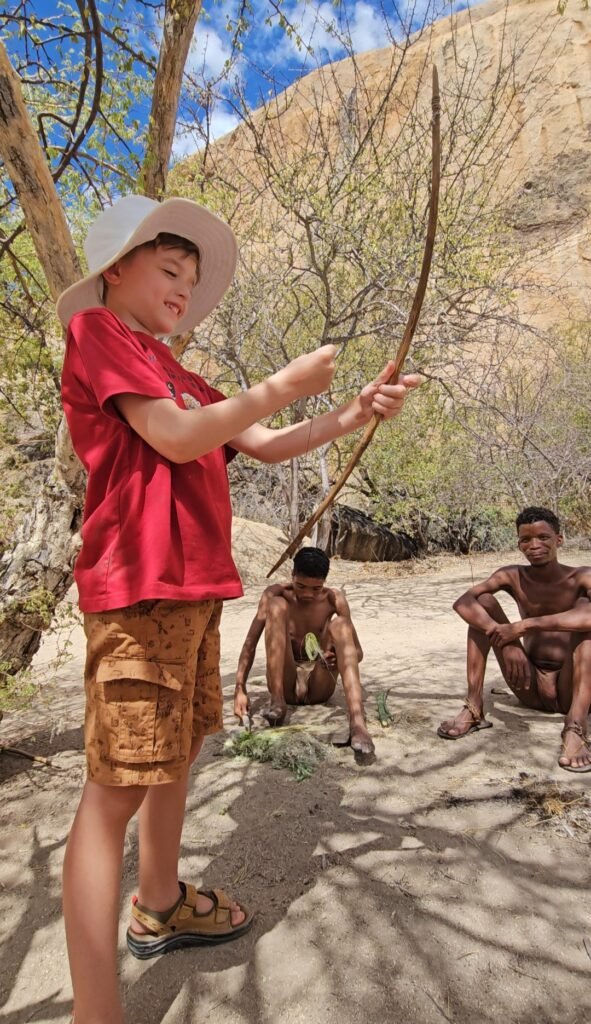
One of the highlights for our son was learning about the bows and arrows used for hunting. He got to become a San “warrior” for a little while and try shooting a bow they had made. He was very proud of himself.
There were also traditional songs and dancing. Rather than just being told about San culture, he saw the skills, music and knowledge demonstrated right in front of him, and got to try some of it himself.
The ethical side of San cultural experiences
The same questions apply here as with the Himba. The San communities offering these experiences aren’t simply re-enacting history. They are living communities taking part in the modern economy, and tourism can be an important source of income.
A good cultural experience gives the community a direct financial benefit and lets them decide which parts of their culture and knowledge they want to share. Look for locally run or community-supported experiences, follow your guide on photography and participation, and avoid treating people as a performance.
For us, the visit felt meaningful because our son was genuinely involved. He wasn’t just watching someone make a fire. He was asking questions, trying the bow, listening to the songs, and starting to understand how differently people can live depending on their environment.
Why These Visits Were Such Good Worldschooling
For us, these were much more than sightseeing excursions. At seven, our son was a great age for them: old enough to ask questions, notice differences and start thinking about why people live the way they do.
Several subjects came together without us having to force a lesson:
- History: cultures with very long roots in southern Africa, and how traditional ways of life have changed
- Science: fire, plants, medicine, animal behaviour and tracking, and why ochre protects skin from the sun
- Geography: water scarcity, climate and how people adapt to a desert environment
- Economics: livestock, crafts, and who benefits from tourism
- Physical education: actually trying the skills rather than just hearing about them
Most importantly, he was learning that different doesn’t mean strange or wrong. A textbook can tell a child that people in Namibia have different traditions. Meeting people, hearing them explain those traditions and seeing them demonstrated makes that knowledge real.
The visits also opened up conversations about tourism itself. Why do people visit other communities? Who benefits? What makes a respectful visitor? Is it okay to take photos? Why might someone keep a traditional way of life while also using a mobile phone or sending their children to school? Those are big questions for a seven-year-old, but travel lets you have them naturally.
If you want more ideas for turning moments like this into learning, here are the worldschooling apps and websites we actually use, and our ultimate guide to worldschooling resources if you’re just getting started.
How to Visit the Himba and San With Kids
Booking a visit
We booked our tours through Quest Transfer, who were happy to customise them and added the Himba visit for us. Going with a local operator meant we had a guide to explain what we were seeing and to handle the arrangements with the community.
If you’re based in Windhoek and short on time, the Bushman Walk with the San is a shorter San experience close to the city. We didn’t do this one ourselves, so check the reviews before booking.
Tips for visiting with children
- Prepare them beforehand. Talk about what they’ll see, including that Himba women traditionally go topless, so it isn’t a surprise on the day.
- Agree on photo rules. Ask before every photo, and let your child ask too.
- Let them ask questions through the guide. Children’s questions are often the most direct ones, and a guide can translate and add context.
- Bring cash for crafts and jewellery.
- Bring water, sun protection and snacks. Villages are often a long drive from anywhere, with little shade.
Is It Worth Visiting the Himba and San With Kids?
For us, absolutely. These two visits did more for our son’s understanding of the world than almost anything else in Namibia. He came away knowing why Himba women are red, how people survive with almost no water, and how to make fire and hunt without modern tools. More than that, he came away curious and respectful rather than seeing people as different or strange.
Choose a visit run with, and paying, the community, prepare your children beforehand, and go with questions rather than a camera first. For how these visits fit into a wider trip, see our Namibia with kids itinerary.
Visiting the Himba and San With Kids: FAQs
Yes. We visited with our seven-year-old and it was one of the highlights of our trip. Prepare your child beforehand for what they’ll see, and agree to ask before taking any photos.
It can be, if the visit is run with the community and pays them fairly. Choose a local guide or reputable operator, keep the group small, ask before taking photos, and buy crafts directly from the people who made them. Avoid giving sweets or money directly to children.
They cover their skin and hair with otjize, a paste of butterfat and red ochre, often perfumed with aromatic resin. It’s part of Himba identity and beauty, and it also protects the skin from the sun and insects.
Ask your guide first. Ours suggested fruit, which is hard for the community to get. Food staples are also a common request. Bring cash for crafts, and don’t bring sweets or money to hand out to children.
Mainly in the Kunene region of northwestern Namibia, with some communities across the border in Angola. Many visitors meet Himba families through tours and lodges in that region.
Yes. We visited a San community in the Spitzkoppe area, where they demonstrated fire-making, hunting with bows and arrows, and plant medicine. There are also shorter San experiences near Windhoek.
One Comment