

Things to Do in Da Nang With Kids: A Family Guide to Da Nang, Vietnam
Things to Do in Da Nang With Kids: A Family Guide
Da Nang turned out to be one of those places that was surprisingly easy to settle into as a family.
We spent a month in Da Nang with our son, who was six at the time. That gave us a very different experience from simply passing through for a few days. We had time to get into a bit of a routine and spend plenty of time at the beach. We also explored the city and surrounding area, and figured out which attractions were genuinely worth doing with a child and which ones were better left for another day.
And that is one of the things I liked most about Da Nang. You don’t have to spend every day sightseeing. You can have a morning at the beach, go out for lunch and wander around somewhere interesting in the afternoon. There is still plenty of time to just be a kid.
Da Nang also works particularly well for families who are travelling slowly or worldschooling. There is a lot here that can be turned into a real-life lesson without it feeling like school. Caves and mountains, ancient Cham history, traditional pottery, farming and Vietnamese food all offer something to learn from.
Here are our favourite things to do in Da Nang with kids. We’ve also added some of the places worth including if you have more time.

Is Da Nang good for families?
Yes. In fact, Da Nang is one of the easier places in Vietnam to visit with children.
It has a long coastline and plenty of beaches, plus a good choice of accommodation and restaurants and cafés. There is enough here to keep children occupied without needing to move hotels every few nights.
The city is also a useful base for exploring central Vietnam. Hoi An, the Marble Mountains, My Son and Hue can all be reached from Da Nang. That means you can stay in one place and take day trips rather than constantly packing and unpacking.
Da Nang sits between Hue and Hoi An and has an international airport, making it particularly convenient for families. The city’s main tourist areas include the beach districts around My Khe and the city centre around the Han River. The Son Tra Peninsula is a third area worth knowing about.
For us, staying for a month made a big difference. We weren’t trying to tick everything off a list. Some days we simply went to the beach, ate somewhere nearby and called it a day.
With a six-year-old, that is sometimes exactly the right itinerary.


Best Things to Do in Da Nang With Kids
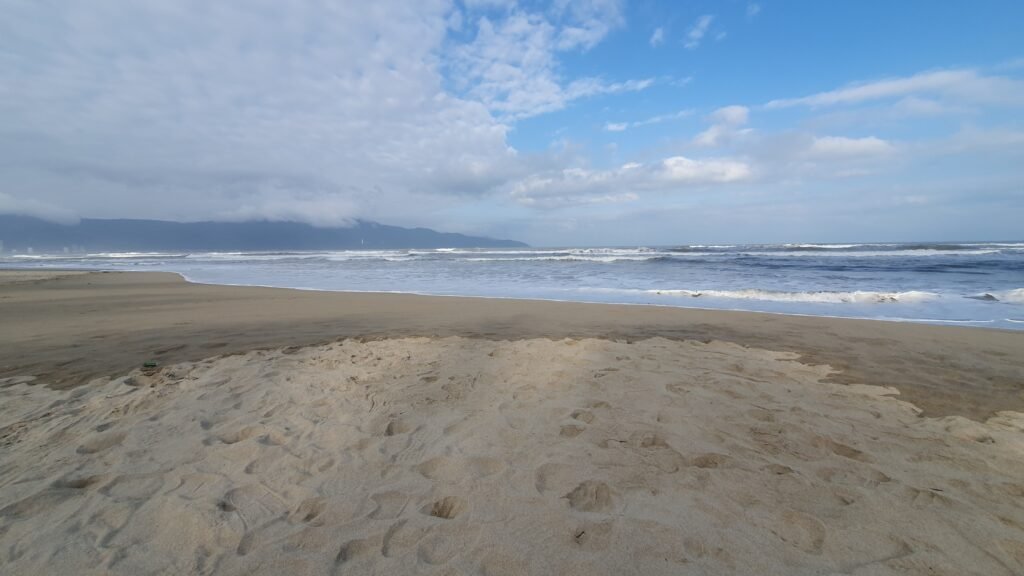
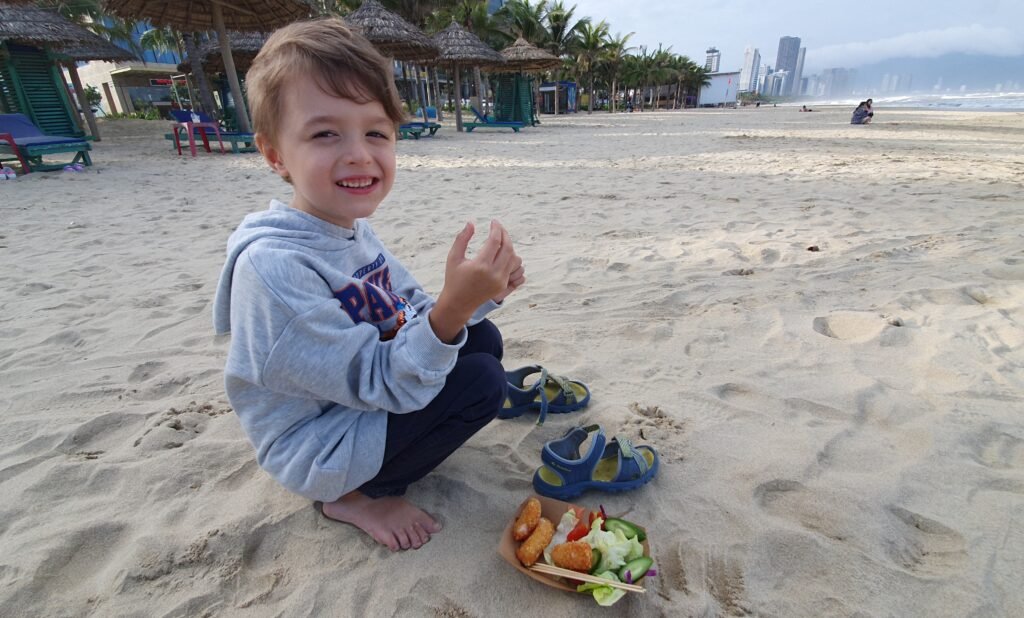
1. Spend time at My Khe Beach
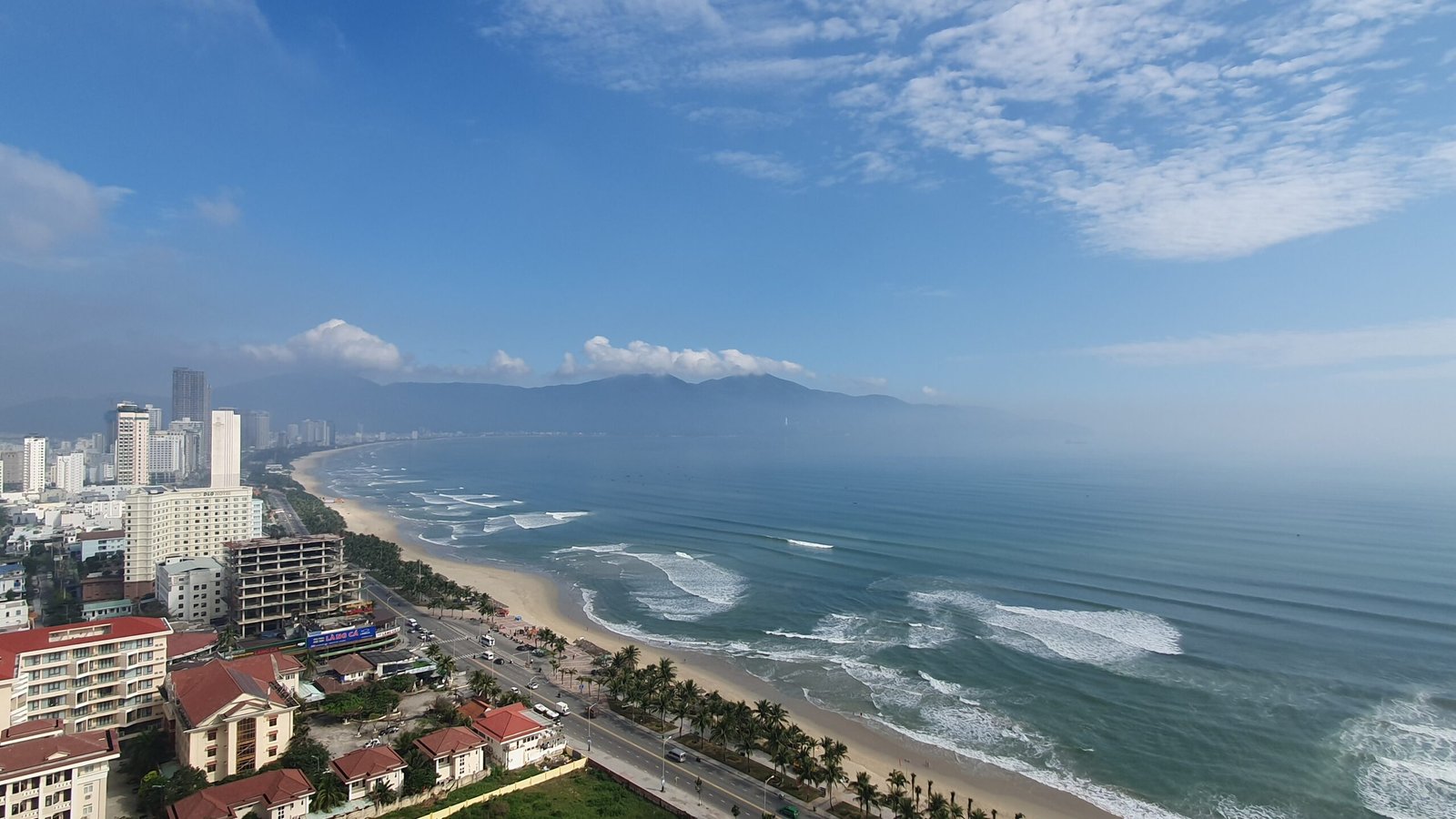
You can’t really visit Da Nang without spending some time at the beach.
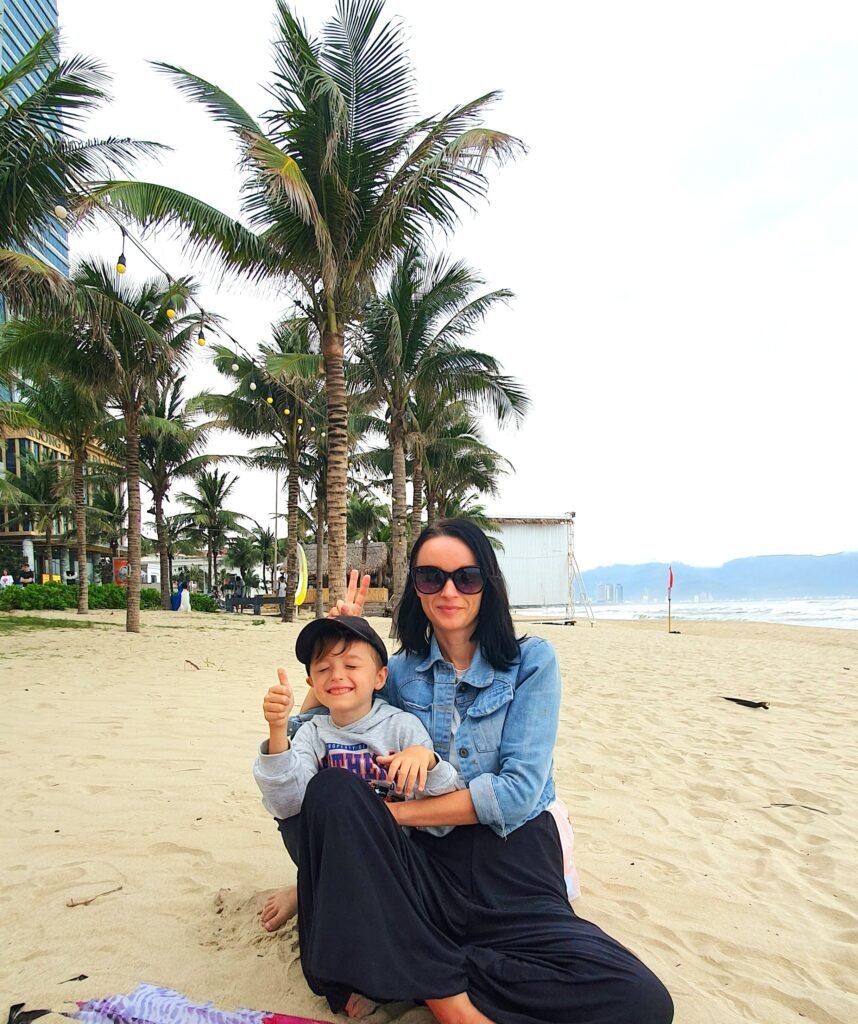
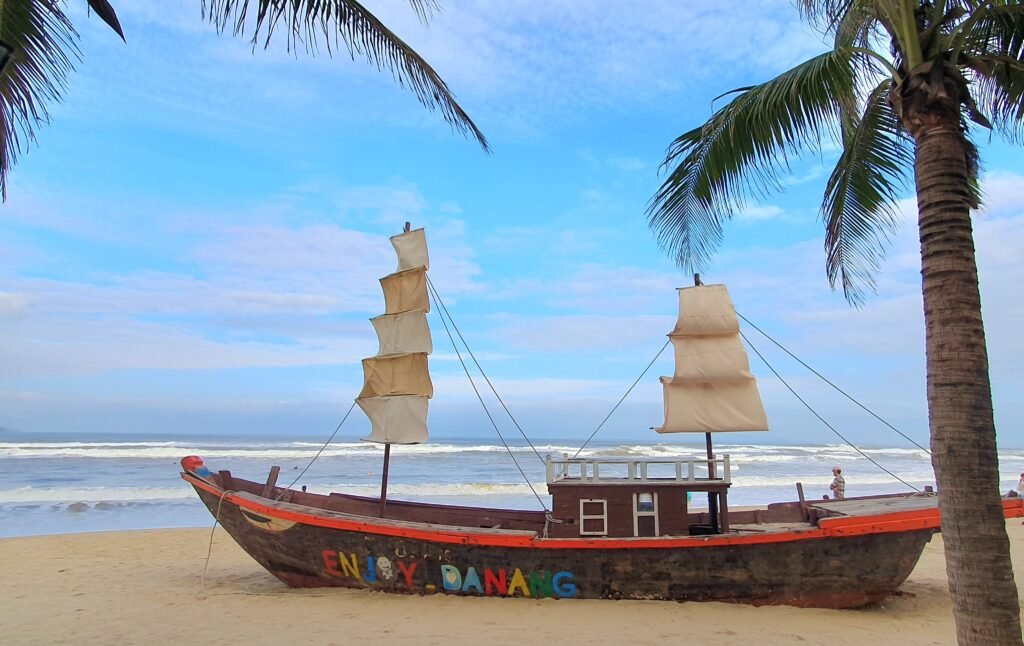
My Khe is the city’s best-known beach. It has a long stretch of sand and easy access from the areas where many visitors stay. It is one of those attractions where you don’t really need to plan anything.
Bring a towel, find some shade, swim, build sandcastles and let the kids burn off some energy.
After spending a month in Da Nang, the beach was less of a “tourist attraction” for us. It became part of our normal routine, which is exactly what makes a longer stay here so enjoyable.
Why families will enjoy it: It is easy, free and doesn’t require much organisation. After a day of sightseeing, having somewhere where children can simply run around is very useful.
Practical tip: Early morning and late afternoon are much more comfortable than the middle of the day. Vietnam’s sun can be intense, even when the temperature doesn’t initially feel too high.
Recommended age: All ages.
2. Explore the Marble Mountains
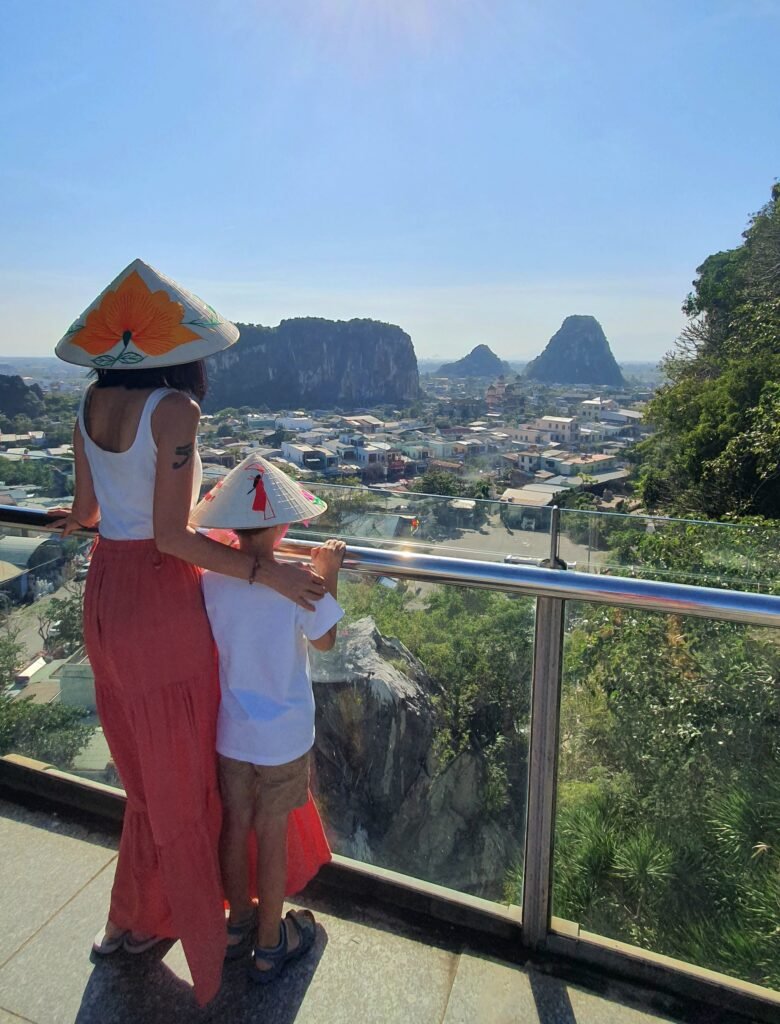
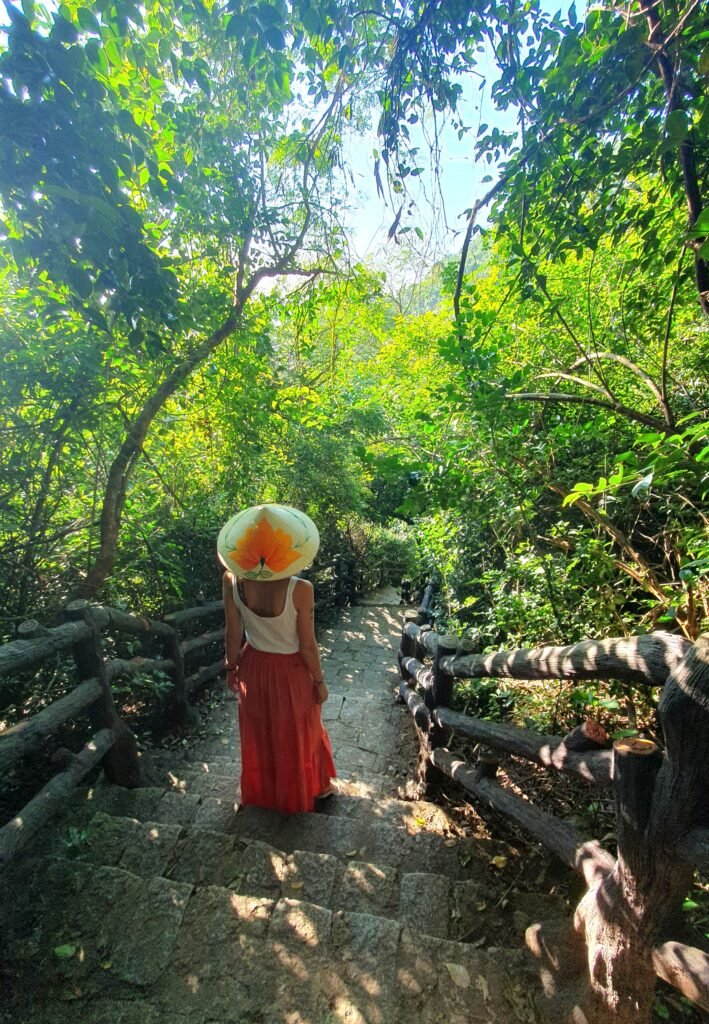
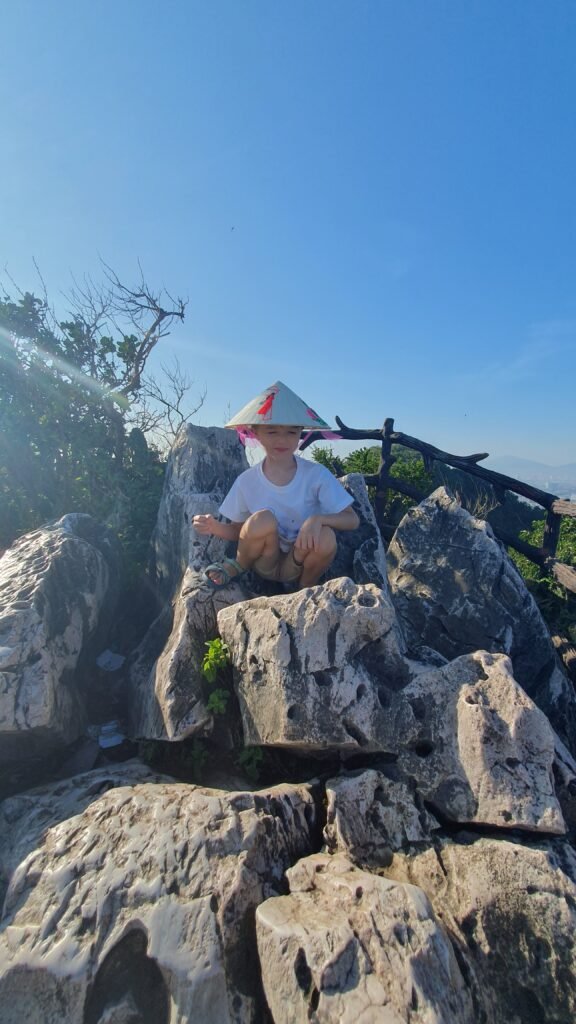
The Marble Mountains were one of the places we would definitely put on a Da Nang family itinerary.
The name is slightly misleading because you are not visiting five enormous mountains. The Marble Mountains are a group of limestone and marble hills. Thuy Son is the main one visited by tourists, and it contains caves, pagodas, shrines and viewpoints.
For children, the fun is that it feels like an adventure rather than simply visiting another temple.
There are stairs, little paths, caves to explore and plenty of things to discover along the way.
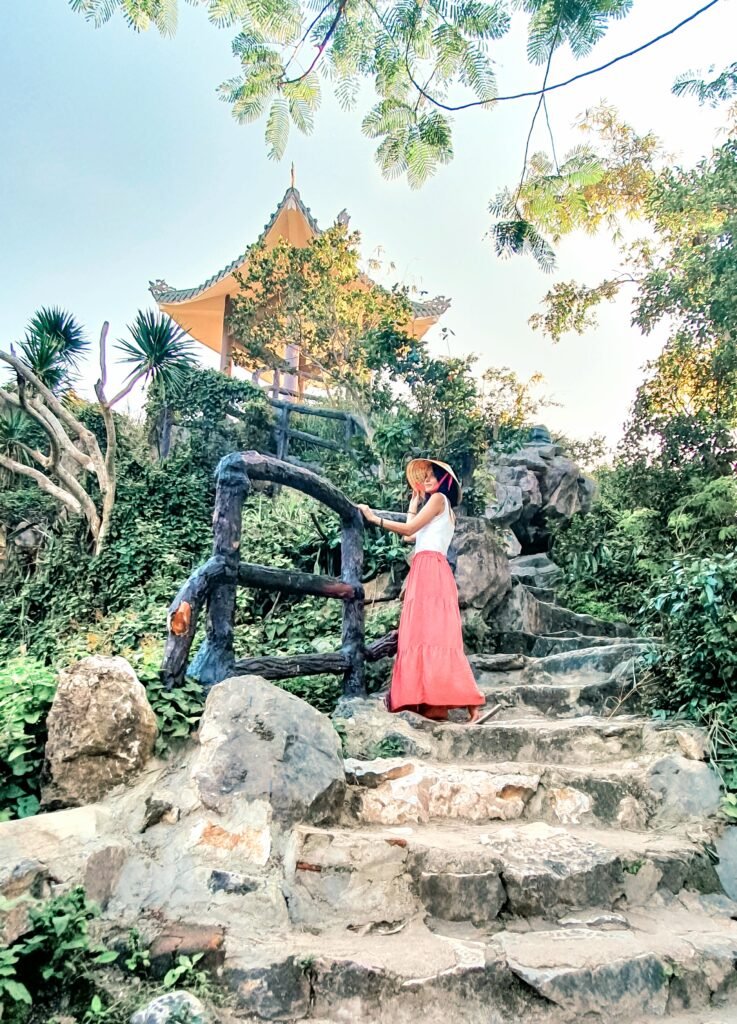
3. Huyen Khong Cave
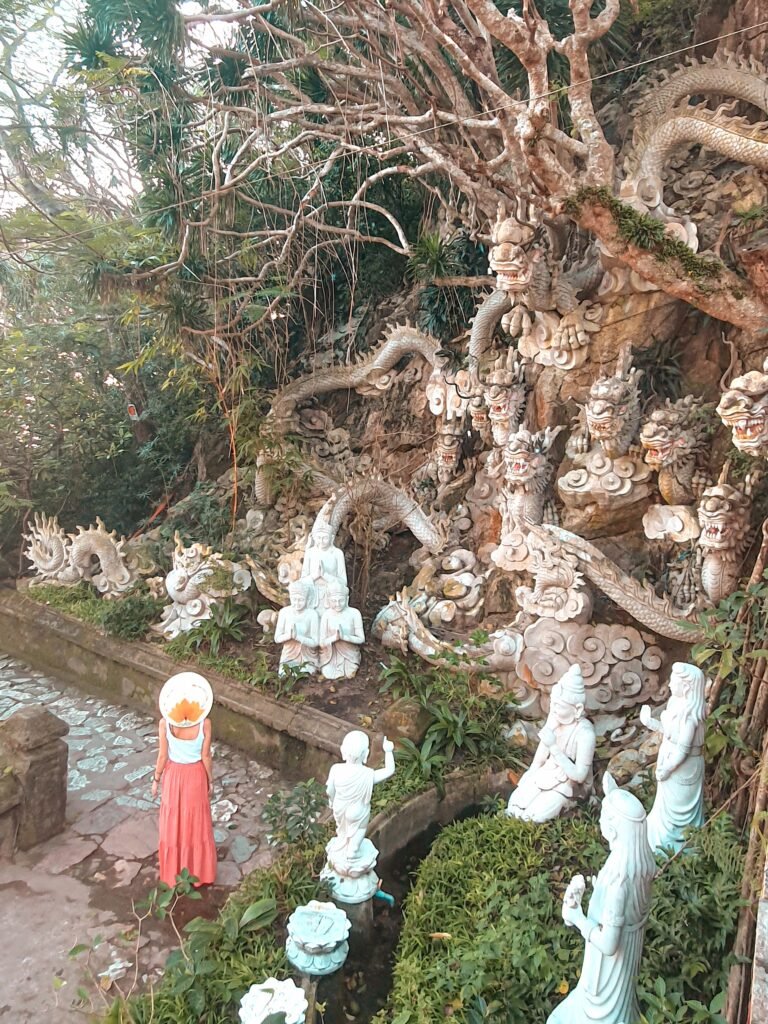
If you’re visiting the Marble Mountains with kids, don’t rush through Huyen Khong Cave. It is probably the most memorable part of the whole complex, partly because of how dramatic it looks. There is also a lot of history packed into one relatively small space.
The cave is the largest of the caves on Thuy Son. Its enormous natural openings in the ceiling allow shafts of sunlight to fall into the darkness below. Inside are Buddhist shrines and statues, and the cave is still a place of worship today. There are also older traces of Champa culture here, including a representation of the goddess Po Inu Nagar. The Marble Mountains have been an important spiritual centre for centuries, with both Cham and later Buddhist traditions leaving their mark.
But the cave’s history doesn’t stop there.
From Sacred Cave to Wartime Shelter
During the wars of the 20th century, Huyen Khong Cave took on a completely different role. It was used as a secret base by Vietnamese revolutionaries. Later, it served as a field hospital and shelter for wounded soldiers. The Marble Mountains were particularly significant during the Vietnam War, because they sat extremely close to the American air base at Da Nang. In other words, people were hiding and treating wounded soldiers inside these caves while a major military installation operated nearby.
That history makes the cave quite a powerful place to visit with older children. You can stand inside what looks like a peaceful Buddhist sanctuary. Then you can explain that, only a few decades ago, the same space was being used by people trying to survive a war.
There are also inscriptions carved into the walls and rocks around the Marble Mountains, some dating back centuries. These ma nhai, or stone inscriptions, record the area’s religious and cultural history. They include writings from Buddhist monks, scholars and officials from the Nguyen period, with some of the earliest surviving inscriptions dating to the 17th century.
Practical tip: Wear shoes with good grip. The steps and rocks around the Marble Mountains can be uneven and slippery, especially after rain. It is also a functioning religious site, so dress respectfully. Remember that people may be there to pray rather than sightsee.
Recommended age: 5+, although older children will get much more out of the historical side of the visit.
Worldschooling connection: Geology, Buddhism, Champa history, archaeology and the Vietnam War.
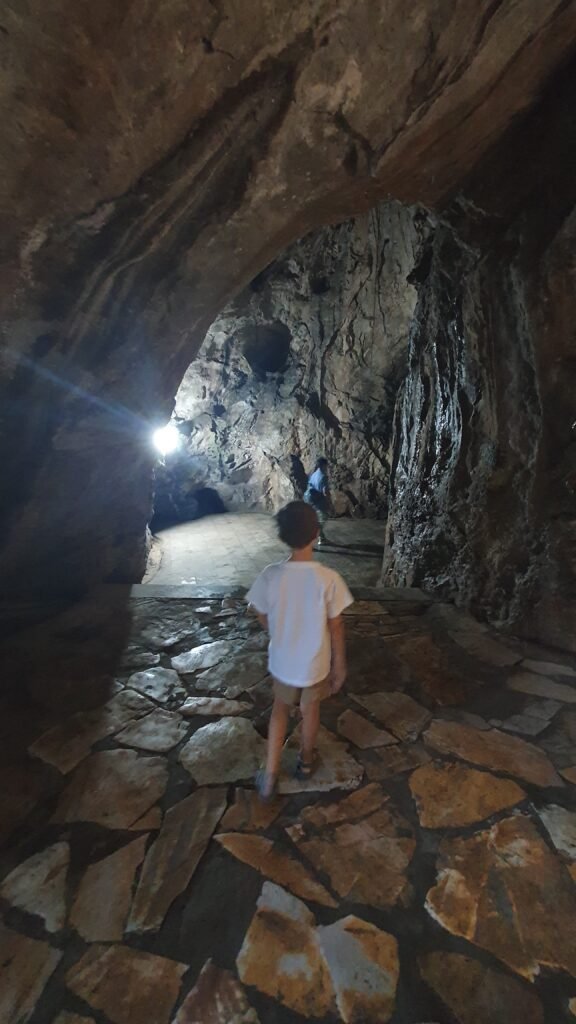
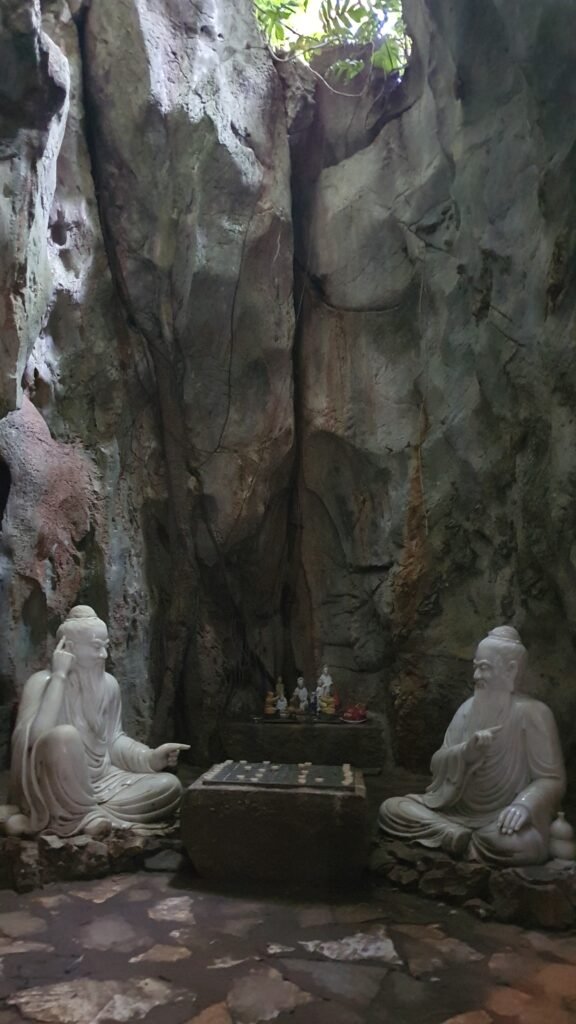
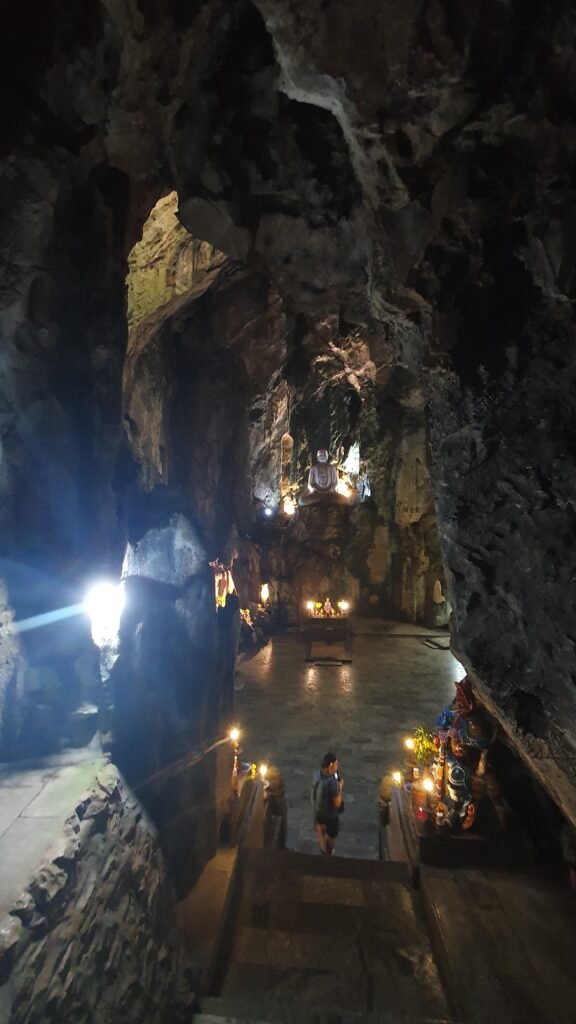
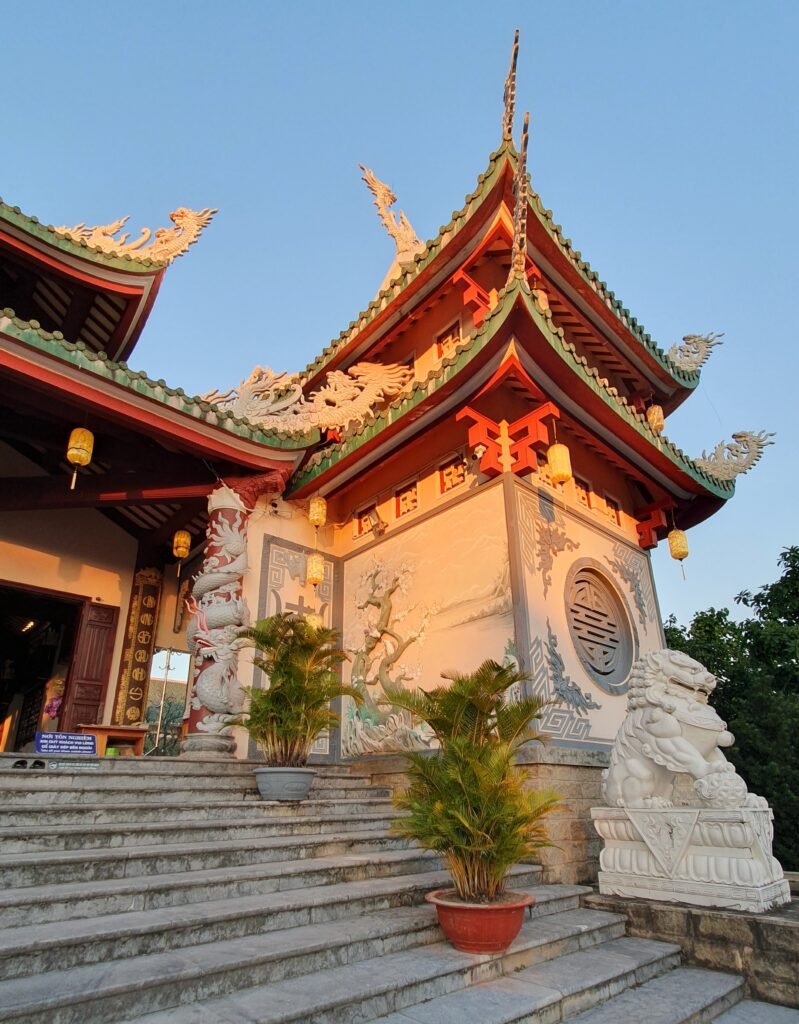
4. Visit Lady Buddha and Linh Ung Pagoda
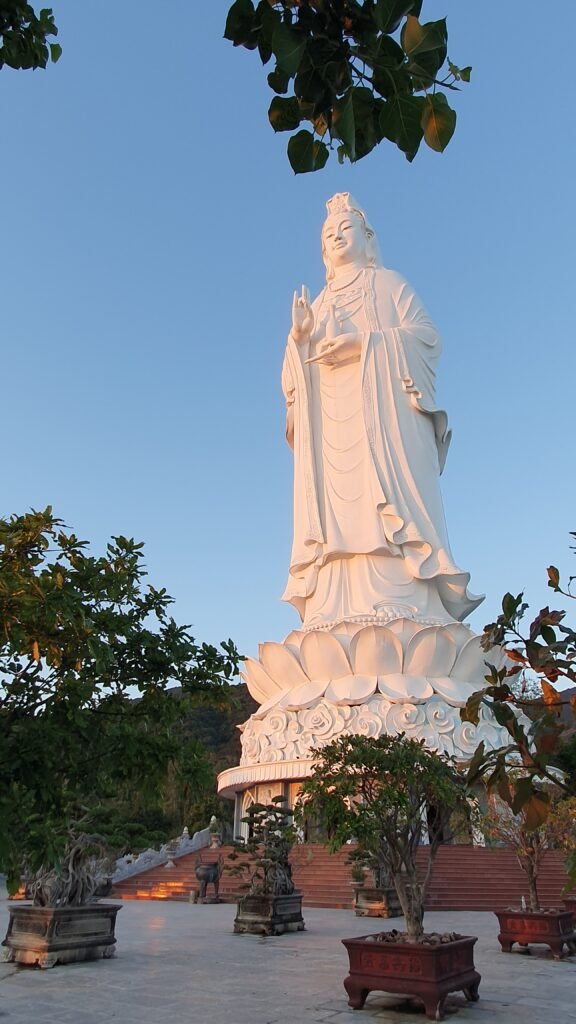
The huge Lady Buddha statue at Linh Ung Pagoda is another Da Nang landmark worth seeing with children. It sits on the Son Tra Peninsula.
The statue stands overlooking the sea and is part of the Linh Ung Pagoda complex.
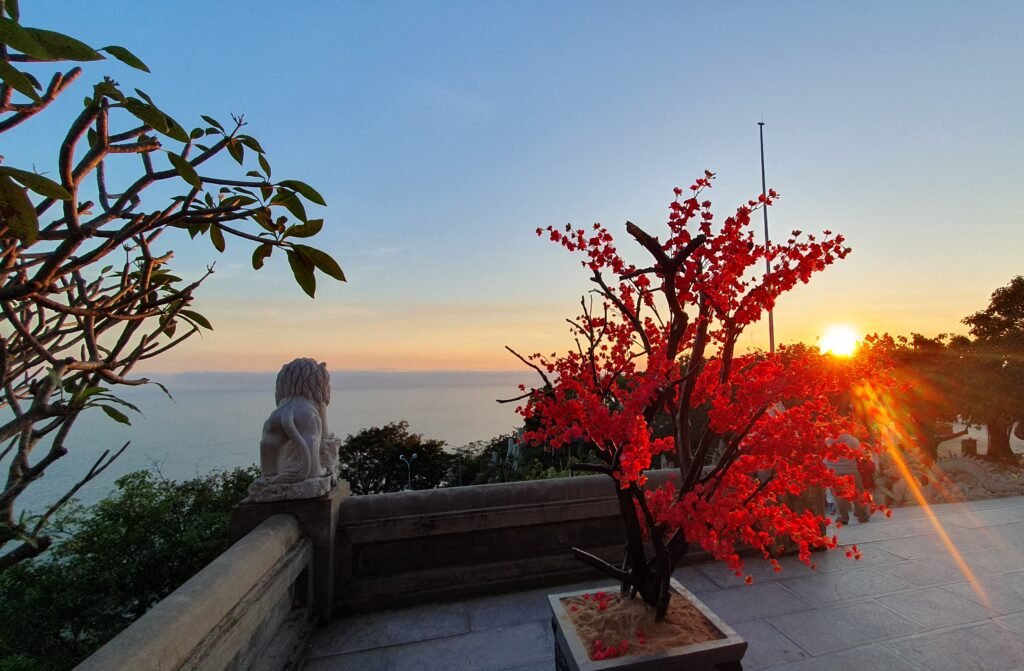
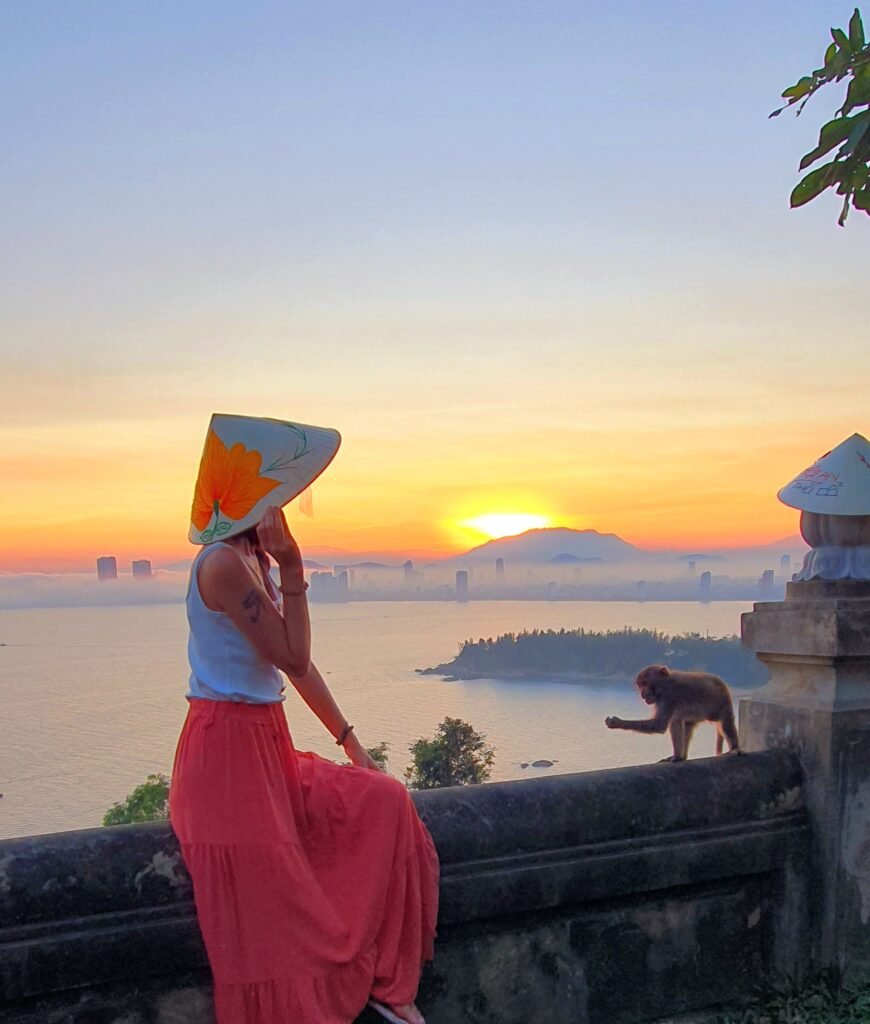
The views are one of the main reasons to come. You can look back towards Da Nang and along the coastline. The setting feels very different from the city itself.
There is also plenty of space to walk around rather than having to keep a child entertained in a small museum.
One thing worth knowing: there is another Linh Ung Pagoda inside the Marble Mountains, which can get confusing when planning your itinerary. The Lady Buddha is at the much larger Son Tra complex, not the one on Marble Mountains.
Practical tip: Combine Lady Buddha with some time exploring the Son Tra Peninsula and the Marble Mountain in this tour.
Recommended age: All ages.

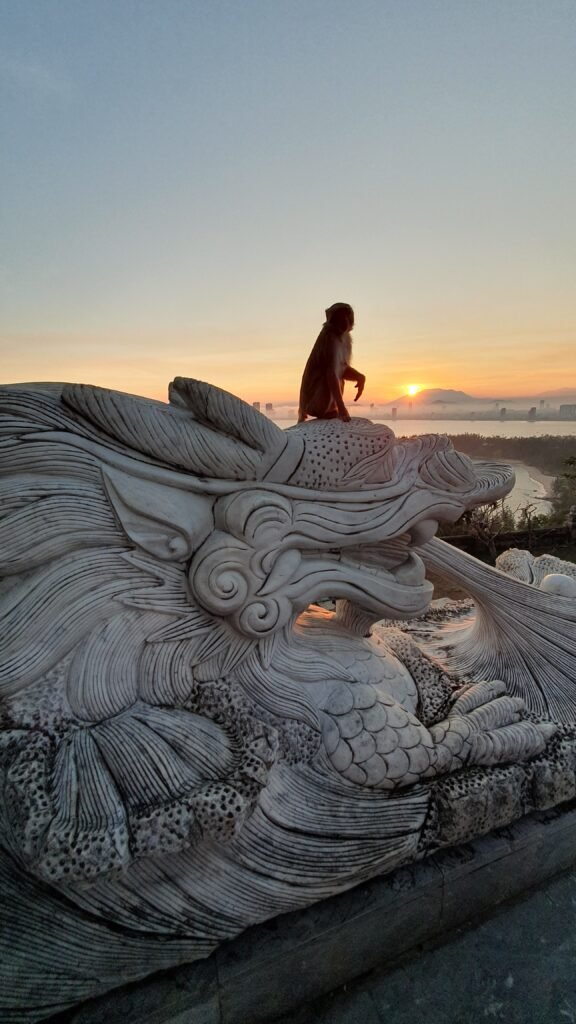
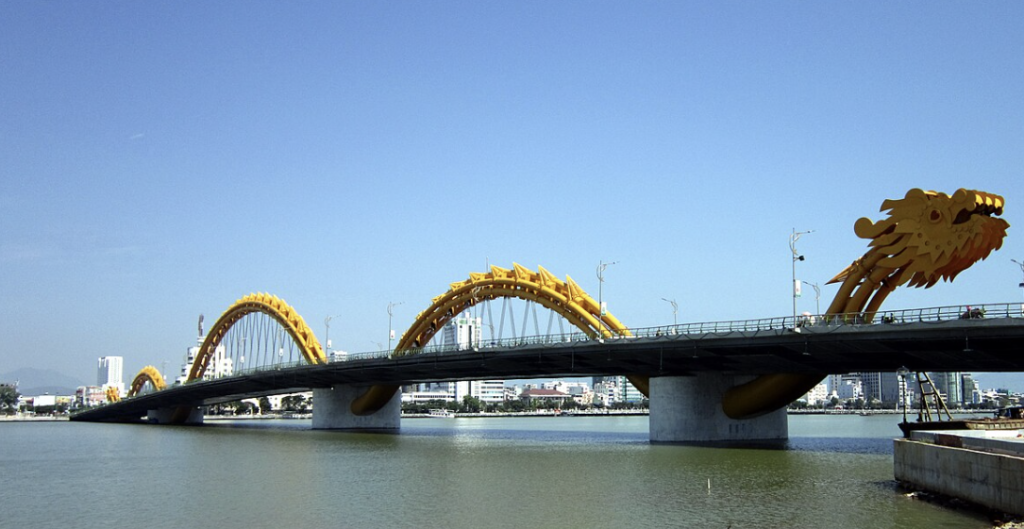
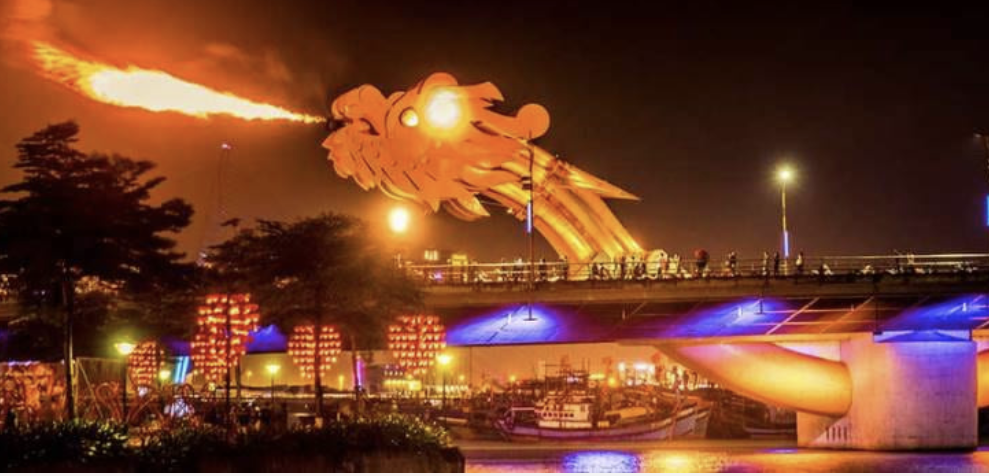
5. See the Dragon Bridge breathe fire
A giant dragon-shaped bridge crosses the Han River. On certain evenings, it breathes fire and sprays water from its mouth.
Children tend to find this considerably more exciting than another historical monument.
The current regular schedule is 9pm on Friday, Saturday and Sunday evenings. It is worth checking the official schedule before you go, though, because special events and holidays can change it.
The show itself is short, which is actually helpful when you’re travelling with kids.
Practical tip: Don’t stand directly in front of the dragon’s head if you don’t want to get wet. Arrive early if you want a good viewing spot.
And yes, a six-year-old staying up late to watch a giant dragon breathe fire is a perfectly reasonable parenting decision.
Recommended age: All ages, although younger children may find the noise a little startling.

Get Hands-On With Traditional Vietnamese Crafts
One thing we particularly enjoyed about the Da Nang and Hoi An area: there are so many opportunities for children to actually see how things are made.
This is the sort of travel experience I love for worldschooling because you’re not just looking at an old object behind glass. You can meet people who still practise traditional crafts and see the process.
6. Visit Tra Que Vegetable Village
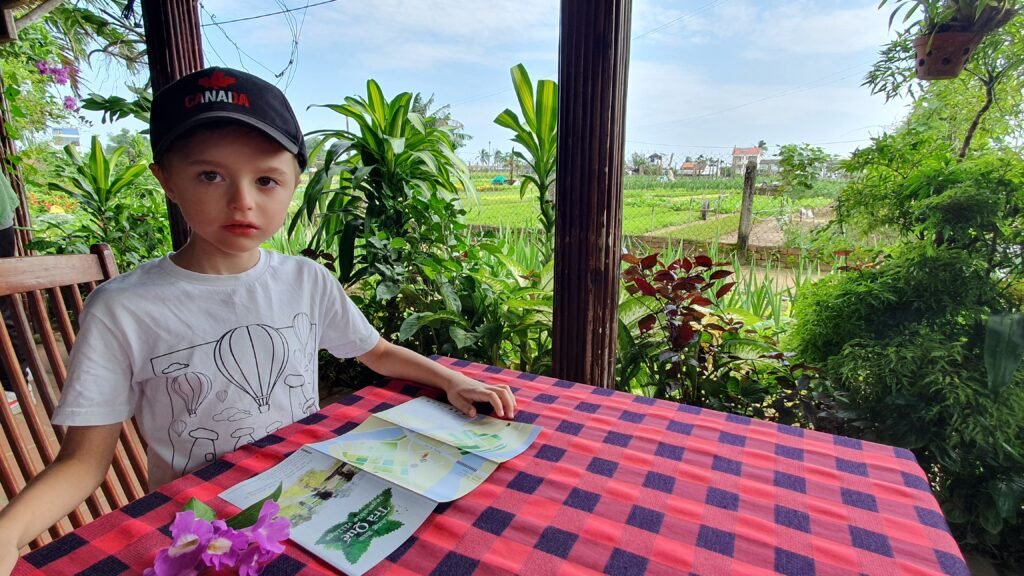
Tra Que Vegetable Village is just outside Hoi An and is a great choice for families who want to see a completely different side of Vietnam.
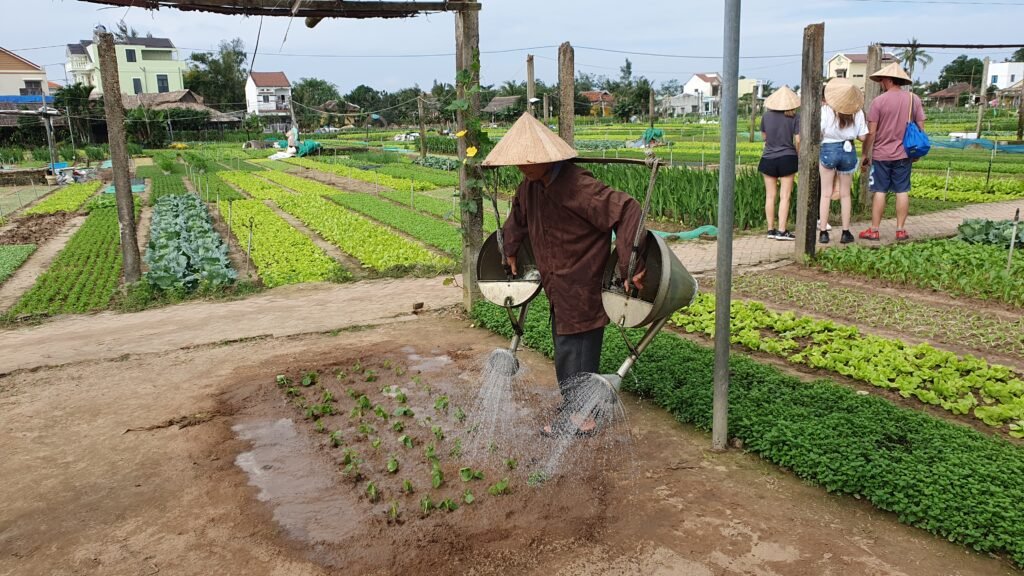
This is a working agricultural area where visitors can learn about traditional farming and see how vegetables and herbs are grown.
Family experiences can include getting involved with planting, watering and caring for crops, rather than simply walking around looking at fields. The village has long supplied herbs and vegetables to the local area, and tourism experiences here focus on giving visitors an insight into traditional agricultural life.
For children, this can be much more interesting than it sounds.
A six-year-old who might not be particularly impressed by the phrase “agricultural heritage” is considerably more interested when you hand him a watering can.
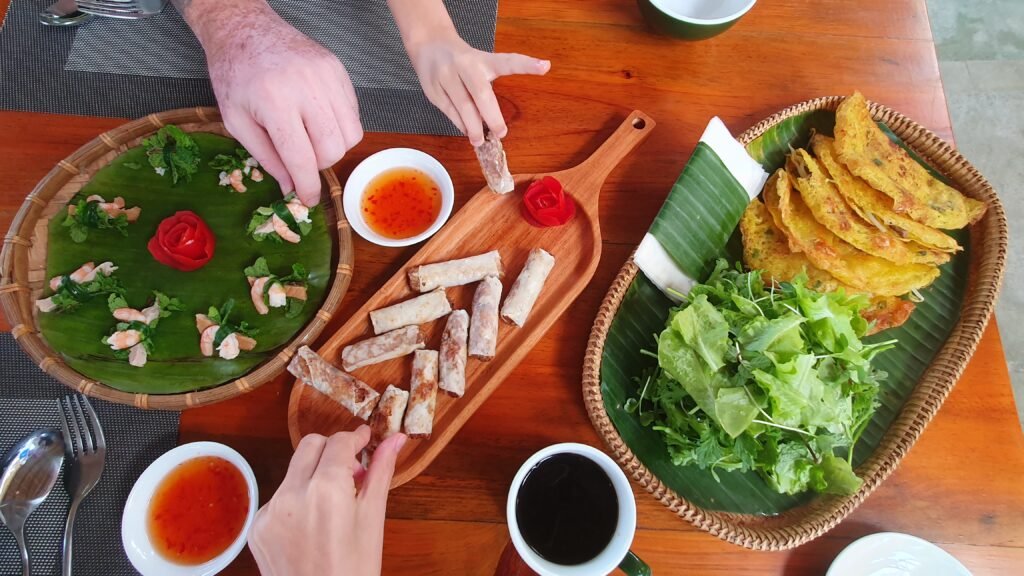
It is also a useful reminder that food doesn’t just appear in a supermarket. There is also a restaurant on site which serves incredibly good food!
Recommended age: All ages, particularly school-age children.
Worldschooling connection: Agriculture, food production, geography, sustainability and local culture.
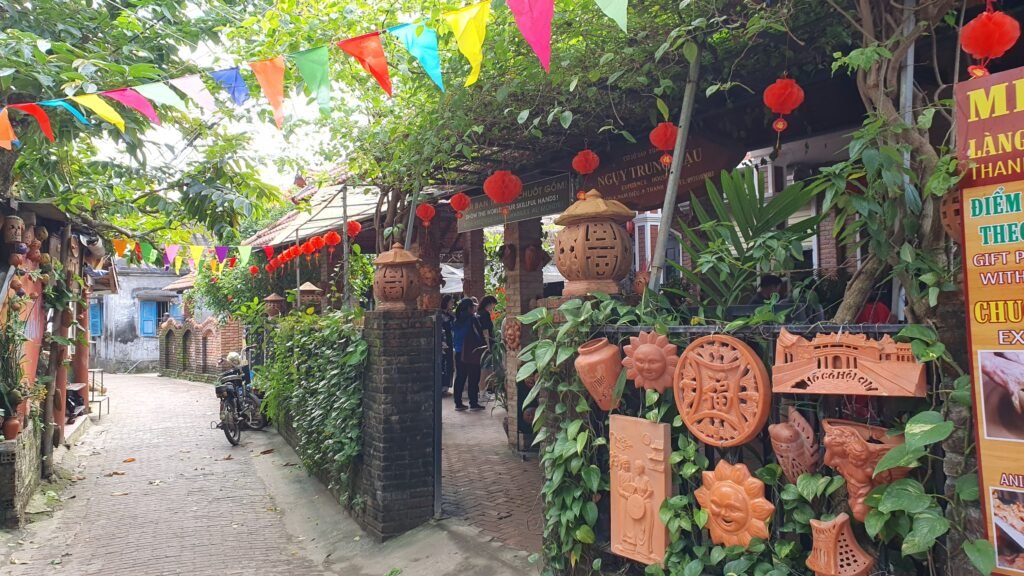
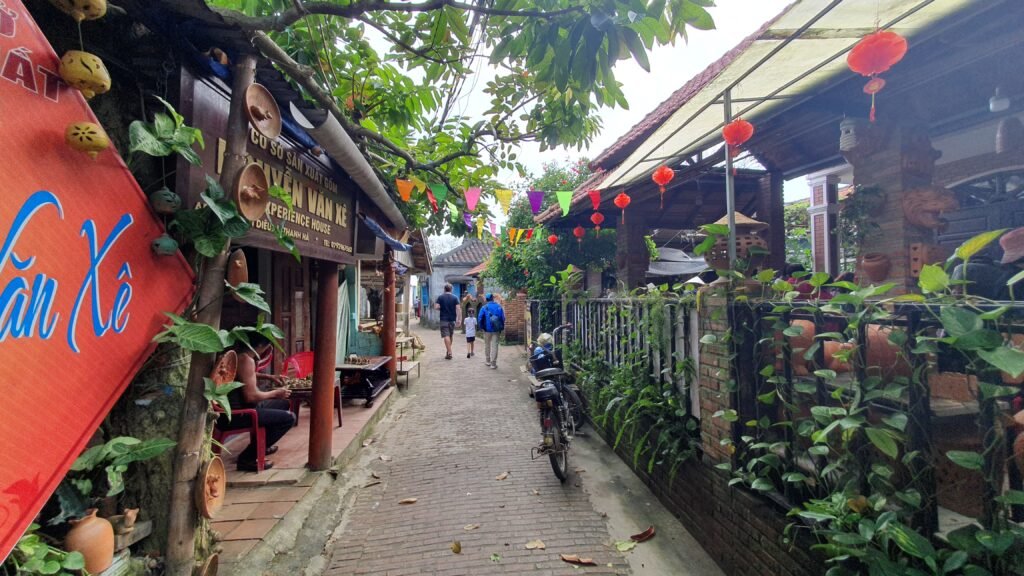
7. Visit Thanh Ha Pottery Village
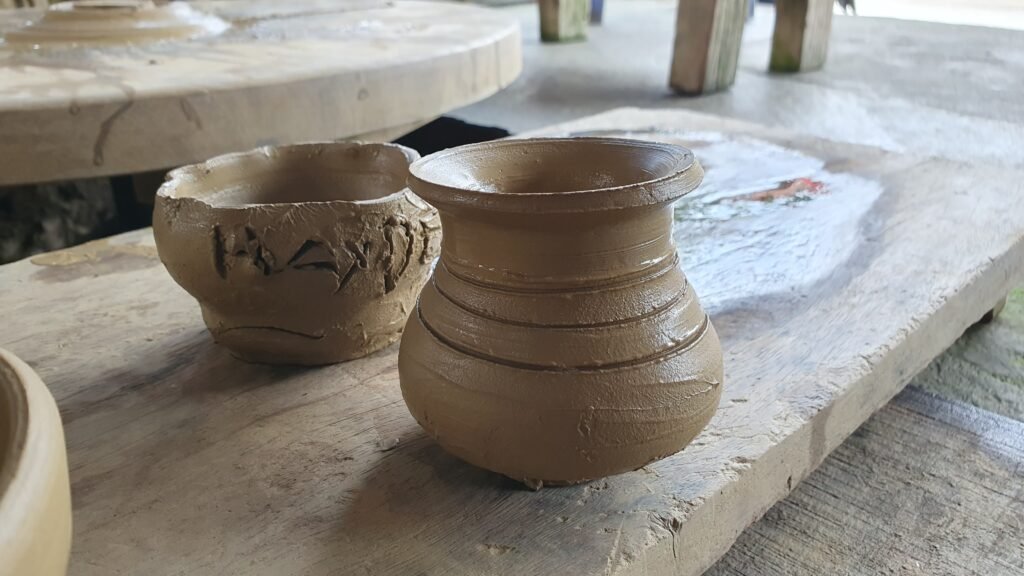
If your child likes making things, put Thanh Ha Pottery Village high on the list.
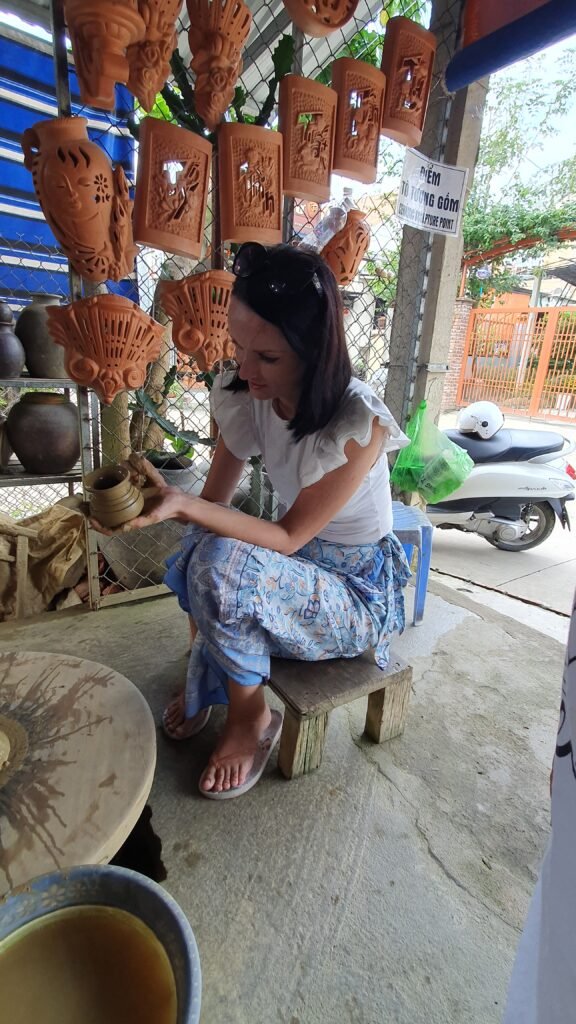
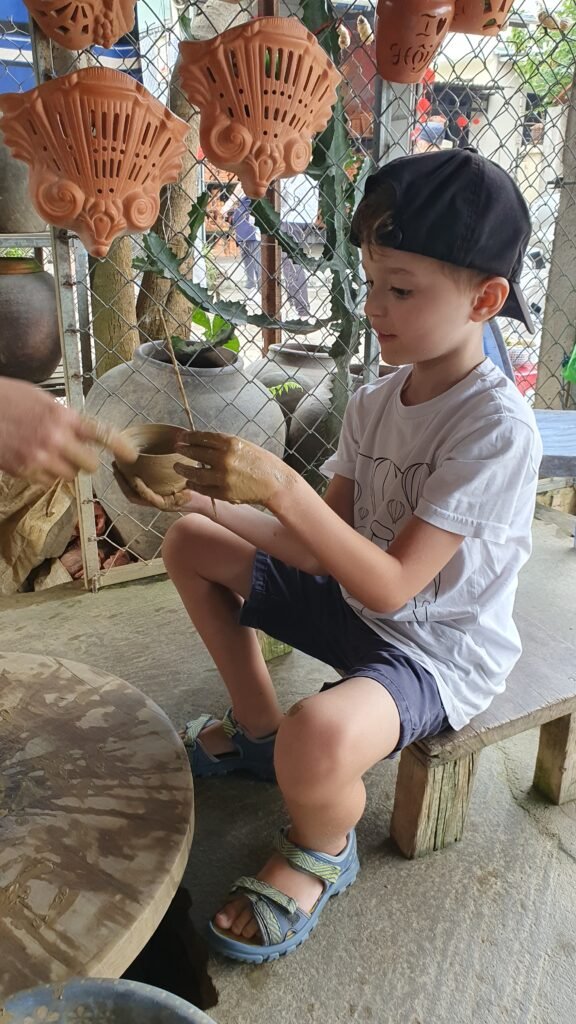
Thanh Ha is a traditional pottery village near Hoi An with more than 500 years of history. Visitors can watch artisans working with clay. Depending on the experience you choose, you can also have a go at making pottery yourself.
There is also Thanh Ha Terracotta Park, which has a large collection of terracotta artwork and miniature architectural models.
For children, the hands-on part is the attraction. They can see how a lump of clay turns into an actual object, rather than just being told that it’s possible.
The village and the terracotta park are separate attractions with separate ticketing, so check which one your activity includes before you go.
This tour combines Tra Que, Thanh Ha village and a couple of others, if you want to visit them all in one day.
Recommended age: About 4+, depending on the activity.
Worldschooling connection: Art, materials science, history, traditional crafts and local culture.

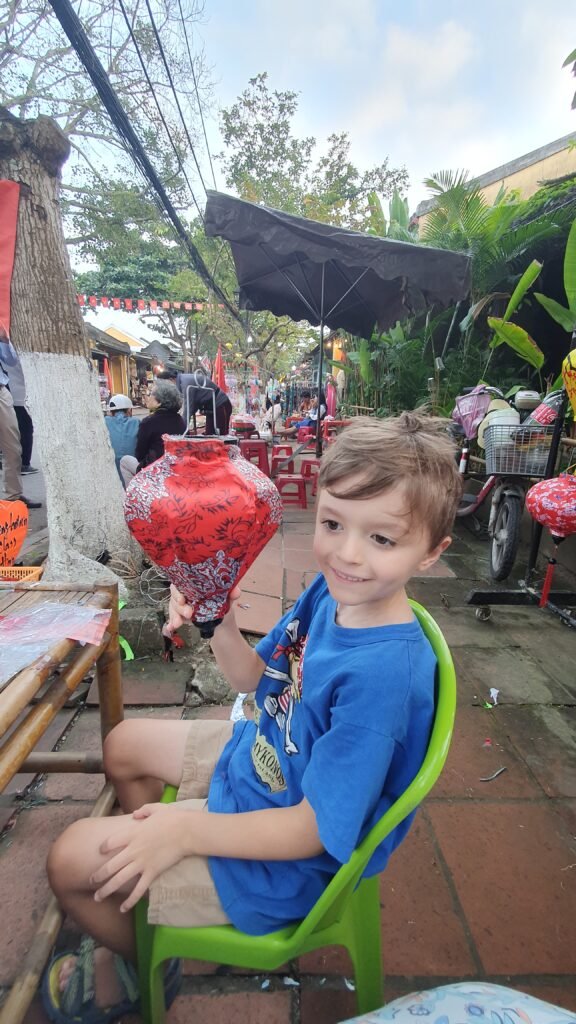
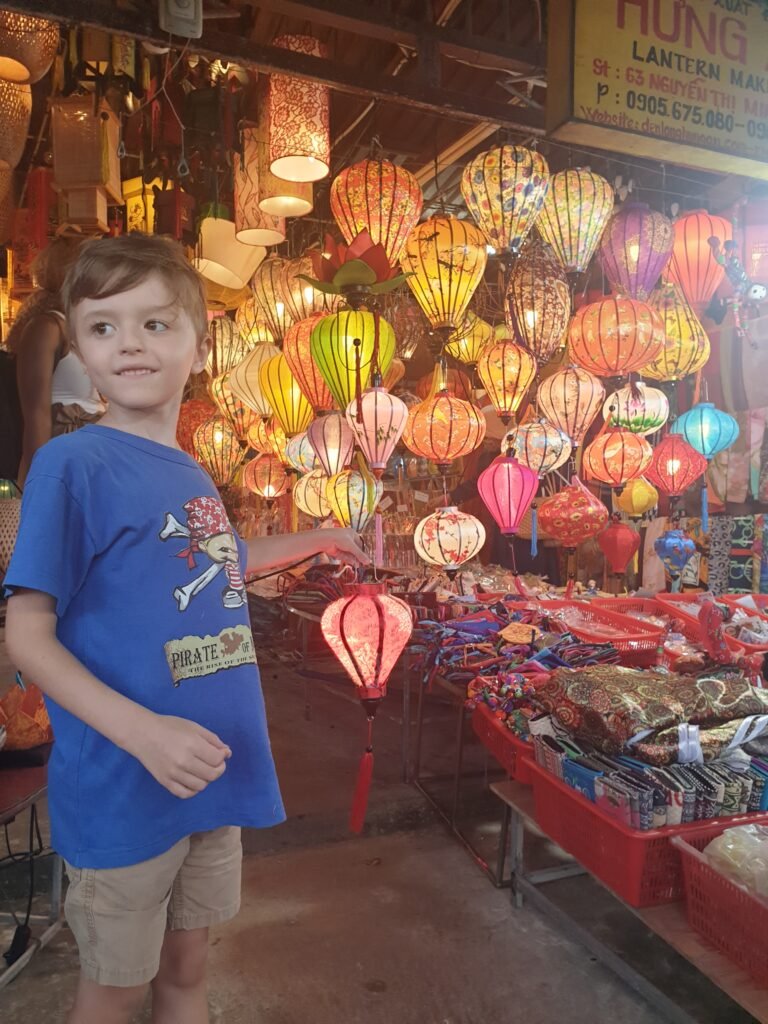
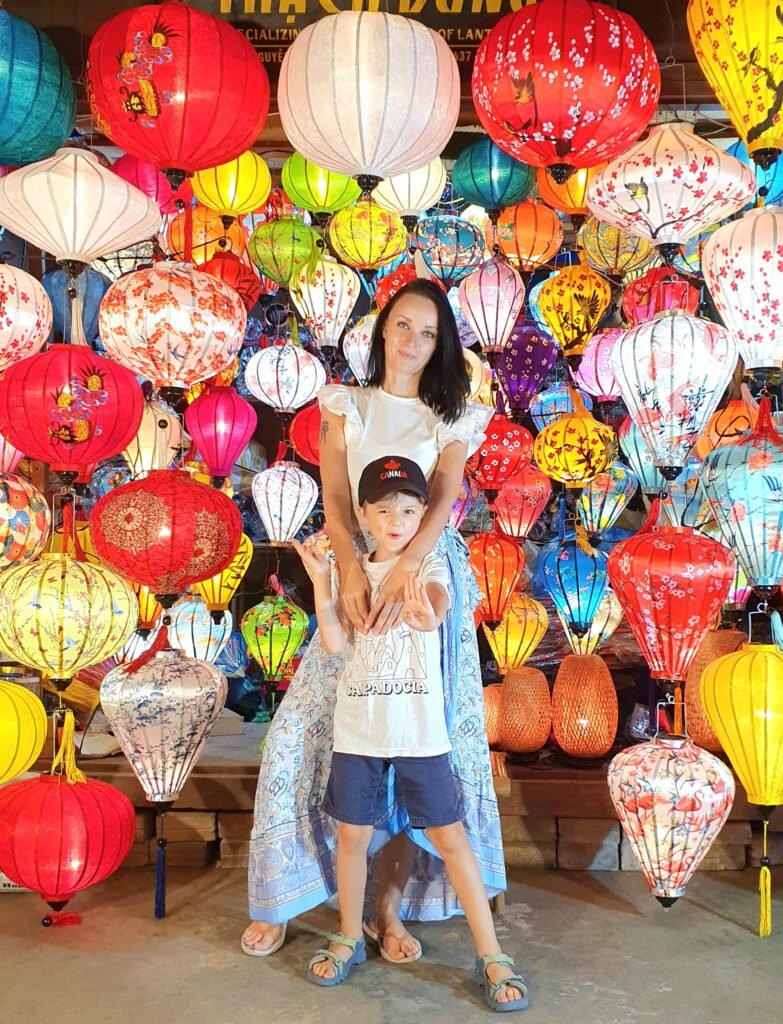
8. Make your own Vietnamese lantern
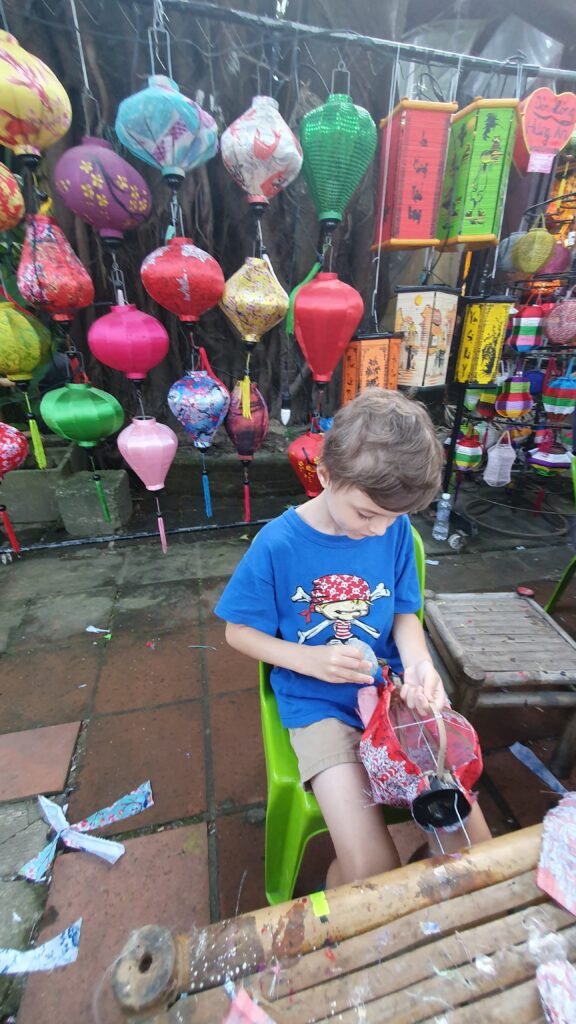
Lantern making is another activity I’d highly recommend for families visiting the Da Nang area.
You’ll generally do this in Hoi An rather than Da Nang itself, but it is easy to combine with a day in the old town.
There are workshops where children and adults can make their own lantern. You learn about the bamboo frame and fabric covering before decorating the finished piece. Family workshops are widely available and are designed to be accessible to children.
The best part is that you end up with something you can actually take home.
That makes a much better souvenir than another plastic toy that will mysteriously disappear somewhere inside your luggage three weeks later.
Recommended age: Around 5+, although some workshops accept younger children with adult help.
Worldschooling connection: Art, design, traditional crafts and Vietnamese cultural history.
Visit a Museum With Kids
9. Da Nang Museum of Cham Sculpture
If you’re travelling with children who are reasonably interested in history, don’t skip the Da Nang Museum of Cham Sculpture.
The museum contains more than 400 artefacts from the ancient Champa kingdom, dating from the 5th to the 15th centuries. It was established in the early 20th century and is right in central Da Nang.
This is particularly useful if you’re also planning to visit My Son Sanctuary. You can start introducing children to the Champa civilisation before seeing the archaeological site itself.
Recommended age: 5+, particularly for children interested in history and archaeology.
More Fun Things to Do With Kids in Da Nang
Not every day needs to be educational.
Sometimes you just need somewhere fun.
10. Try one of Da Nang’s water parks and indoor play areas
Da Nang has several options for families looking for something more entertainment-focused.
Mikazuki 365 is one option, with an indoor heated water park, slides, a lazy river, wave pool and children’s areas. There is also a Ninja Kids Park with climbing and obstacle-style activities.
This is particularly useful if the weather isn’t cooperating or your child has reached the point where another temple is absolutely not happening.
11. Visit Ba Na Hills and the Golden Bridge
Ba Na Hills is the big-ticket family attraction outside central Da Nang.
The complex includes the famous Golden Bridge and a cable car ride, along with French-themed buildings and Fantasy Park, an indoor amusement area aimed at families and children.
We wouldn’t necessarily put it above the more cultural experiences in this guide, particularly if you’re travelling on a tighter budget. But if your child loves rides and amusement parks, it can make for a fun day.
Da Nang’s tourism information also lists Ba Na Hills and Fantasy Park among its major family attractions.
Recommended age: All ages, although older children will probably get more out of the rides.
Best Day Trips From Da Nang With Kids
One of the best reasons to base yourself in Da Nang is that you don’t have to stay in Da Nang.
There are several major cultural and historical sites within easy reach.
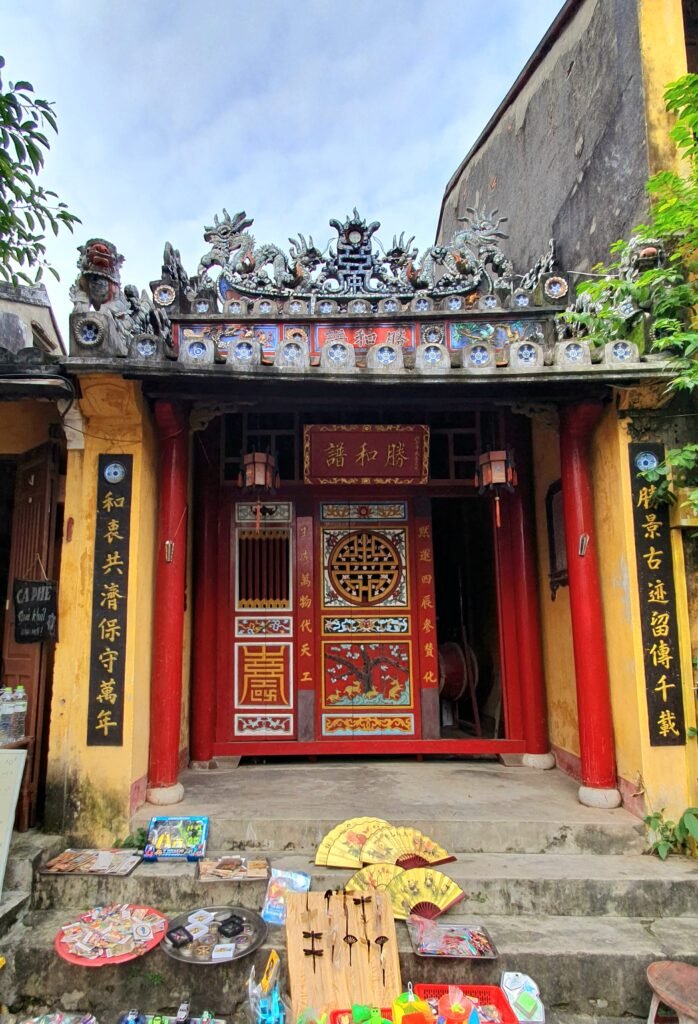
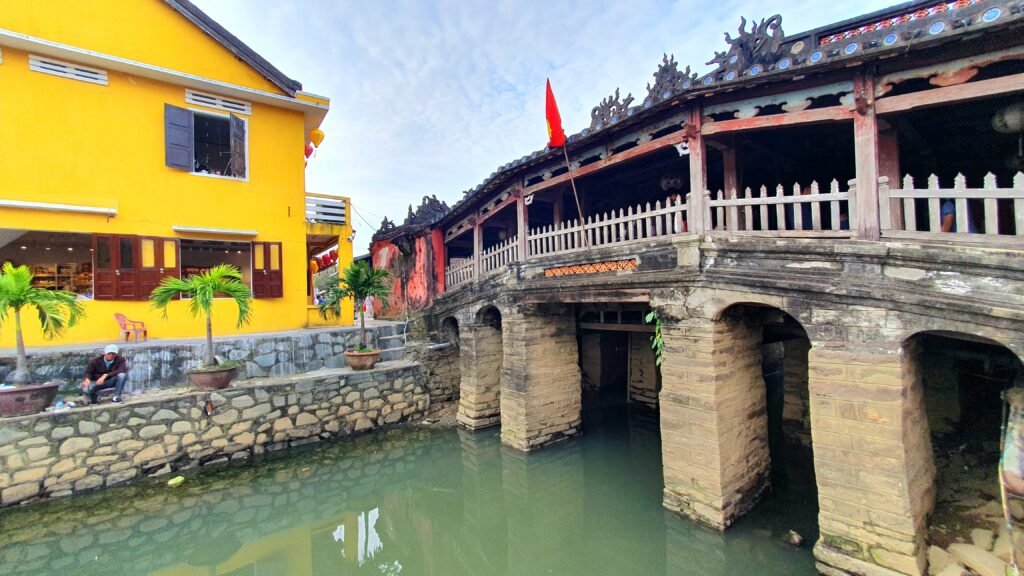
12. Hoi An
Hoi An is the obvious day trip from Da Nang.
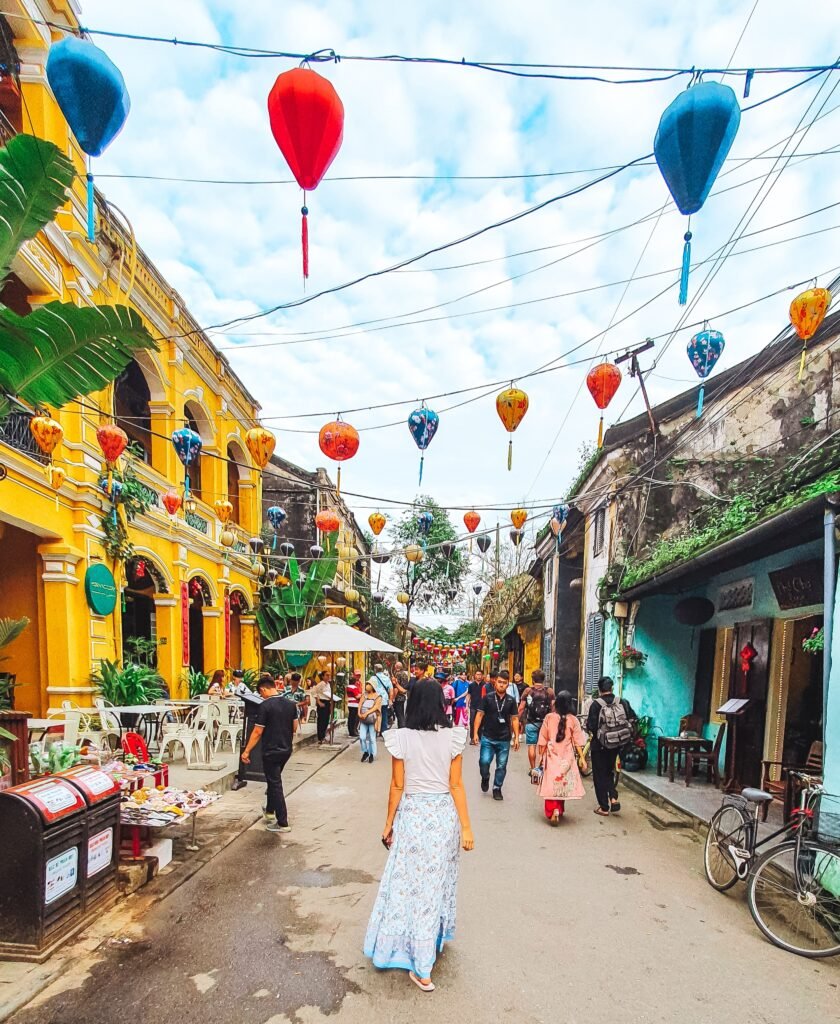
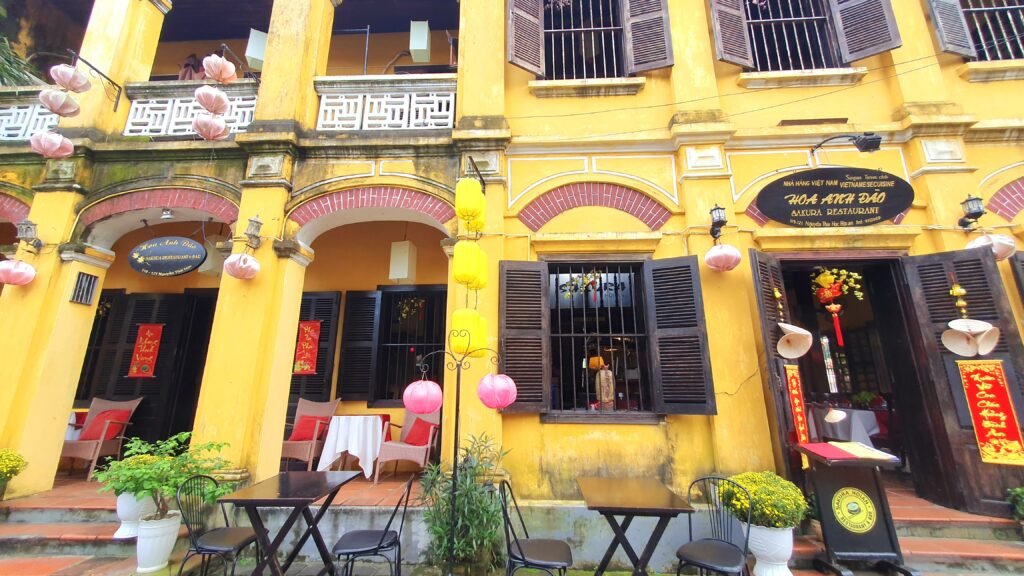
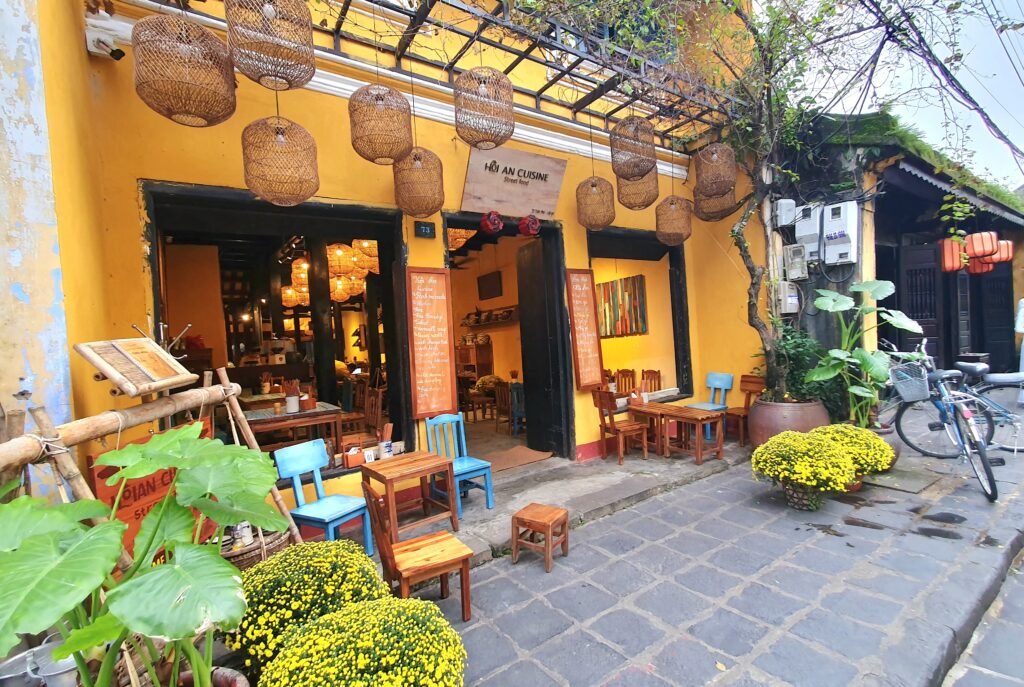
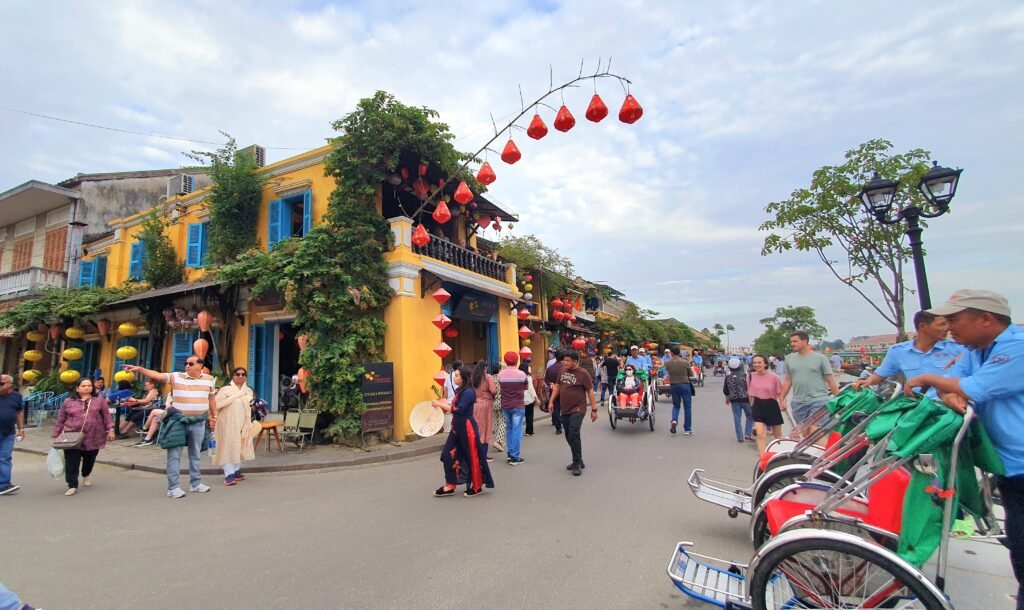
The old town is known for its historic architecture, colourful lanterns, riverside setting and traditional craft culture.
You can combine a wander through the old town with one hands-on activity. Try lantern making, a visit to Thanh Ha Pottery Village or a trip to Tra Que Vegetable Village.
Hoi An’s craft villages are a major part of the cultural experience around the city, including Thanh Ha pottery and Tra Que agriculture.
Best for: Culture, food, crafts and wandering.
Recommended time: One full day, or longer if you want to slow down.
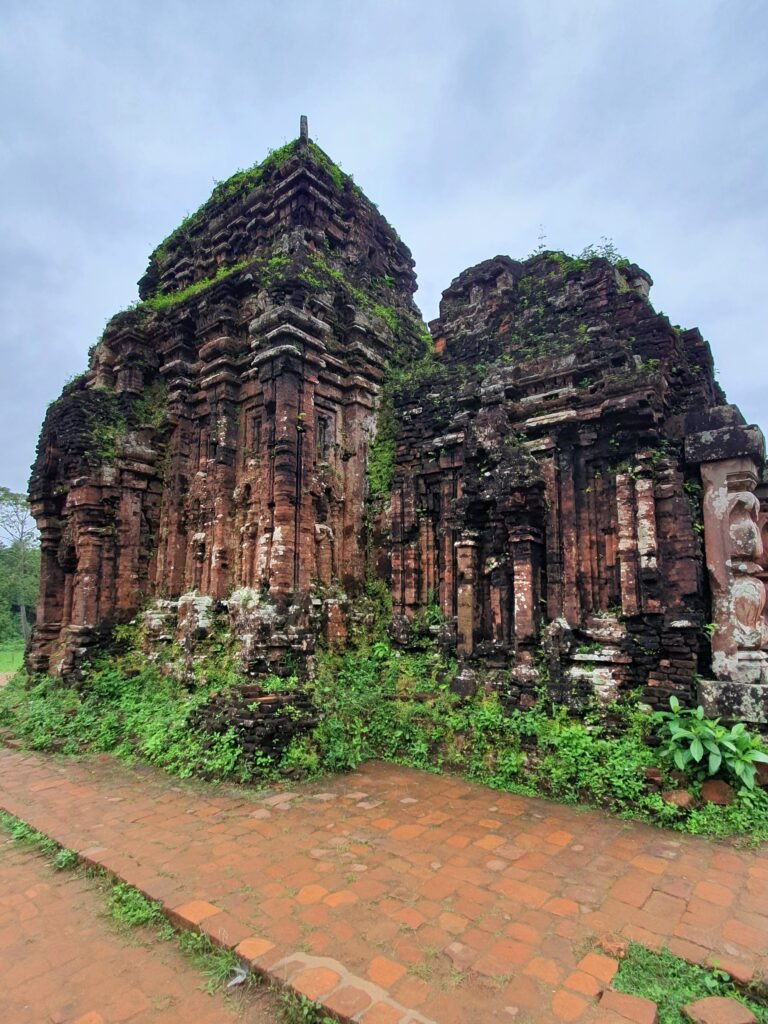
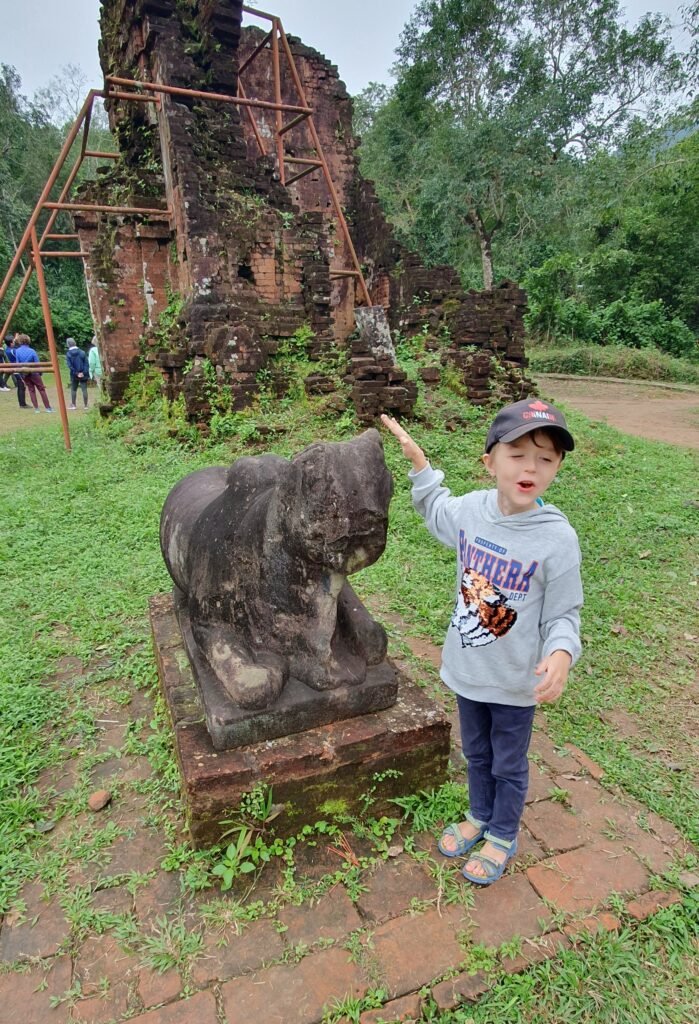
13. My Son Sanctuary
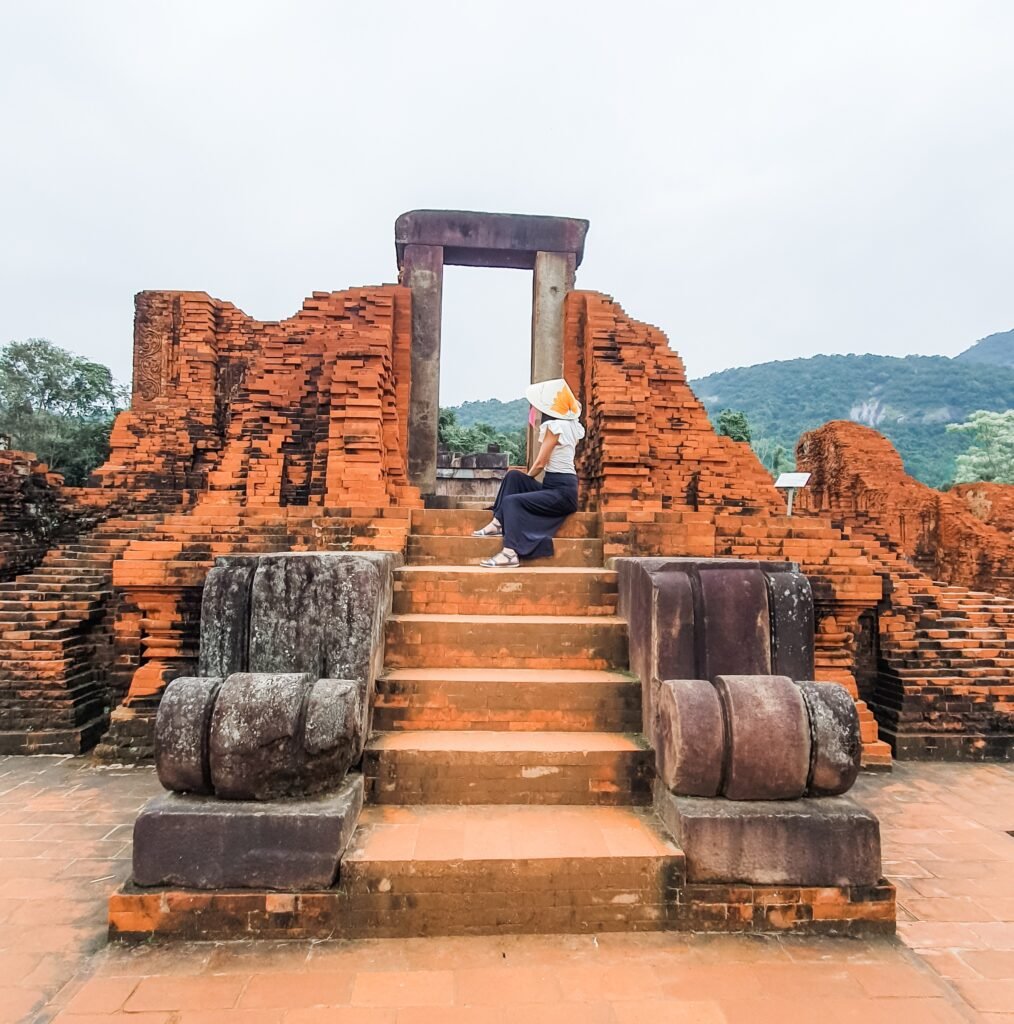
My Son Sanctuary is one of the best day trips from Da Nang if your family has any interest in history, archaeology or ancient civilisations.
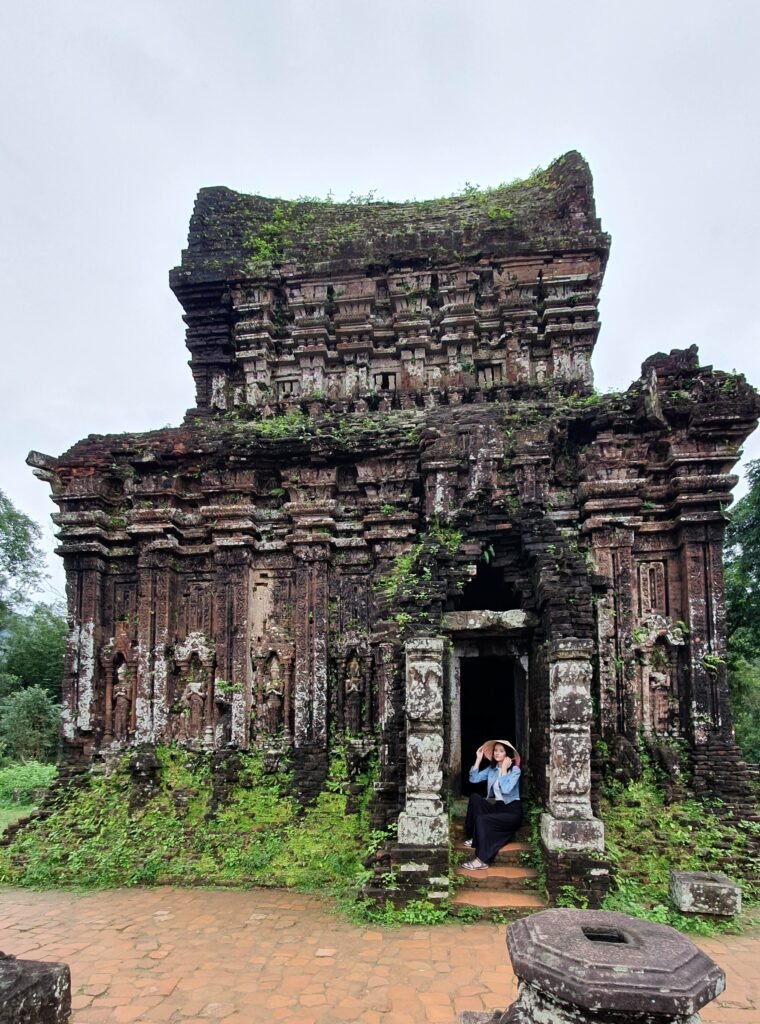
Located about an hour and a half from Da Nang, My Son (pronounced as “mee sohn”) is a collection of ancient Hindu temple ruins built by the Champa civilisation. This kingdom controlled parts of central and southern Vietnam for more than a thousand years. The earliest temples at My Son date back to around the 4th century, and the site developed until roughly the 13th century. It was an important religious centre where Champa kings worshipped Hindu gods, particularly Shiva. (UNESCO)
What makes My Son particularly interesting: it gives you a glimpse into a civilisation that most children, and plenty of adults, probably haven’t heard much about before visiting Vietnam.
The Champa people had their own kingdom, language, culture and religious traditions. They also had strong connections with other parts of Southeast Asia and India. The temple towers were built from brick and decorated with carvings of Hindu gods, animals and mythical figures.
My Son’s Wartime History and Visiting Today
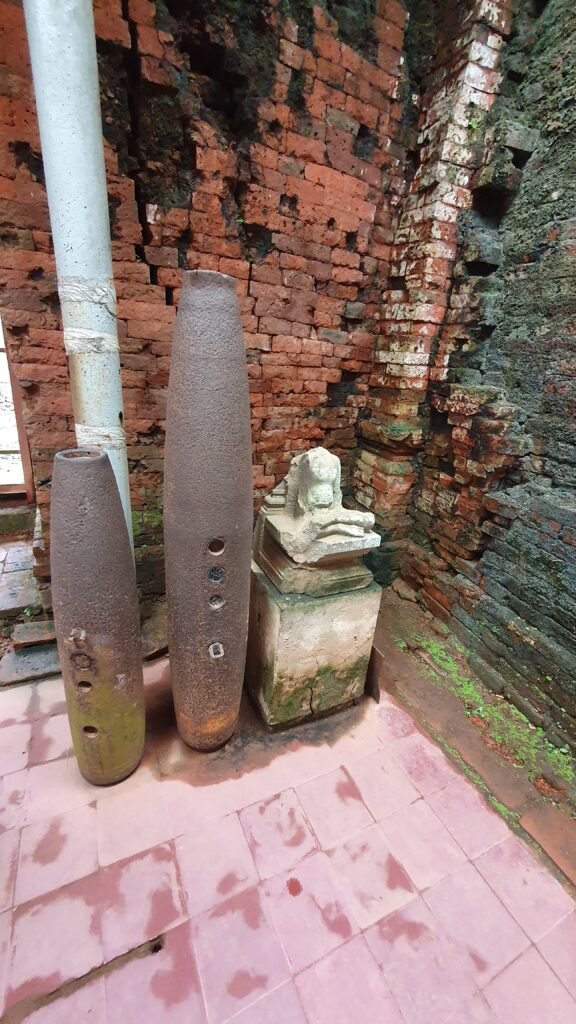
The site also has a much more recent and difficult history. My Son was heavily damaged during the Vietnam War, when some of the area was bombed. You can still see the effects of the conflict in parts of the site, including bomb craters and damaged temple structures. That combination of ancient ruins and recent war history makes My Son an especially interesting place to visit with older children.
My Son was recognised as a UNESCO World Heritage Site in 1999, for its importance as an example of Champa architecture and culture. (UNESCO)
If you’re planning to visit both My Son and the Da Nang Museum of Cham Sculpture, I’d recommend doing both. The museum gives you context about the Champa civilisation and its art. My Son then lets you see where that culture actually built and worshipped.
Practical tip: Go as early as you can. There is relatively little shade around some parts of the site, and the heat can get uncomfortable later in the morning. Wear comfortable shoes, and bring water, sunscreen and a hat.
There is also a shuttle bus from the entrance to the main archaeological area. It saves some walking, especially with younger children.
Recommended age: 6+, although older children will probably appreciate the history more.
Worldschooling connection: Ancient civilisations, Hinduism, archaeology, architecture, Southeast Asian history, geography and the Vietnam War.
14. Hue
Hue makes a longer day trip, but it is possible from Da Nang.
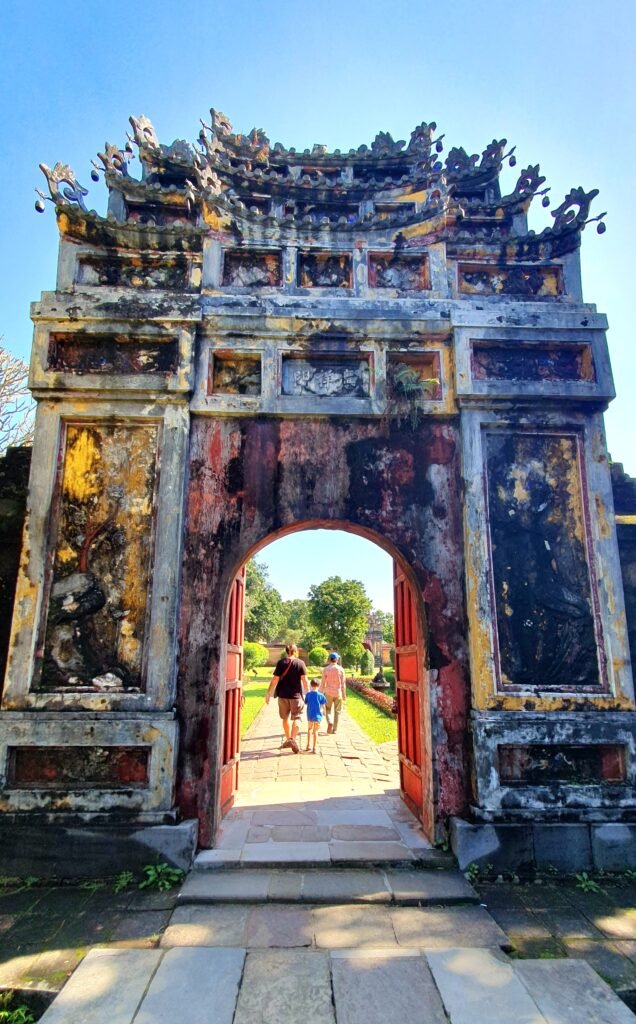
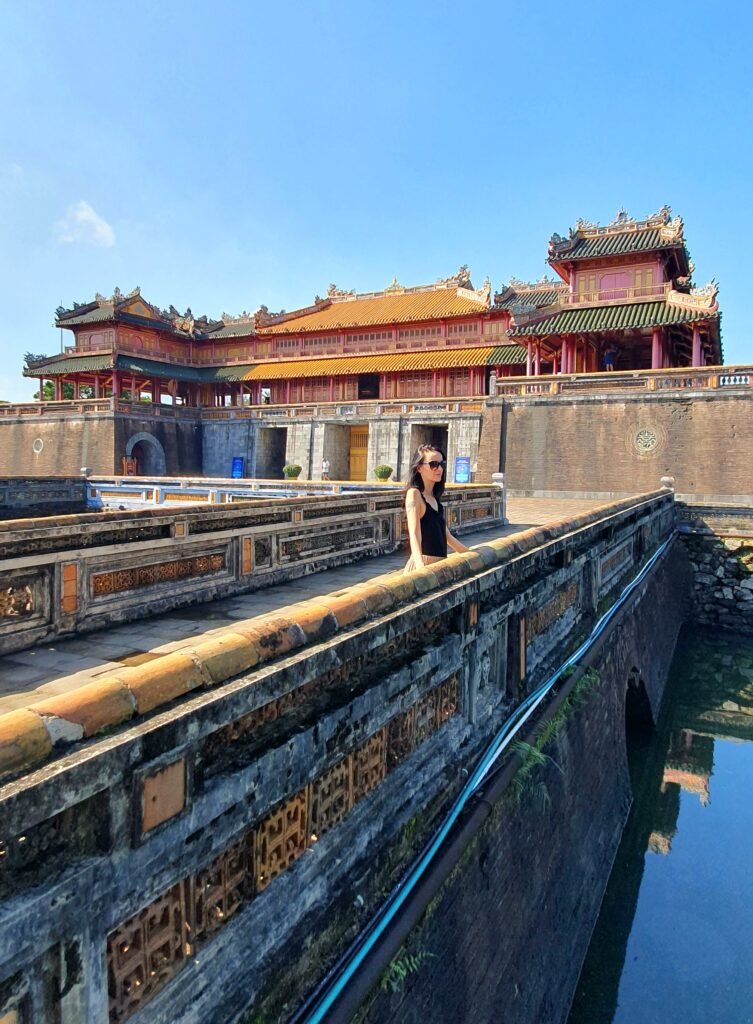
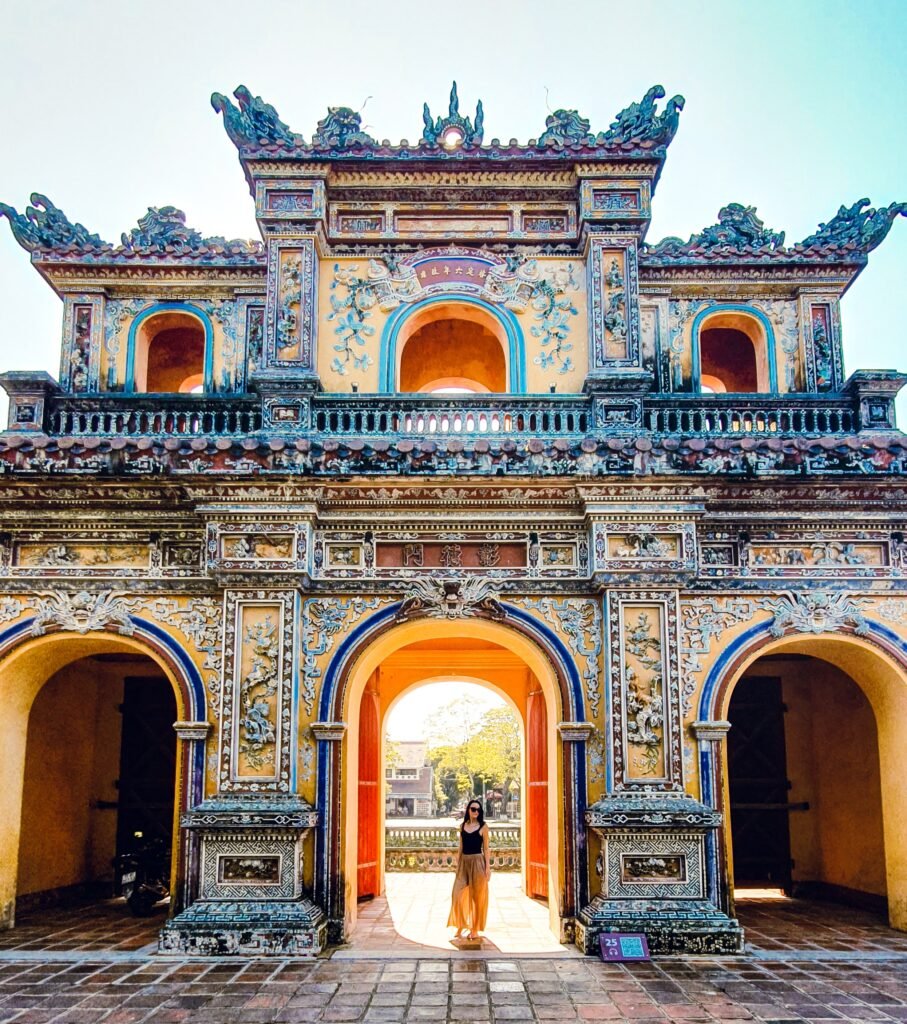
Hue was the imperial capital of Vietnam under the Nguyen dynasty. The main attraction is the Imperial City and surrounding historical sites. This is another particularly good worldschooling day, because you’re effectively walking through Vietnamese history. If you have enough time, I would actually recommend staying overnight in Hue rather than trying to squeeze everything into one exhausting day.
For younger children, the journey plus a full day of historical sites can be a lot.
Best for: History, architecture and older children.
Recommended age: 6+, although older children will probably appreciate it more.

What to Eat in Da Nang With Kids
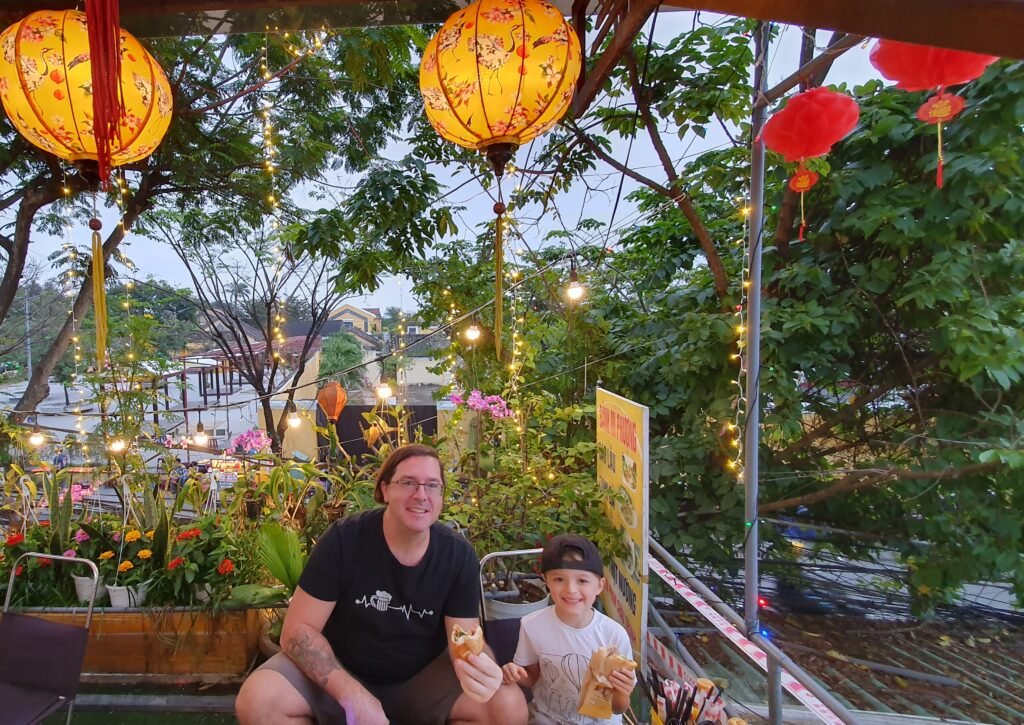
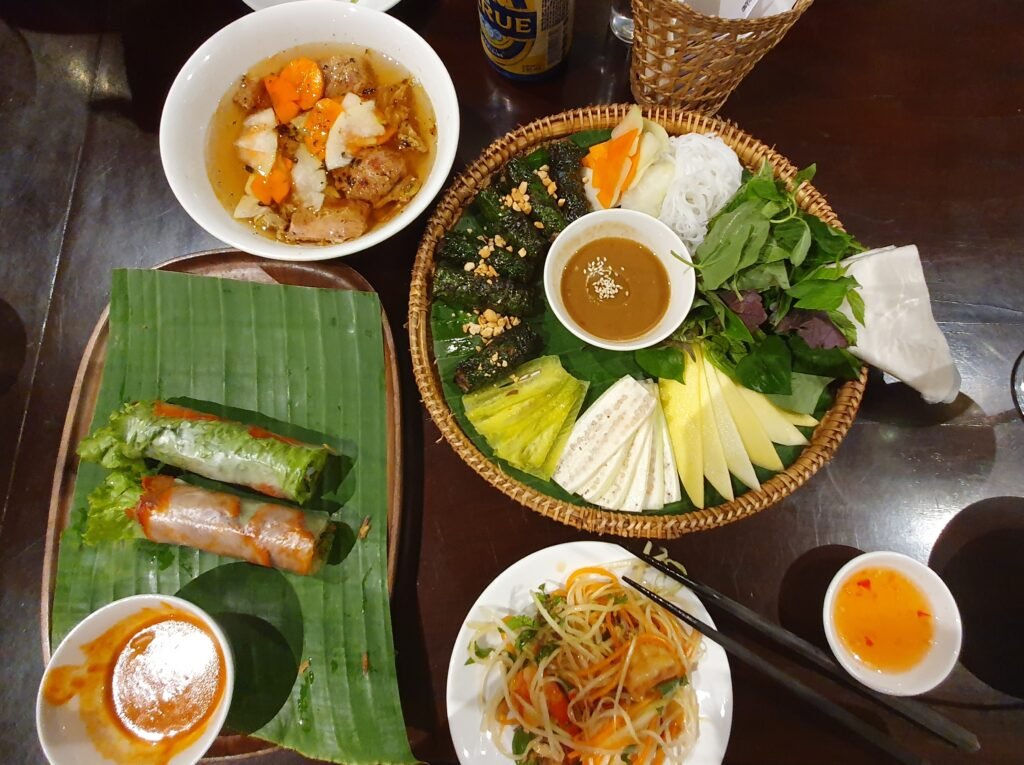
Vietnamese food is one of the reasons we enjoyed spending time in Vietnam. Da Nang is a particularly good place to eat.
There is plenty of inexpensive local food, but also enough western food and familiar options too. You don’t have to worry if your child isn’t ready to embrace every Vietnamese dish immediately.
Some local foods worth trying include:
Mi Quang
Mi Quang is a noodle dish from central Vietnam. It is usually served with a small amount of rich broth, noodles, herbs, vegetables, peanuts and different toppings.
It’s one of the foods I’d put on your Da Nang list.
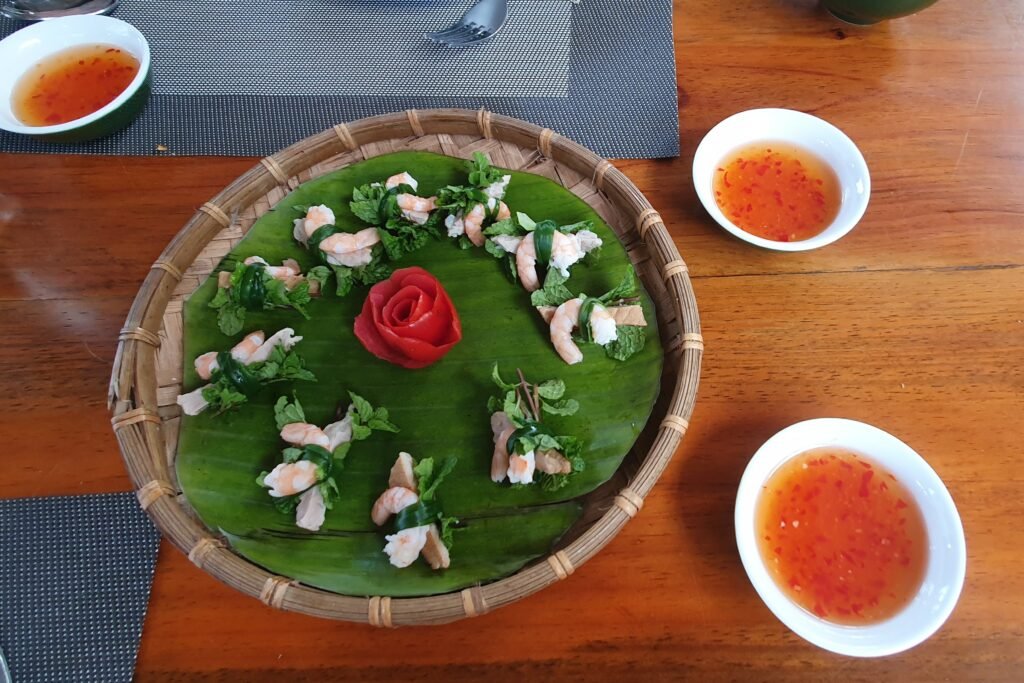
Banh Xeo
These crispy Vietnamese pancakes are filled with ingredients such as shrimp, pork and bean sprouts. They are eaten with herbs and dipping sauce.
Kids often enjoy the crispy pancake part even if they aren’t convinced by everything inside it.
Bun Cha Ca
Da Nang is known for its fish noodle soup, and this is another local dish worth trying.
Fresh seafood
Because you’re on the coast, seafood is everywhere.
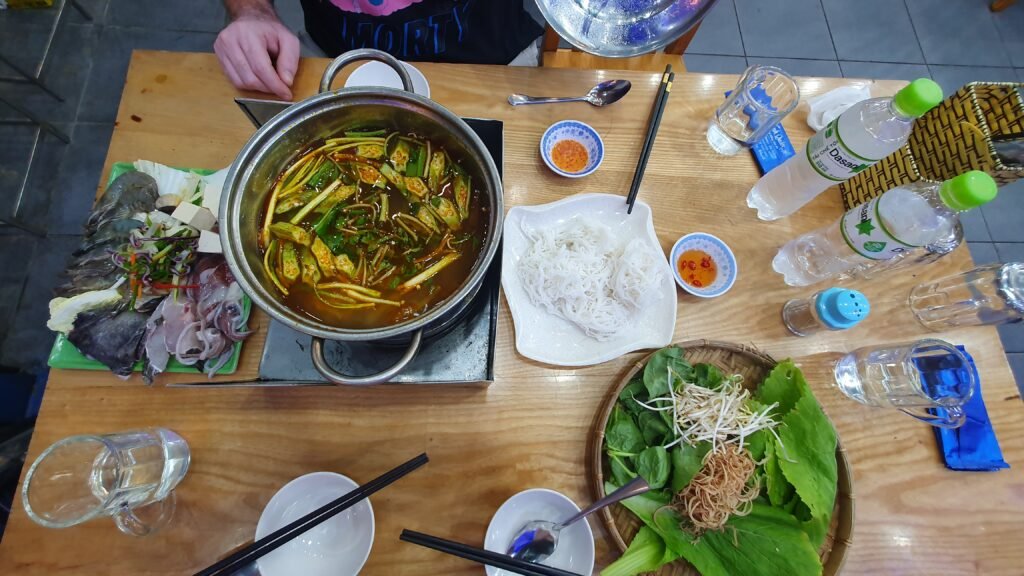
If your child likes fish, prawns or squid, Da Nang is an easy place to eat well without spending a fortune. Make sure to try one of the many hot pot restaurants in the city.
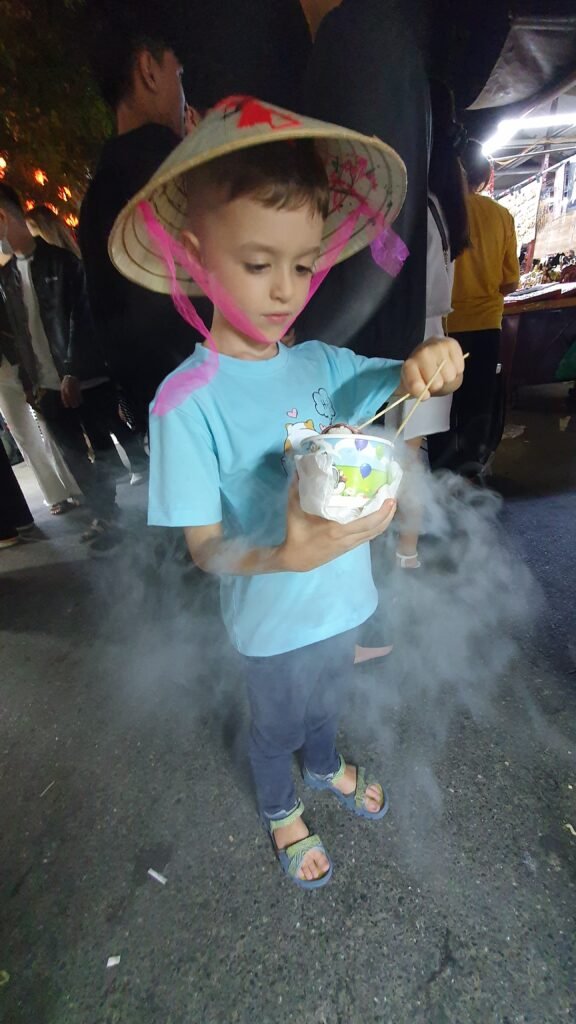
Vietnamese coffee and the café culture
This one is technically more for the parents.
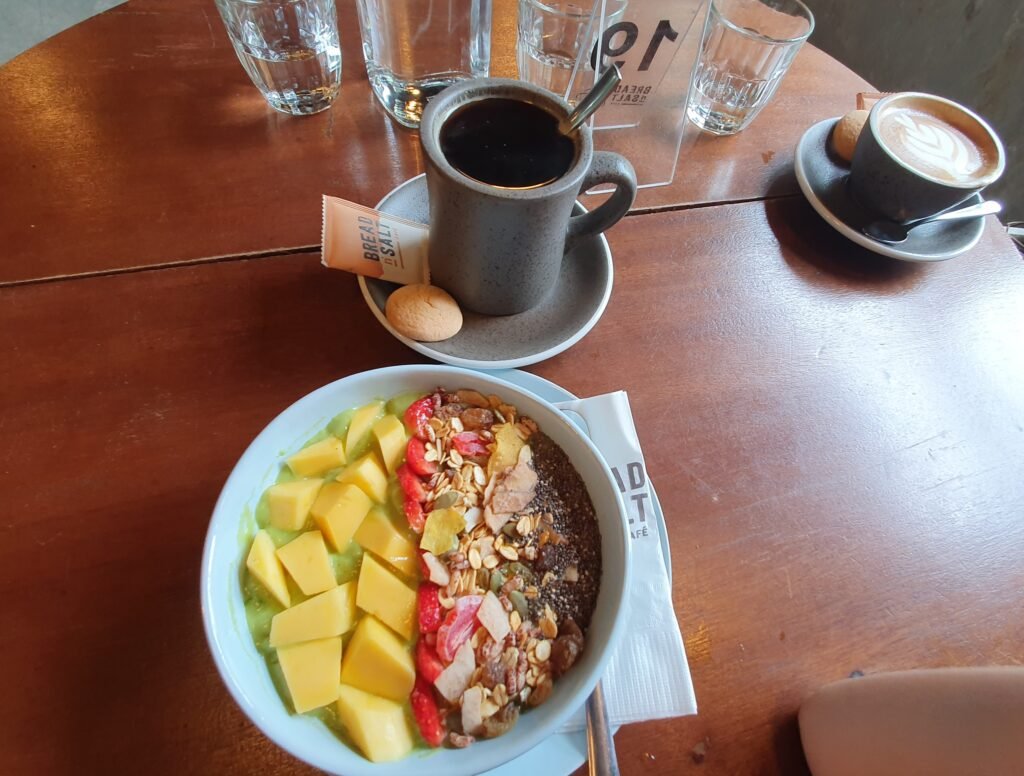
Da Nang has an excellent café culture. Having a coffee while your child has a smoothie or juice is a very workable family activity.
Where to Stay in Da Nang With Kids
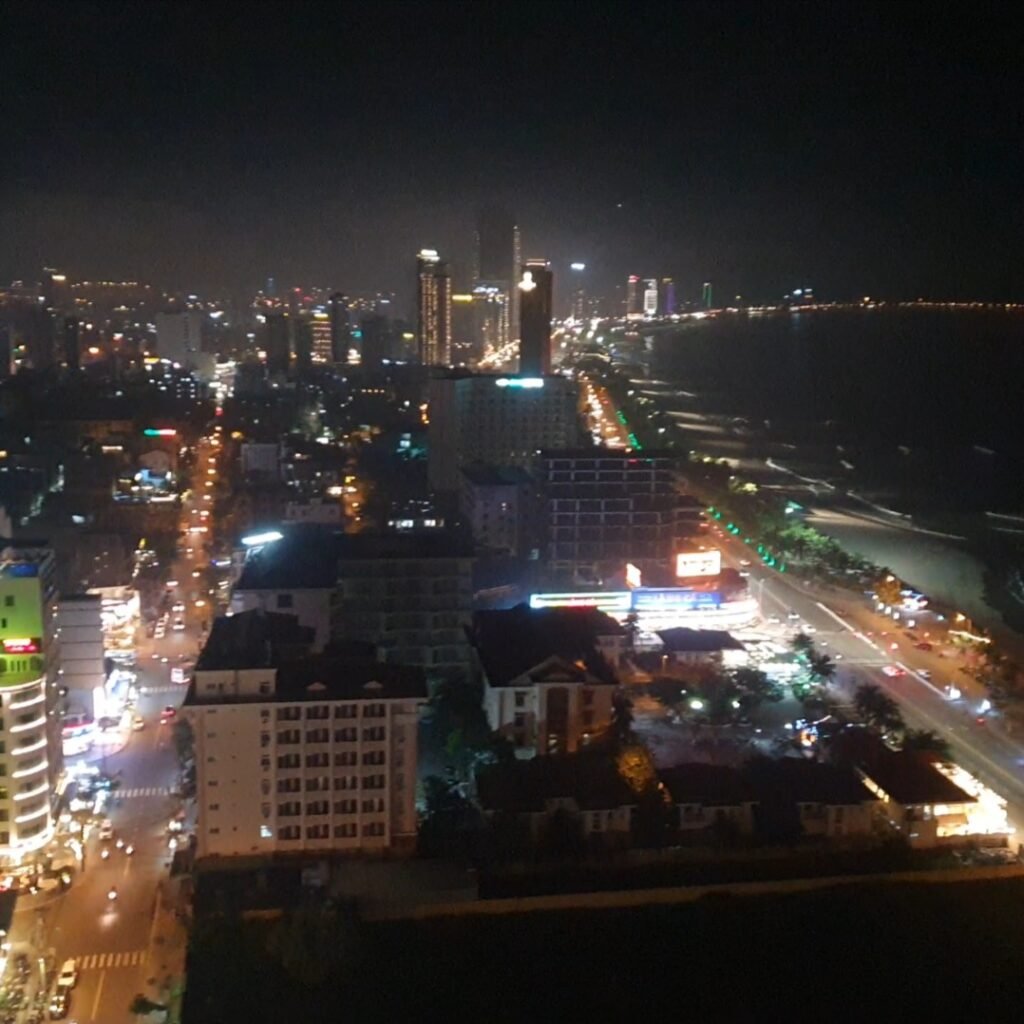
For most families, I’d look at staying around the My Khe Beach area.
It gives you easy access to the beach, plenty of restaurants and cafés, and you’re still close enough to reach central Da Nang.
If you prefer a more local city atmosphere, the area around the Han River and Hai Chau can work well too.
For a longer stay, I would prioritise:
- A kitchen or kitchenette
- Washing machine or laundry nearby
- A swimming pool
- Easy beach access
- A supermarket within walking distance (although delivery services are also widely available)
- Plenty of restaurants nearby
- Reliable Wi-Fi
When you’re travelling with children for a month, these things become much more important than whether the hotel lobby looks impressive.
For a short holiday, a resort may be worth considering. For longer-term family travel or worldschooling, I’d personally rather have an apartment with practical facilities.

Getting to Da Nang With Kids
Da Nang has its own international airport, Da Nang International Airport (DAD). It sits close to the city centre and the main beach areas. That is a genuine advantage when you’re travelling with children, because you’re not looking at a long transfer after a flight.
From the airport, it’s around 15 to 30 minutes by taxi or Grab to most hotels and apartments around My Khe Beach or the city centre, depending on traffic.
If you’re arriving from elsewhere in Vietnam, domestic flights connect Da Nang with Hanoi and Ho Chi Minh City several times a day. Flight time is around 1 hour 15 minutes to 1 hour 30 minutes. Vietnam Airlines, Vietjet Air, Bamboo Airways and a few other carriers all fly the route, so there’s usually a departure time that fits around nap schedules.
Da Nang is also increasingly well connected internationally, with direct flights from regional hubs such as Singapore, Seoul and other parts of Southeast Asia. Depending on where you’re travelling from, you may not need to route through Hanoi or Ho Chi Minh City at all.
If you already have Hue or Hoi An on your itinerary, it’s also worth knowing that Da Nang connects to Hue by train. This includes the stretch over Hai Van Pass, one of the more scenic train journeys in Vietnam. It’s a fun option for kids who enjoy trains, although with younger children a private car or bus is usually more practical for a day trip.
Practical tip: Where possible, book a direct flight rather than a connection. One transfer is manageable with kids. Two, especially with a tight layover, is where trips start to unravel.
Weather and Best Time to Visit Da Nang With Kids
Da Nang has a fairly clear split between a dry season and a wet season. Knowing which one you’re travelling into makes a real difference when you have kids with you.
Roughly speaking, February to August is the dry season. Temperatures climb steadily through this period, from comfortable (sometimes almost chilly) in February and March, up to genuinely hot by June, July and August. It can reach the mid-30s and feel more intense with the humidity. This is peak beach season, but it’s also when the middle of the day gets tough for young children, so the “plan around the heat” advice earlier in this guide really does matter.
September through January is the wet season, with October and November the wettest and highest-risk months for typhoons. Flooding and disrupted travel plans are more likely during this window. That is worth factoring in if your schedule isn’t flexible.
Best Months to Visit With Kids
The best months to visit with kids are generally February to May. You get warm, mostly dry weather without the peak heat of summer, smaller crowds than the domestic holiday season, and a good balance between beach days and days spent out sightseeing.
We visited in January, right at the tail end of the wet season, and it worked out well for us. We had a handful of rainy days, but most of our month there was warm and dry. We also happened to be there for Tet, the Vietnamese Lunar New Year, which was a wonderful bonus. If your travel dates are flexible, February to April is the safer bet weather-wise. Still, a January trip isn’t something we’d discourage.
Practical tip: If you’re travelling between September and January, keep an eye on typhoon forecasts in the weeks before you go and build a little flexibility into your itinerary, particularly around day trips to Hoi An, My Son and Hue.
Getting Around Da Nang With Kids
Da Nang is relatively easy to get around.
For families, taxis and ride-hailing apps are usually the simplest option for longer journeys.
Walking works well in some areas, particularly around the beach and riverside. But Da Nang is still a large city, and the heat can make a seemingly short walk feel considerably longer.
For day trips to places such as Hoi An, My Son or Hue, you can arrange a private driver, join a tour or organise transport independently.
If you are travelling with a young child, I would favour convenience over trying to save a few dollars on every journey.
You are on holiday. There is no prize for making every transfer as complicated as possible.
Practical Tips for Visiting Da Nang With Kids
Plan around the heat
This is probably the biggest practical tip.
Do your outdoor activities early in the morning or later in the afternoon whenever possible.
A good family day might look like:
Morning: Marble Mountains
Lunch: Somewhere with air conditioning
Afternoon: Rest or pool
Evening: Beach or Dragon Bridge
Trying to climb a mountain at midday with a six-year-old is a good way to turn a fun outing into a family negotiation.
Don’t overplan
Because we stayed for a month, we had the luxury of taking things slowly.
But even on a one-week trip, I’d resist the urge to schedule a major attraction every single day.
Da Nang is enjoyable partly because you can just live there for a while.
Carry water
Always.
Bring shoes with good grip
Especially for Marble Mountains and the caves.
Respect religious sites
Cover shoulders and knees when visiting temples and pagodas, and explain to children beforehand that these are places where people come to worship.
Check attraction schedules before visiting
Opening hours, shows and ticket arrangements can change. This is particularly important for Dragon Bridge and special events.
If you want to know exactly what earns a place in our bags for trips like this, our family travel gear guide covers what has actually survived 70+ countries with us.
Is Da Nang Safe for Families?
Da Nang is generally a comfortable destination for family travel, but the usual precautions still apply.
The biggest practical concerns for families are often traffic, heat, dehydration and keeping an eye on children around water.
Crossing roads in Vietnam can take a little getting used to. Take your time, stay predictable and keep younger children close. That said, we found the roads in Da Nang a lot calmer than in Ho Chi Minh City or Hanoi.
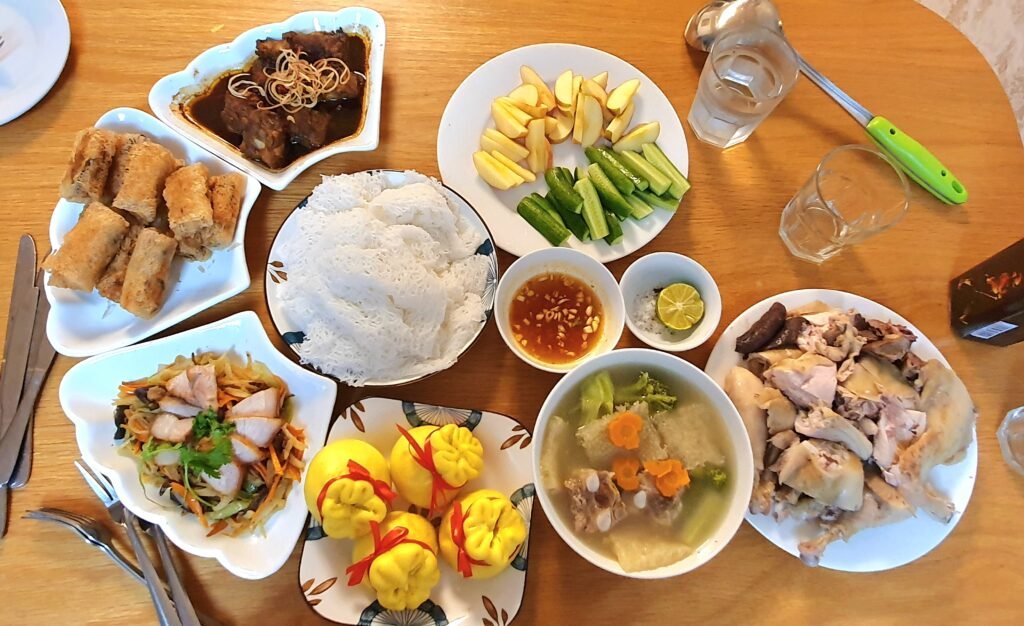
We also found the people in Da Nang incredibly welcoming and friendly. One day, we met a local family at the beach and our kids started playing together. We got chatting and, by complete coincidence, discovered that they lived in the same building as us. It was around Tet, the Vietnamese Lunar New Year, and they were incredibly kind. They prepared a special dinner for us and brought it over to our apartment. What started as a chance meeting at the beach turned into an evening celebrating Tet together. It was one of those lovely, unexpected moments you don’t really plan for when you travel, but end up remembering long after you’ve left.
At beaches and pools, use normal water safety precautions. Don’t assume lifeguards will provide the same level of supervision you might be used to at home.
At Marble Mountains, be particularly careful around steep stairs, uneven paths and cave entrances.
The good news is that Da Nang is a city where families can comfortably settle into a routine. That was one of the things we appreciated most during our month there.
How Da Nang Works for Worldschooling
This is where Da Nang really stands out for us.
You can build an entire week of learning without opening a textbook.
Geography
Look at Vietnam on a map and work out where Da Nang sits between Hanoi and Ho Chi Minh City. Then trace the route to Hue and Hoi An.
History
Visit the Cham Sculpture Museum, My Son and Hue.
Science
Explore caves at the Marble Mountains and talk about how limestone caves form.
Art
Make a Vietnamese lantern or pottery.
Agriculture
Visit Tra Que and learn how vegetables are grown.
Culture
Learn about Buddhism, the Champa civilisation and Vietnamese traditions.
Food
Try local dishes and talk about where the ingredients come from.
And then there is the simplest form of learning:
live somewhere different for a month.
Your child hears another language, sees different foods and navigates different streets. They watch how people work, swim in a different sea, and learn that the world doesn’t work exactly the way it does at home.
That’s a pretty good classroom.
If this kind of travel-based learning is new to you, our worldschooling resources guide is a good place to start. Our roundup of the worldschooling apps and websites we actually use covers what fills in the gaps when you’re not out exploring.
How Long Should You Spend in Da Nang With Kids?
If you are simply using Da Nang as a stop on a Vietnam itinerary, allow at least 4 to 5 days.
That gives you time for:
- The beach
- Marble Mountains
- Lady Buddha and Son Tra
- Dragon Bridge
- Hoi An
- One additional day trip or cultural activity
For a slower family trip, one to two weeks would be much more comfortable.
And if you’re worldschooling or travelling long-term, Da Nang is the sort of place where staying for a month makes sense.
That was our experience.
We had enough time to explore, but we didn’t have to turn every day into an excursion.
More Family Travel Guides
If you’re planning more stops on a longer trip, or just enjoy reading about family travel further afield, here are a few more of our destination guides:
- Antigua Guatemala with Kids
- Chișinău with Kids
- Kraków with Kids
- Prague with Kids
- Copenhagen with Kids
Final Thoughts: Is Da Nang Worth Visiting With Kids?
Absolutely, particularly if you prefer travelling somewhere where you can combine sightseeing with normal family life.
Da Nang isn’t just a destination where you spend three days rushing between attractions. It works surprisingly well as a temporary home base.
You have the beach when you want an easy day. You have mountains and caves when you want an adventure. You have temples, museums and archaeological sites when you want some history. And then there are the villages around Hoi An, where children can get their hands dirty making pottery, growing vegetables or creating a lantern.
That mix is what made Da Nang work so well for us.
Our son was six when we spent a month there. There was enough variety to keep him interested without us having to constantly find the next big attraction.
For families travelling through Vietnam, I’d definitely include Da Nang on the itinerary. For families travelling slowly, worldschooling, or looking for somewhere to stay for a few weeks rather than just a few nights, I’d consider it even more strongly.
You can have a proper beach holiday, a cultural trip, an adventure and a history lesson here. And you never need to change hotels every couple of days.
And sometimes, especially when you’re travelling with kids, having one place where you can just settle in is exactly what you need.