
How Do Worldschooling Kids Make Friends? The Reality of Friendship on the Road
One of the questions we get asked about worldschooling isn’t really about maths, reading or how children learn while travelling. It’s about friends: How do worldschooling kids make friends if they are always moving?
It’s a completely reasonable question. When you picture a family travelling from country to country, it’s easy to imagine the children meeting other kids everywhere they go. They play together at a playground, make friends at a worldschooling hub, spend an afternoon with another travelling family and then move on to the next destination.
And that can absolutely happen. But after years of travelling with our son, we’ve learned something that we didn’t fully understand when we started:
Meeting children isn’t necessarily the same thing as making friends.
For a four-year-old, playing happily with another child for an afternoon can be enough. At seven, eight or nine, things can become more complicated.
Kids at this age want deeper friendship, they want someone they know, trust, someone who understands their jokes and has similar interests. And then, when they find “their people”, they want to hang out with them all the time, not just once and then never see them again.
Sometimes, the hardest part of travelling isn’t finding children for your child to play with. It’s finding continuity. For our family, that distinction eventually changed the way we travel.
A quick note before we get into it: our son is our only child, so everything below is written from that experience. If you’re travelling with siblings, they can act as a built-in social anchor for each other, and some of this may look a little different for your family.
How We Used to Handle Socialising While Travelling
We started travelling with our son when he was almost four.
For the first few years, socialisation honestly didn’t feel like a major problem. He was young, and young children can often be wonderfully uncomplicated about friendship.
Find another child, play, run around, build something. Then everyone goes their separate ways. There doesn’t necessarily need to be a complicated conversation about when you’ll see each other again.
We also made an effort to create those opportunities. We looked for other families travelling with children, arranged playdates, met up with worldschooling families and connected with local expat communities. In other words, we weren’t ignoring the social side of worldschooling.
But we probably had a slightly simplistic understanding of what socialisation meant. We thought that if our son was regularly meeting other children and having good experiences with them, that would be enough. For a while, it was. Then he got older.
When Our Son Was Seven, Everything Changed
When our son was around seven, he became increasingly sad and anxious about not having friends. This was difficult for us to understand at first because, from our perspective, we had always made a real effort to give him opportunities to socialise. He wasn’t isolated or spending his days sitting in a hotel room while we moved from one tourist attraction to another. Over the years, he had met countless children, and played with kids in different countries.
So why wasn’t that enough?
Eventually, we realised that the problem wasn’t really a lack of opportunities to meet other children. What our son wanted was something much harder to create when you’re constantly moving from place to place: friends he could actually keep. He wanted to know that when he made a connection with another child, there was a reasonable chance he would see them again. Once we understood that, something that had seemed confusing to us started to make much more sense.
The Friendship That Really Brought It Home
We had actually seen this kind of friendship develop before, when our son was five. We met another family who were also worldschooling, and their son was almost exactly the same age. The two boys became friends almost immediately, but what made their friendship different from many of the other connections our son had made while travelling was that we kept running into each other. We met the family several more times during our travels, including in Bulgaria, Romania and Japan, so the boys had the chance to build on their friendship rather than simply spending a few hours together before moving on.
They developed a shared history, and it became a genuine friendship rather than just another nice memory from a particular trip. Eventually, however, the other family stopped travelling and went home. By then, our son was almost seven, and he was very sad that he couldn’t see his friend anymore.
What happened afterwards really made us think about the way we had been travelling. Our son became reluctant to form new friendships with children we met on the road, because he had begun to understand what usually came next. From his perspective, there wasn’t much point in getting attached to someone if the friendship was inevitably going to end with another goodbye.
Why get attached to someone if we’re just going to have to say goodbye again?
That was when we realised that the issue wasn’t whether our son was capable of meeting other children or whether we were giving him enough opportunities to socialise. The bigger question was whether our particular way of travelling was giving him the kind of friendships he actually needed as he was getting older.
Why We Decided to Have a Home Base
The experience with our son’s friendship made us seriously reconsider the way we were travelling. We eventually decided to stop travelling full-time, but that didn’t mean we wanted to give up travelling or worldschooling. We still loved the freedom of being able to spend extended periods in different countries, and we had no desire to replace that with a more conventional lifestyle simply because we had encountered a challenge with one part of it. Instead, we realised that we needed to change the balance.
We established a home base in Georgia (the country), where we now live for most of the year. Rather than constantly moving from one country to the next, we travel for a couple of months at a time, several times a year, and then return home. In practice, this has turned out to be a much better balance for our family than being permanently on the road.
The biggest difference for our son is that he now has a social life that doesn’t reset every time we leave the country. He has permanent friends, familiar surroundings, regular classes and activities, and people he knows he will see again. When we’re at home, he isn’t wondering when he’ll next meet someone he connected with or whether a friendship will disappear simply because one of our families has to catch a flight.
The main thing we realised is that Worldschooling doesn’t have to be permanently nomadic.
Ways to find friends for your kids while travelling
If you’re travelling with children and you’re worried about how they’ll make friends, there are several things we’ve found particularly useful.
The key idea running through almost all of them is the same:
Create opportunities for repeated contact.
A child doesn’t necessarily need hundreds of opportunities to meet people.
They may need a smaller number of opportunities to see the same people repeatedly.
1. Facebook Groups and Local Communities
This is currently our main method when we arrive somewhere new.
We look for worldschooling groups and local expat communities.
Worldschooling families are often particularly good because you’re more likely to find people who understand the realities of travelling with children and are actively looking for other families.
Local expat groups can be useful too. When we’re going somewhere, we’ll look for families with children around our son’s age and ask whether anyone would like to meet up.
It doesn’t need to be complicated.
Something as simple as:
“We’re a worldschooling family visiting X for the next three weeks. Our son is 9 and would love to meet some kids around his age. Anyone up for a playdate or park day?”
can be enough.
The important thing is not to sit around waiting for friendship to happen by accident.
Look for the communities that already exist.
A few Facebook groups worth joining before you even start looking for playdates:
- Worldschoolers – the original and largest worldschooling group, with tens of thousands of members worldwide. Good for general advice as well as “who’s in this city right now” posts.
- We Are Worldschoolers – a large, active alternative with its own spin-off group for pop-ups, events and hubs.
There are now a growing number of dedicated websites aimed at connecting worldschooling families too, alongside the Facebook groups. Worldschooly is a searchable directory of worldschooling hubs and coliving programmes around the world, and Worldschool Pop-Up Hub organises short, week-long pop-up gatherings for worldschooling families in a different destination roughly every month. Both are useful if you’d rather browse an actual list of hubs and dates than scroll through a Facebook feed.
And we’ve found that sometimes the most useful connection isn’t another family who happens to be staying in the same hotel. It’s a family who is going to be in the same city for the next few weeks. That gives the children a chance to meet more than once.
2. Travel With Other Families
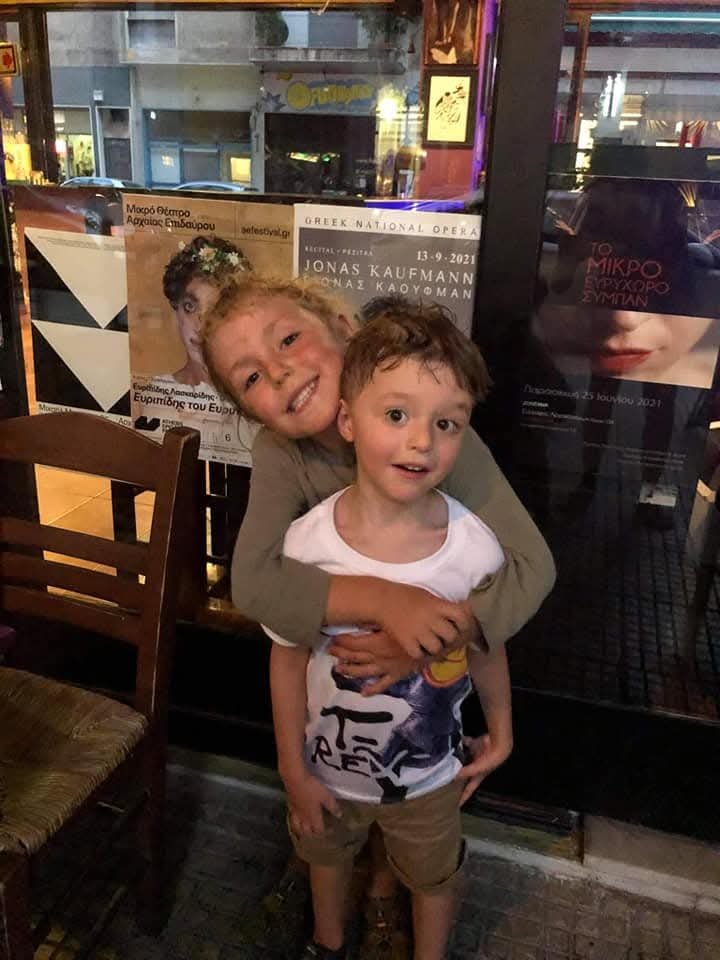
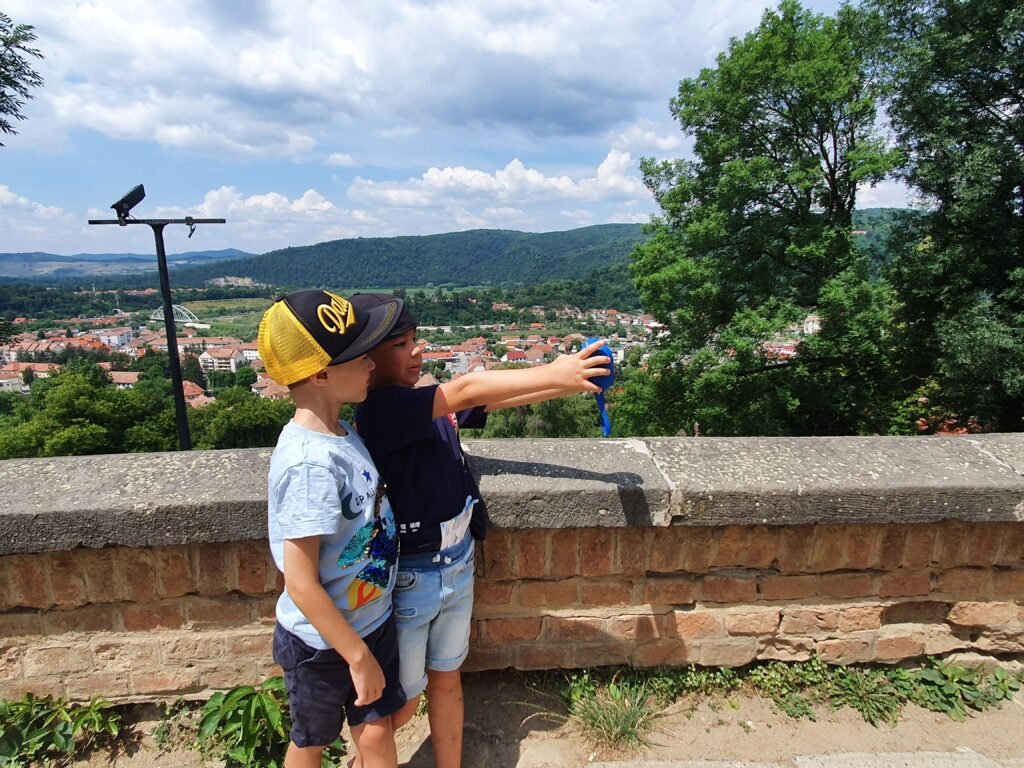
Another option is deliberately travelling with another family for part of a trip. This is very different from accidentally meeting another family once. If two families decide to spend a week or two (or a few months) travelling together, the children have built-in companions.
They see each other repeatedly, they share experiences, they have inside jokes by the end of the trip, and they can become genuine friends. There are obvious advantages for the adults too. You can share some logistics, meals, transport or planning, depending on how you organise the trip, and become friends as well.
But this isn’t something we’d recommend doing casually. Travelling together works best when the families are reasonably compatible.
Things like:
- travel style
- budget
- routines
- parenting approaches
- children’s personalities
- preferred pace
can make a huge difference.
Two families can be wonderful friends and still be terrible travel companions. So don’t assume that because the children get along, the adults will automatically want to spend two weeks travelling together.
But when it works, it can be a fantastic way to give children something that normal travel often lacks:
repeated time with the same child.
3. Worldschooling Hubs
Worldschooling hubs can be particularly helpful for families who want community without having to create it entirely from scratch.
The basic idea is simple: a group of worldschooling families gathers in the same place for a meaningful period of time.
That changes the social equation. Instead of arriving somewhere and hoping you’ll happen to find another family with children around the same age, you have a concentration of families who have deliberately come together.
Current worldschooling hub directories list dozens of hubs and pop-up communities across different regions, with some designed specifically for school-age children. Worldschooly and Worldschool Pop-Up Hub, mentioned above, are both good places to start browsing what’s currently running and where.
That’s important because time and repetition are built into the model. Children can see the same kids again tomorrow. And the day after that. They go on excursions together, explore together and simply spend unstructured time together.
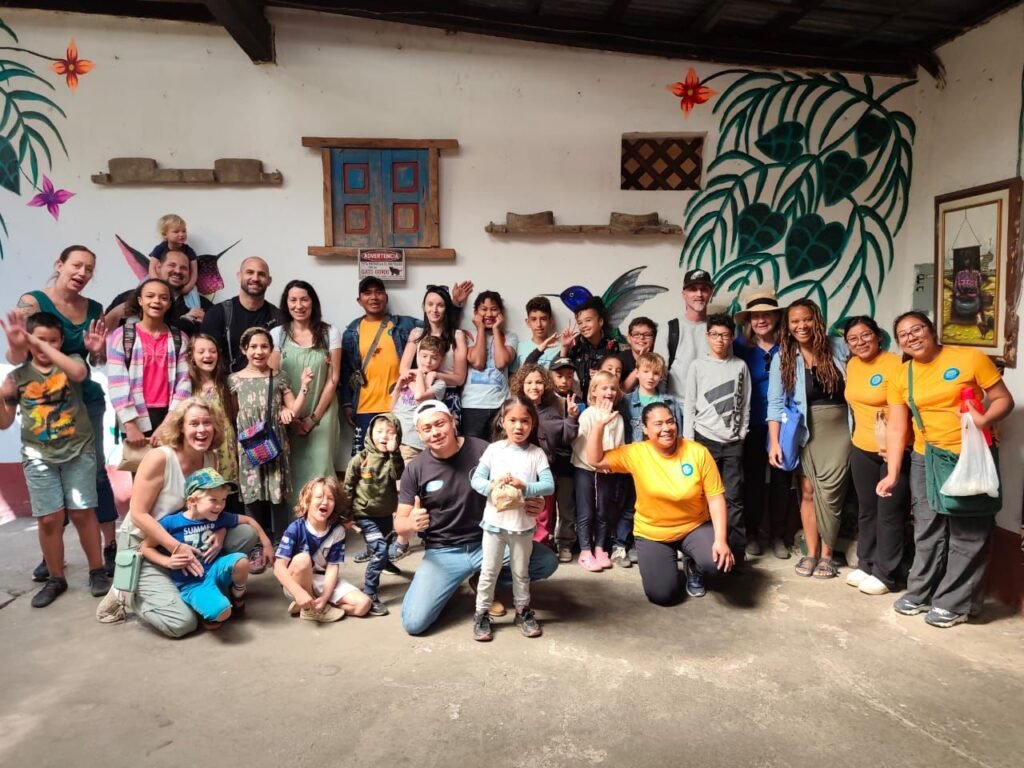
We’ve seen this work particularly well for our son at the Antigua Guatemala Explore Hub. He made many friends there, and really enjoyed his time there. We don’t need to pretend that every hub automatically creates lifelong friendships. But the hub model solves one of the fundamental problems of travelling:
It puts a lot of potentially compatible families in the same place at the same time.
That’s a very different starting point from hoping to meet somebody at a playground.
4. Recurring Kid-Focused Activities
Activities can be another good way to create friendships while travelling.
Think:
- swimming
- sports
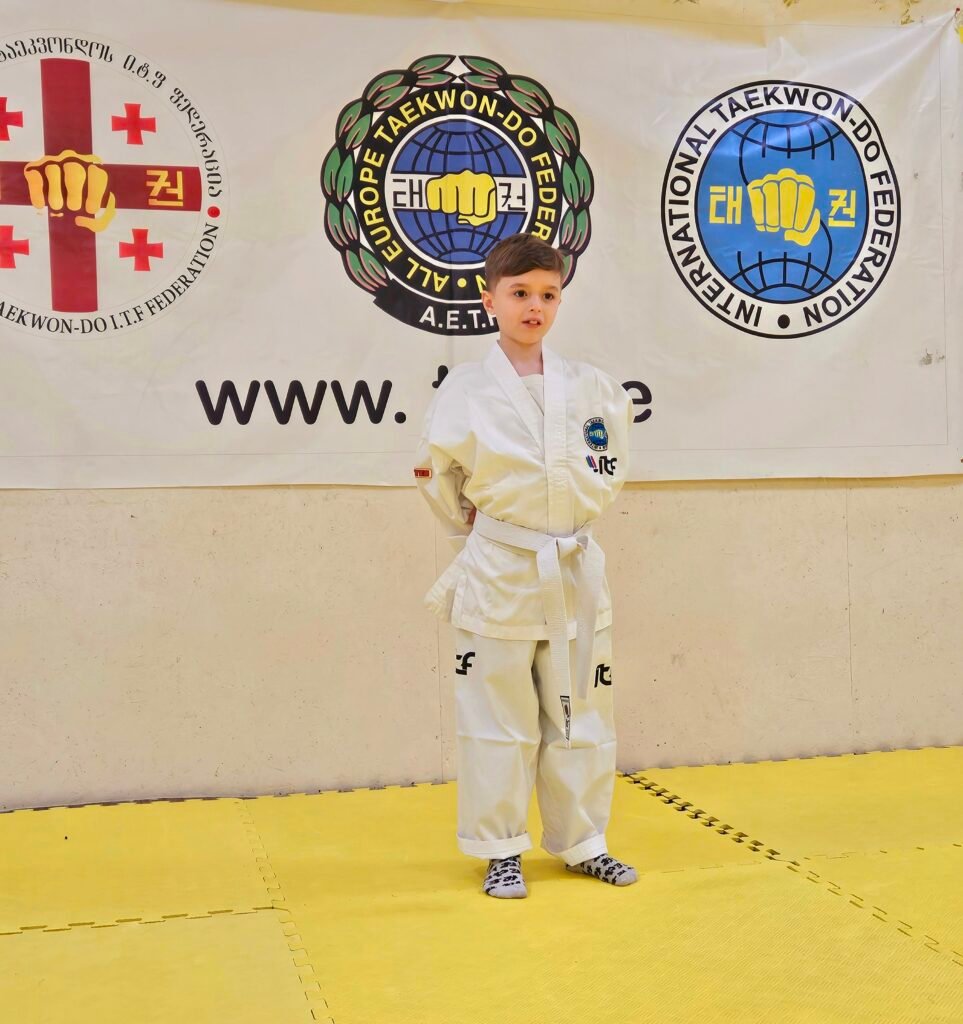
- martial arts
- theatre
- music
- art
- language classes
- chess
- camps
- clubs
The important word here is recurring.
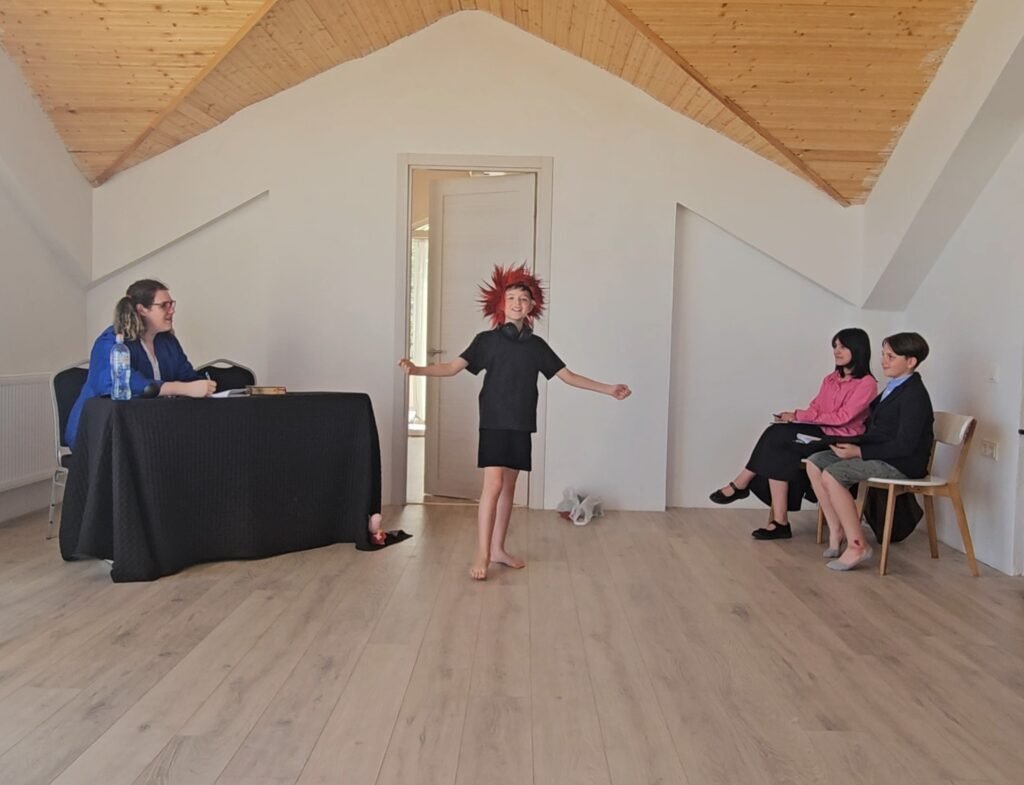
A child who meets another kid once at a playground may have a fun afternoon. A child who sees the same child every Tuesday for a month has a much better opportunity to develop an actual friendship. This is one reason we’ve become more deliberate about including kid-focused activities when we travel.
We’re not looking for activities simply to fill the itinerary. We’re looking for opportunities where our son might see the same children more than once. And sometimes that means choosing a class over another tourist attraction.

5. Having a Home Base
For our family, this has been the biggest change of all.
We now live in one place for most of the year, travel for a couple of months, return home, and then travel again. That means our son has a stable social foundation. He doesn’t have to make new friends every time we land at an airport. He already has people waiting for him. And that makes the temporary friendships he forms while travelling much easier to enjoy. There’s no pressure for every new friend to become a best friend. There’s no sense that losing touch with somebody means losing all of his friends. He can simply enjoy the relationship for what it is.
For us, the home base didn’t mean giving up worldschooling. It actually made worldschooling easier to sustain.
6. Apps and Tools That Help Families Connect
Another option for families looking to help their children meet other kids is LisAmi. The service is designed to help children find other children nearby who share similar interests, making it easier to turn the “we don’t know anyone here” problem into an opportunity to meet someone.
Rather than simply connecting people based on location, LisAmi focuses on finding children who have things in common, such as their age and interests. For travelling families, this could be particularly useful when you’re arriving somewhere new and don’t already have a local network. Instead of trying to find a whole community, you might simply be looking for a couple of kids nearby who your child is likely to get along with.
LisAmi also puts parents in control of their children’s use of the service, with parental controls designed to give parents oversight of their child’s interactions. This is an important feature when an app is specifically intended to help children connect with people they don’t already know.
For families who travel frequently, tools like this can be great because finding other kids isn’t always the difficult part of socialising on the road. The difficult part is knowing who is actually nearby, who has children of a similar age, and who might be interested in meeting up. A service designed around those connections can make that first step considerably easier.
You can find out more about LisAmi on their website.
7. Video Calls, Messenger Kids and Staying in Touch Remotely
Not every friendship needs to end just because one family gets on a plane.
These days, it’s much easier for kids to stay in touch with friends they’ve made on the road, even after everyone has scattered to different countries. Regular video calls, whether through WhatsApp, FaceTime or something like Messenger Kids (Meta’s messaging app designed specifically for children, with parental controls and no public profile), can keep a friendship alive between in-person reunions.
It’s not a replacement for seeing someone in person. But a friend your child can still talk to and joke with, even from a different continent, is very different from a friend who has simply vanished. It’s another way of creating the continuity we keep coming back to in this article: it doesn’t have to come from staying in the same place, it can also come from staying in contact.
We’d also say: check the age requirements and privacy settings of whatever app you use, and keep an eye on it the way you would any other online activity for your child.
Local Kids vs Other Travelling Families
There’s another distinction we’ve found interesting: local children versus other travelling children.
Both can be valuable, but they offer different possibilities.
Other travelling or worldschooling families
The obvious advantage is that they understand your lifestyle.
They may also be actively looking for other families. They may be flexible about meeting up. And because they’re travelling too, you may have more in common than you initially expect.
The downside is obvious:
They may leave.
You could meet an amazing family and then discover that they’re flying to Thailand tomorrow while you’re heading to Rome. However if you and/or your kids hit it off with the other family, you can always try to make plans to meet up again in the future if your paths cross again.
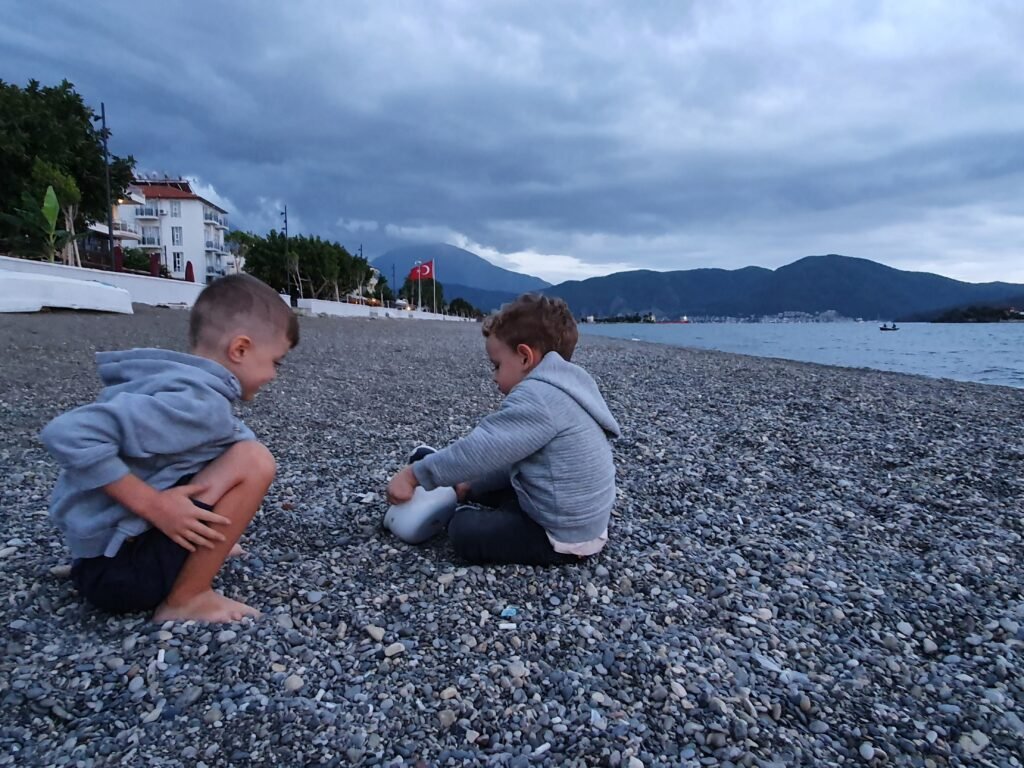
Local children
Local friendships have a different potential.
They’re there. They live in the place you’re visiting. If you return to the same city, there’s at least a possibility of seeing them again. And friendships with local children can give your child a completely different window into the place you’re visiting.
But they can also be harder to establish.
There may be:
- language differences
- school schedules
- different routines
- fewer obvious ways to meet
- the fact that you’re ultimately the one leaving
Neither option is automatically better. And you don’t necessarily have to choose. When travelling, we like the idea of looking for both.
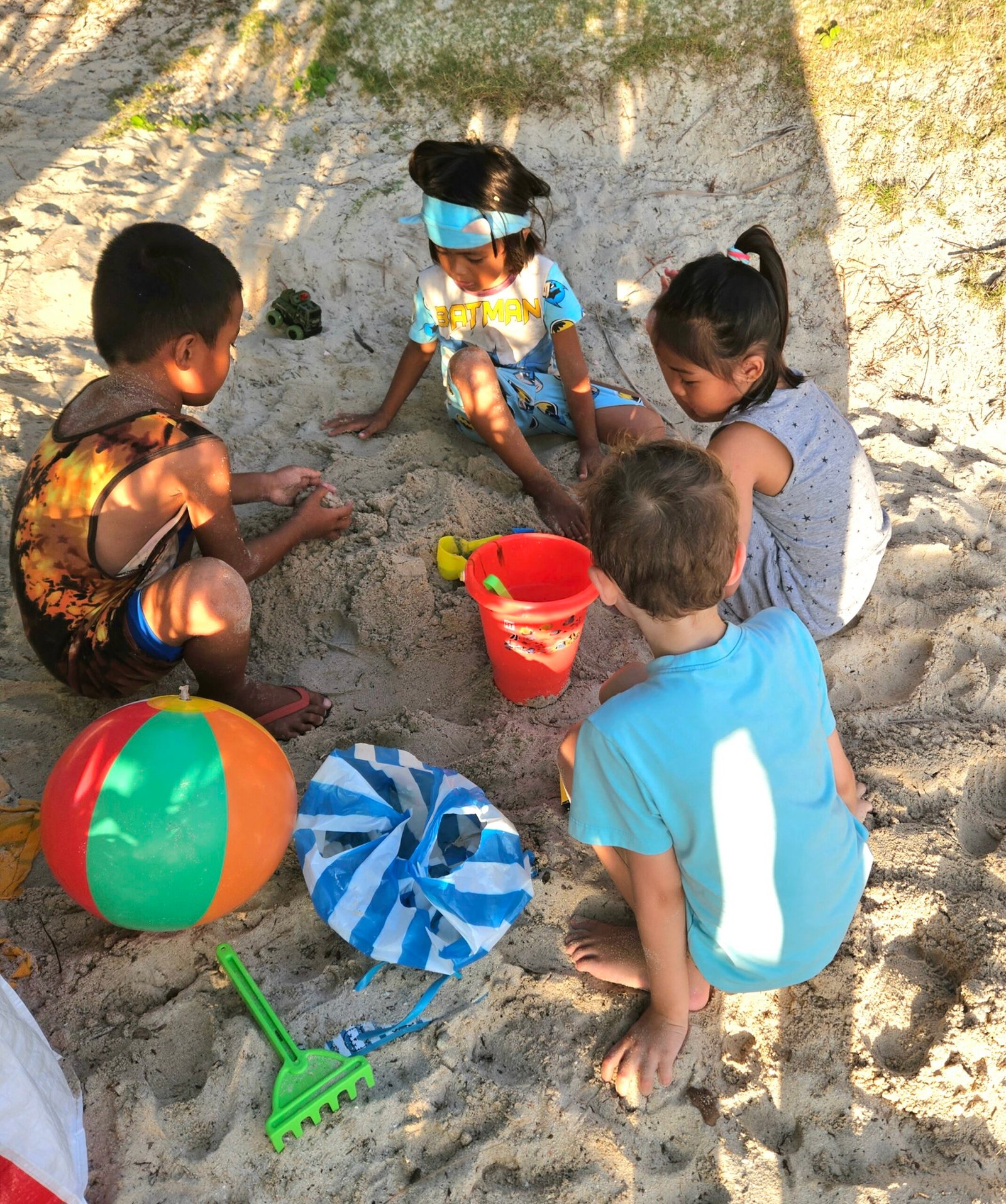
We have also made friends with some wonderful local families along the way. In Da Nang, Vietnam, for example, our kids met while playing on the beach one day, and before we knew it, their family was making an amazing traditional Tet dinner for us.
Why Staying Longer Can Make Such a Difference
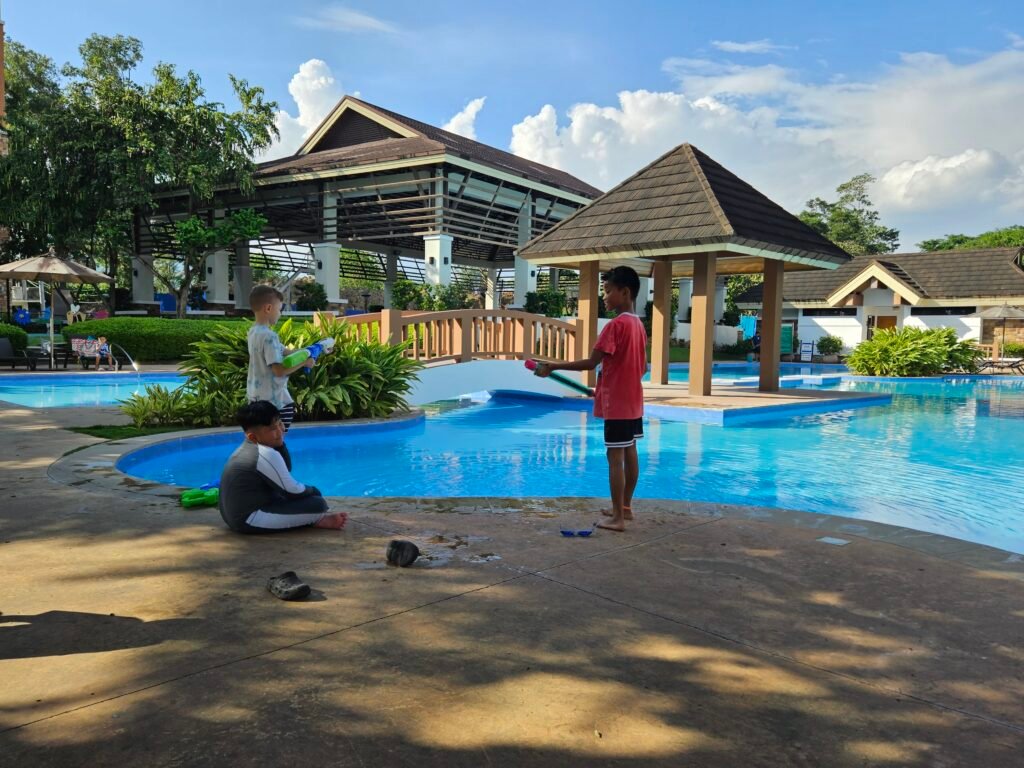
One of the simplest changes a travelling family can make is also one of the most effective: stay longer. If you’re only somewhere for only one or two weeks, there is a natural limit to how much opportunity your child has to develop a friendship with someone they meet. You might have a lovely afternoon together, but before there’s much chance to build on it, one of you is already moving on. Stay for two to three months, however, and the possibilities start to look very different. You might meet the same family several times, arrange another playdate, or discover that your child keeps bumping into the same kids at a local activity or playground. You may find that something even more valuable begins to develop: a genuine sense of community.
This is one of the reasons slow travel can work particularly well for families. You’re not constantly starting from scratch and resetting your child’s social life every time you arrive somewhere new. Instead, there is time to become familiar with a neighbourhood, recognise the same faces and gradually turn casual encounters into real relationships. Your child might meet someone at an activity and then see them again at the park, or you might arrange a second playdate after an initial meeting goes well. Sometimes the parents become friends too, which can make it much easier to maintain the connection.
Of course, staying somewhere longer doesn’t guarantee that your child will find a best friend, and some children will connect quickly while others won’t. But in our experience, time gives relationships somewhere to go. The longer you stay, the more chances there are for a casual meeting to become a familiar face, a familiar face to become a playmate, and a playmate to eventually become a friend.
What If Your Child Is Lonely?
If your child tells you they don’t have friends, the first instinct might be to try to find more children.
But it can be worth asking what they actually mean by “friends.”
Do they want:
- somebody to play with?
- somebody their own age?
- somebody who shares their interests?
- a best friend?
- somebody they can see repeatedly?
- a group to belong to?
Those are very different needs. If your child is lonely, adding another destination to the itinerary may not solve the problem. Sometimes the answer is the opposite. Slow down. Stay longer. Return to somewhere you’ve already been. Join a recurring activity. Find a local family. Find a worldschooling community. Travel with another family. Consider a hub.
Or, as we eventually did, consider whether a home base would give your child the continuity they’re asking for. Sometimes the solution isn’t finding more people. It’s creating more opportunities to see the same people.
What If Your Child Doesn’t Want to Make Friends Anymore?
This is something we think deserves more attention.
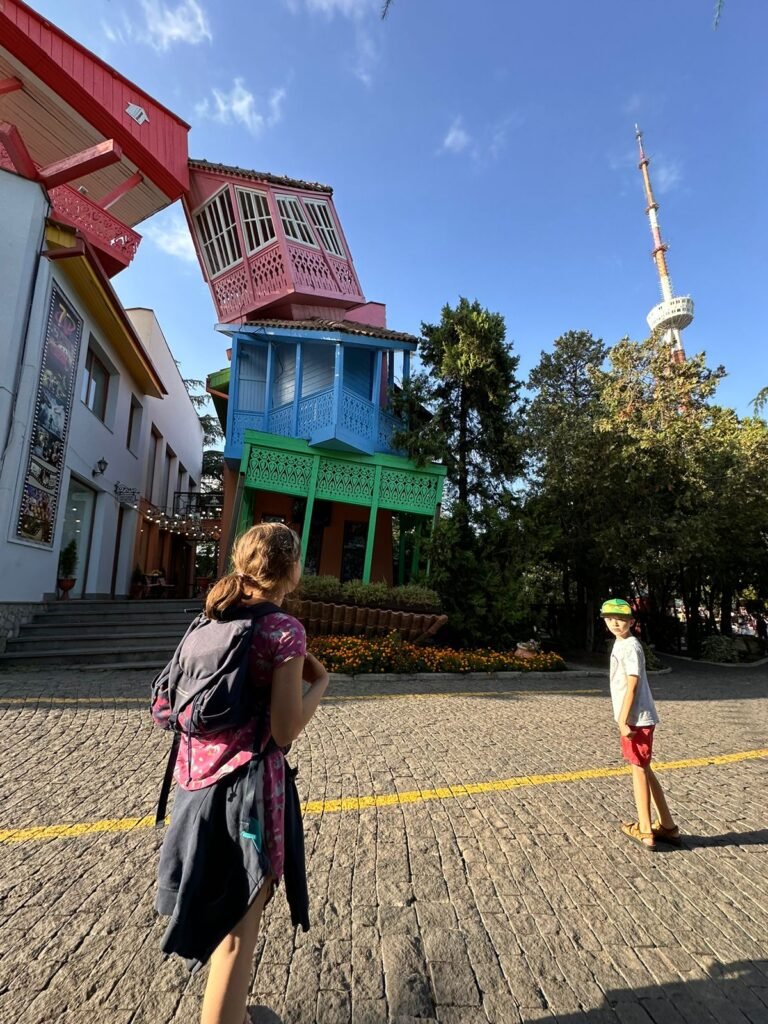
After our son’s close travelling friendship ended, he became reluctant to form new friendships while travelling.
It would have been easy to interpret that as:
“He just doesn’t want to socialise.”
But that wasn’t really the issue. He had learned something about friendship that was painful:
People you become attached to can disappear from your life.
From an adult perspective, we can understand that travel friendships are sometimes temporary. Children don’t necessarily experience them that way.
So if your child seems reluctant to make friends while travelling, it may be worth asking why.
Are they shy? Or are they afraid to get rejected by new kids? Are they overwhelmed? Are they happy being more independent? Or are they protecting themselves from another goodbye?
We don’t think there is a universal answer.
And we certainly wouldn’t tell another family that their child needs a home base simply because ours did.
But we would say:
Listen to what your child is actually telling you.
Sometimes their behaviour makes much more sense once you understand the problem underneath it.
Children’s Social Needs Change as They Get Older
Another thing we underestimated was how much social needs can change.
A four-year-old may be completely happy with:
“Let’s play!”
And then never see that child again.
An older child may start wanting:
- shared interests
- deeper conversations
- inside jokes
- regular play
- shared activities
- belonging
- continuity
- close friends
That doesn’t happen at one particular age for every child. Some children are happy with temporary friendships for years. Others want a stable best friend much earlier. Some children love novelty, others need familiar faces. The important thing is not to decide in advance what your child’s social needs should be. Watch what actually happens.
Our experience around age seven was a reminder that the model that worked beautifully when our son was four or five didn’t necessarily work as well when he got older. The child changed, so we changed with him.
Our son is still a way off being a teenager, so we can’t speak from experience there yet. But we’d expect the same pattern to repeat itself again: teenage friendships tend to come with their own demands, more independence, more emotional weight, sometimes romantic interest, and often a real reluctance to leave a peer group behind. We’d be surprised if the balance that works for us now is exactly the same balance that works once our son is 14 or 15.
What We Do Now
Our current approach is fairly simple.
At home in Georgia
We prioritise:
- permanent friendships
- regular classes
- recurring activities
- familiar surroundings
- continuity
- community
When travelling
We look for:
- worldschooling hubs
- Facebook groups
- local expat communities
- playdates
- kid-focused activities
- other travelling families
- opportunities to stay longer
- tools that can help us find nearby families
- video calls to hold onto the friendships we already have
We’re not trying to recreate our entire home social life in every country. We’re simply trying to create enough opportunities for our son to connect with other kids. Sometimes that results in a friendship that lasts for the duration of the trip. Sometimes we stay in touch, and sometimes it’s just a great afternoon. The difference is that our son no longer depends on those temporary friendships for his entire social world.
Frequently Asked Questions
Do worldschooling kids get lonely?
They can, especially once they’re old enough to want friendships they can keep rather than just kids to play with for an afternoon. It’s less about a lack of company and more about a lack of continuity. Recognising that distinction is usually the first step to fixing it.
Is worldschooling bad for socialisation?
Not inherently, but it does change what socialisation looks like. Worldschooled kids often meet far more people, and more different kinds of people, than kids in a traditional school. What they can miss out on, if you don’t plan for it, is the same small group of friends seeing each other week after week. That’s something you can build back in deliberately.
How do worldschooling families find other kids for their children to play with?
Facebook groups, worldschooling hubs, local expat communities, recurring activities and classes, travelling alongside another family, and apps built for it, such as LisAmi. The common thread is looking for repeated contact with the same people, not just a bigger number of one-off meetings.
Can worldschooling work well for an only child?
Yes, but it takes more deliberate effort than it might for a family with siblings, since an only child doesn’t have a built-in playmate at home. That’s part of why we’ve become so intentional about continuity, whether that’s through a home base, hubs, recurring activities or simply staying in one place for longer.
Final Thoughts
Full-time nomadic worldschooling can be an incredible way to raise and educate a child, and we certainly wouldn’t want to suggest otherwise. At the same time, we’d be doing other parents a disservice if we pretended that the social side of constant travel is always easy, especially when travelling with the only child. One of the genuine challenges is that friendships can be temporary, and for some children, constantly having to say goodbye can eventually become emotionally tiring.
Perhaps that’s the biggest thing we’d tell another family wondering whether their child can have meaningful friendships while worldschooling: you don’t necessarily have to choose between travel and friendship; you may simply need to change the balance between the two. Sometimes that means travelling more slowly, staying longer in one place, or finding other families to travel with. And sometimes it might mean having a home base to return to. In our case, creating that stability has allowed us to keep travelling while also giving our son the continuity he needs.
Because sometimes the answer isn’t travelling less. It’s travelling differently. And sometimes, instead of finding more kids for your child to meet, what they really need is the chance to see the same children again and again.