

How to Find Long-Term Accommodation That Actually Works for a Family
Finding somewhere to stay for three nights is relatively easy. Finding somewhere that three people can actually live happily for a month or two is a completely different problem. We’ve travelled through 90+ countries, and because we’re not travelling on a conventional two-week holiday schedule, we’ve spent a lot of time looking for long-term accommodation for family that can function as an actual temporary home.
That changes what you look for.
A beautiful apartment with a great view can be completely impractical if the Wi-Fi drops every afternoon. A cheap rental can suddenly become expensive when you realise you need to eat out because the “fully equipped kitchen” consists of one saucepan and two forks. And an apartment that looks spacious in photographs can feel remarkably small once three people, schoolwork, luggage, laundry and normal life are all happening inside it.
We’ve learned that when you’re looking for long-term accommodation for families, the question isn’t:
“Is this a nice place to stay?”
It’s:
“Could we actually live here?”
That one change in perspective has saved us from a lot of bad accommodation decisions.
Here’s how we approach it.

Our Free Long-Term Family Accommodation Checklist
After doing this over and over again, we realised we were basically checking the same things every time.
We’ve turned the things we check before booking long-term accommodation for a family into a simple checklist you can use while comparing accommodation.
The idea is simple: instead of relying on memory every time you book somewhere, you can run through the same list and make a much more informed decision.
Want Our Free Long-Term Accommodation Checklist?
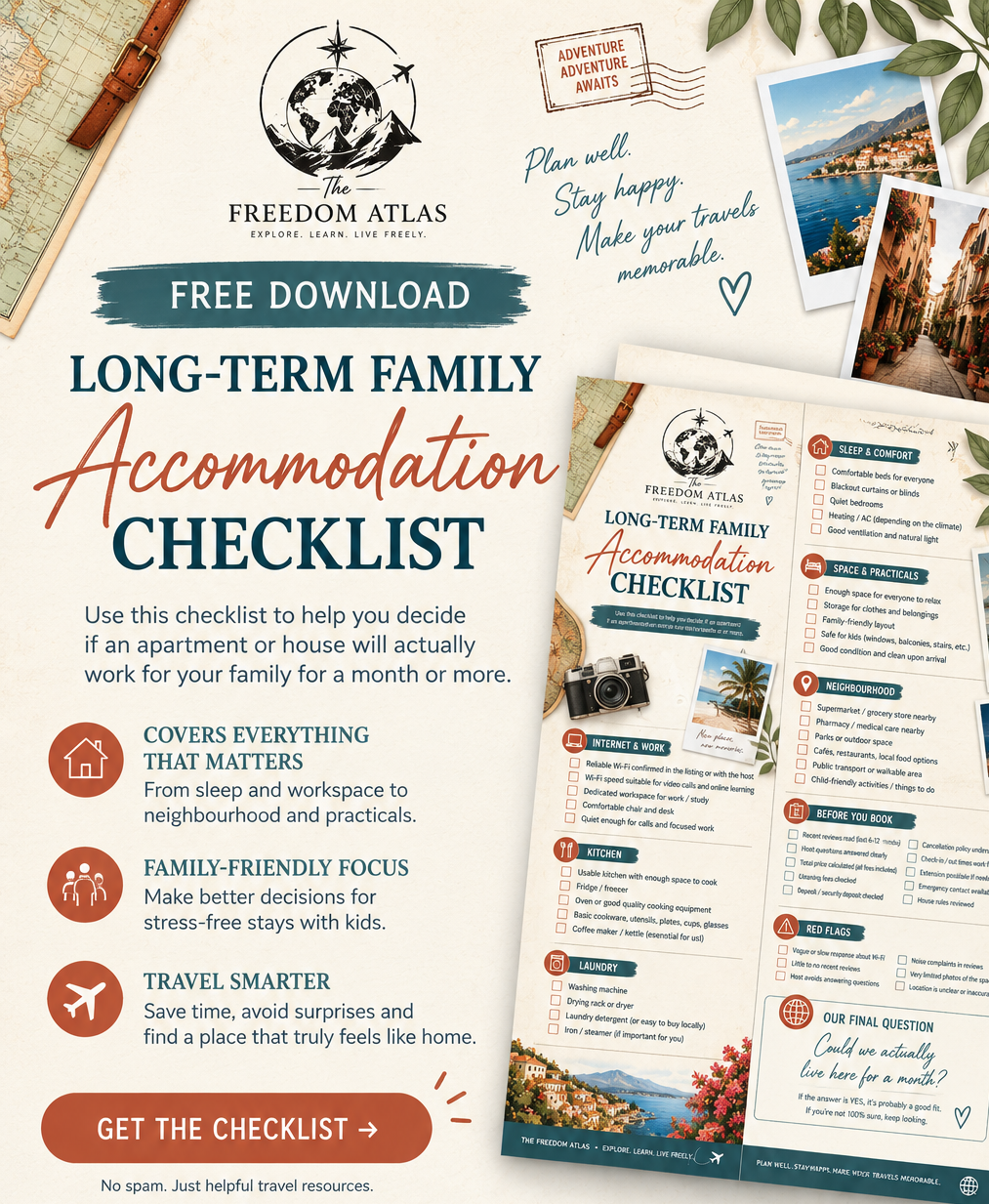
Free PDF, delivered straight to your inbox.
What We Look For in Long-Term Family Accommodation
We’ve gradually developed a mental checklist of things that matter to us.
Some are absolute deal-breakers. Others depend on the destination and how long we’re staying.
Wi-Fi
For a travelling family, internet isn’t a luxury.
We work online, use online resources for worldschooling, communicate with people in different countries and generally rely on the internet for a large part of our daily life.
So “Wi-Fi available” tells us almost nothing.
If possible, we want to know whether the connection is actually reliable and whether it is fast enough for video calls and normal work.
We also look at reviews for clues.
If several guests mention slow internet, dropped connections or problems with the router, we pay attention. We also always message the host prior to booking, and ask what is the wifi speed.
And if we’re staying somewhere for a long time, we think about what our backup would be if the internet failed. Depending on the destination, that might mean a local SIM or eSIM with enough data to act as a backup connection.
The important thing is not simply finding accommodation with Wi-Fi.
It’s finding accommodation where the Wi-Fi can support the life you’re planning to live.

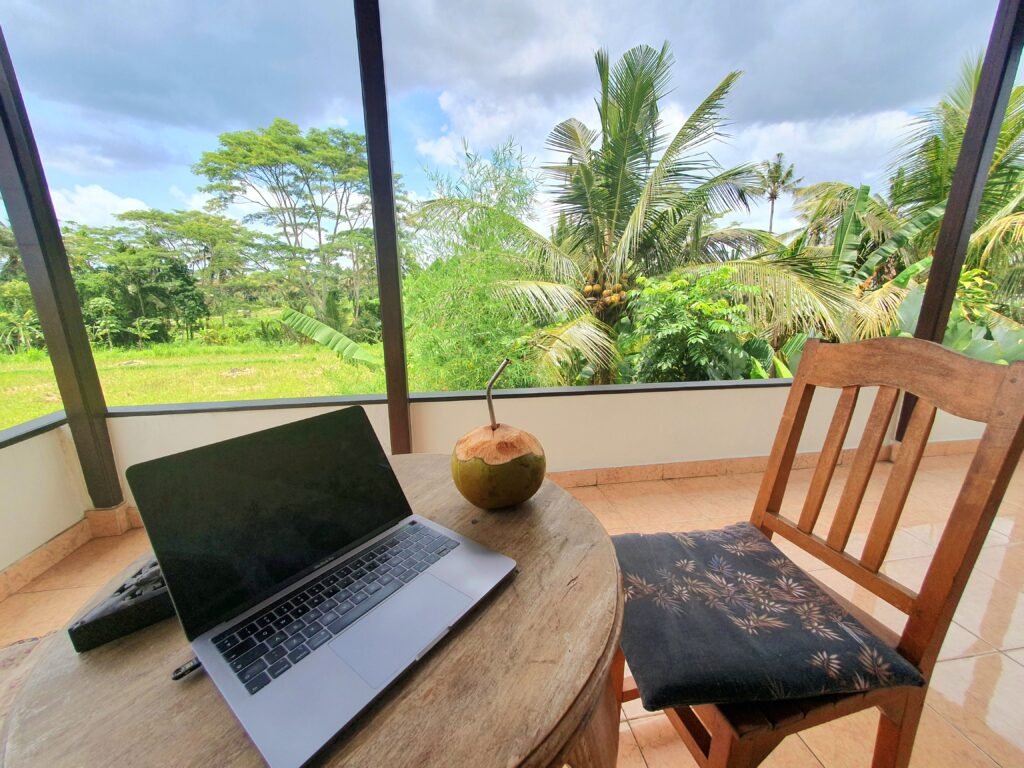
A Proper Workspace
“Work-friendly” can mean almost anything in a listing.
Sometimes it means there is a tiny table in the corner with a decorative chair that looks wonderful in a photograph and would be dreadful after 20 minutes of actual work.
We look for a proper table and a chair that appears usable.
If both adults need to work, we also think about whether there is enough space for that.
And because our son is worldschooling, a table isn’t only a work requirement. It can become the place for reading, writing, maths or whatever else we’re working on that day.
We don’t need a dedicated home office.
We do need somewhere that doesn’t make everyone miserable.
A Kitchen You Can Actually Use
This is one of the biggest differences between short-term and long-term accommodation for a family.
A kitchenette can be perfectly adequate for a few days.
It gets considerably less exciting when you’re trying to make breakfast, lunch and dinner there for six weeks.
We’re looking for a kitchen with enough basic equipment to prepare normal meals, plus:
- a decent fridge
- freezer space where possible
- cooking utensils
- pots and pans
- plates and cutlery
- enough counter space to actually prepare food
- an oven where appropriate
We also look at what’s nearby.
A fantastic kitchen isn’t much use if the nearest supermarket is 40 minutes away. And a mediocre kitchen may be perfectly fine if there’s a great supermarket five minutes away and the local food scene makes eating out affordable. We also check what delivery services are available in this location for groceries and food.
Laundry
For long-term family travel, a washing machine is very high on our list.
Three people generate a surprising amount of laundry.
And while laundry services can be useful in some places, having a washing machine in the accommodation makes everyday life dramatically easier.
But there’s another question people often forget:
Where do the clothes dry?
A washing machine without anywhere practical to dry clothes isn’t quite the win it initially appears to be.
Look for a balcony, drying rack, clothesline or whether there is a tumble dryer.
Also check reviews if you’re unsure. Sometimes the listing says “washing machine” and the reviews tell you that it’s located somewhere inconvenient, shared with another apartment or barely functioning.
Bedrooms and Sleep
We take beds seriously.
You can cope with an uncomfortable mattress for a weekend.
A month is different.
We’re also interested in:
- blackout curtains or blinds
- street noise
- neighbouring apartments
- air conditioning or heating in the bedroom
- storage for clothes
- whether the bedroom is actually separated from the living space
A beautiful apartment isn’t worth much if everyone is exhausted because someone has been playing music outside until 2am.
We also learned early on that blackout curtains aren’t always provided, especially in apartments where the bedroom has thin blinds or completely uncovered windows. When our son was younger, we travelled with a lightweight set of portable blackout curtains, and they were surprisingly useful. They made it much easier to deal with early summer mornings, streetlights and those apartments where the bedroom seemed determined to stay bright all night. They’re one of those small pieces of travel gear you don’t think you need until you’re trying to get a tired child to sleep at 6am.
Space
We don’t necessarily need a huge apartment. But we need enough space for three people to exist without constantly being on top of one another.
This becomes particularly important during periods of bad weather, when you’re spending more time indoors.
We always book a two bedroom apartment when we are staying somewhere for longer than a week. This way we private space to take meeting calls, and our son has his own room to sleep.
For us, the goal isn’t luxury. It’s having somewhere that feels like a home rather than short term accommodation.

Heating and Air Conditioning
Climate matters much more when you’re choosing long-term accommodation for a family and staying somewhere for weeks.
If you’re visiting somewhere hot, reliable air conditioning can be the difference between a comfortable apartment and somewhere you desperately want to escape. The same applies to heating in colder destinations.
Don’t assume that because a listing has an AC unit or heater in a photograph, the entire apartment will be comfortable. Look at reviews.
Search specifically for mentions of temperature, heating, cooling and ventilation. People tend to mention it when it doesn’t work.
The Location
This might actually be more important than the apartment itself.
When we’re choosing long-term accommodation for a family, we want everyday life to be reasonably easy.
Ideally, we can walk to at least some combination of:
- supermarkets
- cafés
- restaurants
- pharmacies
- parks/playgrounds
- public transport
- shops
- activities
- places our son might enjoy
We also consider the things we know we’ll actually need during that particular stay. A neighbourhood can be excellent for tourists but frustrating for someone trying to live there. And the reverse can also be true. Sometimes the best place for a month isn’t the most famous part of a city. It’s the neighbourhood where you can buy groceries, walk to a park, find a decent café and get home easily.
In some cities, choosing the right neighbourhood can make or break your entire stay. This is especially important in larger cities where safety, walkability and the overall feel of an area can vary dramatically from one neighbourhood to the next. In places such as Cape Town, Mexico City or Medellín, we recommend doing extra research before booking — don’t just choose an apartment because the listing looks great or the location appears central on a map. Look at the neighbourhood itself, read recent reviews, check what other travellers say about the area, and make sure it feels like somewhere you’d be comfortable living as a family for several weeks.
15 Things We Check Before Booking Long-Term Accommodation for a Family
When we’re seriously considering a place, these are the things we check before committing.
1. Wi-Fi
Don’t stop at “Wi-Fi included.”
Look for reviews mentioning reliability, and ask the host about speed if internet is important for your work.
2. Washing Machine
Confirm there is one, and check whether it’s private to the apartment.
Then find out where you’re supposed to dry everything.
3. Kitchen
Look beyond “fully equipped.”
Check the photographs carefully and, if necessary, ask what’s actually provided.
4. Workspace
Where will you work?
Where will your child study?
If the answer is “on the sofa,” decide whether you’re genuinely happy with that for several weeks.
5. Heating and Air Conditioning
Check what is actually available, where the units are located and whether reviews mention temperature problems.
6. Bed Quality
Look at reviews specifically for comments about mattresses, pillows and sleep.
A photograph can’t tell you whether a mattress is comfortable.
7. Noise
Look for comments about traffic, bars, restaurants, construction, neighbours and nightlife.
Also consider whether the apartment faces a busy road.
8. Natural Light
This sounds minor until you’ve spent a month in a dark apartment.
Pay attention to windows and which direction the main living areas face if that’s relevant to you.
9. Storage
Where are three people’s clothes, shoes, bags and luggage going to live?
Not everything needs to be unpacked, but you don’t want your suitcases permanently blocking the hallway.
10. Supermarket Access
Find the nearest realistic supermarket on a map rather than assuming “shops nearby” means anything useful.
11. Walkability
Look at the actual streets around the property.
A location can look close on a map and still involve steep hills, major roads or unpleasant walking routes.
12. Transport
If you won’t have a car, check public transport before booking.
Think about the places you’ll actually need to reach rather than simply whether there’s “a bus nearby.”
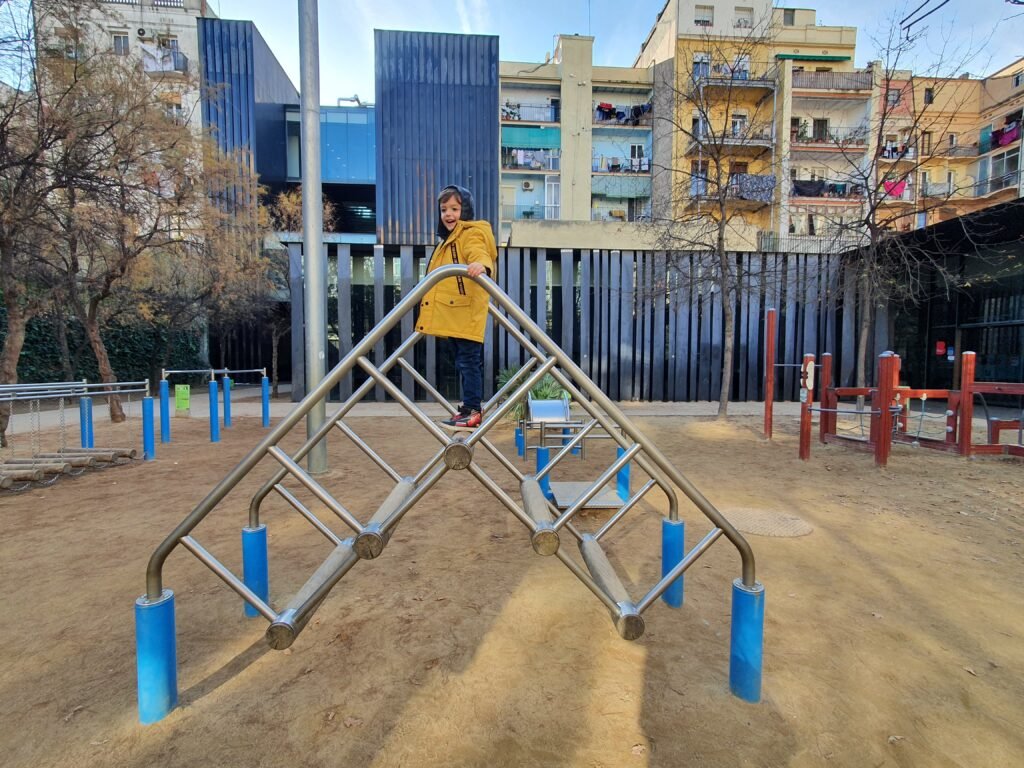
13. Child-Friendly Surroundings
We look for parks, activities, safe places to walk and things our son might enjoy.
It doesn’t need to be a “family resort.”
It just needs to work for family life.
14. Recent Reviews
Read the newest reviews first.
A place can change considerably over time. Furniture, hosts, neighbours, internet and maintenance can all change.
15. What’s Not Shown
This is one of the most useful questions we ask ourselves.
Why isn’t there a photograph of the kitchen?
Why isn’t there a picture of the second bathroom?
Why is the workspace never shown?
Why are there 30 photographs of the balcony but none of the bedroom window?
Missing information isn’t automatically a problem.
But it is a reason to ask questions.

Platforms we use to find long term accommodation
Airbnb
Airbnb can be particularly useful when we’re looking for an apartment that feels more like a home, especially when we’re interested in staying for several weeks or longer.
We pay close attention to:
- the full listing description
- photographs of the practical spaces
- reviews
- the host’s responses to questions
- how quickly the host responds
- monthly or longer-stay pricing where available
The important thing for us is not simply finding an attractive Airbnb.
It’s finding one where the listing gives us enough information to make a reasonably informed decision.
And if it doesn’t, we ask.
Booking.com
Booking.com is also part of our normal accommodation search, that we usually use for shorter term stays.
Booking.com has great filter options which helps you sort all the choices by location, price, reviews, and type of accommodation (i.e. only apartments).
It is also possible to find long term accommodation on Booking.com but usually the prices are not as good as Airbnb.
Other Places We Look
VRBO is another platform we check, especially in destinations where Airbnb listings are thin. It leans toward whole homes rather than shared spaces, which suits a family wanting privacy, and it has similar filters for monthly or weekly rates.
Facebook groups, both local and expat, can turn up long-term family accommodation that never makes it onto the big platforms. Landlords posting there often offer better monthly rates since they’re not paying platform commission, but we still vet these the same way: reviews, photos, and direct questions to the host. We were able to get a great apartment in Barcelona through Facebook groups for about half the price than same size of apartment would cost on Airbnb.
Trusted Housesitters works differently. You look after someone’s home, and often their pets, in exchange for free accommodation. It’s not an option for every stay, but for families with flexible dates it can bring the accommodation cost down to zero.
Home exchange sites like HomeExchange let you swap homes with another family instead of paying for accommodation at all. It works particularly well family-to-family, since both sides already expect kids’ clutter and school schedules.
How We Search for Long-Term Accommodation for a Family
We don’t start by looking for the prettiest apartment.
We start with the practical stuff, because finding long-term accommodation for a family means looking past the photos first.
1. We decide how long we’re staying
A three-week stay and a three-month stay can have very different requirements.
The longer we’re staying, the more seriously we take things like kitchen equipment, storage, workspace and neighbourhood.
2. We choose the general area
Before getting emotionally attached to an apartment, we work out which neighbourhood to stay in.
3. We establish our non-negotiables
These vary, but internet, somewhere to sleep comfortably and a workable setup for three people tend to be high on the list.
4. We search the listings
Now we start looking at actual properties.
At this stage, photographs are useful for eliminating places that obviously won’t work.
They’re not enough to make the final decision.
5. We read the reviews
Not just the star rating.
We look for repeated patterns.
One person saying “the apartment was noisy” might be bad luck.
Five people mentioning noise is information.
6. We investigate the neighbourhood
We use maps to look at supermarkets, parks, restaurants, transport and the places we expect to visit regularly.
7. We contact the host
If something important isn’t clear, we ask.
This is also useful for another reason: the quality of the answer tells us something.
If we ask five specific questions and get five vague answers, that’s information too.
8. We calculate the real cost
We don’t compare accommodation based only on the displayed nightly price.
We look at:
- accommodation cost
- cleaning fees
- deposits
- taxes
- utilities, if applicable
- transport implications
- anything else we know we’ll have to pay
A slightly more expensive apartment within walking distance of everything can sometimes cost less overall than a cheaper apartment that requires taxis or frequent transport.
9. Only then do we decide
At this point we’re asking the most important question:
Could we actually live here?
If the answer is yes, we book.
If we’re trying to convince ourselves that it will “probably be fine,” we keep looking.
Questions We Ask Hosts Before Booking Long-Term Accommodation
When something isn’t clear from the listing, it’s worth asking.
Here’s the sort of message you can adapt and copy:
Hi! We’re considering staying for [number of weeks/months] and wanted to check a few practical things before booking.
Could you please confirm:
- How reliable is the Wi-Fi, and do you know the approximate download/upload speed?
- Is the Wi-Fi suitable for video calls and working from home?
- Is the apartment generally quiet at night?
- Are there any current construction works nearby?
- Does the bedroom have blackout curtains or blinds?
- Is the heating/air conditioning reliable?
- Is there an oven, and what cooking equipment is provided?
- Is there a proper table/desk suitable for working?
- Is there enough space for three people to stay comfortably for [length of stay]?
- Is there a supermarket within easy walking distance?
- Are utilities included in the price?
- Are there any additional cleaning fees, deposits or other charges?
- Would it be possible to extend the stay if we decided we wanted to remain longer?
- Are you willing to offer a discount for a longer term stay
This last question we ask if we are planning on staying longer than a month. Quite often we are able to negotiate a better price than what’s offered on the platform.
One of the advantages of asking these questions is that you may get useful information that isn’t in the listing.
Another advantage is that you find out how the host communicates.
That’s surprisingly important when you’re potentially going to live in their property for two months.
Long-Term Family Rental Red Flags We Don’t Ignore
There are some things that make us slow down.
Not every red flag means “don’t book.”
But it means investigate before booking.
Vague answers about Wi-Fi
If internet matters to you and the host can’t give you any useful information about it, that’s worth considering carefully.
Very few reviews
A new property isn’t necessarily bad.
It just means there’s less evidence to work with.
Repeated complaints about noise
Pay attention to patterns.
Especially if multiple people mention the same problem.
Beautiful photographs but no practical photographs
A listing with 25 photos of decorative details and none of the kitchen, bathroom or workspace isn’t necessarily hiding something.
But we’d like to know why.
No information about heating or AC
This matters particularly if you’re staying during a hot or cold season.
The host avoids specific questions
This is one of our bigger warning signs.
We’re not expecting a five-page technical specification.
We do expect straightforward questions to receive straightforward answers.
An unusually cheap price
Cheap isn’t automatically bad.
But if something is dramatically cheaper than comparable accommodation in the same area, we’d want to understand why.
Poor recent reviews
Old reviews can be less relevant if management or ownership has changed.
Recent reviews matter.
Vague location descriptions
“Close to everything” isn’t particularly useful.
We’d rather know what’s actually within walking distance.
“Cozy”
Sometimes cozy means lovely and comfortable.
Sometimes it means tiny.
You have to investigate.
“Central”
Central can be fantastic.
It can also mean you’re directly above a bar.
“Rustic charm”
We admit that this phrase makes us look a little more closely at the bed, bathroom and heating.
Rustic charm is wonderful.
Rustic plumbing for six weeks? Less so. 😂
What Else to Think About When Renting Long-Term Accommodation for Family Travel
Accommodation is only one piece of the puzzle.
If we’re staying somewhere for a month or longer, we also think about the practical logistics around it.
Visas
Make sure the length of your intended stay actually works with the immigration rules for your nationality. An apartment booked for three months isn’t particularly useful if you’re legally allowed to stay for 30 days.
We use Sherpa to determine what visas we need for certain locations. It lets you enter your nationality/passport and destination and shows the visa, entry and travel-document requirements.
Insurance
Longer travel can also change what kind of travel or health insurance makes sense. Don’t assume a standard holiday policy automatically covers the kind of trip you’re planning. We highly recommend Safety Wing insurance as it offers Nomad Insurance designed for people who travel and work internationally, with coverage that can follow you across multiple countries rather than being tied to a single trip. Depending on the plan, coverage can include medical treatment, hospitalisation, emergency evacuation, travel delays and lost luggage. If you’re considering it, make sure you read the policy details carefully and check that the coverage, exclusions and country requirements fit your particular situation. You can check out SafetyWing Nomad Insurance here.
Internet and eSIMs
Reliable internet isn’t only important inside your accommodation. When we’re travelling, we also like having mobile data as a backup for getting around, checking maps, making bookings or staying connected when the apartment Wi-Fi isn’t cooperating. Nomad eSIM is one option worth looking at if your phone supports eSIMs, with data plans available for destinations around the world. It can be particularly handy when you’re arriving somewhere new and don’t want to spend your first hour hunting for a local SIM card.
Managing Money
When you’re moving between countries, managing different currencies can become surprisingly complicated. Wise is one of the services worth looking at for international travellers, allowing you to hold and convert multiple currencies and make payments abroad without having to rely entirely on traditional bank accounts. For a family spending weeks or months in different countries, having a flexible way to manage money across currencies can make everyday expenses a lot simpler.
Flights
When we’re planning a longer trip, flights are obviously a big part of the overall budget, so we like to compare different options rather than booking the first flight we find. Aviasales is a flight-search and comparison platform that searches flights from airlines and travel agencies, making it useful for comparing routes, dates and prices in one place.
Moving frequency
This one is easy to overlook. Moving every few days might sound exciting. Doing it repeatedly with a child, luggage, schoolwork and work commitments is another matter. We’ve written more about how to avoid burning out on long-term travel with kids.
Final Thoughts: You’re Not Booking a Holiday — You’re Renting Your Life for a While
The biggest shift we’ve made in how we search for accommodation is to stop thinking like tourists. When we’re booking somewhere for a few nights, we’re looking for somewhere convenient and enjoyable.
When we’re booking somewhere for a month or two, we’re looking for something much more important:
a temporary home.
That means the beautiful balcony matters.
But so does the washing machine.
The view matters.
But so does the supermarket five minutes away.
The stylish furniture matters.
But so does the chair you’ll sit in while working.
And a gorgeous apartment isn’t necessarily better than an ordinary one if the ordinary one lets your family have a comfortable, manageable daily life.
After travelling through more than 90 countries and spending years moving around the world as a family, this is probably the biggest lesson we’ve learned about long-term accommodation for a family:
Don’t ask whether you’d enjoy staying there for a few days. Ask whether you’d be happy waking up there on a completely ordinary Tuesday three weeks from now.
That’s the real test.
And it’s usually a much better way to find a place that actually works.


One Comment