Naadam Festival in Mongolia: What We’d Do Differently After Visiting With Our 7-Year-Old
If you’re planning a trip to Mongolia in July, there’s a good chance you’ll hear one word over and over again: Naadam Festival.
It’s Mongolia’s biggest national celebration, a three-day festival of wrestling, archery and horse racing, wrapped up in traditional music, costumes, dancing, food and a huge amount of national pride.
We visited Mongolia during Naadam Festival in 2024 with our son, who was seven at the time. See our full guide to Mongolia with kids.
And while we absolutely loved parts of Naadam Festival, we also learned something important:
You don’t necessarily need to do everything that is called “Naadam.”
If we were planning the trip again, we’d do some things exactly the same way, skip some things entirely, and approach the festival with a much better understanding of what we were actually going to see.
So here’s our honest take on Naadam Festival — including what it’s like in Ulaanbaatar, what the festival actually means, what we loved, what we didn’t, and the mistakes we’d avoid next time.
So, what exactly is Naadam Festival?
Naadam is Mongolia’s national festival and is celebrated every year from July 11–13.
At its heart are the traditional Three Games of Men, or Eriin Gurvan Naadam: Mongolian wrestling, horse racing and archery.
But calling it a sporting event doesn’t really capture what Naadam is.
The three competitions come from skills that were fundamental to life on the Mongolian steppe — strength and balance, horsemanship and endurance, and the ability to use a bow. The traditions go back centuries, with the modern national festival developing from older celebrations and becoming fixed around July 11 after Mongolia’s 1921 revolution.
Naadam was inscribed on UNESCO’s Representative List of the Intangible Cultural Heritage of Humanity in 2010. UNESCO describes it as an expression of Mongolia’s nomadic culture, incorporating not only the three sports but traditional dress, music, dance, craftsmanship, food and other cultural traditions.
And that’s probably the most important thing to understand before you go.
Naadam isn’t a festival created for tourists. It’s a celebration that belongs to Mongolians.
It is about national identity, history, tradition and community.
And you can feel that.
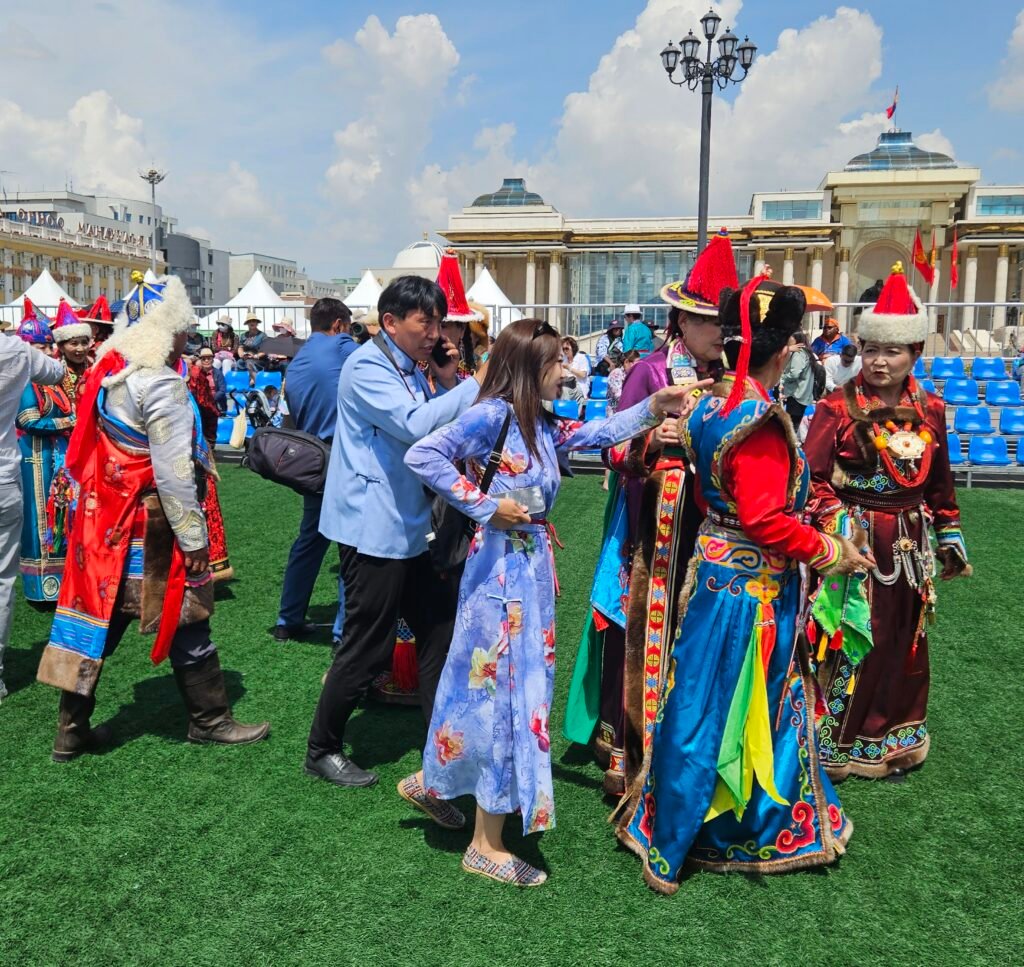
Ulaanbaatar starts celebrating before Naadam Festival officially begins
One of our favourite parts of the whole experience actually happened before the main festival.
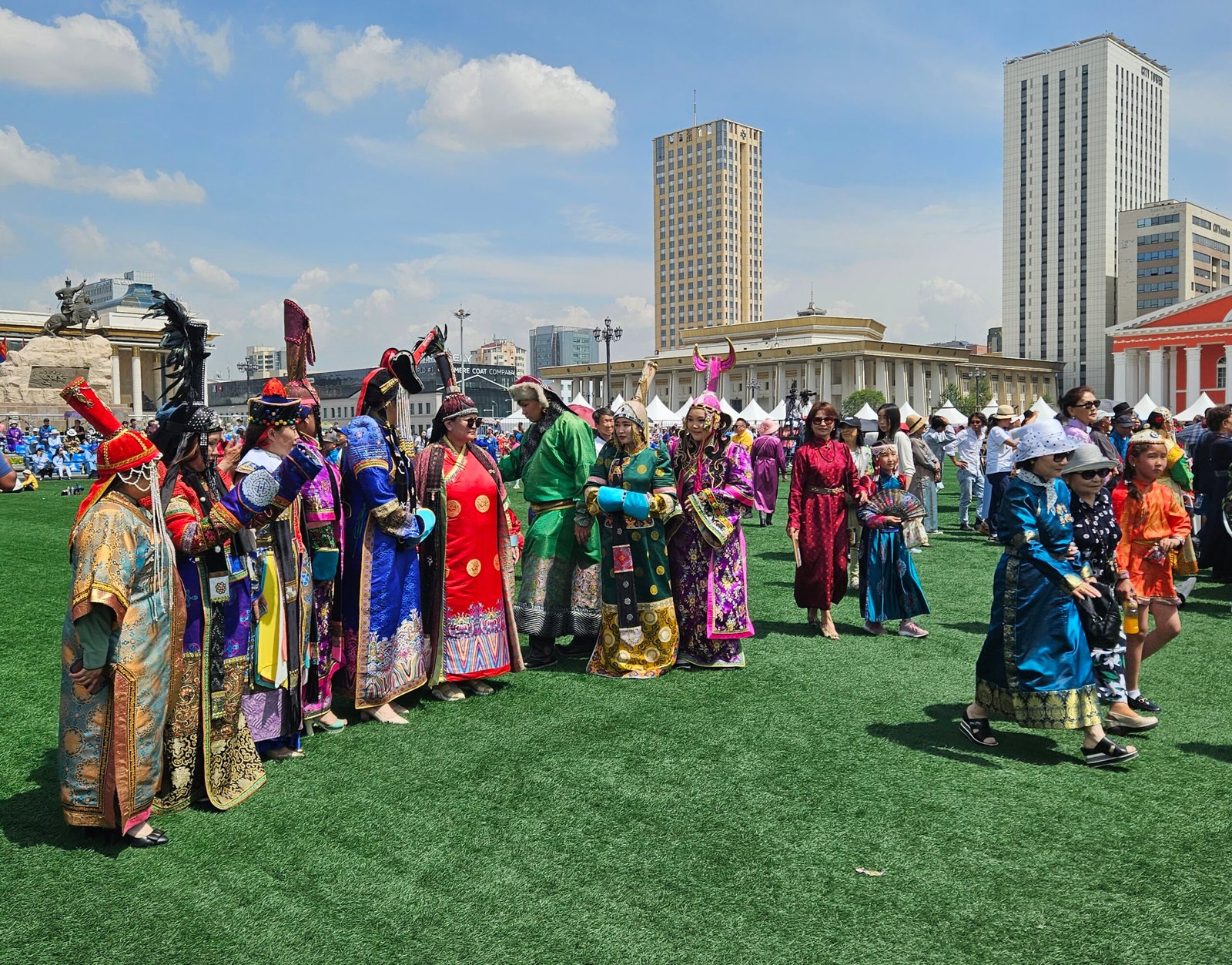
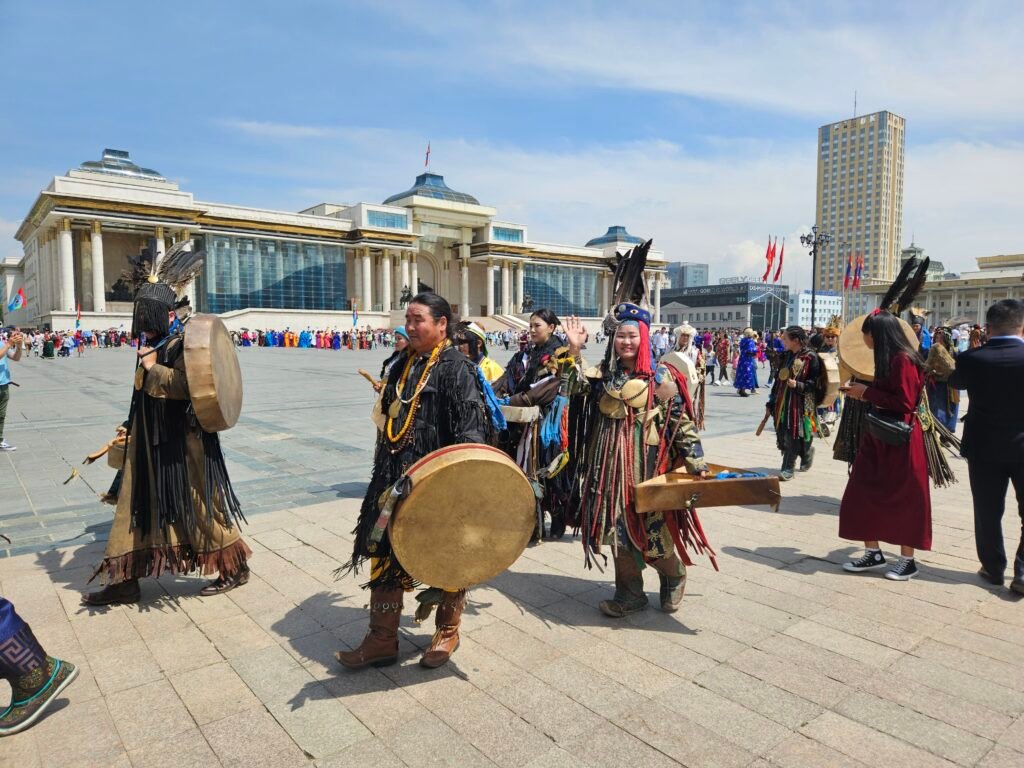
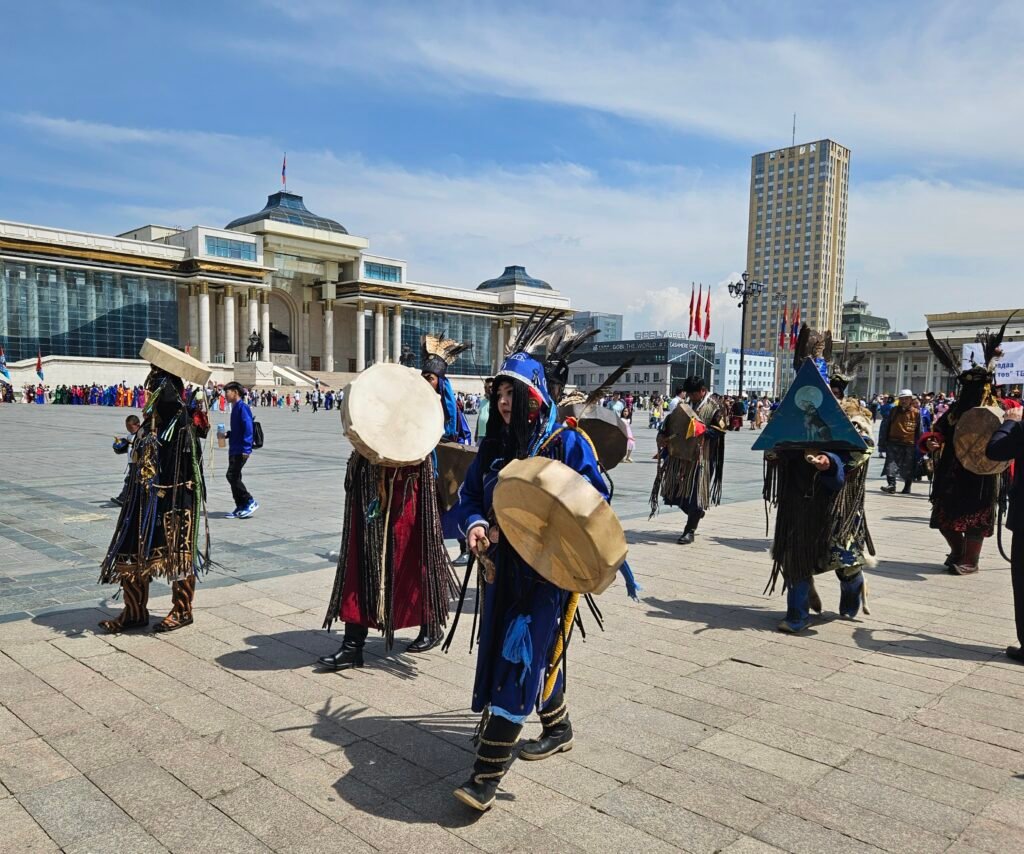
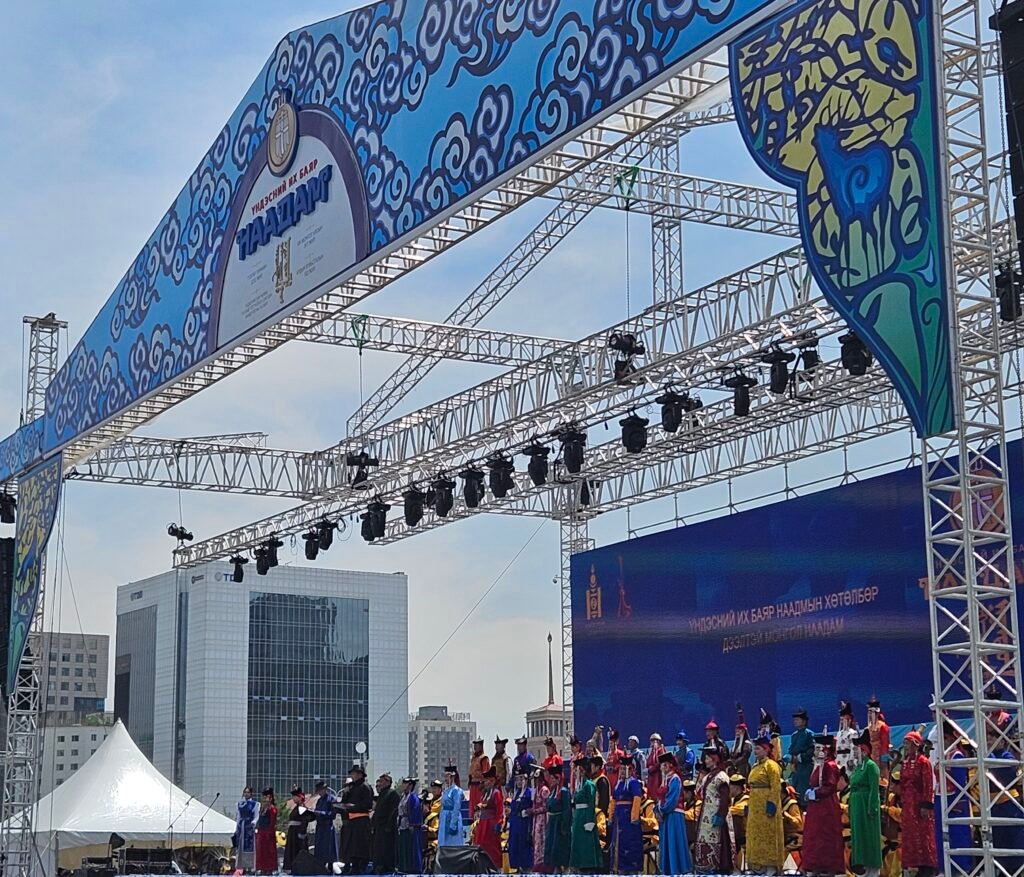
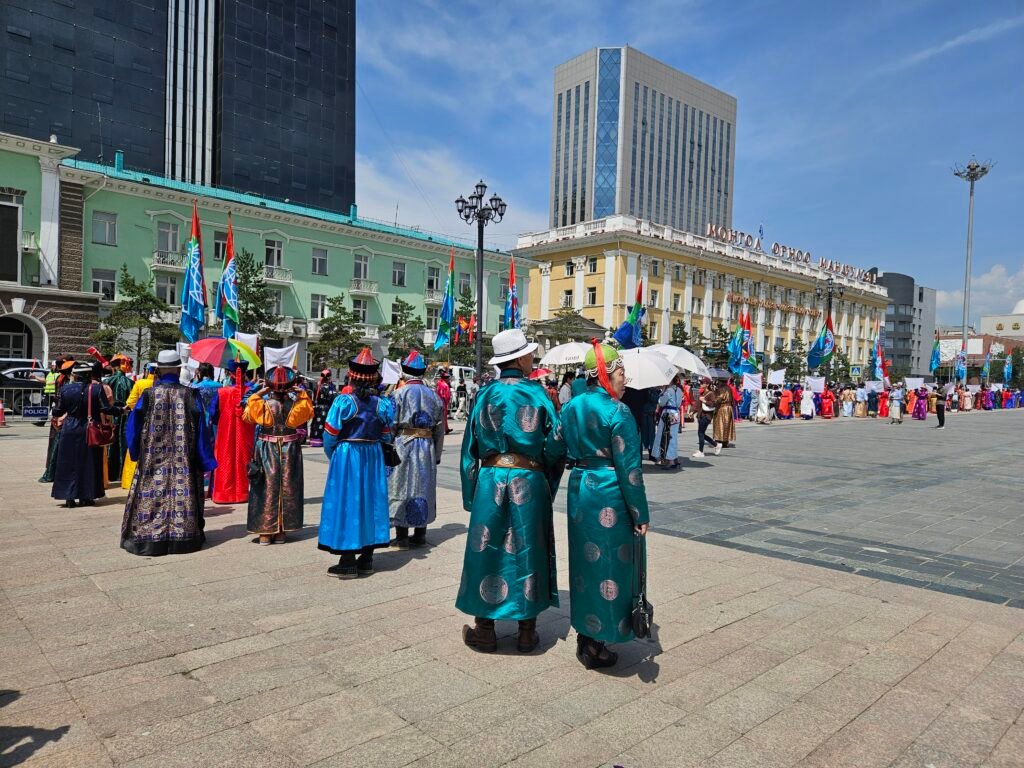
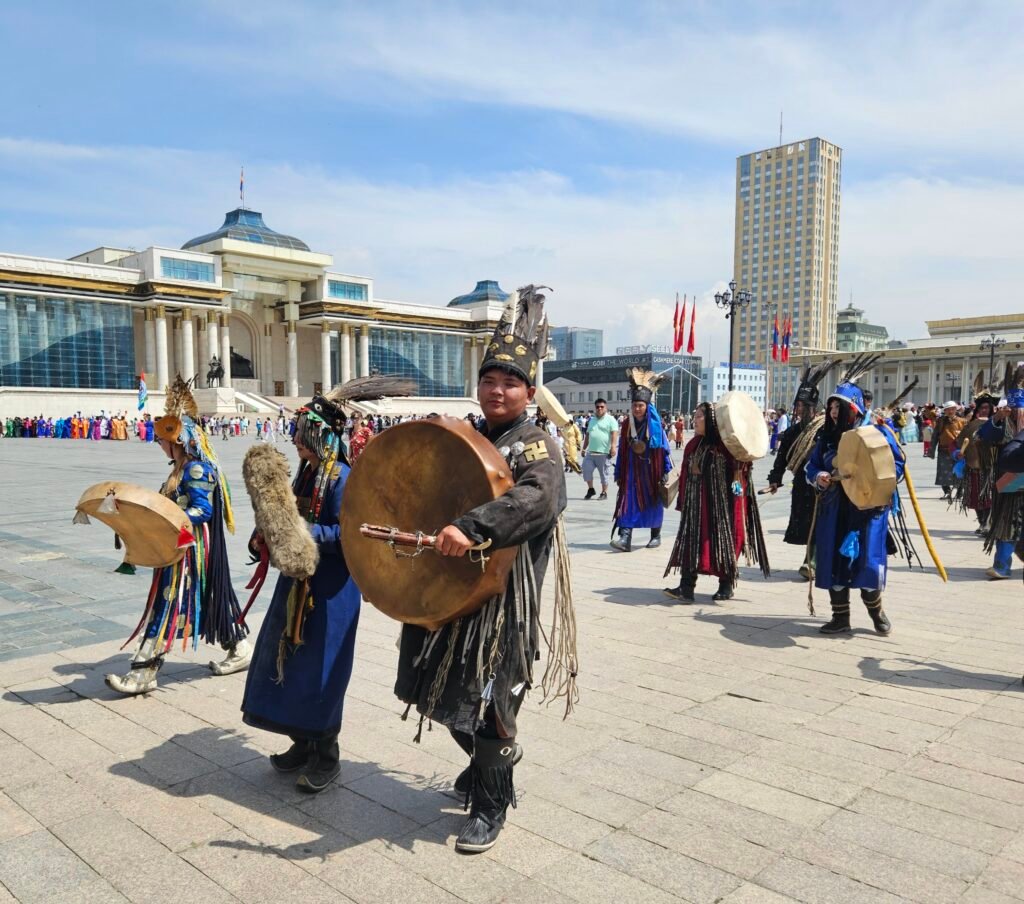
In the days leading up to July 11, Sükhbaatar Square in the centre of Ulaanbaatar turns into a huge outdoor celebration.
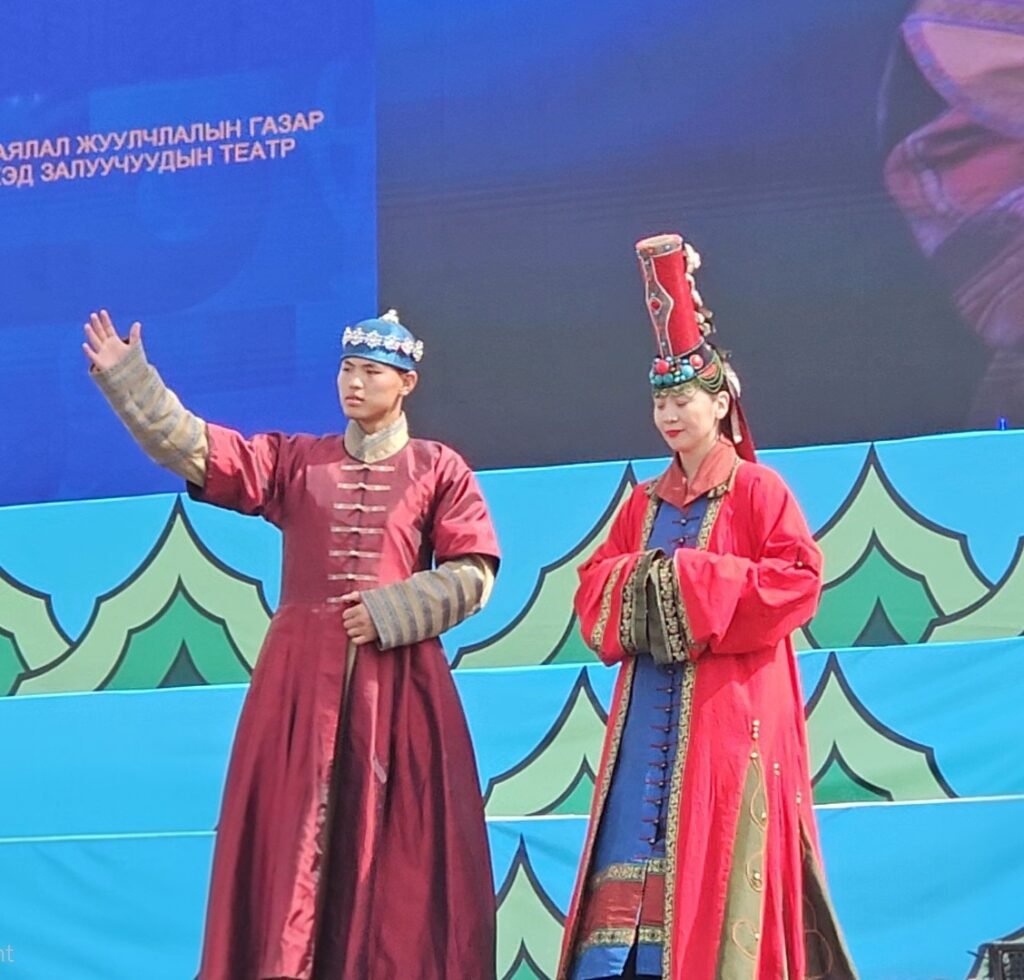
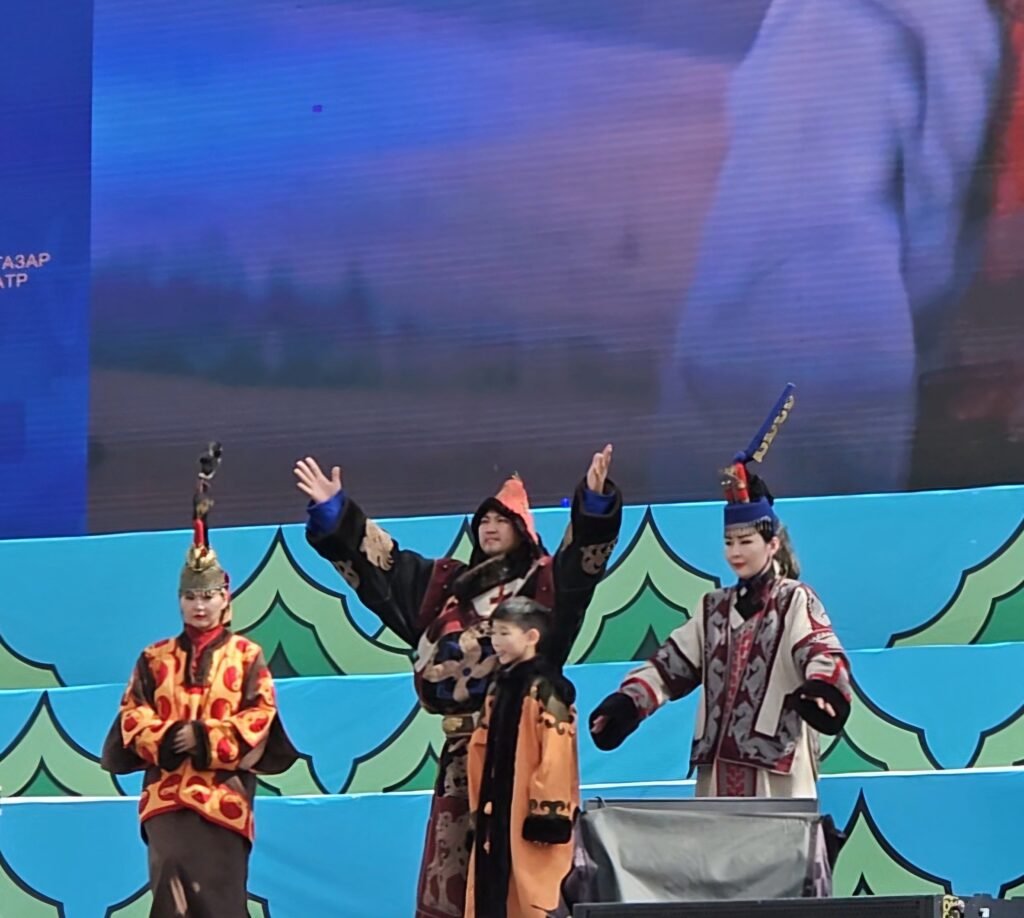
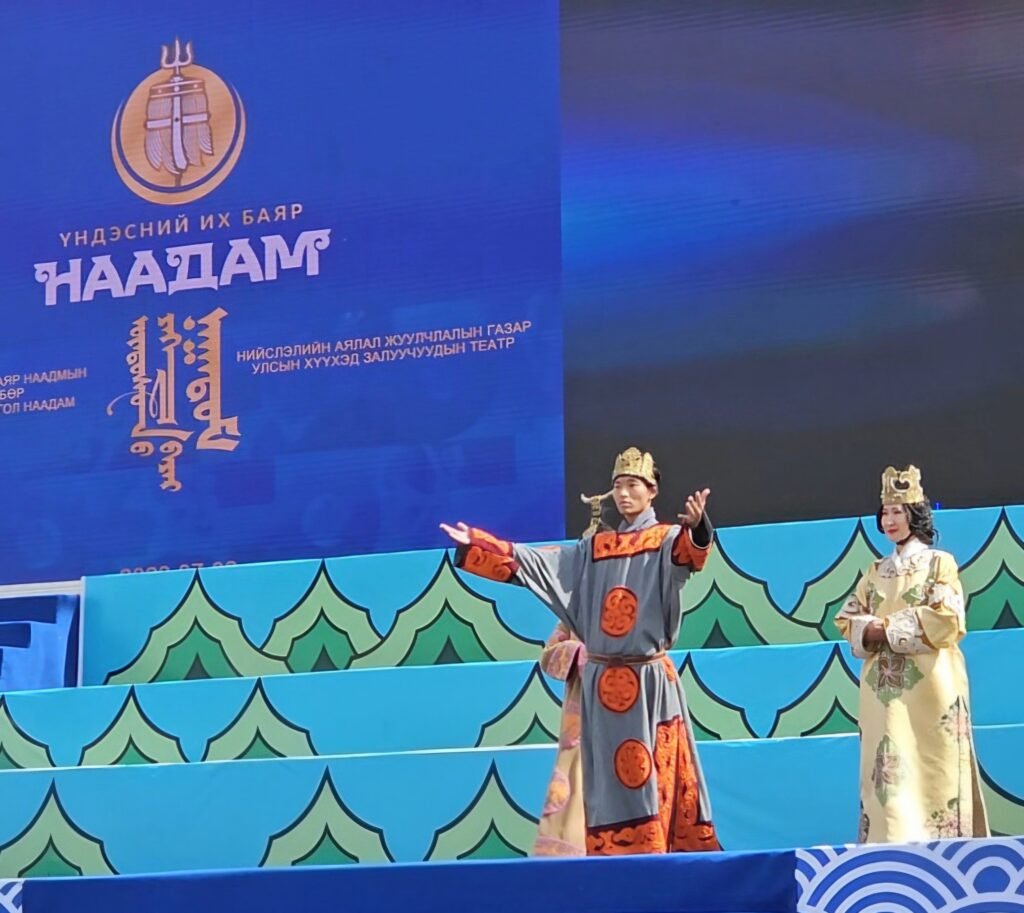
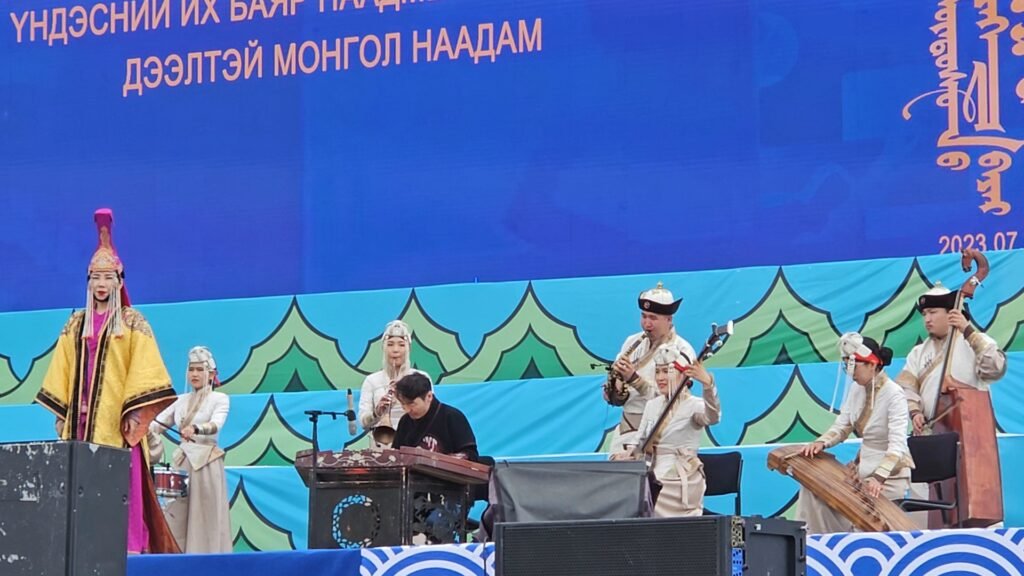
A large stage is constructed in the middle of the square, and there are performances throughout the day — traditional dancing, singing and music, cultural performances and celebrations connected with Naadam.
There are also stalls selling traditional crafts, clothing and other Mongolian products, so the square takes on something of a festival-market atmosphere.
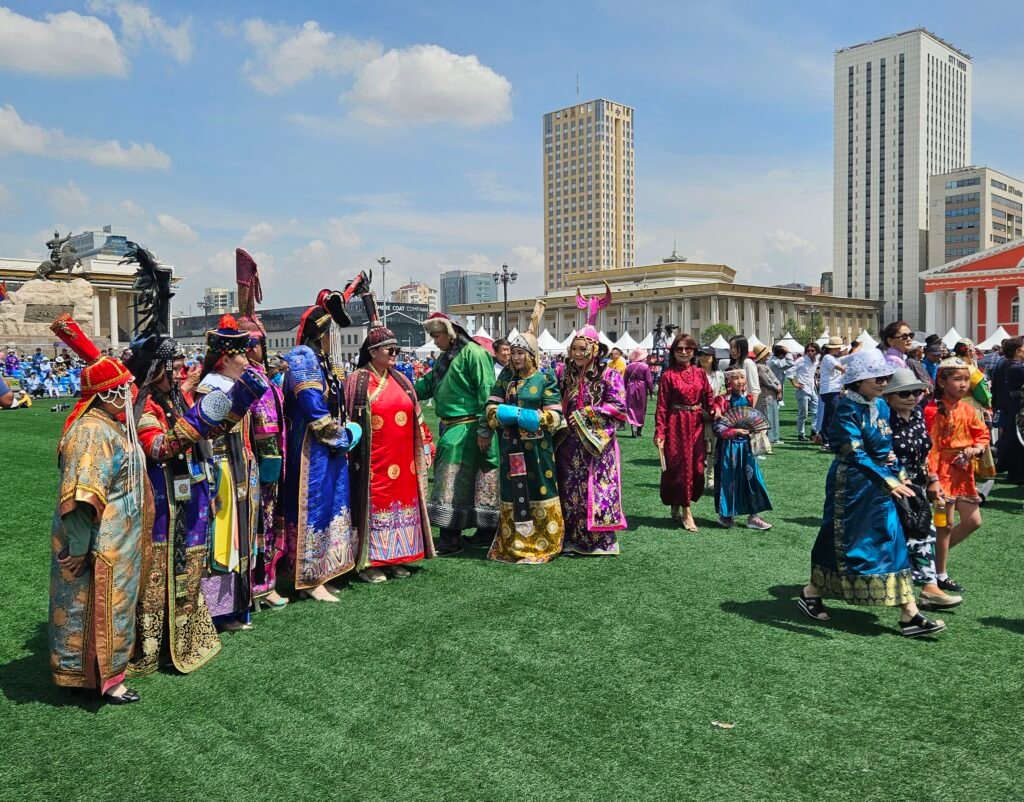
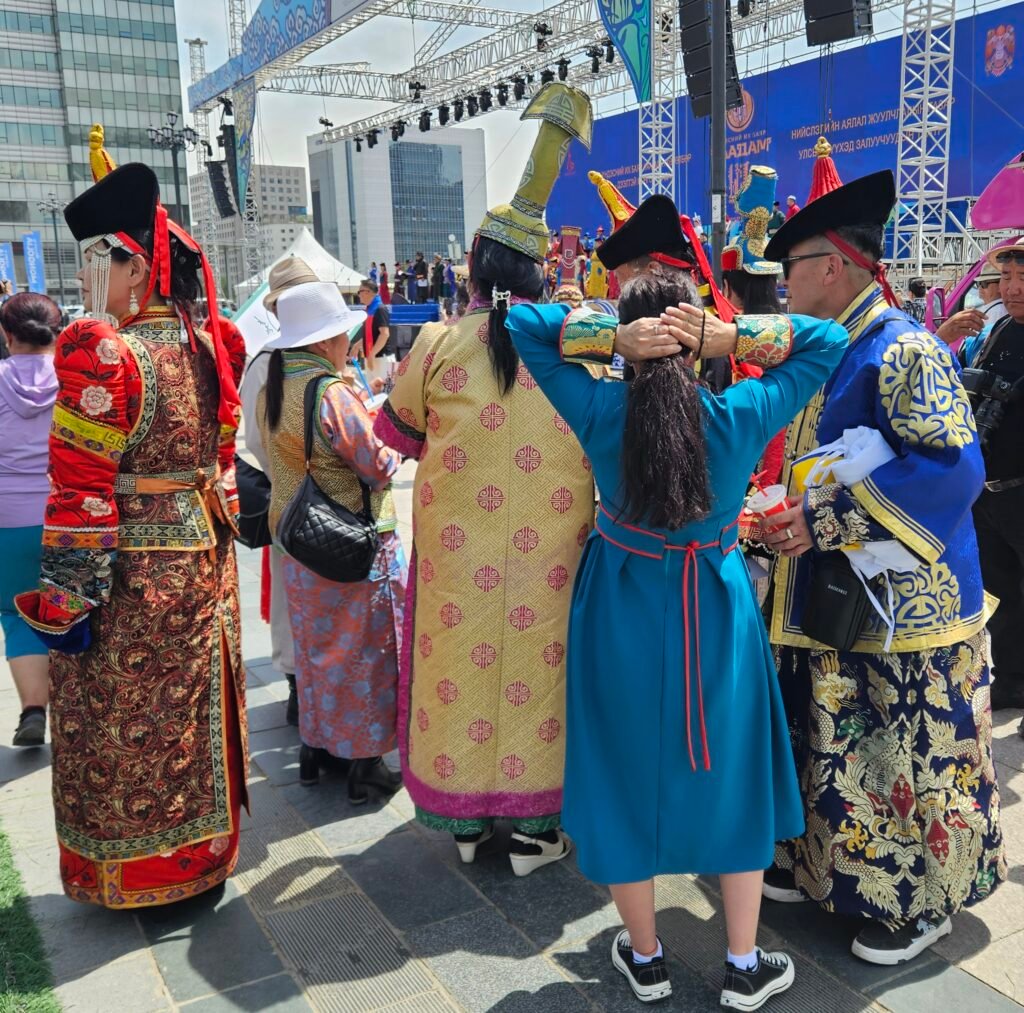
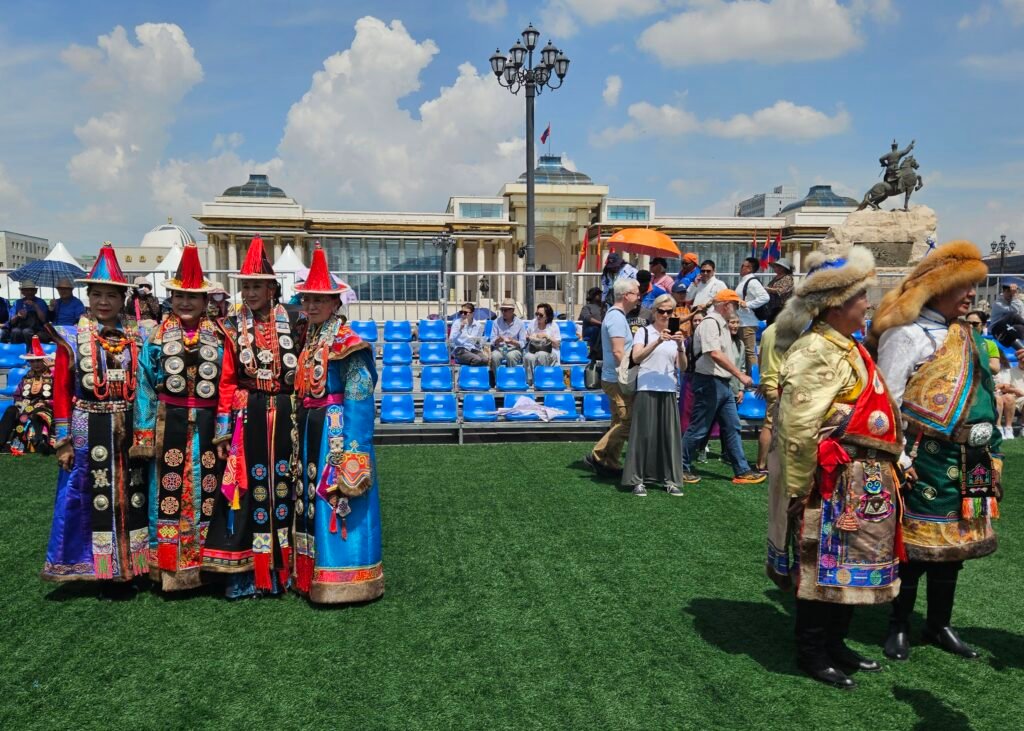
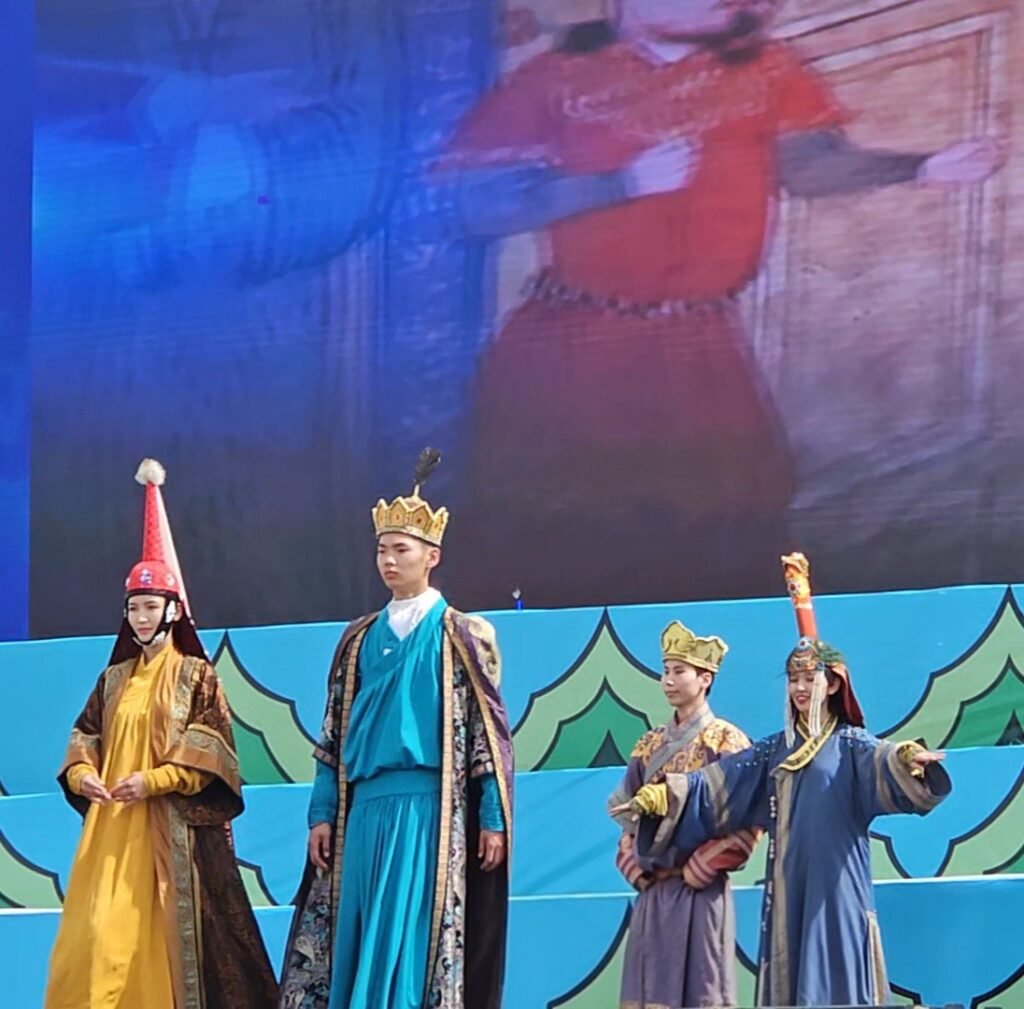
One of the events we particularly enjoyed was Deeltei Mongol, the national costume festival.
A deel is the traditional Mongolian garment, and during the festival people turn up dressed in their best versions of it. The Deeltei Mongol event includes a national costume fashion show, traditional games, performances and a market selling deels and handicrafts.
And yes, there really is a “Deeltei Disco.”
In 2024, the evening programme included modern bands and singers performing for children and young people — essentially a modern concert/disco with people dressed in traditional deels.
It’s a slightly surreal combination: centuries-old Mongolian clothing, traditional cultural performances and a modern music concert happening together in the middle of Ulaanbaatar.
And that’s exactly what made it fun.
The square becomes a place where people come to celebrate, meet friends, eat, browse stalls and simply enjoy the atmosphere.
Is Ulaanbaatar crazy busy during Naadam?
We expected the city to feel much more chaotic than it actually did.
Yes, Ulaanbaatar was somewhat busier around the main celebrations, particularly around Sükhbaatar Square.
But honestly? It wasn’t overcrowded.
Apart from the area around the celebrations, we barely noticed a huge difference in the city.
This isn’t anything like being in a major European capital during a huge sporting event or festival where the entire city seems to grind to a halt.
Ulaanbaatar still felt very much like Ulaanbaatar.
The one thing you should expect is that accommodation prices rise around Naadam Festival, particularly because July is already peak travel season in Mongolia.
So if you’re travelling during Naadam, booking your hotel early is a good idea.
The opening ceremony: absolutely go
If there is one ticketed Naadam Festival event we’d recommend without hesitation, it’s the opening ceremony.
It takes place at the National Sports Stadium in Ulaanbaatar on July 11.
And it is spectacular.
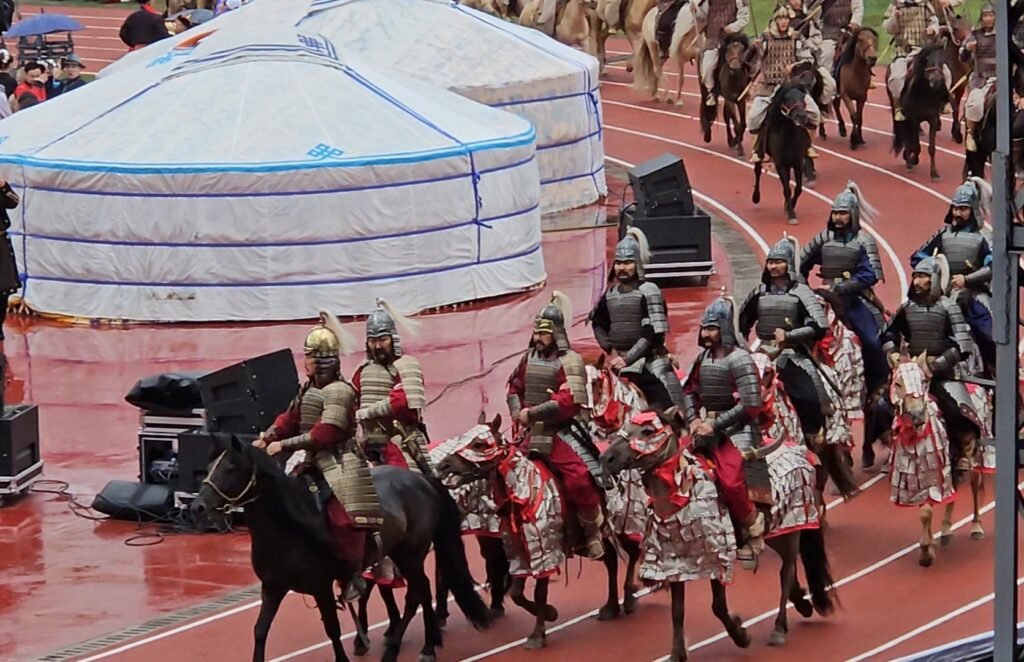
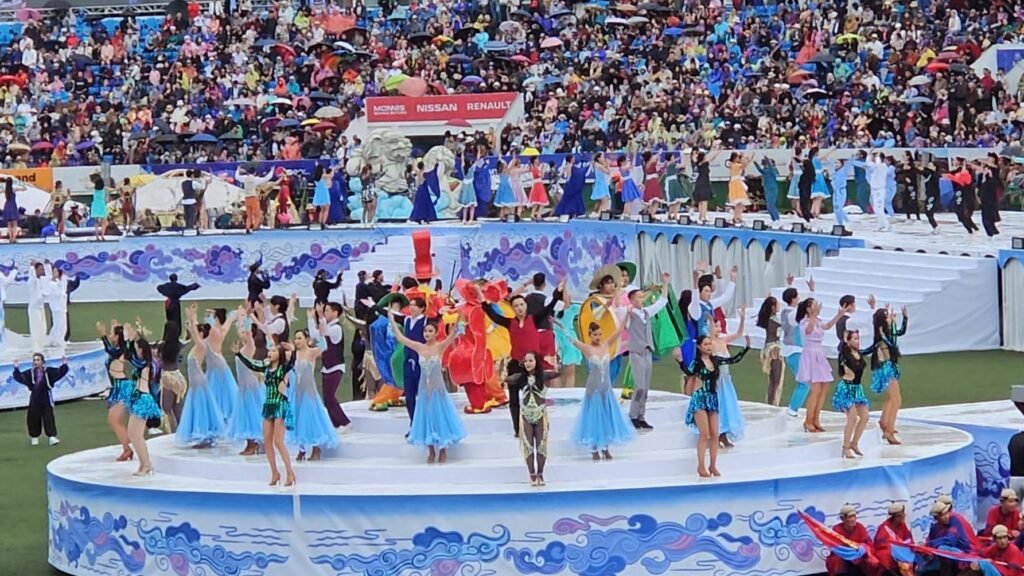
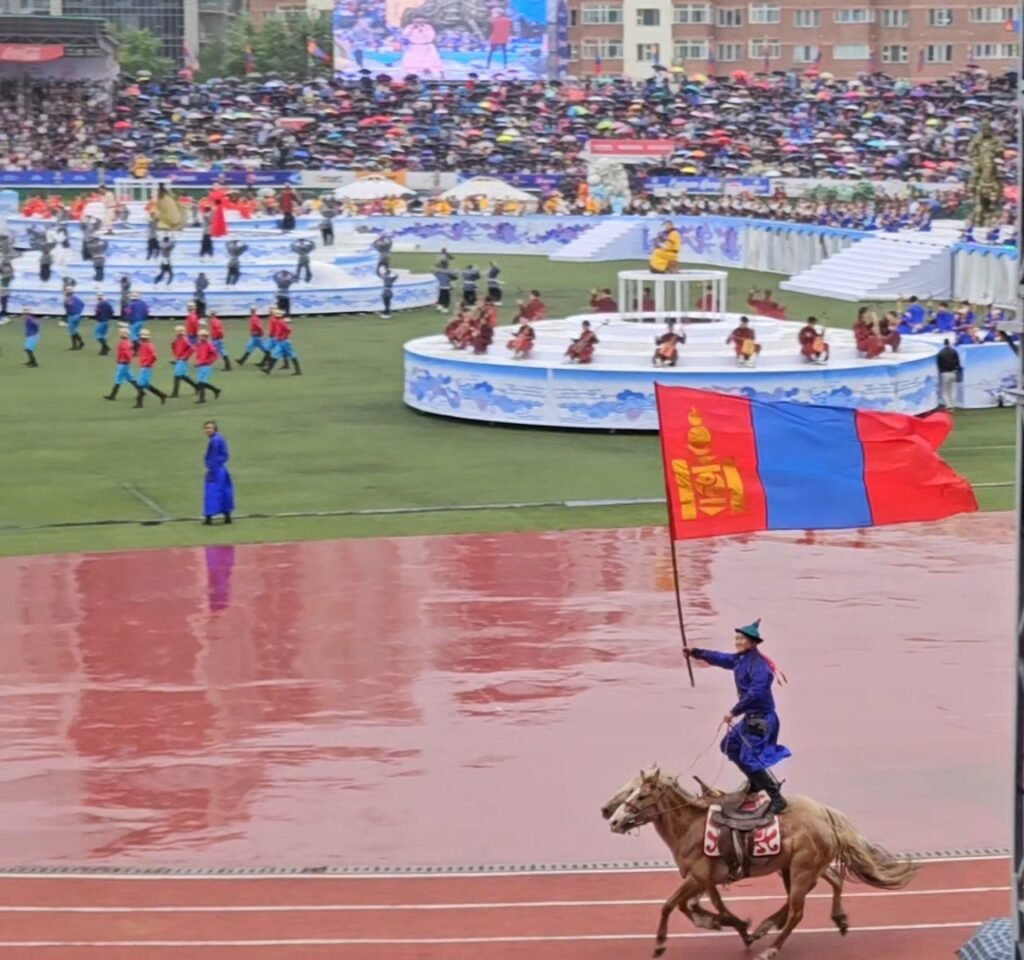
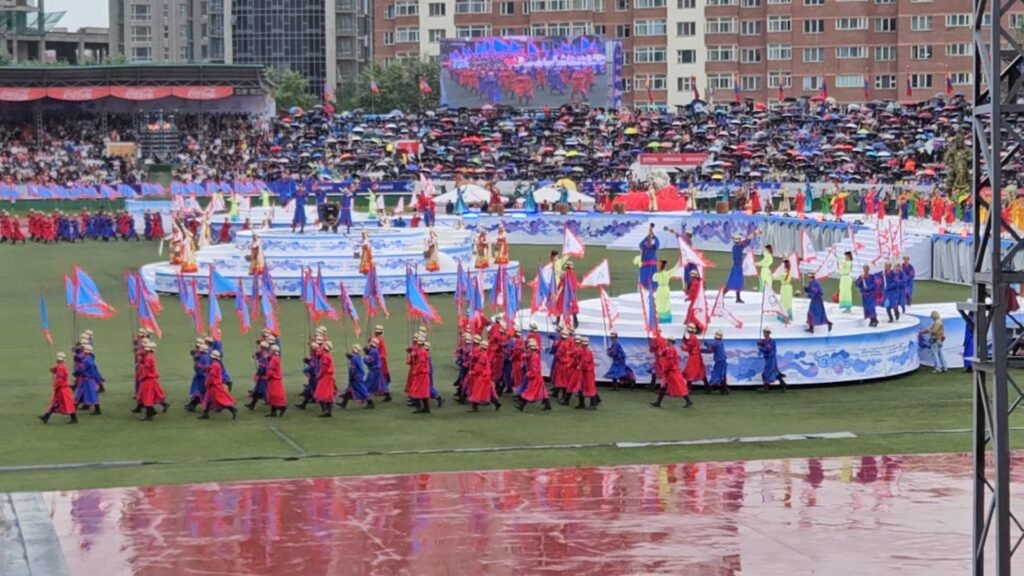
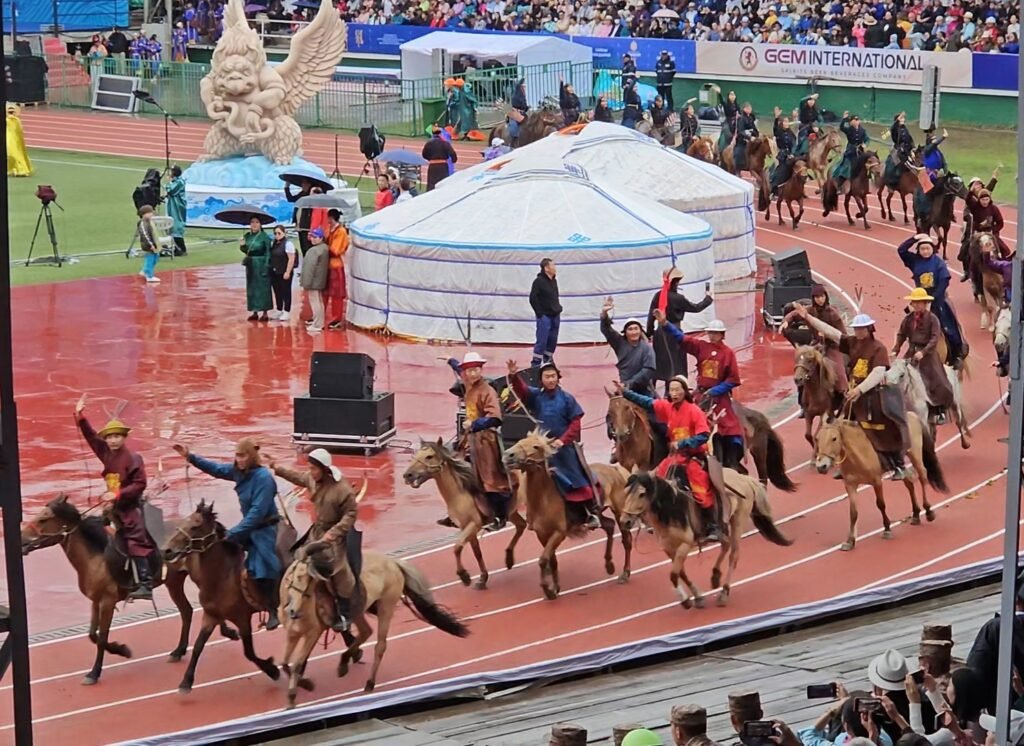
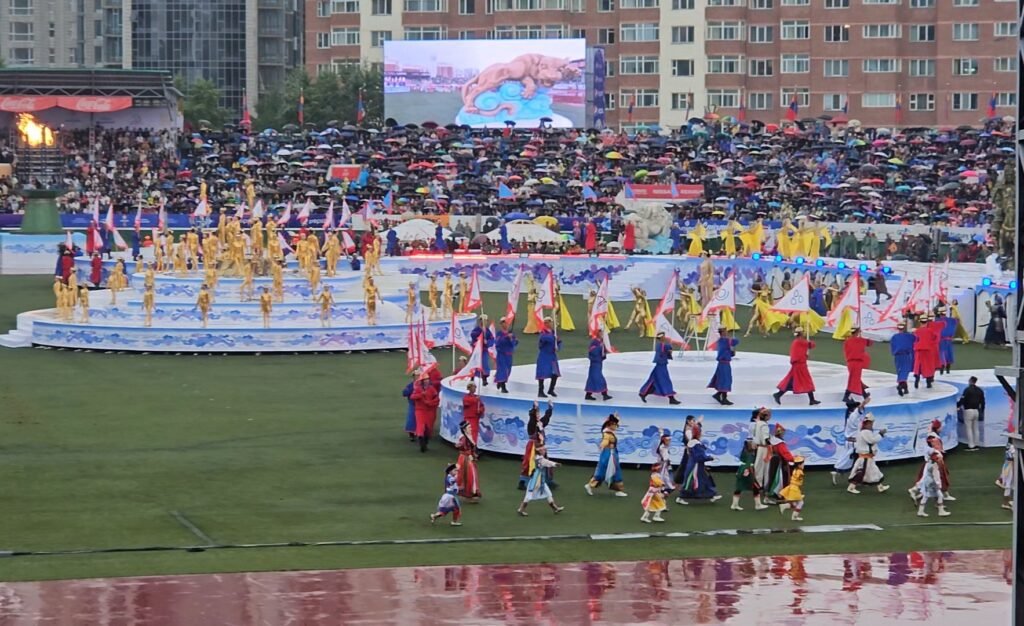
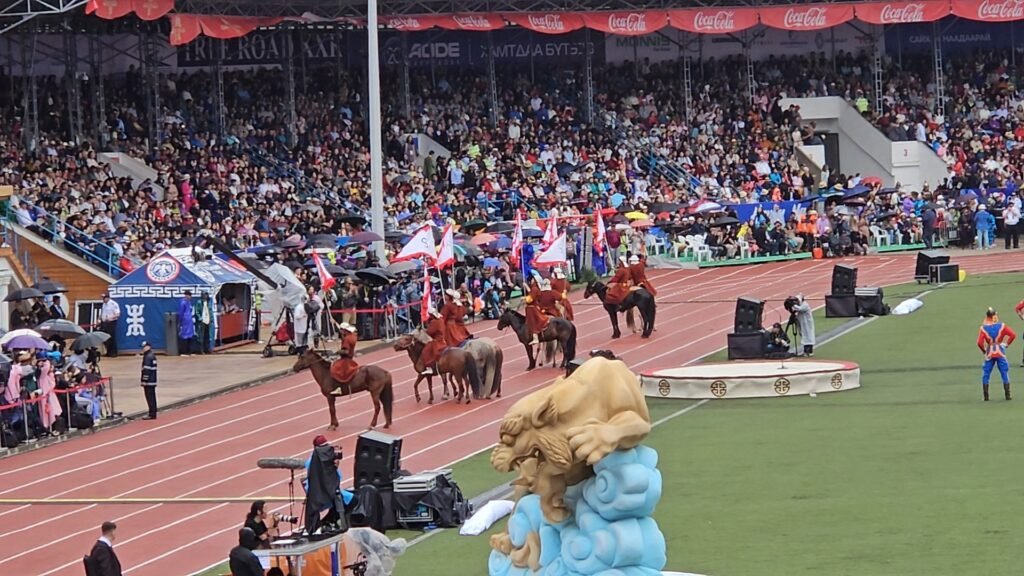
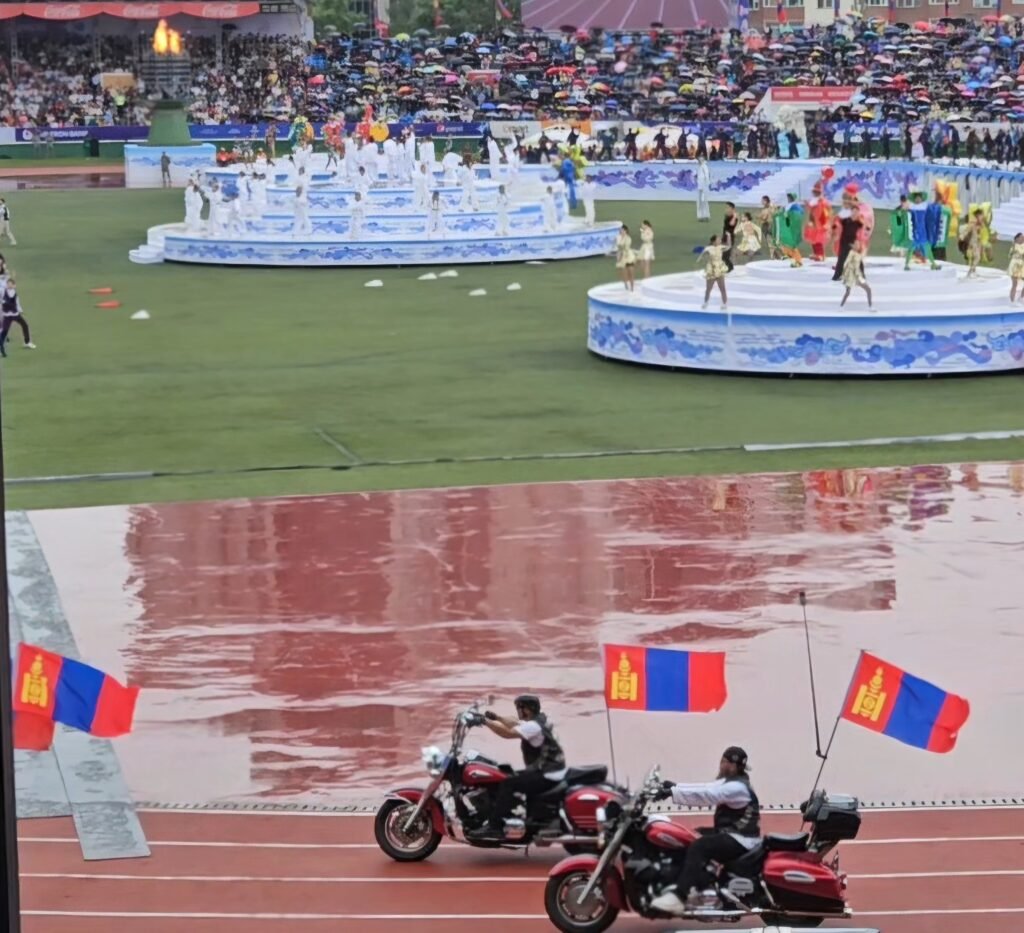
The ceremony combines traditional Mongolian culture with a surprisingly large-scale production. There are dancers, musicians, enormous costumes, horses, riders, traditional warriors, archers and performers filling the stadium.
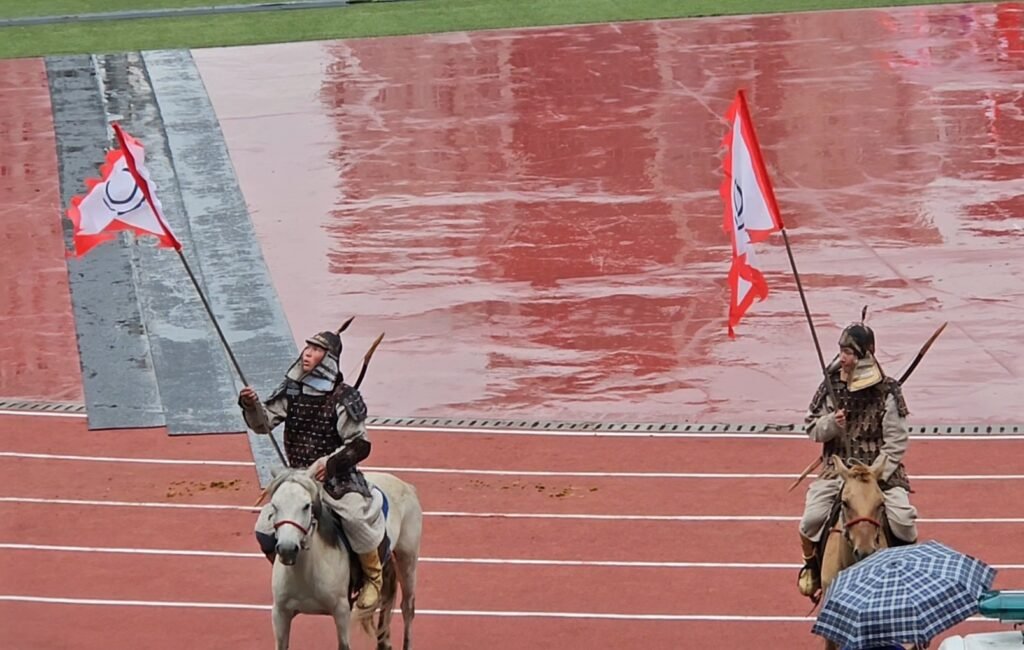
You’ll see people riding horses and demonstrating traditional skills, including archery, alongside choreographed performances telling stories from Mongolian history and culture.
The Nine White Banners — an important national symbol — are also brought to the stadium as part of the opening rituals.
It feels much more like a theatrical spectacle than simply the opening of a sporting competition. This was one of those travel experiences where our son didn’t need to be entertained every five minutes. There was enough happening on the field to keep all of us interested.
The National Sports Stadium is an outdoor venue, so remember that you’re exposed to the weather. There are food vendors around the stadium during Naadam, and sanitary facilities have also been upgraded in recent years, although we’d still recommend using the bathroom before settling into your seat and bringing water with you.
Naadam tickets are a little complicated
This is one of the things we wish we’d understood better beforehand.
You generally cannot just buy Naadam Festival tickets months in advance and tick them off your itinerary.
Official tickets are released relatively close to the festival. In 2024, tickets went on sale on July 1, with the festival beginning on July 11. Prices were 80,000, 100,000 and 150,000 Mongolian tögrög depending on the seat (approximately $22, $28 and $42 USD).
And there are only a limited number of seats available to foreign visitors.
In 2024, approximately 2,200 tickets were allocated to foreign tourists. In previous years that number had been considerably higher, which shows how unpredictable the allocation can be.
That’s why we’d recommend doing what we did:
Book your Naadam tickets through a reputable Mongolian tour company.
We used the same company we had booked our Mongolia tours through, Dream Mongolia, and they were able to arrange the tickets for us.
It does mean that, if you’re planning a trip around Naadam, there is an annoying period where you know you are going to Mongolia specifically for the festival but don’t have 100% confirmation that you’ll get into the opening ceremony until quite close to the date. Usually, things work out. But don’t leave it until the last minute assuming you’ll be able to stroll up and buy a ticket.
The current official face value is around ₮100,000–₮150,000 (roughly US$28–43), although tour packages or guaranteed tourist seats can cost considerably more.
And then there’s the wrestling…
After the opening ceremony, the actual sporting competitions begin.
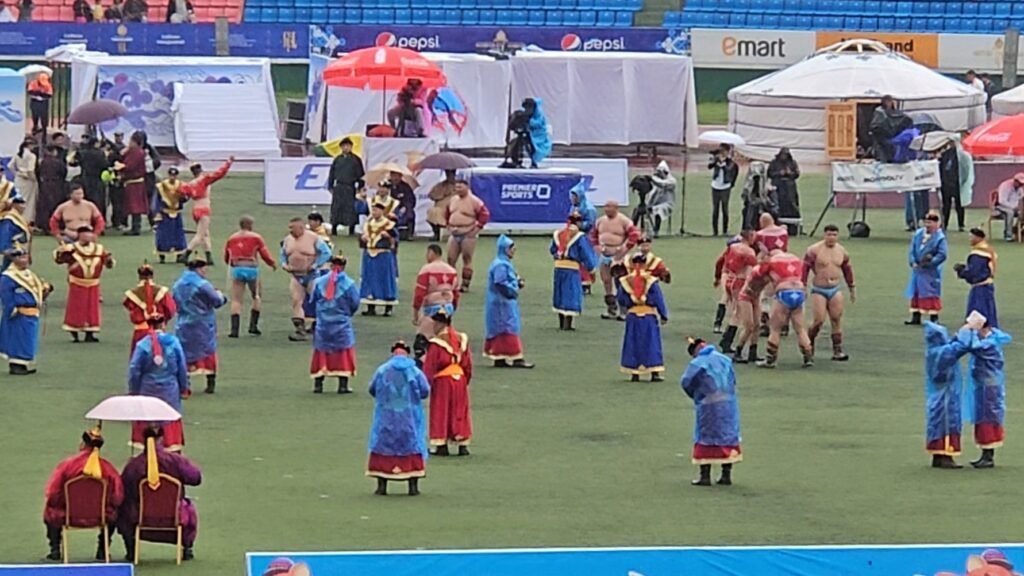
The wrestling takes place at the stadium and is probably the most important of the three sports.
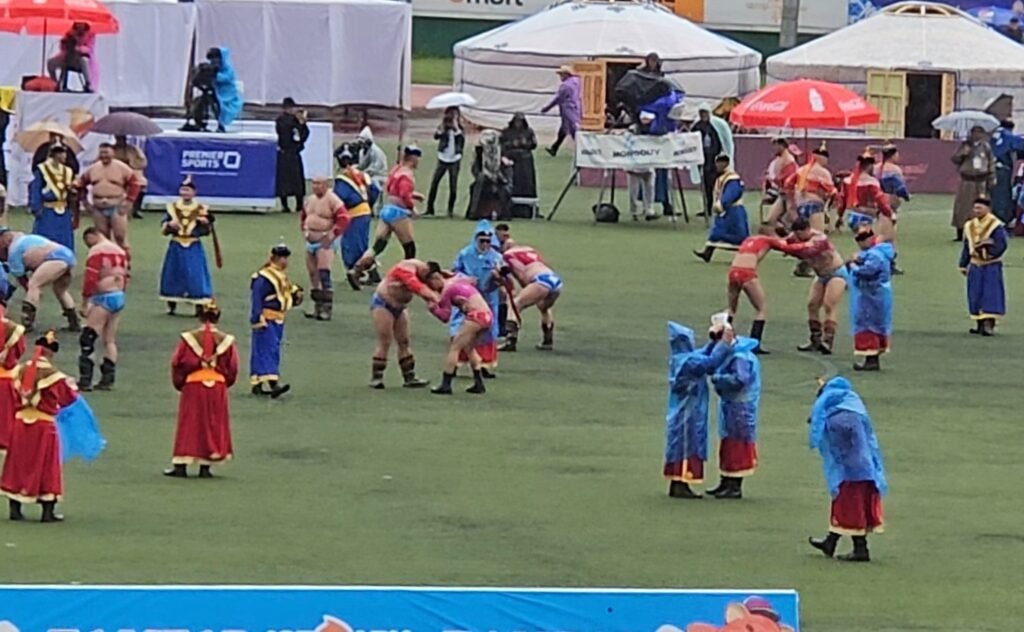
Mongolian wrestling, or bökh, is very different from what you might expect if you’re familiar with Olympic wrestling.
There are no weight classes. There are no time limits. And there isn’t really a wrestling ring.
At the national Naadam, 512 wrestlers compete in a knockout tournament over multiple rounds, with 1,024 competing in particularly significant anniversary years. A wrestler loses when any part of their body above the feet touches the ground.
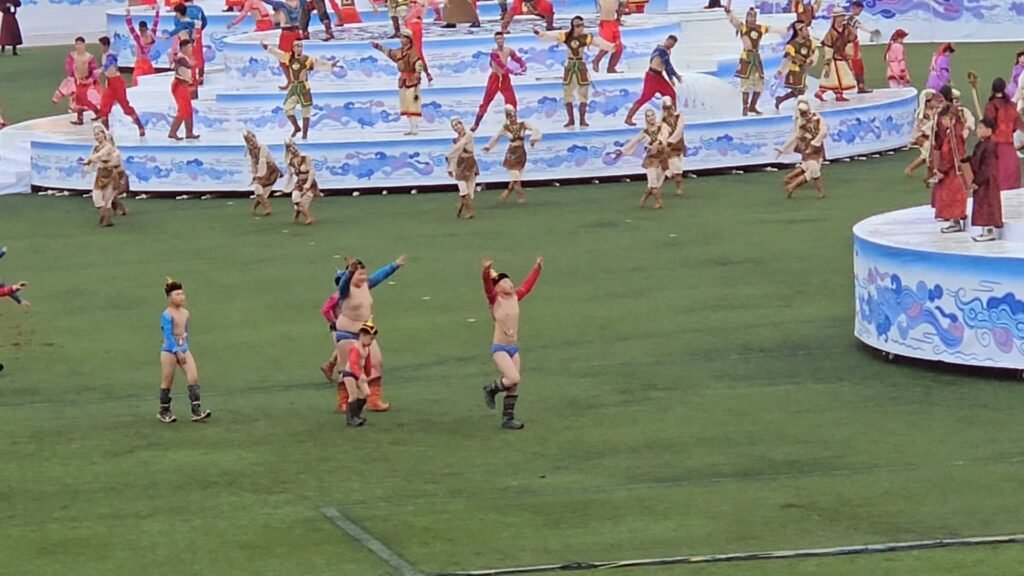
The wrestlers wear the distinctive open-chested zodog and tight shuudag, and each wrestler has a zasuul — essentially a ceremonial herald who accompanies them and sings their praises.
The rituals surrounding the matches are fascinating.
But here’s our honest foreigner perspective:
The wrestling was interesting… but it wasn’t our favourite part of Naadam Festival.
The reason is partly cultural.
If you don’t understand the history, rituals and subtleties of bökh, watching the competition can initially look a little like watching several pairs of guys having a fight after a night at the pub.
There are multiple matches happening at the same time across the stadium, rather than one big wrestling match taking centre stage.
So you’re looking around and suddenly there are several men in traditional wrestling outfits grappling with each other all over the field.
For Mongolians who understand the sport, the wrestlers, their titles, their techniques and the significance of each round, this is a completely different experience.
For us, it was more of a “this is really cool to see once” experience than something we’d spend hours watching.
Archery is the other stadium sport
Traditional archery is the second major competition you can see around the stadium (usually takes place just about 150 m. away from the stadium)
Mongolian archery is not quite the same as the Olympic version you may have seen on television. Archers use traditional bows and shoot at targets from a considerable distance, while spectators encourage competitors with traditional calls of “uukhai!”
Archery, like wrestling, is tied directly to Mongolia’s nomadic and warrior traditions. It’s also one of those events that becomes much more interesting when you understand what you’re looking at rather than simply watching someone fire arrows at a target.
And, unlike the horse racing, it doesn’t require driving out into the countryside.
Horse racing: the part we would skip
And now we get to the part where we made our biggest Naadam mistake.
The horse racing.
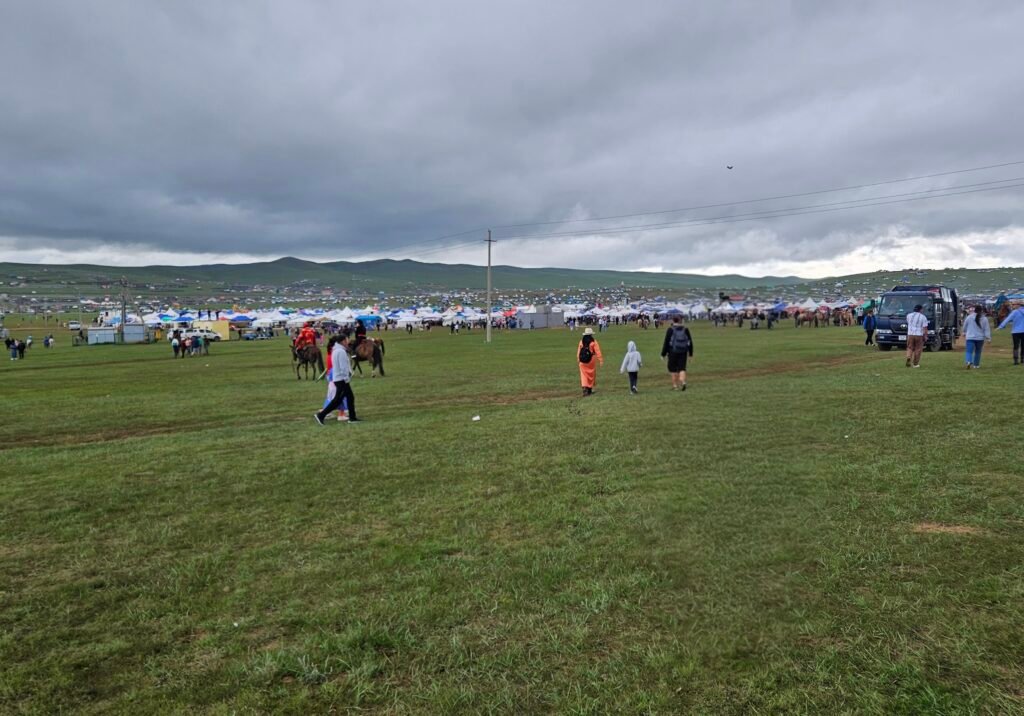
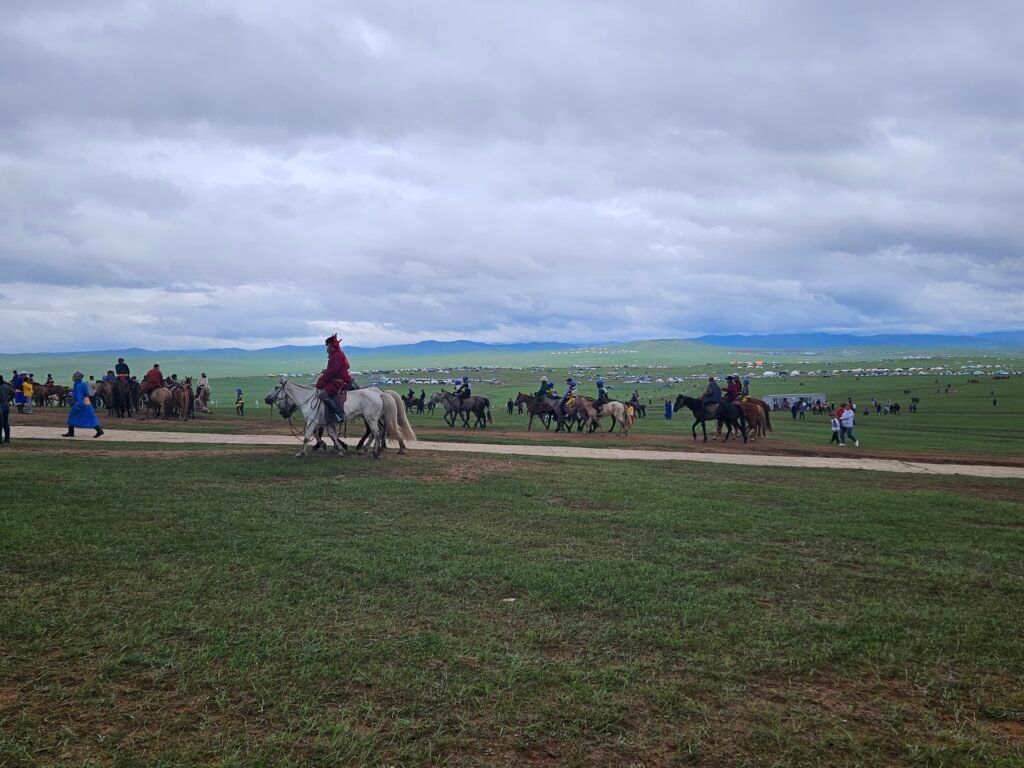
The races take place at Khui Doloon Khudag, roughly 40–50 km outside Ulaanbaatar. This isn’t a conventional horse-racing venue. It’s essentially an enormous open field on the steppe. And that is both the attraction and the problem.
There are temporary tents and stalls selling food and drinks, and there are some activities around the site, including things for children. But there are no proper buildings where you can escape the weather. There is little or no shade. Toilets are basic outdoor facilities.
And Mongolia’s July weather can be unpredictable. When we went, it was cold and rainy. That wasn’t particularly pleasant when we were sitting outside on the open steppe with a seven-year-old.
But the weather wasn’t actually our biggest problem.
The race doesn’t start where you are watching it
This is the thing we completely misunderstood.
The horses don’t simply line up in front of the spectators and race past them. The race takes place over a huge distance across the countryside, and Khui Doloon Khudag is essentially where the horses finish.
Which means you can arrive at the viewing area and then…
wait.
And wait.
And wait.
If you want a decent position, you need to arrive early and claim your spot. There aren’t reserved seats that you can simply book.
So you’re faced with a slightly ridiculous choice:
Either arrive early and sit there for hours waiting for the horses…
…or arrive later and potentially struggle to get a good place to see the finish.
We arrived, waited for around an hour, and eventually admitted defeat.
It was cold.
It was wet.
Our son was spectacularly bored.
And, if we’re being honest, so were we.
There were things for children to do, but that’s not particularly useful when you’ve got to sit in your place to make sure you don’t lose it.
Eventually we decided we’d had enough and went home.
Which meant we’d spent around $100 on a private car and driver, plus the associated access/vehicle costs, to sit in the rain for an hour and then leave without really seeing the race.
Getting there
If you do decide to go, we’d strongly recommend hiring a private driver rather than trying to figure out transport on the day.
The vehicle needs permission to enter the festival grounds, and the cost we were quoted was around $100 total for the car, driver and permission.
The drive is roughly 45 minutes to an hour depending on traffic.
The current festival information puts Khui Doloon Khudag at around 40–50 km from Ulaanbaatar, and it remains the main venue for the long-distance races.
Take food, water, rain gear and warm layers. For more on what we always pack, see our family travel gear guide.
Basically, prepare as though you’re going camping for the day, not going to a sporting stadium.
Would we recommend Naadam with kids?
Absolutely.
Just not necessarily every part of it.
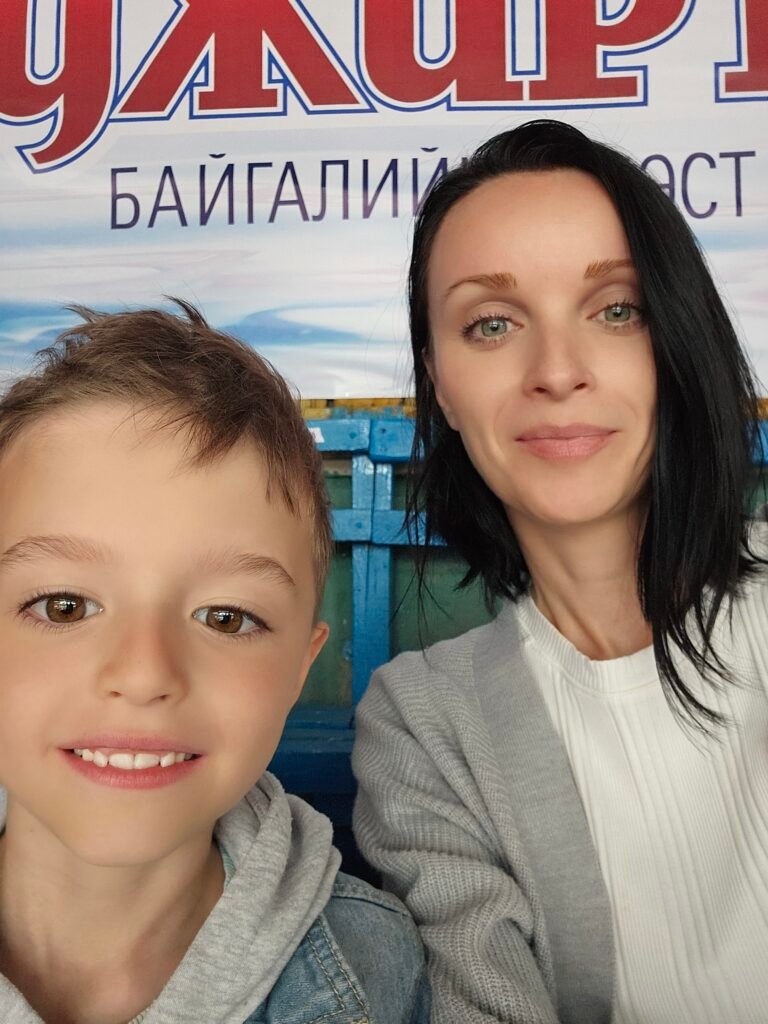
Our son was seven when we visited, and the combination of costumes, horses, music, dancing and the huge opening ceremony made Naadam a fantastic worldschooling experience.
He got to see something that wasn’t a performance created specifically for tourists. He saw a major part of Mongolian national identity being celebrated by Mongolians themselves.
We could talk about how the three sports developed from the skills needed by people living on the steppe, why horses are so important to Mongolian culture, what traditional clothing looks like, and how a modern country can preserve traditions that go back centuries.
What we’d do differently next time
If we were planning our Mongolia trip again, we’d keep our Naadam itinerary very simple.
1. Spend time around Sükhbaatar Square
Definitely.
The free celebrations before and during Naadam were some of our favourite experiences.
Walk around, look at the traditional clothing, watch the performances, browse the crafts, eat something, and just watch people. You don’t need a ticket for this part, and it’s probably one of the easiest ways to experience the atmosphere of Naadam without having to organize anything complicated.
2. Go to the opening ceremony
100% yes.
This is the one thing we’d make sure was booked.
It’s colourful, energetic, theatrical and genuinely impressive.
If you only have the time or budget for one ticketed Naadam experience, this would be ours.
3. Watch some wrestling and archery
They’re worth seeing because they’re such an important part of Mongolian culture.
But we wouldn’t necessarily dedicate an entire day to sitting at the stadium watching every round.
If you’re travelling with children, especially younger ones, we’d keep expectations realistic.
4. Skip the horse racing — unless you’re really into it
This is the controversial one.
We know that horse racing is one of the three defining events of Naadam.
And if you’re a horse lover, a photographer, or someone who really wants to experience the traditional races on the Mongolian steppe, you may feel completely differently.
But for our family?
We wouldn’t do it again.
The long wait, unpredictable weather, lack of shelter, basic facilities and difficulty of actually seeing the race made it a poor experience for us.
Especially with a seven-year-old.
If you really want to see horse racing, we’d consider looking for a smaller local Naadam in the countryside instead. Mongolia holds Naadam celebrations across its provinces and districts, and these smaller festivals can offer a more intimate experience of the traditions.
So, is Naadam worth planning your Mongolia trip around?
Yes — with a caveat.
We wouldn’t plan an entire Mongolia trip around trying to tick off every single Naadam event. But if you’re already travelling to Mongolia in July, experiencing Naadam is absolutely worth it.
For us, the most memorable parts weren’t even necessarily the competitions. It was seeing Ulaanbaatar dressed up for the occasion and watching families walking around in beautiful deels.
It was the music and dancing in the square, and the unexpected combination of traditional clothing and modern pop concerts.
It was sitting in the stadium watching an enormous production built around Mongolian history and culture.
And it was realizing that Naadam isn’t just something Mongolia puts on for visitors.
It’s Mongolia celebrating itself.