

Kyrgyzstan With Kids: Our One-Month Family Travel Guide
We spent a month travelling around Kyrgyzstan with our son, who was eight at the time, using Bishkek as our base and heading out on trips into the mountains, valleys and around Issyk Kul.
We went to Kyrgyzstan to learn more about its nomadic traditions and ancient Silk Road history, while also exploring its beautiful lakes, mountains and hiking trails. And we were not disappointed! There are mountains everywhere, huge open landscapes, horses, yurts, eagles, ancient Silk Road sites and some surprisingly good hiking that doesn’t require you to be a serious trekker.
We did organised trips and used private drivers to get out of Bishkek, which worked particularly well as a family. It gave us the freedom to stop when we wanted and meant we weren’t trying to work out complicated public transport connections with an eight-year-old in tow.
This is our honest guide to Kyrgyzstan with kids, including the places we visited, what we thought, what we would do differently and the practical information you’ll need if you’re planning your own trip.
Our one-month Kyrgyzstan itinerary
We based ourselves in Bishkek for much of our time and used it as a starting point for excursions rather than moving hotels every few days.
Our main trips included:
- Bishkek
- Ala Archa National Park
- Chong Kemin, including horse riding
- Burana Tower
- Konorchek Canyon
- Issyk Kul
- Bokonbaevo, for eagle hunters
- A yurt stay
- Skazka Canyon, also called Fairy Tale Canyon
If you’re visiting for only a week or two, you can still use the same destinations, but I’d strongly recommend allowing several nights around Issyk Kul rather than attempting to squeeze the lake into a single day.
Planning to visit Kyrgyzstan soon?
🏨 Booking hotels: Booking.com
- Orient Hotel Bishkek (Budget/Mid-Range)
- City Stay Hotel (Mid-Range)
- Orion Hotel Bishkek (Luxury) 👍 Top Pick
🐎 Booking tours: GetYourGuide and Viator
- Ala Archa National Park Tour (6 hours) 🏅 Top Pick
- Chon Kemin Horse Riding Tour (8–12 hours)
- Issyk Kul, Yurt Stay & Eagle Hunting (3 days)
- Burana Tower & Konorchek Canyons (8 hours)
- Issyk Kul, Canyons, Horse Riding & Yurt Stay (2 days)
🩺 Travel Insurance: Genki Traveler or SafetyWing Nomad Insurance
Bishkek With Kids
Bishkek isn’t the main reason most people travel to Kyrgyzstan. Most people visit for mountains and hiking (unless you are a fan of Soviet architecture of course, in which case you will love Bichkek).
If I am honest, the capital of Kyrgyzstan is not the most exciting city in the world. It’s not as pretty and polished, as Baku for example, or doesn’t have a cool old town, like Tbilisi, but it does make for a good base when exploring Kyrgyzstan. The city is relatively easy to get around, has plenty of green space, markets, museums and restaurants, and it gives you a completely different perspective on Kyrgyzstan from the mountain valleys.
Here are the main Bishkek attractions worth putting on your list.
Ala-Too Square
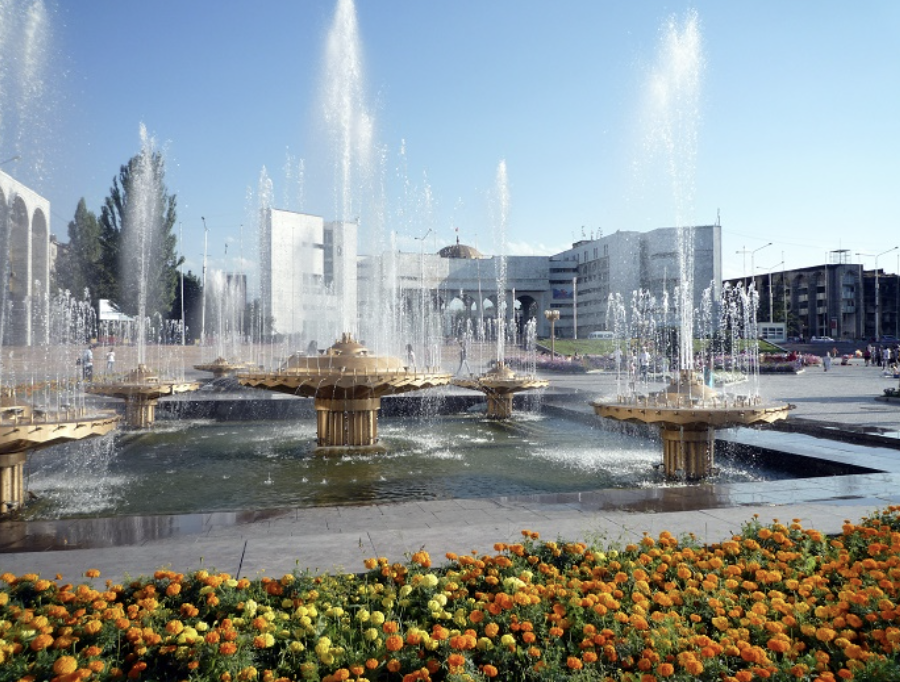
Ala-Too Square is the obvious place to start exploring central Bishkek.
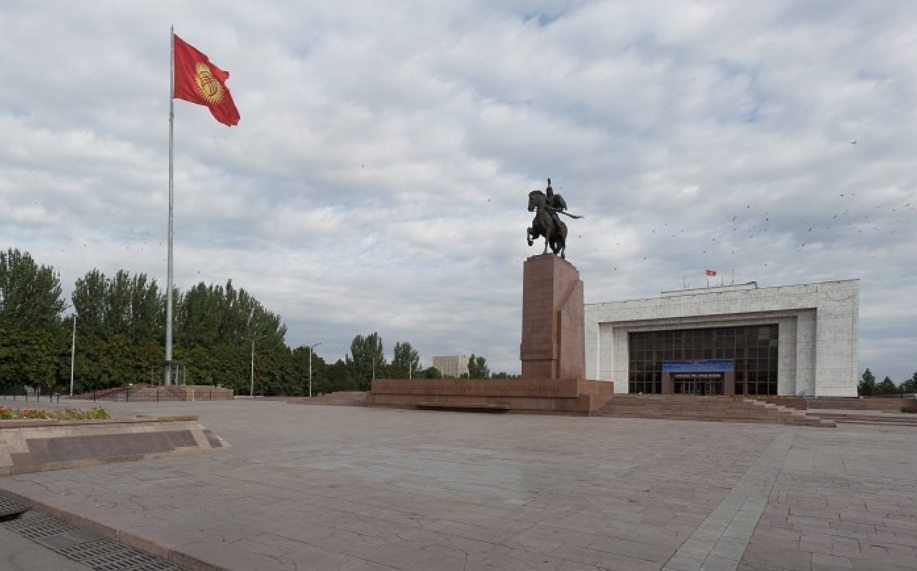
It is the city’s main square and sits in the middle of the capital’s political and historical centre. The square was built in 1984 during the Soviet period and was originally known as Lenin Square. The Lenin statue was later moved (you can still see it in a small park directly behind the National Historical Museum), and the current square includes a statue of Manas, the legendary hero of the Kyrgyz epic.
The enormous flagpole, Manas statue and the State Historical Museum all make this an easy place to combine with several other sights. The square also has some interesting layers of Kyrgyzstan’s modern history. It has been the scene of major political events, including the 2005 Tulip Revolution and the 2010 revolution.
State Historical Museum
The State Historical Museum is right on Ala-Too Square, so it’s easy to combine with the square and Oak Park.
The museum covers Kyrgyzstan’s history from prehistoric times through the Soviet period and into the country’s more recent history. There are also exhibits covering Kyrgyz culture, traditional clothing, textiles and objects connected with everyday life. The museum was founded in 1925 and its current building dates from the Soviet period.
This is one of those places where having some understanding of Kyrgyzstan’s history makes everything else you see during the trip more interesting. If you’re travelling with a child who is interested in history, it’s worth including. If museums aren’t really their thing, you probably don’t need to spend hours here.
Practical information
🕘 Opening Hours: Currently listed as Tuesday to Sunday, 9 AM to 6 PM
💰 Entry Fees: Around 200 KGS per person according to current visitor information. Check locally before visiting as museum prices can change. (en.wikivoyage.org)
Osh Bazaar
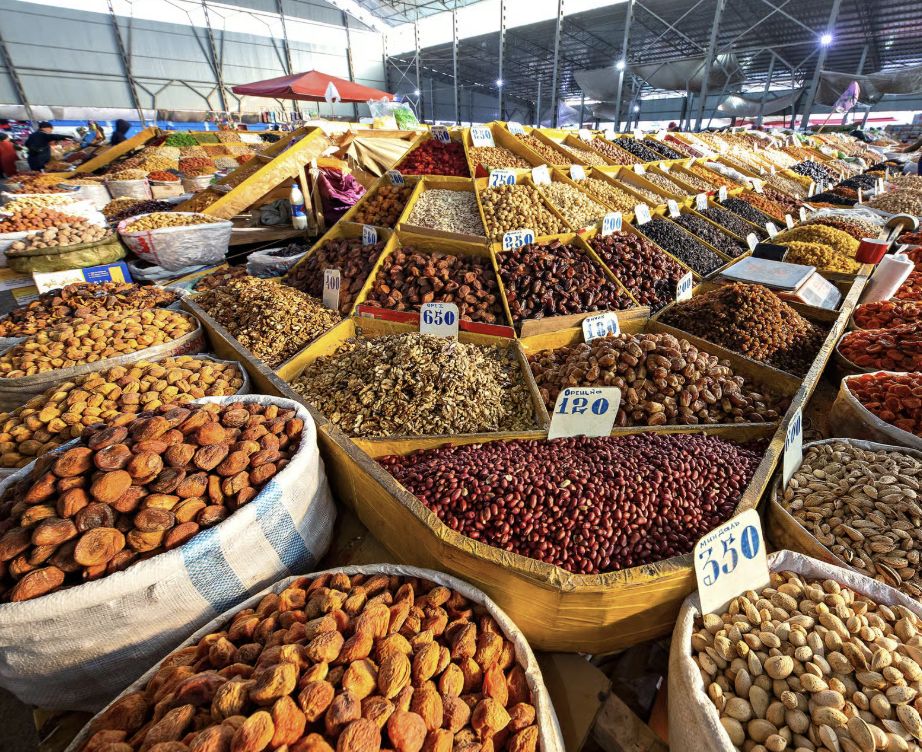
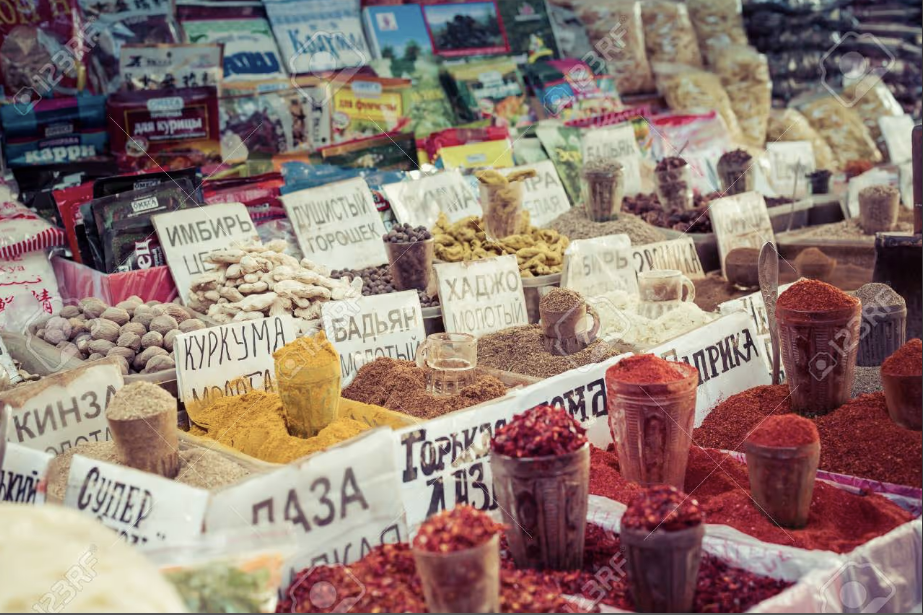
Osh Bazaar is one of the places I’d include in any list of things to do in Bishkek with kids, even if you aren’t particularly interested in shopping. It’s a huge market selling food, fresh fruit and vegetables, spices, dried fruit, clothing, household goods, souvenirs and all sorts of things you probably didn’t realise you needed. There are also many vendors selling toys and things for kids.
It can be busy and chaotic, so keep an eye on children and belongings, but that’s also part of what makes a market like this interesting. For a child, there’s plenty to look at without having to turn the visit into a history lesson. You can see unfamiliar foods, piles of spices, traditional hats, dried fruit and everyday life happening around you.
It’s also a useful place to pick up snacks for road trips.
Practical information
🕘 Opening Hours: Currently listed as approximately 9 AM to 5 PM, Tuesday to Sunday. Closed Monday according to current listings.
💰 Entry Fees: Free.
Go earlier rather than later if you want a more comfortable visit. Current local guidance also recommends morning for cooler temperatures and a less hectic experience.
Oak Park
Oak Park, or Dubovy Park, is directly beside the central attractions and is a nice place to slow things down after the square and museum.
It’s one of Bishkek’s older green spaces and contains the Open-Air Sculpture Museum, where you can wander among sculptures. There is also St Nicholas Church nearby.
It isn’t somewhere I’d make a special trip across the city to visit, but it’s an easy addition to a central Bishkek walking route.
Panfilov Park
Panfilov Park is another option if you’re travelling with children.
It’s a traditional city amusement park with rides and open space. It’s not a major Kyrgyzstan attraction, but it can be useful on a family trip when everyone has had enough of cultural sightseeing.
Victory Square
Victory Square commemorates the Soviet victory in the Second World War.
The central monument consists of three curved structures representing a traditional Kyrgyz yurt, with a woman holding a wreath beside the eternal flame.
It’s a quick visit rather than something you’ll spend hours exploring, but it can easily be included in a Bishkek city walk.
Frunze House-Museum
The Mikhail Frunze Museum is another interesting stop for anyone interested in Soviet history.
Frunze was a Soviet military commander born in what was then Pishpek, the city that became Bishkek. The museum incorporates the small house where he spent part of his childhood inside a much larger Soviet-era museum building.
It’s a slightly unusual museum and more interesting for older children or adults who have some interest in the Soviet period.
Ala Archa National Park
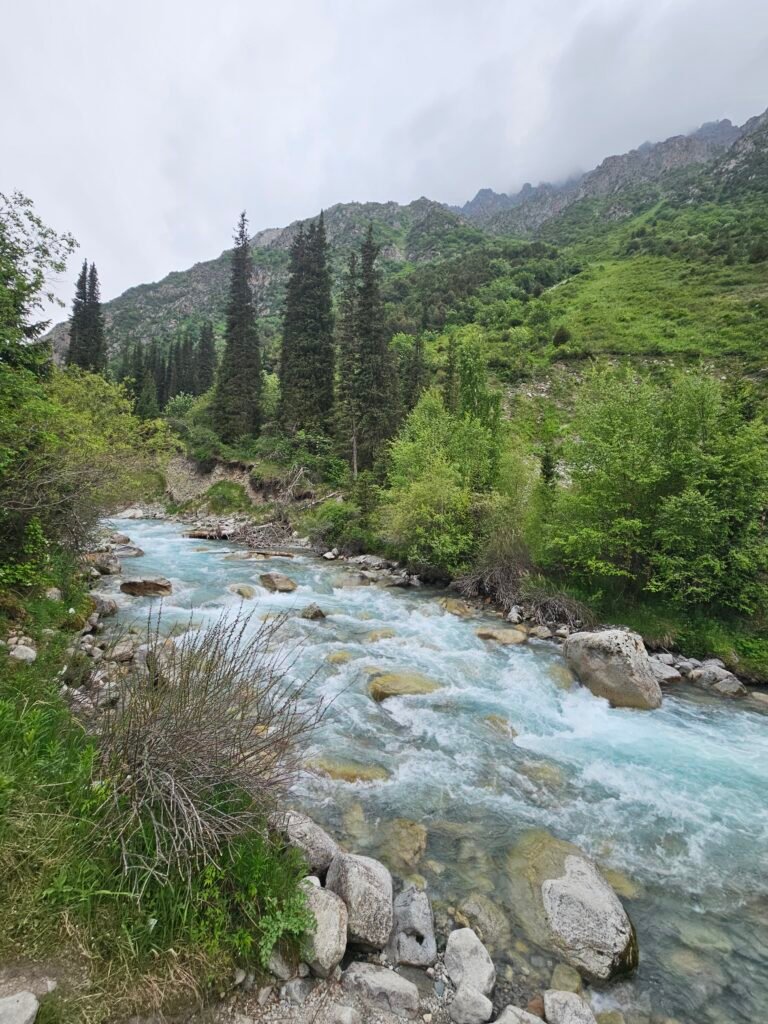
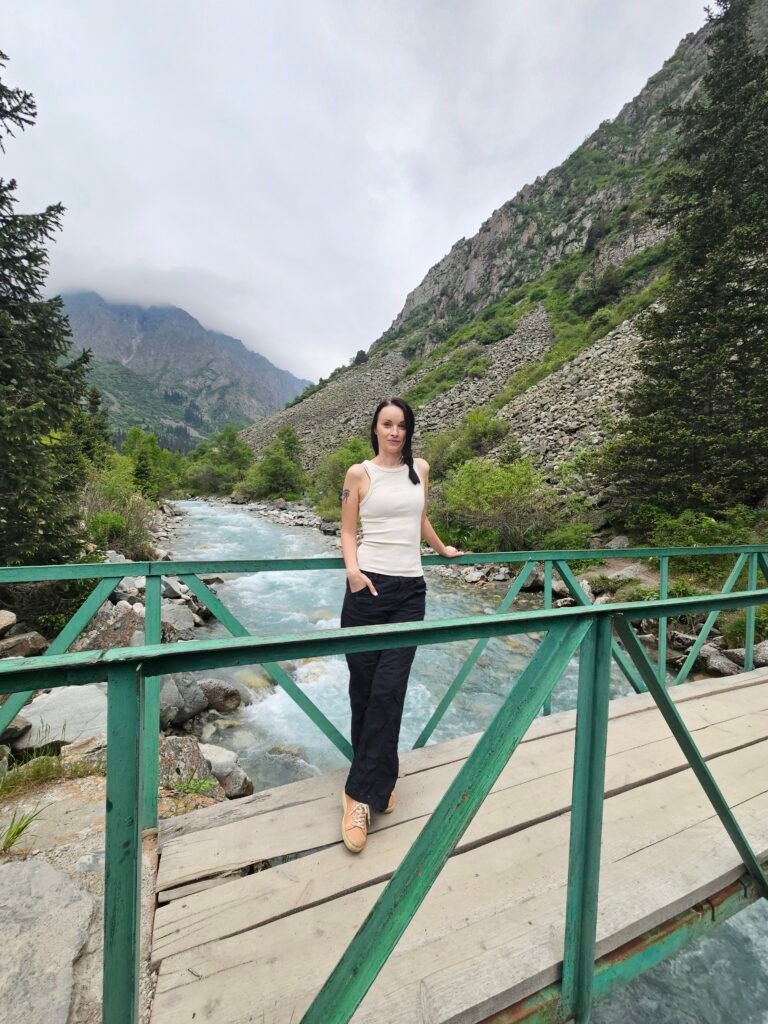
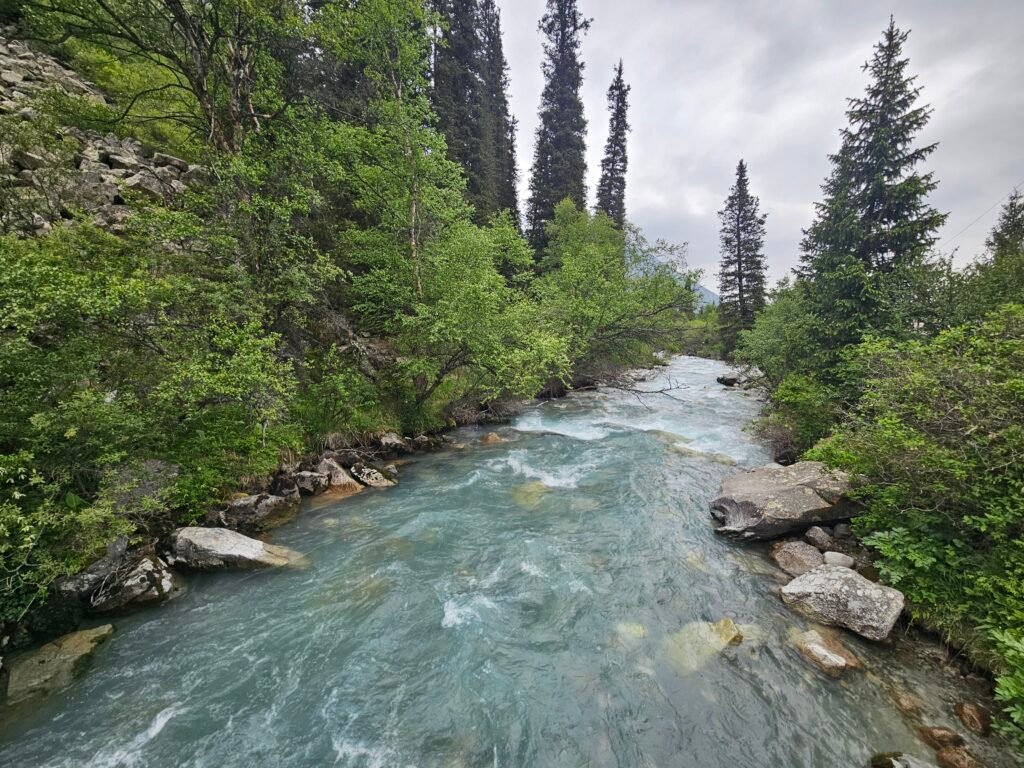
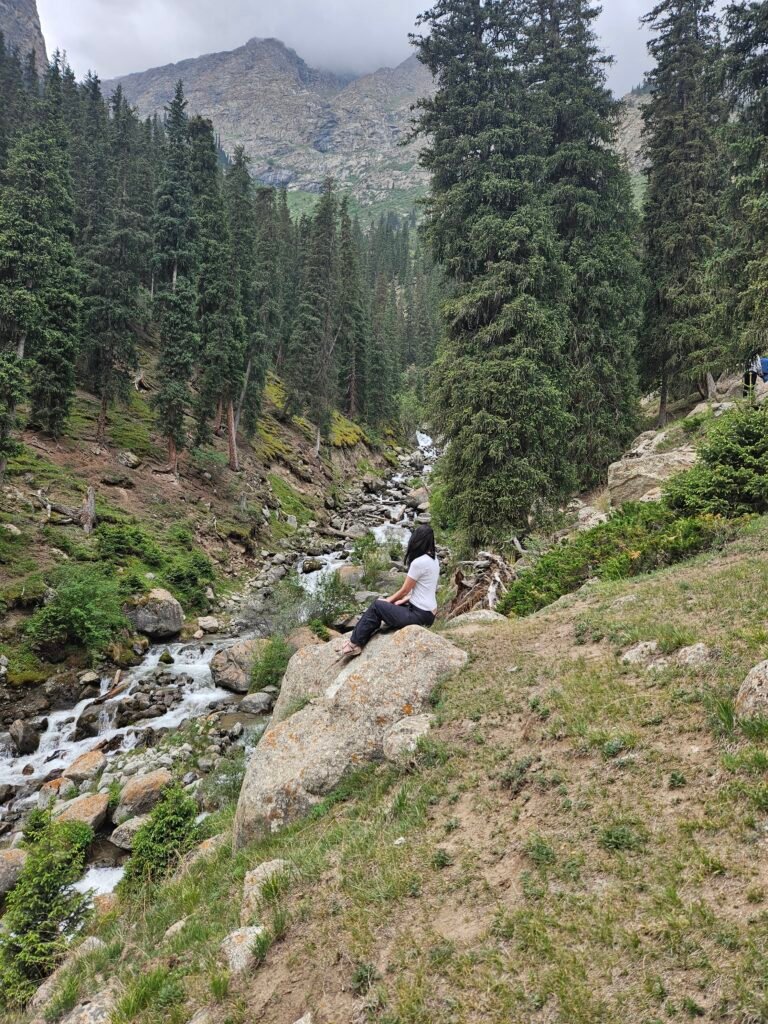
Ala Archa was one of the places that really showed us how dramatically the temperature can change in Kyrgyzstan.
It is only about 40 km south of Bishkek, so it’s one of the easiest mountain trips from the capital. The park stretches from forested valleys up towards some very high Tian Shan peaks. The scenery is spectacular! But the important thing to know when travelling with kids is that the weather at altitude can be completely different from Bishkek.
When we visited, it was around 26°C in Bishkek and only 7°C at Ala Archa. That’s a huge difference. So don’t leave Bishkek in shorts and a T-shirt because it’s sunny and warm.
Bring:
- Warm layers
- A waterproof jacket
- Proper walking shoes
- Water
- Snacks
- Sun protection
The park has everything from relatively easy valley walks to serious mountain routes. You don’t have to be an experienced trekker to enjoy it. Current information describes the park as suitable for everything from easier walks to much more demanding alpine routes.
Getting to Ala Archa from Bishkek
We used a private driver/tour rather than relying on public transport, which was much easier with our son.
Ala Archa is roughly 40 km from Bishkek and takes around 40 to 60 minutes depending on traffic and exactly where you’re staying. Current taxi estimates are around 600 to 800 KGS one way, although a private driver or organised excursion will cost more.
There have also been changes to access inside the park, so don’t rely on very old blog posts for transport information.
Public Transportation
If you don’t want to hire a driver, there is now a convenient public transport option. Bus No. 1 runs from T. Usubaliev Square in central Bishkek directly to Ala Archa Nature Park. The bus operates daily from around 8 AM to 7 PM, with departures every 20 to 30 minutes. The fare is currently 50 KGS when paying cash or 40 KGS with cashless payment.
The bus stop is particularly convenient if you’re sightseeing in central Bishkek, as T. Usubaliev Square is close to Ala-Too Square and the State Historical Museum. You’ll still need to allow time for getting from the park entrance to the actual hiking areas. Since 2025, private petrol and diesel vehicles have been restricted inside the park, and electric shuttle buses operate beyond the entrance.
There are older guides that recommend marshrutka 265 from Osh Bazaar. This route still runs towards Kashka-Suu, but it isn’t as straightforward for visitors heading to Ala Archa itself, so Bus No. 1 is the better public transport option now.
Current entry fee
The park changed its fees in June 2026. Current rates are:
🕘 Opening Hours: Open year-round, with visitor access generally during daylight hours.
💰 Entry Fees: 250 KGS adults | 180 KGS children aged 7 to 14 | Free for children under 7.
The park administration has also introduced electric transport arrangements inside the park, so access beyond the entrance can change from season to season. Check locally when you arrive.
Horse Riding in Chong Kemin
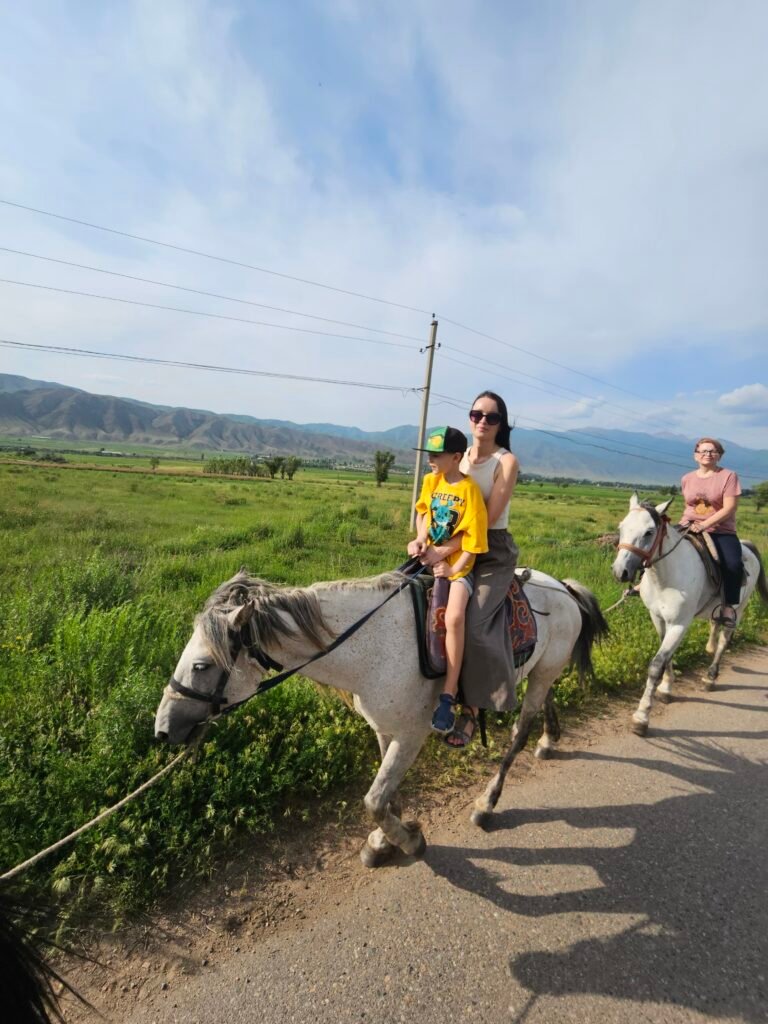
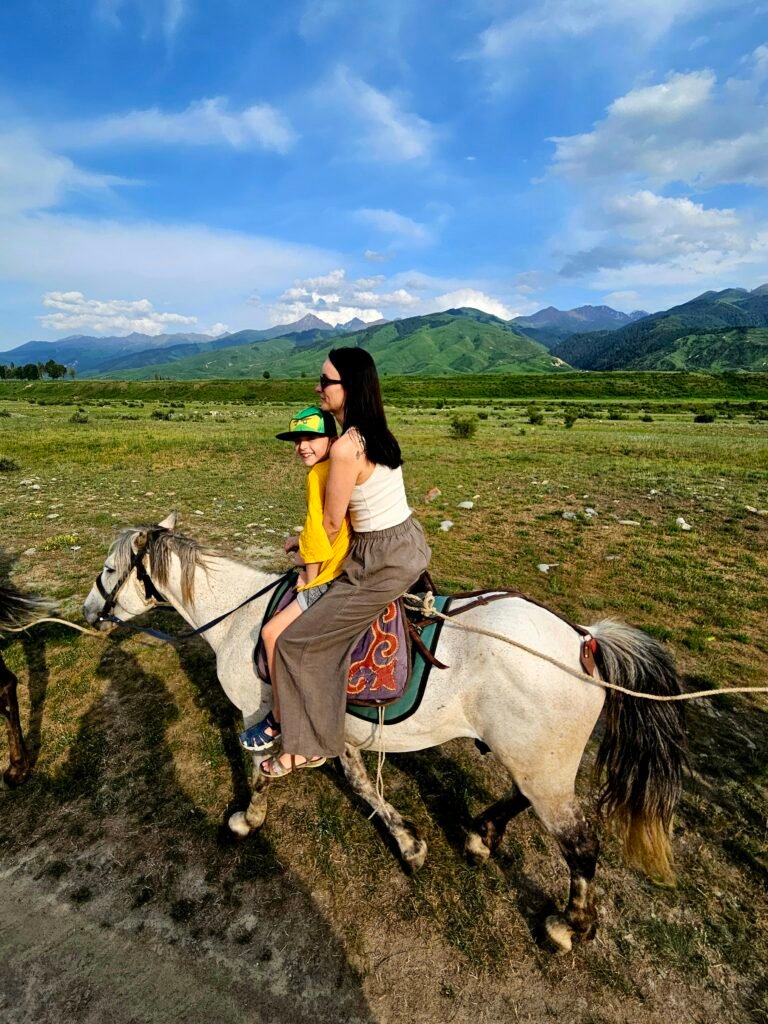
One of our other adventures was horse riding in Chong Kemin.
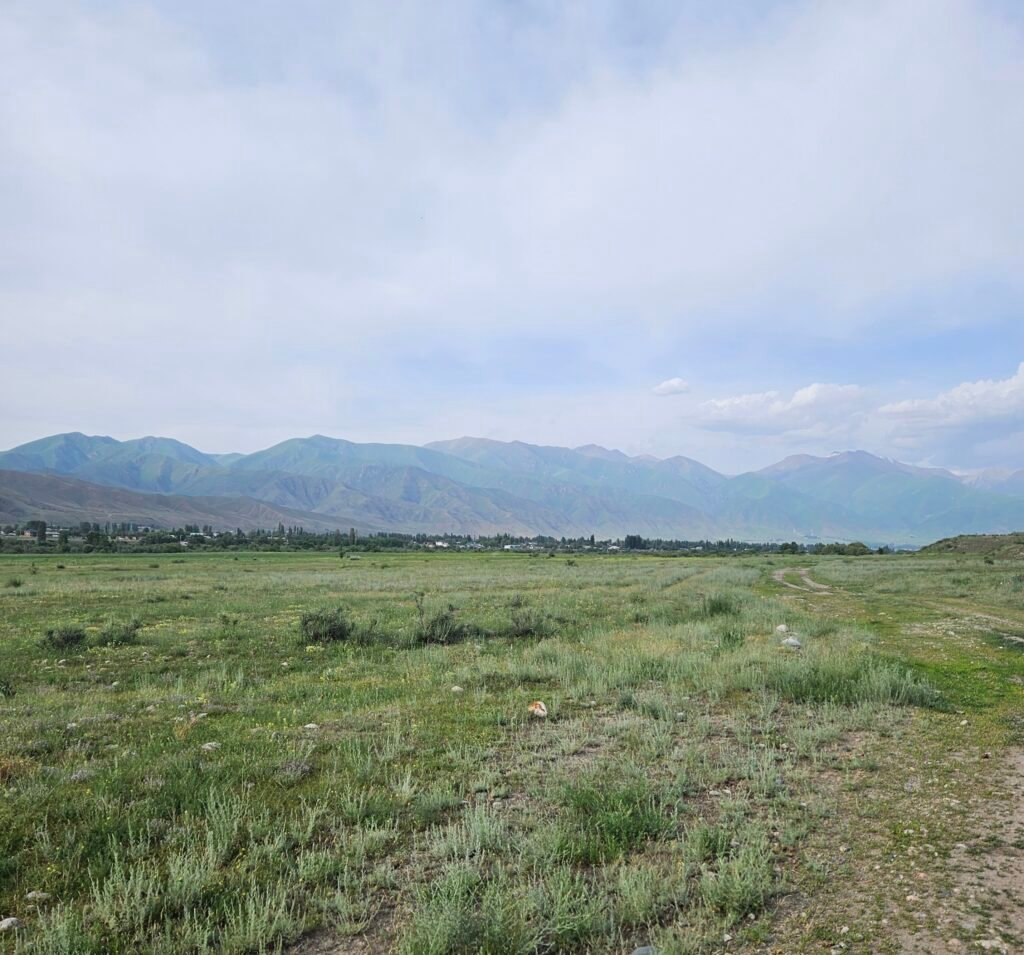
Horse culture is such an important part of Kyrgyzstan that getting on a horse feels like a much more natural travel experience here than it does in many countries. Chong Kemin is a large valley and national park area northeast of Bishkek, surrounded by mountains and open landscapes.
Current organised rides in Chong Kemin cater to beginners as well as more experienced riders, and day trips can combine transport from Bishkek with a couple of hours on horseback.
For families, I’d make sure you book with an operator who knows the riding ability and age of your child in advance. “Horse riding” can mean anything from a gentle supervised ride to a proper mountain trek.
Our son was eight, and this was a good age for the experience. He was riding on a horse together with me, and it was a very gentle, slow ride.
Getting to Chong Kemin
Chong Kemin is around 120 to 140 km east of Bishkek, depending on where in the valley you are going, and the drive usually takes around 2 to 2.5 hours. We visited as part of an organised tour, which was the easiest option for us as a family and included our transport from Bishkek.
It is possible to get there independently. Shared taxis or marshrutkas travelling from Bishkek towards Balykchy or Issyk Kul pass the turn-off for the Kemin area, where you can arrange a local taxi or pickup for the journey into the valley. There is also a train from Bishkek to Bystrovka, followed by a taxi into Chong Kemin, although this is considerably less straightforward.
For families, we’d recommend booking a tour or private driver, especially if you want to combine Chong Kemin with horse riding or other activities and don’t want to spend part of the day working out local connections.
Burana Tower
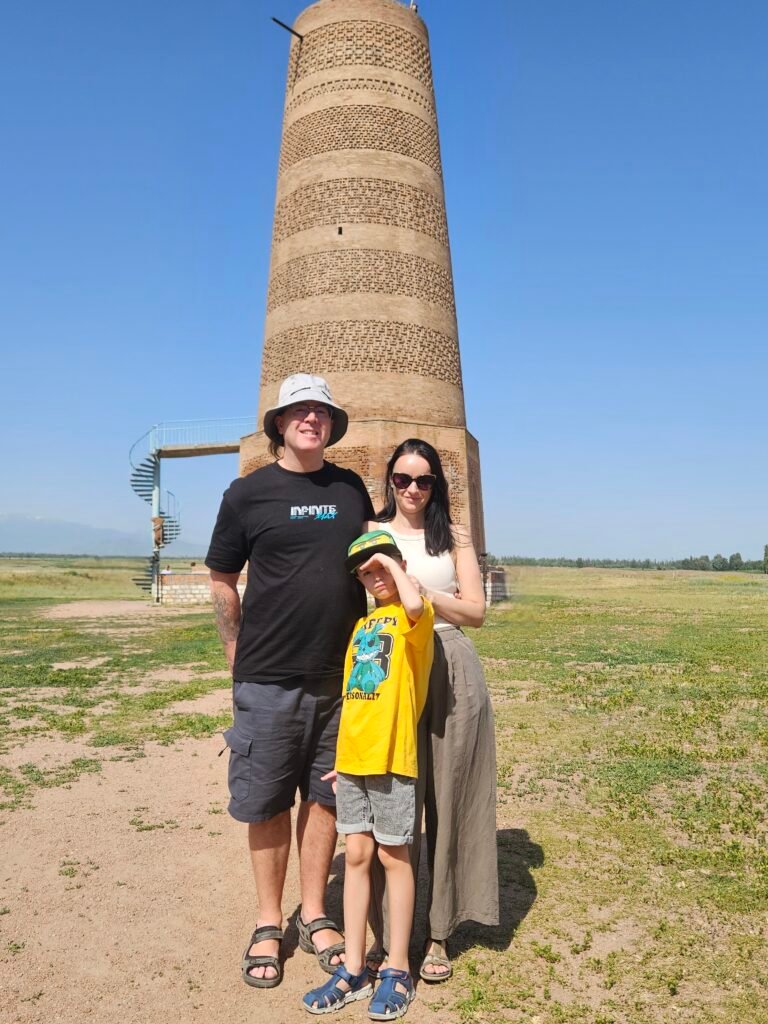
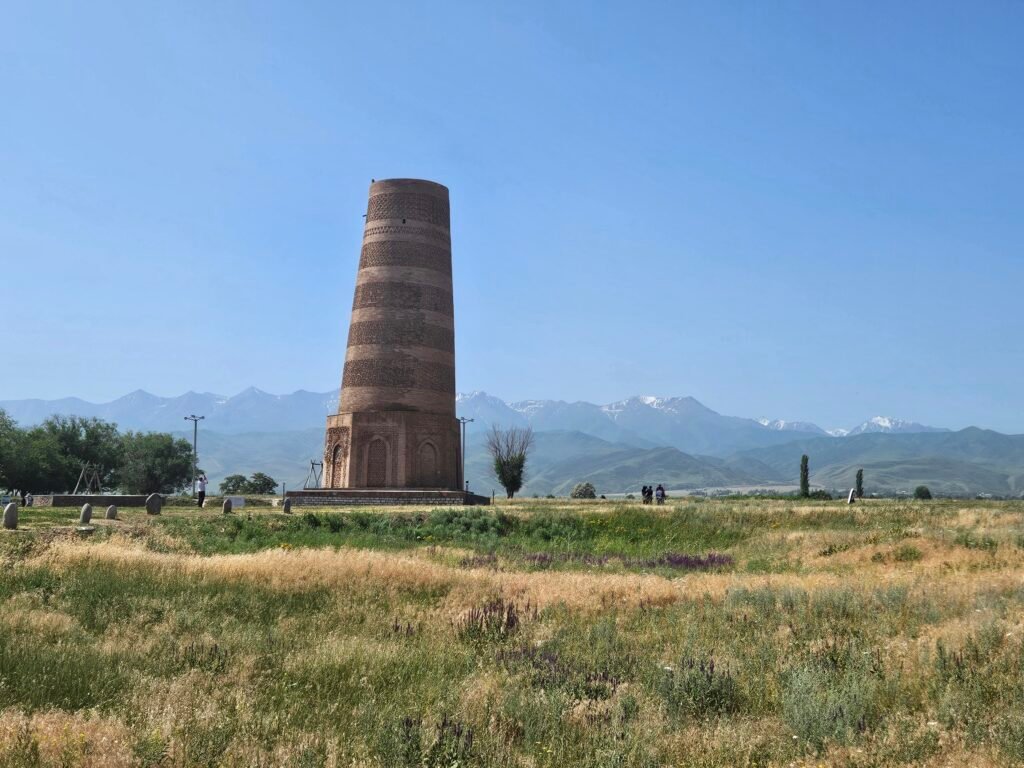
Burana Tower is one of the easiest historical sites to add to a Kyrgyzstan family itinerary.
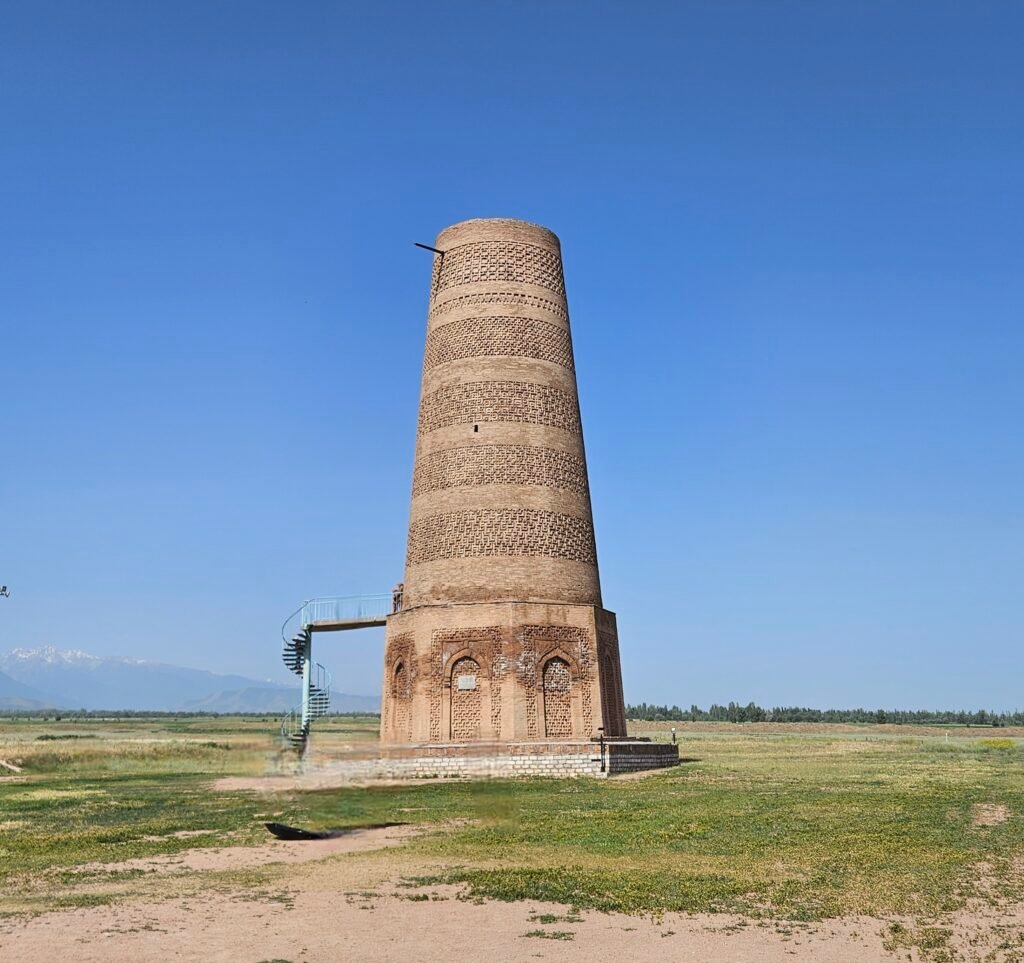
It is located near Tokmok, roughly 80 to 100 km east of Bishkek depending on the route, and makes a straightforward day trip. The tower is what’s left of the ancient city of Balasagun, an important settlement of the Karakhanid period and part of the Silk Road network.
The original minaret was considerably taller than the tower you see today. Earthquakes destroyed part of it, leaving the approximately 21-metre structure standing today.
The site isn’t just the tower.
There are also:
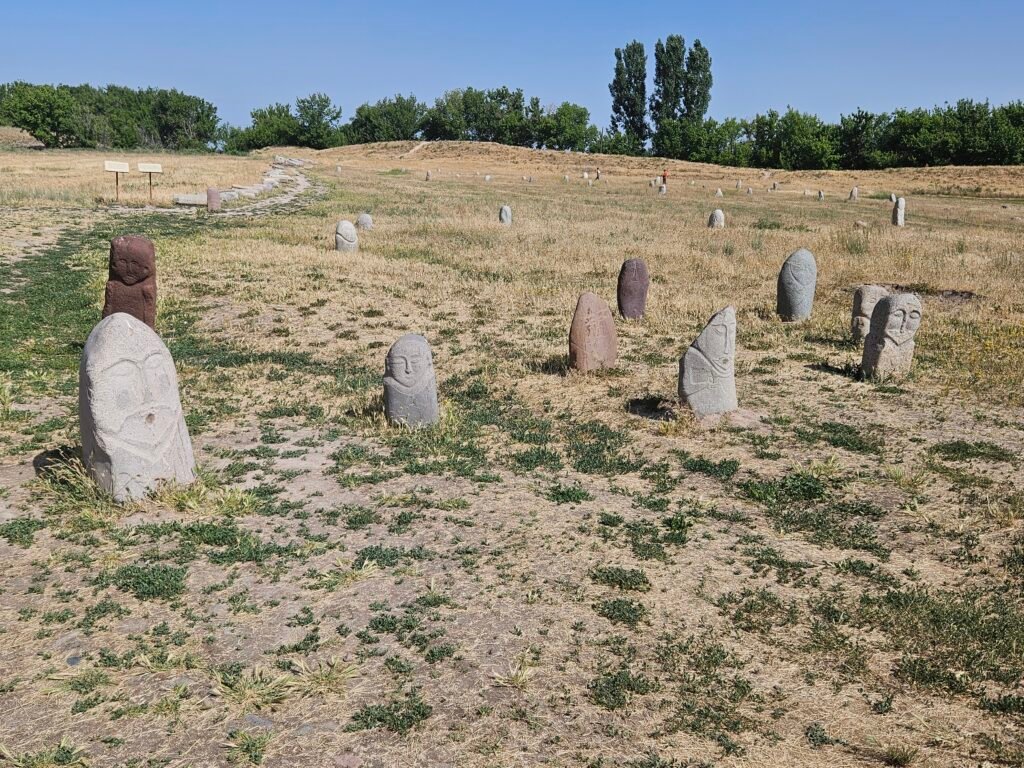
- Balbal stone figures
- Remains of the ancient settlement
- A small museum
- Archaeological remains
- Views across the surrounding Chuy Valley
The stone figures are particularly interesting because they give you a physical connection to the people who lived in this region centuries ago.
Practical information
🕘 Opening Hours: Generally daytime, but current official daily hours are not consistently published online
💰 Entry Fees: Around 100 to 120 KGS is currently reported, although older sources list lower prices. Confirm at the entrance.
Getting there
We used a private driver/tour.
This is one of the places where I think a driver is worth the extra money when travelling with a child. Public transport can get you towards Tokmok, but you’ll still need to arrange the final section to the archaeological site.
You can also combine Burana with other attractions in the Chuy Valley.
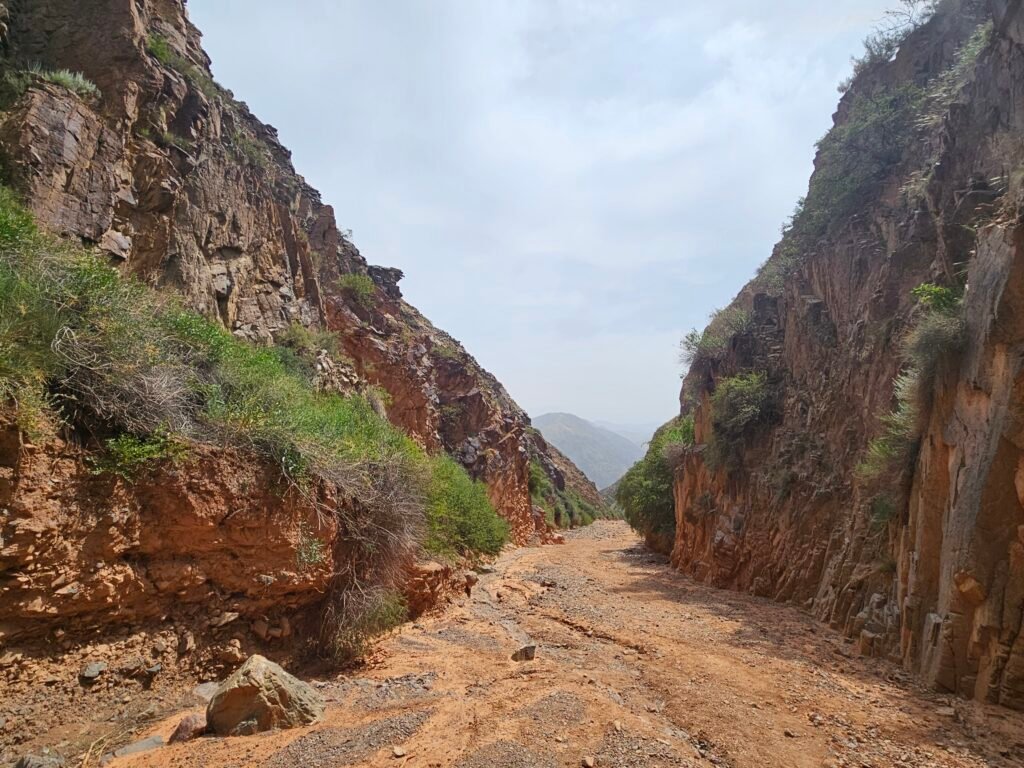
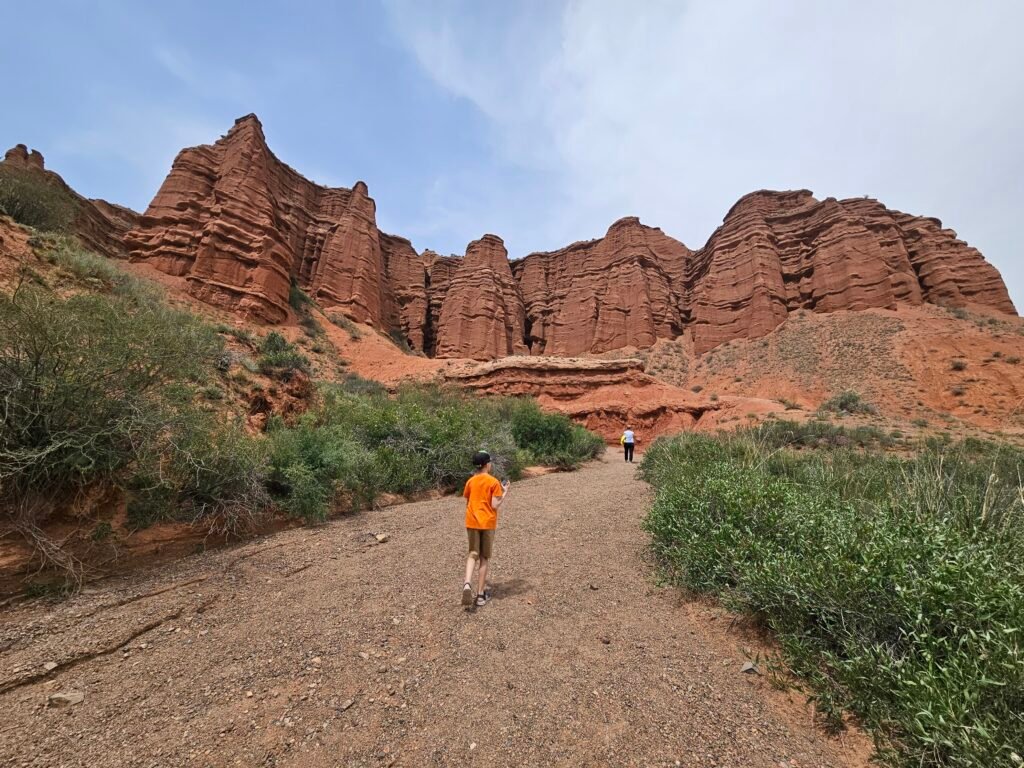
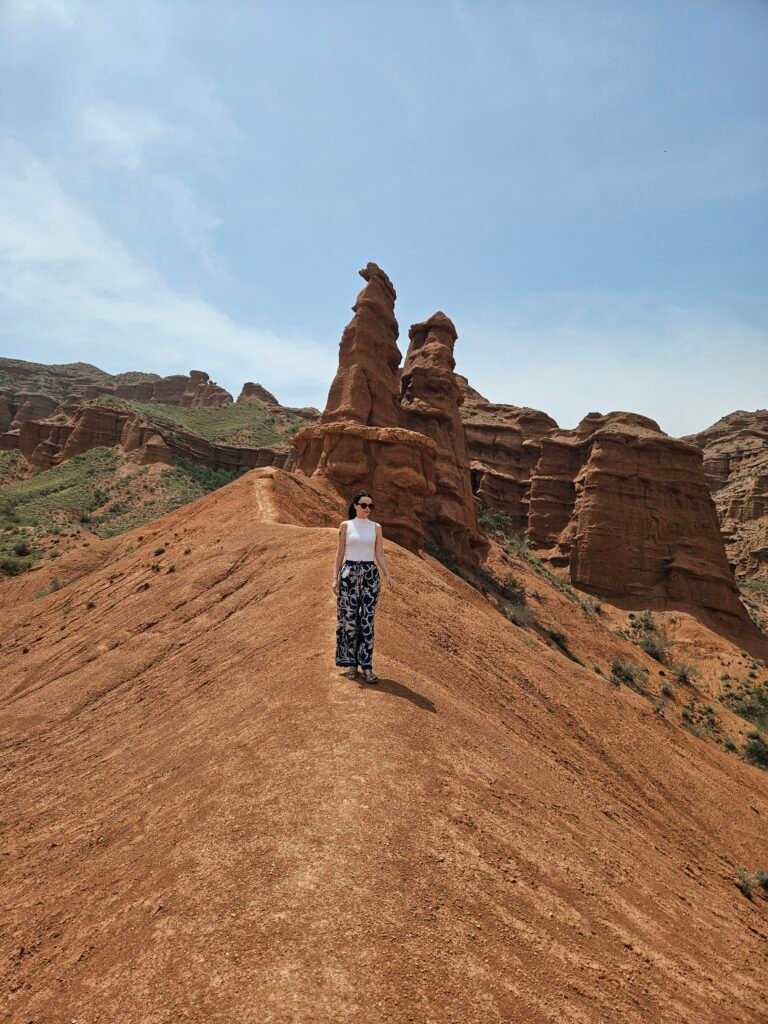
Konorchek Canyon
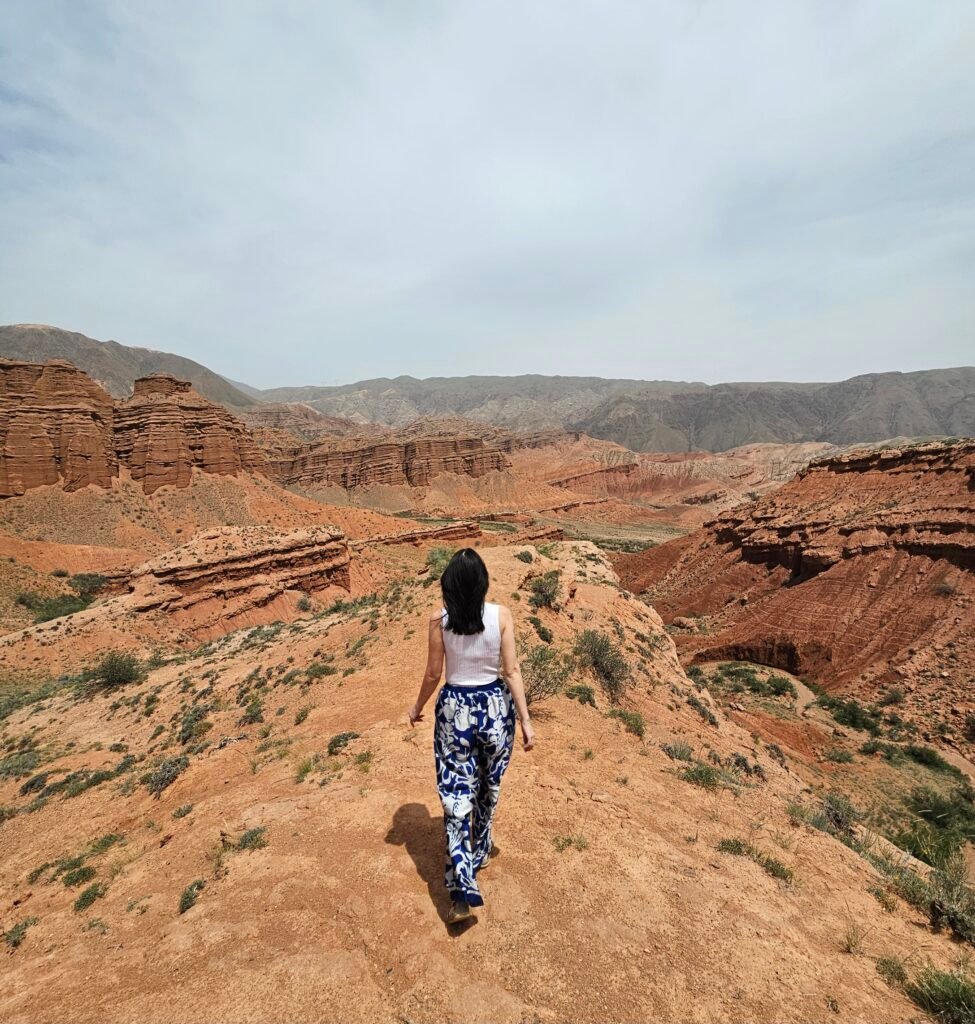
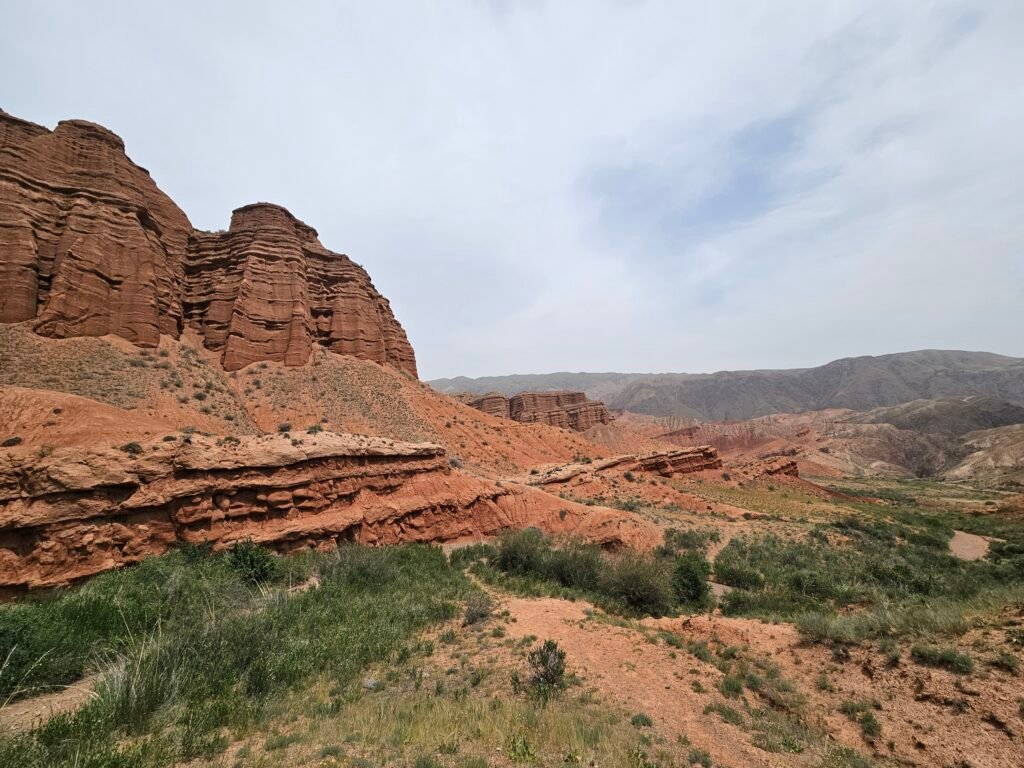
Konorchek Canyon was another place where the landscape changed completely.
The canyon is in the Boom Gorge area on the road towards Issyk Kul, roughly 125 km from Bishkek.
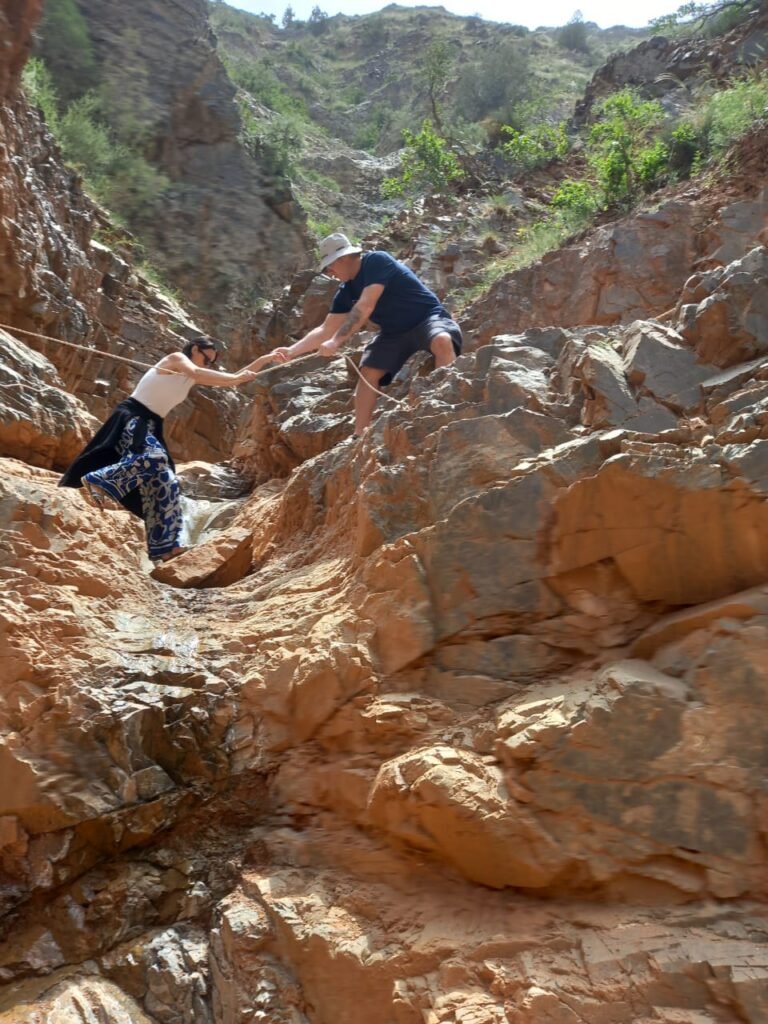
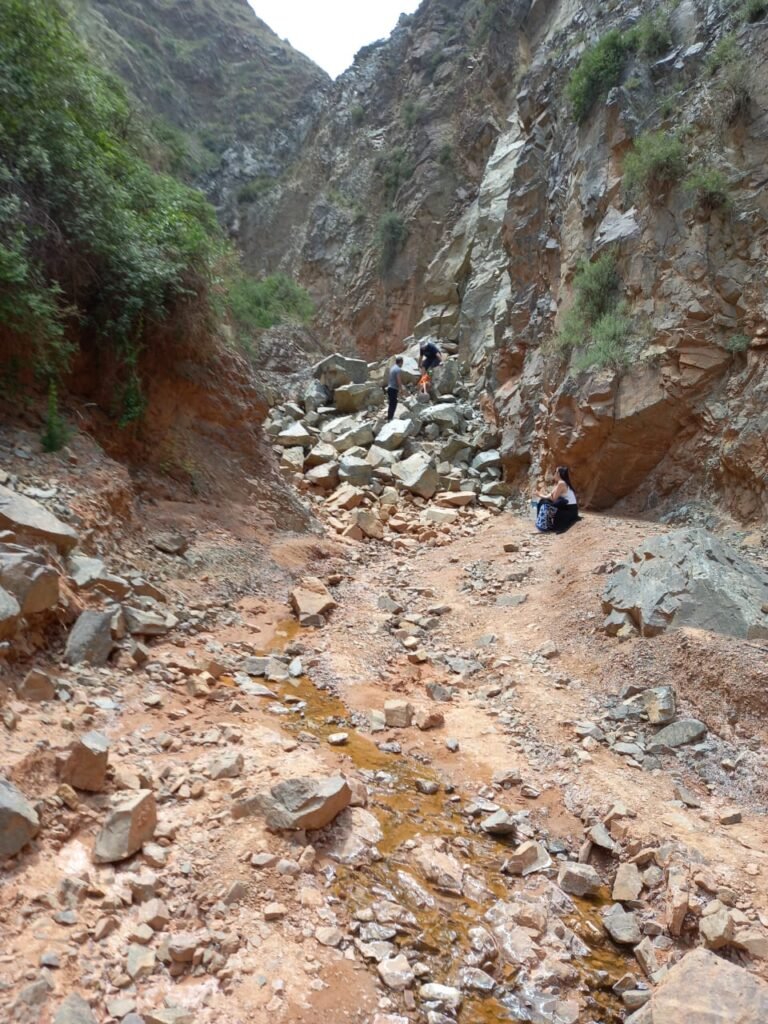
The scenery is dry and dramatic, with reddish rock formations and narrow canyon sections rather than the green alpine scenery you get at Ala Archa. The hike is fairly easy for most of the way, which is what made it workable for us with an eight-year-old.
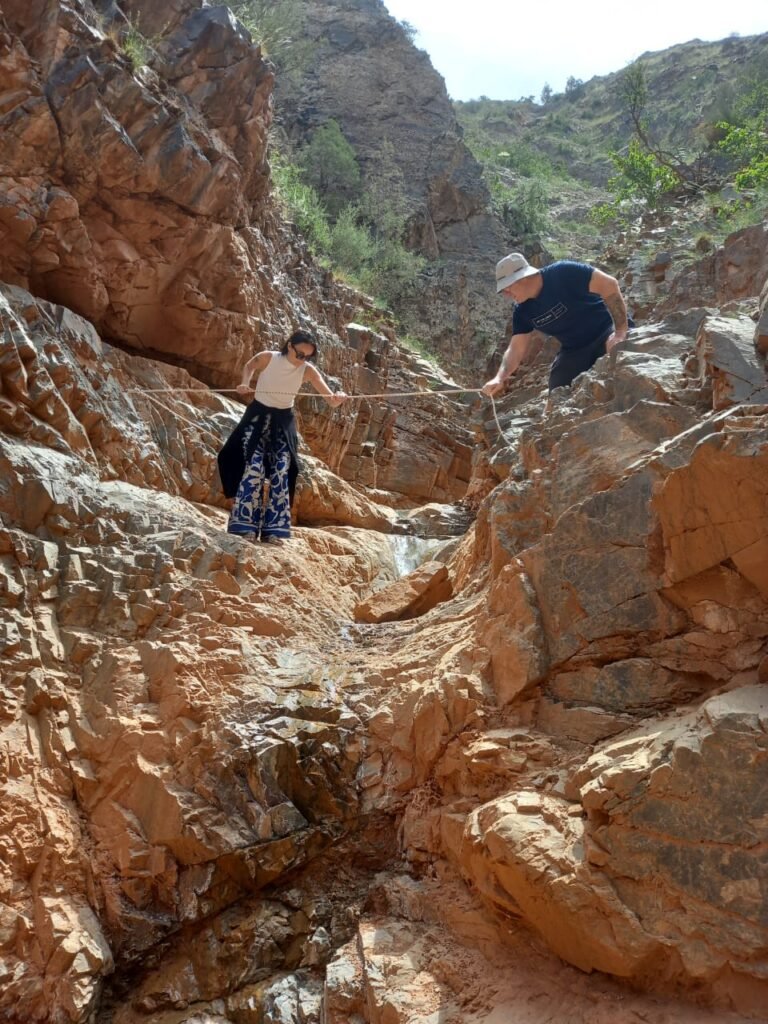
But there are a couple of places where you need to do a little bit of climbing. This is important because photos of the canyon can make it look like you’re simply walking along a flat path.
And for the most part you are, asides from a few spots. However, there are sections where you’ll be scrambling over rocks and using your hands or a rope. Nothing that we found particularly difficult, but it does mean this isn’t somewhere I’d take a very young child without thinking carefully about their ability and confidence.
Wear proper hiking shoes. Not sandals. Not slippery trainers. Proper shoes with decent grip.
Bring water
This is one of those places where you really need to take the practical advice seriously.
Konorchek is dry. There isn’t a convenient café waiting halfway through your hike. Take plenty of water, snacks, sunscreen, a hat and an offline map. Also avoid entering the canyon after heavy rain. Flash flooding can occur in dry canyon systems.
Issyk Kul With Kids
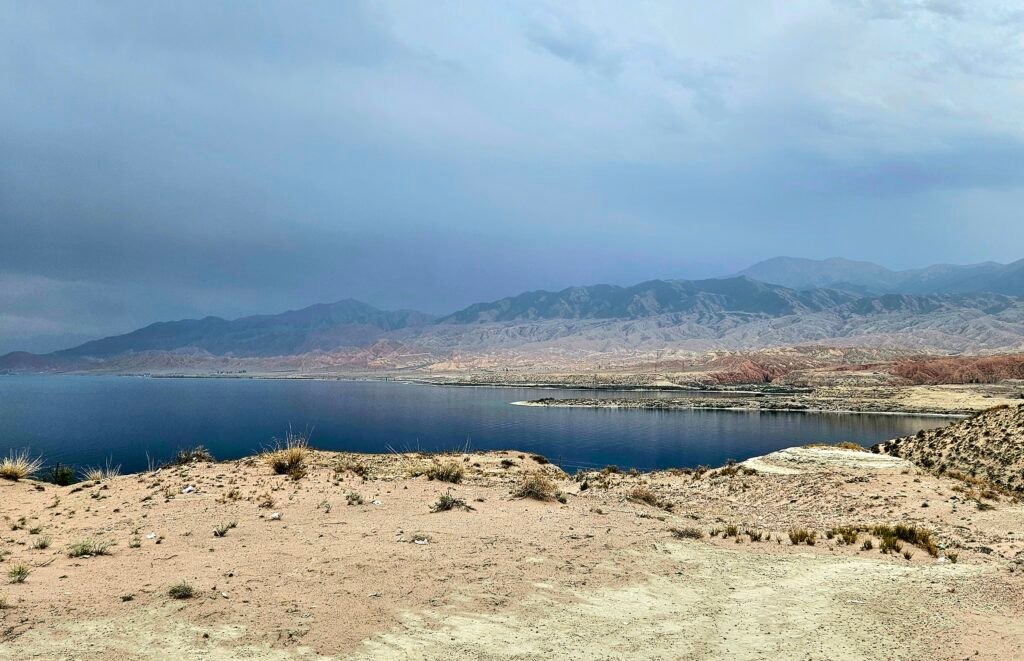
Then there was Issyk Kul, the huge mountain lake in the east of Kyrgyzstan. It is a long drive from Bishkek, and there is so much to see around the lake that we wouldn’t recommend trying to visit it as a day trip. The journey itself takes time, and once you’re there, you’ll want time to explore the different places along the shore. We think at least one overnight stay is worthwhile, preferably with a private driver so you can stop at the sights and villages along the way.
The lake itself is enormous. It is about 182 km long and 60 km wide and sits at an altitude of around 1,607 metres. It is one of the world’s largest high-altitude lakes and famously does not completely freeze in winter.
There are different experiences around the lake depending on which shore you visit.
The northern shore is more developed, with resorts, beaches and water activities. The southern shore is quieter and is where you’ll find places such as Bokonbaevo and Skazka Canyon.
We went to the southern side. And this is where I would recommend at least one overnight stay, more if you have the time. We used a private driver/tour because it made the whole trip much easier. You can use marshrutkas, but with a child and several stops, a private car gives you much more flexibility.
The south shore has mountains, villages, canyons, beaches, eagle hunters and yurt stays all within the same general region.
Trying to see all of that in one day from Bishkek would be exhausting.
The practical version
If you have the time, I’d structure it something like:
Day 1: Bishkek → Issyk Kul → stops along the way → Bokonbaevo/yurt
Day 2: Eagle hunters → lake area → Skazka Canyon → overnight
Day 3: More south shore → return to Bishkek
You could easily make this longer.
Staying in a Yurt
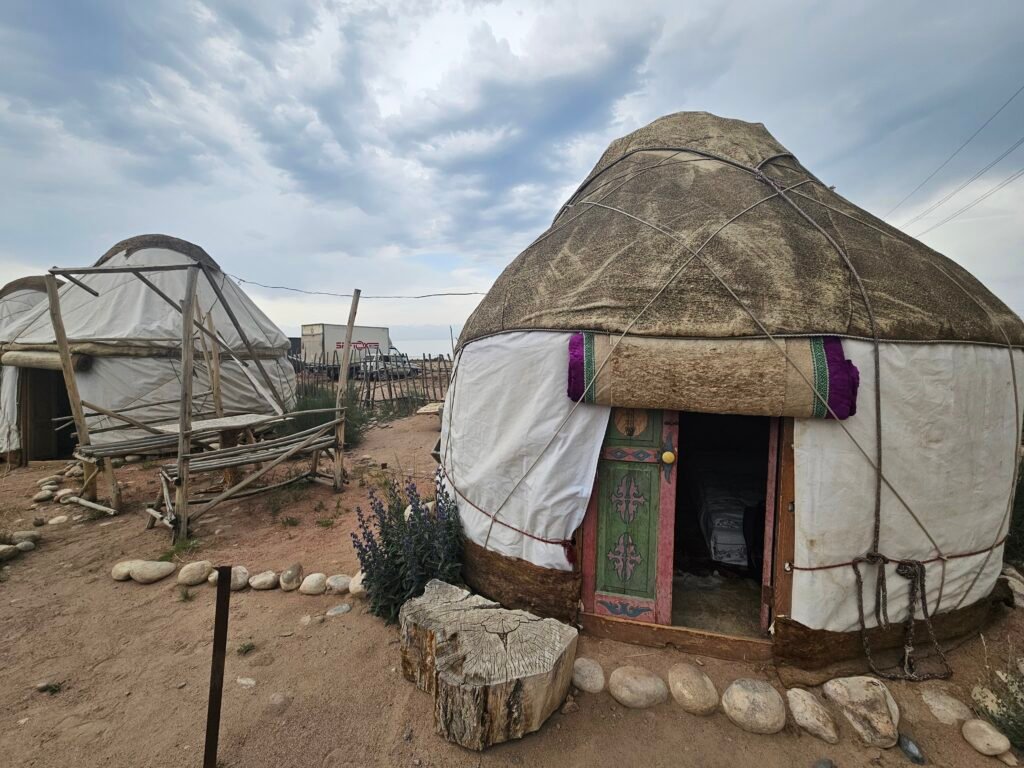
We stayed in a yurt during our Issyk Kul trip.
This is one of those experiences that makes sense to include in a Kyrgyzstan itinerary because you’re not just seeing the landscape, you’re experiencing something connected to the country’s nomadic culture.
Traditional Kyrgyz yurts are portable round dwellings built around a wooden framework and covered with felt. The circular roof structure, or tunduk, is also an important symbol in Kyrgyz culture and appears on the country’s flag.
Yurt stays vary enormously. Some are very basic and traditional. Others are set up specifically for tourists and can be surprisingly comfortable.
Don’t expect a hotel room in a round tent. Depending on where you stay, bathrooms may be separate, electricity may be limited and temperatures can drop significantly at night. But that’s also part of the point.
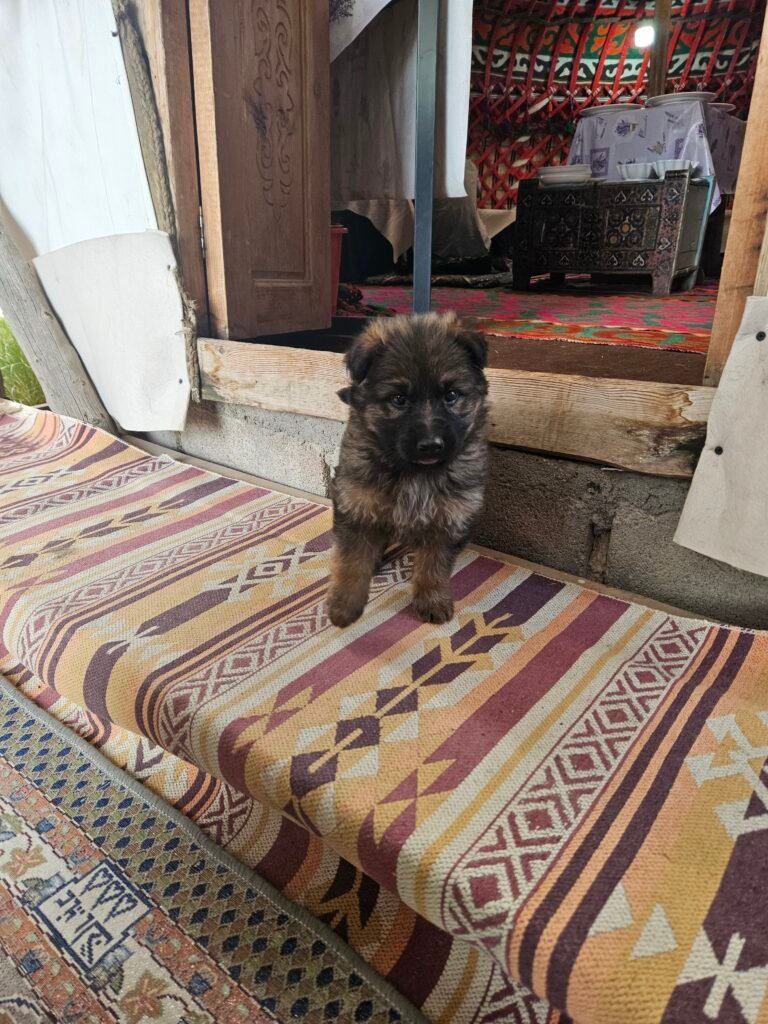
We stayed previously in yurt camps in Turkmenistan, Mongolia and Kazakhstan, and in comparison this camp was fairly basic, and somewhere in the middle. Unfortunately there was also a loud party going on somewhere at the lake, with music and karaoke till 1:00 am. This is something to be aware of, as the lake is a popular place in the summer for tourists and locals to have parties and celebrations. But at least there was a cute puppy.
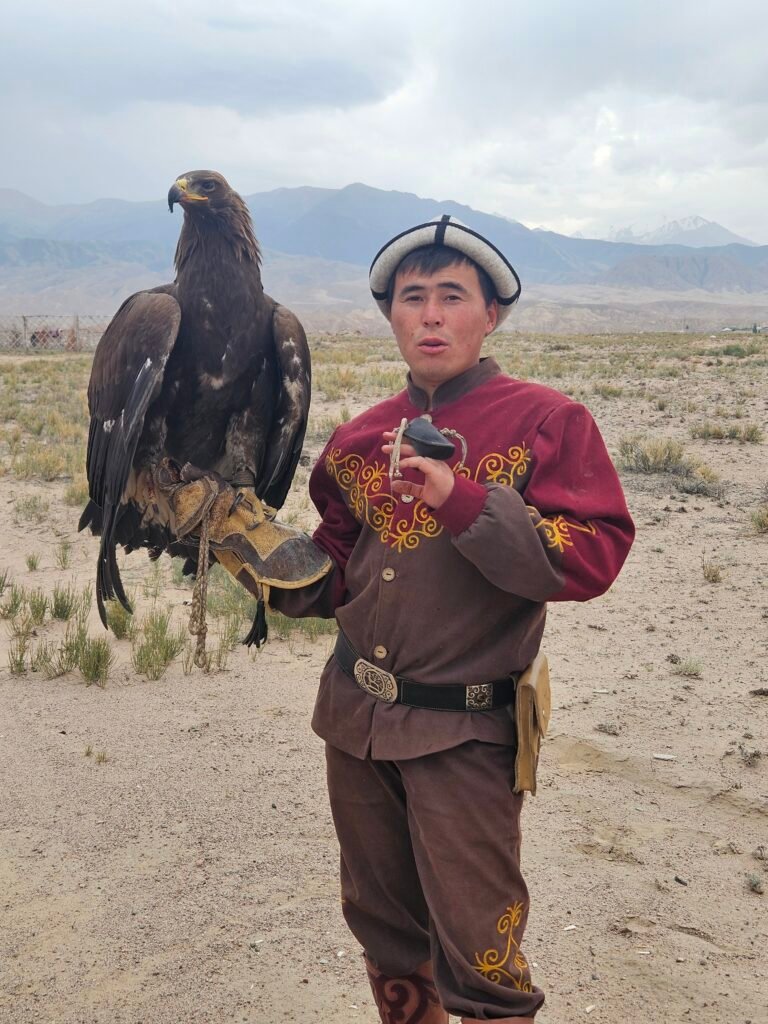
Eagle Hunters in Bokonbaevo
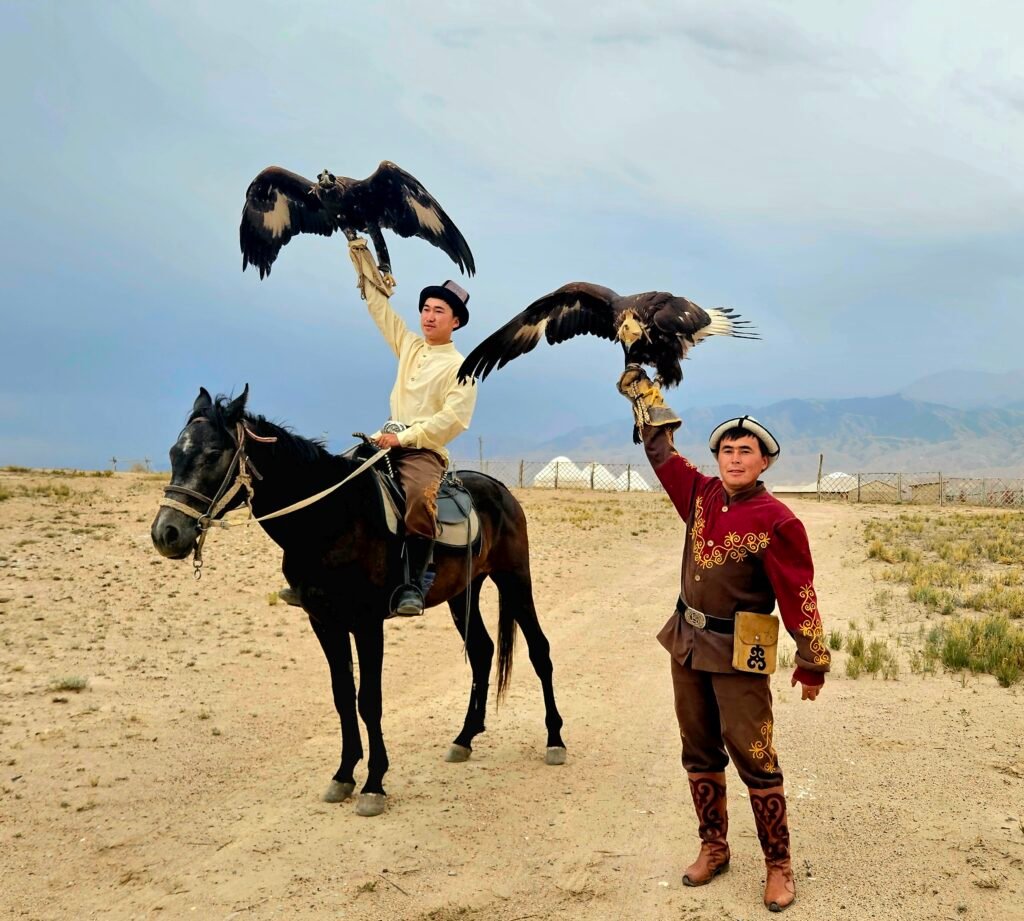
Bokonbaevo, also commonly written Bokonbayevo, is a village on the southern shore of Issyk Kul, famous for its berkutchi, the traditional eagle hunters.
Berkutchi is the Kyrgyz tradition of hunting with trained golden eagles. It has survived as part of the cultural traditions of communities around Kyrgyzstan, particularly in the Issyk Kul region.
We visited the eagle hunters while we were in the area.
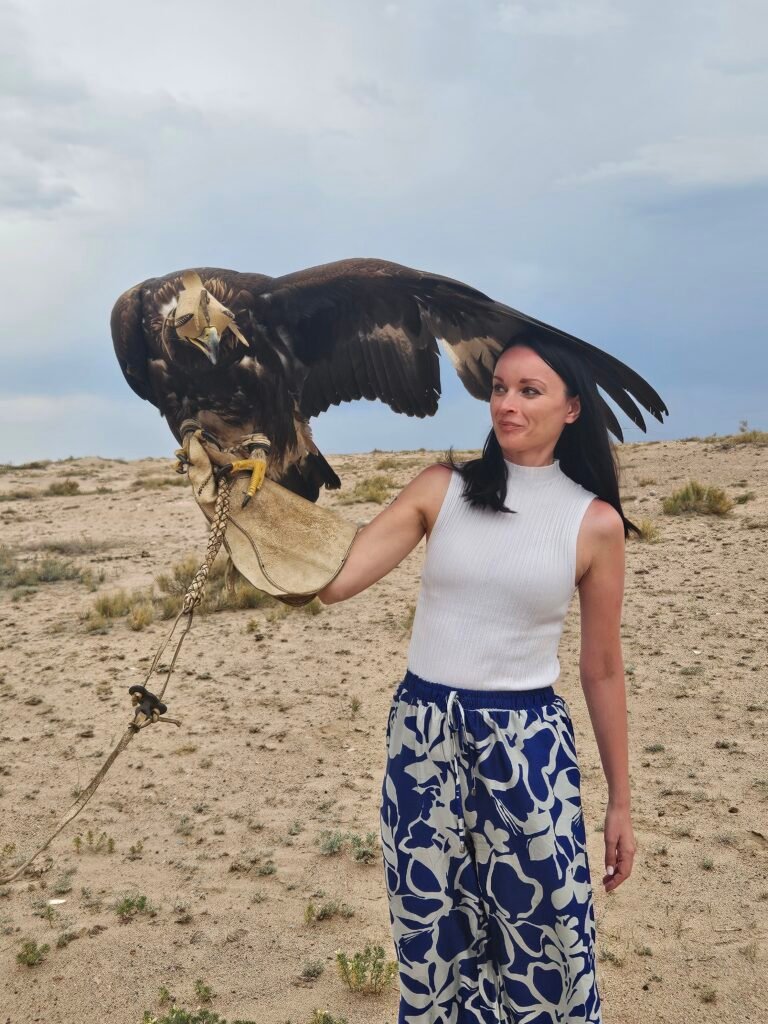
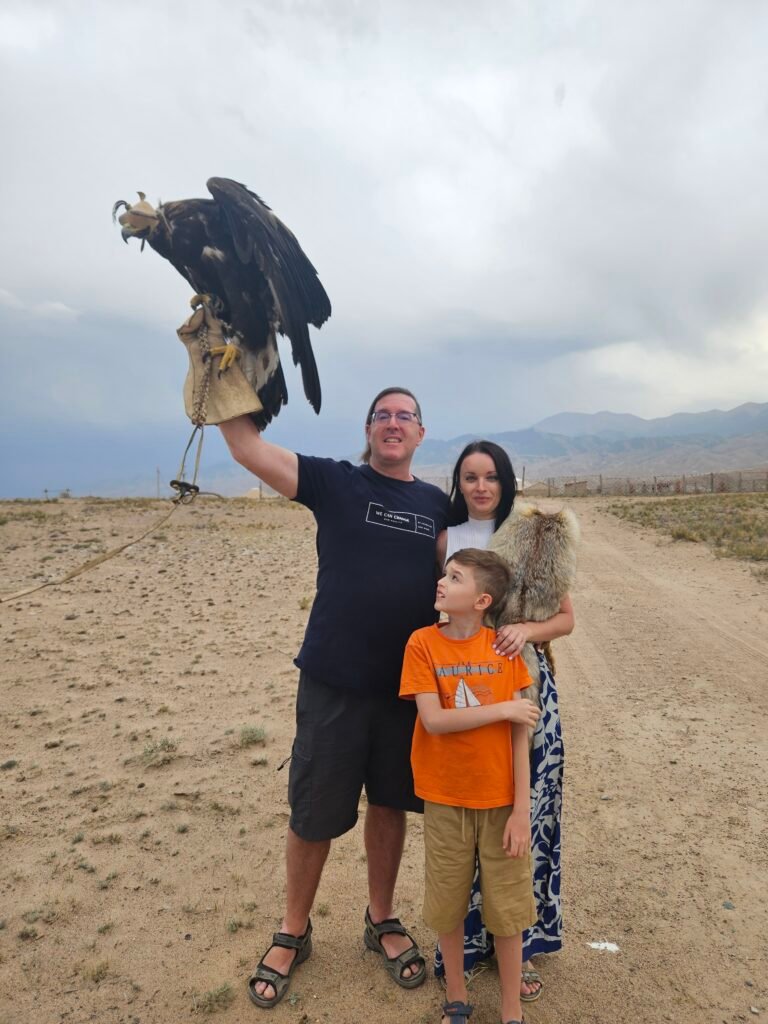
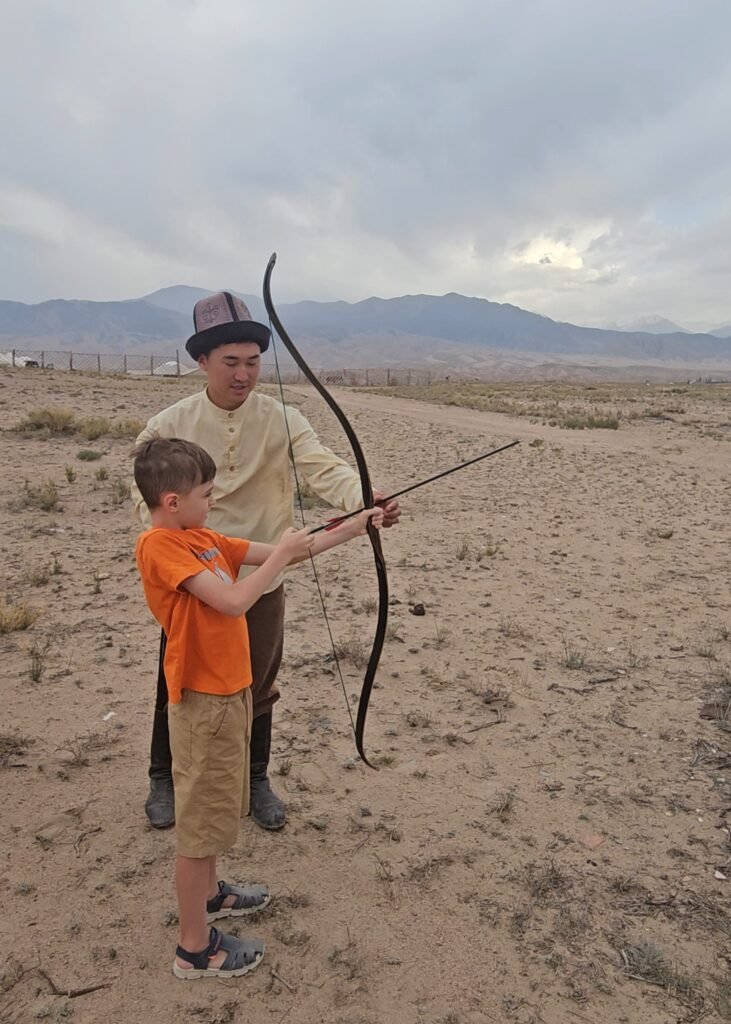
The experience was very interesting and fascinating. The hunters explained the relationship between the hunter and eagle, showed how the birds are trained and how the tradition has been passed down. Then they did a hunting demonstration, and afterwards we got to hold the eagle ourselves (it’s fairly heavy!) and try our hand at archery.
Current visitor information puts typical eagle-hunting demonstrations at roughly $20 to $40 per person, depending on the group, length of the experience and what’s included.
Practical information
🕘 Opening Hours: By arrangement. Demonstrations are generally available year-round.
💰 Entry Fees: Approximately $20 to $40 per person for a typical demonstration, with prices varying by operator and group size.
If you want to visit, arranging it through a local tour operator, or your accommodation is the best option.
There is also an annual Salbuurun festival around August, bringing together eagle hunters, traditional hunting dogs, archery and horsemanship. Dates and programmes vary, so check before planning a trip around it.
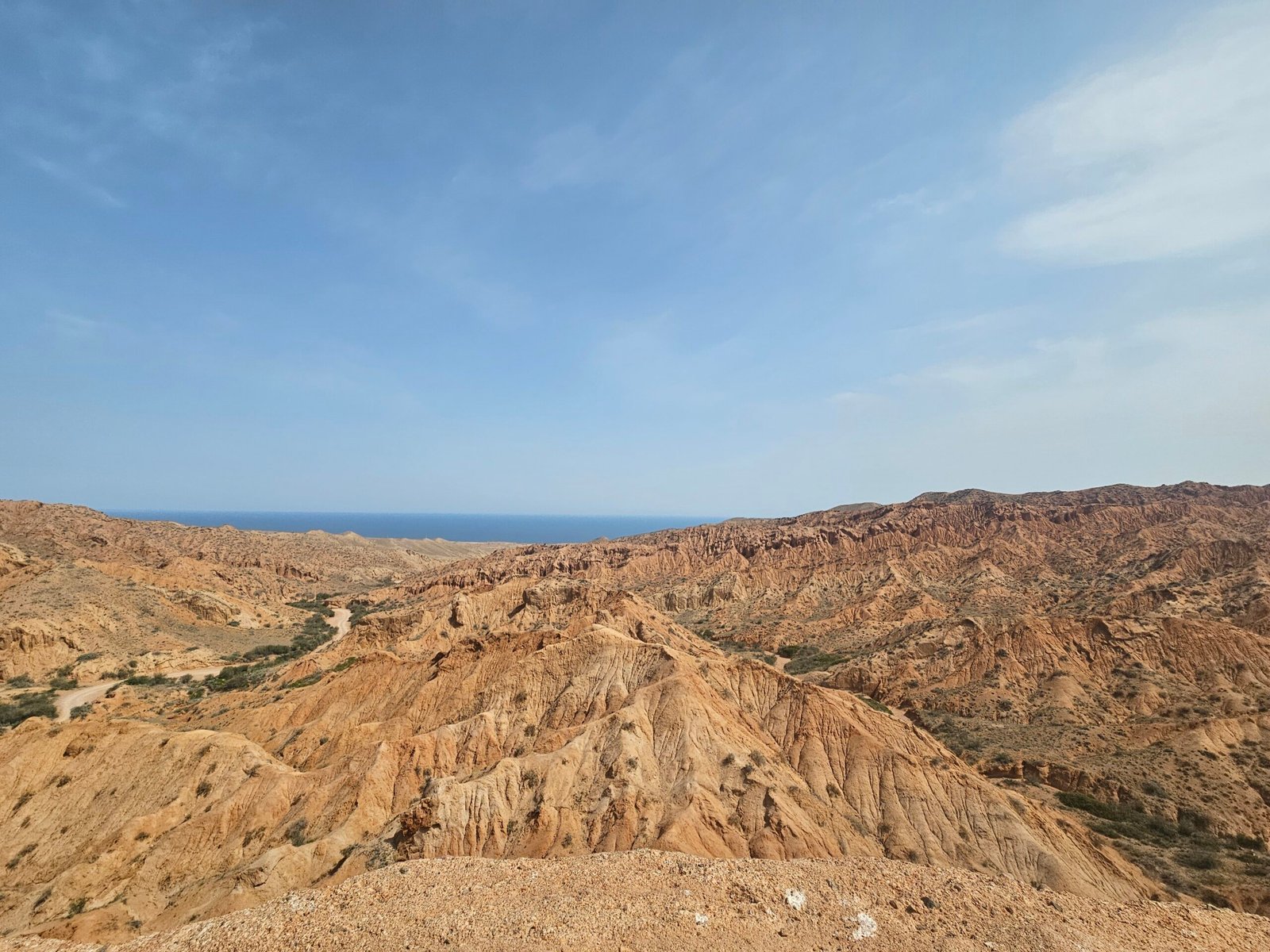
Skazka Canyon, or Fairy Tale Canyon
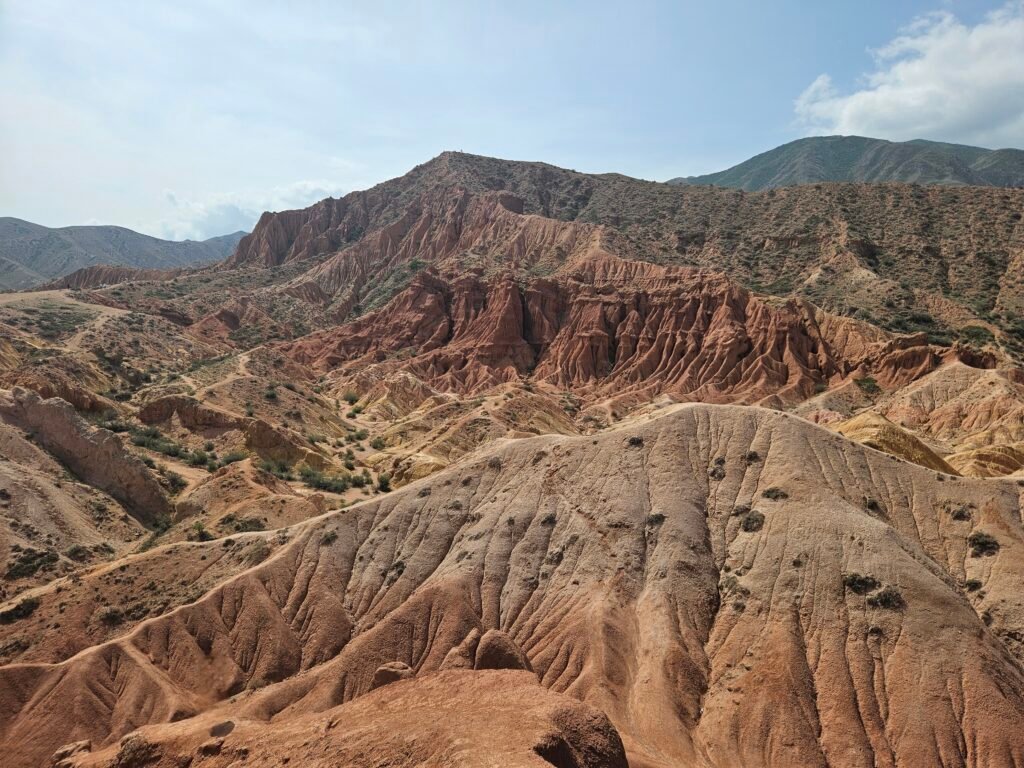
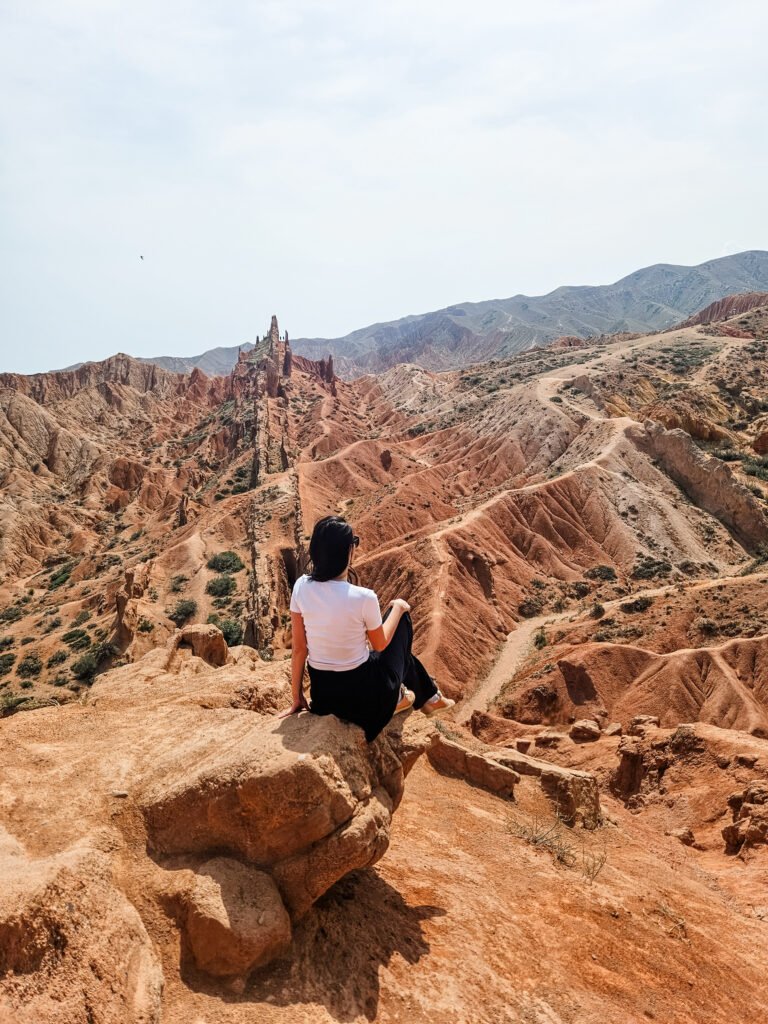
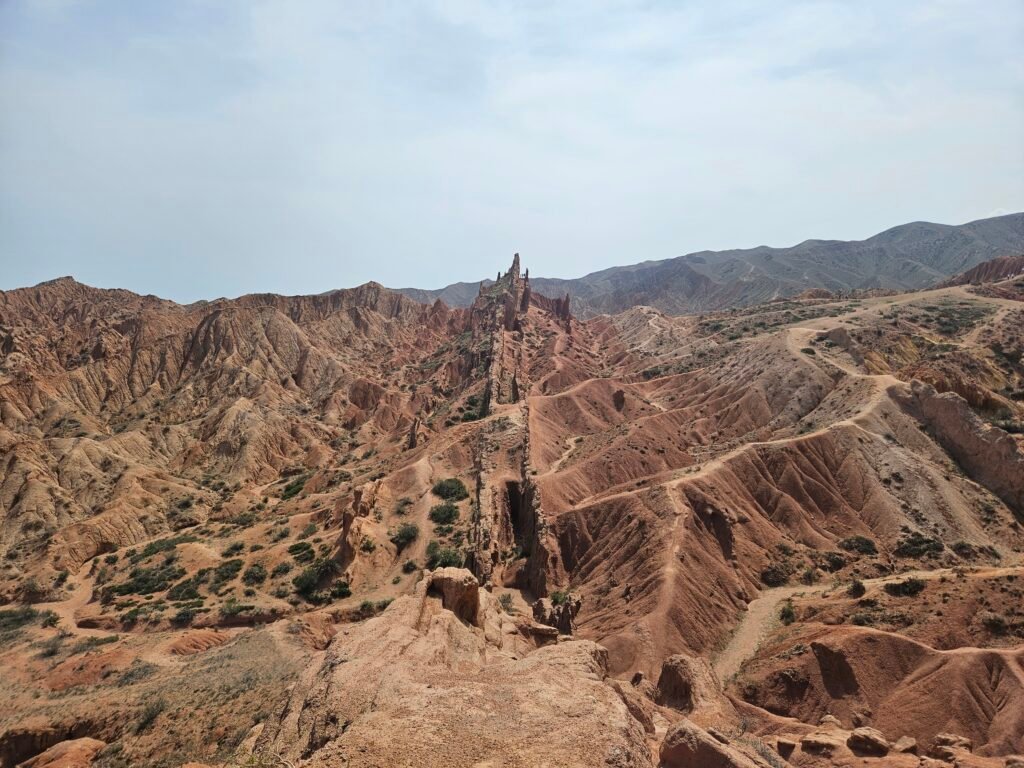
The following day we visited Skazka Canyon, also known as Fairy Tale Canyon.
It is on the southern shore of Issyk Kul, near Tosor. The landscape here is completely different again, with red and orange clay and sandstone formations shaped by erosion.
The name means “fairy tale”, and the formations have been given names based on things they supposedly resemble. There are narrow paths, ridges and unusual shapes throughout the canyon. We found the hike fairly easy overall.
However, it’s worth mentioning that there are sections where you are walking over loose ground and climbing up and down formations. You don’t have to climb everything, and there are easier routes through the canyon, but if you want to explore more of it, you’ll probably end up scrambling in places.
Our son was eight and managed it. I’d still recommend good footwear, particularly because the loose sandstone can be slippery on descents.
Practical information
🕘 Opening Hours: Visitor access is generally during daylight hours. Some current local sources list approximately 9 AM to 5 PM.
💰 Entry Fees: Small local entrance charges apply. Current sources report around 50 to 120 KGS, so carry cash and check the price at the entrance.
There aren’t the sorts of facilities you’d expect at a major tourist attraction, so bring water and snacks. And don’t underestimate the sun. There isn’t much shade.
How long do you need?
You can see the main formations relatively quickly, but I’d allow around 1 to 2 hours if you’re actually exploring rather than just getting out of the car for a few photos.
If you’re travelling with children, allow longer.
Getting Around Kyrgyzstan With Kids
We used tours and private drivers for our trips outside Bishkek.
For our family, this was the easiest option.
Kyrgyzstan is absolutely possible by public transport, and marshrutkas connect many of the main towns and routes. But once you want to combine several remote attractions in one day, things get more complicated.
A private driver lets you:
- Leave when you want
- Stop for photographs
- Stop for snacks and toilets
- Spend longer somewhere your child is enjoying
- Leave somewhere early if everyone has had enough
- Combine several attractions efficiently
For example, Burana Tower and other Chuy Valley sights can be combined relatively easily, while Konorchek makes sense as part of a route towards Issyk Kul rather than as a random trip from Bishkek.
Food to Try in Kyrgyzstan
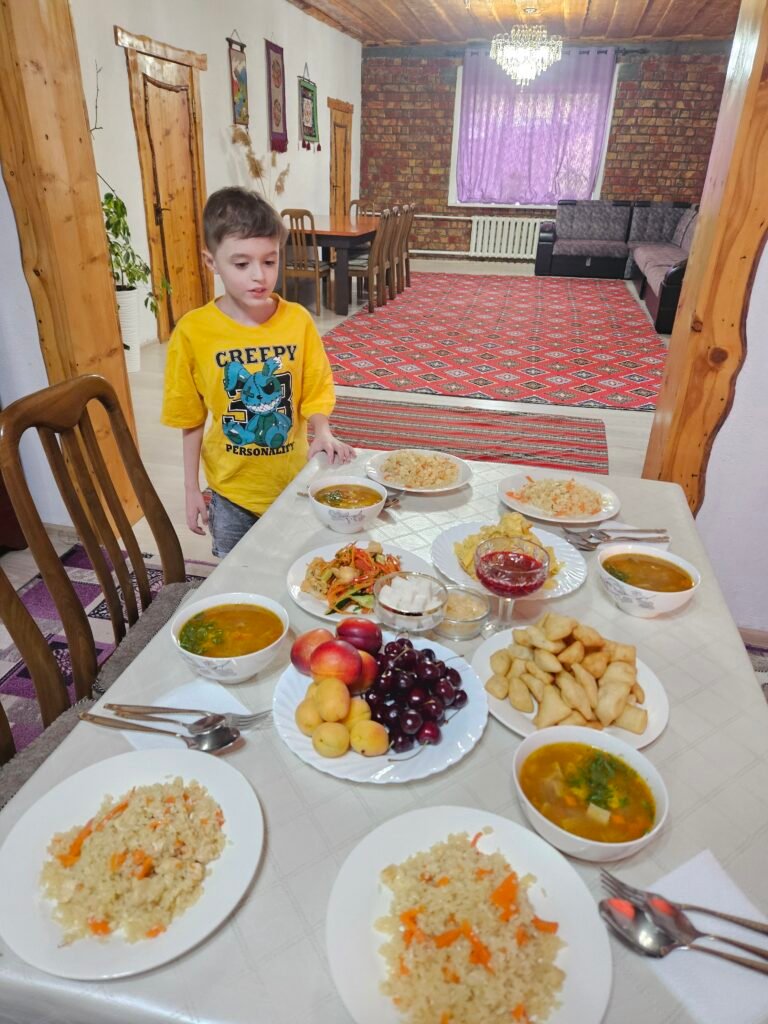
Kyrgyz food is heavily influenced by the country’s nomadic traditions and wider Central Asian cuisine.
Some of the dishes you’re likely to encounter include:
Beshbarmak
One of the best-known Kyrgyz dishes. It traditionally consists of boiled meat served over noodles with onion. The name roughly translates to “five fingers”, referring to the traditional way of eating it by hand. It’s quite a substantial meal.
Manty
Large steamed dumplings filled with meat and onions. If your child likes dumplings, this is probably one of the safer bets.
Lagman
Hand-pulled noodles served with meat and vegetables in either a soup or with a sauce. It’s common across Central Asia.
Plov
Rice cooked with meat, carrots and onions. You will find variations throughout the region.
Samsa
Pastry filled with meat, onions and sometimes other fillings. Useful road-trip food.
Boorsok
Small pieces of fried dough, commonly served alongside meals. These tend to disappear quickly when children are around.
Kurut
Small balls of dried fermented dairy. They are salty, sour and very different from the sort of snacks most children are used to. Your child may love them. Or look at you as if you’ve deliberately betrayed him.
Kumys
Fermented mare’s milk. This is one of the traditional drinks associated with Kyrgyz nomadic culture. It has a distinctive sour, fermented taste and is definitely something to try if you’re curious about local food.
Best Time to Visit Kyrgyzstan With Kids
For the kind of trip we did, late spring through early autumn is the most practical period.
May to October is generally the main hiking season for Ala Archa, while June to September works particularly well for yurt stays and Issyk Kul. Horse riding is also commonly offered from May through October.
June to September
This is the easiest period if you want to combine:
- Mountains
- Hiking
- Horse riding
- Yurt stays
- Issyk Kul
- Eagle-hunting demonstrations
- Canyon trips
Issyk Kul’s main swimming season is roughly June to September, with July and August being the busiest summer period.
July and August
These can be hot in Bishkek and exposed areas.
But remember what happened to us at Ala Archa.
Bishkek: 26°C.
Ala Archa: 7°C.
Altitude makes a huge difference.
Don’t pack for the weather in Bishkek alone.
Spring and autumn
These can be excellent for hiking because temperatures are more comfortable, although weather can be less predictable.
For a family trip, I’d rather have layers that I don’t use than arrive at a mountain park wearing shorts because the city forecast looked great.
Visa and Entry Requirements for Kyrgyzstan
Entry requirements depend on nationality, so check the rules for the passport you will actually use before travelling.
Kyrgyzstan currently has visa-free arrangements for citizens of a large number of countries, and including EU countries, Canada, US, UK, Australia and New Zealand.
However, length of permitted stay can vary by nationality and rules can change, so make sure to check the official information before booking your travels. For comparison, current UK government guidance says British citizens can enter visa-free for up to 30 calendar days in each 60-day period, while the Kyrgyz government’s published material lists Ireland among countries with visa-free access. (gov.uk)
If you’re planning to stay for a month, make sure the permitted stay for your passport covers the entire trip.
Kyrgyzstan also operates an official e-visa system for nationalities that require a visa. Your passport should also have sufficient remaining validity. Current UK guidance says passports should be valid for at least six months after arrival. (gov.uk)
Always check the current rules shortly before departure, particularly if you’re staying longer than the standard tourist period or travelling overland.
Kyrgyzstan Family Travel Tips
We found Kyrgyzstan very safe as a family destination, but there are some practical things I’d take seriously.
Mountain weather
This is probably the biggest one for the sort of trip we did. Temperatures can change dramatically with altitude. Take layers even when Bishkek is hot.
Canyon hikes
Konorchek and Skazka are not dangerous hiking destinations if you use common sense, but neither should be treated like a paved family attraction. At Konorchek there are sections requiring scrambling. At Skazka there are loose and steep areas. Good shoes matter.
Water
Carry enough water on canyon hikes. Konorchek in particular is dry, and you should not expect regular places to refill your bottle.
Driving
Road journeys can be long and driving standards may be very different from what you’re used to. This was another reason we preferred organised trips and private drivers.
Border areas
If you’re travelling further south or towards Kyrgyzstan’s border regions, check current conditions before going.
The UK government currently advises particular caution near the Kyrgyzstan-Tajikistan border because of the history of clashes and the possibility of mines or unexploded ordnance. It also recommends using recognised border crossings and checking whether crossings are open before travelling. (gov.uk)
This isn’t relevant to the Bishkek, Chong Kemin and Issyk Kul route we took, but it’s worth knowing if you’re planning to expand the trip.
Travel insurance
Make sure your insurance actually covers what you’re planning to do.
If you’re going horse riding, hiking at altitude or taking more adventurous trips, check that those activities are covered rather than assuming a standard policy covers everything. The FCDO also recommends insurance that covers planned activities and emergency expenses.
We recommend Safety Wing or Genki as options for families and long-term travellers. Make sure you check that your policy covers the activities and remote areas included in your Kyrgyzstan itinerary.
Carry cash
Kyrgyzstan uses the som, and cash remains useful, particularly outside Bishkek. Carry smaller notes for entrance fees, snacks, taxis and rural stops.
Download offline maps
Connectivity can become unreliable once you’re out in the mountains and valleys. An offline map is worth having before leaving Bishkek.
Don’t overpack the itinerary
The distances can look deceptively manageable on a map. The combination of mountain roads, stops and sightseeing makes journeys longer than you might expect. This is particularly true around Issyk Kul.
Keep some flexibility
Weather can affect mountain activities. A private driver also gives you more flexibility to change the order of your day if conditions aren’t ideal.
Language
English isn’t widely spoken in Kyrgyzstan, particularly once you leave the main tourist areas, so learning a few basic words before your trip can be very useful. Kyrgyz is the state language, while Russian is also an official language and is widely spoken, especially in Bishkek and other cities. If you already know some Russian, you’ll find it very helpful for getting around, ordering food and communicating with drivers and shopkeepers. Otherwise, learning a handful of simple phrases in either Kyrgyz or Russian, and having a translation app downloaded for offline use, can make travelling much easier.
A Practical Kyrgyzstan Itinerary for Families
If you have around 10 to 14 days, rather than our full month, I’d use our trip as a starting point and build something like this:
Days 1 to 3: Bishkek
Spend a couple of days getting settled.
Visit:
- Ala-Too Square
- State Historical Museum
- Oak Park
- Erkindik Boulevard
- Osh Bazaar
- Panfilov Park
You don’t need to race through all of them.
Day 4: Ala Archa
Take a private driver to Ala Archa.
Spend several hours walking around the park and return to Bishkek.
Bring warm clothes.
Seriously.
Day 5: Chong Kemin
Head towards Chong Kemin and include horse riding.
Depending on the tour, this can be a full day from Bishkek.
Day 6: Burana Tower
Visit Burana Tower and the archaeological site around ancient Balasagun.
This works well as a relatively easy history day after the more active mountain excursions.
Days 7 to 9: Konorchek Canyon + Issyk Kul
Leave Bishkek, visit the canyon on the way, and head for the lake. Stay overnight in a yurt around the lake.
Don’t try to see the entire lake in one day.
Day 10: Bokonbaevo and eagle hunters
Visit the eagle hunters and spend time around the southern shore.
A yurt stay makes sense here.
Day 11: Skazka Canyon
Explore Skazka Canyon, allowing at least a couple of hours if your kids want to investigate the formations rather than simply take photographs.
Days 12 to 14: More Issyk Kul or return to Bishkek
Use these days as a buffer.
This is one of the advantages of having more time. You don’t have to panic if a long drive takes longer than expected or the weather changes.
How Much Does a Trip to Kyrgyzstan Cost?
Kyrgyzstan was a surprisingly affordable country for a family trip, especially considering how much we did during our four weeks there. We travelled as a family of three and stayed in a two-bedroom Airbnb apartment in central Bishkek, which gave us plenty of space and meant we could cook some of our own meals.
Our accommodation for the full four weeks cost $1,400 USD.
We also booked a 2-night, 3-day tour around Issyk Kul for the three of us. This included horse riding, an eagle hunters’ demonstration, stops at Konorchek and Skazka Canyon, one night in a guesthouse and one night in a yurt. All meals were included, and the total was $1,200 USD for the three of us, or $400 per person.
For our trip to Ala Archa National Park, we hired a private driver for the return journey and paid around $35 to $45 USD, including the driver’s waiting time while we explored the park.
Over the four weeks, we spent approximately $1,000 to $1,200 USD on groceries and eating out. Having an apartment with a kitchen helped keep the food budget under control.
Our approximate four-week total
| Expense | Cost |
|---|---|
| 2-bedroom Airbnb, 4 weeks | $1,400 |
| 3-day Issyk Kul tour for 3 people | $1,200 |
| Private driver to Ala Archa | $35–45 |
| Groceries and restaurants | $1,000–1,200 |
| Total | $3,635–3,845 USD |
This doesn’t include international flights, travel insurance, visas or other personal expenses, so it’s best thought of as the cost of accommodation, food and the main excursions during our month in Kyrgyzstan.
Why We Liked Kyrgyzstan as a Worldschooling Destination
Kyrgyzstan is particularly good for families who enjoy learning through travel because so much of the country naturally turns into a lesson.
You can learn about:
History:
Burana Tower, Balasagun and the Silk Road.
Geography:
The Tian Shan mountains, alpine environments, altitude and Issyk Kul.
Culture:
Yurts, nomadic traditions, horse culture and eagle hunting.
Natural science:
Erosion at Konorchek and Skazka, mountain ecosystems and the enormous Issyk Kul lake.
Modern history:
Soviet history in Bishkek and the country’s transition after independence.
Practical life:
Markets, food, local transport and staying in rural communities.
And unlike a classroom lesson, you can actually stand inside a yurt, climb an ancient tower, ride a horse through a mountain valley or look at the geological layers of a canyon.
Final Thoughts: Is Kyrgyzstan Good for Families?
Yes, Kyrgyzstan is fantastic for families, particularly families who enjoy being outdoors and don’t mind a little adventure.
Kyrgyzstan turned out to be a fantastic destination for a family that likes a bit of adventure. There are huge mountain landscapes, beautiful lakes, canyon hikes, horseback riding and the chance to stay in a traditional yurt, all without the prices you often find in more established adventure destinations. We also loved how much there was to learn along the way, from the ancient Silk Road and the history of Balasagun to Kyrgyz nomadic traditions, horses and eagle hunting.
Travelling with an eight-year-old worked particularly well for this kind of trip. He could manage the hikes and horse riding, but there was still plenty that felt like a real adventure. We never felt that Kyrgyzstan was an unsafe place to travel as a family, although the long drives, mountain weather and occasional tricky hiking sections do require some planning.
If you have the time, don’t rush it. Bishkek is useful as a base, but the real character of Kyrgyzstan is found beyond the capital, in the mountains, valleys and villages. Ala Archa, Konorchek, Chong Kemin and the southern shore of Issyk Kul all gave us very different experiences, and the landscape seemed to change every time we got back in the car. For families looking for somewhere outdoorsy, naturally stunning and culturally interesting, Kyrgyzstan is a great option.
Current practical information note
Prices, opening hours, park access and transport arrangements in Kyrgyzstan can change quite quickly. The figures above are intended as current September 2026 planning information where reliable current sources were available, while descriptions of our experiences reflect the conditions when we travelled. Always check directly with an attraction, tour operator or local driver shortly before visiting. (gov.uk)
Official Kyrgyzstan e-visa portal
UK government Kyrgyzstan travel advice and entry requirements
One Comment