

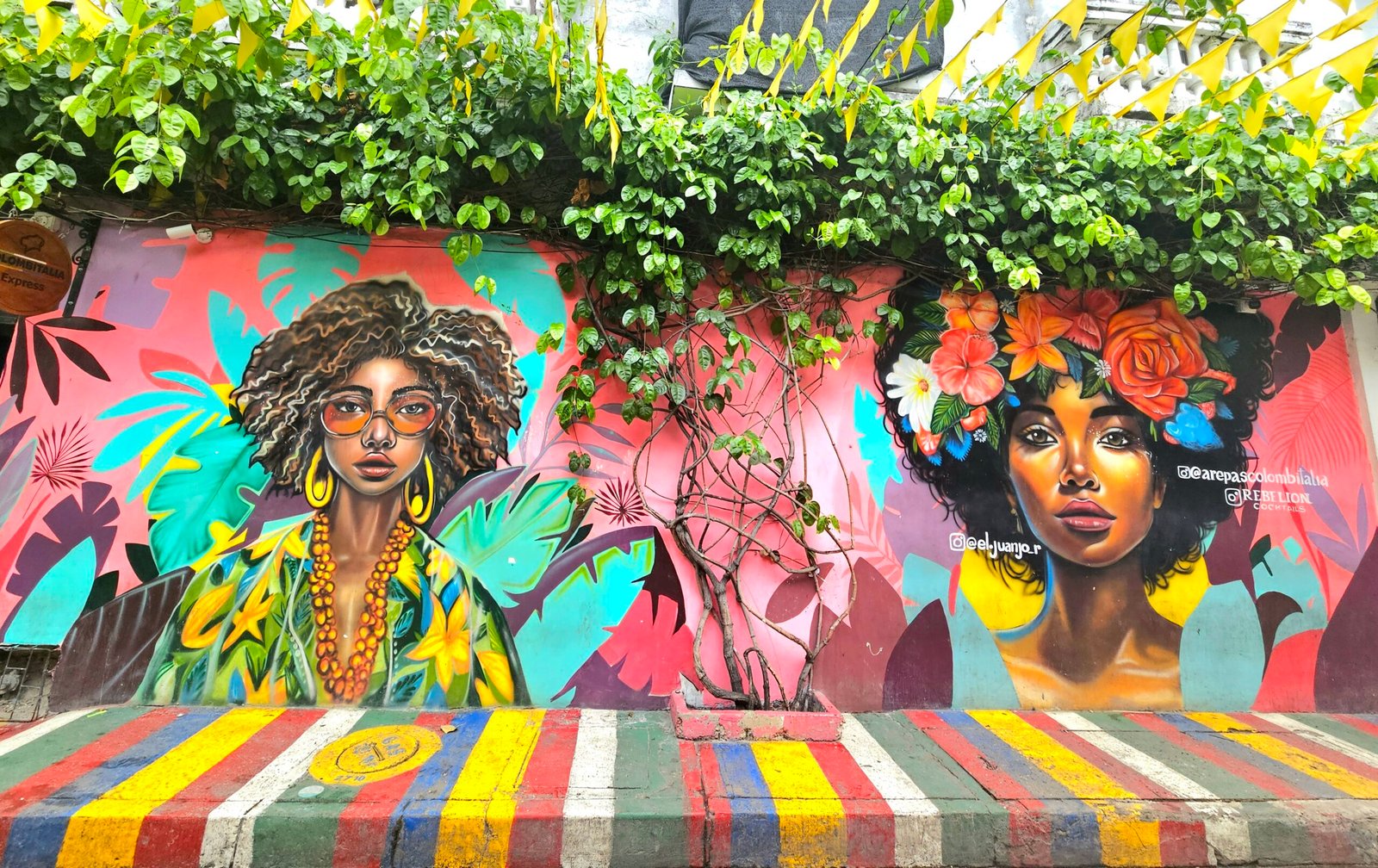
Colombia with Kids: Our 1-Week Family Itinerary
Colombia is one of those countries where you could spend months travelling and still only scratch the surface.
We had just one week in Colombia, so rather than trying to see everything, we packed quite a lot into seven days. Our route took us from Bogotá to the coffee region, then on to Medellín, Guatapé and finally Cartagena on the Caribbean coast.
Travelling with our 9-year-old, we found Colombia was especially good for mixing sightseeing with hands-on experiences that naturally became part of his learning.
We learned about pre-Columbian cultures in Bogotá, the history of Colombian art, how coffee is grown and processed, became coffee pickers for a day, learned about the world’s tallest palm trees, explored the history of Comuna 13 in Medellín and wandered around the old fortress and streets of Cartagena.
That is a pretty good worldschooling curriculum for one week.
If like us, you are travelling through Colombia and only have a week, this route gives you a really good introduction to some of the country’s biggest highlights.
Here is exactly how we did it, plus the things we enjoyed most in each place and some practical advice for travelling around Colombia with kids.
A quick note before you dive in: this post contains some affiliate and sponsored links, including tours and hotels we booked ourselves. If you book through one of them, we may earn a small commission at no extra cost to you. It does not change the price you pay, and we only link to places and experiences we would genuinely recommend anyway.
Table of Contents
- Bogotá with Kids
- Visit the Botero Museum
- Visit the Gold Museum in Bogotá
- Salento and Colombia’s Coffee Region
- Explore Salento
- Valle de Cocora with Kids
- Medellín with Kids
- Guatapé Day Trip
- Explore the colourful streets of Guatapé
- Cartagena with Kids
- Wander Cartagena’s colourful streets
- Best things to do in Colombia with kids
- Colombian food worth trying with kids
- Where to stay in Colombia with kids
- Getting around Colombia with kids
- Our Colombia itinerary for one week
- How much did a week in Colombia cost us?
- Practical tips for travelling Colombia with kids
- Is Colombia safe for families?
- How much time do you really need in Colombia?
- Final thoughts: Is Colombia worth visiting with kids?
Our 1-week Colombia itinerary at a glance
Our route looked like this:
Day 1: Bogotá
City tour, historic centre, Botero Museum and Gold Museum
Day 2: Salento
Travel to Salento and visit a coffee finca
Day 3: Valle de Cocora
See the giant wax palms and explore the Cocora Valley
Day 4: Medellín
Travel to Medellín and explore Comuna 13
Day 5: Guatapé
Day trip to Guatapé and Piedra del Peñol
Day 6: Cartagena
Travel to Cartagena and explore the fortress and old city
Day 7: Cartagena
More time exploring the colourful streets before continuing our travels
This is definitely a fast itinerary. If you have 10-14 days, I would slow it down and give Bogotá, the coffee region and Cartagena more time.
But for a one-week Colombia trip, it worked for us.
Bogotá with Kids
Bogotá was our starting point, and I was glad we included it rather than treating the capital as somewhere to simply fly into and leave again.
The city is huge, and you could spend days exploring it, but with children I think a good guided tour is one of the easiest ways to get an introduction without spending hours trying to work out where everything is.
Take a guided city tour
One of our favourite things we did in Bogotá was a city tour with a guide.
This was particularly useful because Bogotá has a complicated history, and having someone explain what we were looking at made the city much more interesting than simply walking around and taking photographs.
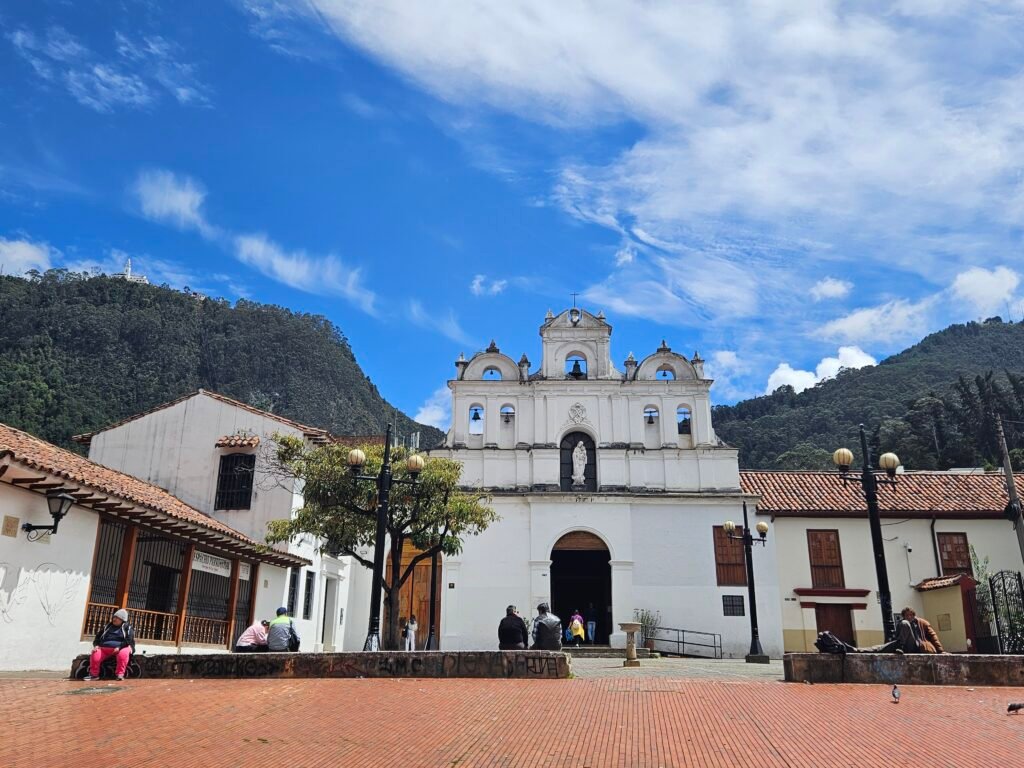
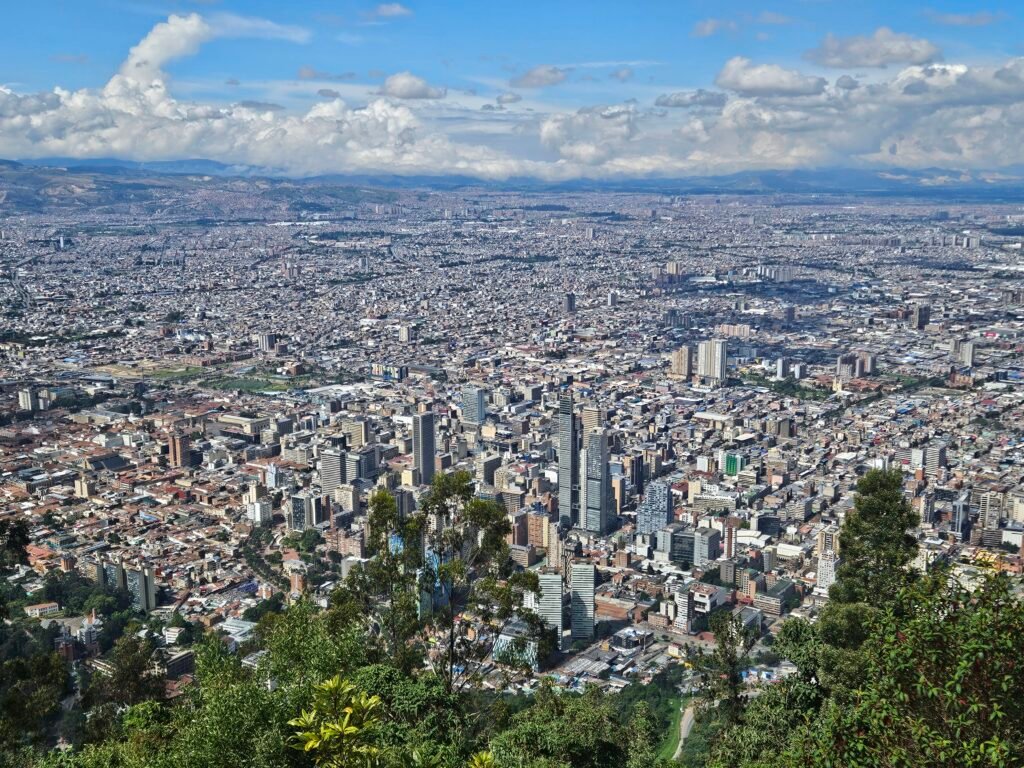
We visited Cerro de Monserrate, the mountain overlooking Bogotá, which has been an important pilgrimage site since the 17th century. The views over the enormous city are impressive, but the history of the site made the visit much more interesting too.
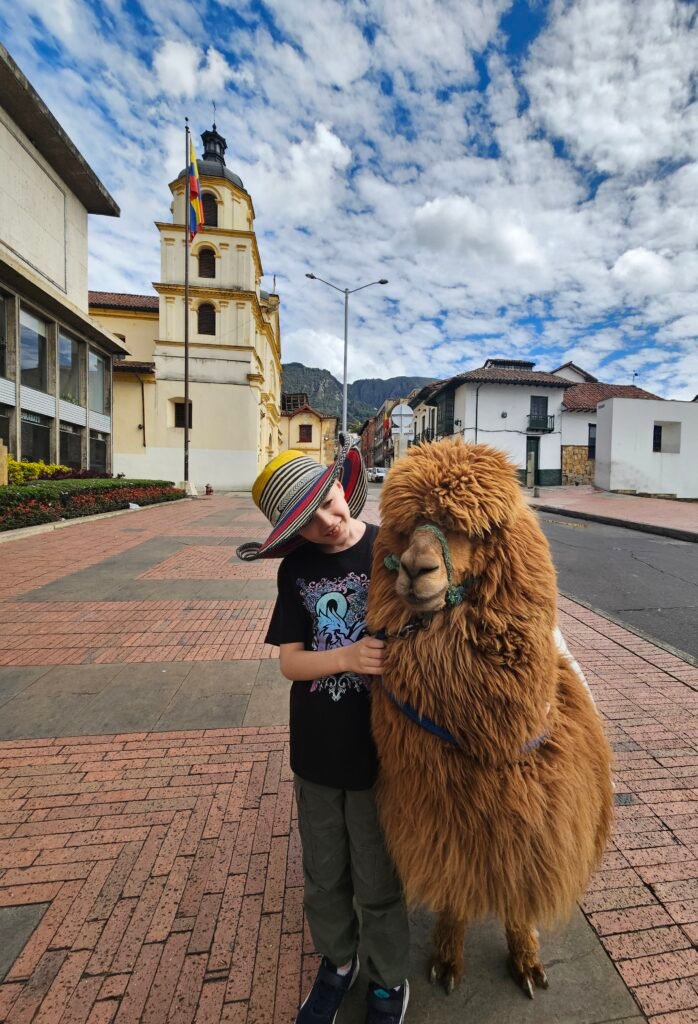
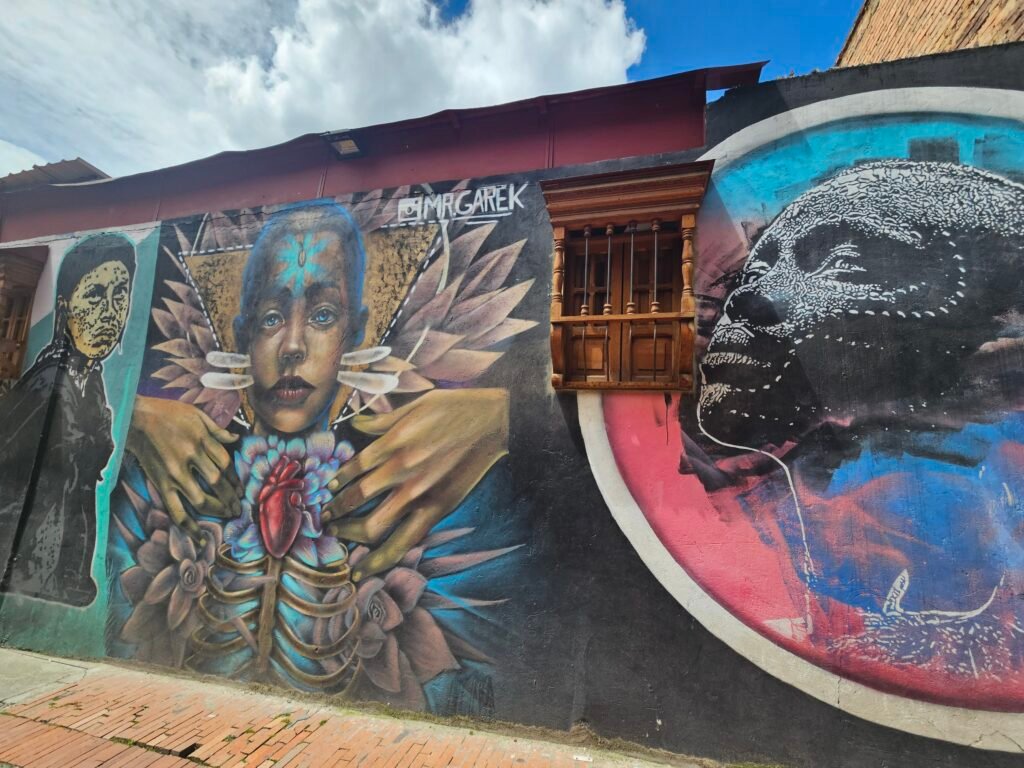
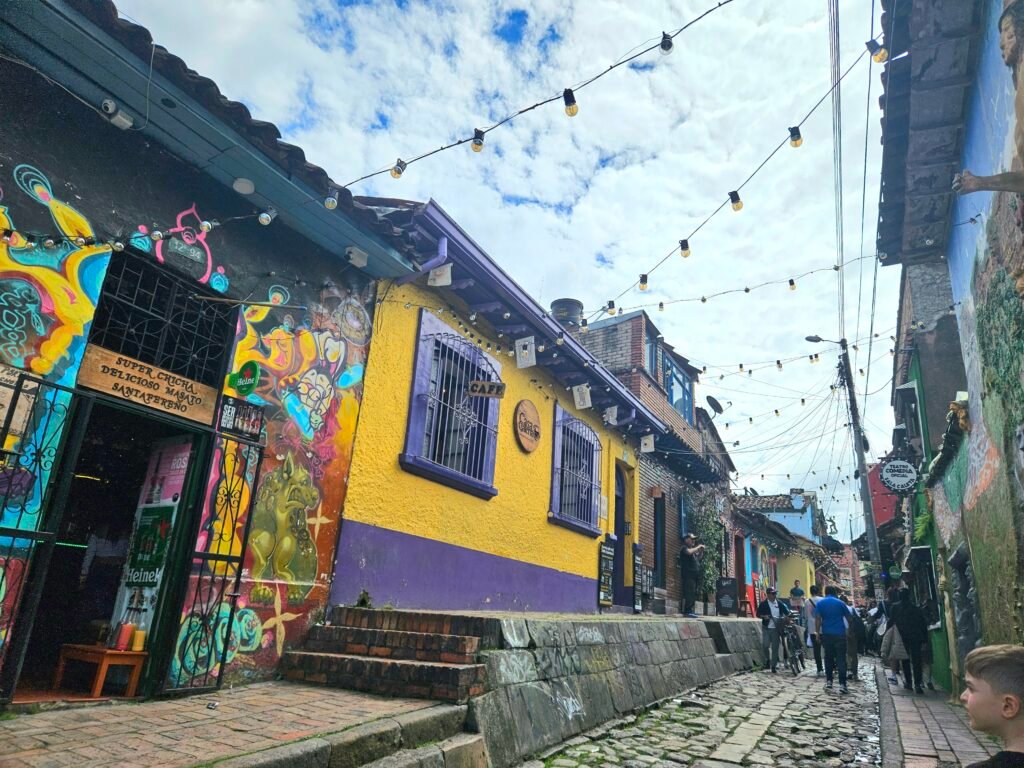
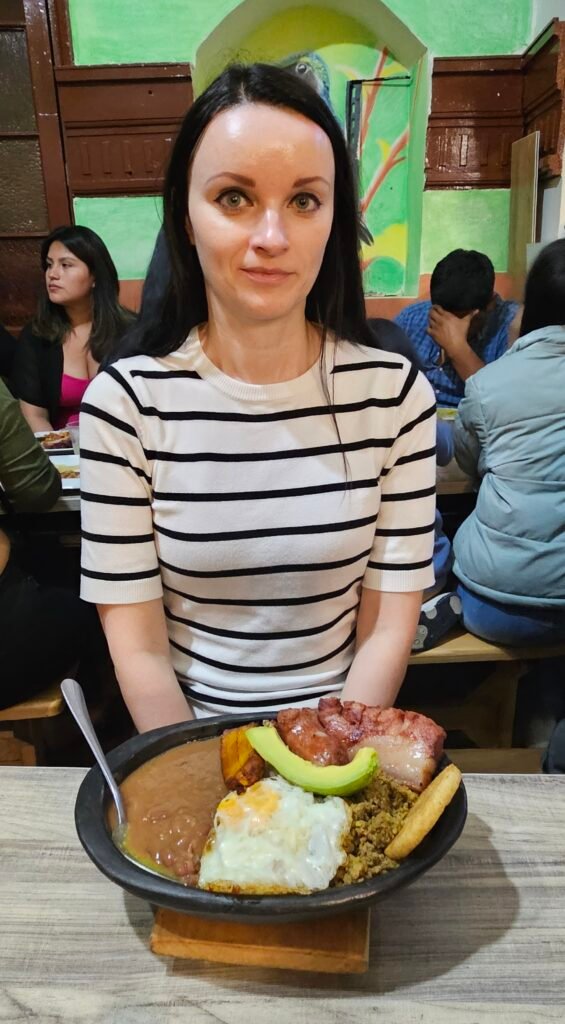
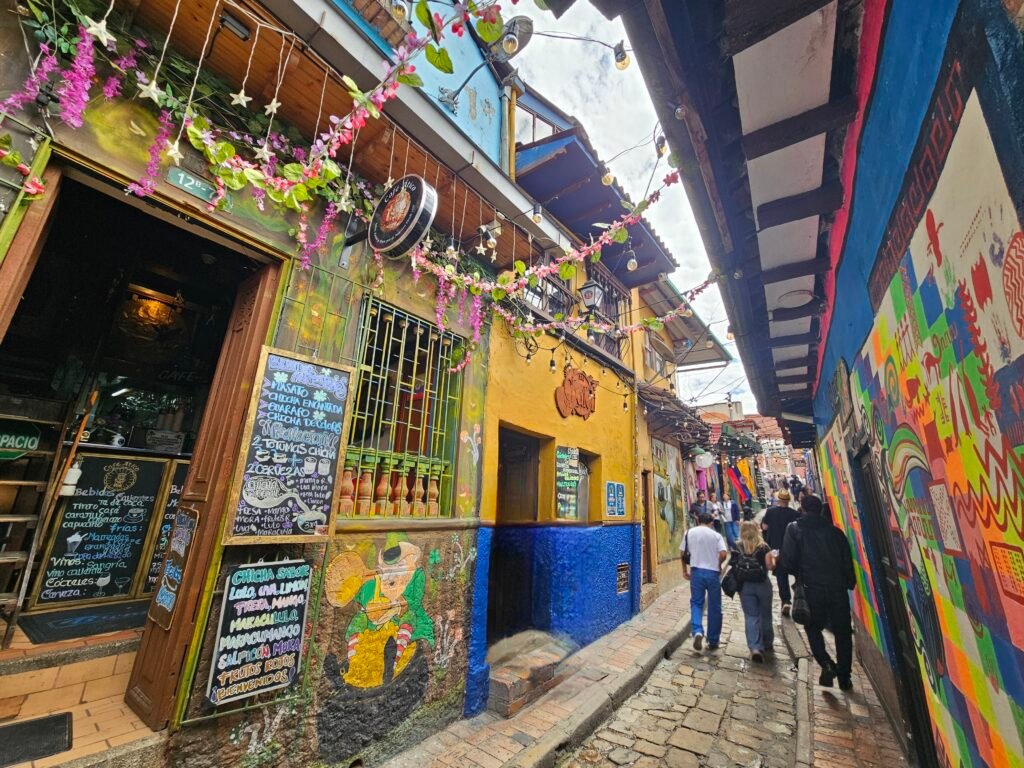
Back down in La Candelaria, we wandered the cobbled streets, admired the colourful street art and learned more about Bogotá’s history as we explored. We also got to try some traditional Colombian food along the way, including bandeja paisa, a very filling dish of rice, beans, meat, plantain, avocado and egg. It was a good way to experience Bogotá through more than just its sights, and, importantly, kept our son interested too.
Recommended age: 7+
Our tip: If you are visiting Bogotá with kids, I’d book a tour rather than trying to cram all the historic sights into a self-guided walk.
Visit the Botero Museum
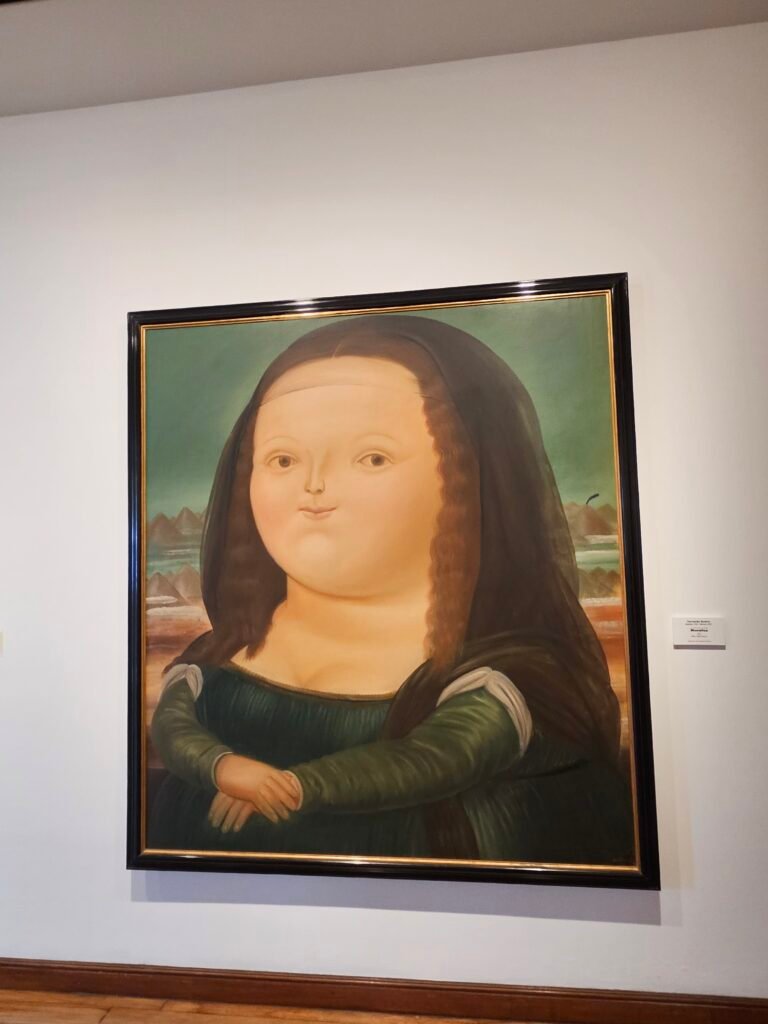
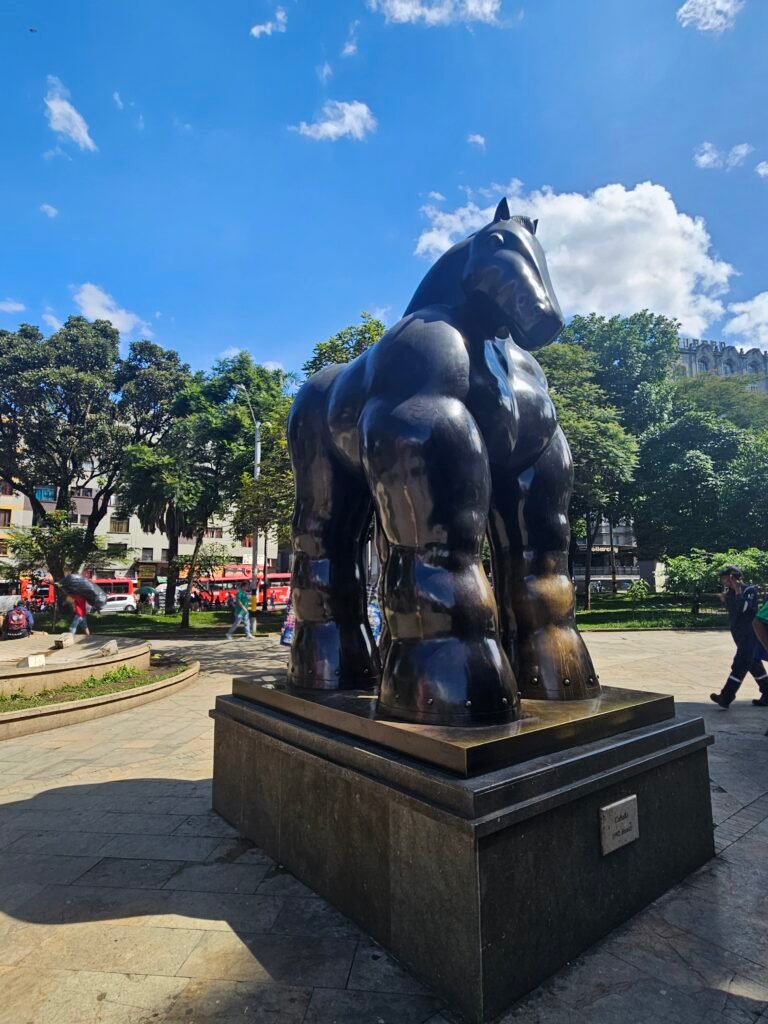
The Museo Botero was another stop we really enjoyed.
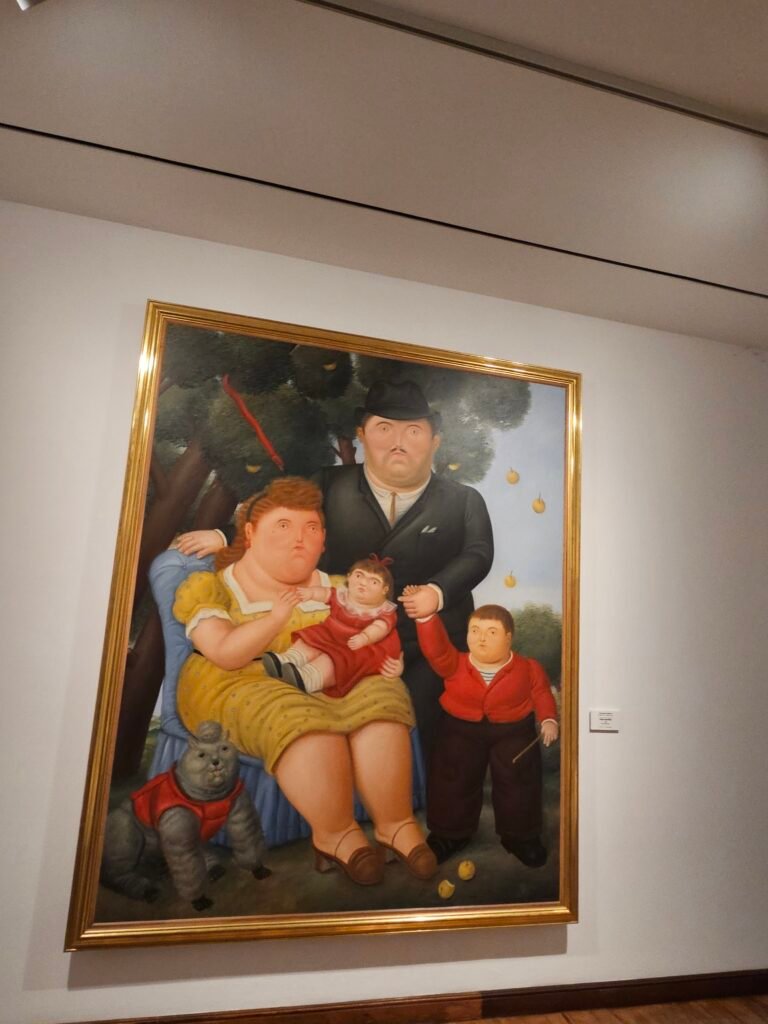
Fernando Botero is one of Colombia’s best-known artists, and his distinctive style makes the museum particularly approachable for children. His figures are famous for their exaggerated, rounded proportions, so even a child who knows nothing about art can immediately spot what makes the paintings and sculptures different.
The museum isn’t enormous, which is another advantage when travelling with kids. You can see a good amount without committing half a day to an art museum. The collection also includes works by international artists, so it isn’t exclusively about Botero.
Best of all, admission to the Botero Museum is free. The museum currently operates Monday and Wednesday to Saturday from 9am to 7pm, and Sundays and public holidays from 10am to 5pm, although it is worth checking the official site before visiting because schedules can change.
Why kids will enjoy it: The unusual shapes and larger-than-life figures make it much easier to engage a child than some traditional art museums.
Recommended age: 6+
Worldschooling connection: Art, Colombian culture and the life of Fernando Botero.

Visit the Gold Museum in Bogotá
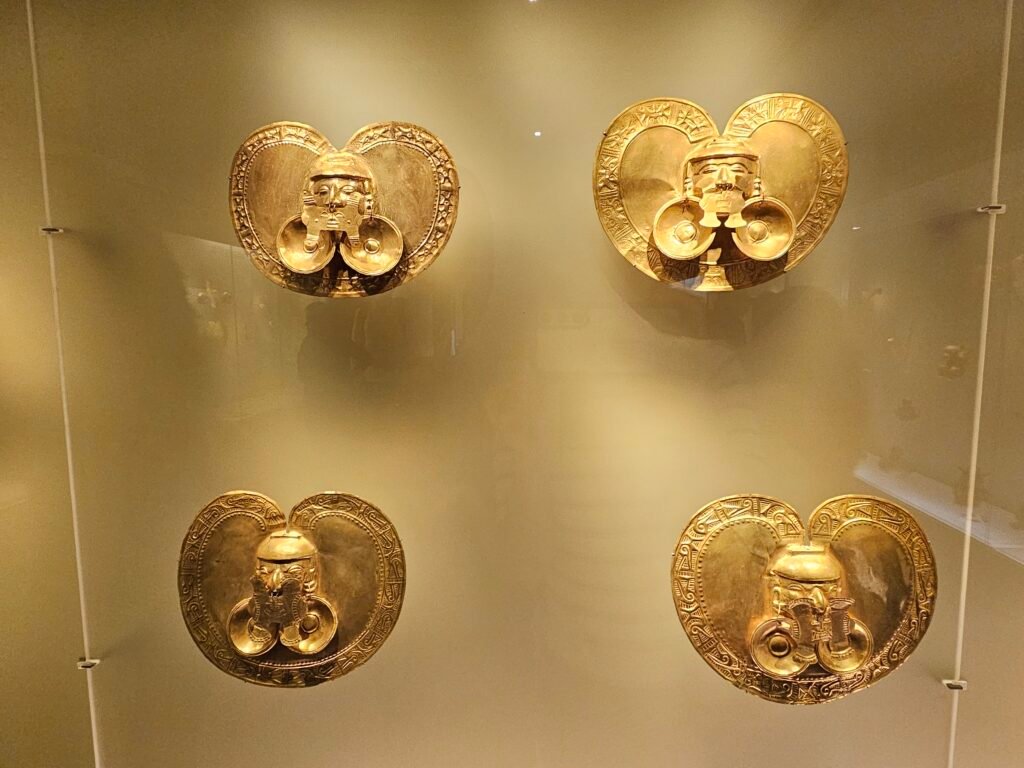
If you only have time for one museum in Bogotá, I’d make a strong case for the Gold Museum, or Museo del Oro.
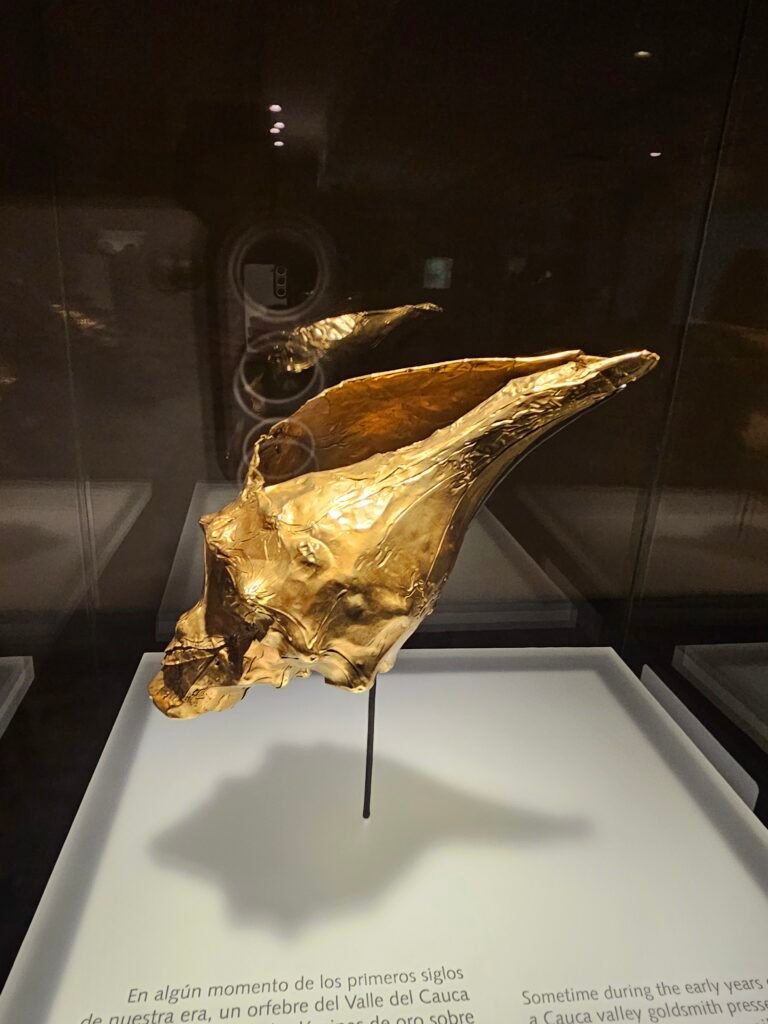
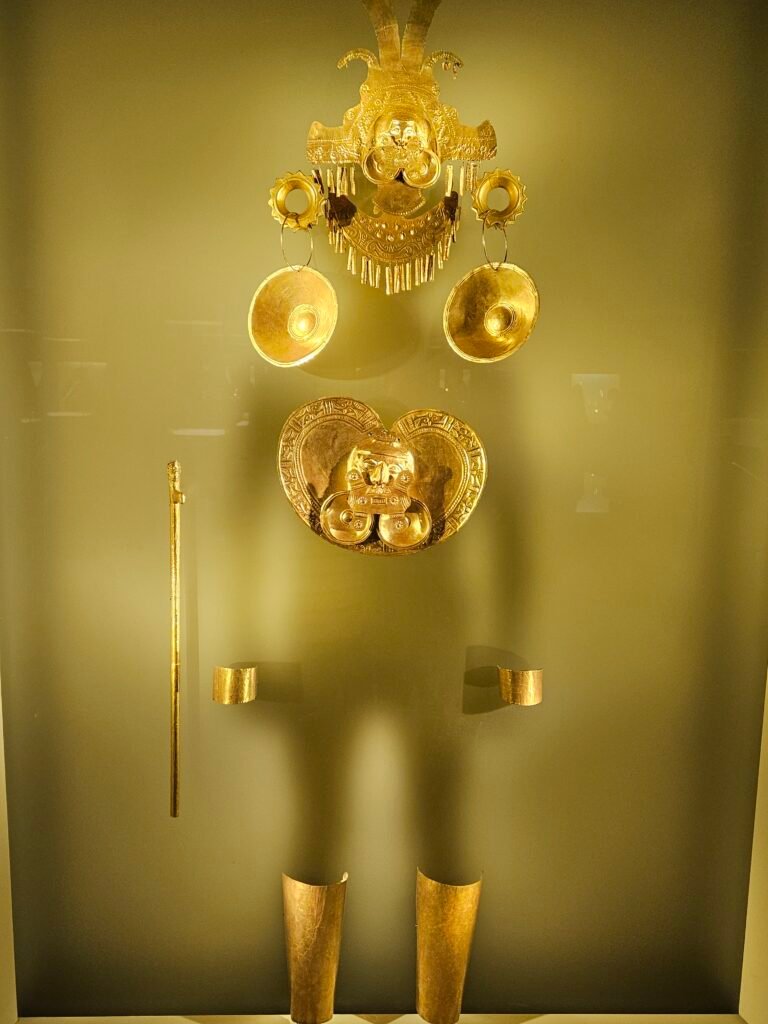
This was one of our favourites because it is not simply a collection of shiny objects. It gives you an introduction to the indigenous cultures of Colombia and the importance of gold long before the Spanish arrived.
The museum holds an enormous collection of pre-Columbian archaeological objects. The Bogotá tourism authority describes it as one of the world’s largest collections of pre-Hispanic gold, with more than 55,000 objects made from gold and other materials.
For kids, there is a nice opportunity to talk about why gold was important to different societies, what it represented and how Europeans’ obsession with gold was very different from the way many indigenous cultures viewed it.
Practical tip: The museum is currently closed on Mondays and open Tuesday to Saturday from 9am to 7pm and Sundays from 10am to 5pm. The official museum site says no advance reservation is currently required, but check before you go as opening arrangements can change.
Recommended age: 7+
Worldschooling connection: Pre-Columbian Colombia, indigenous cultures, archaeology, history and Spanish colonisation.
Salento and Colombia’s Coffee Region
From Bogotá we headed to Salento, in Colombia’s famous coffee-growing region.
To get to Salento, we flew from Bogota to Pereira (alternatively it is also possible to fly to Armenia). Both are approximately 1 hour flight. Then we drove to Salento for about an hour and a half.
This area was probably the biggest change of scenery of the trip. We went from a huge high-altitude capital city to green mountains, coffee plantations and a much smaller town.
Salento is one of the main gateways to the Coffee Cultural Landscape, and coffee farms around the area offer visitors the chance to see how coffee is grown, harvested and prepared.
Visit a coffee finca
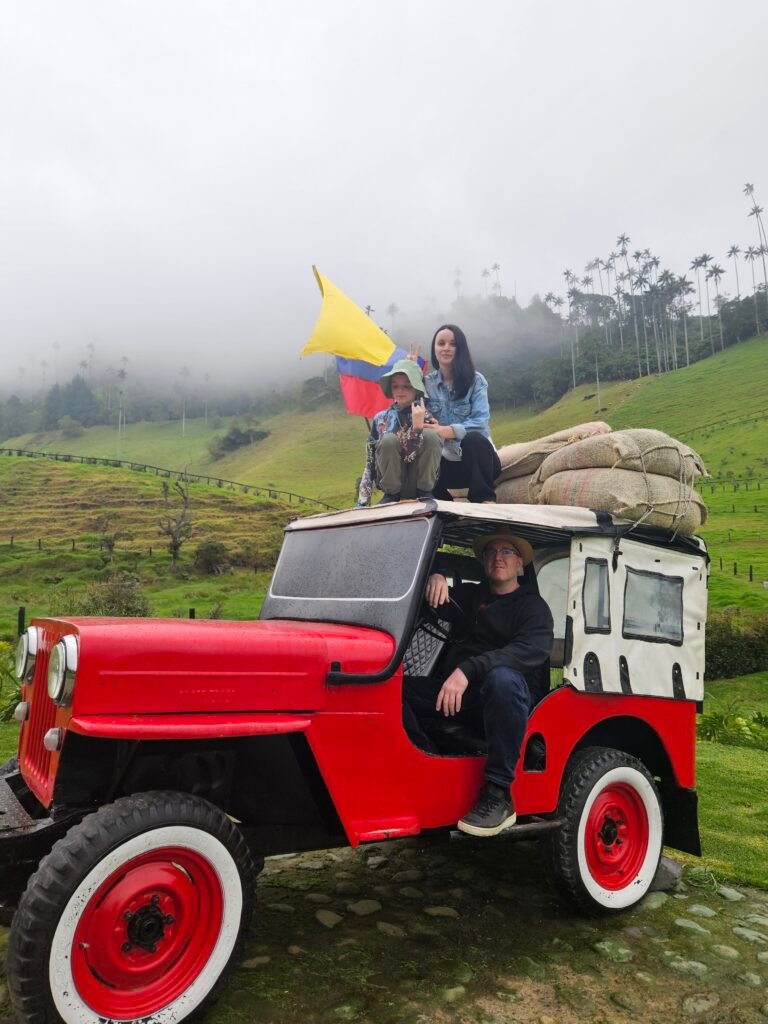
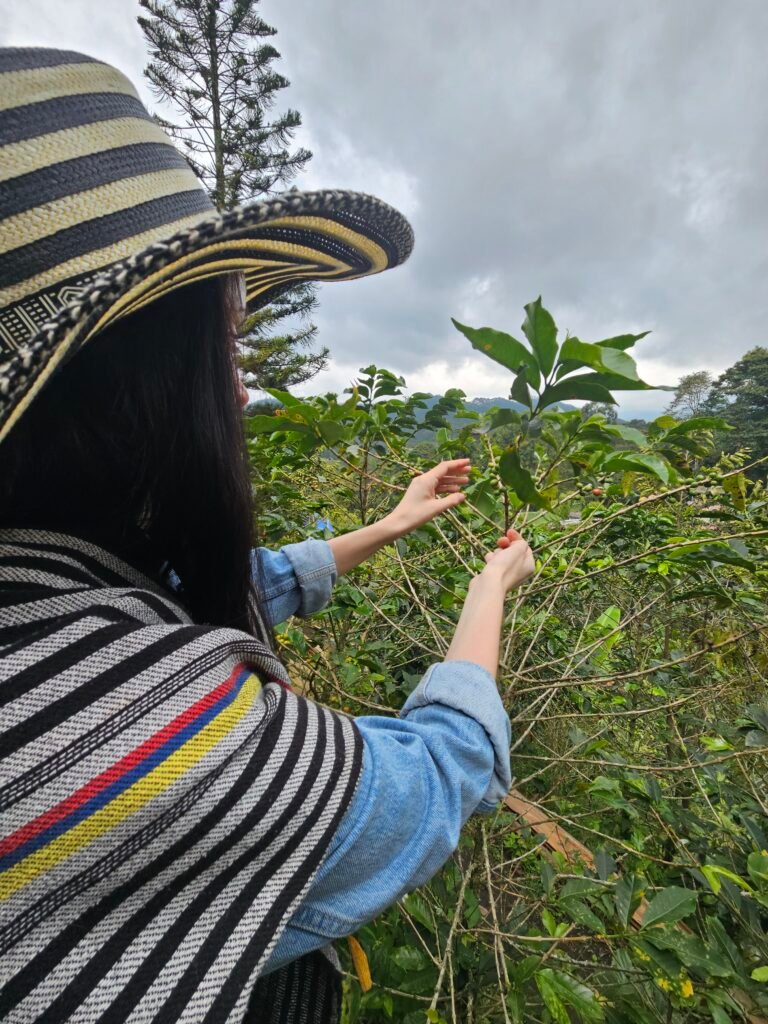
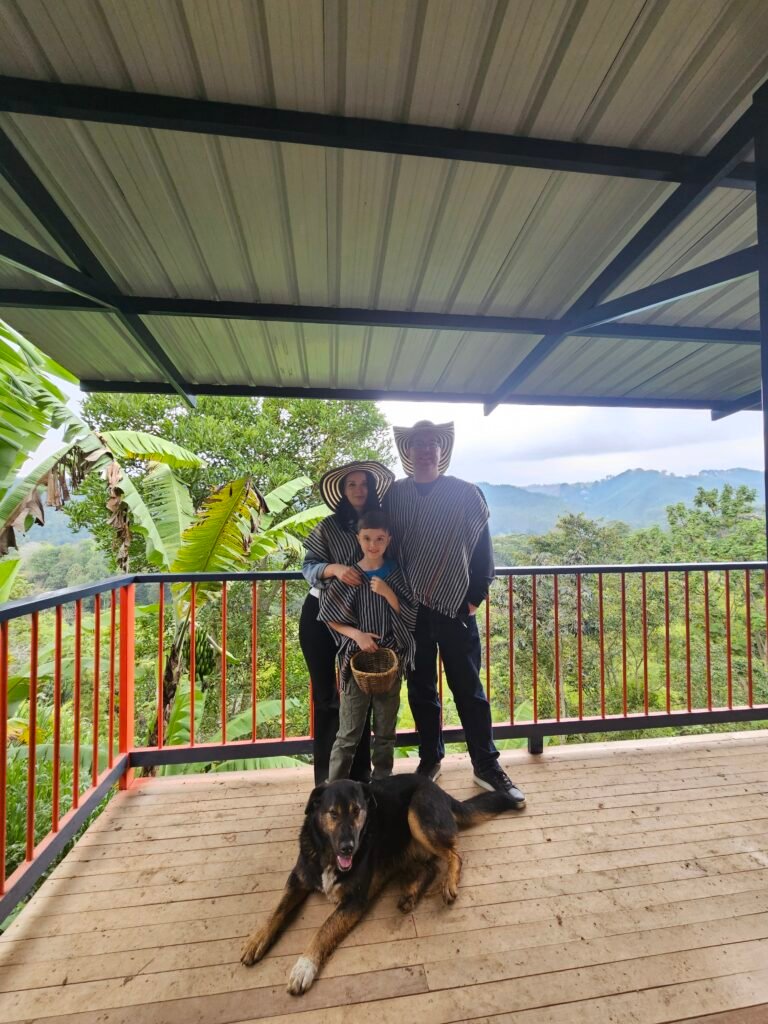
One of the highlights of our entire week in Colombia was visiting a coffee finca.
This wasn’t just a quick tour where someone points at a coffee plant and then takes you to a gift shop.
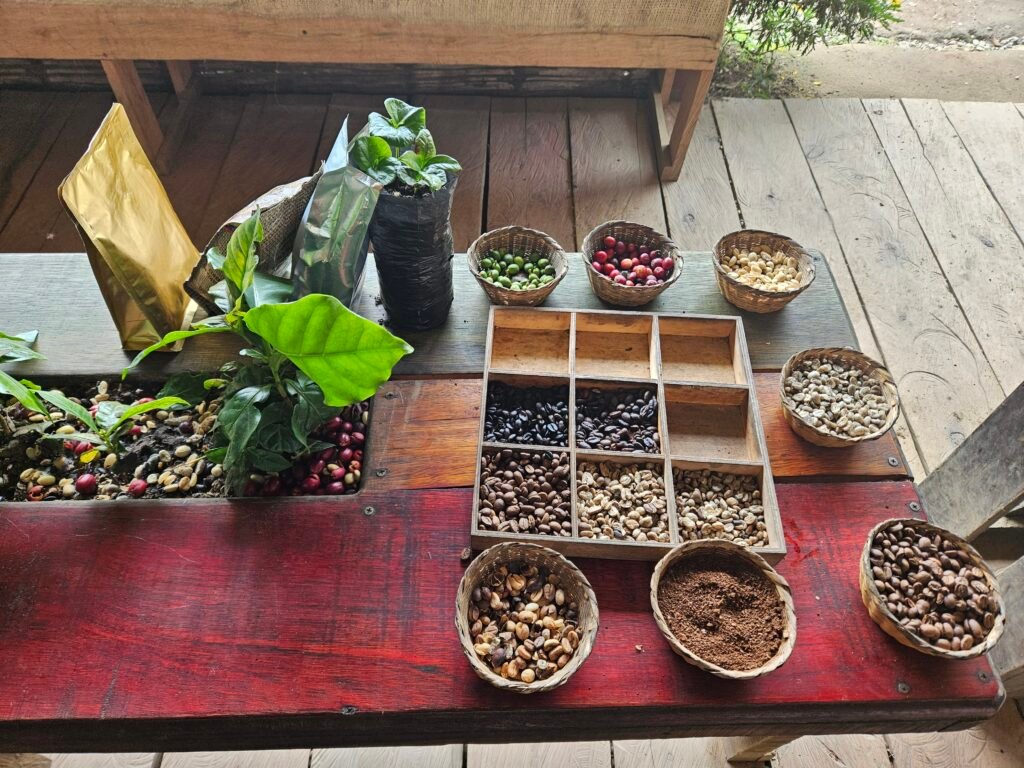
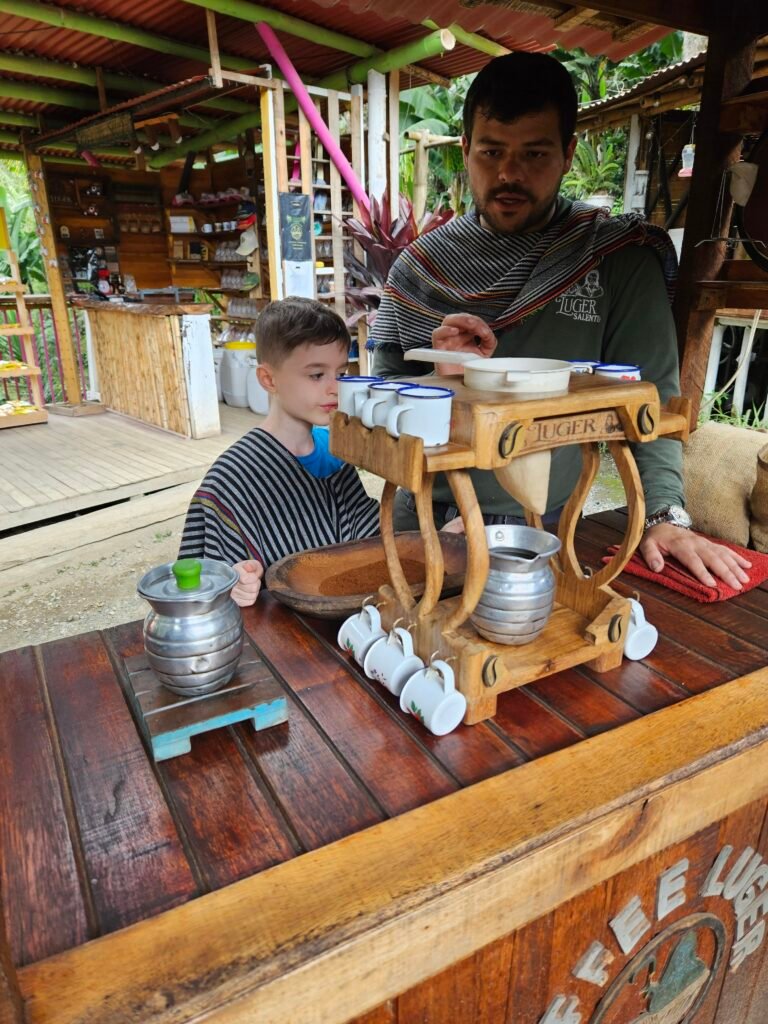
We actually learned about coffee production and got to see the process from the plant onwards.
And the best part for our son?
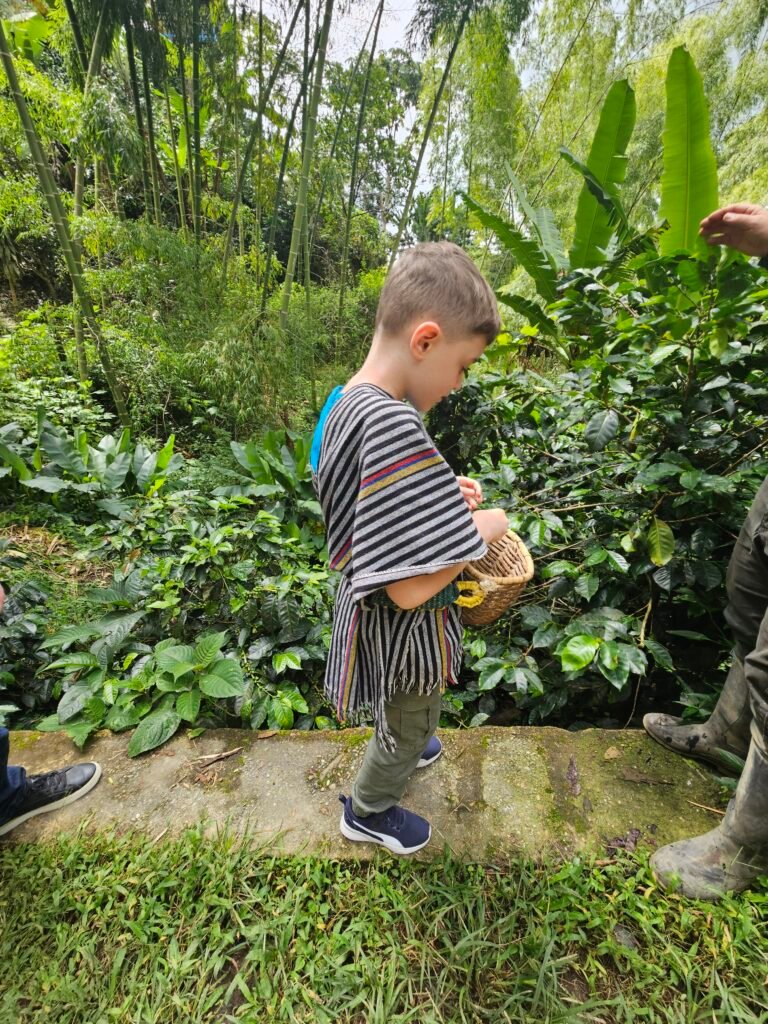
We became coffee pickers for the day.
There is something about being allowed to actually do the thing rather than just watch somebody else do it that makes the experience much more memorable for kids.
We learned how coffee grows, how the beans are harvested and what happens to them before they eventually become the coffee people drink.
For a worldschooling family, this is exactly the kind of experience we look for.
You can connect it to geography, agriculture, economics, biology and even maths if you really want to ruin everyone’s holiday.
We preferred to just enjoy the coffee.
Why kids will enjoy it: It is hands-on and gives them a chance to participate rather than simply listen to a guide.
Recommended age: 6+
Worldschooling connection: Agriculture, geography, economics, food production and Colombian culture.
Our verdict: Definitely put this on your list if you’re travelling to Colombia with children.
Explore Salento
Even if you aren’t interested in coffee, Salento itself is worth exploring.
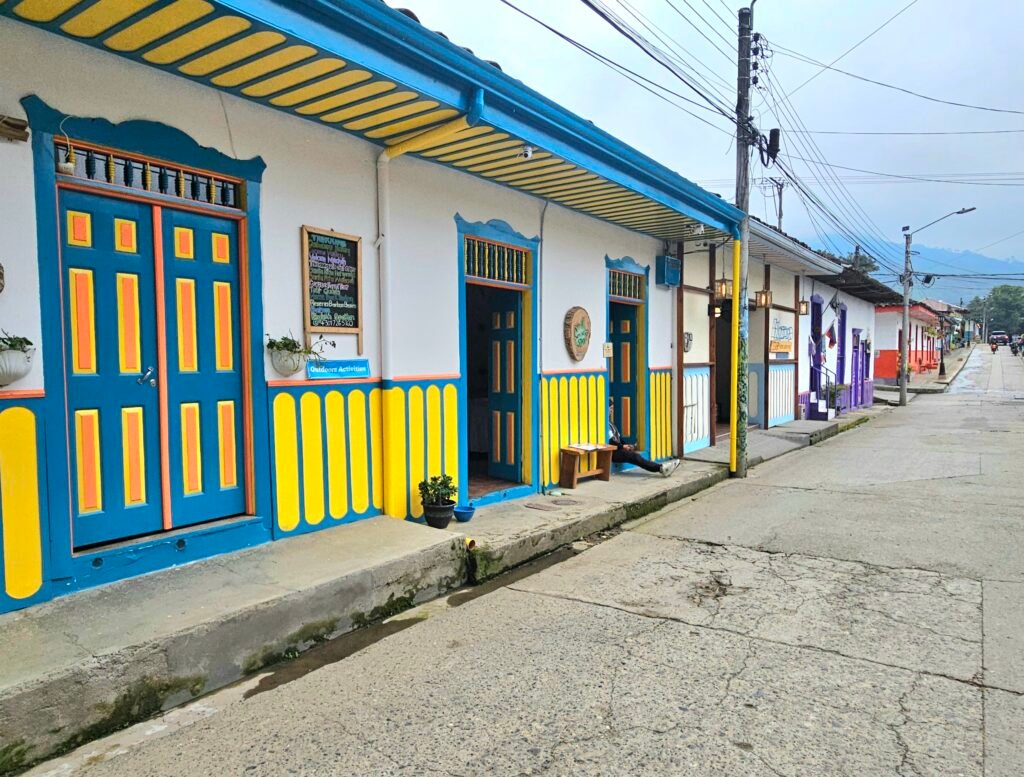
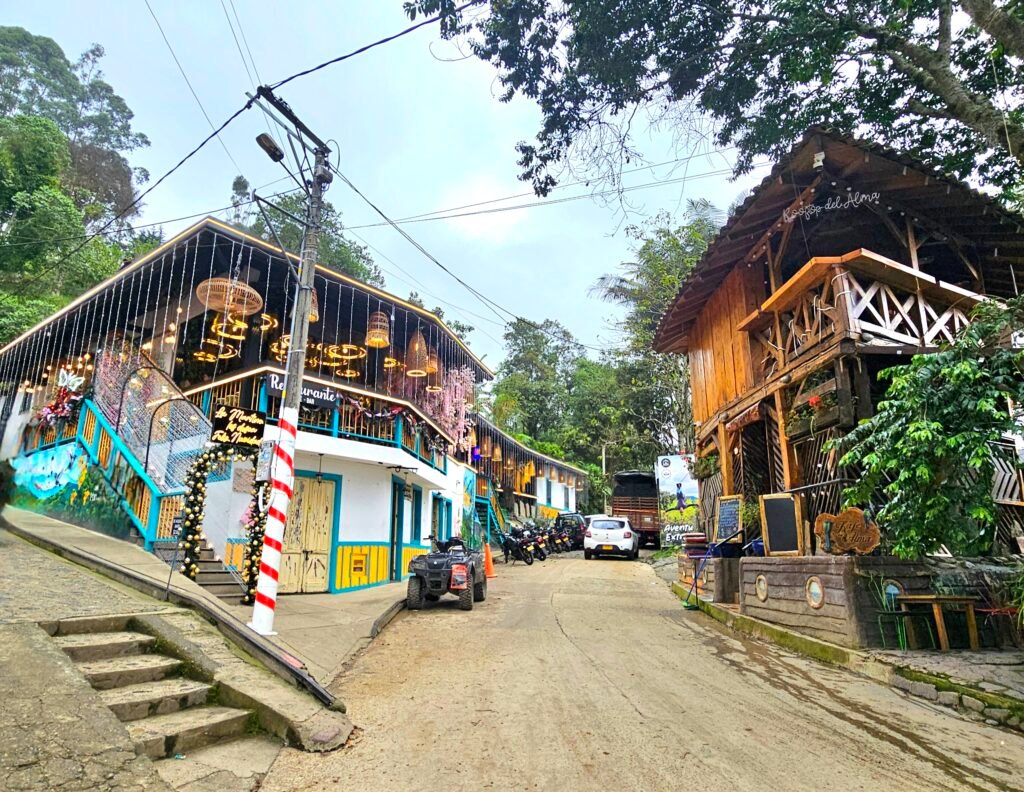
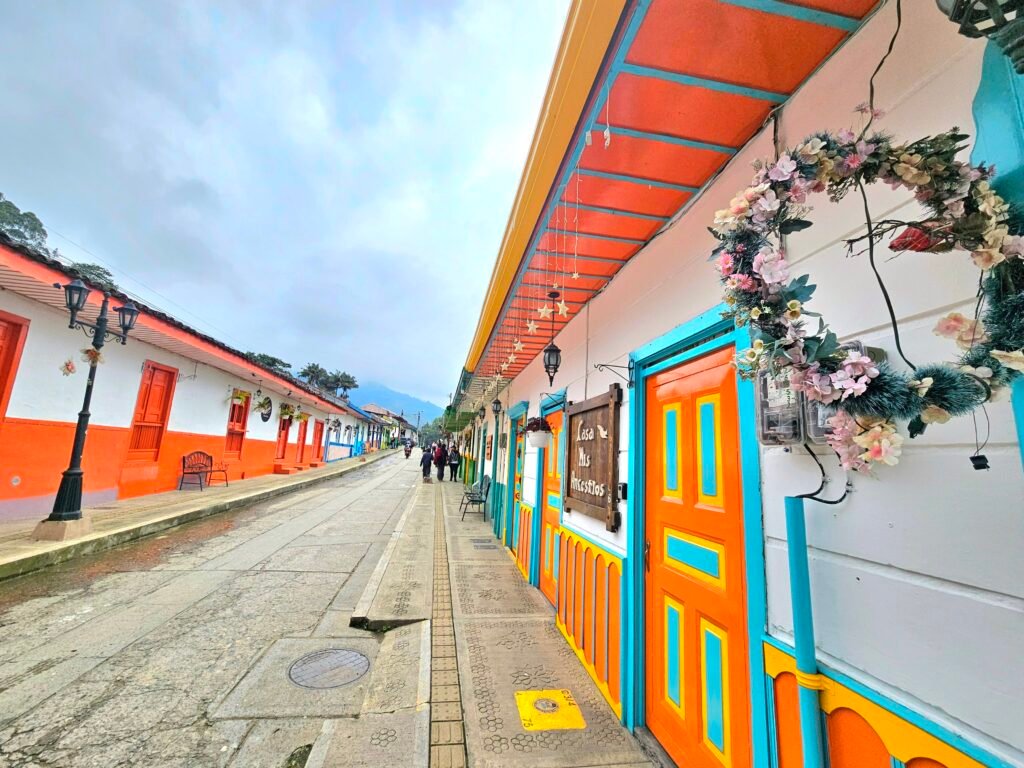
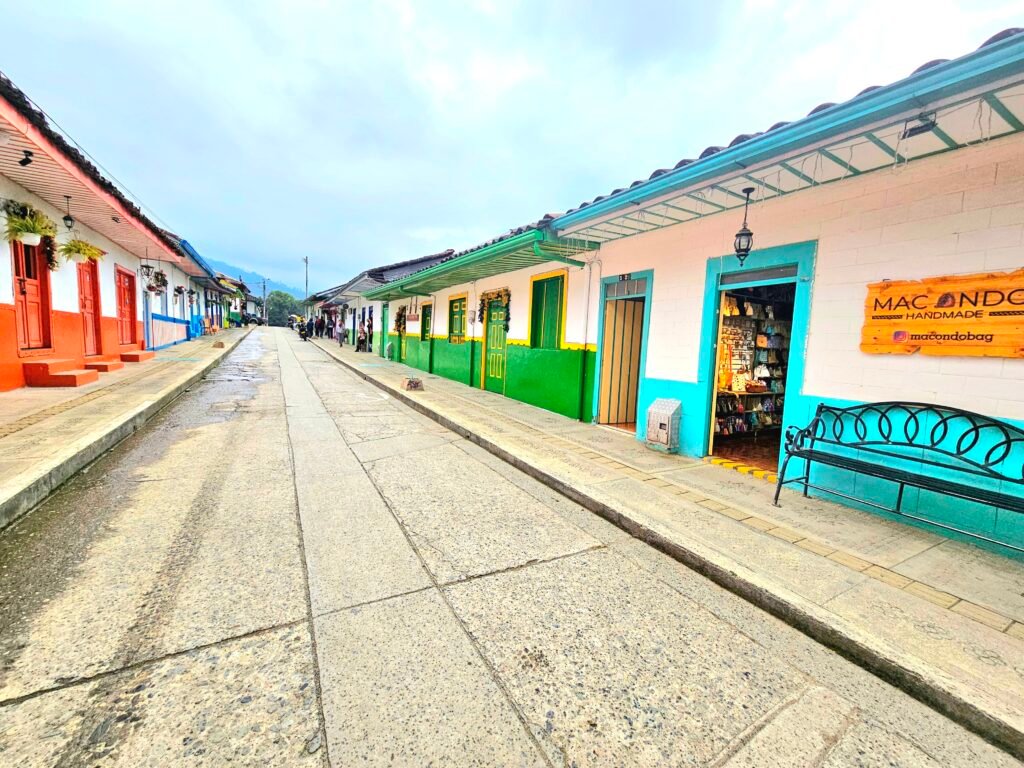
Salento is one of those towns that is easy to like from the moment you arrive. It is a small, colourful mountain town surrounded by the green hills of Colombia’s coffee region, with brightly painted buildings, wooden balconies and the kind of streets that make you want to slow down and wander rather than rush from one attraction to the next.
If the town looks strangely familiar, there’s a reason for that. Salento and the surrounding Cocora Valley are widely recognised as inspiration for the setting of Disney’s Encanto. The film isn’t a direct depiction of Salento, but its colourful houses, mountain landscapes and towering wax palms are very reminiscent of the area.
For our son, that connection made the landscape particularly fun to recognise. After watching Encanto, seeing the real Colombian scenery that helped inspire its world was a nice little connection between something familiar and somewhere we were actually visiting.
The Calle Real runs from the main square towards the viewpoint at Cerro Alto de la Cruz. The official Colombia tourism site notes that the viewpoint offers views over the town and towards the Cocora Valley.
Recommended age: All ages
Valle de Cocora with Kids
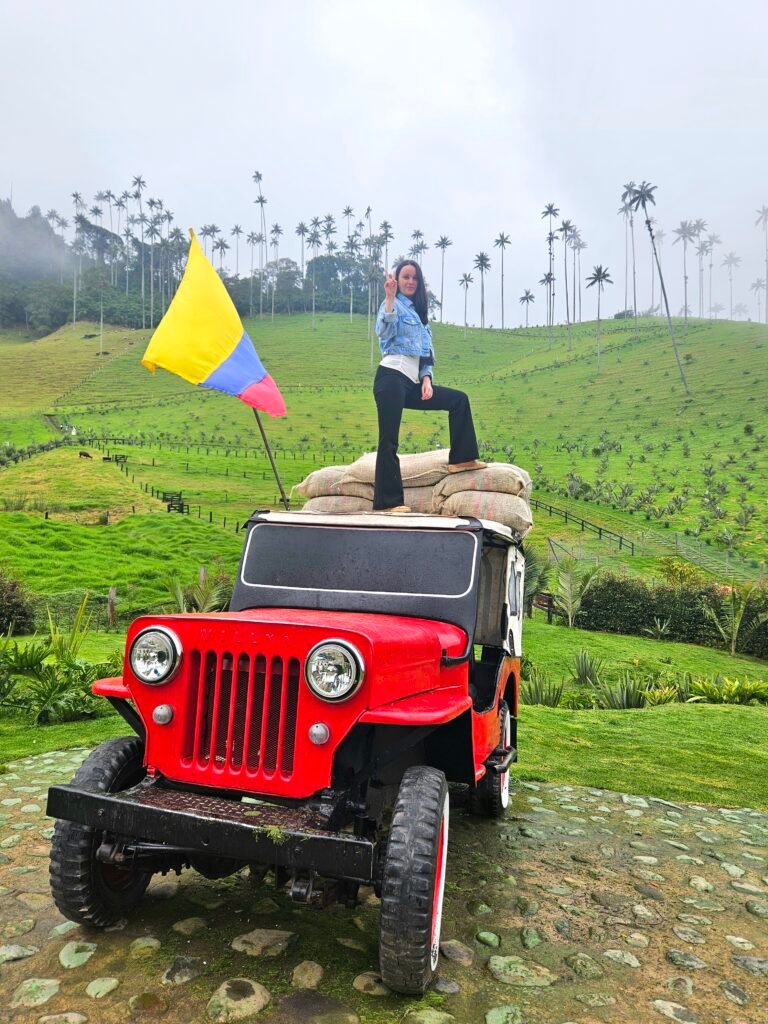
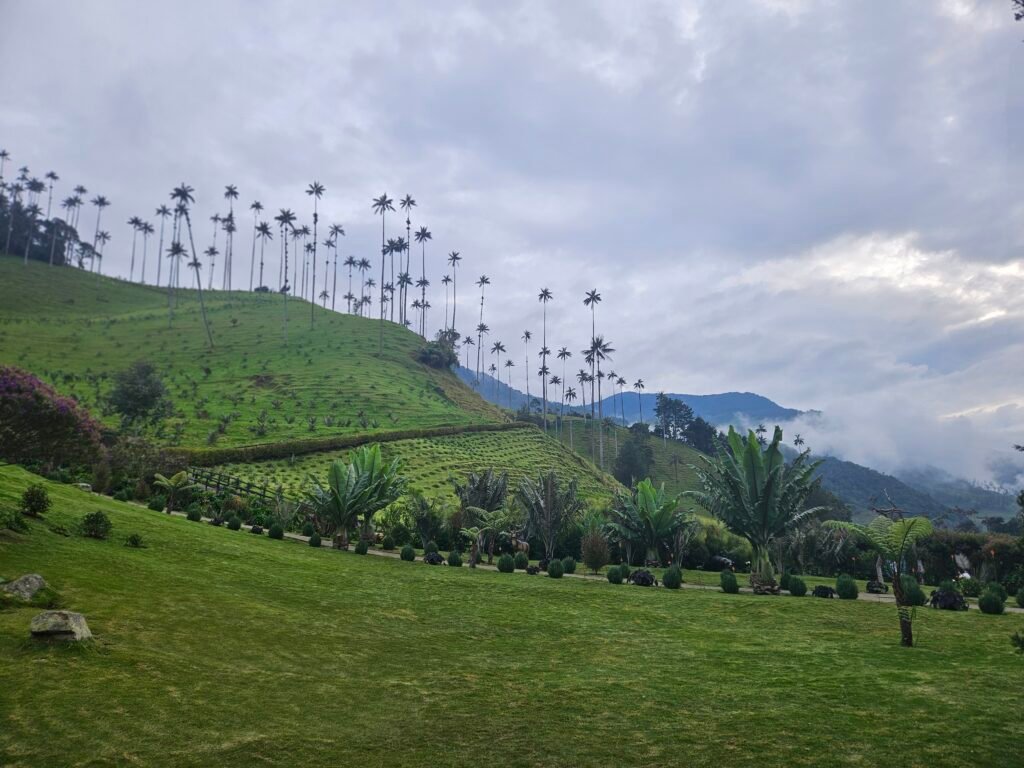
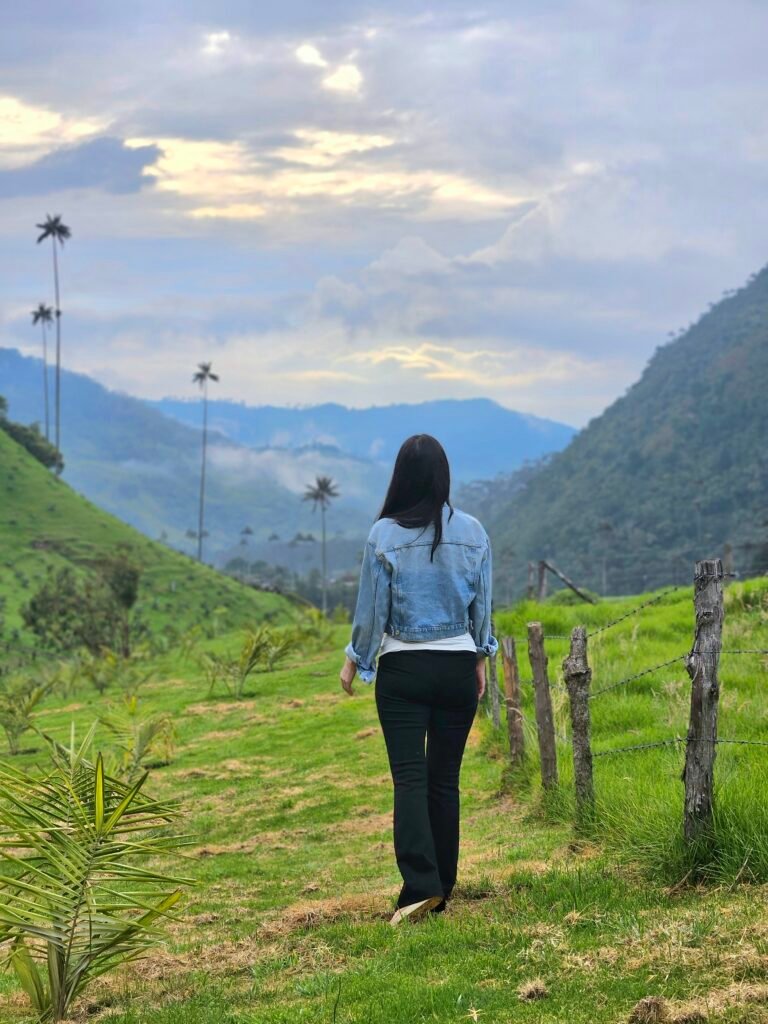
If you’ve ever seen photographs of Colombia with enormous palm trees rising out of green mountain valleys, there is a good chance you’re looking at the Valle de Cocora.
And yes, the palm trees really are that ridiculous.
See the world’s tallest palm trees
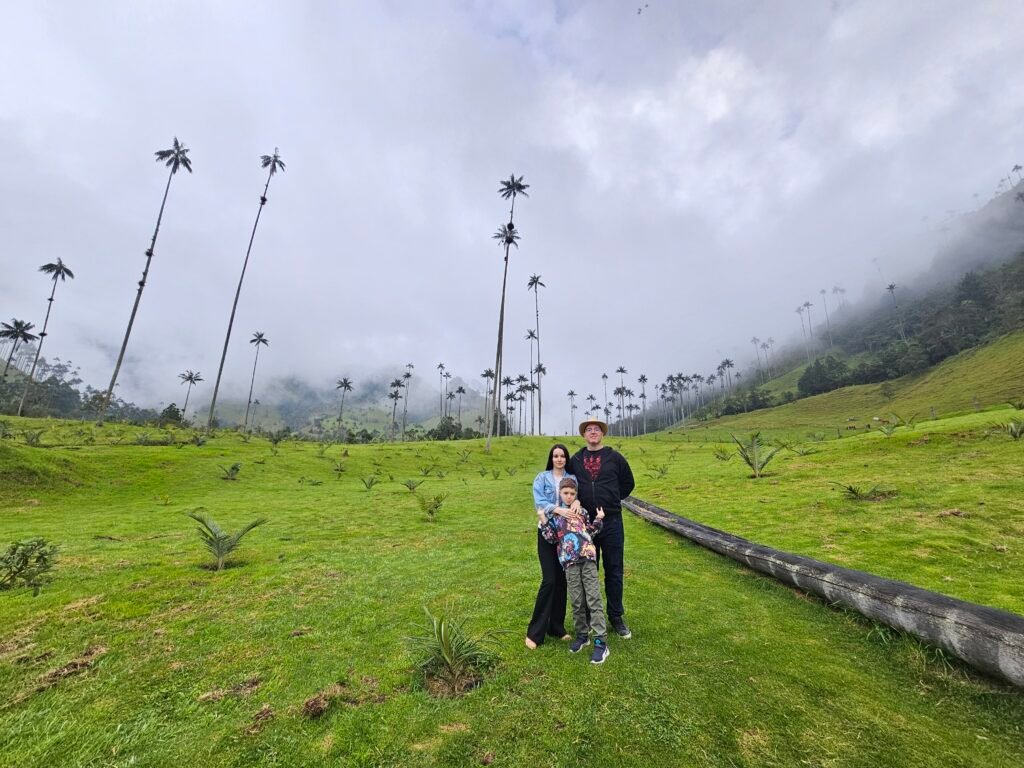
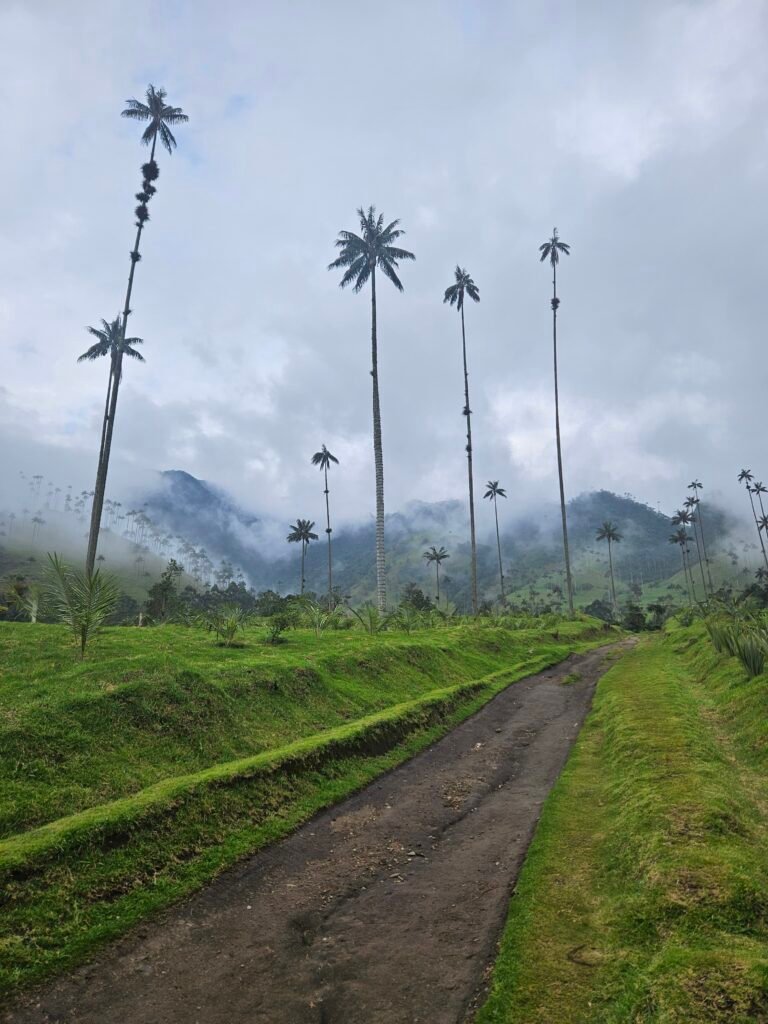
The Cocora Valley is famous for the wax palm, Colombia’s national tree.
These palms can reach around 60 metres in height, making them the tallest palm trees in the world.
This was another excellent worldschooling stop for us because our son was genuinely interested in learning how something that looks completely out of place could grow so tall in the mountains.
The wax palm is also important to the yellow-eared parrot, which is closely associated with the species. You can explore the valley on foot, with different trails depending on how much hiking you want to do. There are also horseback riding options in the area.
The scenery is spectacular, but the main attraction for us was simply learning about the landscape and the trees.
Recommended age: All ages for the viewpoint and easier walks. Older children and teenagers will get more out of longer hikes.
Worldschooling connection: Botany, ecosystems, geography and conservation.
A practical tip for families
Don’t underestimate the weather.
The Cocora Valley is mountainous and conditions can change quickly. Bring layers and waterproofs, even if it looks warm and sunny when you leave Salento.
And comfortable shoes are a must as well.
Medellín with Kids
From the coffee region we continued to Medellín. You can fly direct from Pereira to Medellin in about 45 minutes.
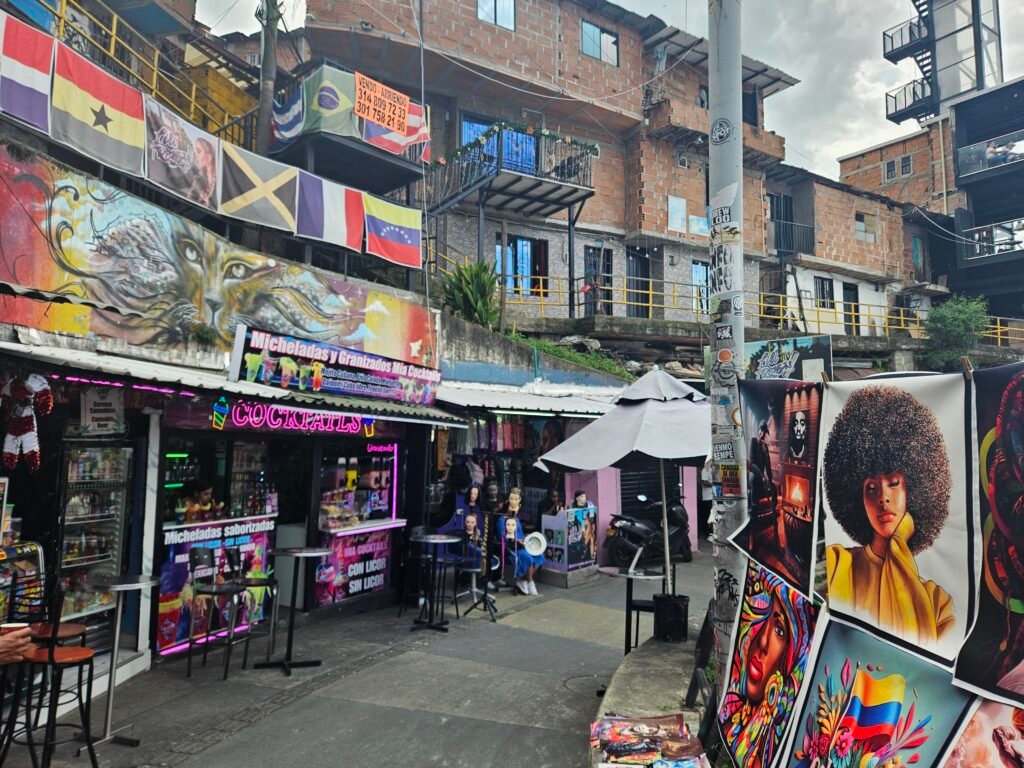
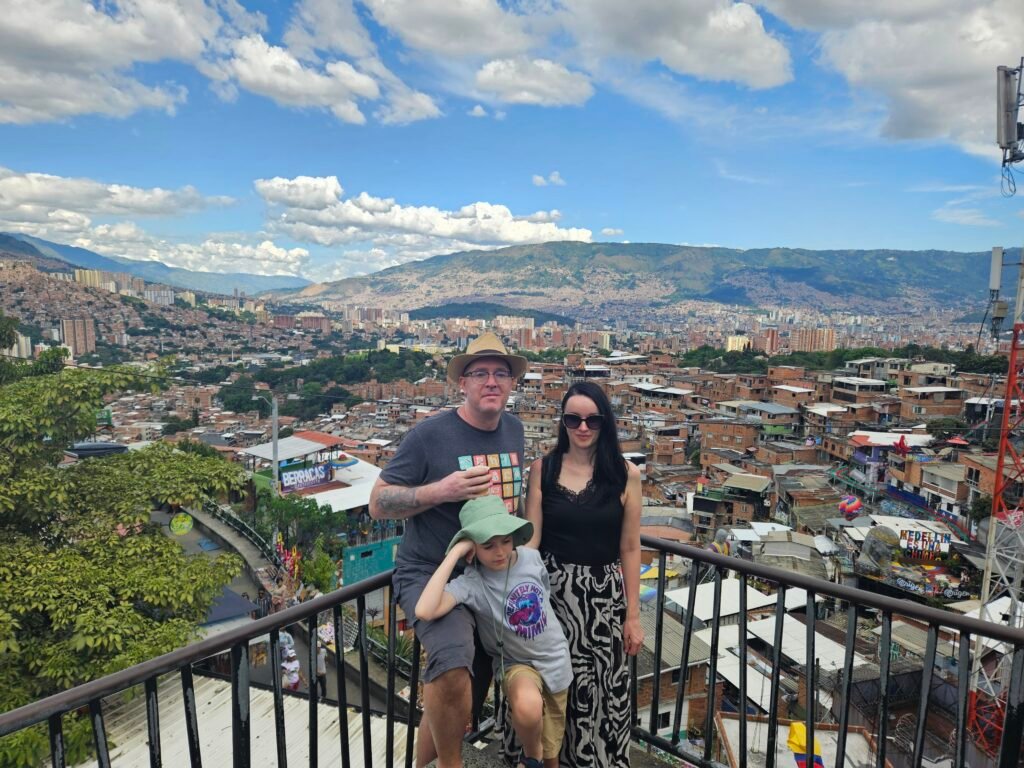
Medellín is one of those cities where the history is impossible to ignore. It has undergone enormous changes over the past few decades, and one of the most interesting places to learn about that transformation is Comuna 13.
Explore Comuna 13
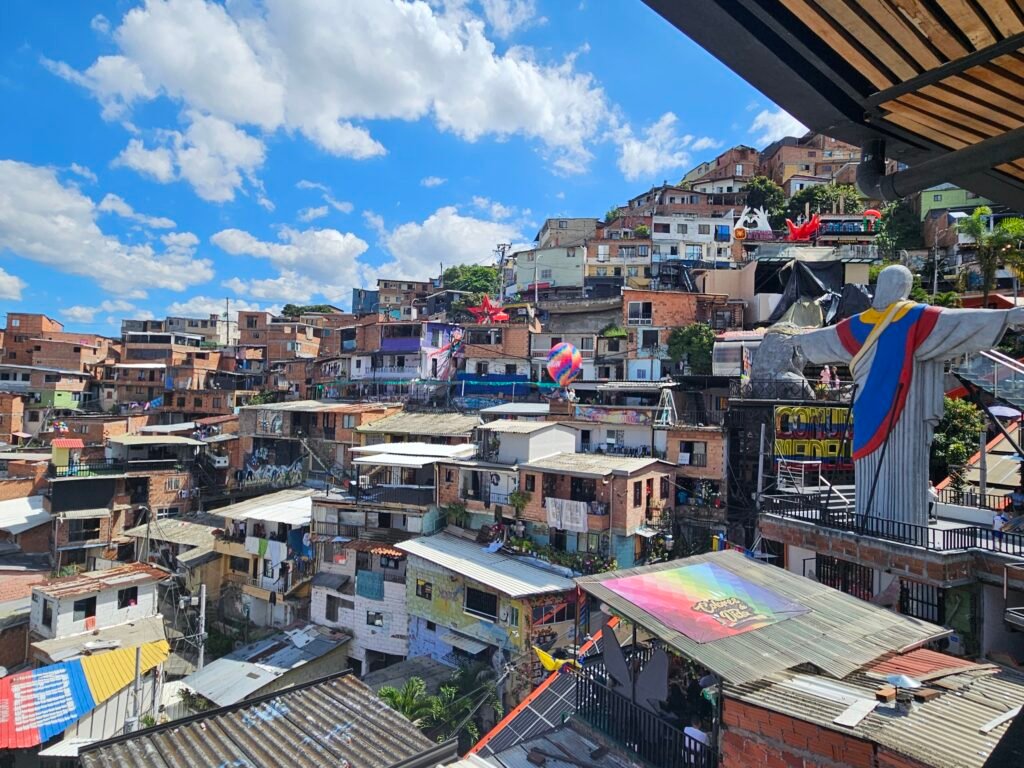
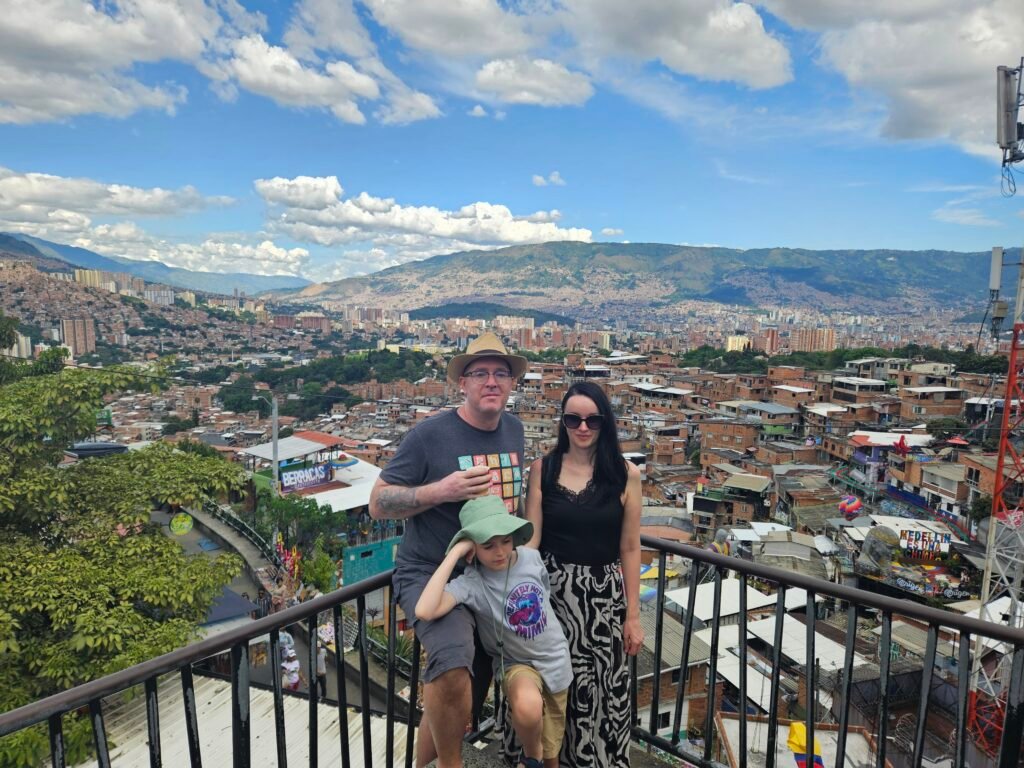
Our main experience in Medellín was visiting Comuna 13.
The area is now famous for its street art, music, colourful murals and outdoor escalators, but its recent history is much more complicated.
The escalators were introduced as part of efforts to improve mobility in the steep neighbourhood, and they have become one of the most recognisable symbols of Comuna 13’s transformation. Colombia’s official tourism site recommends guided tours of the area specifically because they explain its history and transformation.
We found this particularly worthwhile with our son because the experience wasn’t just about looking at colourful walls. It was an opportunity to talk about how cities change, what happens to communities after periods of violence and how art can become part of that process.
I’d strongly recommend doing this with a local guide.
A guide gives the murals, music and streets much more context and helps you understand what you’re actually seeing.
Why kids will enjoy it: Street art, music, escalators and an outdoor environment are much easier for many children to engage with than a traditional museum.
Recommended age: 8+
Worldschooling connection: Colombian history, urban development, community, art and social change.
Is Comuna 13 suitable for children?
We visited with our 9-year-old, but I would choose your tour carefully.
The area has a difficult history, and some tours discuss violence and organised crime quite openly. For older children this can be an important part of understanding the history, but younger children may not need every detail.
I’d also stick with your guide and avoid wandering into unfamiliar areas on your own.

Guatapé Day Trip
One of the easiest additions to a Medellín itinerary is Guatapé.
We visited Guatapé as a day trip, which worked well because you can combine the town with the famous Piedra del Peñol.
Climb Piedra del Peñol
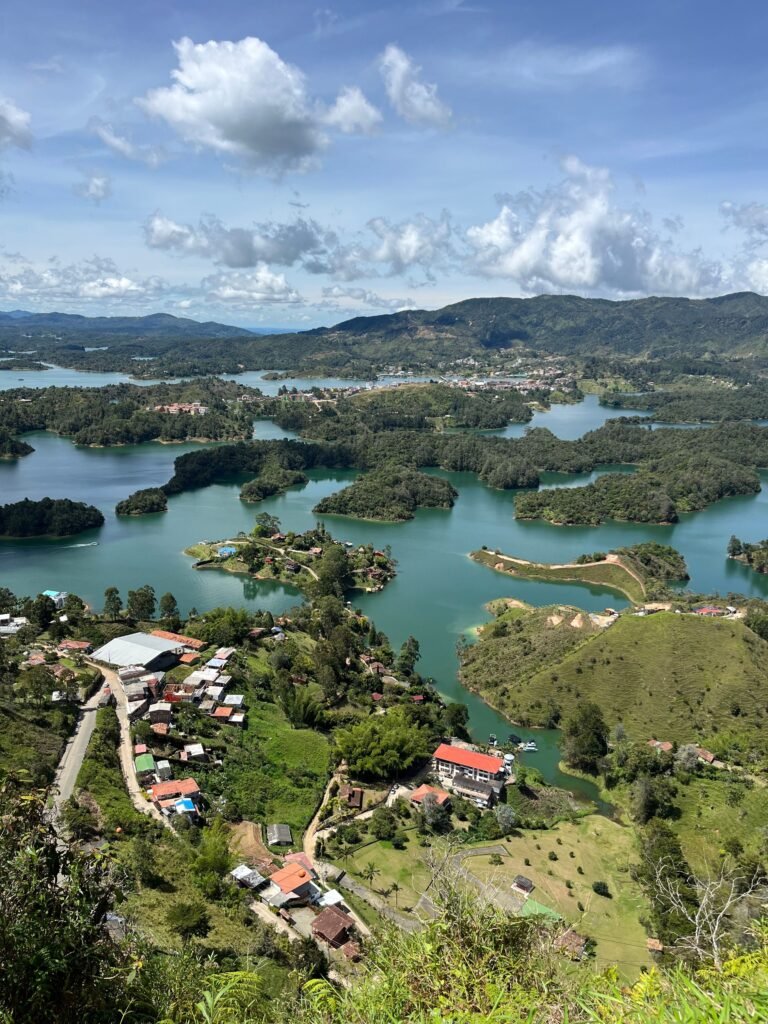
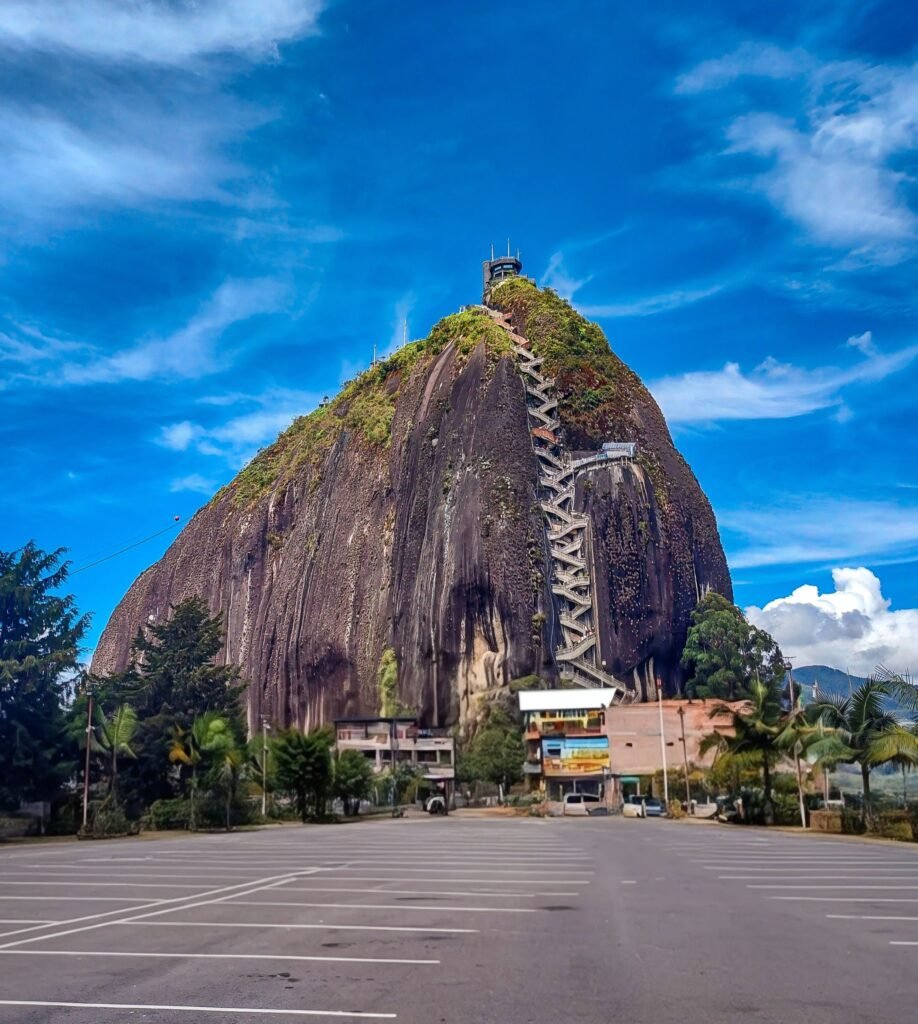
Piedra del Peñol, the enormous granite rock that towers over the landscape just outside Guatape town. The rock rises around 220 metres above the surrounding area, and you can climb to the top via a long staircase built into the side of the rock.
There are a lot of steps, so whether you make it to the top will probably depend on the enthusiasm levels of everyone in your family. Our 9-year-old was perfectly happy with the challenge, and reaching the top makes the climb feel worthwhile. From up there, you get incredible views over the patchwork of lakes and green hills surrounding Guatapé.
Recommended age: 7+ depending on fitness and how your child feels about stairs.
Worldschooling connection: Geography, geology and landscape.
Explore the colourful streets of Guatapé
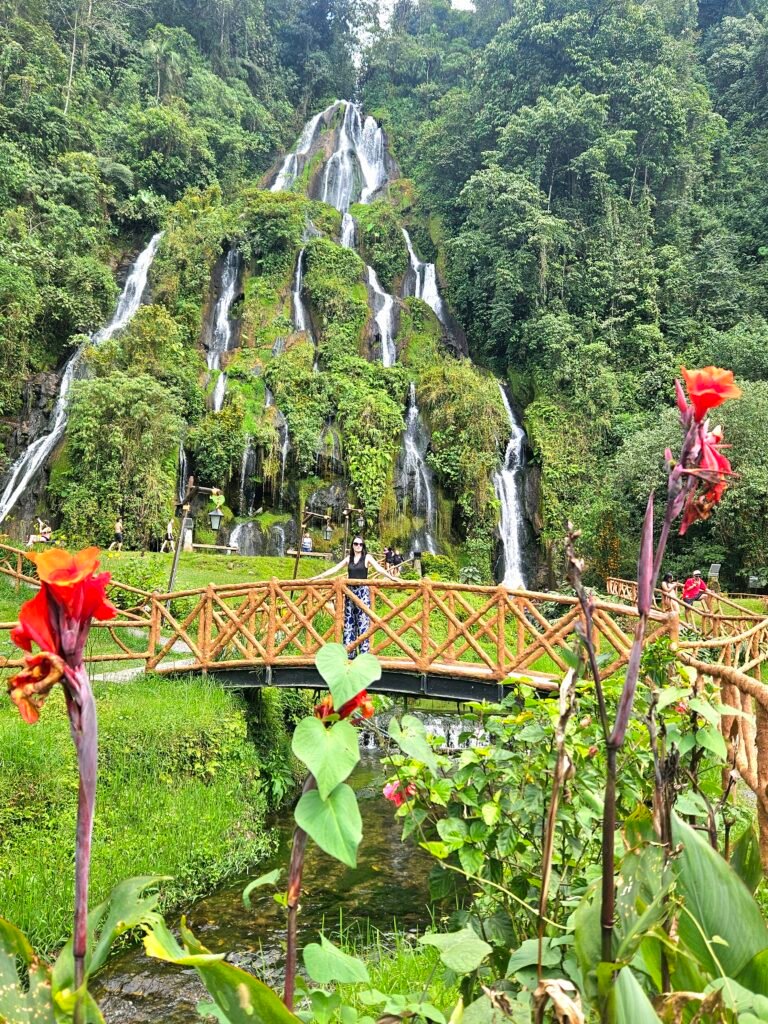
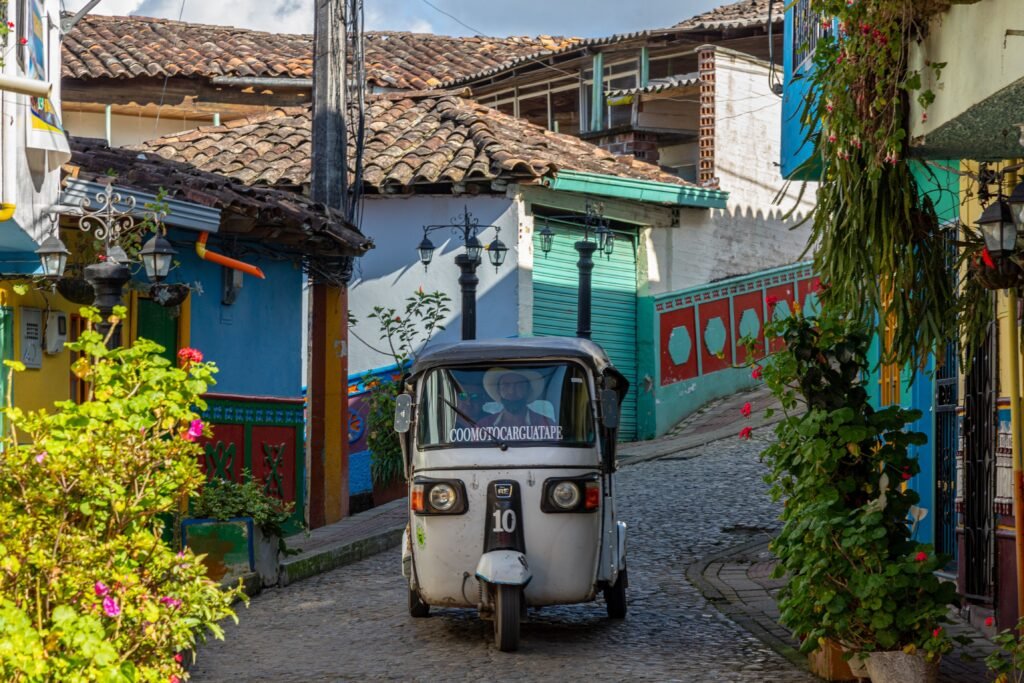
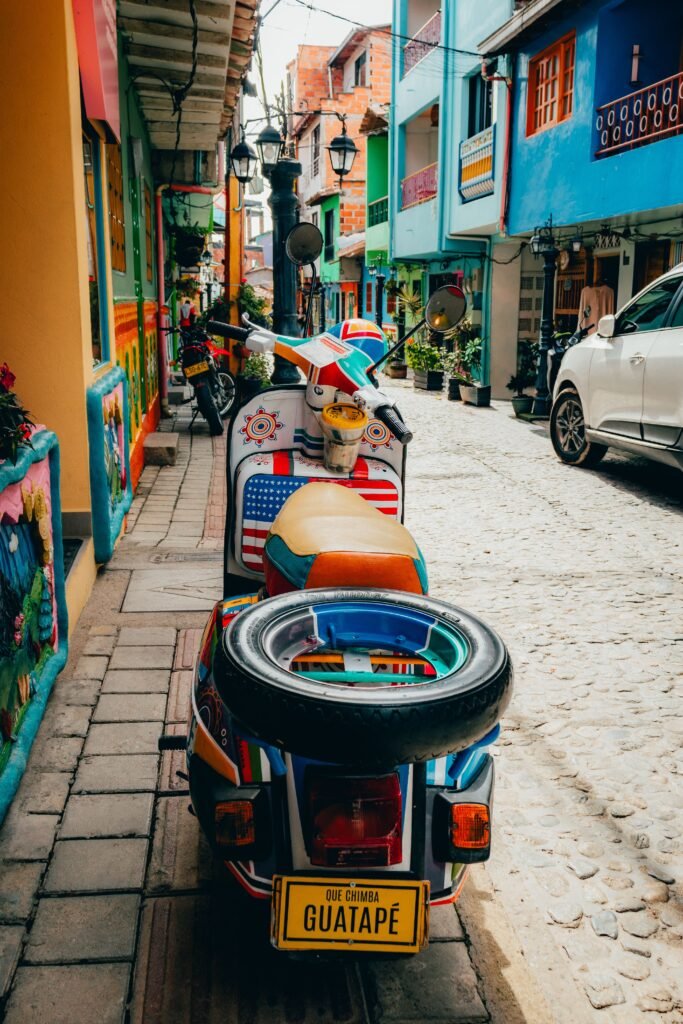
Guatapé was one of those places where we could have happily spent longer than we did. The town itself is incredibly cute, with brightly painted buildings, colourful zócalos decorating the lower parts of the houses, little shops and cafés, and streets that are fun to wander without having a particular plan.
The colourful zócalos are one of Guatapé’s most distinctive features. Many of the houses have decorative panels showing flowers, animals, people and scenes from local life, so even a simple walk through town becomes a bit of a treasure hunt with kids. It is worth taking your time here rather than treating Guatapé as just a stop before or after the rock.
Cartagena with Kids
Our final stop was Cartagena, which felt completely different again.
There is a direct flight to Cartagena from Medellin, taking only about 1 hour and 10 minutes.
After Bogotá’s altitude and the green mountains around Salento and Medellín, suddenly we were in a Caribbean city with hot weather, old stone walls and colourful streets.
Cartagena’s historic centre is surrounded by its famous defensive walls, and the city’s old town is one of the places where simply walking around is part of the experience.
Explore the Cartagena fortress and city walls
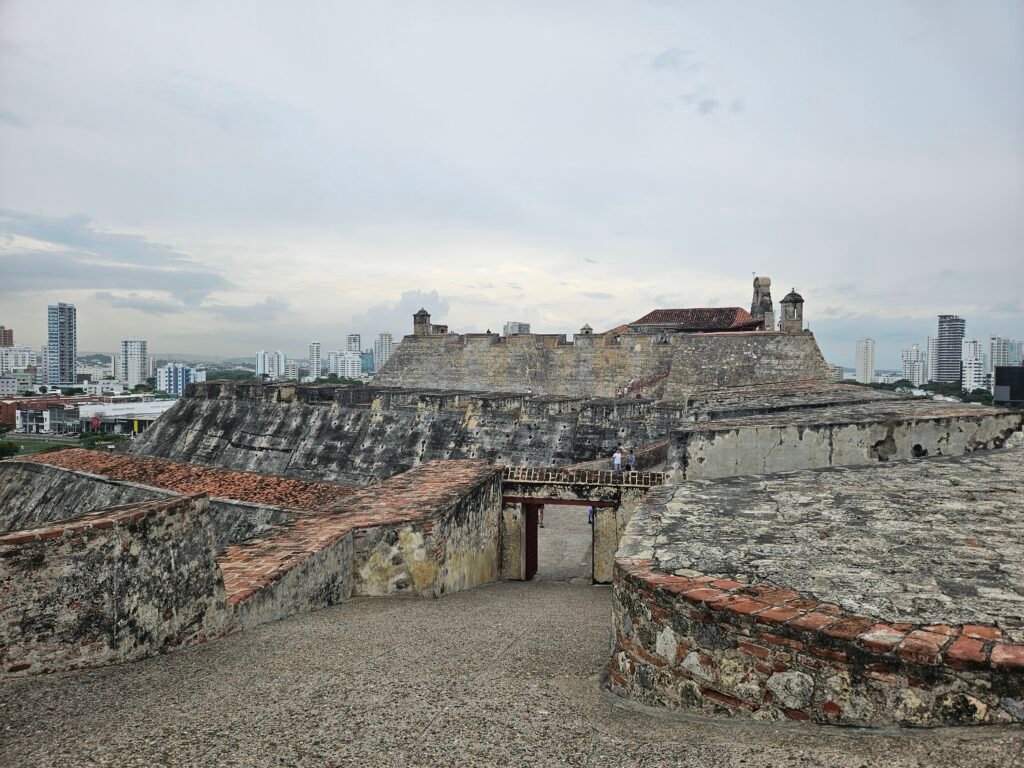
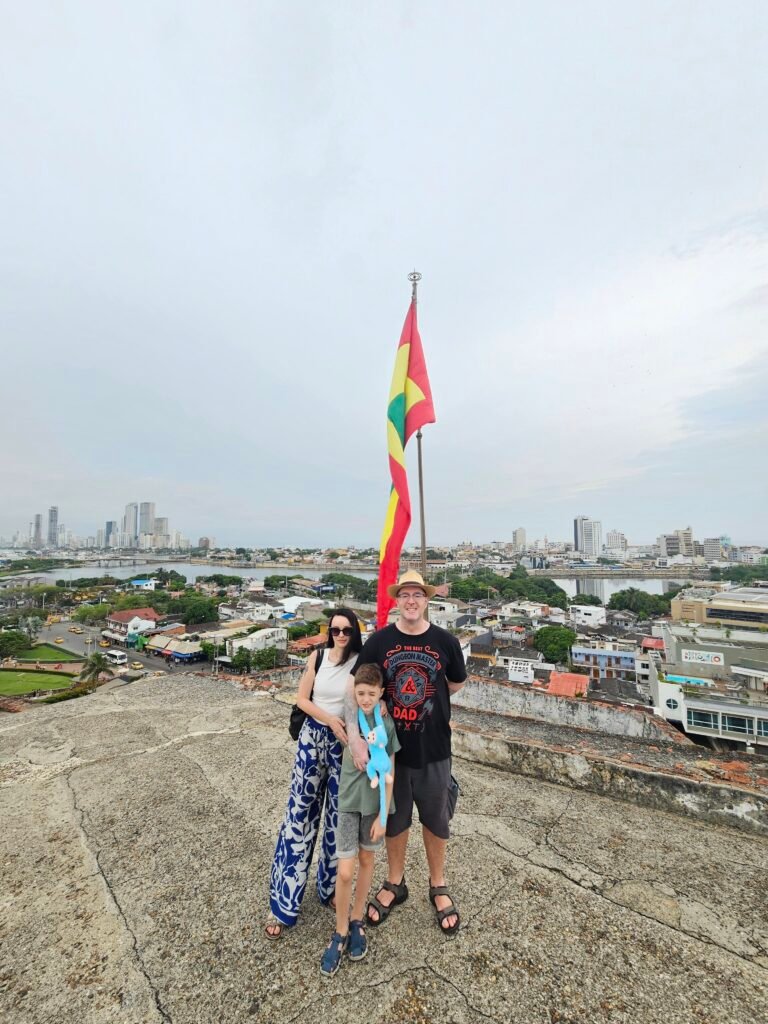
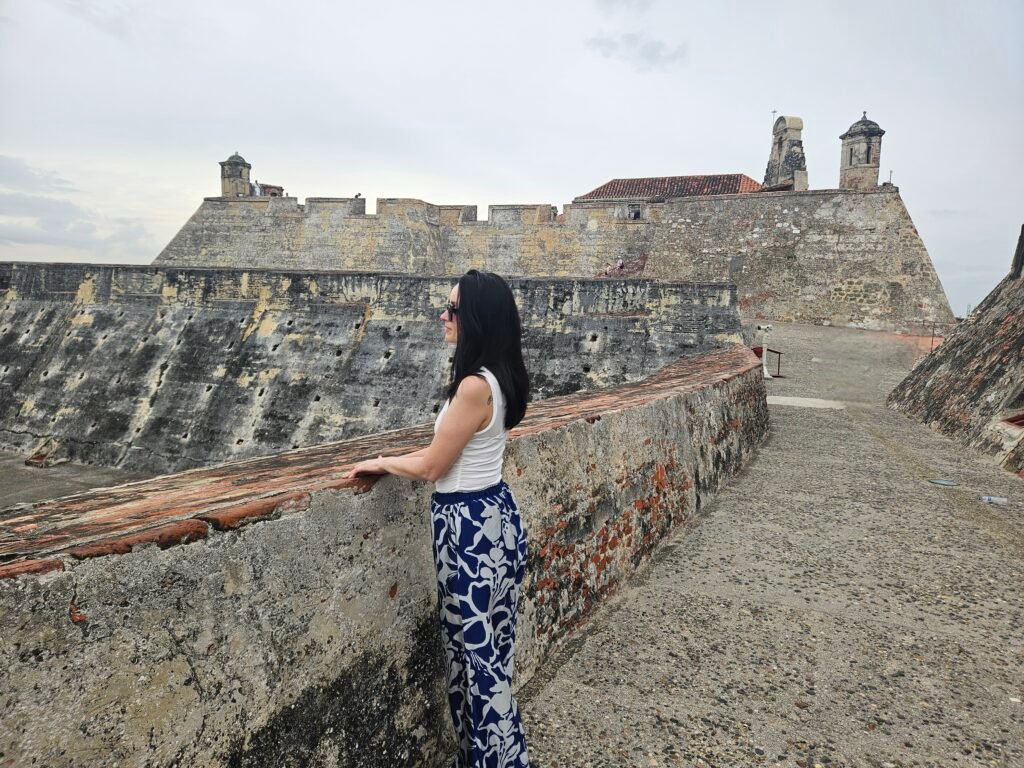
Cartagena’s old city is packed with history, and one of the first things we wanted to explore was the fortress and the huge defensive walls surrounding the city. Cartagena was founded by the Spanish in 1533 and quickly became one of the most important ports in the Spanish Empire. Gold and other valuable goods passed through the city on their way to Spain, which also made it a target for pirates and privateers. The impressive fortifications were built over centuries to protect the city, including Castillo San Felipe de Barajas, the enormous fortress that sits just outside the old walled city.
Walking along the walls and through the old streets made all of that history much easier to understand. You can see the old gates, cannons and thick stone walls and get a real sense of how heavily the city had to be defended. Our son was much more interested in exploring a fortress than reading about one in a history book, so it was a great way to bring the history to life.
Recommended age: All ages
Worldschooling connection: Colonial history, geography, trade, military history and architecture.
Practical tip
Cartagena can be extremely hot, particularly in the middle of the day. If you’re travelling with kids, get out early, take a break during the hottest part of the afternoon and head back out later.
Wander Cartagena’s colourful streets
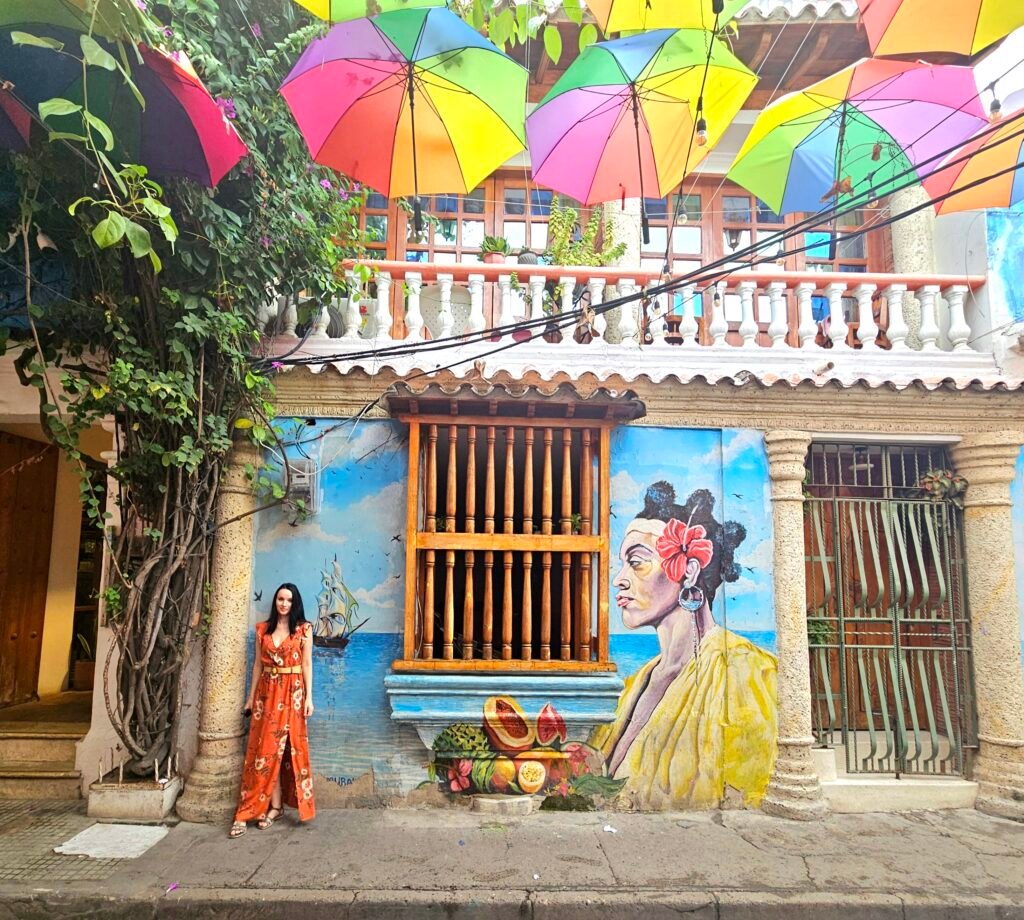
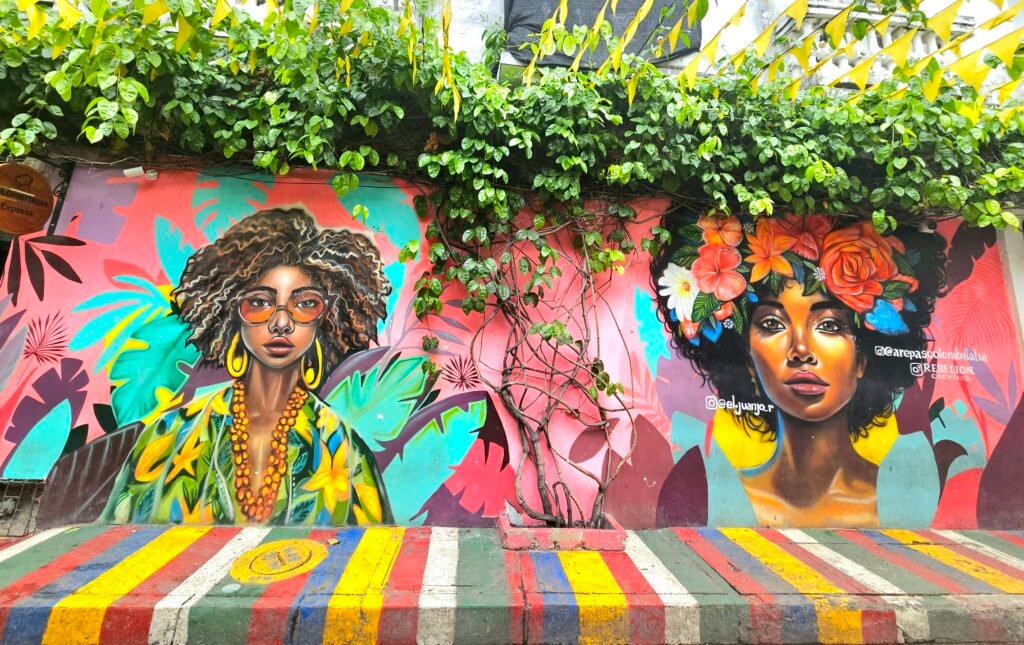
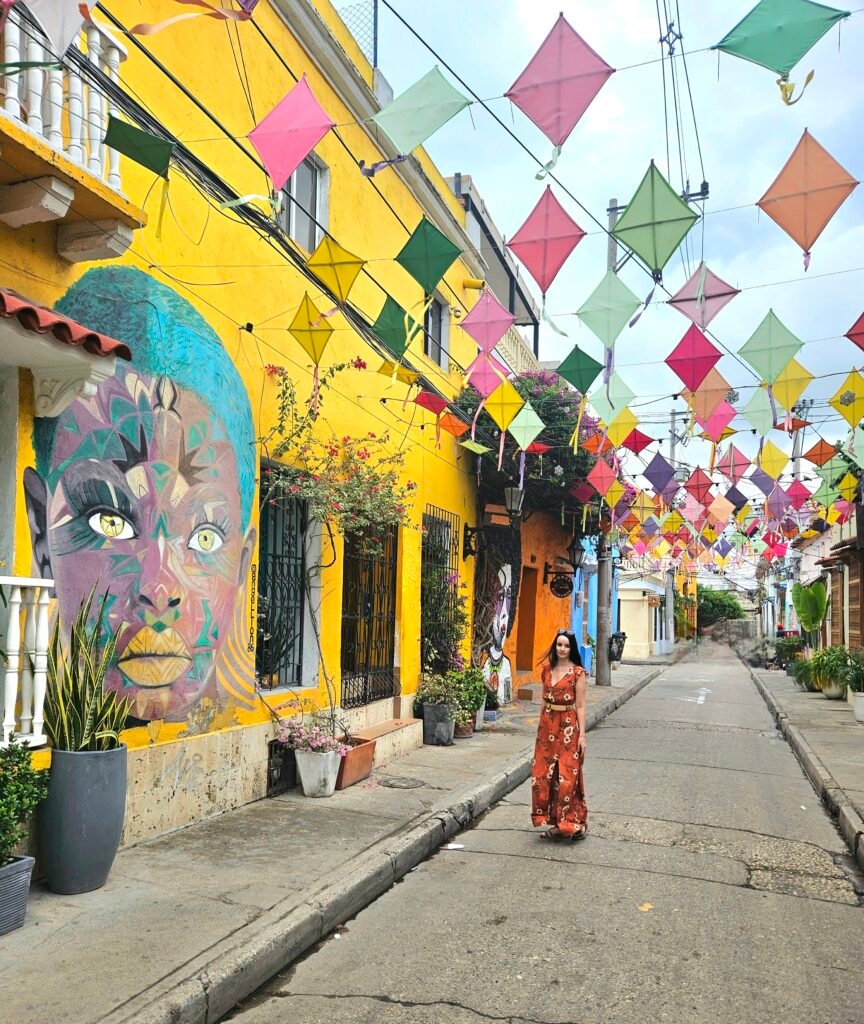
One of our favourite things about Cartagena was simply walking through the old streets.
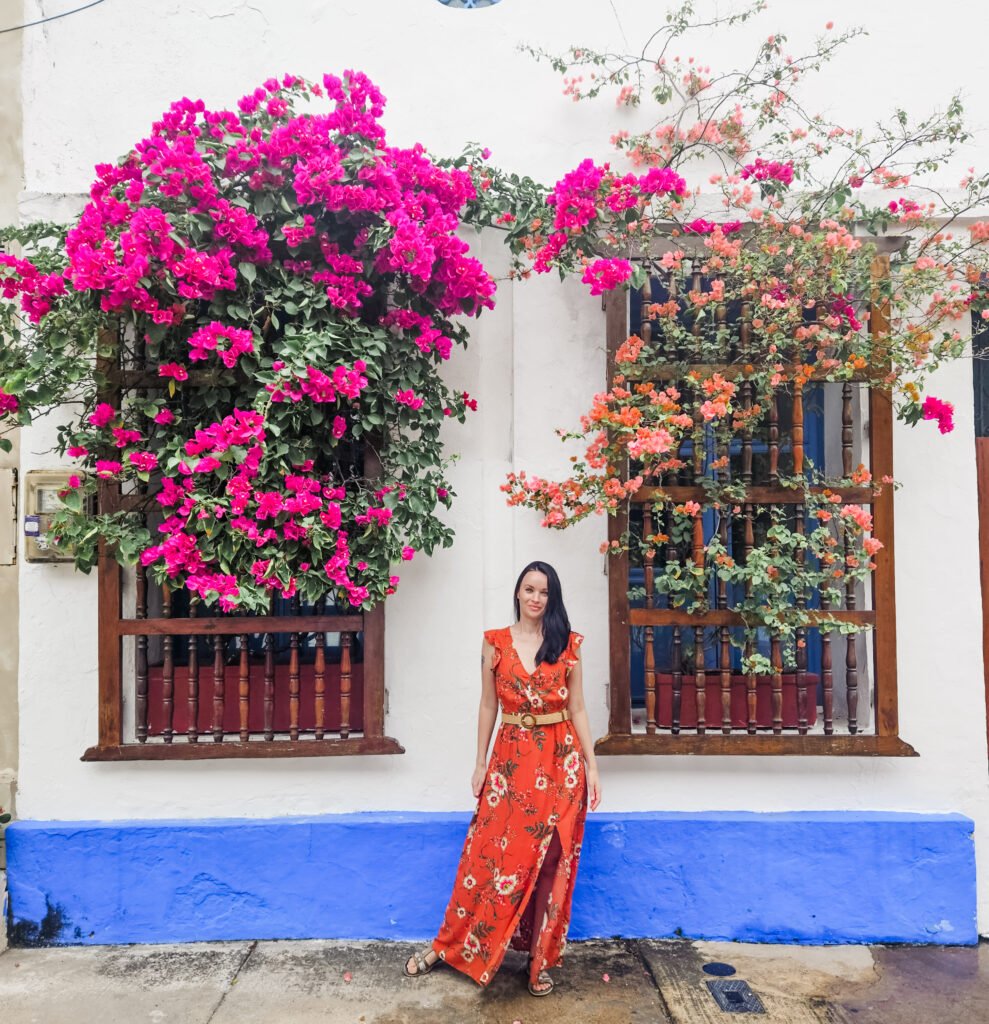
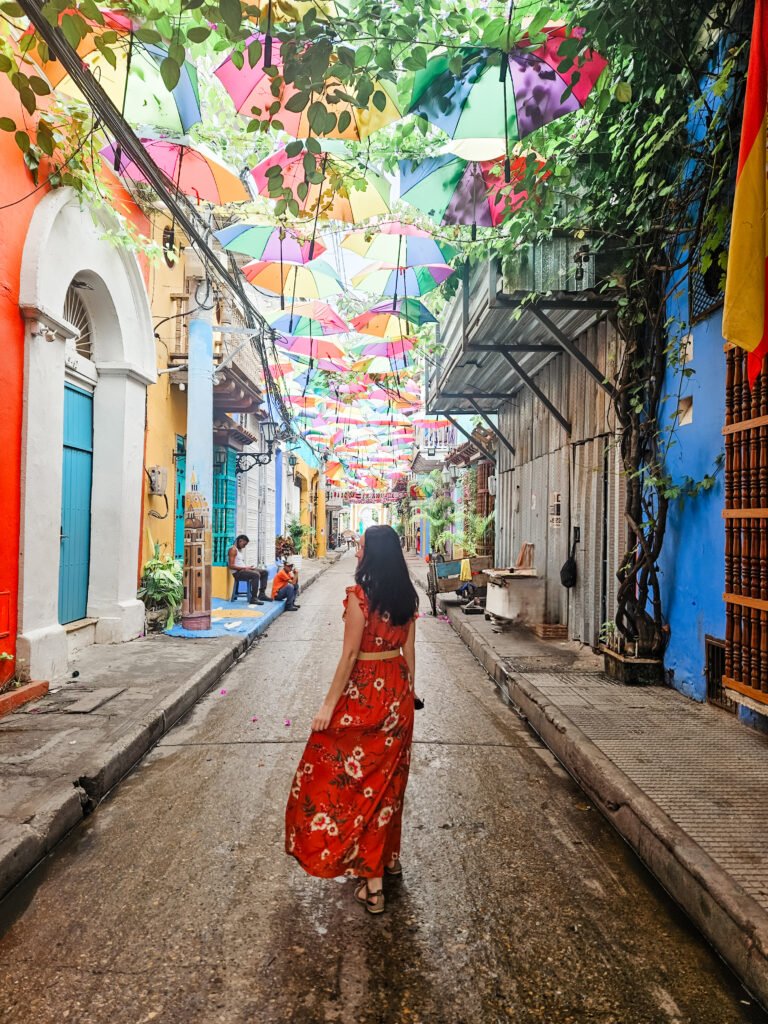
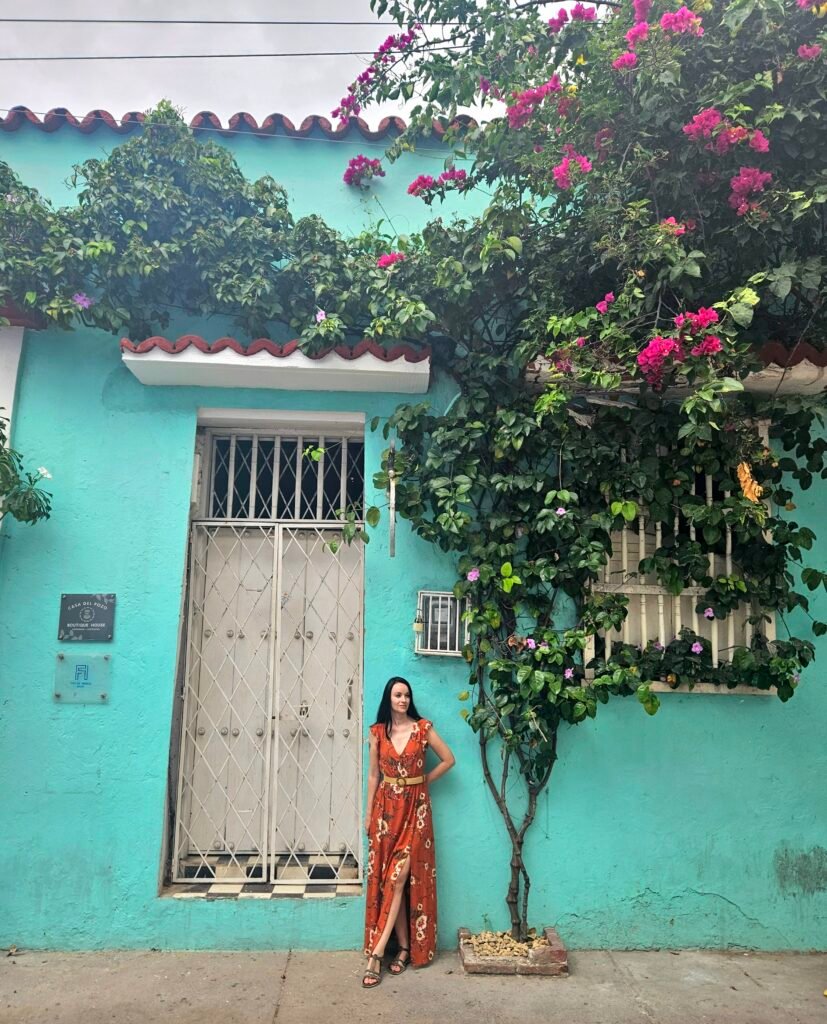
Cartagena’s old town is a wonderful place to simply wander, with narrow streets lined with brightly painted colonial buildings, colourful wooden doors, flower-covered balconies and little plazas opening up between the buildings. Much of what you see today reflects the city’s Spanish colonial past, when Cartagena was an important port and trading centre for the Spanish Empire.
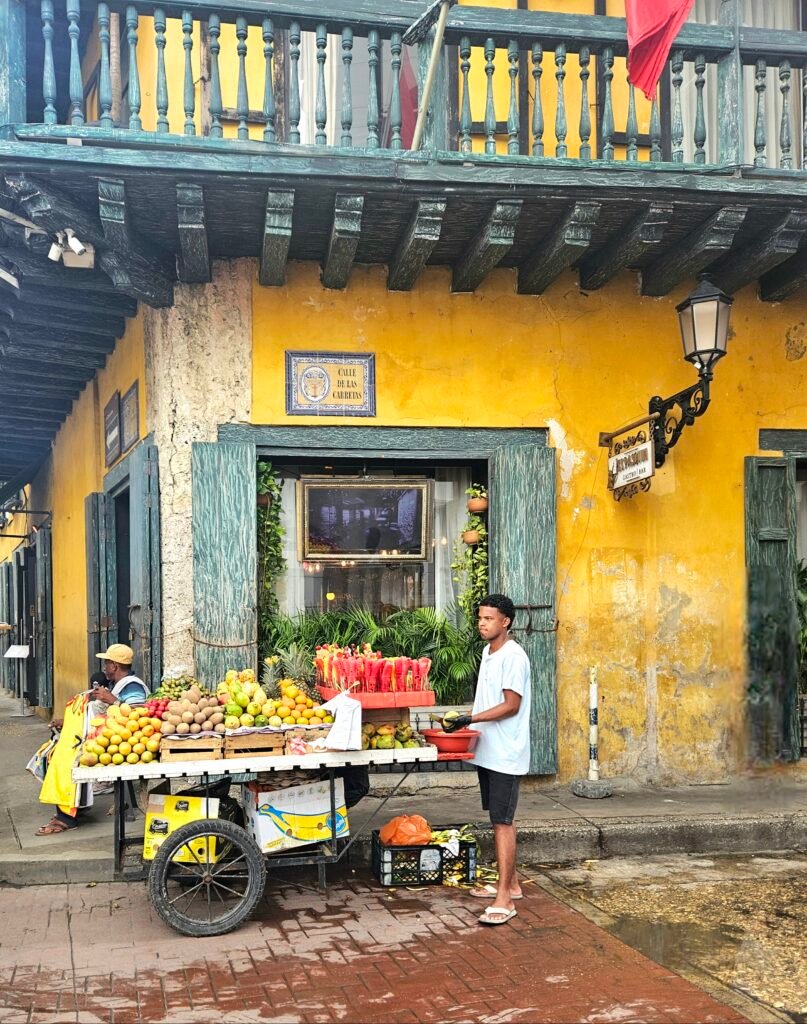
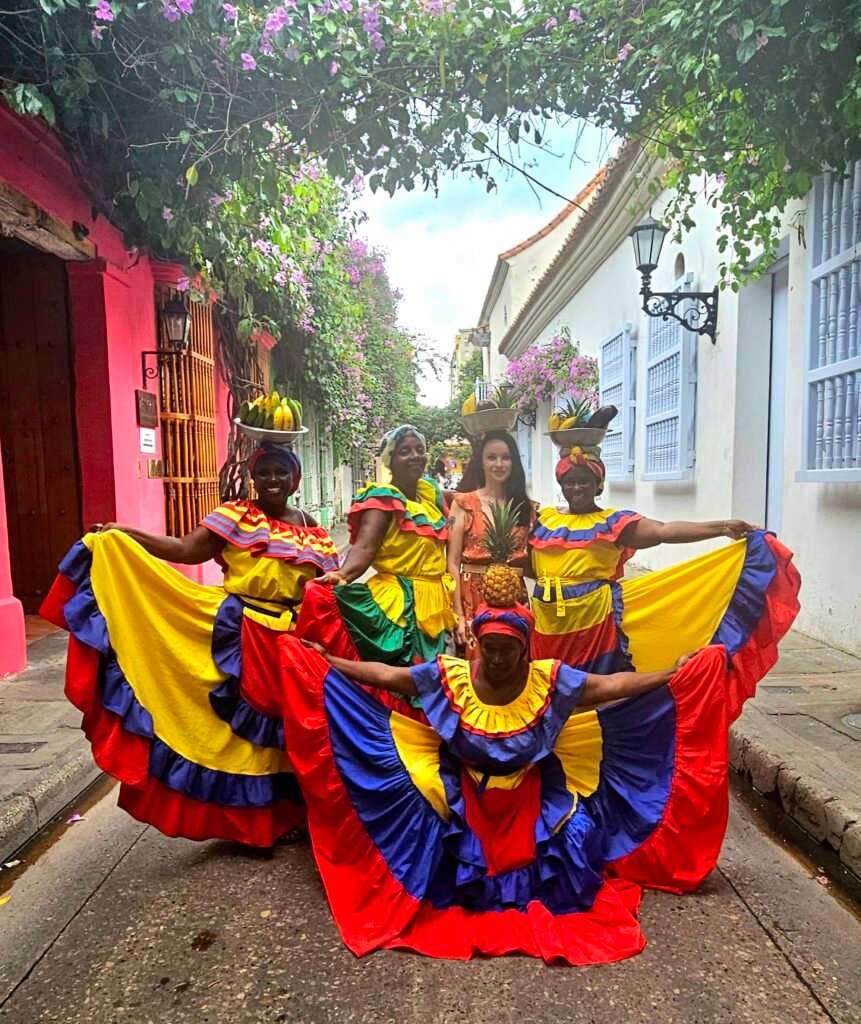
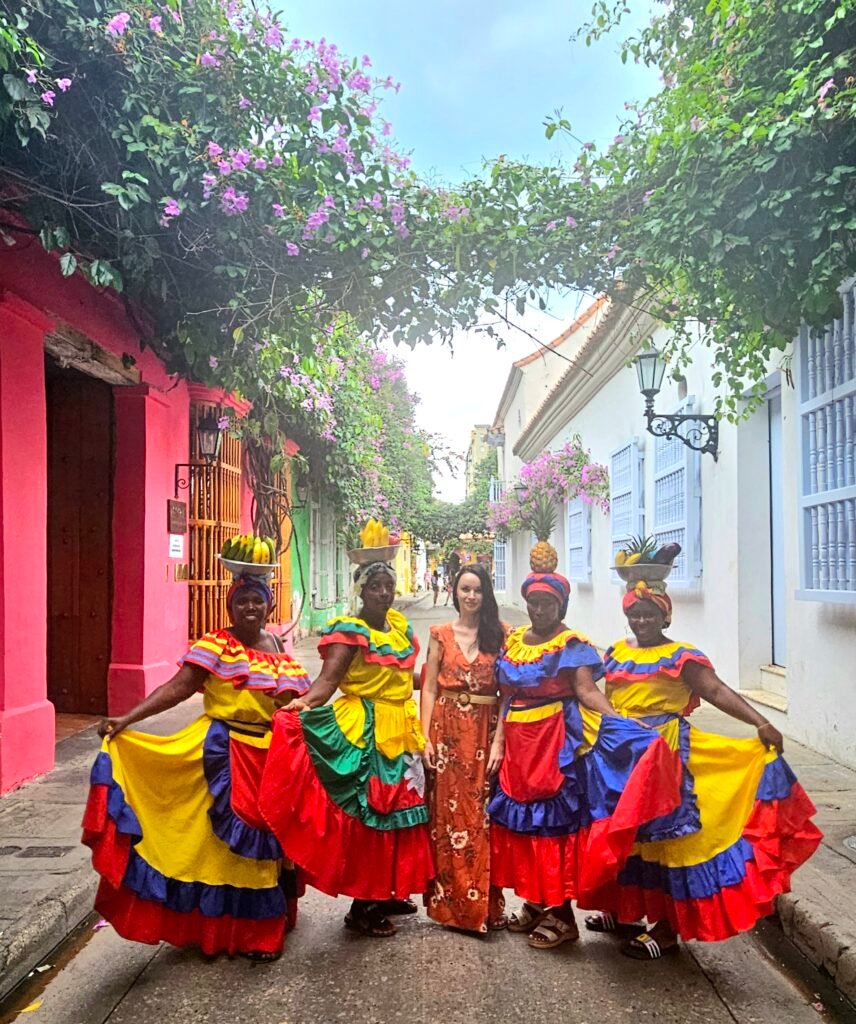
Another memorable part of wandering around Cartagena was seeing the palenqueras, the women traditionally dressed in brightly coloured clothing who sell fresh fruit around the city. They come from San Basilio de Palenque, a community founded by formerly enslaved Africans and recognised as an important part of Colombia’s Afro-Colombian heritage. The women and their colourful outfits have become closely associated with Cartagena, although it’s worth remembering that they are real people and not simply a photo opportunity. It should be noted that if you would like a photo with the palenqueras, you should agree on the price with them first. There is no set price but usually they charge between $5 and $10 USD per each lady that’s in the photo with you.
Another fun thing to do in Cartagena is a food tour. During the tour you learn about the city, as well as the local street food. This is absolutely the best way to experience the culture and all the city has to offer!
Best things to do in Colombia with kids
If you are planning a family trip to Colombia and don’t have time for everything we did, these would be the experiences I’d prioritise from our trip.
1. Visit a coffee finca in Salento
Our favourite hands-on experience.
Learning about coffee is interesting, but actually becoming coffee pickers for the day made it memorable.
2. Explore Comuna 13 with a guide
Best for history and culture.
The street art is fun to see, but the real value is understanding the story behind the neighbourhood.
3. Visit the Gold Museum in Bogotá
Best museum for families.
It is full of fascinating objects and gives children a much better understanding of Colombia before European colonisation.
4. See the wax palms in Valle de Cocora
Best nature experience.
Standing underneath 60-metre palms is pretty impressive.
5. Explore Cartagena’s old city
Best for history and architecture.
The combination of the fortress, walls and colourful streets makes history very tangible.
6. Visit the Botero Museum
Best quick museum stop.
It’s free, interesting and doesn’t require half a day.
7. Take a day trip to Guatapé
Best combination of scenery and activity.
Climbing Piedra del Peñol gives children a clear goal, and Guatapé itself is easy to explore afterwards.
Colombian food worth trying with kids
Food is always part of our worldschooling.
Colombia has plenty of familiar options for children, but there are also some local dishes worth trying.
Arepas
These are probably the easiest introduction for children.
Arepas are made from cornmeal and can be served in lots of different ways, with cheese, meat, eggs or other fillings.
They’re also useful when your child is having one of those “I don’t want anything weird” days.
Empanadas
Colombian empanadas are generally made with corn rather than the wheat pastry you may be used to elsewhere in Latin America.
They’re usually filled with meat, potatoes or other savoury fillings.
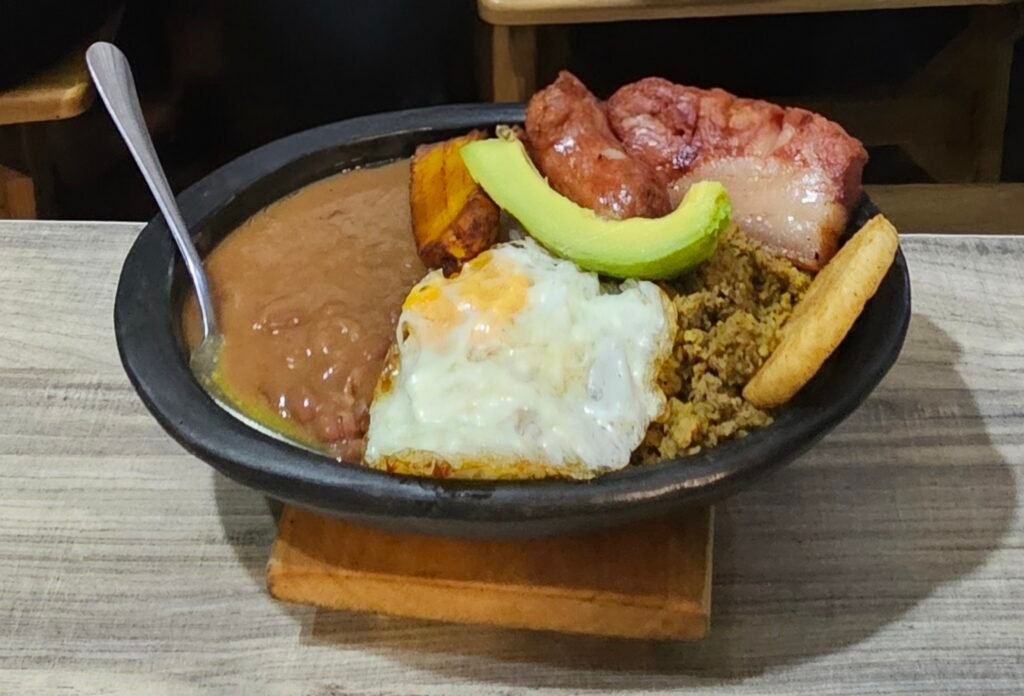
Bandeja paisa
This is a famous dish from the Antioquia region around Medellín.
It’s substantial, with things such as beans, rice, meat, plantain, egg and avocado.
Basically, it is not the dish you order when you’re looking for a light lunch.
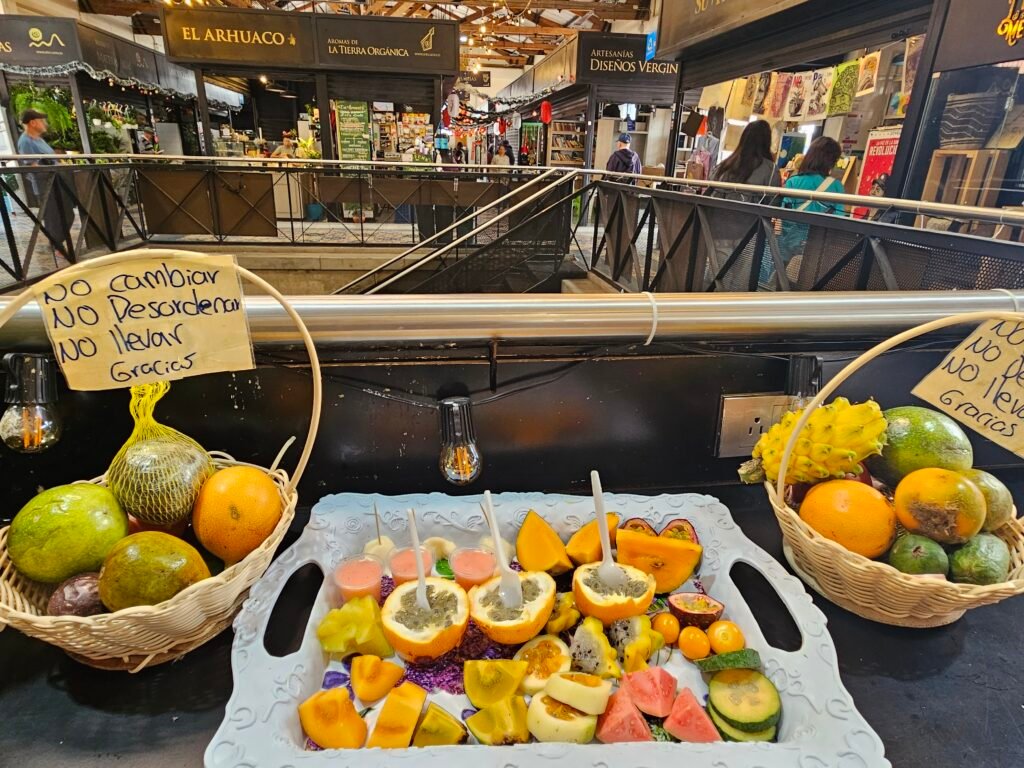
Fresh fruit
Colombia has an incredible range of tropical fruit, and buying fruit from local markets is an easy way to introduce children to things they may not see at home.
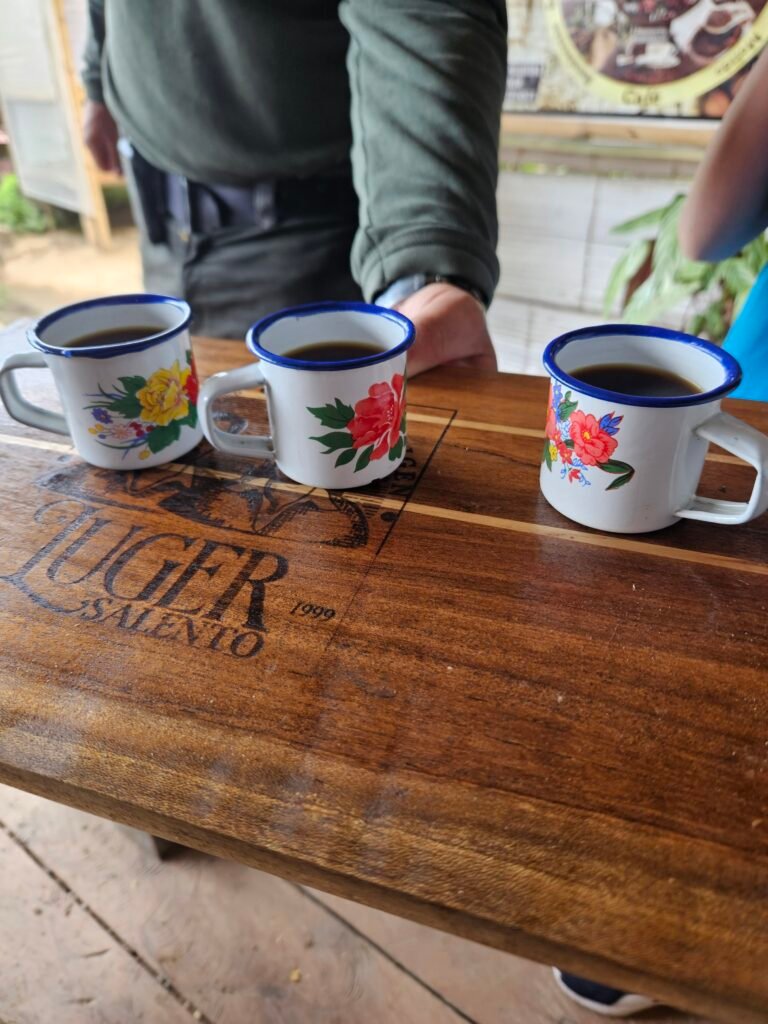
Coffee
Obviously, you cannot visit the Colombian coffee region without talking about coffee.
Our son was far more interested in the process of growing and harvesting it (he did also get a cheeky taste).
Where to stay in Colombia with kids
For a short family trip like ours, I’d prioritise location as well as the quality. Location is very important, especially in cities like Bogota and Medellin, where it’s best to stay in a knowingly safe area.
You’re going to be moving around a lot, so being able to walk to restaurants, attractions and transport is much more useful than having a fancy hotel that requires a 30-minute taxi ride every time you leave.
Bogotá
Look for accommodation in an area with easy access to the places you want to visit. If you’re planning to spend a lot of time in the historic centre, staying nearby can reduce travel time, but make sure you choose accommodation carefully and take local safety advice seriously.
We stayed at GHL Bioxury which is located in a very safe part of the city, close to the old town. The hotel was beautiful and very comfortable.
Salento
This is a place where I’d look for a small family-run hotel, guesthouse or finca. Being close to the town makes eating and getting around easier, while staying outside town can give you more of the coffee-country experience.
We did not stay in Salento, but in Pereira – at Movich hotel. We highly recommend this property, our stay was very comfortable, and the location is great. This meant that we had to drive to Salento and back, which added driving time, although it was more convenient for the driving to the airport.
Medellín
El Poblado and Laureles are popular choices for visitors, with plenty of accommodation, restaurants and cafes. For a family, I’d choose somewhere convenient rather than choosing accommodation purely because it has the highest number of nightlife options.
We stayed at San Fernando Plaza which is an amazing hotel in a great location. It has a gym, rooftop pool, and provides a great breakfast.
Cartagena
Staying in or close to the historic centre makes a lot of sense for a short visit. You’ll be able to walk to many of the main sights rather than constantly arranging transport.
In Cartagena we stayed at GHL Arsenal Hotel, and you really cannot find a better location! Very close to the old town, this hotel is in a historic building and is absolutely beautiful. We ate breakfast and lunch there, and the food was fantastic.
Getting around Colombia with kids
This is one area where I’d build some flexibility into your itinerary.
Colombia is a large country, and the destinations on this itinerary are not close together.
For a one-week trip, domestic flights make much more sense for some of the longer journeys.
We had limited time, so spending entire days sitting on buses wasn’t what we wanted.
For shorter journeys and day trips, private transfers, taxis or organised tours can be more practical with a child and luggage.
In cities, use reputable transport options rather than simply flagging down random taxis.
And remember that travel times can be longer than they look on a map. Colombia is mountainous, and roads between destinations can wind through terrain that makes apparently short journeys take much longer than expected.
Our Colombia itinerary for one week
If you want to copy our route, this is the simplest version.
We arranged your tour with Gran Colombia Tours and they were fantastic and easy to deal with.
Day 1: Bogotá
- Guided city tour
- Explore the historic centre
- Visit the Botero Museum
- Visit the Gold Museum
Day 2: Bogotá to Salento
- Travel to Salento
- Explore the town
- Visit a coffee finca
- Learn about coffee production
- Try your hand at coffee picking
Day 3: Valle de Cocora
- Travel to Cocora Valley
- See the giant wax palms
- Walk some of the valley trails
- Learn about Colombia’s national tree
- Return to Salento
Day 4: Salento to Medellín
- Travel to Medellín
- Explore Comuna 13 with a local guide
- See the street art and escalators
- Learn about the neighbourhood’s history
Day 5: Guatapé
- Day trip from Medellín
- Visit Piedra del Peñol
- Climb the rock if your family is up for it
- Explore colourful Guatapé
- Return to Medellín
Day 6: Medellín to Cartagena
- Travel to Cartagena
- Explore the historic centre
- Walk along the old walls
- Explore the colourful streets
Day 7: Cartagena
- More time exploring the old city
- Visit the fortress
- Wander the streets
- Eat, relax and enjoy the Caribbean atmosphere
And then, unfortunately, it was time to leave.
How much did a week in Colombia cost us?
Costs for a trip like this can vary a lot depending on your travel style, so take these numbers as a guide rather than a fixed budget. Ours was probably on the more expensive end, and this trip can definitely be done more cheaply.
Our tour cost $5,241 USD for 8 nights at 5-star hotels, with all breakfasts and most lunches included (no dinners), plus all guided tours, entrance fees, transfers and domestic flights. This did not include visa fees, international flights, dinners, tips or any additional purchases. There is also a cheaper version of the same tour using 4-star hotels, which comes in at $4,678 USD.
We spent approximately another $500 USD on dinners for the three of us, which brought our total to about $5,741 USD. My son and I did not need to get a visa as Irish citizens, but my husband also had to pay an entry fee as a Canadian citizen. The cost was 270,000 Colombian pesos, which is currently around $88 USD. With a few souvenirs added on top, our overall spend for the week came to about $6,000 USD.
Practical tips for travelling Colombia with kids
Don’t try to see the whole country
This is probably the biggest piece of advice I’d give.
Our one-week route worked because we accepted that we were only getting a taste of Colombia.
If you have two or three weeks, don’t automatically add more destinations. Instead, slow down.
I’d happily spend several days in Salento, Medellín and Cartagena rather than constantly packing and unpacking.
Be prepared for very different climates
Our route went from Bogotá’s high-altitude climate to the cooler mountains around Salento and Medellín and then to hot Cartagena.
Pack layers.
And don’t assume that because it’s Colombia, everywhere will be hot.
Carry water
Particularly for the Cocora Valley and Guatapé, and especially Cartagena.
Bring rain protection
The weather in the mountains can change quickly.
A lightweight waterproof jacket takes up very little room and is worth carrying.
Learn a little Spanish
You don’t need to be fluent, but even basic Spanish is useful.
Learning simple phrases together can also be part of the worldschooling experience.
We always find that kids are more willing to try another language when it is immediately useful.
Bring Cash
Having some cash with you is very useful, because in small towns they often don’t accept card. Bring some USD that you can exchange to Colombian peso as some small places don’t accept USD.
Is Colombia safe for families?
This is the question I would expect most parents to ask.
Colombia has changed enormously over the past few decades, but it is still important to take safety seriously. Current government travel advice continues to flag crime, kidnapping, terrorism and civil unrest as risks in parts of the country. The US State Department currently lists Colombia at Level 3, “Reconsider travel”, with specific regions under stronger warnings.
The UK’s current advice also warns about street crime, including pickpocketing, mugging and armed robbery, particularly in major cities and tourist areas.
That doesn’t mean families cannot travel to Colombia. It means you should travel thoughtfully.
A few things we would recommend:
- Don’t walk around unfamiliar areas after dark.
- Keep phones and valuables out of sight when you’re not using them.
- Don’t flash expensive jewellery, watches or cameras.
- Use reputable taxis or arranged transport.
- Be particularly careful around ATMs.
- Stay with your guide during organised tours.
- Check current government travel advice before travelling.
- Check the specific areas you plan to visit, rather than treating the entire country as having the same level of risk.
The current UK advice also has specific areas where it advises against all but essential travel, so don’t assume that advice for one part of Colombia applies equally to every destination.
Travelling with a child also changes how we travel generally. We tend to be more conservative about where we walk, when we go out and how we get around.
How much time do you really need in Colombia?
If you only have one week in Colombia, you can absolutely have a great trip.
Our route gives you a little bit of everything:
Bogotá for history and museums.
Salento for coffee and mountain scenery.
Valle de Cocora for nature.
Medellín for modern Colombian history and culture.
Guatapé for landscapes and a bit of adventure.
Cartagena for colonial history and the Caribbean.
But I wouldn’t say one week is enough to “see Colombia”.
It’s enough to get a taste.
If we were planning a longer family trip, I’d probably choose three or four bases rather than six and spend more time in each.
Final thoughts: Is Colombia worth visiting with kids?
Yes, especially if your family enjoys learning through travel rather than simply ticking off attractions.
What stood out to us wasn’t one particular monument or beach. It was the variety of experiences we could have in a relatively short period.
One day we were looking at pre-Columbian gold in Bogotá. A couple of days later our son was picking coffee beans on a farm. Then we were standing underneath 60-metre wax palms, learning about Colombia’s national tree. In Medellín, we were learning about a neighbourhood’s difficult history through street art, and a few days later we were walking along the walls of a centuries-old fortress in Cartagena.
For us, that’s what makes Colombia particularly good for worldschooling families.
There are plenty of opportunities to learn about history, geography, art, agriculture, nature, food, culture and social change, but the learning happens because you’re actually there.
If you only have a week, this itinerary gives you a great introduction to Colombia, from the history and culture of Bogotá to the coffee region, Medellín and the Caribbean coast. With more time, we would simply slow the pace and spend longer in each place, because there is plenty more of Colombia we would love to explore.