

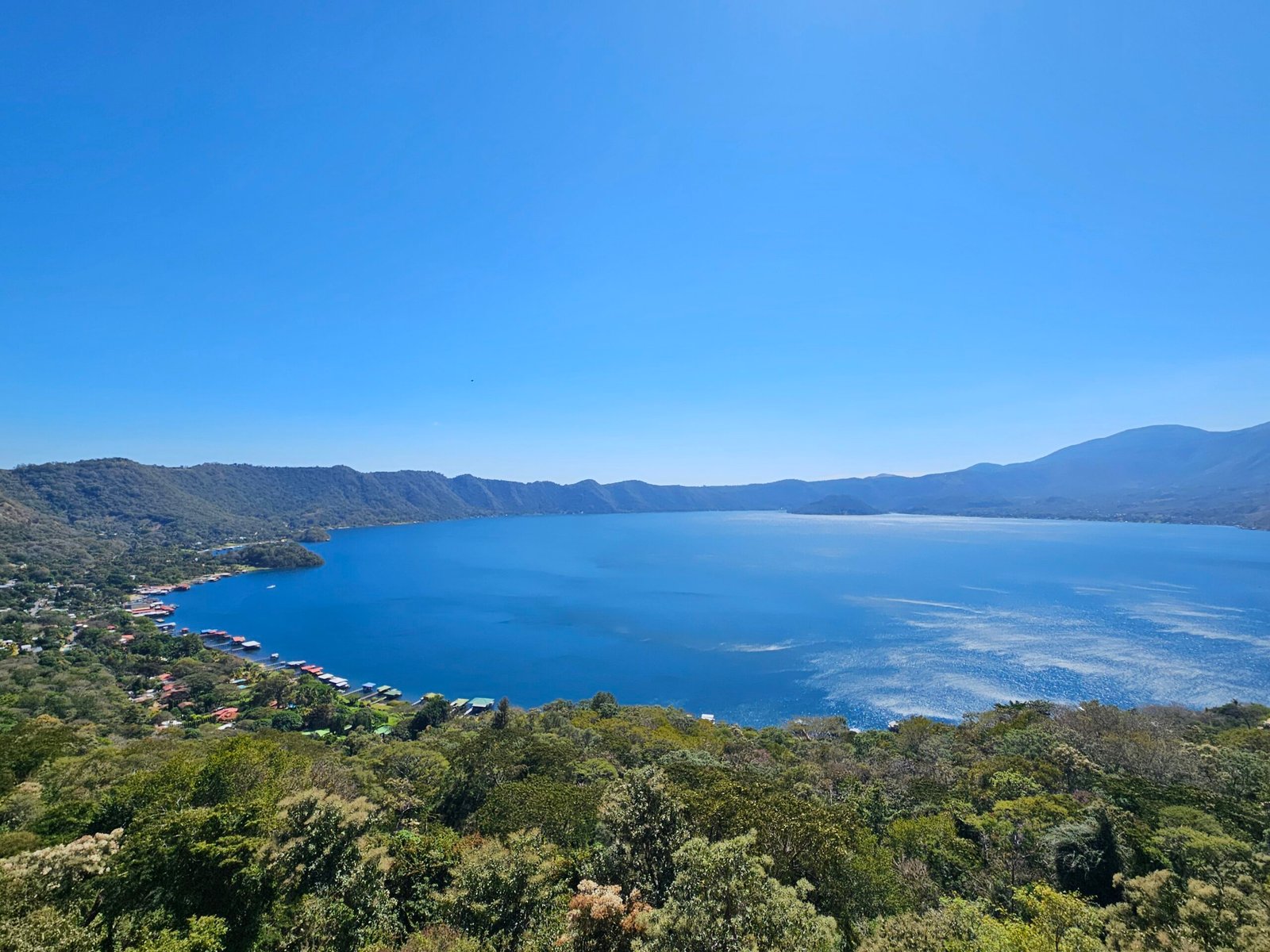
5 Days in El Salvador With Kids: Our Real Family Itinerary
We had just 5 days in El Salvador with kids, travelling with our 9-year-old son, and we knew from the start that we wouldn’t see everything. El Salvador is small, though. Even travelling with a child, you can cover a lot of ground. Our route ended with El Tunco on the coast and gave us a surprisingly broad introduction to the country.
In just a few days, we went from ancient ruins to a colonial town. Then we walked the forests around a community shaped by El Salvador’s civil war. After that, the landscape changed again on the Ruta de las Flores and in coffee country. We finished among volcanoes and on the Pacific coast.
Our route was:
Copán Ruinas (Honduras) → Suchitoto → Cinquera → San Andrés → Cerro Verde → Concepción de Ataco → Café Albania (Apaneca) → El Tunco
We travelled with Gringo Tours, and this made a huge difference to the logistics. They organised our hotels and transport and handled the practical side of moving us around. That meant we could focus on El Salvador itself instead of working out how to get from place to place. Gringo Tours is a local operator based in Suchitoto. It offers personalised multi-day itineraries, private transport, guides and hotel reservations.
This wasn’t a slow trip. We spent plenty of hours on the road and moved on most days. But the destinations were so different from each other that it never felt like we were just ticking off attractions.
If you’re wondering what you can realistically see in 5 days in El Salvador with kids, this is exactly what we fitted in.
Planning a Trip to El Salvador With Kids?
🏨 Booking hotels: Booking.com – El Salvador hotels
- Los Almendros de San Lorenzo, Suchitoto: Our Suchitoto pick
- Casa Degraciela – Boutique Hotel: Our Ataco pick
- Boca Olas Resort Villas, El Tunco: Our El Tunco pick
🎟️ Booking tours: GetYourGuide and Viator
- San Andrés, volcanoes & Mayan archaeological sites – Viator
- Suchitoto, Los Tercios & indigo workshop – GetYourGuide
- Ruta de las Flores + Rainbow Slide at Café Albania – GetYourGuide
- Ruta de las Flores + coffee plantation – GetYourGuide
- Santa Ana & Lake Coatepeque tours – GetYourGuide
🚗 Renting a car: Discover Cars
📱 eSIM: Nomad or Holafly (see our best eSIMs for international travel comparison)
☕ Top family day trip from San Salvador: the Ruta de las Flores and a coffee farm
Not driving yourself? This full-day tour from San Salvador takes you along the Ruta de las Flores, the route of colourful mountain towns we cover on Day 4, with a visit to a coffee farm.
Read more about our day on the Ruta de las Flores below
Getting to El Salvador With Kids: Our Drive From Copán
El Salvador was one part of a longer Central America trip for us, so we didn’t fly in. We drove to Suchitoto from the Copán ruins in Honduras. It was a fairly long drive of about 5 hours or more. From Honduras, we crossed into Guatemala first and then into El Salvador.
All the border crossings were very easy, and the drive was pleasant overall. It’s a long day with a child, though, so bring snacks, water, and something to keep them entertained, like downloaded audiobooks or music for the car.
If you’re flying in instead, San Salvador’s international airport is about 44 miles (70 km) from Suchitoto. Route planners put the drive at around 1 hour 20 minutes. That makes Suchitoto an easy first stop for 5 days in El Salvador with kids.
Money: US Dollars, Cash and Cards
El Salvador uses the US dollar, so there’s no currency exchange to worry about if you have dollars already. Bitcoin made headlines here, but a 2025 law change made accepting it voluntary for businesses. Don’t plan on paying with it.
Cards usually work at hotels and larger restaurants. Carry cash for pupuserías, markets, small cafés, entry fees and tips, especially in small towns like Cinquera. Small bills are the most useful.
Language: Spanish
Spanish is the main language. You’ll hear more English in El Tunco and with tour guides, but much less in towns like Suchitoto, Cinquera and Ataco. A few basic phrases and a translation app go a long way, and they’re a nice way to get kids practising too.
Route Map and Drive Times for 5 Days in El Salvador With Kids
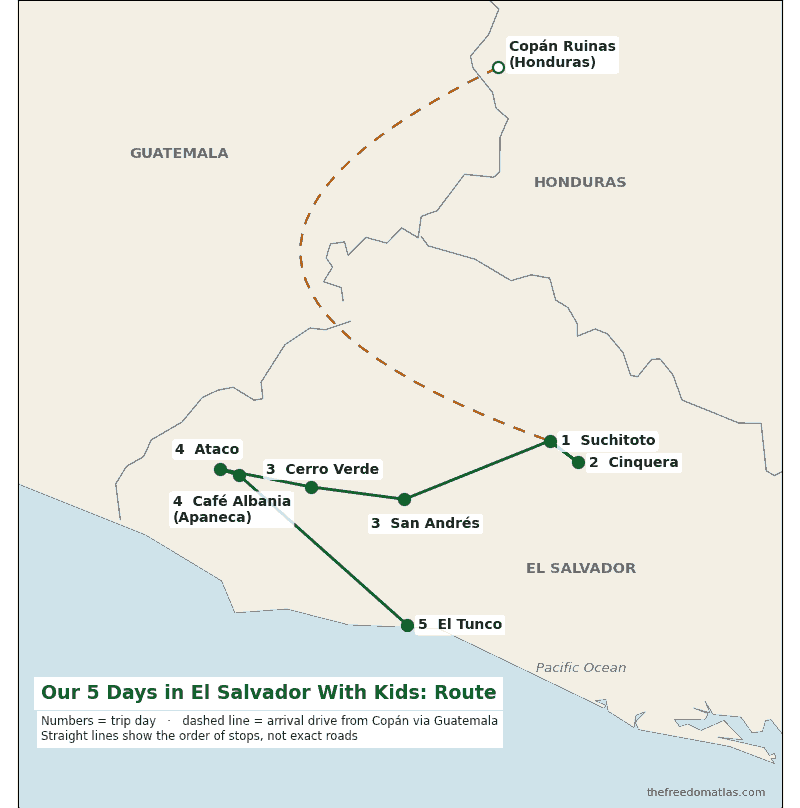
The heavy driving is the main trade-off on this route, so here are the approximate drive times for each leg. They come from route planners, so allow extra time for traffic, road works and stops.
- Copán Ruinas (Honduras) → Suchitoto: about 5 hours or more, via Guatemala (our experience)
- San Salvador airport → Suchitoto (if you fly in): about 1 hour 20 minutes
- Suchitoto → Cinquera: about 20–30 minutes (18–19 km)
- Suchitoto → San Andrés: about 1 hour 10 minutes
- San Andrés → Cerro Verde: about 50 minutes
- Cerro Verde → Concepción de Ataco: about 1 hour 10 minutes
- Ataco → Café Albania (Apaneca): about 15–20 minutes
- Apaneca → El Tunco: about 2 hours
- El Tunco → El Zonte: about 15 minutes
Want to see the roads? Here’s our route on Google Maps.
Our 5 Days in El Salvador With Kids: Itinerary at a Glance
Day 1: Arrive in Suchitoto
The drive from Copán, then time to explore the historic town of Suchitoto.
Day 2: Cinquera
A very different side of El Salvador. We learned about the civil war and walked through the forest where guerrillas once hid.
Day 3: San Andrés + Cerro Verde
Ancient ruins at San Andrés, then volcano views and an easy forest walk at Cerro Verde, before an overnight stay in Ataco.
Day 4: Ataco + Café Albania
Murals, markets and coffee in Ataco, the rainbow slide at Café Albania, then the drive down to the coast.
Day 5: El Tunco
A completely different feel on the Pacific coast, with a black, rocky beach and streets full of restaurants and bars.

Day 1: Arriving in Suchitoto
After the long drive from Copán, we arrived in Suchitoto. It was the perfect place to slow down after a day on the road.
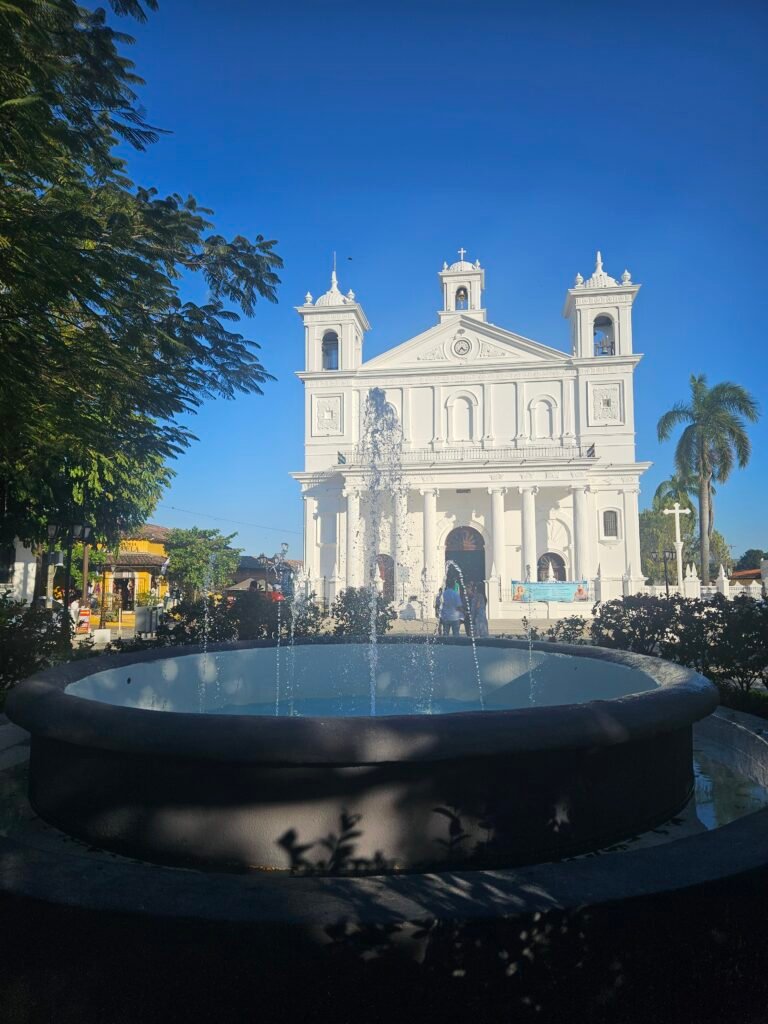
Suchitoto is a pretty historic town with cobbled streets, tiled roofs, old houses and balconies. The white façade of Santa Lucía Church overlooks the central plaza. The name comes from Nahuatl, and most sources translate it as “Place of Birds and Flowers”. In 1528, the Spanish founded El Salvador’s first capital, Ciudad Vieja, just outside town. Suchitoto’s historic centre keeps much of its traditional architecture.
You’ll find lots of cafés, restaurants, galleries, craft shops and cultural spaces among the old buildings. The best way to experience it is to just wander around.
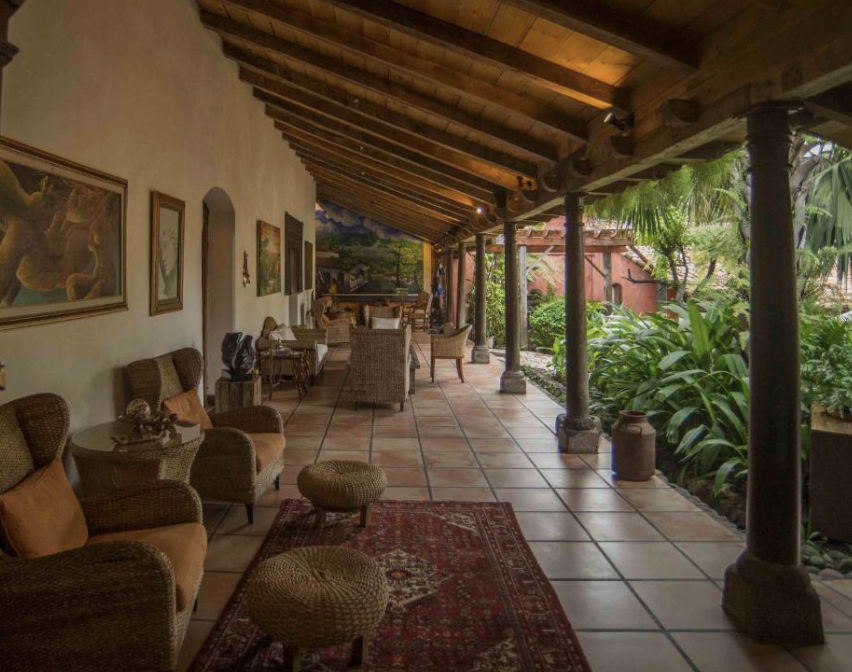
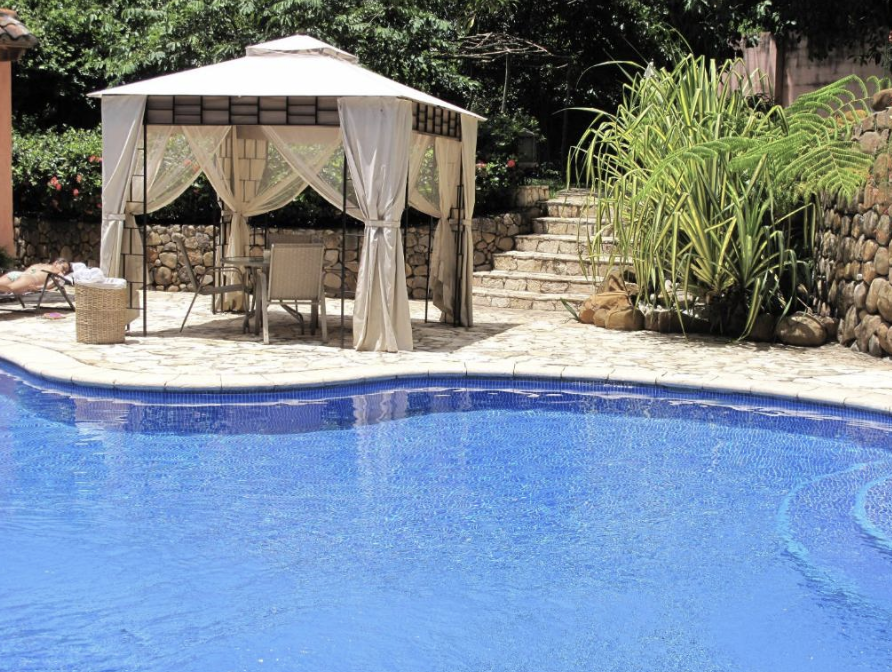
We stayed at the beautiful Los Almendros de San Lorenzo hotel located right in the historical centre, within easy walking distance of the main square. It’s a beautiful boutique hotel in a restored colonial building, with individually decorated rooms that are comfortable and full of character. The breakfast was really good, and there’s a lovely outdoor pool surrounded by gardens, which was particularly nice after a day of exploring.
Things to Do in Suchitoto With Kids
Walk around the historic centre. The cobbled streets around the main square are easy to explore at your own pace. Kids can spot clay-tiled roofs, wrought-iron balconies, old doors, galleries and craft shops along the way.
Take a boat on Lake Suchitlán. The huge lake beside Suchitoto is actually a reservoir. Engineers created it between 1973 and 1976 for the Cerrón Grande hydroelectric project. Today it’s a popular spot for boat trips, fishing and kayaking. The lake also has several islands, including Isla de los Pájaros and Isla El Ermitaño. It shows you a completely different side of the landscape around Suchitoto.
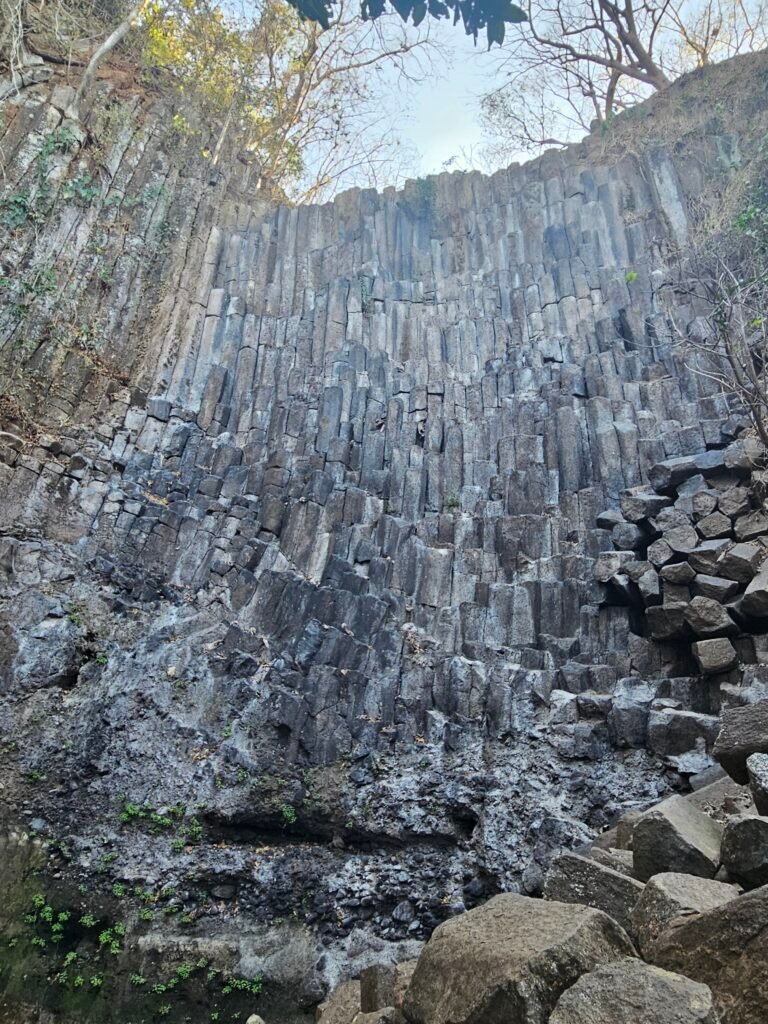
Visit Los Tercios waterfall. Just outside town, Cascadas Los Tercios has an unusual wall of dark, roughly hexagonal rock columns. Official tourism information links the formation to volcanic activity, and the site overlooks Lake Suchitlán. Reaching the waterfall means scrambling over rocks, so wear sturdy shoes. I’d treat it as an optional adventure rather than an easy sightseeing stop.
Visit a museum or cultural centre. Suchitoto has a surprisingly strong arts scene for a town of its size. One place we recommend is Centro Arte para la Paz, which is much more than a museum. It sits in the former Colegio Beata Imelda, a school that Dominican Sisters founded in 1914. The school stood empty during the civil war. Today it’s a community cultural centre with a small museum, art exhibitions, workshops, a café and a restored chapel.
Look for an indigo workshop. El Salvador has a long history with añil, or indigo dye. In Suchitoto, you can learn about the traditional dyeing process and make something yourself. This tour combines the city tour and indigo workshop in one trip.

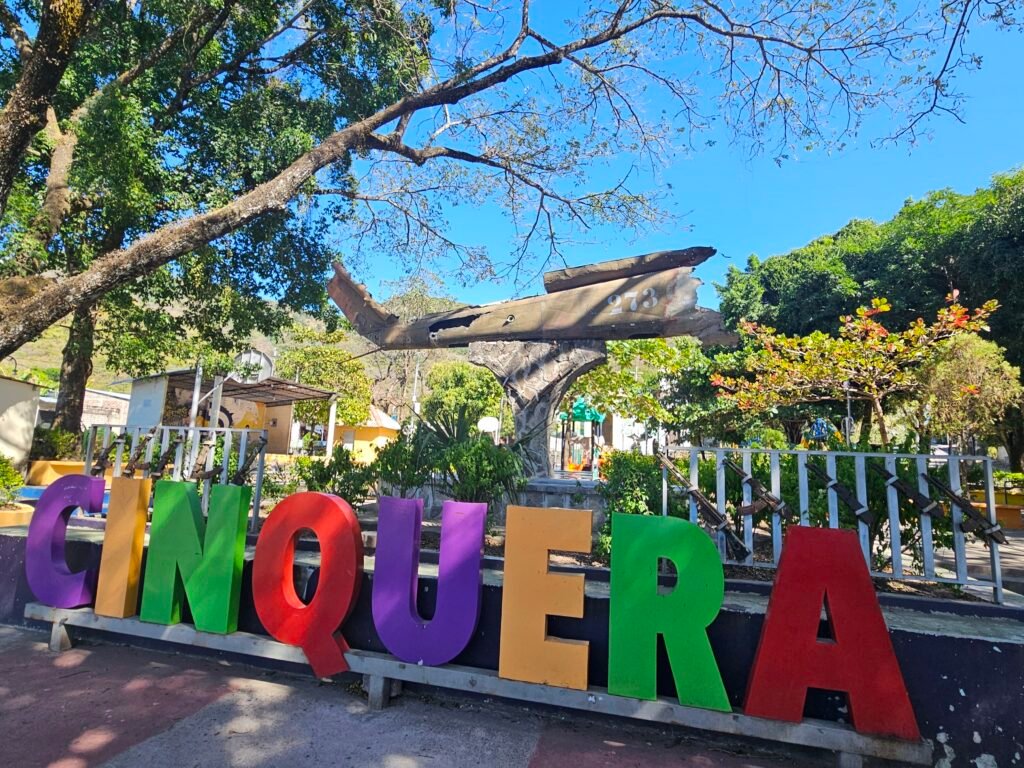
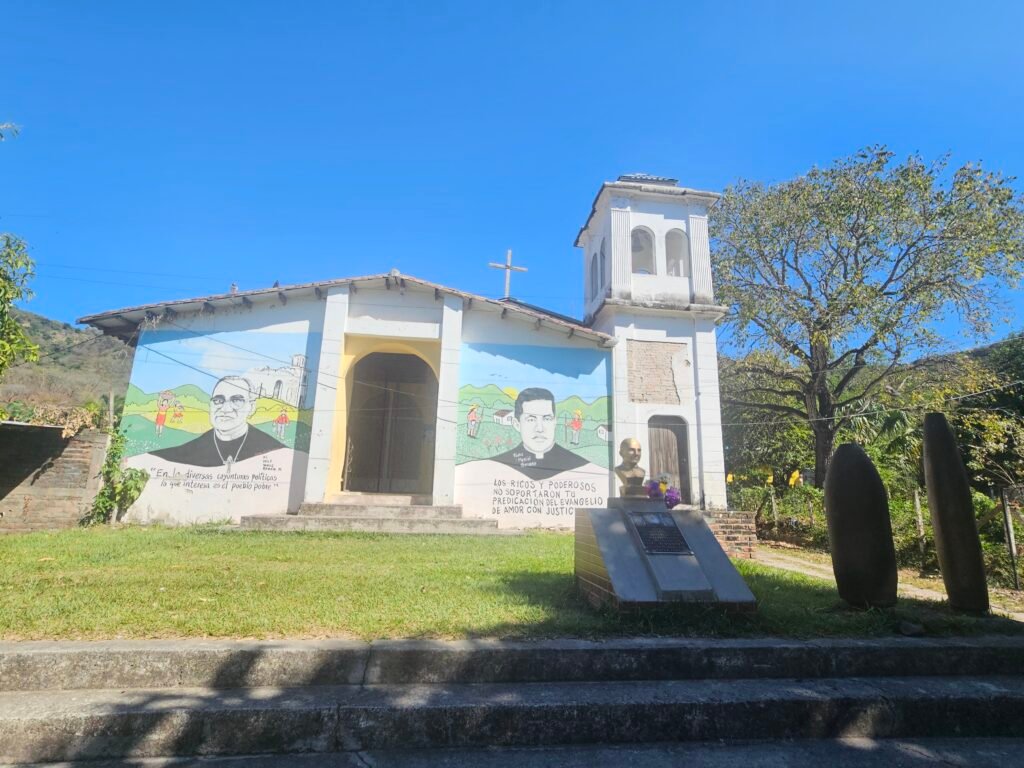
Day 2: Cinquera and the History of El Salvador’s Civil War
Cinquera was probably the most unexpected part of our trip.
We didn’t go there just because it was another pretty place. We wanted to learn about El Salvador’s civil war, and Cinquera has an extraordinary connection to that period.
Most historians date the Salvadoran Civil War from the late 1970s or early 1980s until the 1992 Peace Accords. The Salvadoran armed forces fought guerrilla groups that later became the FMLN. The backdrop was political repression, deep inequality and growing polarisation. The war hit Cinquera particularly hard.
During the conflict, most residents had to leave, and the surrounding forest became a place of refuge. According to the Museo de la Memoria Histórica, people lived in the forest for years. They relied on it for shelter, food and medicinal plants. When they finally returned after the war, vegetation had swallowed much of the abandoned town.
That history is still visible in the landscape.
Meeting a guerrilla veteran in Cinquera
What made it so powerful for us was that we didn’t just read about this history in a museum.
We met a guerrilla veteran, sat down with him and listened to his story. Then we walked through the jungle where guerrillas hid during the war. We saw the actual landscape where these events took place.
Hearing someone describe an experience in their own words feels very different. Walking through the place where it happened makes it even more real. It brought the history close without any need to sensationalise it.
For our son, this was one of those moments when history stepped out of a book. He listened to a man who lived through El Salvador’s recent history. Then he walked through the same forest that had been part of that man’s life.
Cinquera now combines this history with nature tourism. The town has the Museo de la Memoria Histórica de la Guerra Civil. The surrounding Bosque de Cinquera is a protected natural area where you can explore the forest and its history. El Salvador’s tourism authority describes Cinquera as a place where history, culture and ecotourism come together.
The community set up the Museo de la Memoria Histórica to preserve and explain its experiences during the conflict. You’ll find the museum behind the parish church in Barrio Las Flores.
Day 3: San Andrés Ruins and Cerro Verde Volcano Views
On Day 3, we headed west. Our first stop showed how much history you can pack into a small corner of El Salvador.
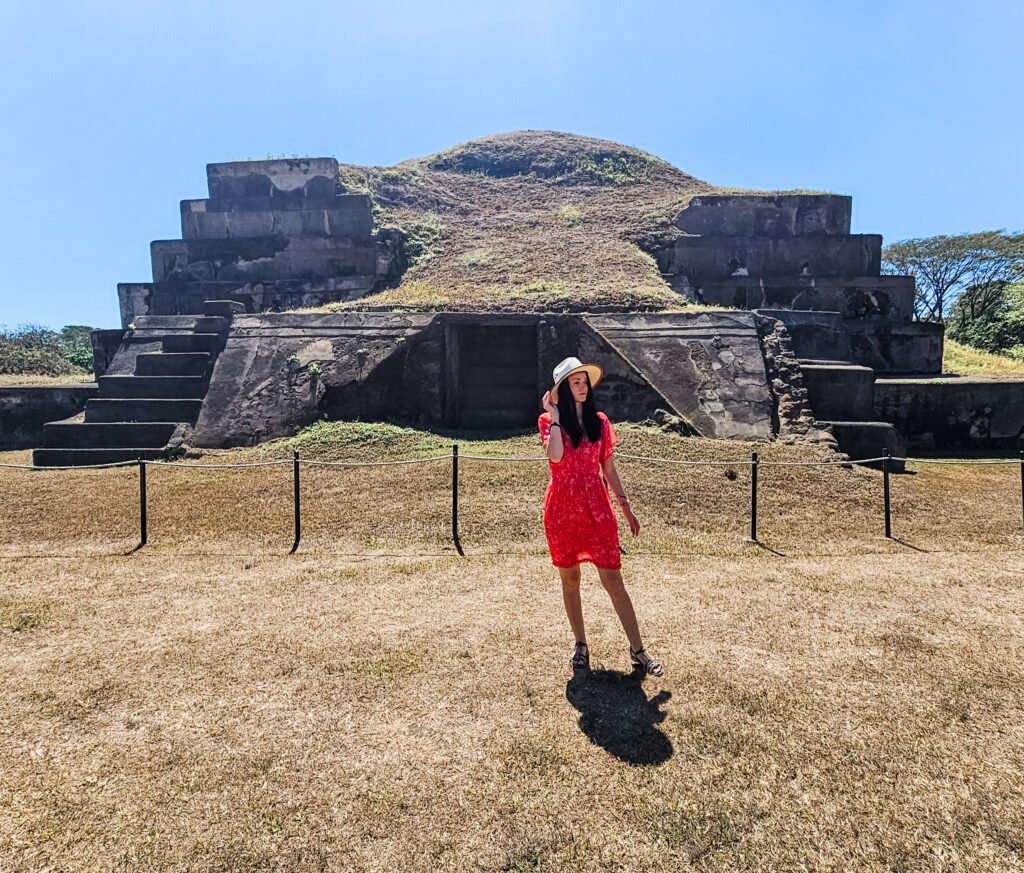
We started at San Andrés, one of the country’s major archaeological sites, in the Zapotitán Valley. The site flourished during the Late Classic period, roughly AD 600–900. It includes an acropolis, plazas and large adobe structures. Archaeologists believe many people lived in the wider valley before the Spanish arrived.
The ruins aren’t as impressive as the big pre-Columbian sites in Mexico or Guatemala. Still, it was a very interesting introduction to this side of El Salvador.
The archaeological park opens Tuesday to Sunday from 9am to 4pm. The Ministry of Culture lists a guided visit of about 35–45 minutes. Admission is $5 for non-resident foreigners and $3 for Central American visitors and foreign residents. Children under 12 get in free, along with some other exemptions.
That makes San Andrés easy to fit into a busy itinerary. You don’t need a whole day for it.
From San Andrés, it’s about 50 minutes to Cerro Verde, where the landscape changes completely.

Cerro Verde: Volcano Views Without the Big Hike
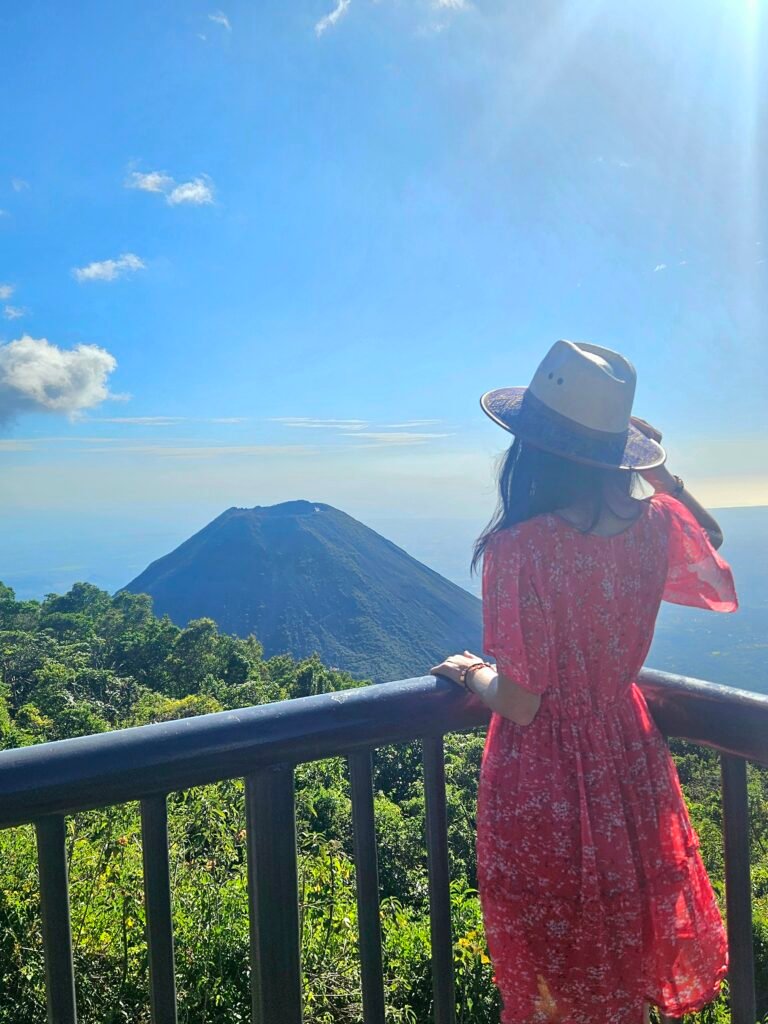
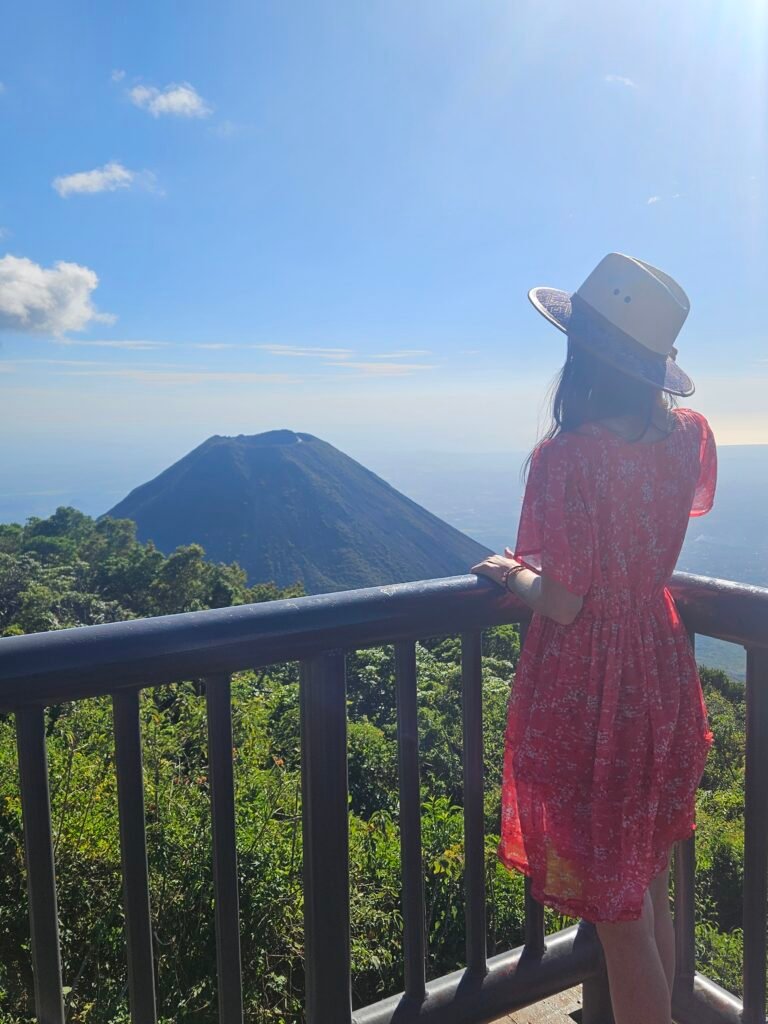
We visited the Cerro Verde sector of Parque Nacional Los Volcanes. We walked through the park to the viewpoint and enjoyed the views over the volcanic landscape. For this trip we chose to skip the Santa Ana volcano climb because it’s a long hike, and we didn’t want to do it with our 9-year-old.
The park is part of the larger Los Volcanes National Park, which includes Cerro Verde, Santa Ana and Izalco. Cerro Verde itself is an old volcanic cone covered in forest. From the park, you get views of the other volcanoes and Lake Coatepeque.
The walk we did was very manageable and a good fit for 5 days in El Salvador with kids. Short interpretive trails loop around the park, including routes through the forest and orchid areas. We joined a guided forest walk, which took around 30–45 minutes.
What Can You Do at Cerro Verde With More Time?
This is where things get much more demanding.
Guided hikes to the other volcanoes, including Santa Ana and Izalco, start from the park. Book your volcano hike in advance, because places are limited.
The famous Santa Ana hike is much harder than the short walks around Cerro Verde. The full crater route is roughly 5.7 miles (9 km) round trip and takes several hours. You need a guide to go up. We didn’t want to fit that into such a short trip.

From Cerro Verde, it’s about 1 hour 10 minutes to Concepción de Ataco, where we spent the night. Ataco sits in the mountains and gets chilly in the evening, so pack layers (here’s how we pack for family travel).
Day 4: Ataco, the Ruta de las Flores and Café Albania
Day 4 started on the Ruta de las Flores, and the trip changed character again. This mountain route through western El Salvador is famous for coffee plantations, a cooler climate, small towns, colourful murals, markets and cafés.
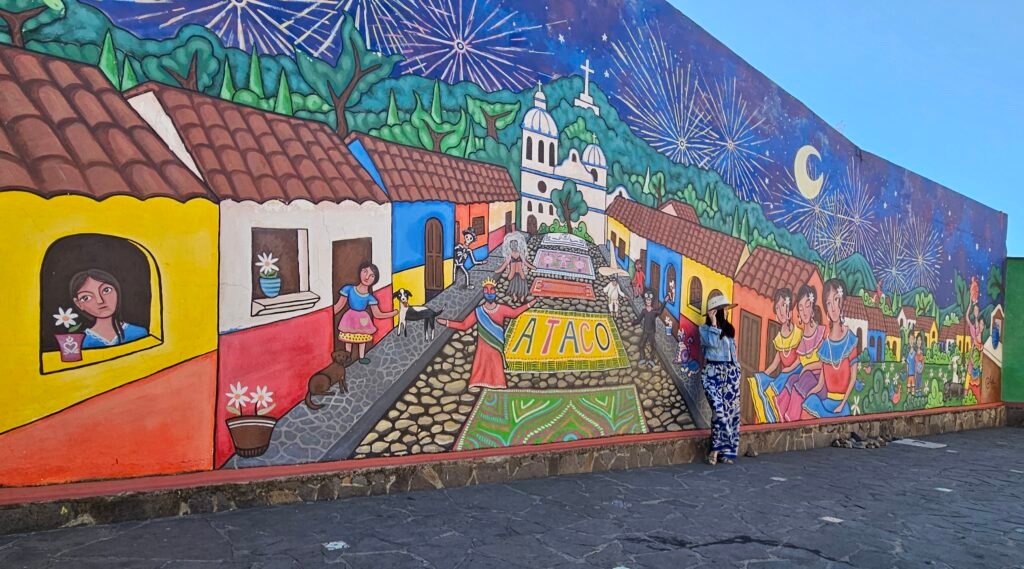
We stayed overnight in Concepción de Ataco and explored the town in the morning. The route also takes in Juayúa and Apaneca. Ataco was probably our favourite place to simply wander. Colourful murals cover the streets, little shops and markets line the way, and coffee seems to be everywhere. The town sits at around 1,260 metres, and coffee plantations surround it. This is real coffee-growing country, not a place where coffee is just a tourist theme.
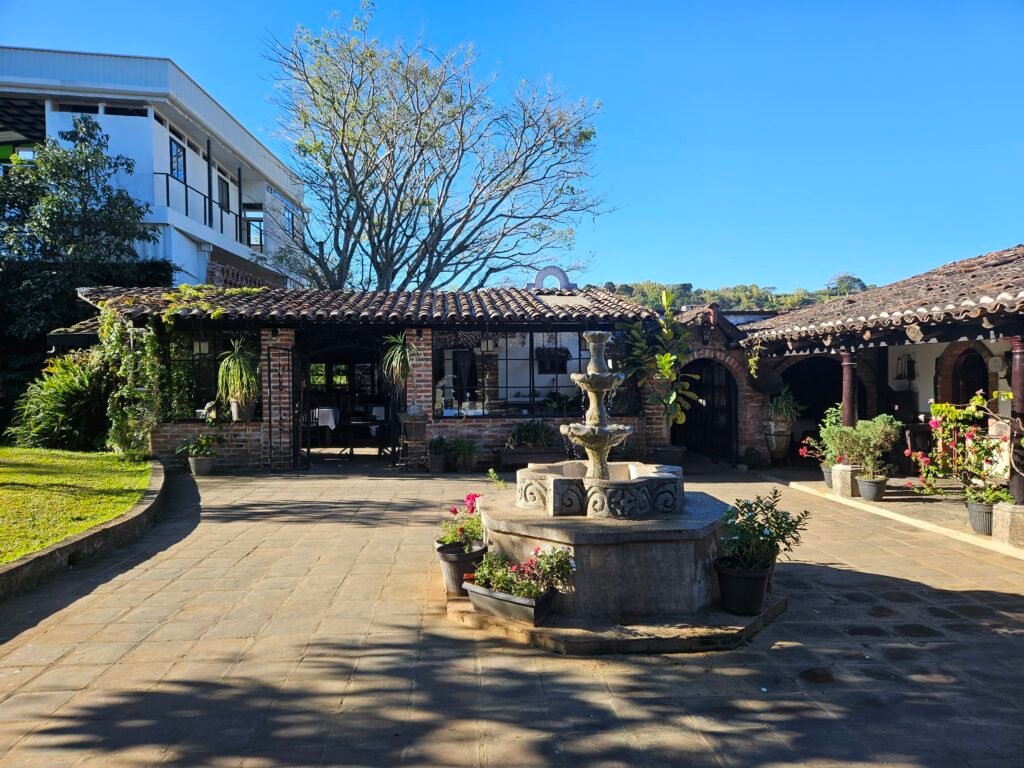
We stayed at Casa Degraciela, which is a charming boutique hotel in a beautifully restored historic building dating back to 1850, right in the heart of Concepción de Ataco. The rooms are comfortable and nicely appointed, and the hotel has a lovely garden and courtyard that give it a peaceful feel despite being so central. The location couldn’t be better: you’re right in town and within easy walking distance of Ataco’s colourful streets, cafés, restaurants and shops. Breakfast was really good, and the hotel also has its own restaurant and bar, which is handy after a day exploring the Ruta de las Flores.
Ataco is also a great stop if you like coffee. We found several cafés where you can sit down for a proper Salvadoran coffee. Most importantly, you can buy beans or ground coffee to take home. Three worth knowing about are:
- Los Portones de Ataco (with its La Estancia coffee shop)
- Axul Coffee Artesanías
- Entre Nubes.
Los Portones and Axul are right in Ataco. Entre Nubes is on the road between Ataco and Apaneca. Axul is ideal if you want to combine coffee with browsing, as it’s also an artisan shop in Ataco’s municipal market. Entre Nubes sits among the coffee farms and offers coffee experiences as well as coffee to buy. It’s a good place to learn where your cup actually comes from. If your kids enjoy this, the coffee region is also a highlight of our Colombia with kids itinerary.


Café Albania and the Rainbow Slide
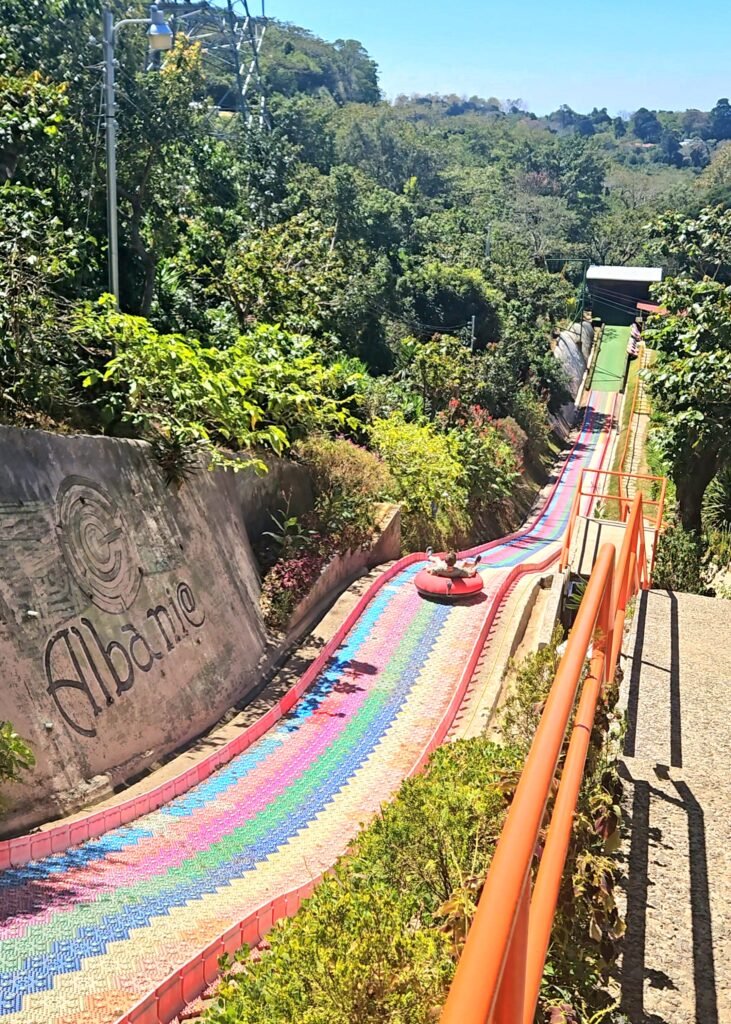
After the towns and coffee country of the Ruta de las Flores, we headed to Café Albania in Apaneca, about 15–20 minutes from Ataco. It was a completely different sort of stop. Set in the mountains, Café Albania is part café, part adventure park, with activities spread across the hillside. You’ll find a huge cypress maze, canopy and zipline rides, bike and surfboard ziplines, a giant swing and the Sky Mirror.
We tried several things, but the rainbow slide was the one everyone talked about.
The Rainbow Slide at Café Albania
I’ll admit, the rainbow slide looked a little more intimidating in person than it does in photographs.
Our 9-year-old was quite unsure about it. The first section is fairly steep. Once you sit at the top looking down, it feels much higher and faster than it did from the ground. He was nervous but went for it anyway, and he was very pleased with himself afterwards.
The slide actually has two sections. You slide down the first part and then reach a second, slightly steeper section. There, you can choose whether to carry on. If you’ve had enough adrenaline, you can walk down instead.
Our son did the second section too. He found it a bit scary but thought it was great fun. There was definitely a moment of “I’m not sure I want to do this” followed by “I’m really glad I did.”
Be ready for the walk back to the top. After the slide, you climb back up the hill, which takes around five minutes and is fairly steep. By the time you reach the top, you’ve earned your next activity, or at least a coffee.
There’s plenty more to do, so it’s easy to spend several hours at Café Albania. We explored the cypress maze, and you can also try the bike and surfboard ziplines, the canopy and the pendulum. The newer Sky Mirror lets you walk out onto a mirrored platform above the landscape.

Café Albania: Opening Hours and Entry Fees
Opening hours: Café Albania’s official website currently lists 8am–6pm, Monday to Sunday.
General admission: Current sources list admission at $5 for adults and $2 for children under 1.30m. You can use the admission amount towards food or activities. Prices can change, so confirm directly with Café Albania before you go.
Current activity prices: Recent 2025–2026 information gives approximately:
- Rainbow slide: $10
- Bike zipline: $10
- Surfboard zipline: $10
- Canopy: $13
- Cypress maze: $3
- Pendulum: $5
- Sky Mirror: $3
- Wings/photo swing: $1
- Other activities cost extra.
An all-activities pass costs around $50. It only makes sense if you plan to try a lot of the attractions.
For us, Café Albania was a fun change of pace after days of archaeology, history and sightseeing. It was great to have some fun and let our son be a little braver than he planned to be.
From Apaneca, it’s about 2 hours down to El Tunco on the coast.
Day 5: El Tunco
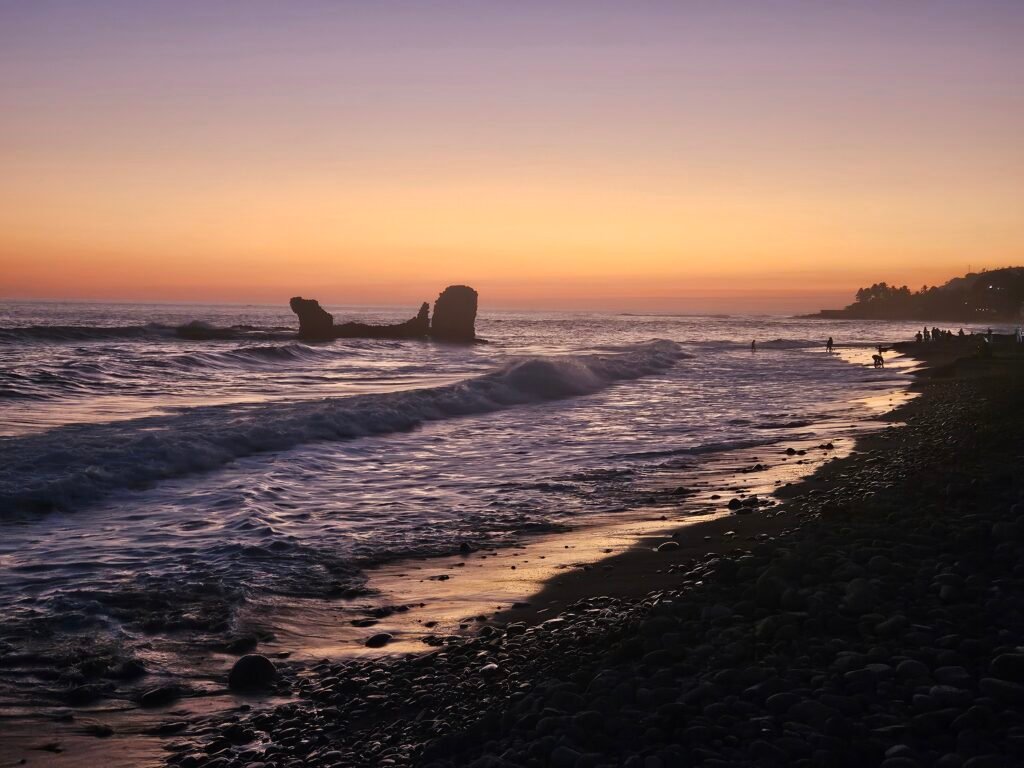
After all the archaeology, history, forests, coffee and volcanoes, we finished at El Tunco on the Pacific coast. It felt like we’d arrived in a completely different part of the country. El Tunco is one of El Salvador’s best-known surf spots. The name comes from a large rock on the beach that locals say looks like a pig, or tunco. Today, the town is famous for its surf culture, restaurants and bars.
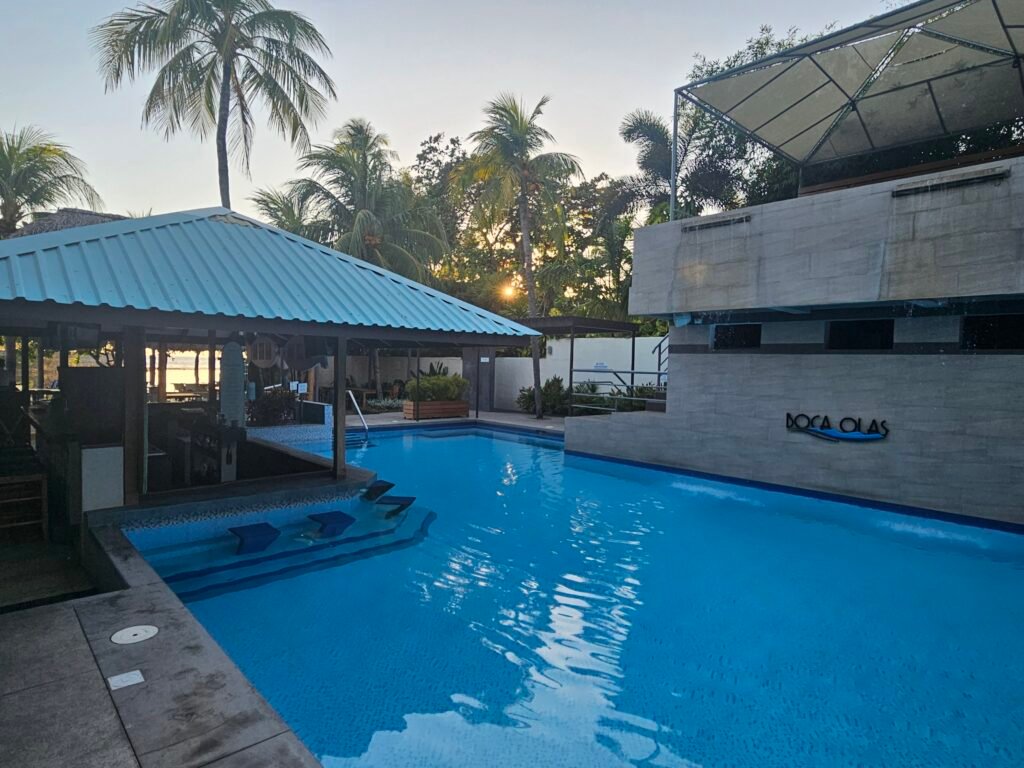
We stayed at Boca Olas Resort Villas which was a great place to finish the trip. The rooms are spacious, comfortable and beautifully appointed, and the resort has a really nice tropical setting beside the river, with two swimming pools, including one with a swim-up bar. Breakfast was really good, with a great selection from the restaurant menu, and the resort is around a 10-minute walk from the centre of El Tunco and the beach, so you get a quieter setting without being far from all the restaurants and atmosphere.
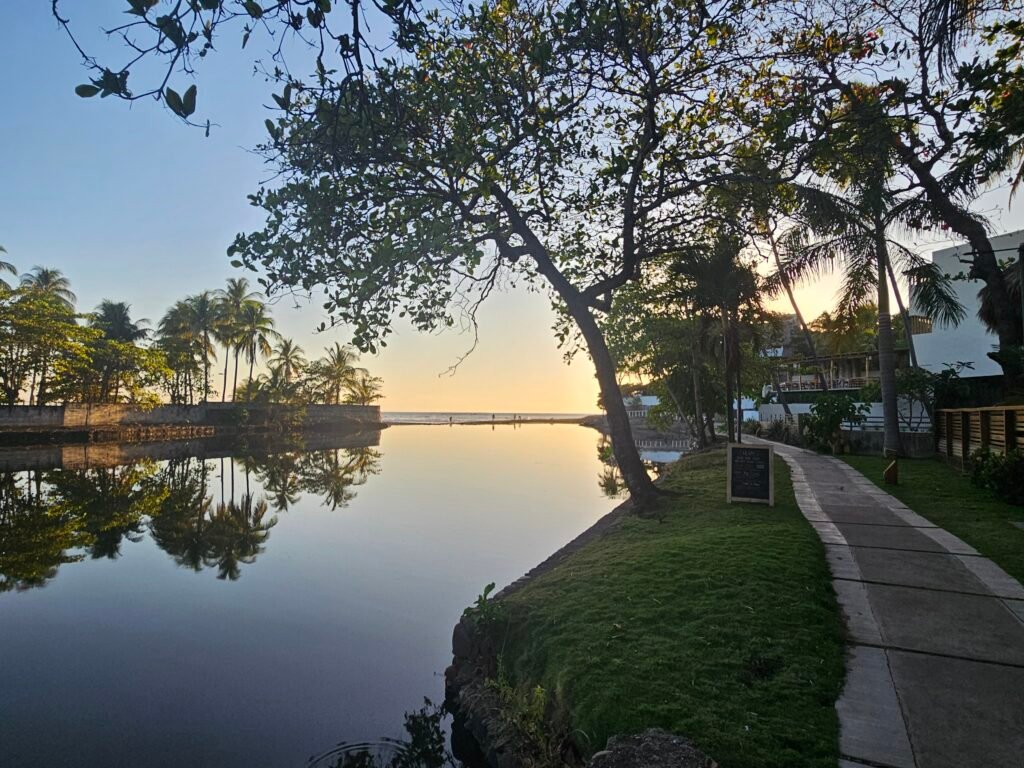
The beach was quite different from the sandy beaches we’ve visited elsewhere. El Tunco is mostly black, rocky coastline. The famous rock formations and big waves give it a rugged look.
Just back from the beach, a couple of streets are full of restaurants and bars. After the quiet inland towns, the atmosphere felt completely different. It was a good place to end the trip.
After days of changing landscapes and historical sites, El Tunco felt relaxed and social. We could walk around, watch the surf, wander the streets and stop to eat without a schedule.
We spent our last day relaxing by the pool and on the beach, and enjoying the laid-back boardwalk.


Beach Safety in El Salvador With Kids
El Tunco is a surf beach, not a swimming beach. The waves are powerful, the shore break can be strong, and rocks sit under the sand in places. Official travel advice also warns about strong currents and undertows along El Salvador’s Pacific coast.
With kids, treat El Tunco as a place to watch the surf and explore the beach, with an adult close by. For proper swimming, a hotel pool is the better choice.
El Zonte is about 15 minutes west of El Tunco. It’s a smaller, quieter surf town with a laid-back feel and plenty of surf schools. It’s worth a visit if your kids want a beginner surf lesson with an instructor. The ocean there is still strong, though, so ask locally where conditions are calmer and never let children swim alone.
What We Ate in El Salvador With Kids
You can’t travel through El Salvador without eating pupusas. They’re the country’s signature food. Cooks fill corn or rice masa with cheese, beans, chicharrón or loroco and cook them on a hot griddle. They come with curtido, a lightly fermented cabbage slaw, and tomato salsa. Pupusas matter so much here that El Salvador made them its official national dish in 2005.
Pupusas were the easiest meal during our 5 days in El Salvador with kids. They’re cheap and filling, and everyone can pick a filling they like. Queso y frijol (cheese and beans) and chicharrón are classic combinations. You’ll also see more varied fillings depending on where you eat.
Pupusas aren’t the only thing worth trying, though. Yuca frita is another Salvadoran staple, especially in the west around the Ruta de las Flores. It usually comes with curtido, tomato sauce and either chicharrón or pepesca, small fried fish. It’s especially popular around Chalchuapa, Salcoatitán and Izalco.
We also tried other traditional foods and snacks along the way. Pastelitos are small fried corn pastries filled with meat and vegetables. The local empanadas use ripe plantain and have a bean or sweet milk filling, with sugar sprinkled on top.
And, of course, coffee became a recurring theme once we reached the Ruta de las Flores. This is one of El Salvador’s main coffee-growing regions, so a good coffee in Ataco or Apaneca is part of the experience. We bought coffee to bring home too, and it turned out to be one of our most useful souvenirs.
How Much Did 5 Days in El Salvador With Kids Cost?
El Salvador was one part of a longer Central America trip for us, so it’s hard to give exact figures. These are rough estimates of what the El Salvador part cost our family of three.
- Tours and transport: about $700 (all our tours were private)
- Accommodation: about $1,200 (breakfast included everywhere we stayed)
- Rainbow slide at Café Albania: $50
- Food: about $500 for three people over five days
- eSIM: about $10 (we used one eSIM that works across Central America)
Total: roughly $2,460 USD, or about $490 a day for the three of us.
Private tours and transport were a big part of the budget. They made a fast itinerary much easier with a child, but you could spend less by using public buses or shared shuttles and simpler guesthouses. For the bigger picture, see our full-time family travel budget.
Is 5 Days in El Salvador With Kids Enough?
Five days was enough to see a lot. It wasn’t enough to see El Salvador properly.
Those are two different things.
Our route worked because we kept moving and accepted some long driving days. El Salvador is compact. Its main tourist areas sit close together compared with many other Central American countries.
As a result, we covered an unusual amount of ground in a short time.
We experienced:
- Pre-Columbian archaeology at San Andrés
- The historic town of Suchitoto
- El Salvador’s civil-war history at Cinquera and the forests around it
- Coffee country and pretty towns along the Ruta de las Flores
- The adventure attractions at Café Albania
- Volcano landscapes around Cerro Verde
- The Pacific coast at El Tunco
That’s a lot for five days.
It also means I wouldn’t recommend this itinerary if you like to stay in one place and travel slowly.
The route works because the destinations are so different. You’re constantly changing the subject, so to speak. Ancient history gives way to colonial architecture and then recent history. After that come mountains, coffee plantations, adventure activities, volcanoes and finally the coast.
El Salvador has far more to explore than we could fit in. So think of this as a fast introduction to El Salvador, not a complete itinerary.
With a week or longer, you can slow down, spend more time in the places you love most and move on less often.

Travelling Around El Salvador With Kids
My main tip for 5 days in El Salvador with kids: this itinerary is much easier when someone else handles the transport.
We used Gringo Tours, and they organised our hotels, transport and logistics. They offer private transfers, multi-day tours, bilingual guides and hotel bookings. A trip like ours is exactly the kind of itinerary they put together.
That made a big difference. We didn’t have to juggle buses, luggage and several hotel bookings while moving between regions.
The variety also helped. We had historical sites, walks, forests, towns, markets, coffee country, the rainbow slide, volcano viewpoints and finally the beach. We weren’t asking our son to look at historic buildings for five days straight. But we also didn’t fill every day with purpose-built kids’ attractions.
The pace is still fairly fast. If your child struggles with long drives or frequent hotel changes, slow this itinerary down instead of copying every stop. See our article on avoiding travel burnout with kids as we learnt this the hard way.
The Worldschooling Side of 5 Days in El Salvador
Our 5 days in El Salvador with kids turned into one of those trips where the worldschooling just happened.
At San Andrés, archaeology and pre-Columbian history were right in front of us.
In Cinquera, modern Salvadoran history became personal. We listened to a man who lived through the civil war and then walked the forest where guerrillas hid.
Along the Ruta de las Flores, the geography changed again. The mountains and coffee farms showed how agriculture and landscape connect, in a way no textbook could.
Then Cerro Verde provided a completely different perspective through volcanoes, forests and geology.
Even the driving days were useful. Moving between regions showed how quickly the landscape, architecture and atmosphere change in a small country.

Frequently Asked Questions About 5 Days in El Salvador With Kids
Yes, 5 days in El Salvador with kids is enough for a fast introduction, especially with private transport and a route that flows geographically. You won’t see the whole country. But you will experience a surprisingly broad range of landscapes, history and culture.
It can be, especially if you enjoy a mix of sightseeing, driving, history and outdoor activities. Our trip showed that you don’t have to choose between culture and adventure. We combined archaeological sites and history with the rainbow slide, mountain scenery and the coast.
Public buses run between many destinations. Private drivers, taxis and tour operators work better for multi-stop itineraries. We used Gringo Tours, a local operator in Suchitoto, who organised our transport and accommodation. That made it much easier to cover several regions in a short time.
We felt very safe, even walking around on our own in the evening without a guide. Keep in mind we stayed in smaller towns like Suchitoto, not San Salvador. Always check current official travel advice before your trip. As of June 2026, the U.S. State Department lists El Salvador at Level 1. It does advise against intercity travel at night because of road conditions, terrain, possible landslides and poor street lighting. Conditions vary by location, so follow local advice and use sensible precautions.
The dry season runs from November to April and is the easiest time to travel, especially for ruins, mountain towns, hikes and road trips. The rainy season runs from May through October. It doesn’t mean constant rain, but expect more afternoon showers, and heavy rain can affect roads and trails. We travelled in February, and the weather was warm and sunny. It gets chilly in the mountains in the evening, so bring layers.
It depends on your passport. El Salvador’s Ministry of Foreign Affairs lists Canada, the USA and EU countries among those whose ordinary passport holders don’t need a visa. Rules can change, so always check the official visa system before you travel.
Final Thoughts on Our 5 Days in El Salvador With Kids
We loved our 5 days in El Salvador with kids, and the variety surprised us. We went from archaeology and historic towns to civil-war history, coffee country, volcanoes, adventure and the Pacific coast. It never felt repetitive.
And the coffee deserves a special mention. It was some of the best coffee we’ve had anywhere in the world!
From El Tunco, we flew to Managua and spent the next six days travelling through Nicaragua. You can read about that part of the trip in our 6 days in Nicaragua with kids guide.
Five days was fast, but it gave us a really good taste of the country. We’d happily go back for longer. We left feeling we hadn’t had enough time with the food, the coffee and the places we loved. If you’re looking for more trips like this, see how we approach full-time family travel.
2 Comments