

Uzbekistan With Kids: Steal Our 10-Day Family Itinerary
Uzbekistan had been on my travel list for a long time. When we finally got the chance to visit, I was excited to experience it with our son.
It turned out to be an especially good destination for our family. Uzbekistan is packed with history, culture and hands-on learning opportunities, making it a fantastic place for worldschooling. This was once a major crossroads of the Silk Road. Cities like Samarkand, Bukhara and Khiva are full of stories about the people, ideas and goods that travelled along it. Add ancient cities, traditional crafts, fascinating architecture and local food. Throw in plenty of chances to learn geography and history as you travel. You have a pretty perfect combination for a family trip.
We spent around 10 days travelling through Uzbekistan with our son, who was eight at the time. Our route took us from Tashkent to Samarkand, then Bukhara and finally Khiva. We also added something a little outside the usual Uzbekistan itinerary. It was an overnight trip into Turkmenistan to see the Darvaza Gas Crater.
That little addition turned an already interesting trip into a proper adventure.
So if you’re planning a family trip to Uzbekistan, here’s the route we took. Below is what we loved, what we’d prioritise, and what you need to know before you go.
Our Uzbekistan itinerary at a glance
Our route was:
Tashkent → Samarkand → Bukhara → Khiva → Turkmenistan/Darvaza → Tashkent
We flew into Tashkent, but we didn’t actually explore the city on this trip. It was simply our starting point.
From there, we travelled through the country’s big Silk Road cities. Then we crossed the border from Khiva into Turkmenistan for one night at the Darvaza Gas Crater.
Our rough itinerary
| Stop | Suggested time |
|---|---|
| Tashkent | Arrival/start point |
| Samarkand | 2-3 days |
| Bukhara | 2 days |
| Khiva | 2-3 days |
| Darvaza, Turkmenistan | 1 night |
| Total | Around 10 days |
You could easily spend considerably longer in Uzbekistan. In fact, if you have two weeks, I’d recommend slowing this itinerary down rather than trying to add more cities.
The advantage of this route is that it covers three very different historic cities. You won’t spend your entire trip sightseeing in one place. You can book a tour through a tour operator, or travel independently. Independent travel is pretty straightforward and safe in Uzbekistan.
We booked our tour with Advantour, and we were happy with their services and how everything was handled. We booked their 8 day Classic Uzbekistan tour, and combined it with their Darvaza Gas Crater overnight tour from Khiva. They handled all the logistics for us, including booking the train and the internal flight.
Day 1: Arrive in Tashkent
We flew into Tashkent, but unlike many Uzbekistan itineraries, we didn’t actually spend time exploring the capital.
For us, Tashkent was simply the starting point for the trip.
If you have more time, there is plenty to see here. The official Uzbekistan tourism itinerary includes places such as the Khast-Imam Complex and Chorsu Bazaar. It also lists the Museum of Applied Arts and Amir Timur Square.
But if you’re trying to fit Samarkand, Bukhara and Khiva into a short trip, that’s fine. I don’t think you need to feel guilty about skipping Tashkent.
We didn’t, and we still had a very full trip.
Samarkand with kids
Samarkand was our first real stop and one of the obvious highlights of travelling through Uzbekistan.
The city has been an important centre along the Silk Road for centuries. It’s famous for its spectacular Islamic architecture. UNESCO added the historic city to its World Heritage List as Samarkand, Crossroad of Cultures.
There is a huge amount of history to get your head around.
Travelling with an eight-year-old, we found the best way to explore Samarkand was to mix big historical sights with hands-on experiences. Markets, traditional crafts and places where he could see things being made helped bring history to life. It also kept the days interesting for all of us.
Best things to do in Samarkand with kids
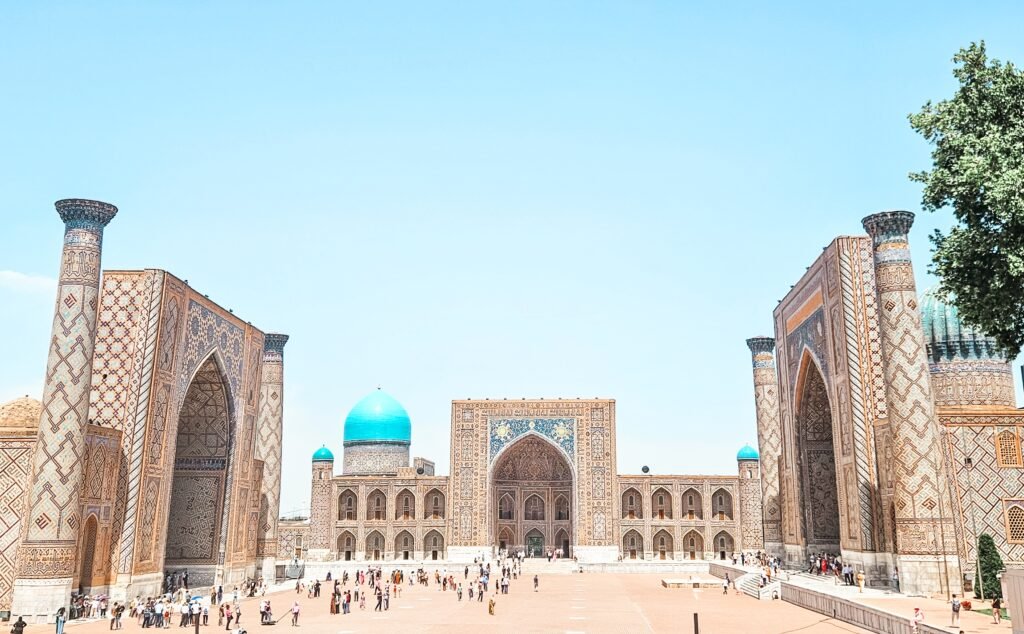
Registan Square
If there’s one place you absolutely can’t miss in Samarkand, it’s Registan Square.
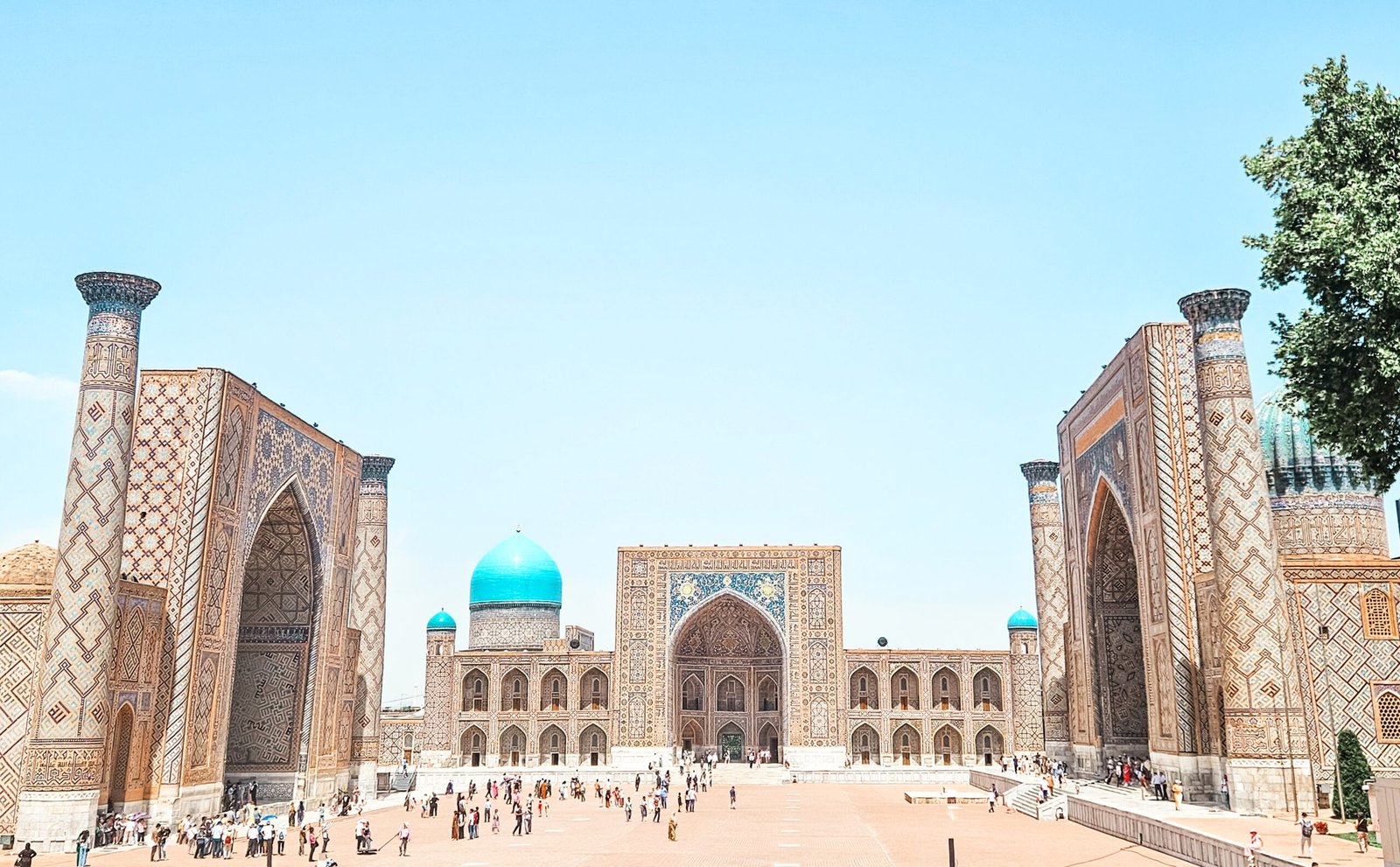
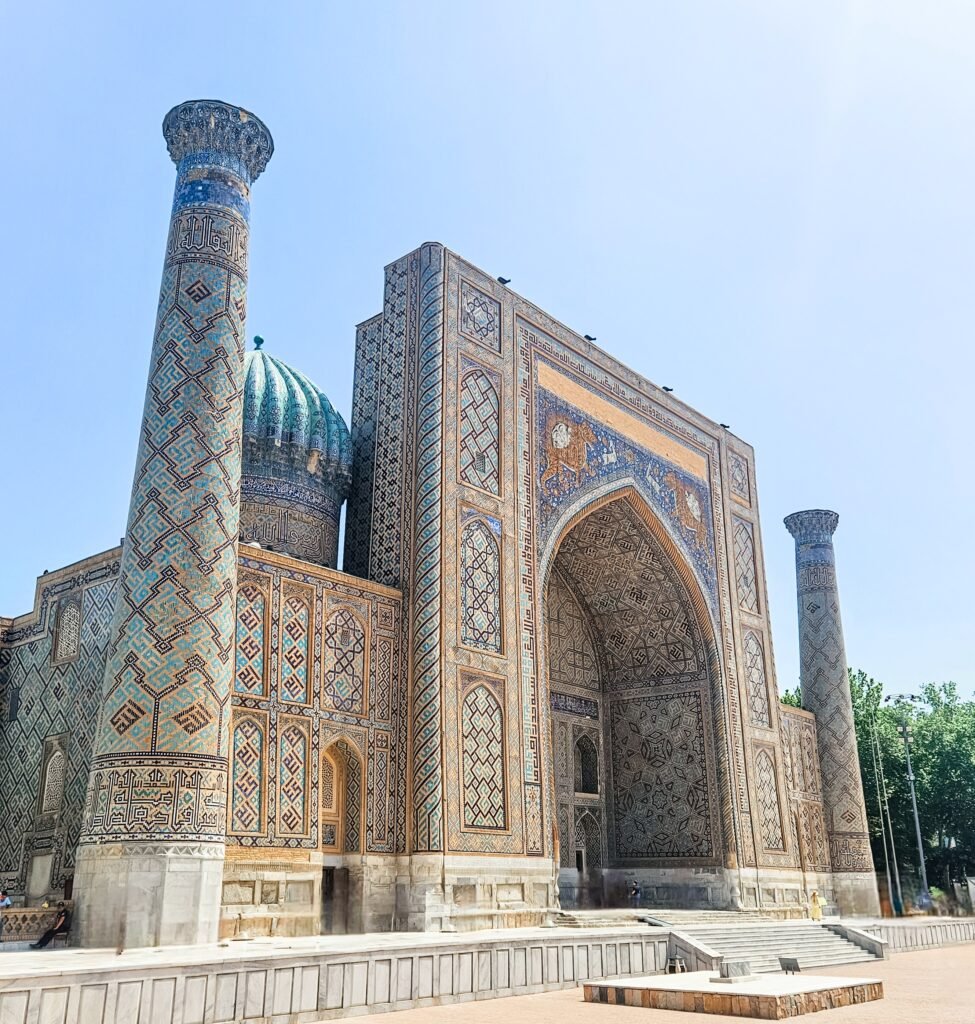
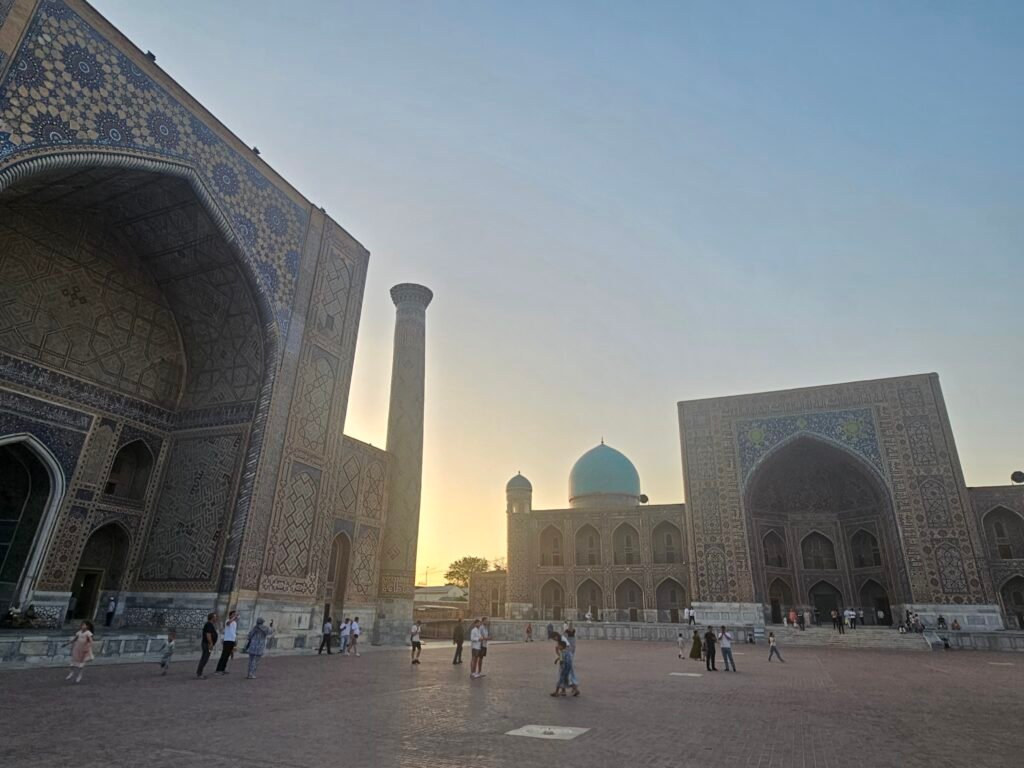
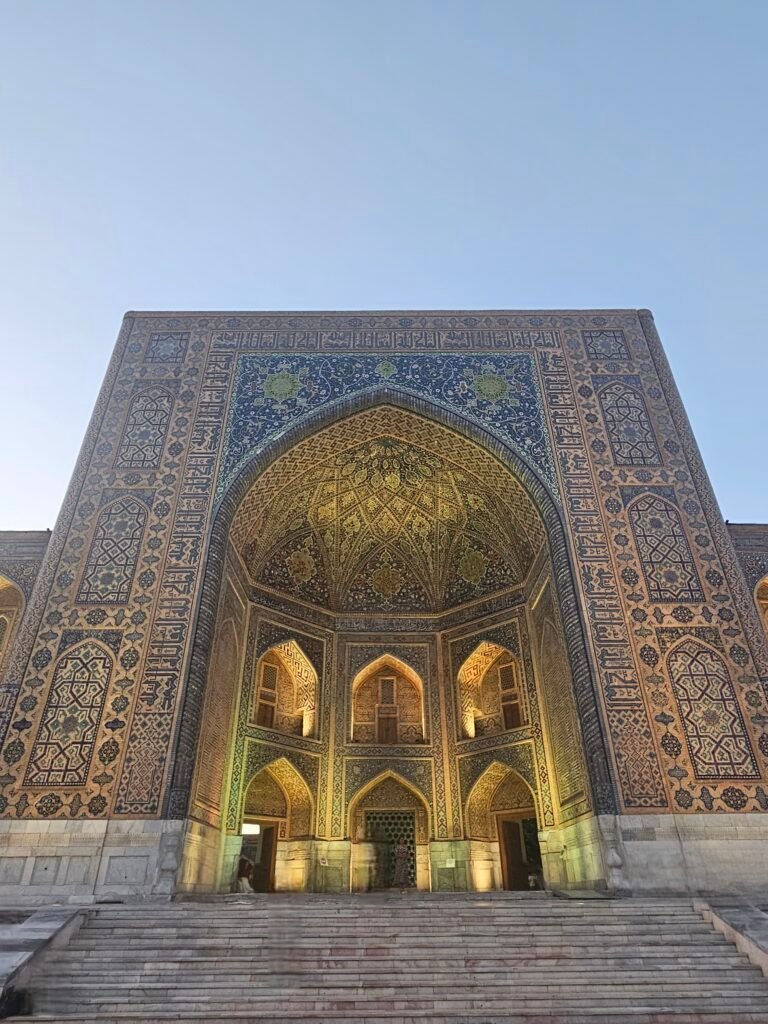
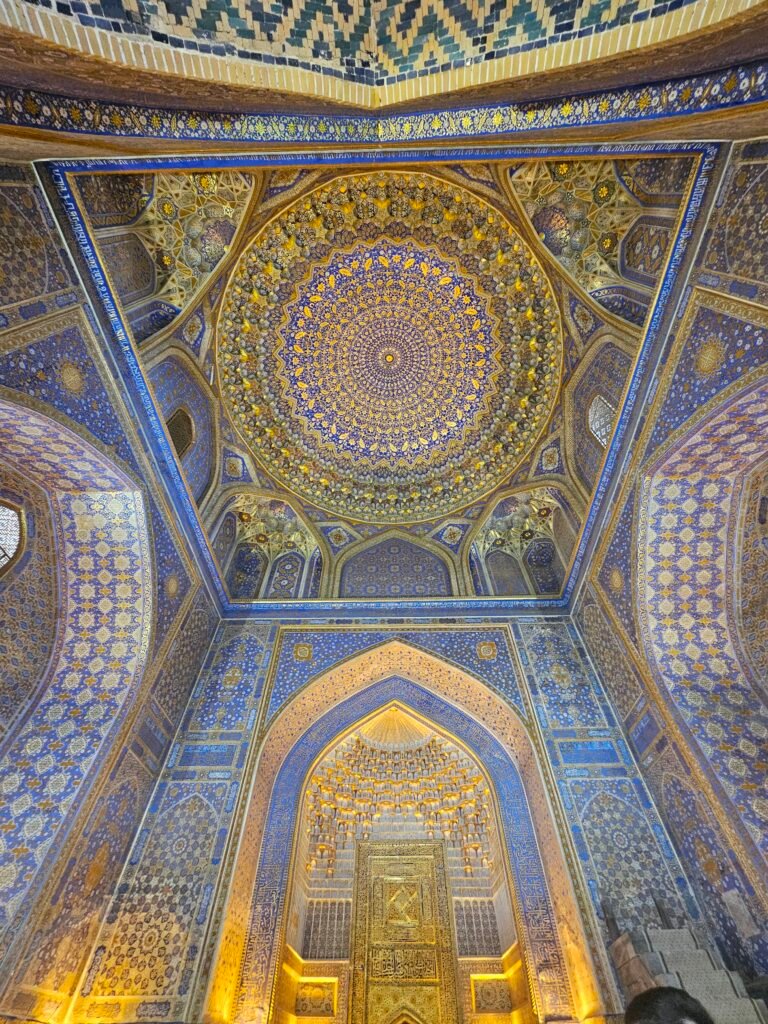
Registan Square is the place you’ll probably recognise from almost every photo of Uzbekistan. Three magnificent madrasas surround the huge square: Ulugh Beg, Sher-Dor and Tilya-Kori. Builders raised them between the 15th and 17th centuries, when Samarkand was one of the most important cities along the Silk Road.
The buildings were centres of Islamic learning, and the square itself was an important gathering place in the heart of the city. Its incredible blue tilework and intricate decoration make it easy to appreciate with kids, even if they aren’t interested in history.
We also visited in the evening, when traditional dancing was taking place in the square. It was a lovely way to experience the space beyond just looking at the buildings. Our son enjoyed watching the performers.
Recommended age: All ages.
Family tip: If you can, visit both during the day and after dark. The buildings are beautifully lit in the evening, and there can be performances or other events in the square. Go early or later in the day if you’re visiting during hot weather. The square is very exposed and there isn’t much shade.
Shah-i-Zinda
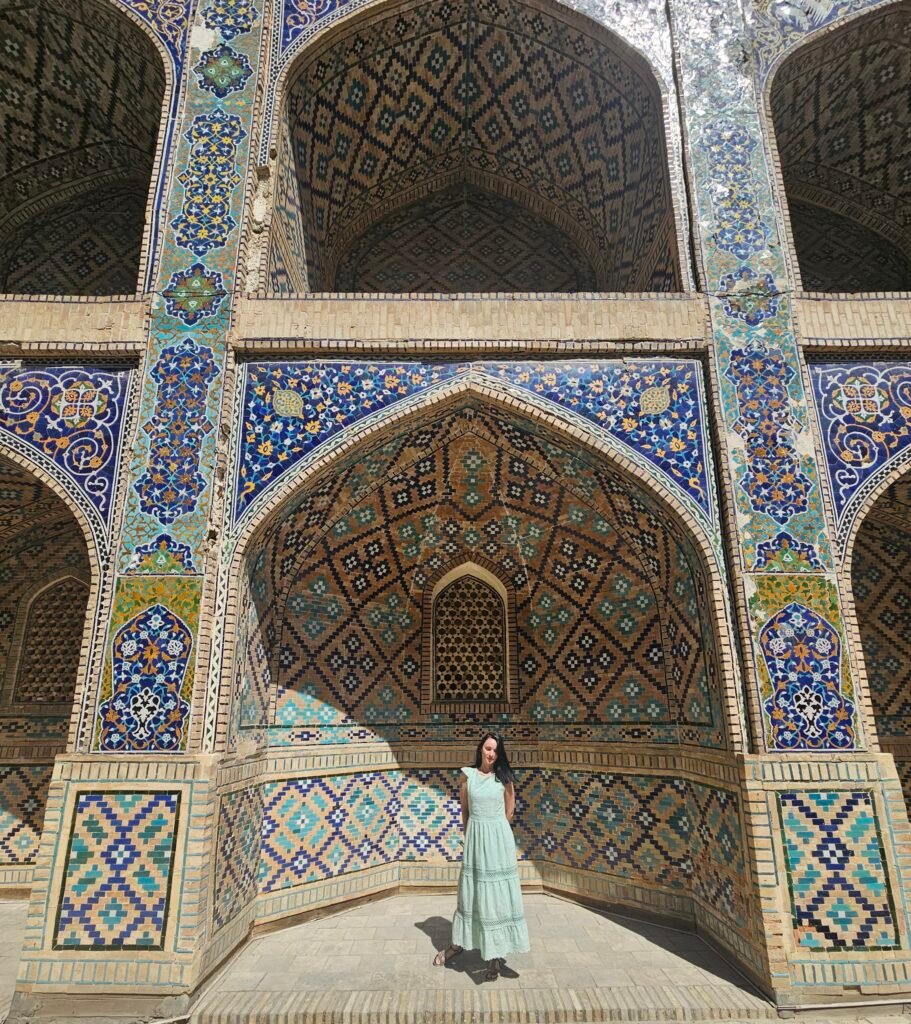
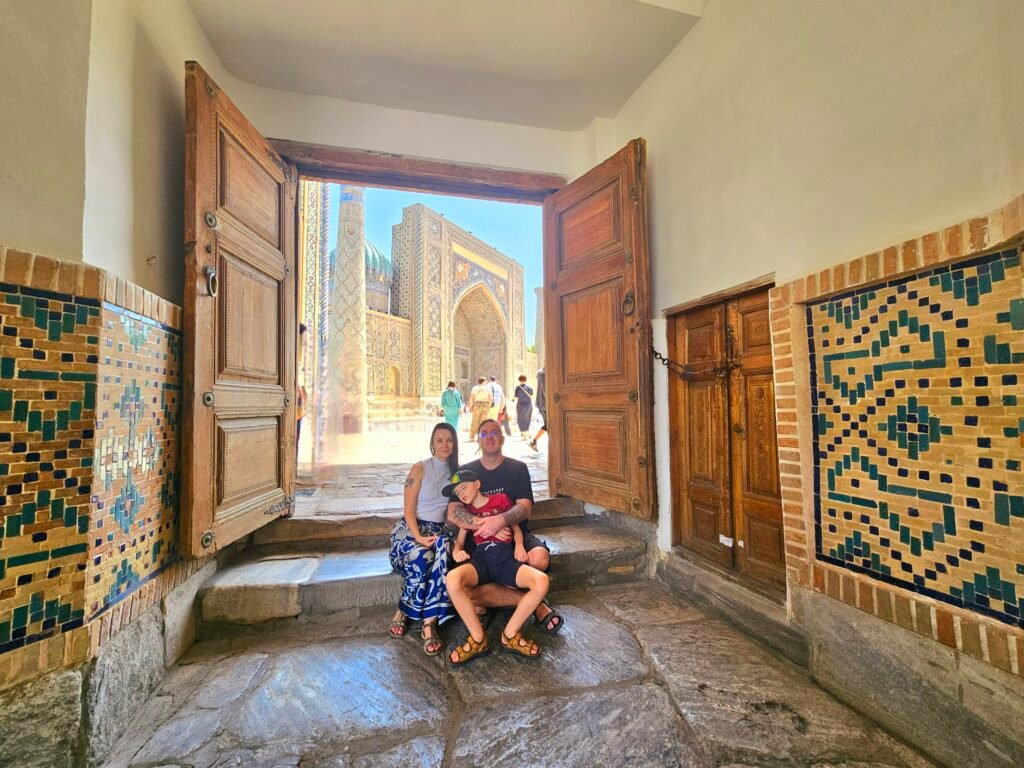
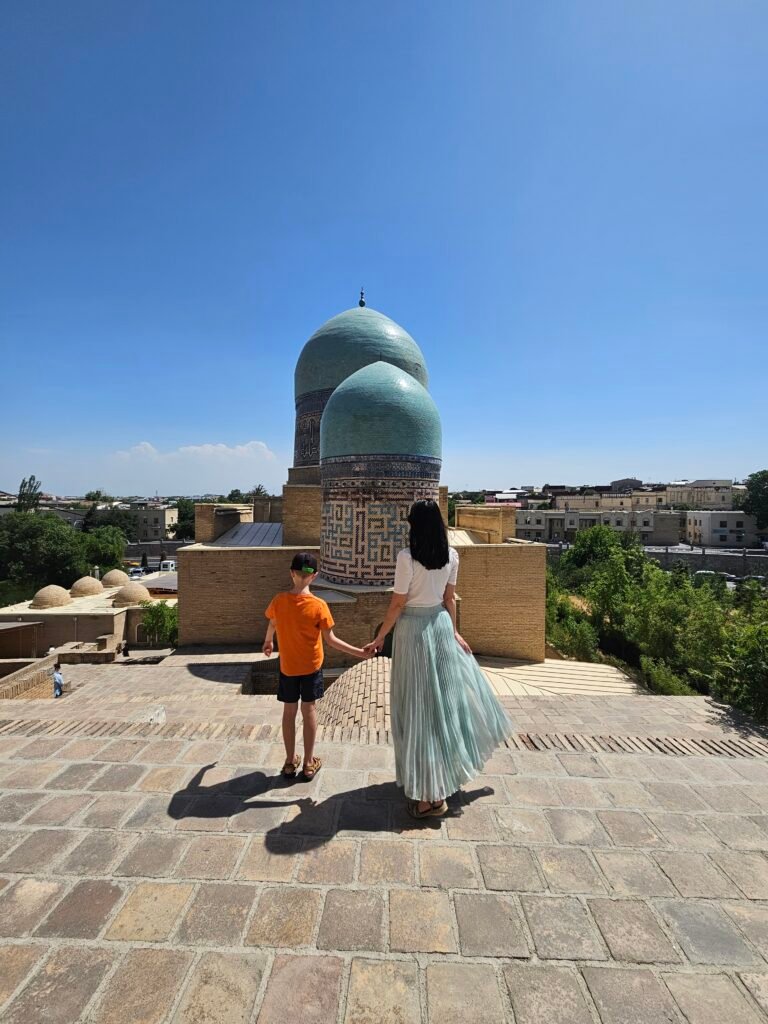
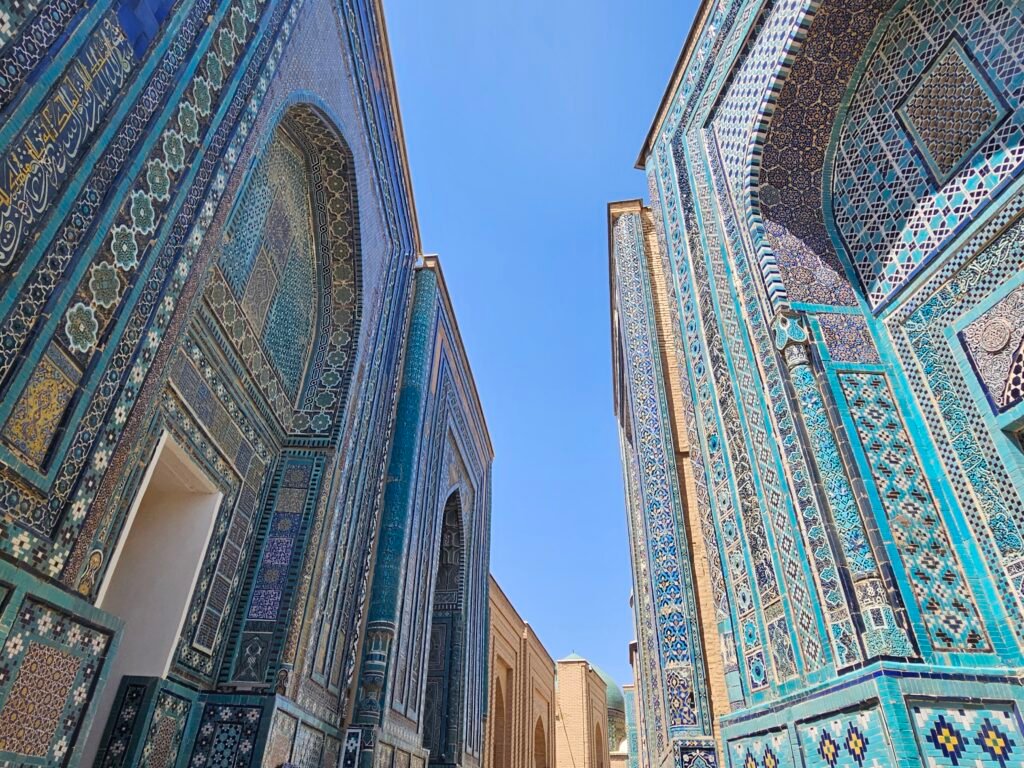
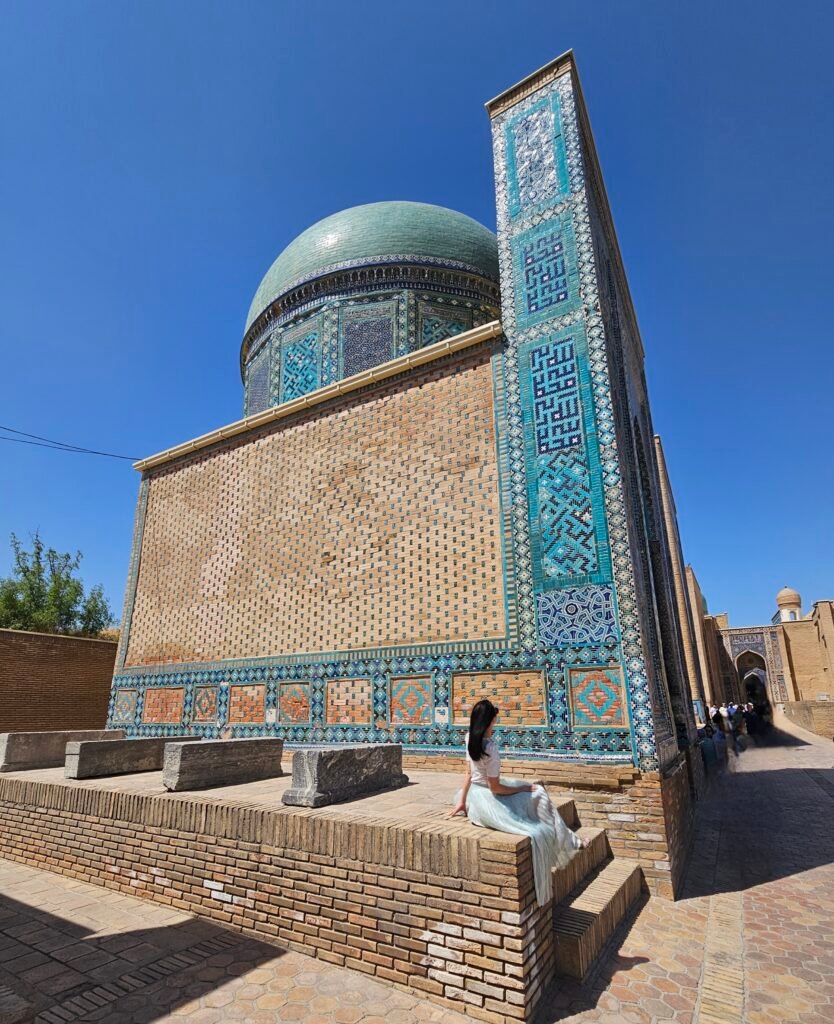
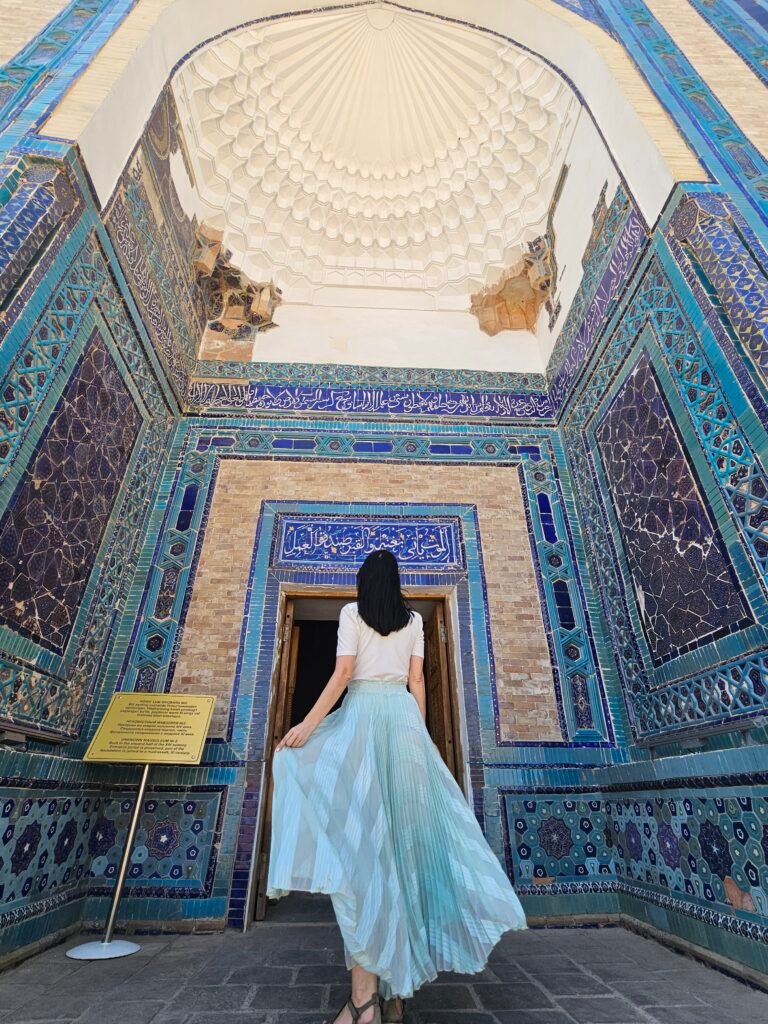
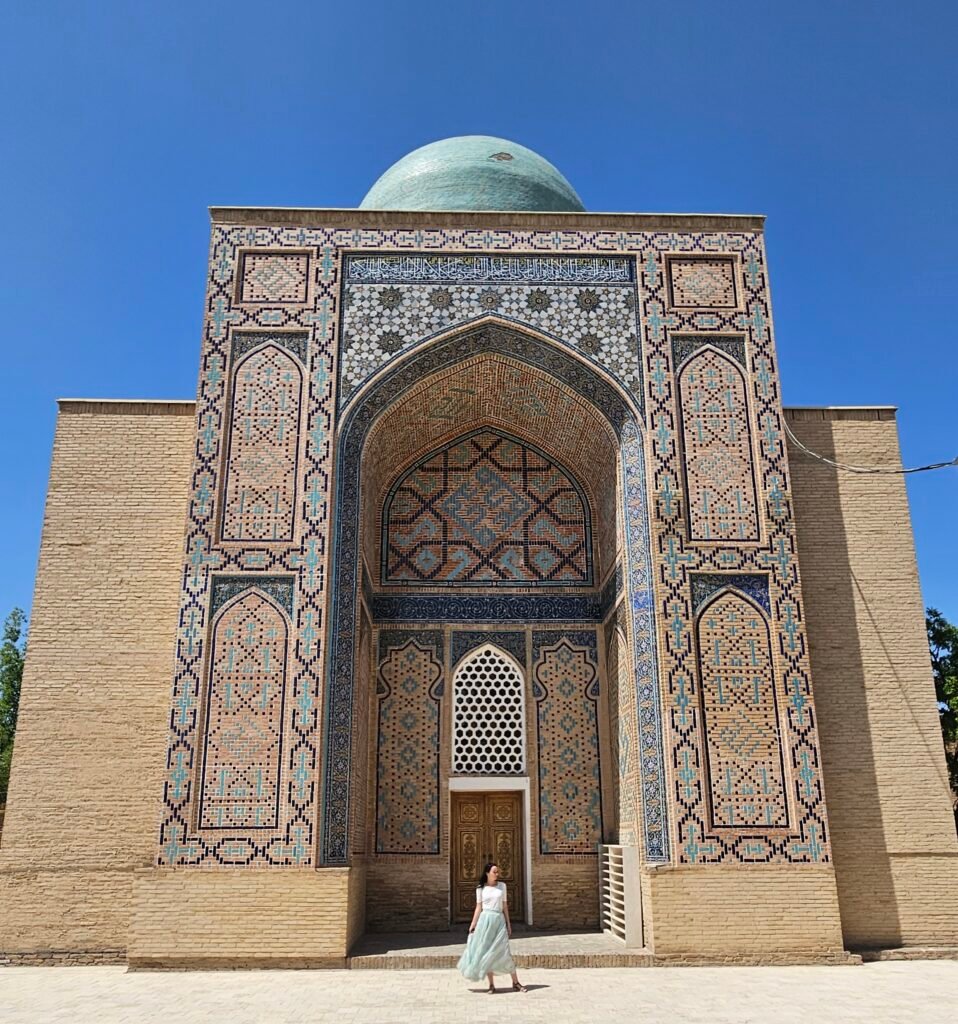
Shah-i-Zinda is one of the most beautiful places we visited in Samarkand, and it has a fascinating history behind it. The complex is a collection of mausoleums built over several centuries. Some of the earliest structures date back to the 11th century. It grew around the tomb believed to belong to Kusam ibn Abbas, a cousin of the Prophet Muhammad. Over time, it became an important place of pilgrimage.
The narrow passage is lined with beautifully decorated tombs, covered in intricate blue, turquoise and patterned tiles. Unlike some of the enormous monuments in Samarkand, Shah-i-Zinda feels more intimate. There’s plenty for kids to spot as you make your way through the complex.
Recommended age: 6+.
Family tip: There are quite a few steps and the area can get very hot. Comfortable shoes, water and an earlier visit are a good idea. As with all religious sites, dress respectfully.
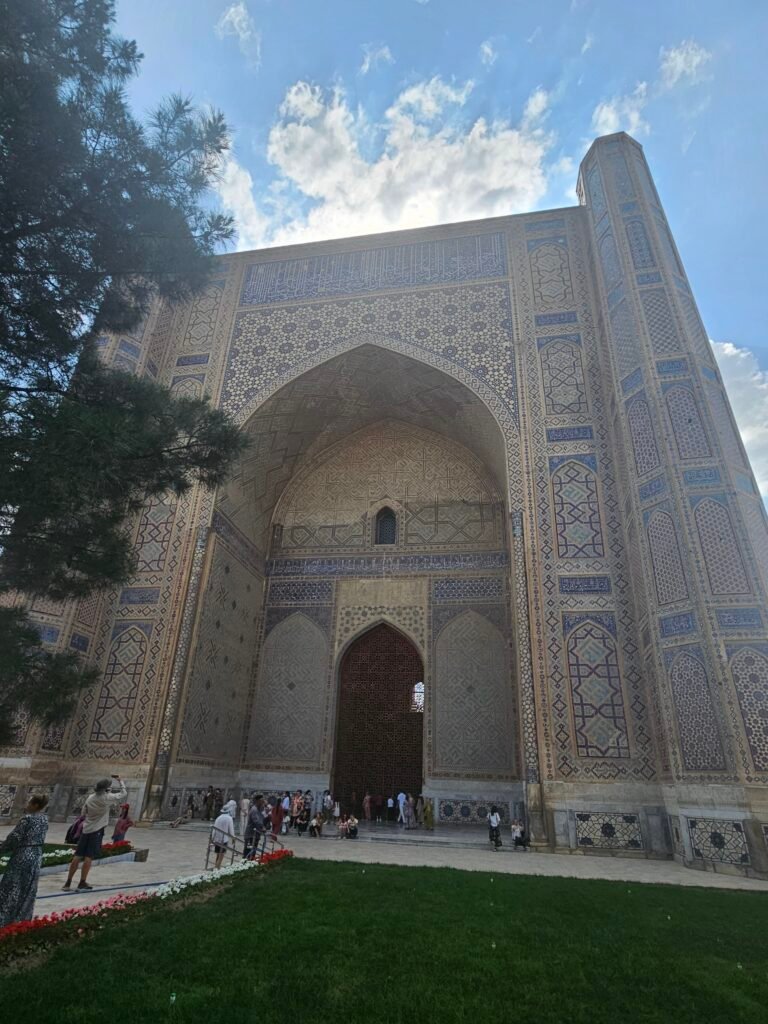
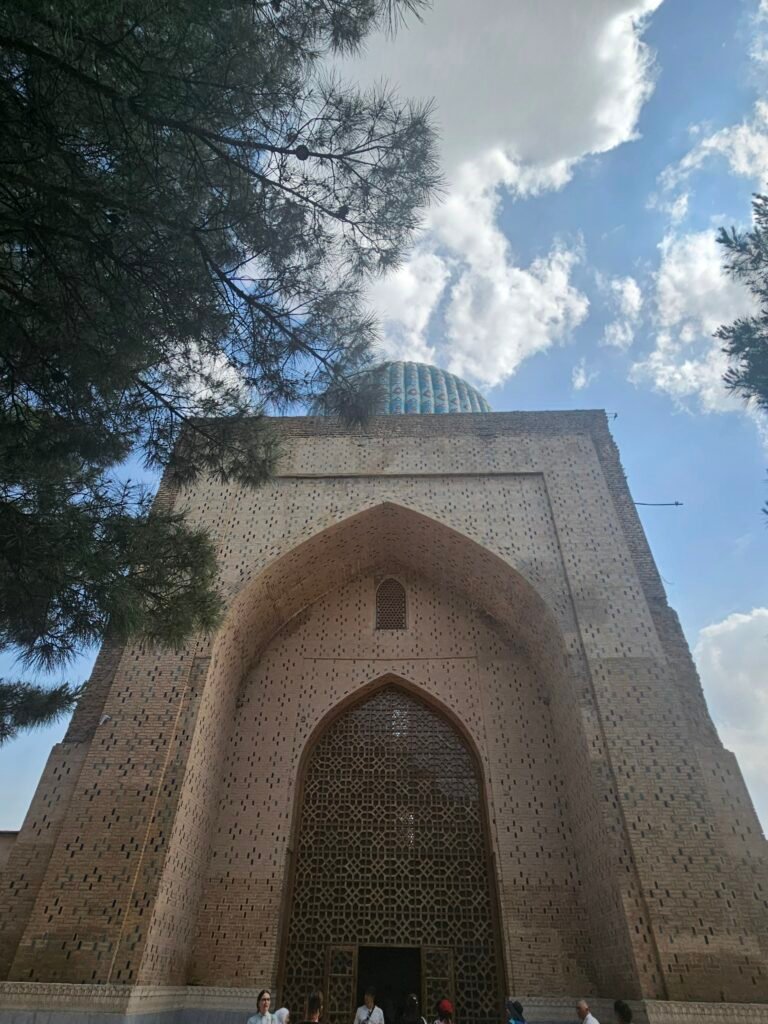
Bibi-Khanum Mosque
Amir Timur built the enormous Bibi-Khanum Mosque in the early 15th century, during his reign. At the time, Samarkand was the capital of his vast empire. Timur intended it to be one of the largest mosques in the Islamic world, and he built it on a huge scale, wanting Samarkand to be a capital worthy of his growing empire.
The mosque takes its name from Bibi-Khanum, traditionally said to have been Timur’s wife. Some of the stories surrounding her and the building have become mixed with legend over the centuries. Earthquakes badly damaged the original structure, and much of what you see today has been restored.
Even in its restored state, the scale is impressive. Standing in the courtyard and looking up at the enormous entrance gives you a good sense of how ambitious Timur’s building projects were. It also shows how important Samarkand had become during his rule.
Recommended age: All ages.
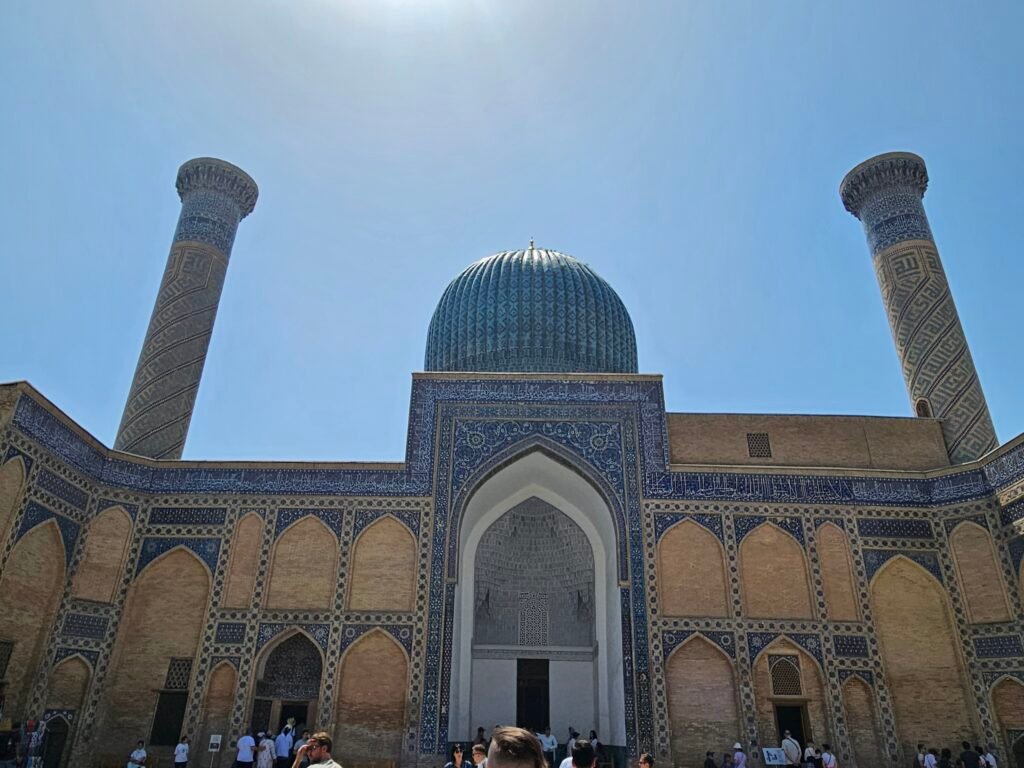
Gur-e-Amir Mausoleum
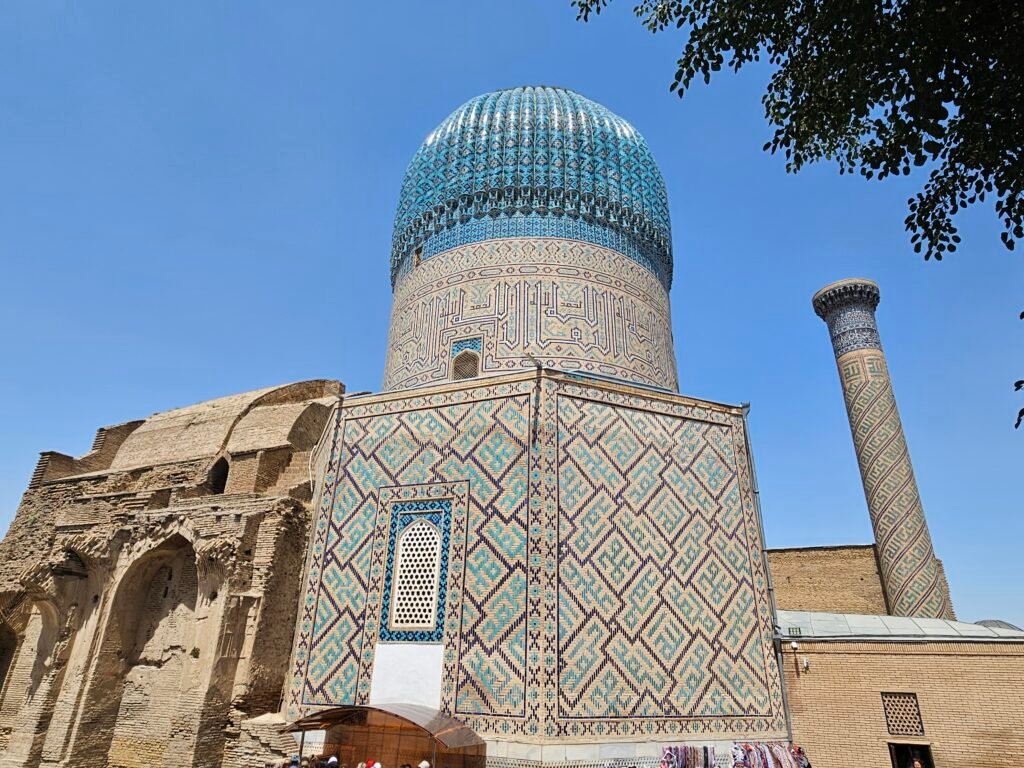
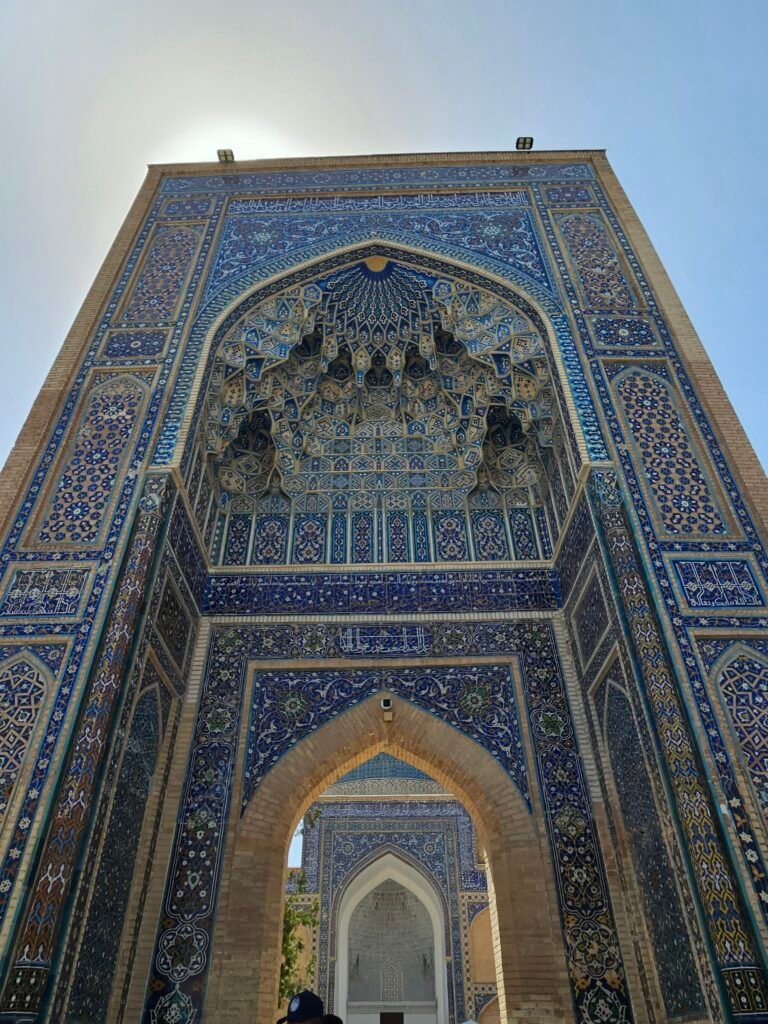
The Gur-e-Amir Mausoleum is the final resting place of Amir Timur and several members of his family.
The interior is particularly impressive, with intricate decoration and the famous turquoise dome.
For worldschooling families, this is another easy place to connect geography and history. You can trace the area controlled by Timur on a map and then compare it with modern-day Uzbekistan.
Suddenly the trip becomes a history lesson without actually feeling like one.
Don’t miss the Samarkand paper mill
One of our favourite stops in Samarkand was actually something completely different from the grand monuments.
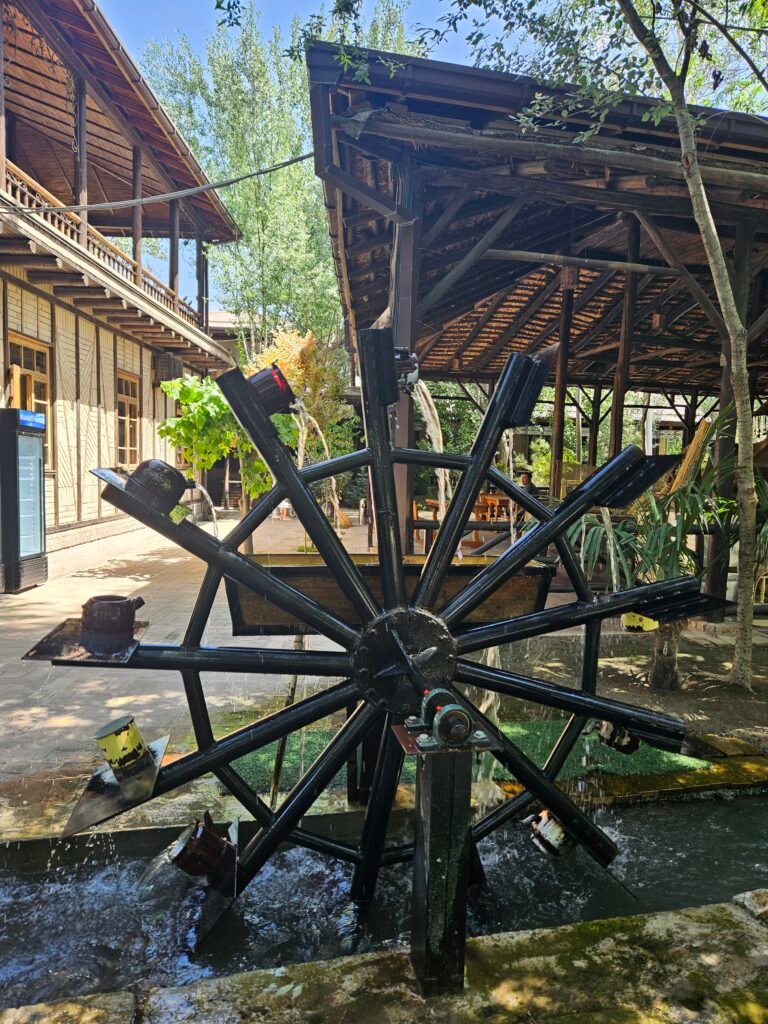
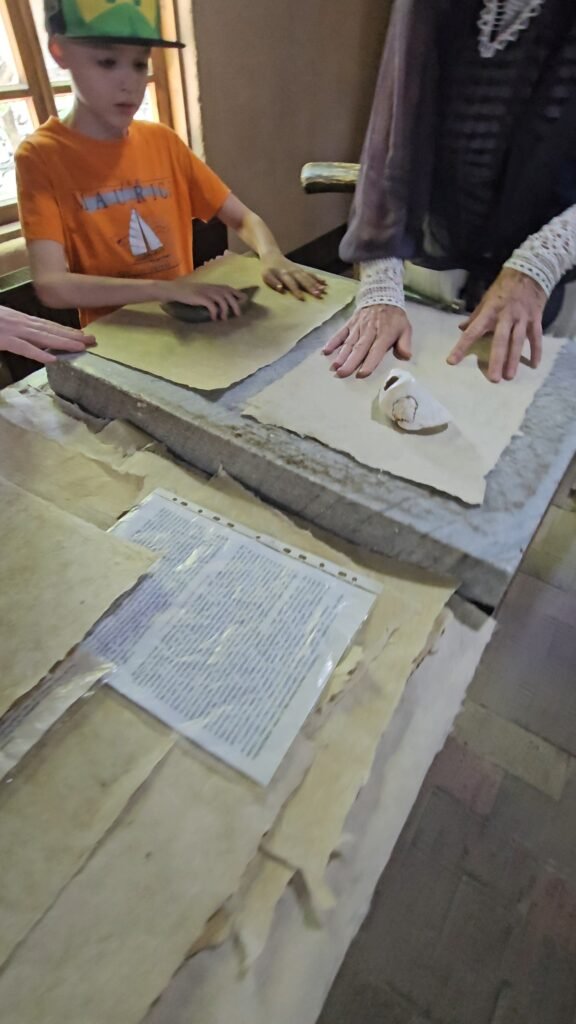
We visited Meros Paper Mill in Konigil, where artisans make traditional Samarkand paper from mulberry bark.
Local artisans have revived the paper-making tradition, using an old process involving natural materials and manual labour. The workshop uses traditional methods, and visitors can watch how they produce the paper.
This was exactly the sort of experience we love when travelling with our son. Our guide explained and showed the process to us, and our son got to try it out himself. The mulberry bark is processed, beaten and turned into sheets of paper using traditional techniques. We got to talk about how paper spread along the Silk Road and why it mattered for books and scholarship.
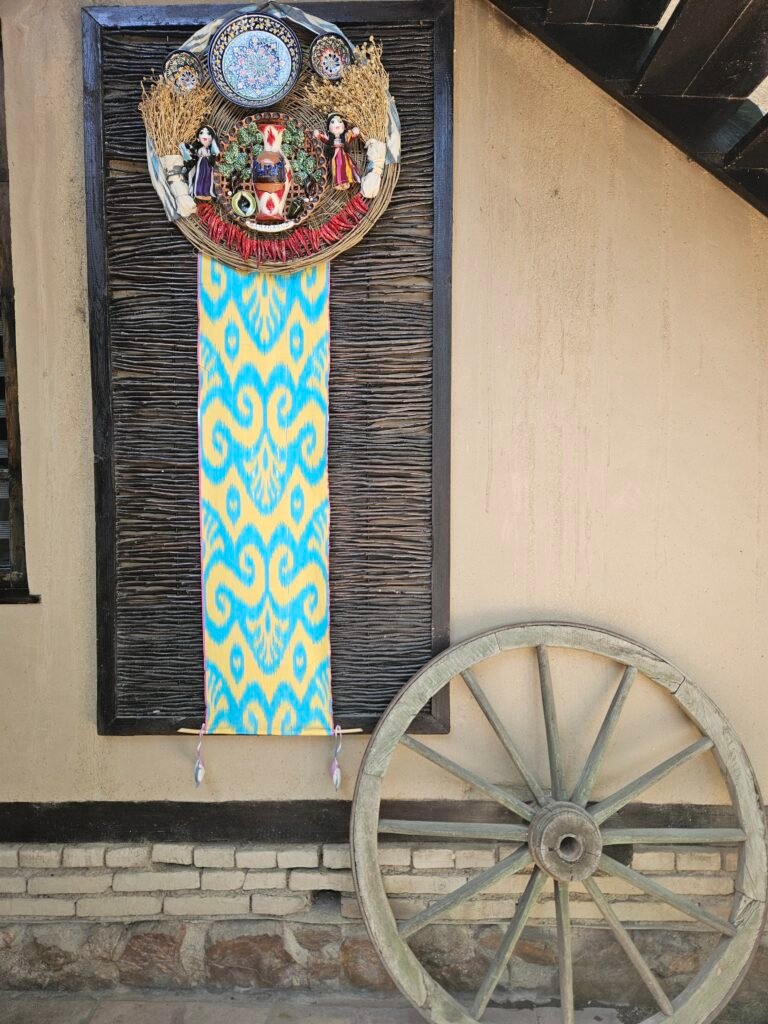
You can also buy the hand made sheets of paper at the gift shop, as well as various crafts.
Why families will enjoy it
It’s hands-on, relatively short and completely different from the monumental sightseeing you’ll be doing elsewhere in Samarkand.
Recommended age: 5+.
Siyob Bazaar
Siyob Bazaar is the largest market in Samarkand. It has been an important part of daily life in the city for generations. It’s right beside the Bibi-Khanum Mosque, so it’s easy to combine the two when exploring the old city.
The market is a great place to see the everyday side of Samarkand after spending time visiting its grand monuments. Inside, you’ll find rows of stalls selling huge round loaves of Uzbek bread, dried fruit and nuts, spices, sweets and fresh produce. The sheer variety of dried fruits and nuts was particularly impressive. There are plenty of things to sample as you walk around.
For us, it was also a nice change of pace from sightseeing. Our son could wander around, look at the different foods and choose a few things he wanted to try. Meanwhile, we got to experience a much more ordinary side of life in Samarkand.
Recommended age: All ages.
Family tip: Go hungry. There are plenty of things to taste. It’s also a good place to pick up snacks for the rest of your day.
Bukhara with kids
From Samarkand we continued to Bukhara, another of Uzbekistan’s major historic cities.
Bukhara’s historic centre is a UNESCO World Heritage Site and the city has more than 2,500 years of history.
Bukhara felt different from Samarkand.
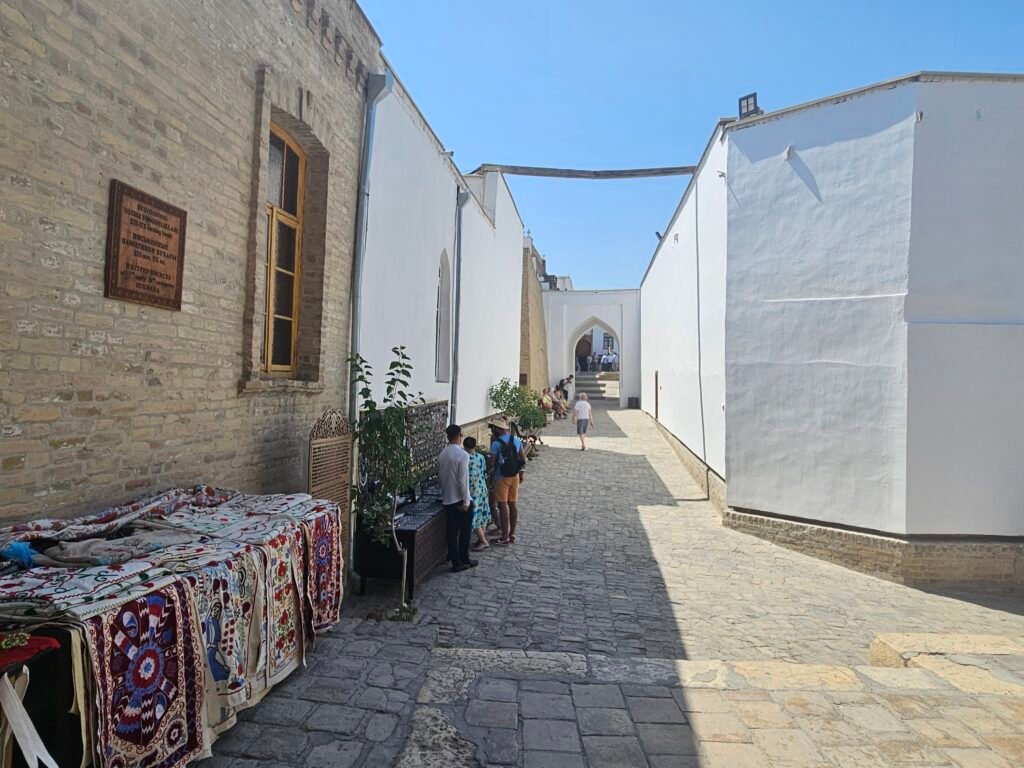
Bukhara doesn’t have one enormous square dominating the experience. Instead, much of the historic centre is about wandering between mosques, madrasas, trading domes, courtyards and small streets.
That made it a good city for simply walking around.
Best things to do in Bukhara with kids
Lyabi-Hauz
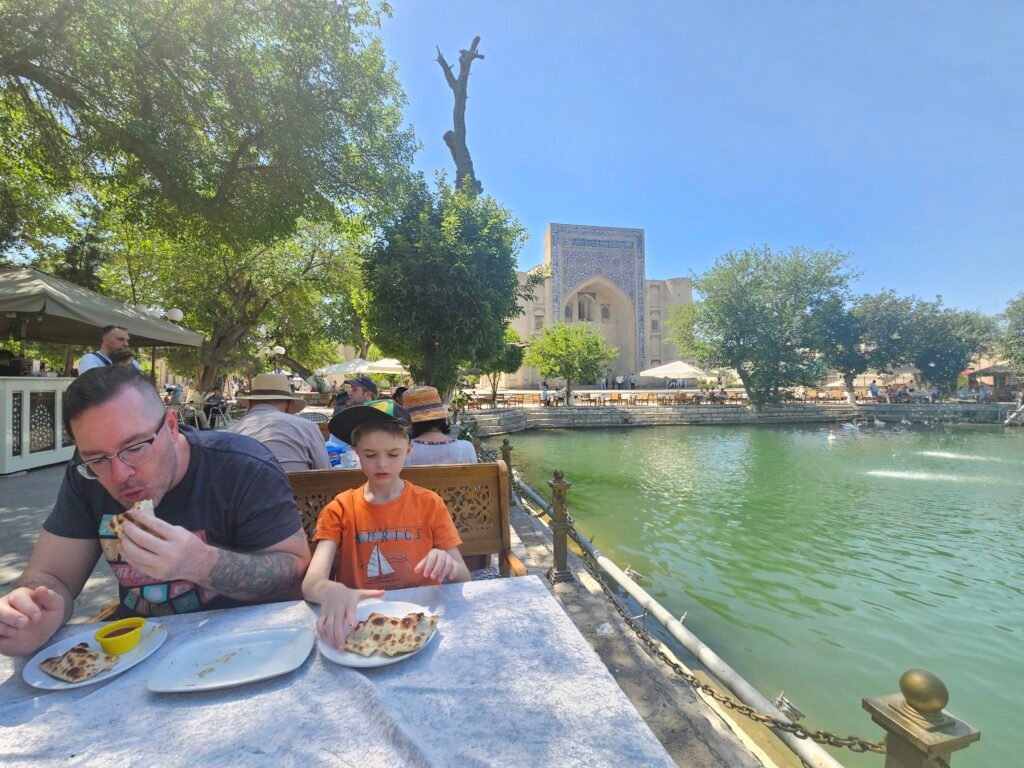
Lyabi-Hauz became one of our favourite places to spend time in Bukhara.
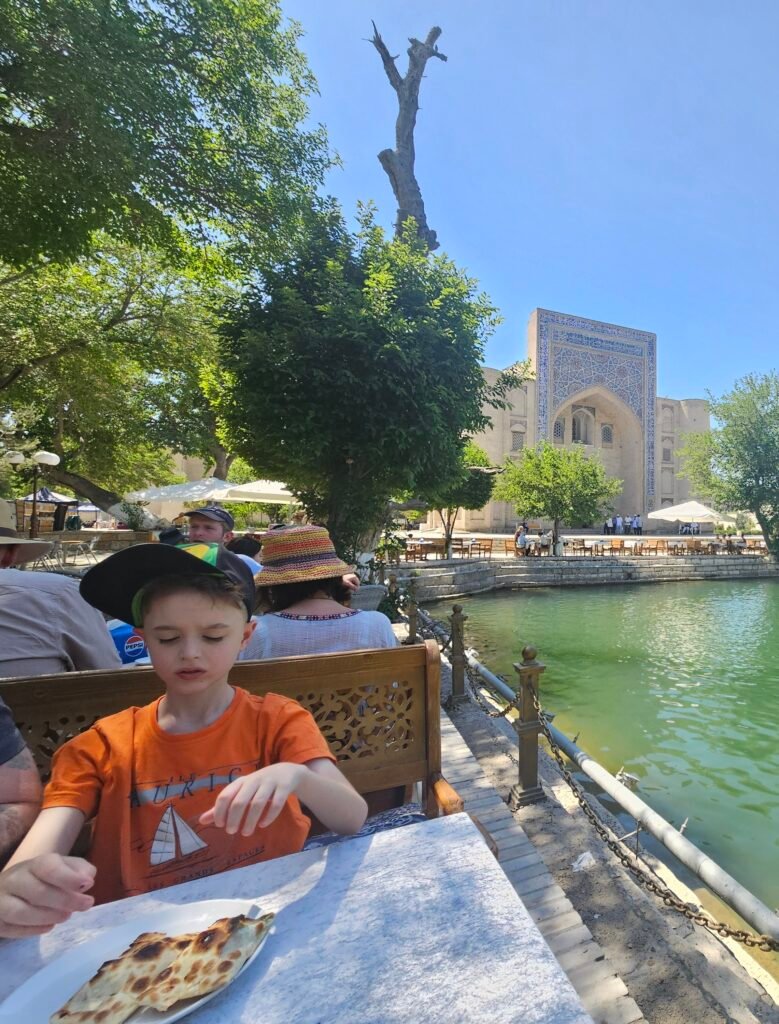
The name means “by the pond.” The historic ensemble is built around the old pool, surrounded by madrasas and a khanaka. There are cafés and restaurants around the area, and the square is also used for performances and cultural events.
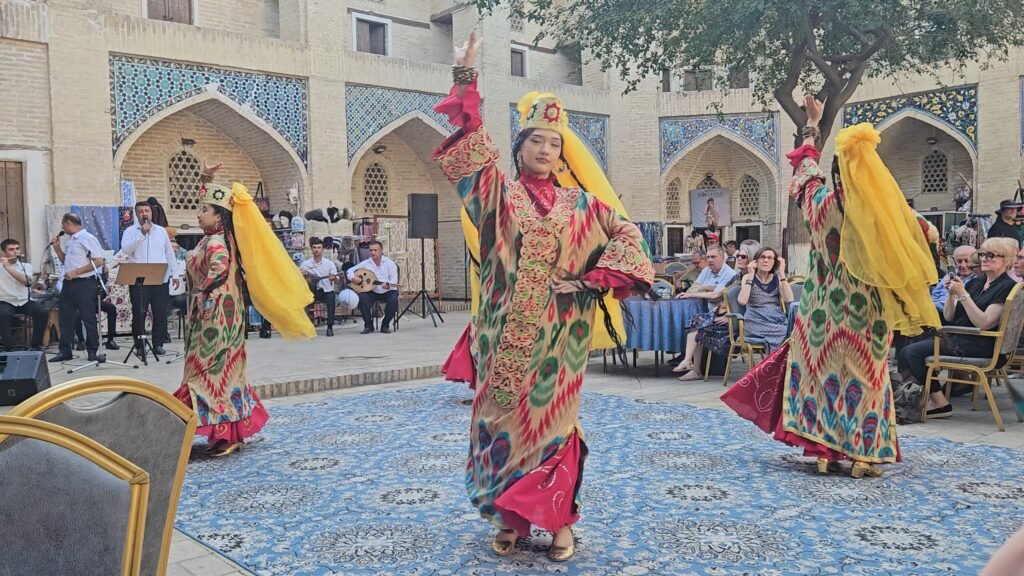
When we were there, we saw traditional dancing taking place in the city centre. It was a lovely way to experience local culture without scheduling a formal cultural show.
Recommended age: All ages.
Ark Fortress
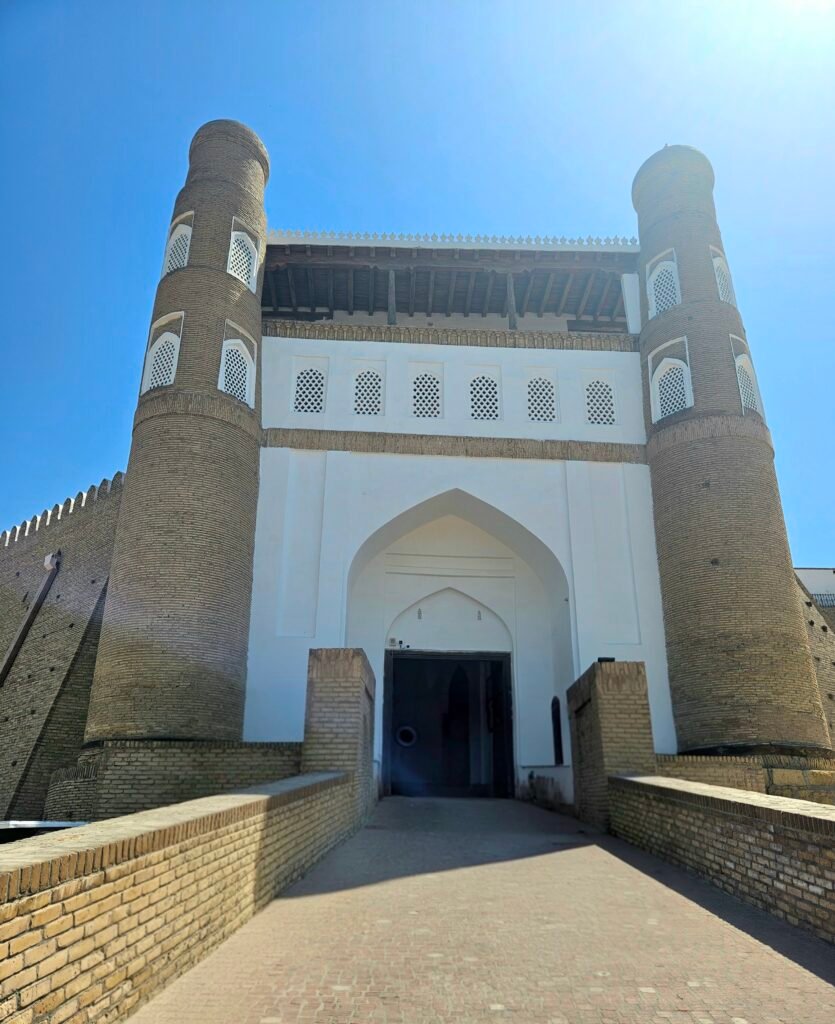
The Ark Fortress is one of those places where the history of Bukhara really comes alive. This citadel is believed to have existed in some form for more than a thousand years. The earliest written descriptions of the Ark date back to the 10th century. It was repeatedly destroyed and rebuilt over the centuries. The fortress took much of its present form under the Shaybanid dynasty in the 16th century.
What I found fascinating was thinking about everything that had happened here over the centuries. Bukhara has stood at the crossroads of civilizations for more than 2,500 years. It sits on the Silk Road between East and West. Persians, Greeks, Arabs, Mongols, Turkic peoples and many other cultures and empires passed through or ruled this region. The Ark was at the centre of it all. It served as the seat of Bukhara’s rulers, effectively functioning as a city within the city.
The legend of the fortress
There is also a fascinating local legend about the fortress’s origins. It involves a Persian prince called Siyavush and a challenge to build a fortress on an area the size of a bull’s hide. It’s a great story to tell kids before visiting, although it is, of course, a legend rather than established history.
Recommended age: All ages, although older children who enjoy history will probably get the most out of it.
Family tip: Don’t underestimate the heat in Bukhara. At 38°C, we found it much easier to explore early in the day. We took a break during the hottest part of the afternoon.
Poi-Kalyan
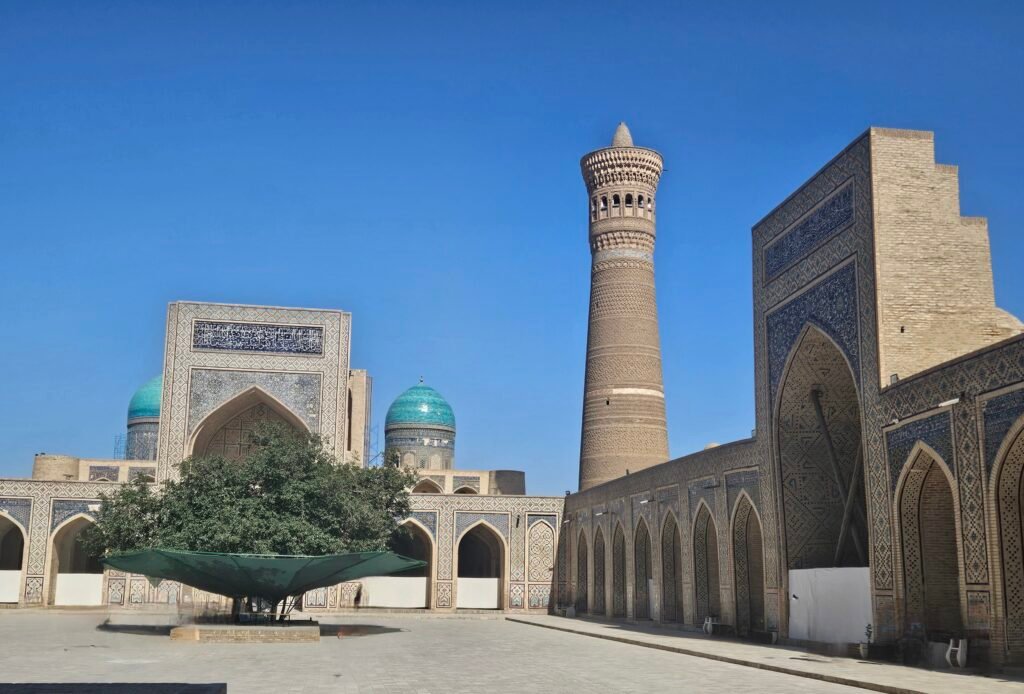
The Poi-Kalyan complex is one of the places in Bukhara where you really get a sense of how important this city was. The complex has stood at the heart of Bukhara for centuries. It includes the enormous Kalyan Minaret, Kalyan Mosque and Mir-i-Arab Madrasa. It’s been associated with Bukhara’s main mosque since at least the 8th century, though the buildings you see today were constructed at different times.
Its star is the Kalyan Minaret, built in 1127 under the Karakhanid ruler Arslan Khan. Standing around 46 metres tall, it was built from baked brick. It wasn’t simply a place from which the call to prayer was made. It also served as a landmark and lookout tower. Its size was a statement of Bukhara’s importance and the power of its rulers.
A minaret that survived Genghis Khan
The history here gets even more interesting. Genghis Khan’s armies destroyed much of Bukhara in 1220, including the original mosque. The Kalyan Minaret survived. The mosque and Mir-i-Arab Madrasa that form the complex today were built several centuries later. That gives the square an incredible mix of history spanning from the 12th to the 16th century.
Recommended age: All ages.
Family tip: The square is particularly impressive in the late afternoon when the light starts to change. But if you’re visiting in summer, remember that Bukhara can be extremely hot. We were there when temperatures reached around 38°C, so plan your sightseeing around the heat and carry plenty of water.
Chor Minor
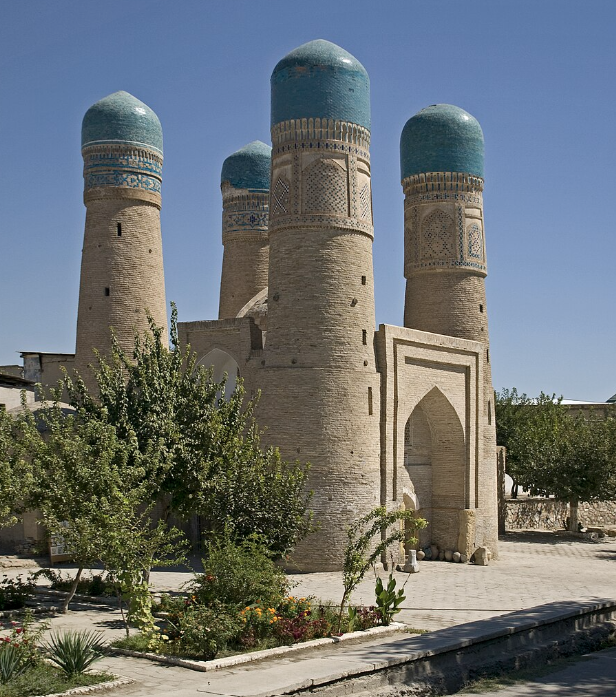
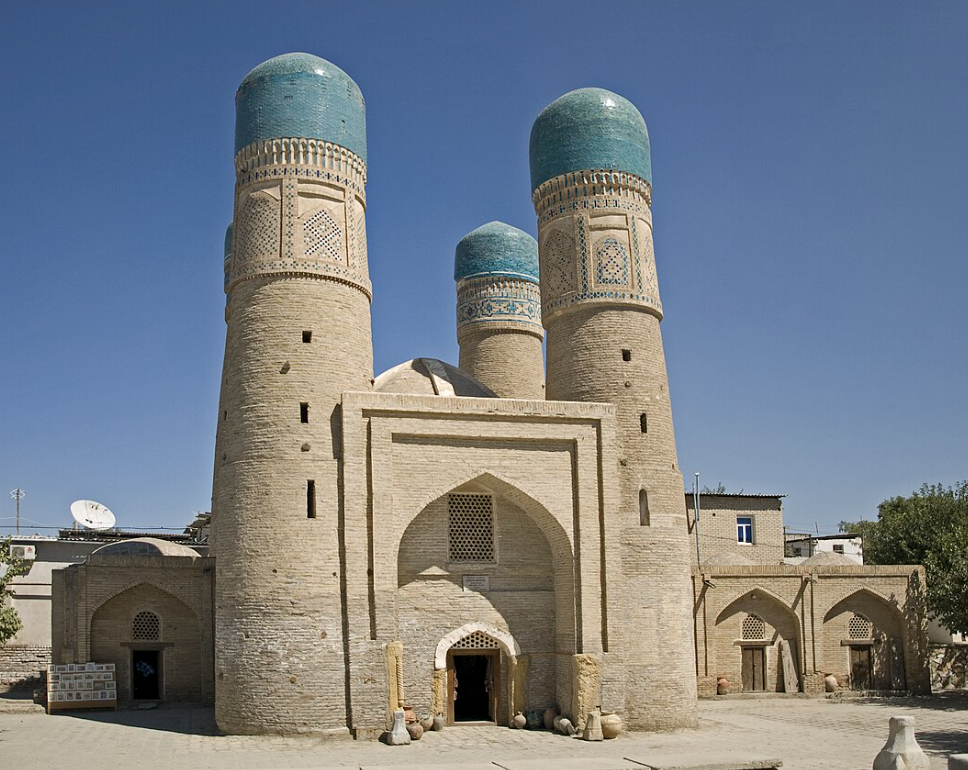
Chor Minor, which means “Four Minarets”, is one of the more unusual buildings in Bukhara. It’s tucked away in a residential area a short walk from Lyabi-Hauz. That makes it feel quite different from the huge monuments in the centre of the old city.
The building dates from the early 19th century, traditionally to 1807, when the wealthy merchant Khalif Niyazkul built it. It was part of a larger madrasa complex that included student rooms, a mosque and a courtyard. Most of that complex has disappeared over time. What remains today is the distinctive two-storey gateway topped by four small turquoise-domed towers.
Despite its name, the four towers aren’t actually traditional minarets in the usual sense. They are part of the unusual architectural design of the gateway, which is what makes Chor Minor so memorable. There are also plenty of stories about what the four towers and their decorations might represent. These interpretations are more legend than established history.
Recommended age: All ages.
Family tip: You only need around 20 to 30 minutes here. It’s easy to combine with Lyabi-Hauz and the other sights in the old city.
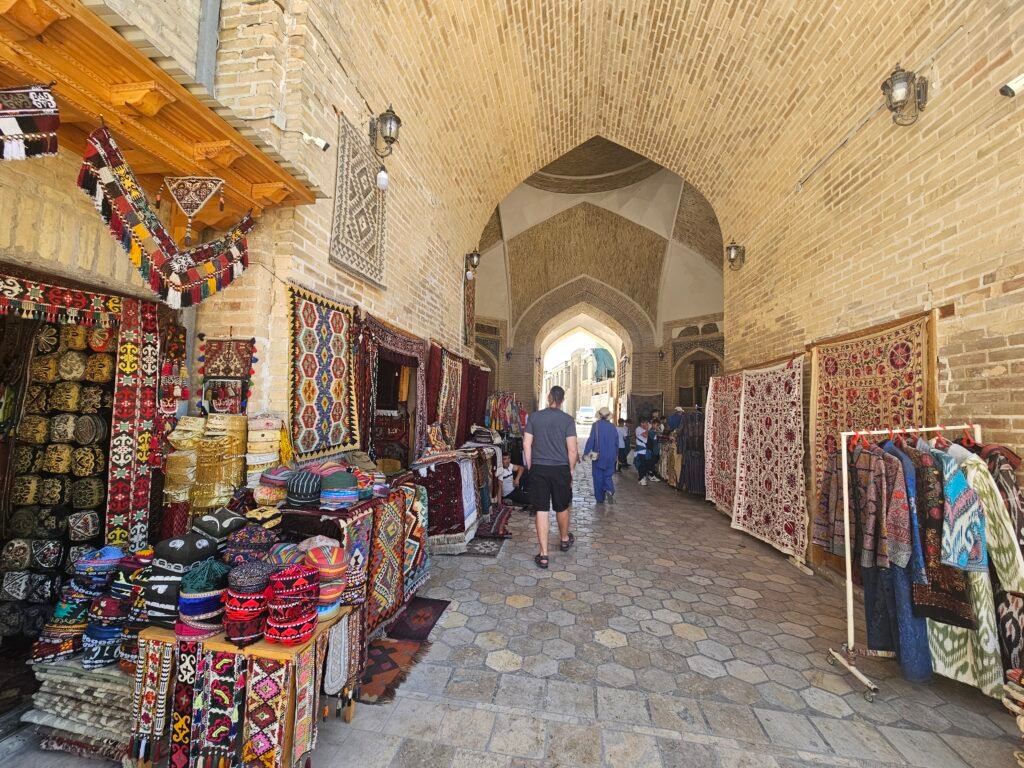
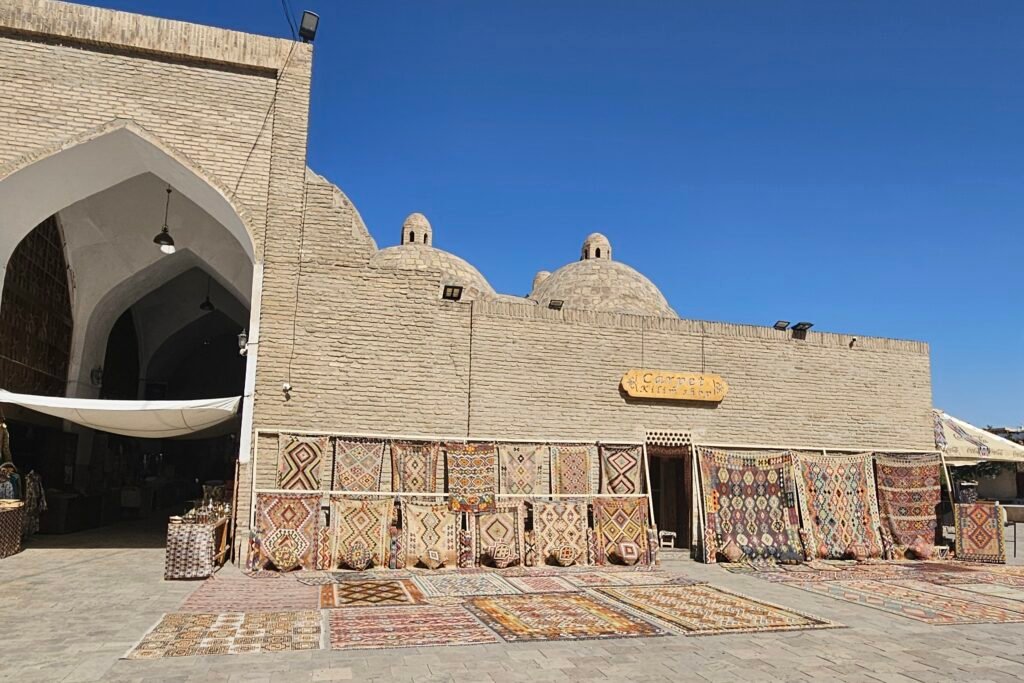
The trading domes
One of the things we enjoyed about Bukhara was wandering through the old trading areas.
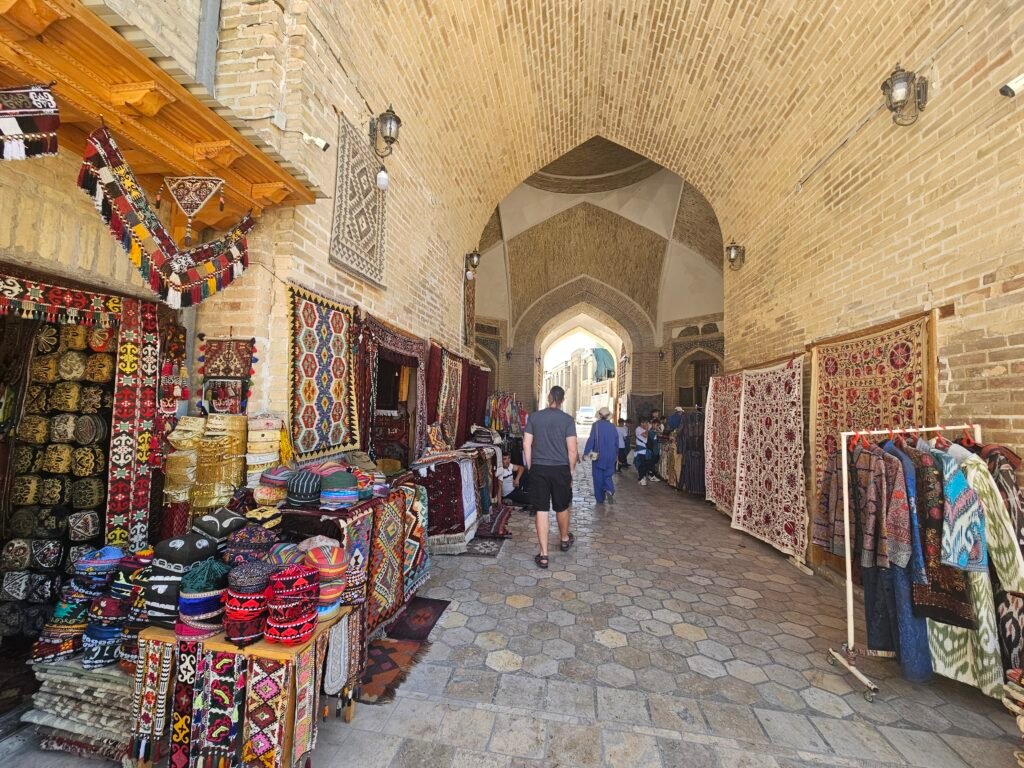
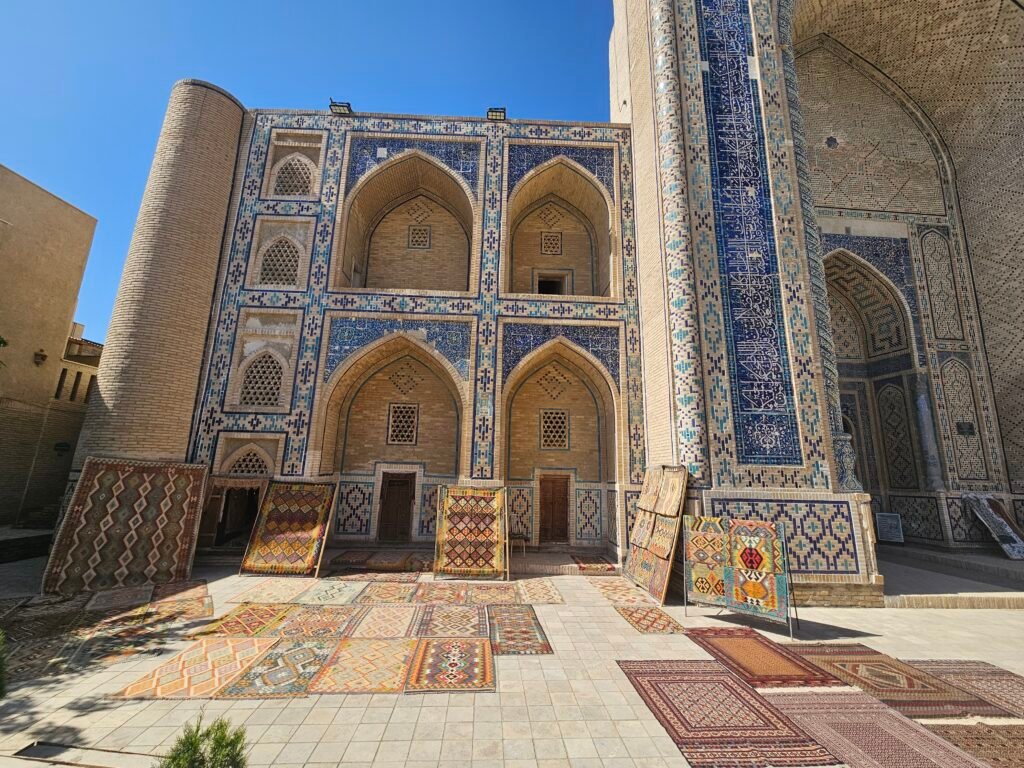
Historically, Bukhara was an important trading centre on the Silk Road. The old city still contains covered trading domes and workshops.
This is a great place to let kids look at the crafts rather than rushing from monument to monument.
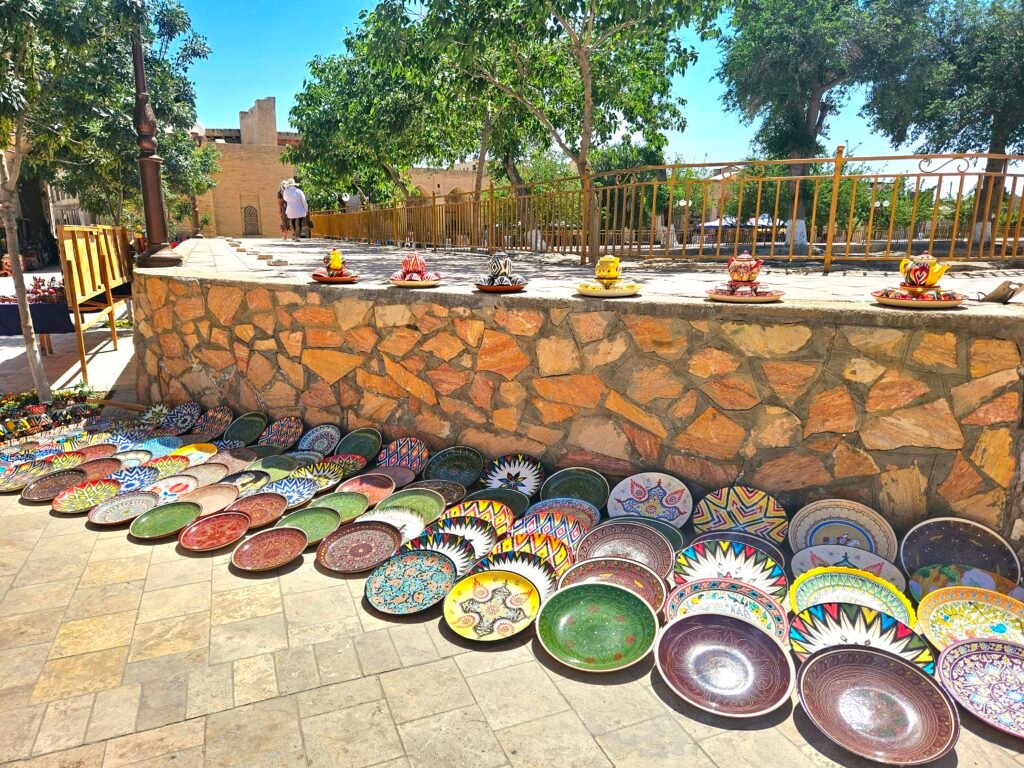
You’ll find textiles, ceramics, jewellery, woodwork and souvenirs.
Khiva with kids
And then there was Khiva.
Of all the places we visited in Uzbekistan, Khiva was our favourite.
If you’re wondering whether it’s worth the effort to get all the way to Khiva, our answer is yes. Absolutely.
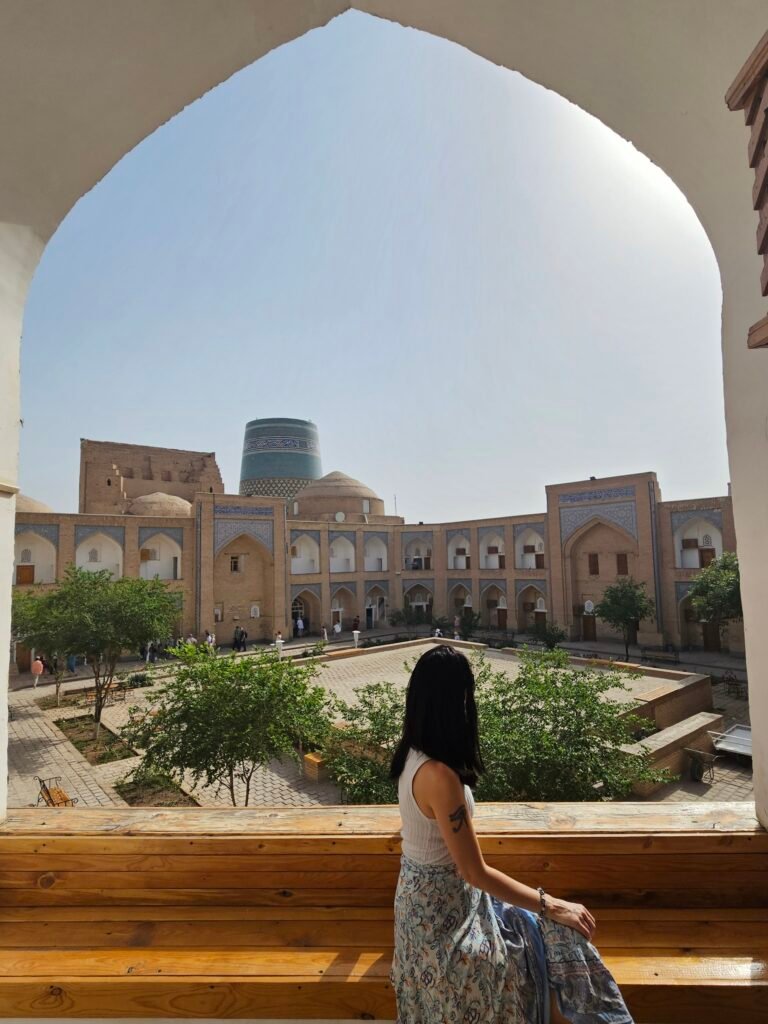
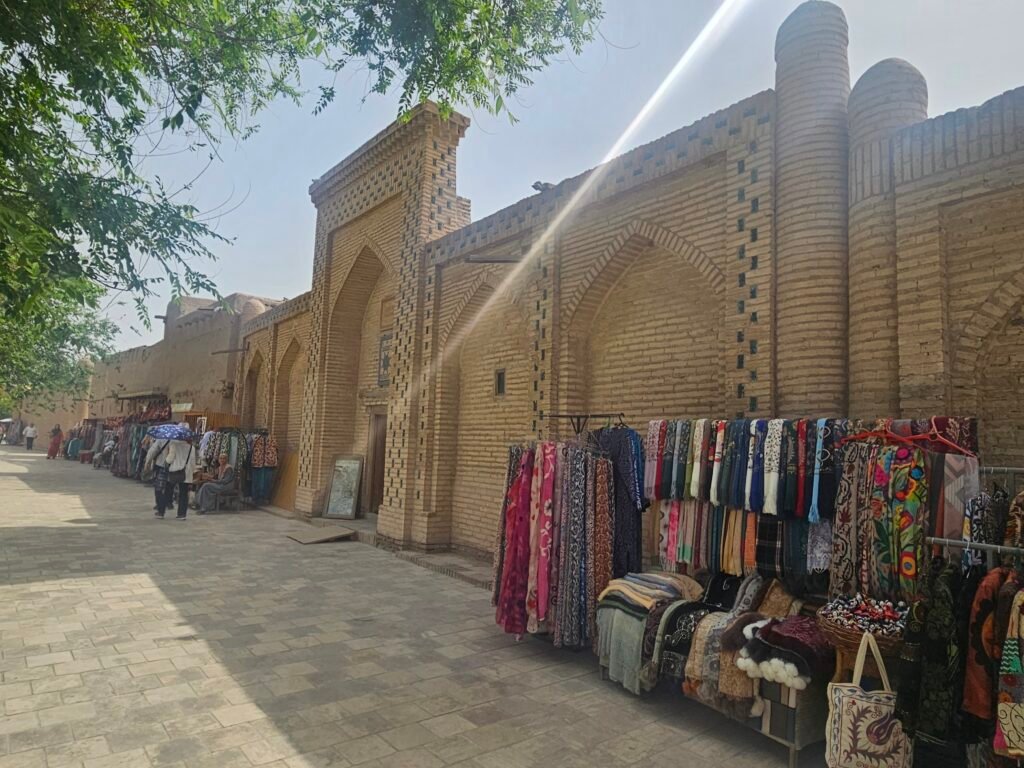
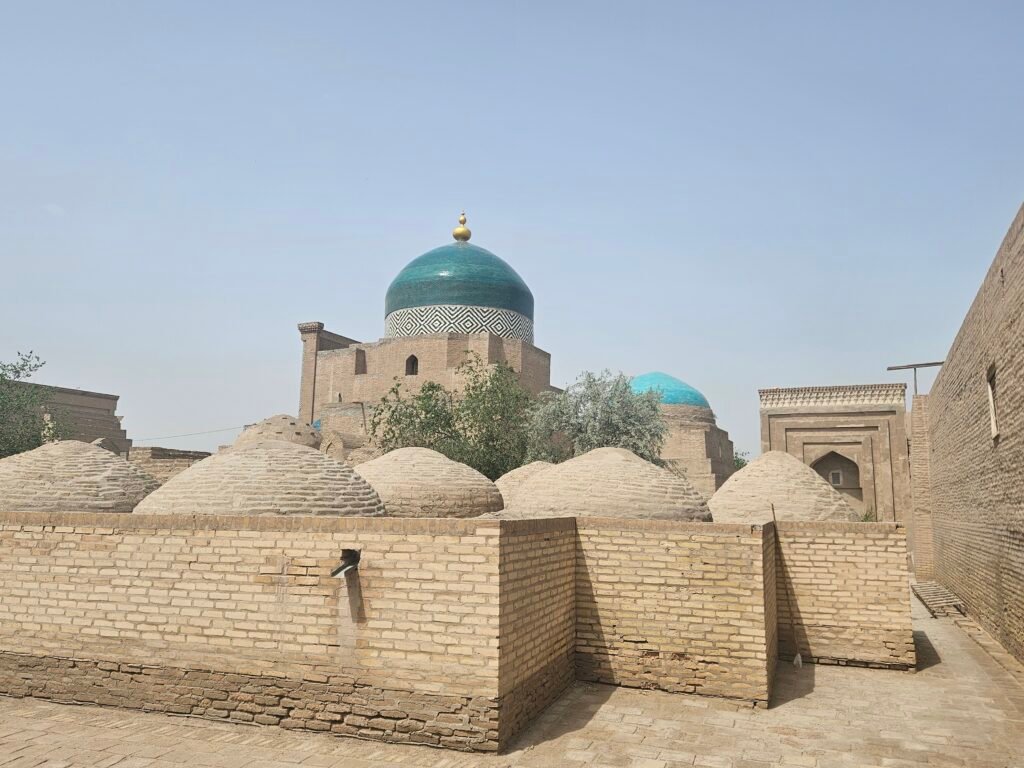
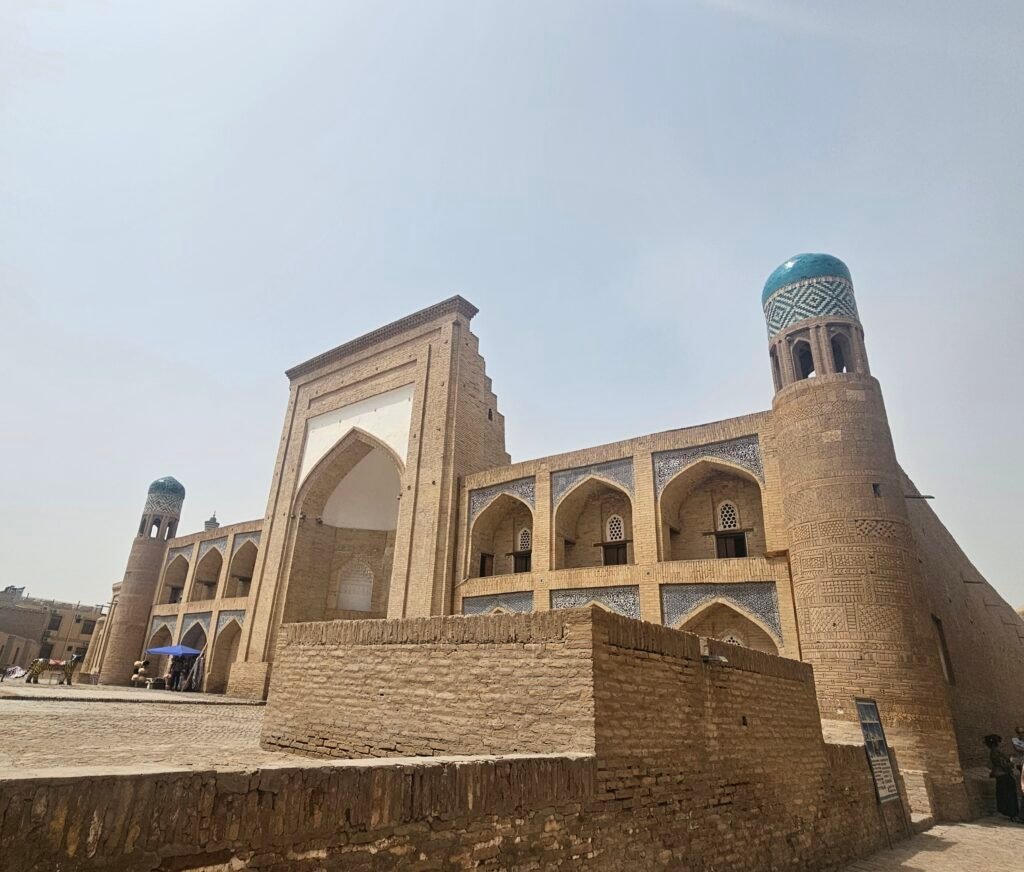
The historic heart of the city is Ichan-Kala, an ancient walled city and UNESCO World Heritage Site. It contains mosques, madrasas, minarets, palaces, mausoleums, workshops and old streets within its walls.
And that’s exactly why we liked it so much. You don’t really need to spend your day travelling between attractions. You’re already inside the attraction. Wandering through the old town just felt like being in an Arabian fairy tale.
Ichan-Kala
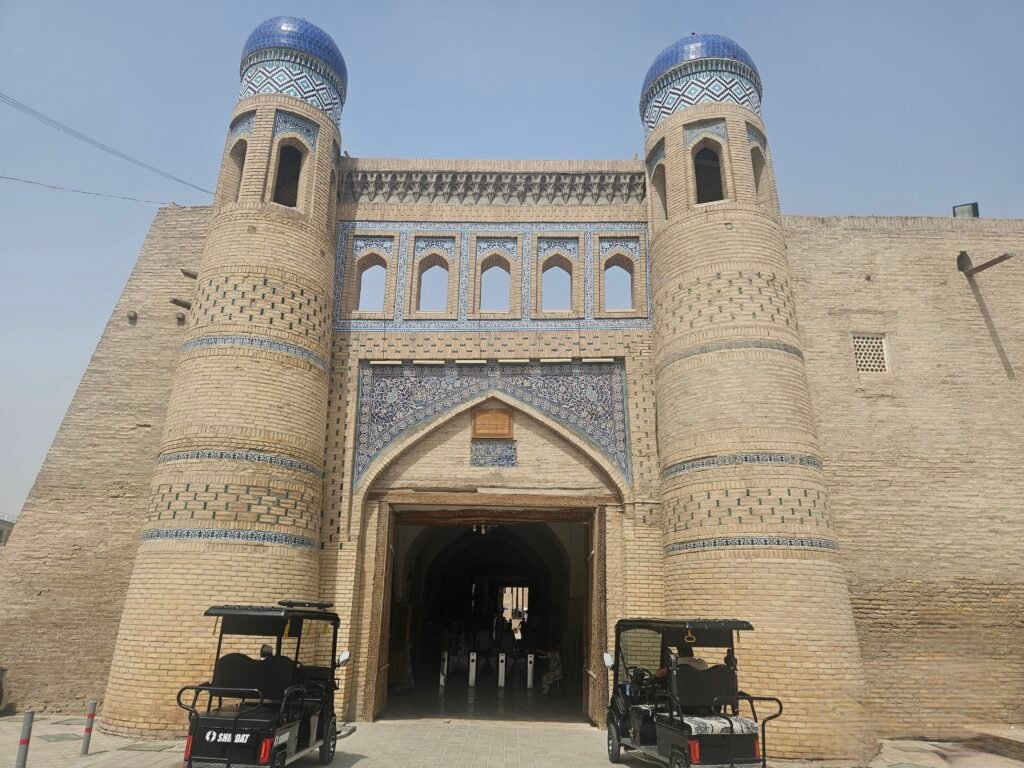
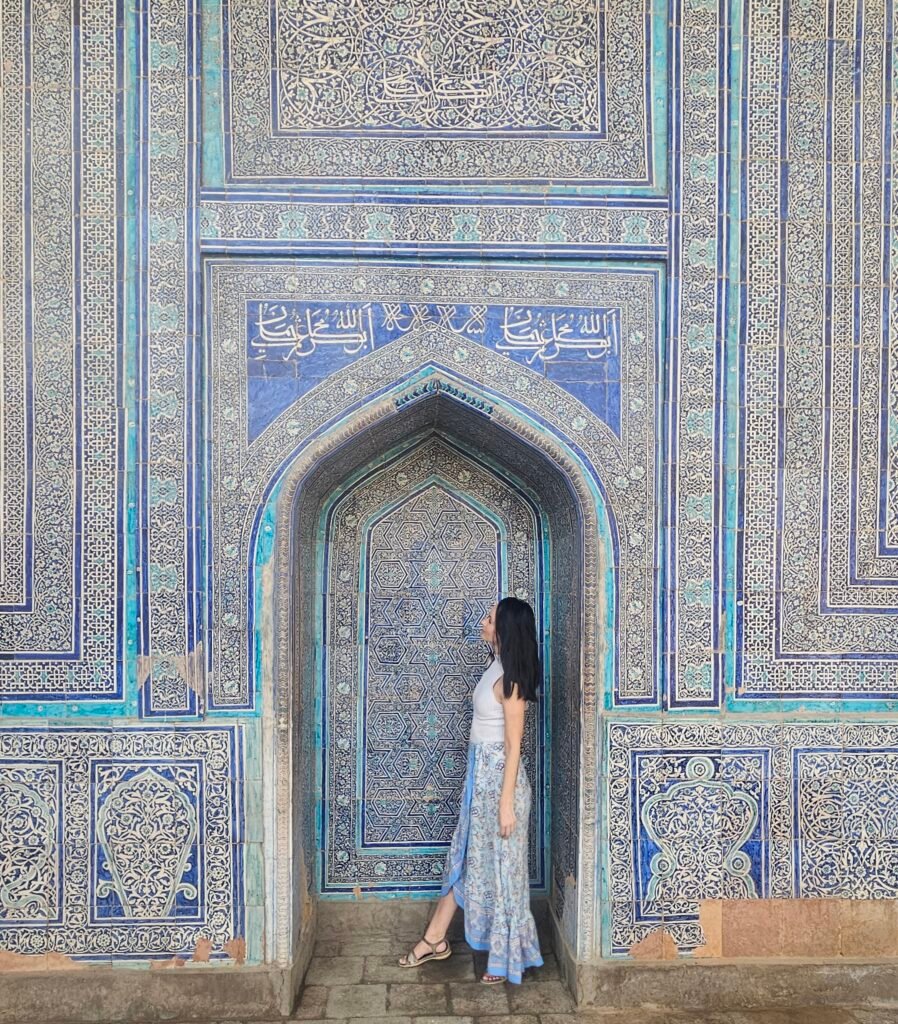
Ichan-Kala, the walled inner city of Khiva, was easily our favourite part of Uzbekistan. There is something almost magical about walking through its enormous brick gates. Inside is a city that feels remarkably removed from the modern world. The history of the site stretches back more than 2,000 years. Ichan-Kala became an important stopping point for Silk Road caravans before they crossed the desert towards Persia.
Inside the walls you’ll find more than 50 historic monuments, including mosques, madrasas, mausoleums, palaces, caravanserais and markets. They’re all packed into a relatively small area. The result is that you can spend hours simply wandering through the narrow streets. There’s another beautiful turquoise-tiled building or towering minaret around every corner.
For us, it had a real 1001 Nights feeling. The sandy-coloured walls, blue tiles, domes and minarets rising above the old city made it feel almost like a film set. It could have been an old Arabian fairy tale. Of course, this is a real city with a very complicated history. But there were moments when it genuinely felt like stepping back into another time.
Recommended age: All ages.
Family tip: Stay inside or right next to Ichan-Kala if you can. Being able to walk out of your accommodation straight into the old city makes exploring with kids much easier. The atmosphere in the early morning and evening is particularly special.
Kalta Minor
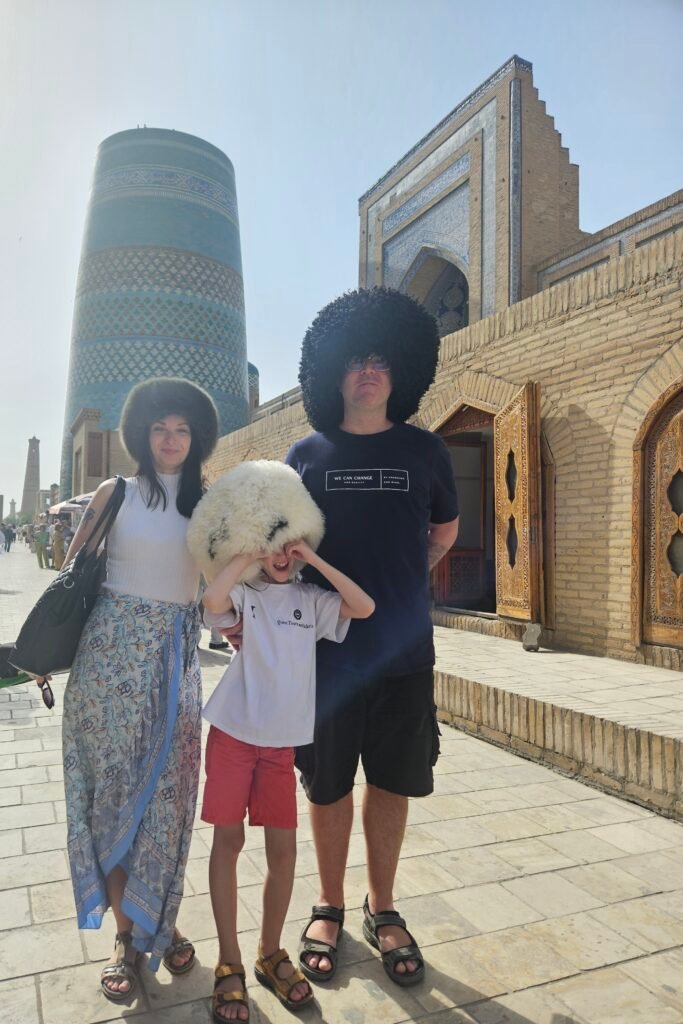
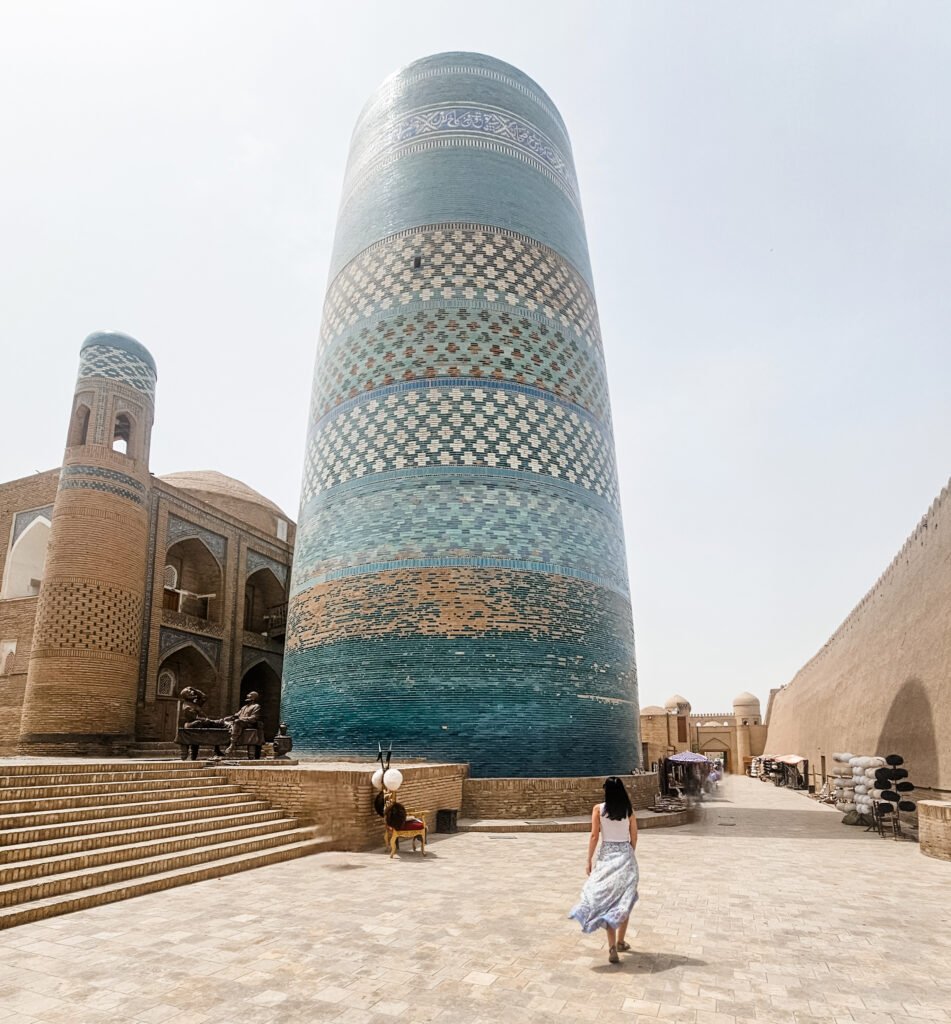
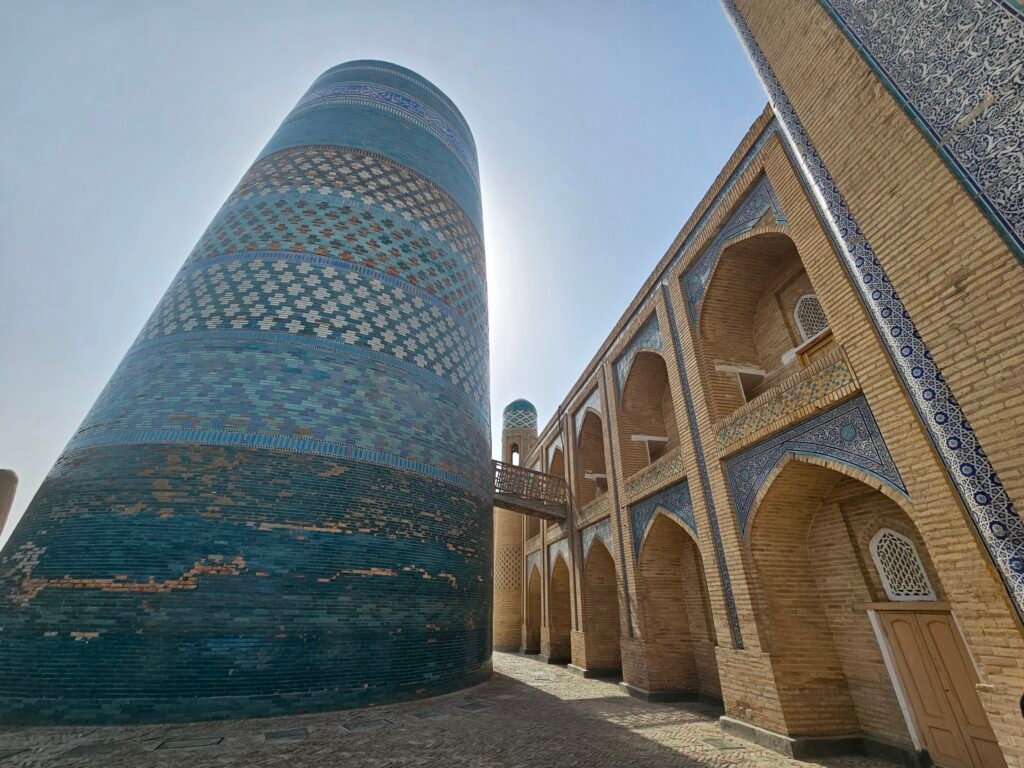
Kalta Minor, meaning “Short Minaret”, is probably the most recognisable landmark in Khiva. It stands just inside the western entrance to Ichan-Kala. Its chunky shape and bright turquoise and blue tiles make it impossible to miss.
But the interesting thing about Kalta Minor is that it was never supposed to be short. Construction began in 1852 on the orders of Muhammad Amin Khan. He wanted to build what would have been one of the tallest minarets in the world, reaching around 80 metres. Instead, work stopped in 1855 when the khan died, leaving the minaret at around 29 metres.
What makes Kalta Minor particularly special is its decoration. It is completely covered in glazed tiles and majolica, with bands of turquoise, blue, green and white patterns. It looks almost unreal against the sandy-coloured buildings of Ichan-Kala.
Recommended age: All ages.
Family tip: Don’t just take a photo and move on. Walk right up to the base and look at the tilework. It is particularly beautiful in the evening when the minaret is illuminated.
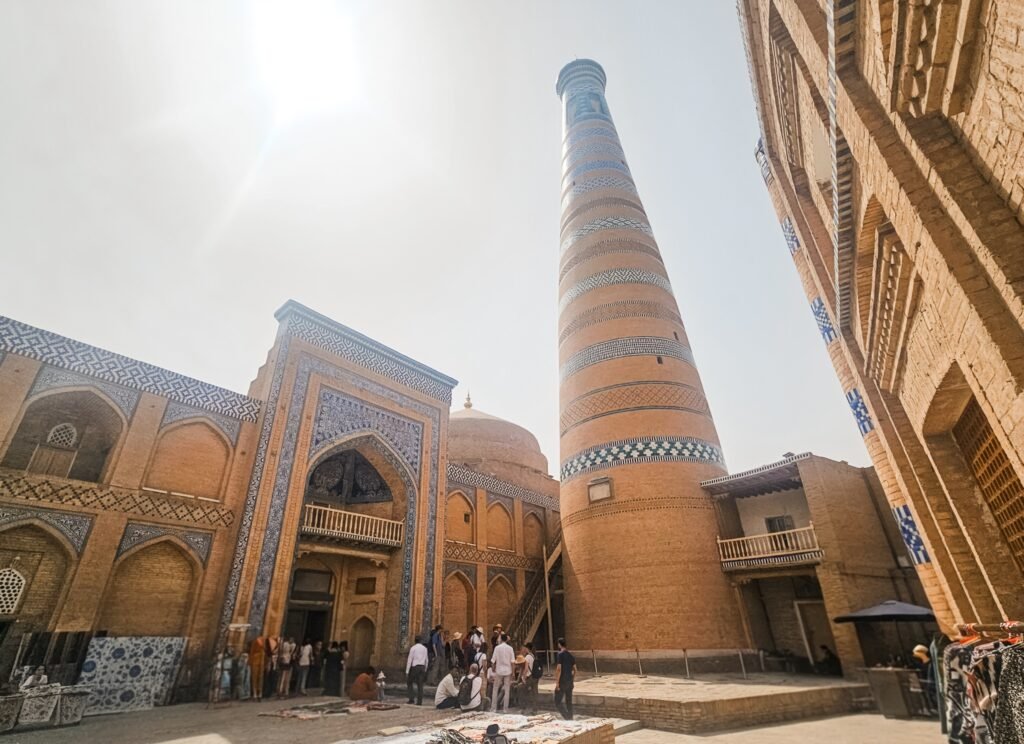
Islam Khoja Minaret
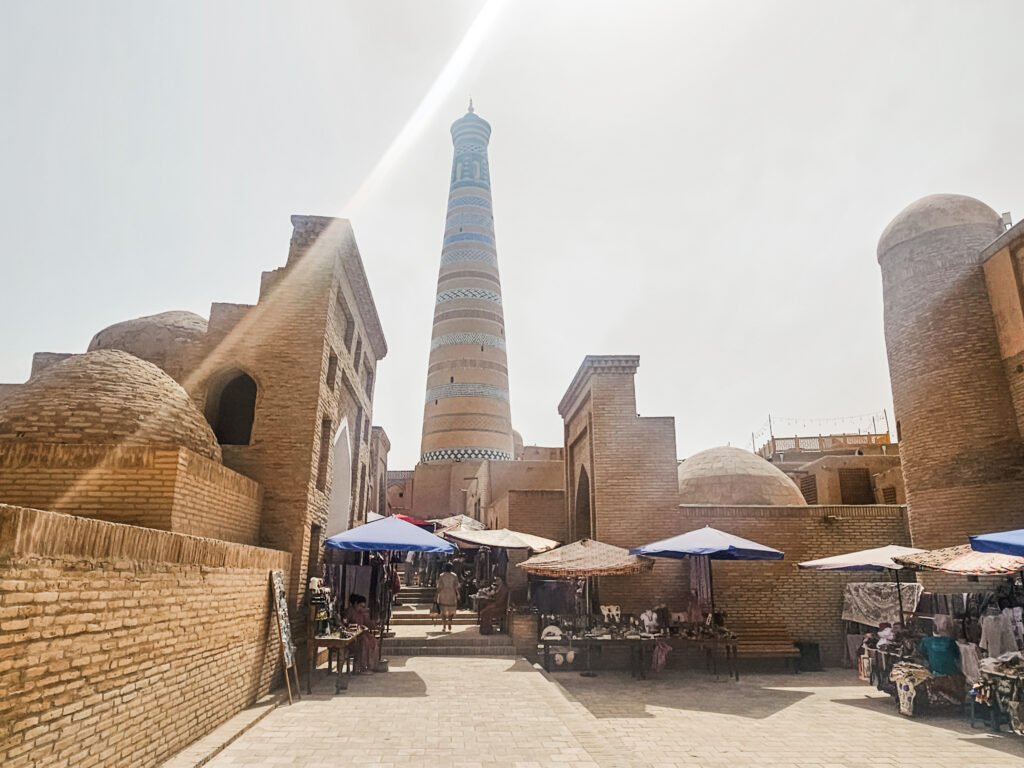
If your child is old enough and comfortable with stairs, the Islam Khoja Minaret is worth considering.
It stands around 56 metres high and has a spiral staircase leading to a viewing platform. The official tourism site notes that there are 175 steps.
The views across the old city are the reward.
This is one of those activities that gives kids something to do rather than simply something to look at.
Recommended age: Older children who are comfortable with heights and lots of stairs.
Family tip
Check current access before you go. Historic monuments can have changing opening arrangements, and climbing a narrow old minaret isn’t something I’d recommend for every child.
Juma Mosque
Juma Mosque, or Friday Mosque, is one of the most unusual buildings in Ichan-Kala. Unlike the grand domed mosques you see elsewhere in Uzbekistan, it has a simple exterior. Inside is a large, low-ceilinged interior supported by 213 carved wooden columns. The mosque was first mentioned in the 10th century, although the current building dates largely from a reconstruction in 1788.
The columns are what make it special. They come from different periods, with some dating back as far as the 10th century. Each one has its own carvings and details. Walking between them feels almost like being in a forest of wooden pillars. It was fascinating to think about how many centuries of history are represented in one room.
Recommended age: All ages.
Family tip: Take your time looking at the individual columns. They’re all slightly different, and it’s a fun one for kids to see how many details they can spot.
Slight detour: Turkmenistan and Darvaza
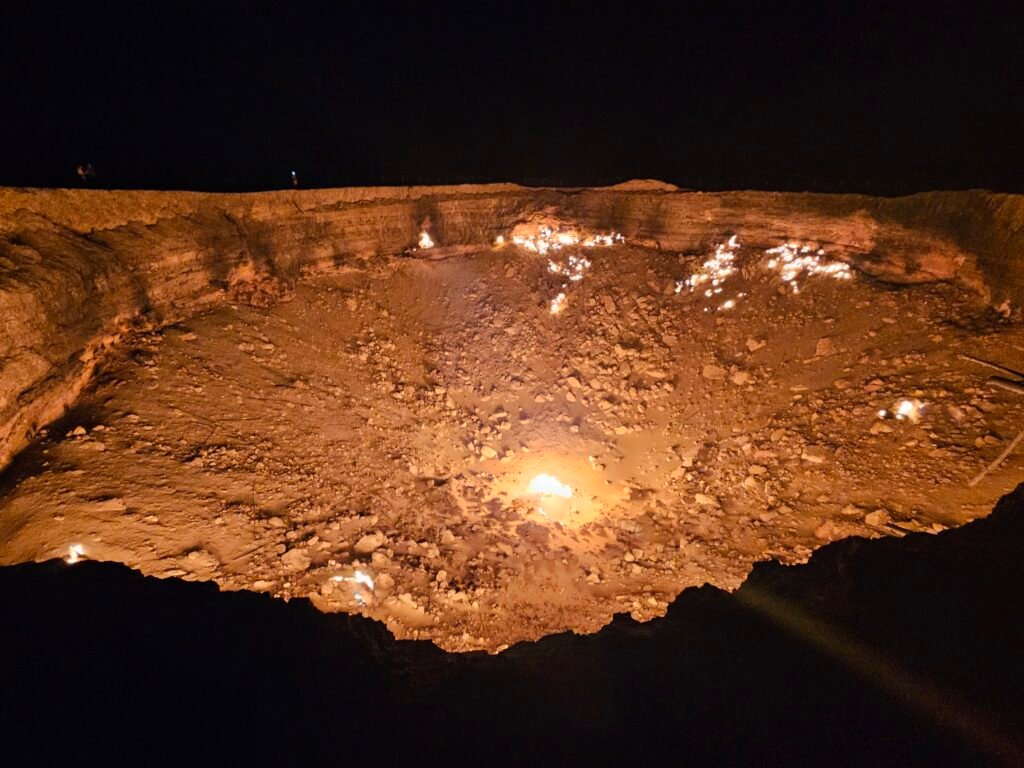
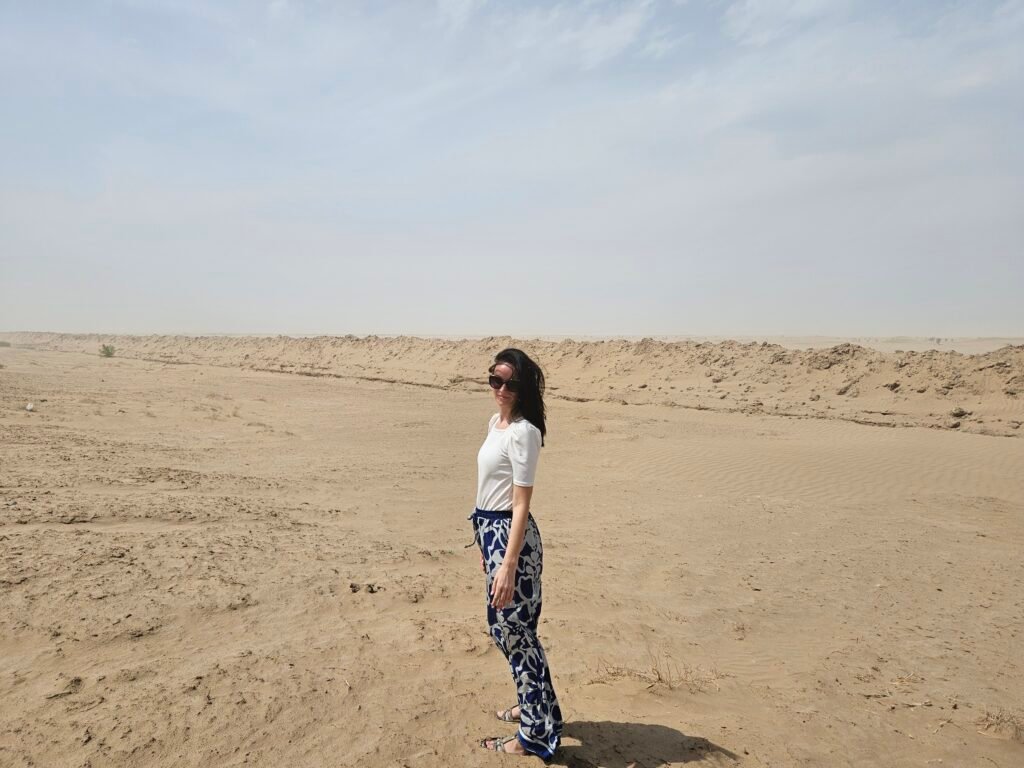
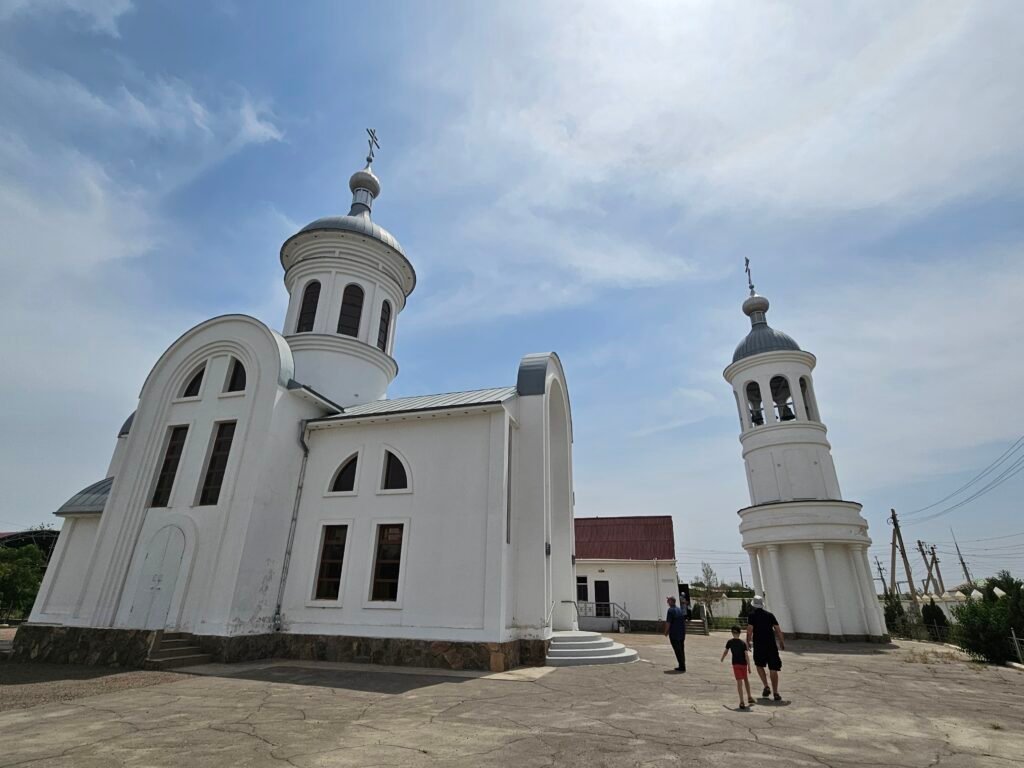
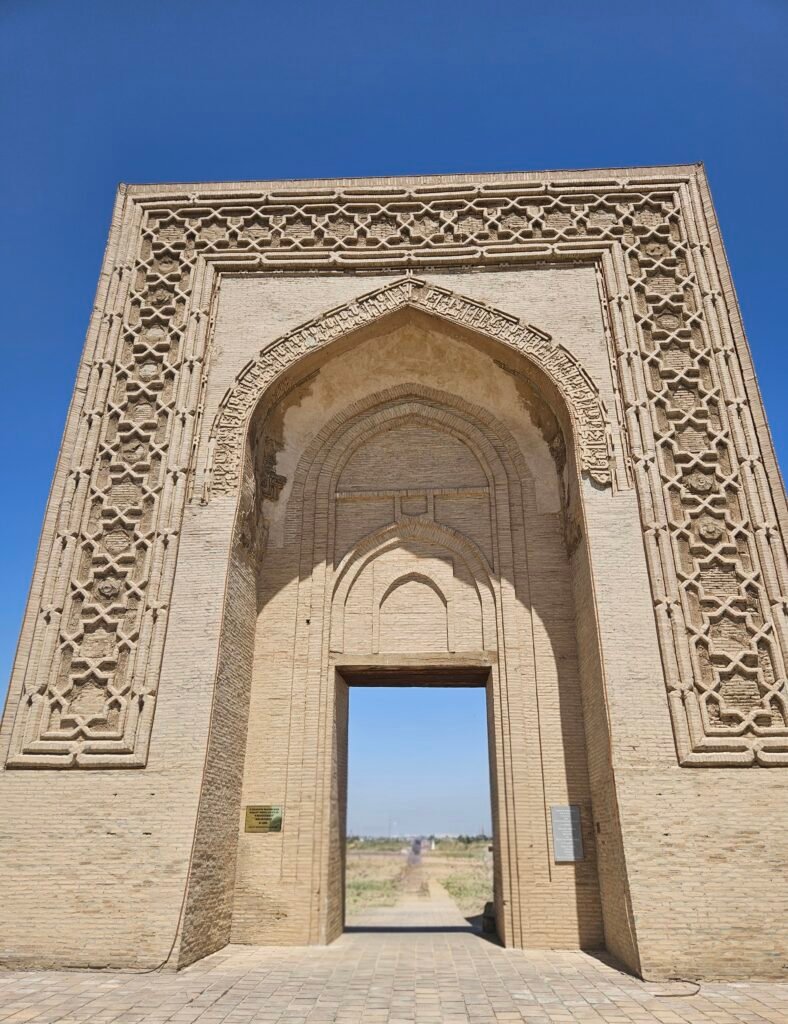
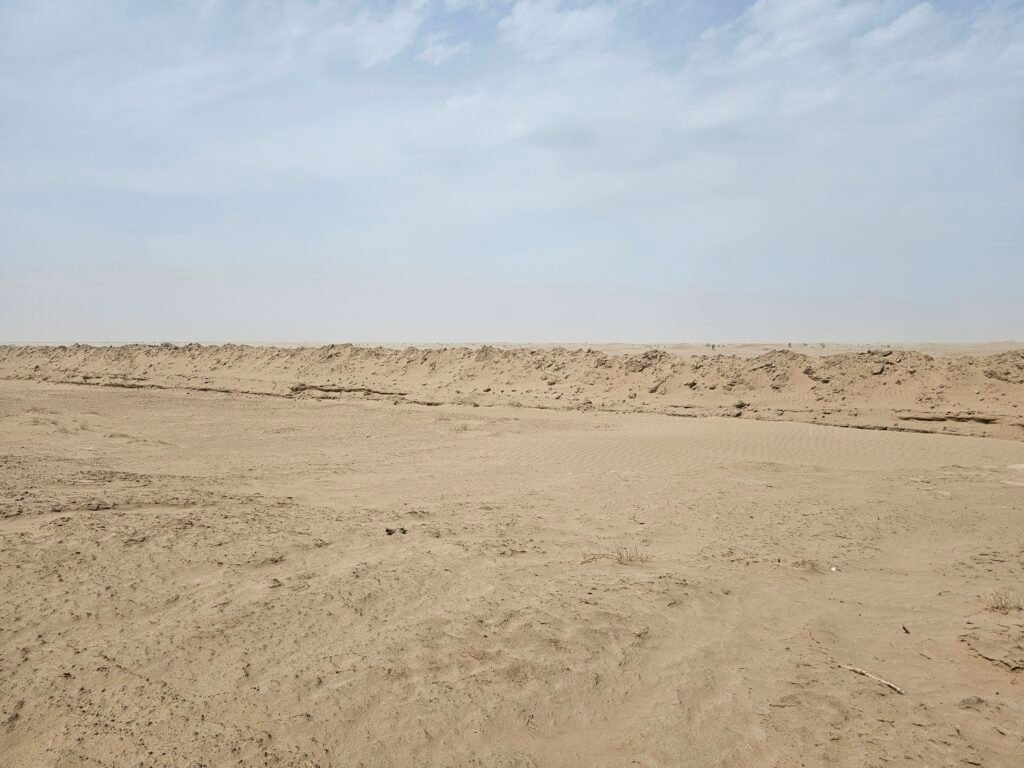
From Khiva, we crossed the border into Turkmenistan and headed into the Karakum Desert towards the Darvaza Gas Crater, also known as the “Door to Hell”. The journey was definitely part of the adventure. The road was incredibly rough and bumpy, and at times our driver actually left the road and drove across the desert because the sand was easier than the road itself. After the long border crossing and all the paperwork, it was a relief to finally arrive at the crater. Standing there at night, looking down into a huge burning crater in the middle of the desert, was an unforgettable experience, and definitely worth the effort.
See the full article on our experience of overlanding from Uzbekistan to Turkmenistan.
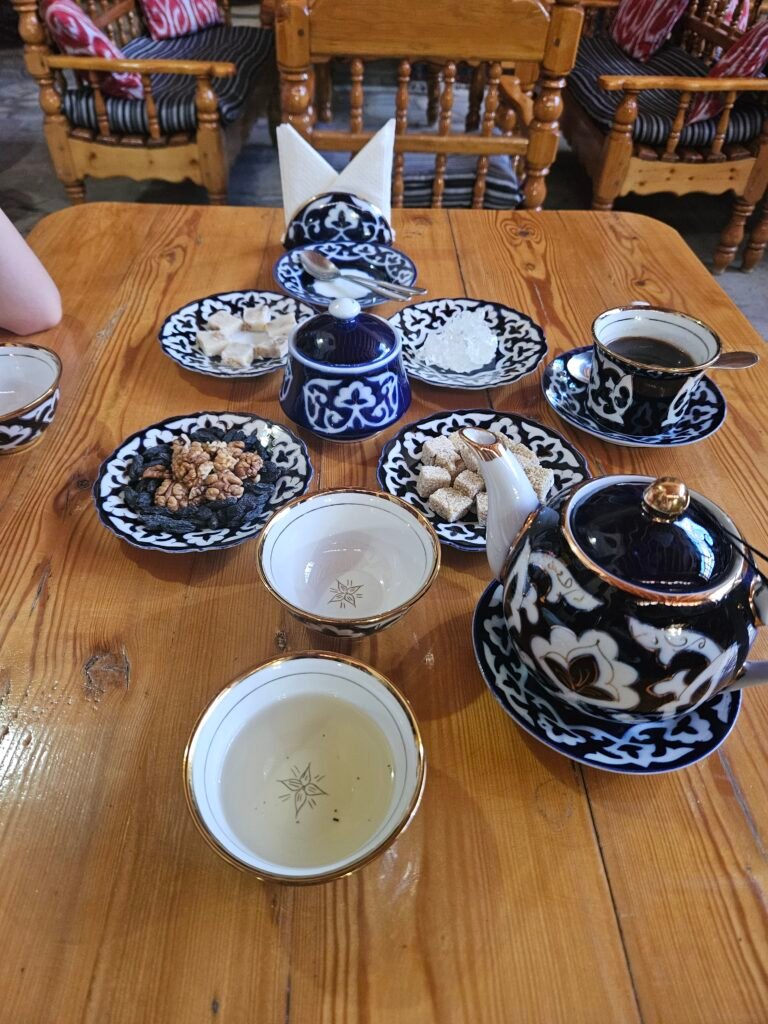
What to eat in Uzbekistan with kids
Food was one of the easiest parts of travelling through Uzbekistan with a child.
There is plenty of familiar food, but also lots of things to try if your children are adventurous.
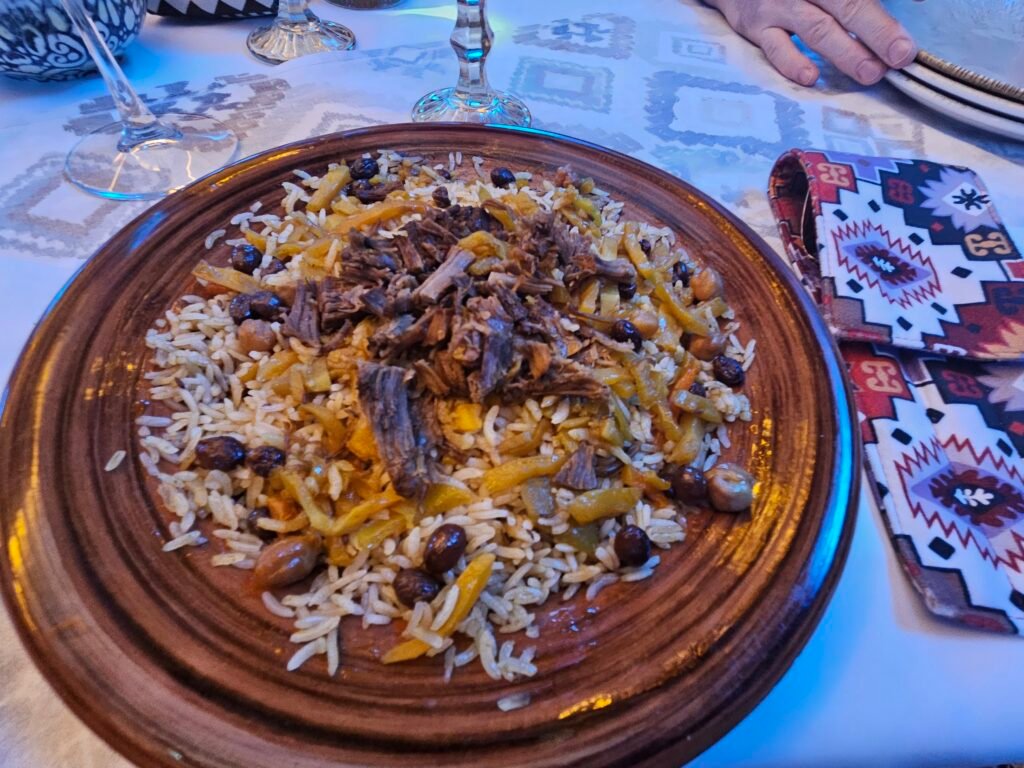
Plov
You can’t really visit Uzbekistan without encountering plov.
It’s a rice dish usually cooked with meat, carrots, onions and spices.
It’s filling, relatively straightforward and generally a good option for children who aren’t keen on very spicy food.
Samsa
Samsa are pastry parcels filled with meat, onions or other fillings.
Think of them as a Central Asian cousin of a meat pie.
They make excellent travel food.
Uzbek bread
The round Uzbek breads are everywhere, and they are particularly associated with Samarkand.
Even if your child is suspicious of most unfamiliar food, bread is usually a safe starting point.
Shashlik
Shashlik is grilled meat cooked on skewers.
Again, this is one of those dishes that tends to work well for kids. There isn’t anything particularly complicated about it.
Lagman
Lagman is a noodle dish served with meat and vegetables.
It’s another useful option if you have a child who will happily eat noodles. It works even if they aren’t ready to embrace everything else on the menu.
How much did 10 days in Uzbekistan cost us?
Our 10-day Uzbekistan and Turkmenistan trip cost US$6,770 for our family of three. This was the Deluxe option. It included higher-rated hotels, private transfers, local guides and entrance fees. It also covered the Tashkent to Samarkand high-speed train, our flight from Nukus back to Tashkent, and our overnight camp at Darvaza.
There were some additional costs on top of this. These included Turkmenistan visa and border fees, the COVID test, lunches and dinners, tips, travel insurance and our international flights.
It wasn’t the cheapest way to travel through Uzbekistan. But we deliberately chose the Deluxe option because comfort was important to us, particularly as we were travelling with our eight-year-old. After long days of sightseeing and some fairly lengthy journeys, comfortable hotels and private transport made the trip much easier.
You could definitely do this trip for less. Choose simpler accommodation, use trains and public transport where possible, and organise some of the sightseeing independently. If you’re travelling on a tighter budget, Uzbekistan gives you plenty of options to bring the overall cost down.
Where to stay in Uzbekistan with kids
We opted for the Deluxe version of the tour, so accommodation was one area where we deliberately prioritised comfort. After long days of sightseeing and some lengthy journeys, it was nice knowing we had a comfortable hotel to come back to.
Tashkent: Hyatt Regency
We stayed at the Hyatt Regency Tashkent, a comfortable, modern five-star hotel. We didn’t actually explore Tashkent on this trip, since we were only using the city as our starting point. But it was a good place to begin and end our journey.
Samarkand: Mövenpick Samarkand
In Samarkand, we stayed at the Mövenpick Samarkand. It was another comfortable, higher-end option and a good base for exploring the city.
Bukhara: Shahristan Plaza Hotel
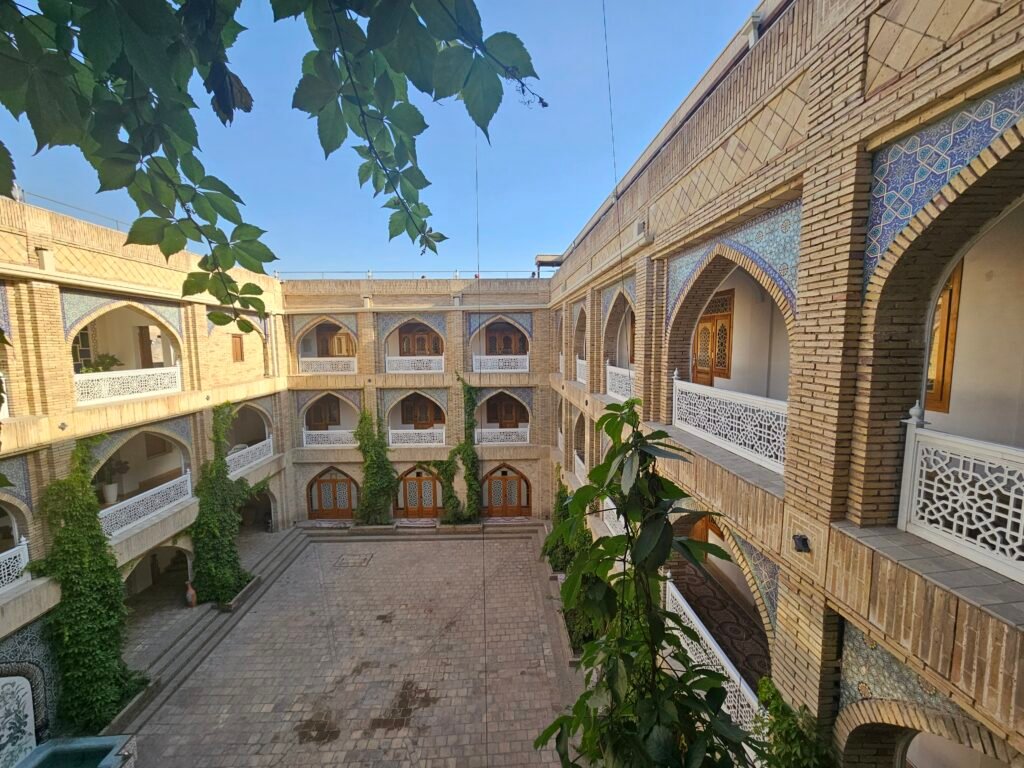
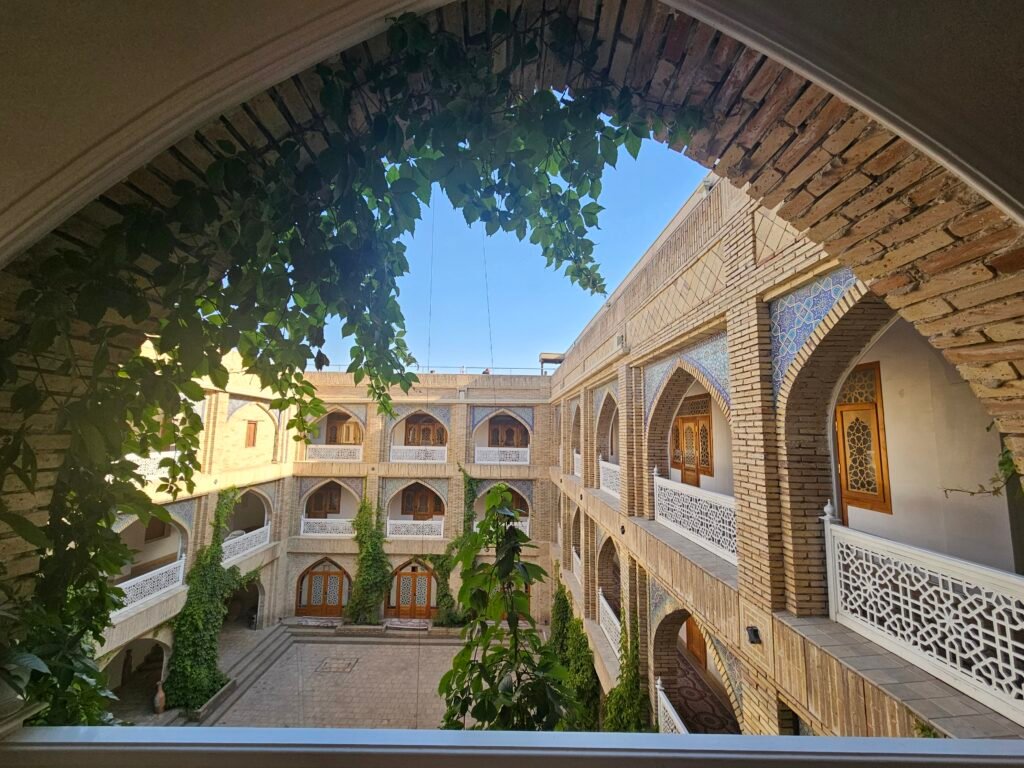
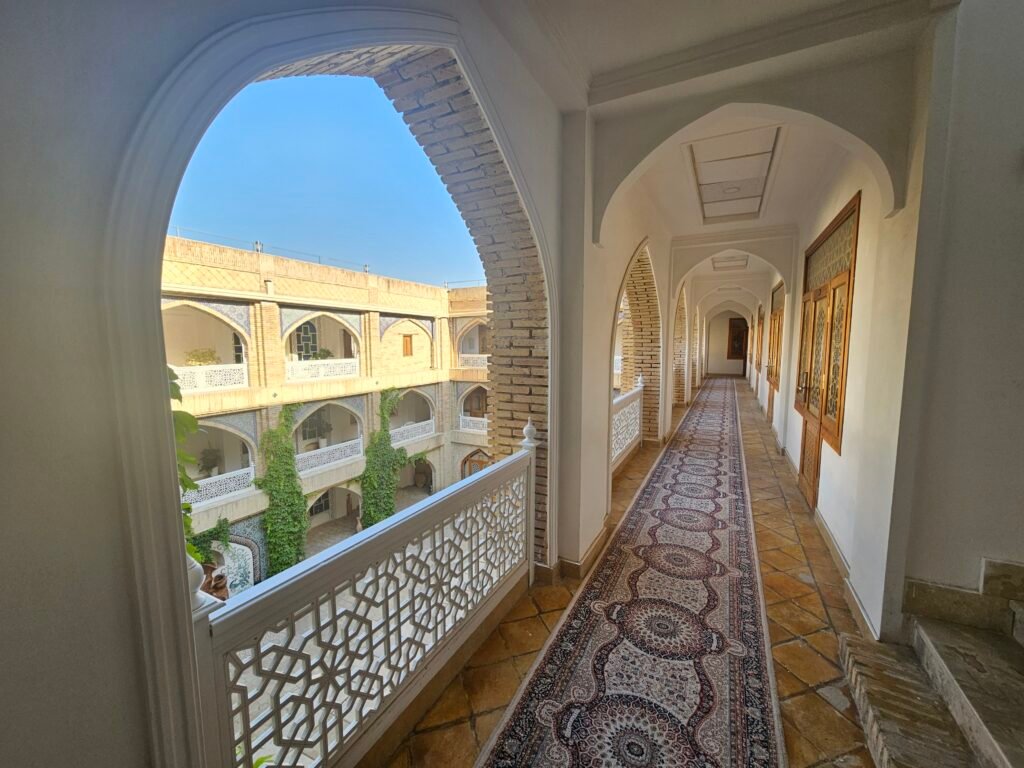
In Bukhara, we stayed at the Shahristan Plaza Hotel. It had a more traditional feel than the modern hotels in Tashkent and Samarkand. Its location also made it convenient for exploring the historic centre.
Khiva: Farovon
Our hotel in Khiva was the Farovon Khiva Hotel, a comfortable modern hotel just outside the old city. Khiva was our favourite stop on the trip. The hotel gave us a comfortable place to relax after exploring Ichan-Kala.
Getting around Uzbekistan with kids
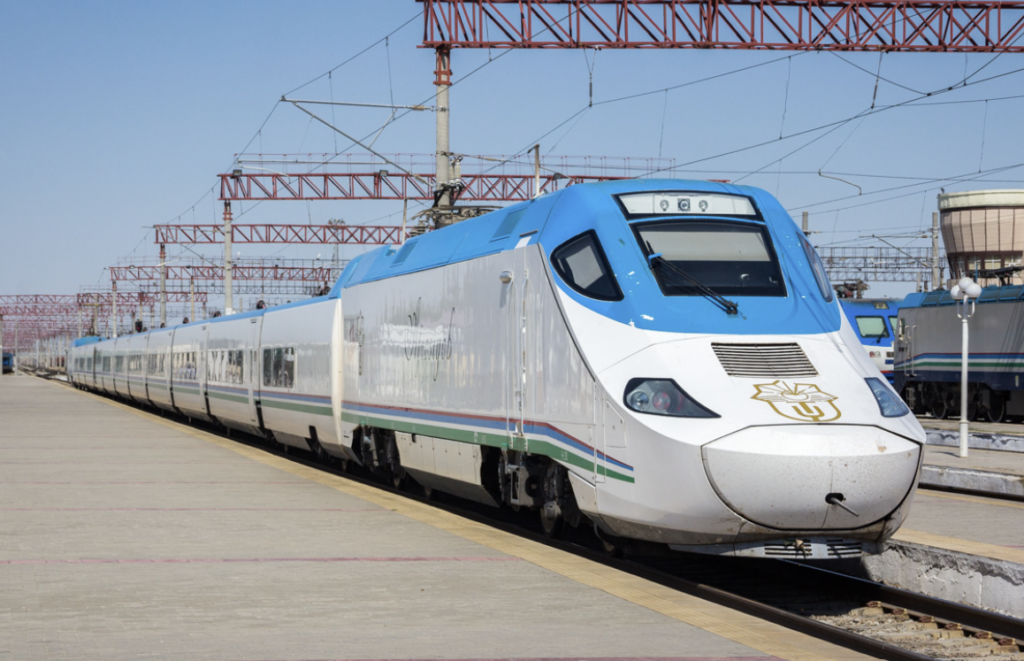
Uzbekistan is relatively easy to travel around, with high-speed trains connecting the main cities. We used a combination of train, private car and plane, which worked well for us.
Tashkent to Samarkand
We took the Afrosiyob high-speed train, which takes around 2 hours 10 minutes. It’s comfortable, air-conditioned and definitely the option we’d recommend for families. Economy tickets are roughly 311,000 UZS (around US$25), although prices vary.
Samarkand to Bukhara
We travelled by private car, but you can also take the Afrosiyob train, which takes around 1 hour 45 minutes. Economy tickets are roughly 165,000 UZS (around US$13).
Bukhara to Khiva
We drove this route, which takes most of a day, but there is also a direct train taking around 6.5 to 7 hours. For families, a private car gives you more flexibility to stop along the way.
Khiva to Darvaza
We travelled overland from Khiva into Turkmenistan with our tour company. After crossing the border, we continued by 4×4 towards Darvaza. The road was extremely rough, and at times our driver actually drove across the desert because it was easier than the road. Definitely an adventure!
Darvaza to Nukus, then Nukus to Tashkent
After Darvaza, we travelled overland back through Turkmenistan and into Uzbekistan, eventually reaching Nukus. From there, we flew to Tashkent, which took around 1.5 hours. There is also a train between Nukus and Tashkent, but after all the driving we’d done, we were very happy to fly.
Family tip: If you’re travelling independently, book the high-speed trains in advance, particularly during busy periods. For the main Uzbekistan cities, trains are generally the easiest option, while a private car gives you more flexibility for longer journeys.
Practical tips for travelling to Uzbekistan with kids
Don’t try to see everything
The biggest mistake you could make is treating Uzbekistan like a checklist.
Samarkand, Bukhara and Khiva are all historically important, but they also contain a lot of sights.
You don’t need to enter every mosque, madrasa and mausoleum.
Pick the things that genuinely interest your family.
Then leave time to wander.
Plan around the heat
It gets very hot in Uzbekistan in summer. The best time to visit Uzbekistan is generally spring (April to May) and autumn (September to October), when temperatures are much more comfortable for exploring the historic cities on foot.
Summers can be extremely hot, particularly in Bukhara and Khiva, where temperatures can climb well above 35°C. We visited during a period when Bukhara reached around 38°C, and sightseeing in the middle of the day was definitely hard work, especially with a child. Winter is much colder, but can still be a good option if you don’t mind chilly weather and want to avoid the crowds. For a family trip, we’d choose April-May or September-October, when you can comfortably spend more time outdoors exploring.
For exactly what we pack for hot, dusty destinations like this one, see the family travel gear we actually use.
Dress respectfully
Uzbekistan is a predominantly Muslim country, and you’ll be visiting many religious sites.
You don’t need to dress like you’re going to a formal event. But shoulders and knees should be covered when appropriate, particularly when visiting religious sites.
The Uzbekistan tourism site specifically advises visitors to cover exposed shoulders, backs and legs at religious attractions.
A lightweight scarf is useful to keep in your day bag.
Language
English isn’t very widely spoken outside the main tourist areas. Knowing a little Russian can be really useful, since it’s still spoken by many people. Even better, learn a few basic words and phrases in Uzbek — locals really appreciate the effort, and it can make interactions much easier.
Do you need a visa for Uzbekistan?
One of the great things about travelling to Uzbekistan is that many nationalities don’t need a visa at all. Citizens of 90 countries can currently visit Uzbekistan visa-free for up to 30 days. That list includes Ireland, the UK, the US, Canada, Australia and most EU countries.
If your country isn’t on the visa-free list, Uzbekistan also has an e-visa system for citizens of a number of countries. That makes the process relatively straightforward. Always check the current requirements before travelling, as visa rules can change.
Is Uzbekistan safe for families?
We felt comfortable travelling through the country with our son.
As with anywhere, normal travel precautions apply. Keep an eye on belongings in busy places, use reputable transport and follow local rules.
The biggest practical challenges for us weren’t safety issues. They were heat, long journeys and the sheer amount of sightseeing.
Turkmenistan is a different matter.
The country has considerably more restrictions on movement, internet access and travel than Uzbekistan, and border crossings can be unpredictable. Current government travel advice also notes that internet and mobile phone networks are restricted in Turkmenistan.
For that part of the trip, I would absolutely use an experienced tour company and follow their instructions.
Uzbekistan as a worldschooling destination
This is one of the reasons we loved Uzbekistan.
You don’t need to manufacture educational opportunities.
They’re everywhere.
History
The Silk Road, Alexander the Great, Amir Timur and the Timurid Empire are all directly connected to the places you’re visiting. So are Islamic scholarship and the medieval Central Asian cities themselves.
Geography
You can follow the route on a map:
Tashkent → Samarkand → Bukhara → Khiva → Turkmenistan
Then look at the deserts, trade routes and geography that influenced how these cities developed.
Science
The Ulugh Beg Observatory gives you a natural introduction to medieval astronomy.
Art
Tilework, architecture, miniature art, textiles and traditional crafts all provide endless material for art projects.
Technology
Konigil’s traditional paper-making process is a brilliant example of historical technology.
Economics
The old trading domes in Bukhara make it easy to talk about trade along the Silk Road. It’s a natural way to explore how goods travelled between regions.
Culture
Markets, food, music, dancing and traditional crafts all provide learning opportunities that don’t require a worksheet.
That’s pretty much our favourite kind of school.
Want more ideas for turning everyday travel into learning? Our ultimate guide to worldschooling resources and our roundup of the worldschooling apps and websites we actually use go into a lot more detail.
Final thoughts: Is Uzbekistan good for kids?
Absolutely. Uzbekistan is a fantastic destination to explore with kids, particularly if your family enjoys history, culture and food. It’s also great if you love discovering places that feel very different from home.
For worldschooling families, it’s especially good. The Silk Road, ancient civilisations, Islamic architecture and traditional crafts all come to life as you travel. So do astronomy, geography and local culture, making the whole trip one big hands-on learning experience.
We loved travelling through Uzbekistan with our son, and we’d happily go back. And if you have the time, don’t skip Khiva. It was our favourite.
More family travel guides
If you’re planning your next family trip, here are a few more of our guides:
- Colombia with Kids: Our 1-Week Family Itinerary
- Namibia with Kids: Our 2-Month Family Travel Guide
- Things to Do in Da Nang With Kids
- Antigua Guatemala with Kids
- Prague with Kids: Fun Things to Do as a Family
- Chișinău with Kids: The Best Things to Do in Moldova
- Best Things to Do in Kraków with Kids
- 21 Best Things to Do in Copenhagen with Kids
One Comment