


2 Weeks in Central America With Kids: Honduras, El Salvador and Nicaragua Itinerary
We had already been living in Antigua, Guatemala, for two months when we decided to pack up and set off on a different kind of trip.
Rather than moving somewhere else for another month, we wanted to see more of the region around us. So we left our base in Antigua and spent roughly two weeks travelling through Honduras, El Salvador and Nicaragua with our nine-year-old son.
The evening before the trip started, we drove from Antigua to Guatemala City and stayed there overnight. The next morning we set off for Copán Ruinas in Honduras, continued through El Salvador, flew to Nicaragua and spent six days travelling around the country before flying back to Guatemala.
We booked the whole Honduras, El Salvador and Nicaragua trip as one tour through Mayan Gateway. Mayan Gateway puts together multi-country itineraries and works with local operators in each country, so on the ground our El Salvador days were run by Gringo Tours and our Nicaragua days by NicaUP Travel. We had a private driver taking us between destinations and guides arranged for the sites and activities along the way. That made it possible to cover a lot of ground without organising every border crossing and transfer ourselves.
This is what our 2 weeks in Central America with kids actually looked like: the long drives, border crossings, archaeological sites, volcanoes and cities, plus the places where, with hindsight, we would have liked more time.
Our trip in a nutshell
- Route: Guatemala City → Copán Ruinas, Honduras → El Salvador → Nicaragua → back to Guatemala City
- Length: 11 days plus a night in Guatemala City (1 night in Honduras, 5 days in El Salvador, 6 days in Nicaragua)
- Who: two adults and our 9-year-old son, travelling in February
- Getting around: private driver and guides on a tour booked through Mayan Gateway, plus two flights
- Total cost: about $11,850 for the three of us
- Highlights: the Copán ruins, Café Albania, meeting a former guerrilla in Cinquera, volcano boarding on Cerro Negro and Ometepe
- What we’d change: two nights in Copán and more time on Ometepe
Our Central America Route Map
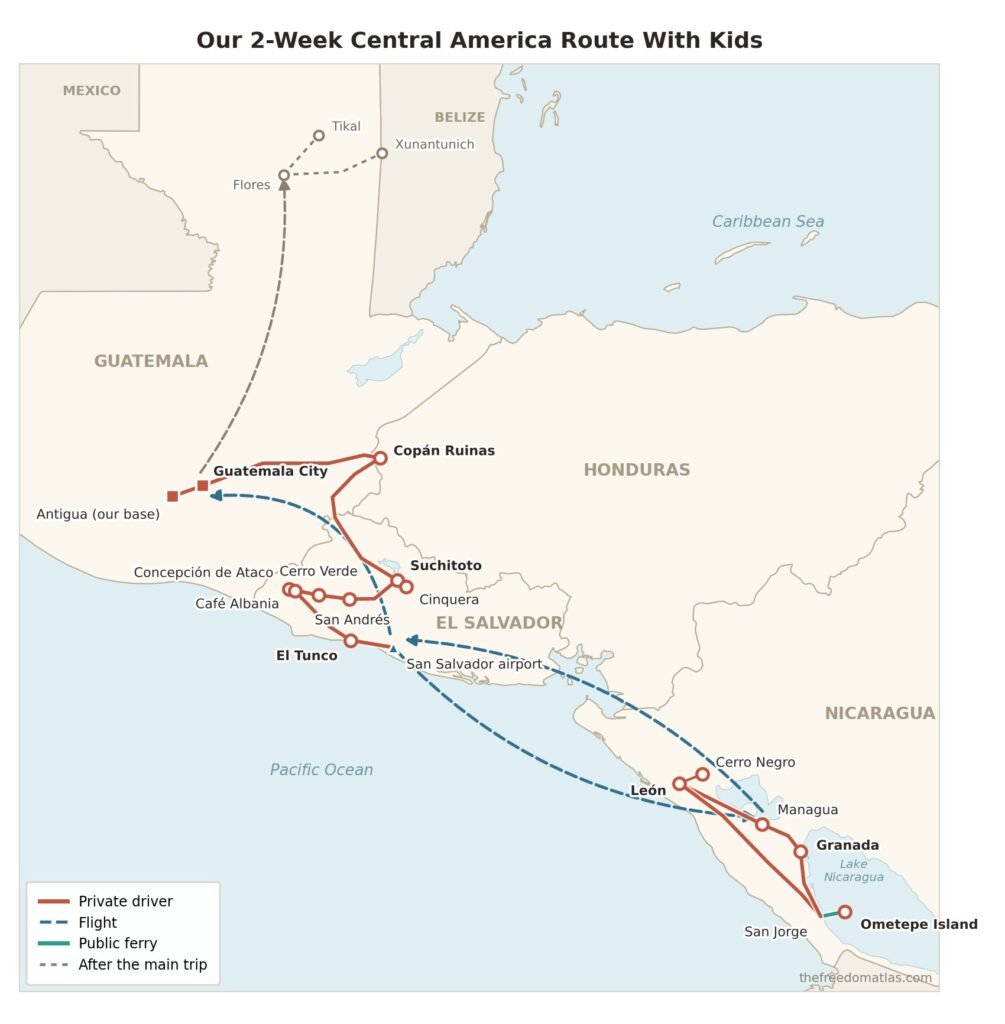
The solid lines show where we travelled by road with our private driver, the dashed blue lines are our flights, and the short green line is the public ferry to Ometepe. The grey dotted lines show the part we did afterwards: Flores, Tikal and Xunantunich in Belize.
Our Route at a Glance
Guatemala City → Copán Ruinas, Honduras → El Salvador → Nicaragua → back to Guatemala
- Guatemala City: 1 night before the trip (Antigua was our base for two months)
- Honduras: 1 night in Copán Ruinas
- El Salvador: 5 days (Suchitoto, Cinquera, San Andrés, Cerro Verde, Concepción de Ataco, Café Albania, El Tunco)
- Nicaragua: 6 days (Managua, León, Cerro Negro, Ometepe, Granada)
Our 2-Week Central America Itinerary, Day by Day
- Night before: Drive from Antigua to Guatemala City and stay overnight.
- Day 1: Guatemala City to Copán Ruinas, Honduras (about 7 hours including the border). Late visit to the Copán archaeological site. Night in Copán Ruinas.
- Day 2: Copán Ruinas to Suchitoto, El Salvador, crossing back through Guatemala (5 to 6 hours). Night in Suchitoto.
- Day 3: Day trip to Cinquera: civil war history and the forest where guerrillas once hid. Night in Suchitoto.
- Day 4: San Andrés archaeological site and Cerro Verde, then on to Concepción de Ataco. Night in Ataco.
- Day 5: Ataco and the Ruta de las Flores, the rainbow slide at Café Albania, then down to the coast. Night in El Tunco.
- Day 6: Drive from El Tunco to San Salvador airport and fly to Managua (about 1 hour). A day in Managua, then drive to León. Night in León.
- Day 7: León and volcano boarding at Cerro Negro. Night in León.
- Day 8: Drive to San Jorge and take the public ferry to Ometepe. Cooking class with the women’s cooperative and a coffee farm visit. Night on Ometepe.
- Day 9: Ferry back to the mainland and drive to Granada. Night in Granada.
- Day 10: Granada and a boat trip around Las Isletas. Night in Granada.
- Day 11: Drive to Managua and fly back to Guatemala City, connecting in San Salvador.
Why We Chose This Route
After two months in Antigua, Guatemala was the obvious starting point for exploring further into the region. See our full Antigua Guatemala guide here.
The route also gave us a lot of variety without huge distances between every stop. We could combine Maya archaeological sites with colonial cities, volcanic landscapes, coffee-growing areas, an island in Lake Nicaragua and the Pacific coast. With one booking covering the whole trip and private transport throughout, we didn’t have to start from scratch every time we crossed a border.
Planning a Central America trip soon? Here is what we recommend:
🏨 Hotels we stayed at:
- Hacienda San Lucas (Copán Ruinas | Boutique hacienda)
- Los Almendros de San Lorenzo (Suchitoto | Colonial boutique hotel)
- Casa Degraciela (Concepción de Ataco | Boutique hotel)
- Boca Olas Resort Villas (El Tunco | Resort with pools)
- Hotel El Convento (León | Restored convent)
- Xalli Beach Hotel Ometepe (Ometepe | Private cottages)
- Hotel Plaza Colón (Granada | On the main square) 👑 Top Pick
🎟️ Booking tours: GetYourGuide
- Copán Ruins Day Tour (From Guatemala City | Full day)
- Ruta de las Flores + Rainbow Slide at Café Albania (El Salvador)
- Hike and Volcano Boarding on Cerro Negro (From León) 🌋 Top Pick
- Las Isletas Boat Tour (Granada)
- Full-Day Trip to Ometepe Island (From Granada)
📱 eSIM: Airalo (one eSIM covered all four countries for us; compare options in our eSIM guide)
🏷️ Airalo discount: New customers get 15% off with code NEWTOAIRALO15 (valid until December 31, 2026)
🩺 Travel insurance: SafetyWing Nomad Insurance
Honduras: Copán Ruinas
Our first stop was Copán Ruinas in Honduras, and getting there was the longest drive of the entire trip.
From Guatemala City, it took us about seven hours to reach Copán, including the border crossing. The border wasn’t difficult, although there was a line. We first queued to leave Guatemala and then went through the process of entering Honduras.
If you’re making this journey with children, be prepared for the whole driving day. We didn’t have time to stop for lunch, so having plenty of water, food and snacks with us was important. Make sure children have something to keep them entertained during the longer stretches of road. You’ll also need cash for border fees (more on that in the visa section below).
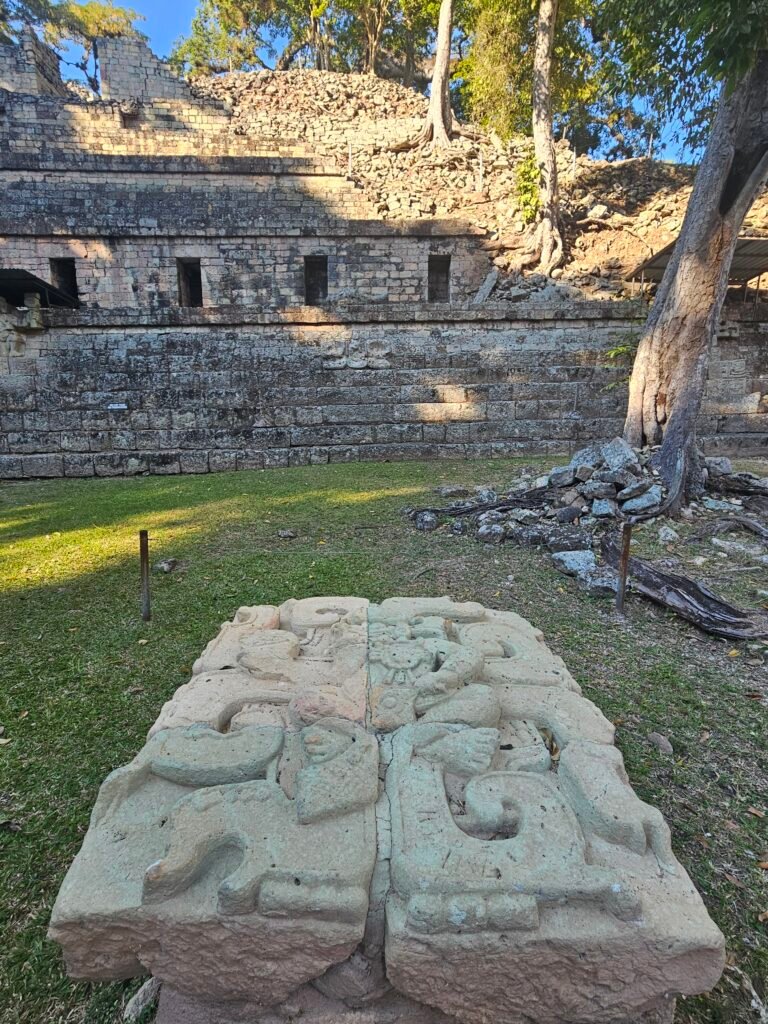
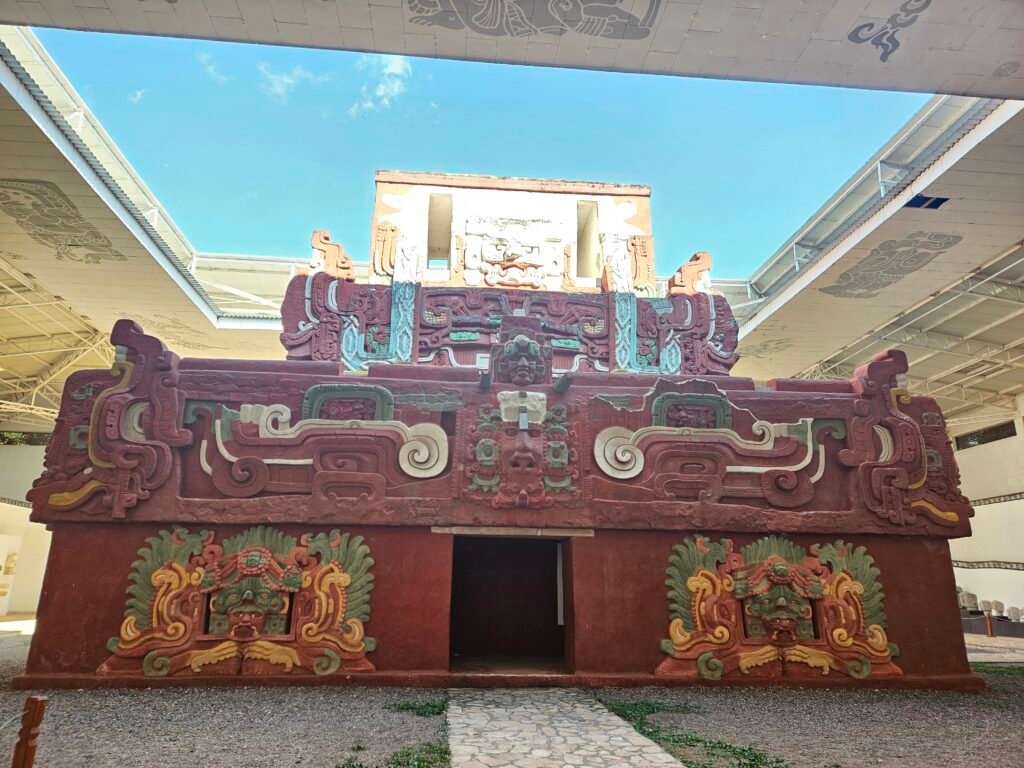
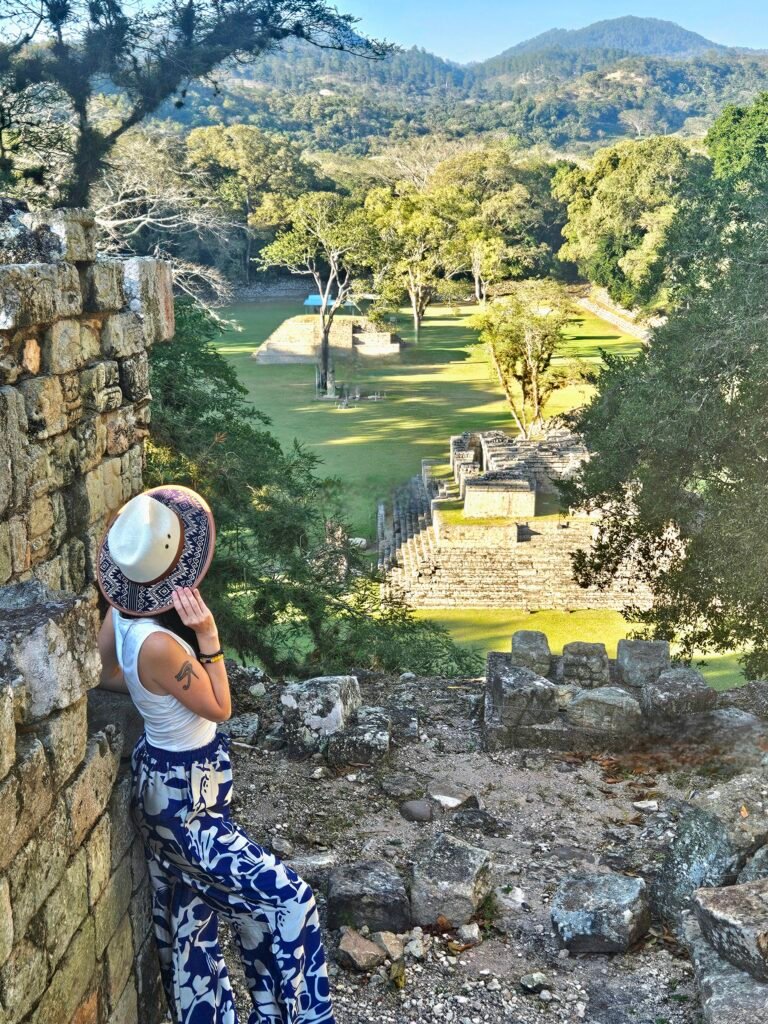
Copán Archaeological Site
After the long drive, we visited the Copán archaeological site with our guide. This was one of the places I was most looking forward to, because Copán is one of the most important Maya sites in Central America and a UNESCO World Heritage Site.
Copán was an important political, civil and religious centre of the Maya world, reaching its height during the Classic Maya period between around AD 300 and 900. The site includes large plazas, temples, terraces, altars, ball courts and the Acropolis, with some of the most impressive Maya sculpture in the region.
What makes Copán particularly interesting is the quality and quantity of its carved stonework. The Great Plaza contains a collection of elaborately carved stelae and altars, while the Acropolis is made up of layers of temples, pyramids and terraces built and rebuilt over generations. UNESCO describes the sculpture at Copán as having reached an exceptionally high level of artistic development.
The site is also much larger than you might expect. The Great Plaza alone covers around three hectares, and the Acropolis rises roughly 30 metres above the surrounding ground, with residential and secondary complexes extending around the main area.
Because of the long journey and late arrival, we had less than two hours at the site. With a site this size, we were conscious of the clock the whole time and couldn’t explore at the pace we’d have liked.
🗺️ For the long drives between the ruins
This route means a lot of time in the car and a lot of history, from the Maya ruins at Copán to the volcanoes of Nicaragua. We made our Central America World Explorer activity book to give kids something to work on along the way: a mystery map, Maya numbers and writing, wildlife and volcano challenges, an Ometepe activity, a treasure hunt and a travel journal for recording what they discover.
It’s 35 pages for ages 8 to 12, with an adventure for each of the seven Central American countries, stamps for their explorer passport and a certificate at the end. It comes as an instant PDF download in A4 and US Letter, so you can print it before you leave.
See the Central America World Explorer activity book on Etsy
Where We Stayed in Copán Ruinas: Hacienda San Lucas
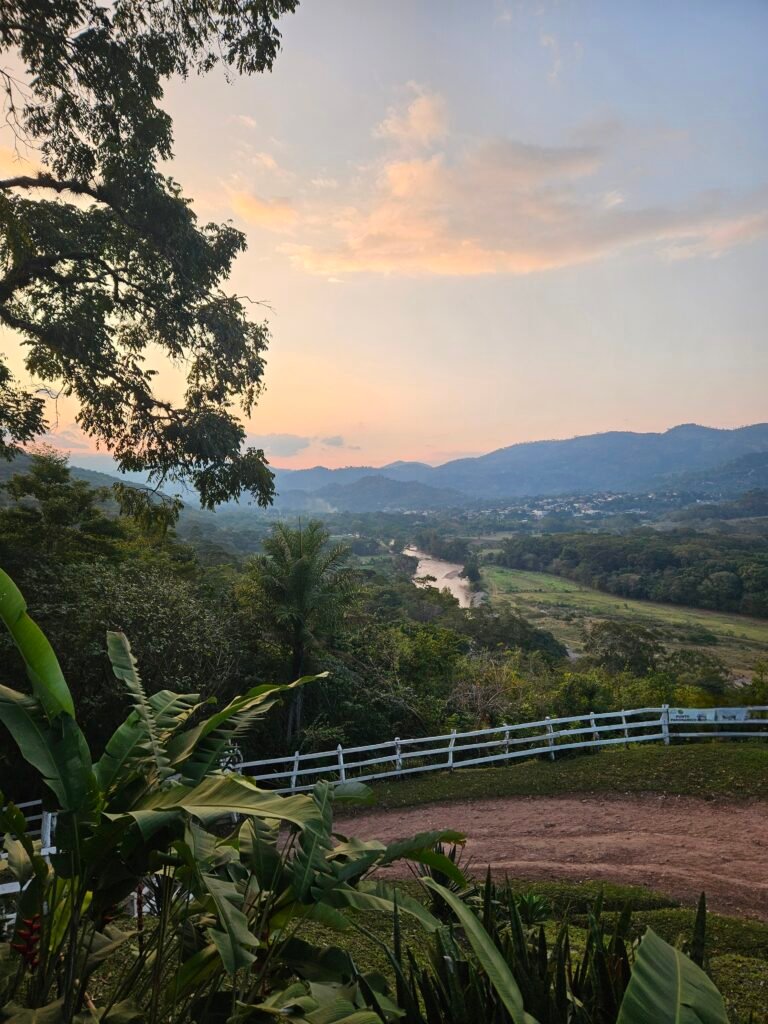
We stayed one night at Hacienda San Lucas. The property is beautiful, and in the early morning you can hear and see macaws flying around, which makes for a memorable start to the day. It gets chilly in the evening, so bring a layer or two.
The food was fantastic, but if you’re travelling with a picky eater, know that the restaurant focuses on local Honduran food, with no real non-Honduran alternatives. There’s also nowhere to walk to for food, so you’re committed to eating at the hotel. For one night this wasn’t a problem, but keep it in mind if your child is likely to turn their nose up at local food.
El Salvador: Five Days and a Lot of Variety
From Honduras, we continued into El Salvador. This was the second-longest driving day of the trip, about five to six hours. We crossed back into Guatemala and then entered El Salvador, and both crossings were fairly quick.
In El Salvador, our tour was run on the ground by Gringo Tours, a local operator based in Suchitoto, who handled our guides, hotels and transport around the country.
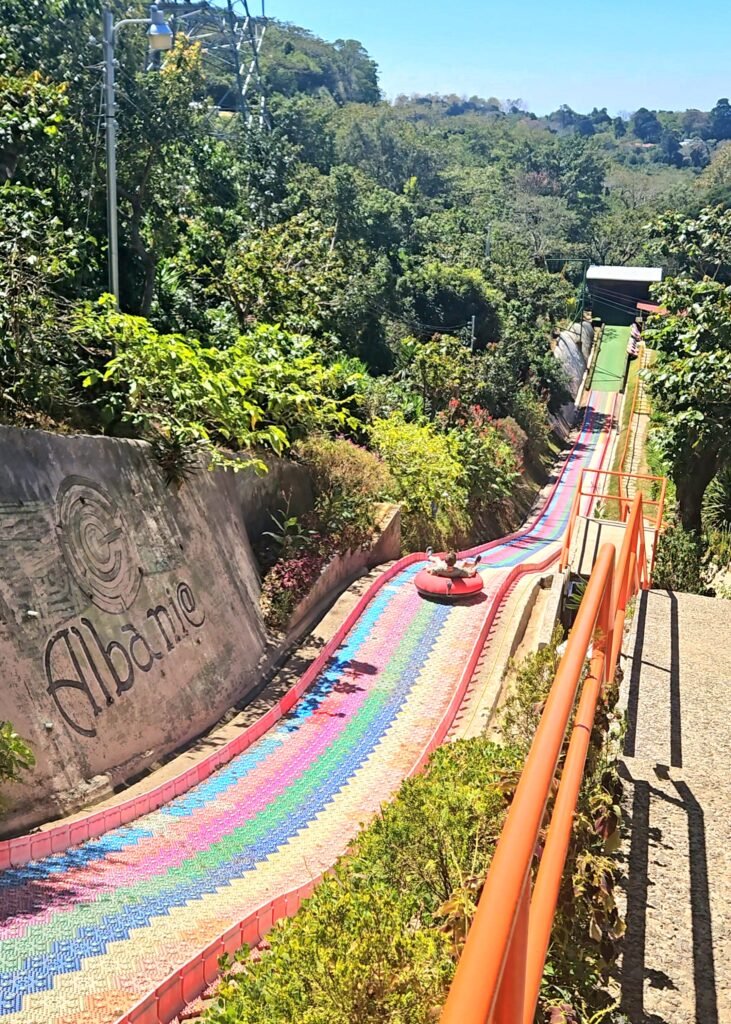
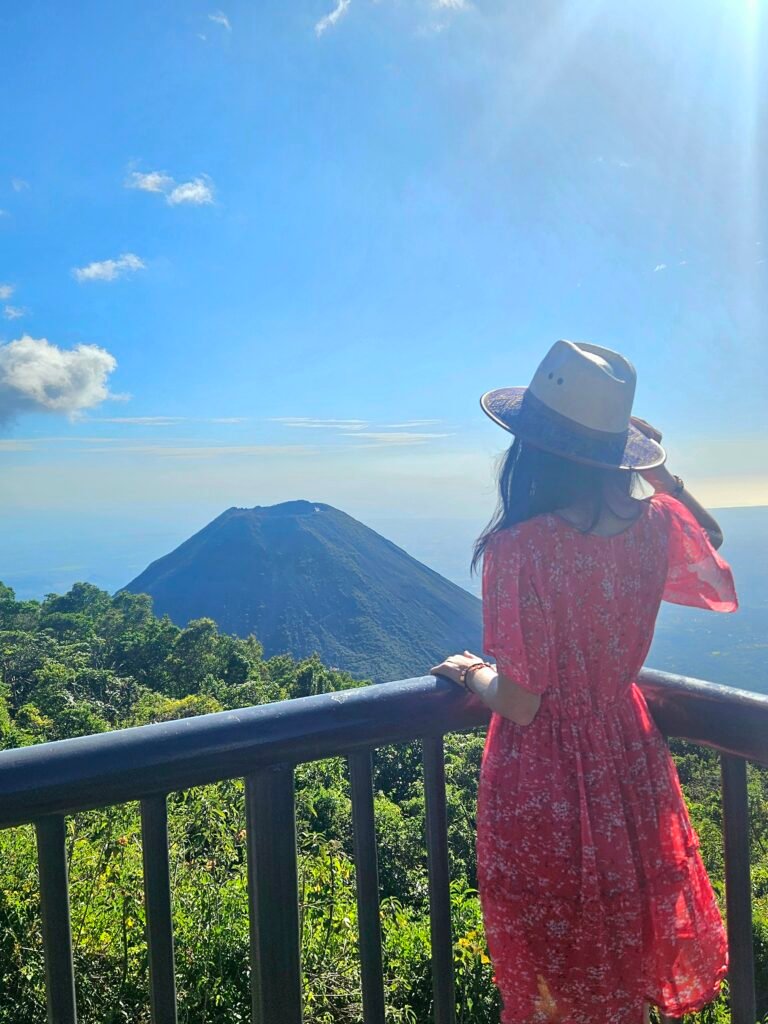
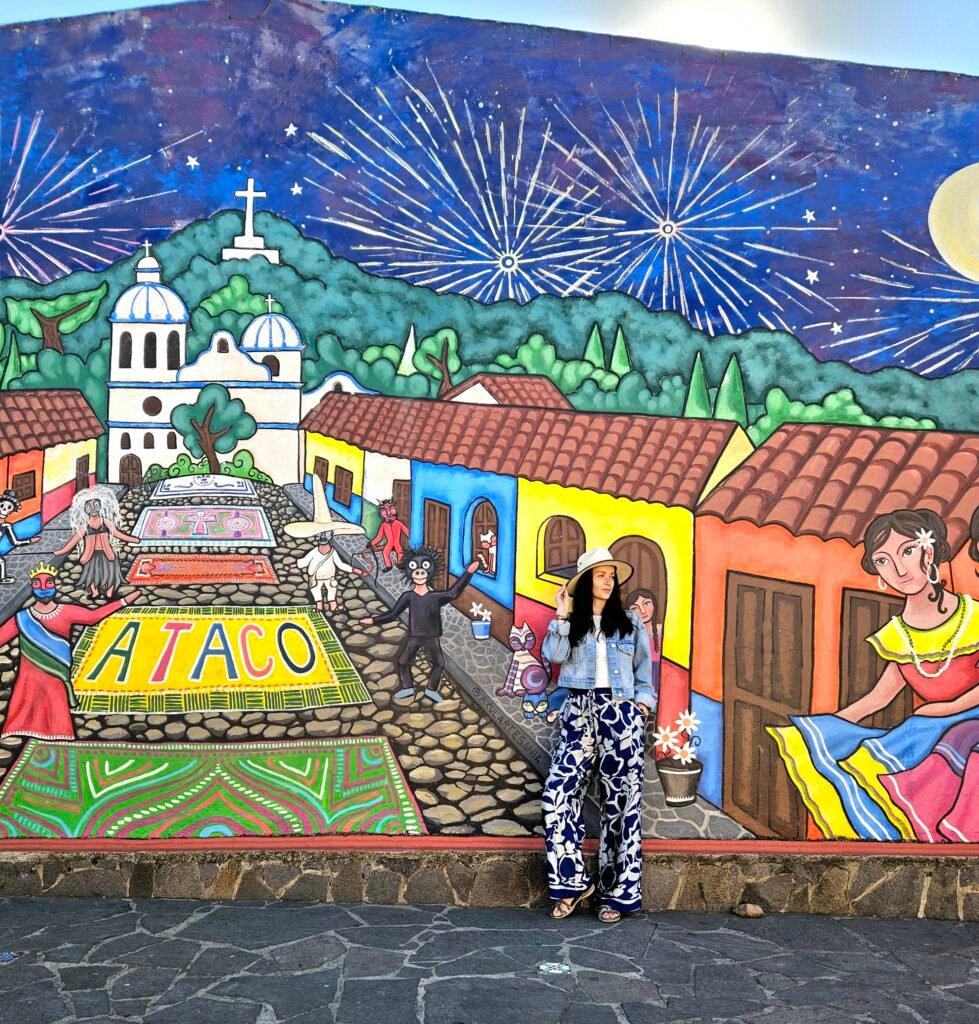
What I liked about this part of the route was how much the landscape and subject matter changed from one stop to the next. We started in Suchitoto, a historic colonial town, and spent a day around Cinquera, where the focus shifted to forest and El Salvador’s civil war history. Then came the pre-Columbian site at San Andrés, the volcanic landscape of Cerro Verde, the coffee country of the Ruta de las Flores and Café Albania, before we finished on the Pacific coast at El Tunco.
It was a busy few days, but it showed us how varied El Salvador is within a relatively small area.
See our detailed article on 5 days in El Salvador with kids for the individual stops, what we did at each one and how the itinerary worked day by day.
Where We Stayed in El Salvador
- Suchitoto: Los Almendros de San Lorenzo, a boutique hotel in a restored colonial building with a garden pool
- Concepción de Ataco: Casa Degraciela, a boutique hotel in a restored 1850 building in the centre of town
- El Tunco: Boca Olas Resort Villas, with two pools and about a 10-minute walk to the beach
Nicaragua: Six Days From Managua to Granada
After one night in El Tunco, we drove to San Salvador airport and flew directly to Managua with Avianca. The flight was only about one hour, a much easier transition than our long overland journey into Honduras.
We liked San Salvador’s airport. It had plenty of facilities and was a comfortable place to travel through. Managua airport was much more basic, with only a couple of restaurants and not much to do.
We spent a day in Managua without staying overnight, followed by two nights in León, one night on Ometepe and two nights in Granada. In Nicaragua, the tour was run on the ground by NicaUP Travel. We again had a private driver and guide, travelling by road between destinations, and took the public ferry to Ometepe.
For the full day-by-day story, including what everything cost and how to do the same route by bus, read our guide to 6 days in Nicaragua with kids.
León
León has a very different feel from the places we’d visited earlier, with its colonial architecture, historic churches and colourful streets. We had time to explore the city itself, including the cathedral, and it was a good introduction to Nicaragua before heading out to Cerro Negro.

Where We Stayed in León: Hotel El Convento
We spent two nights at Hotel El Convento, which is housed in a beautifully restored former convent and has a lot of character because of it. The building itself is lovely, with the original convent setting giving the hotel a much more interesting feel than a standard city hotel. The location is also unbeatable for exploring León, with the main sights and streets of the historic centre right on your doorstep. And the breakfast was genuinely excellent, which made it a particularly enjoyable place to start the day.
Cerro Negro: Volcano Boarding
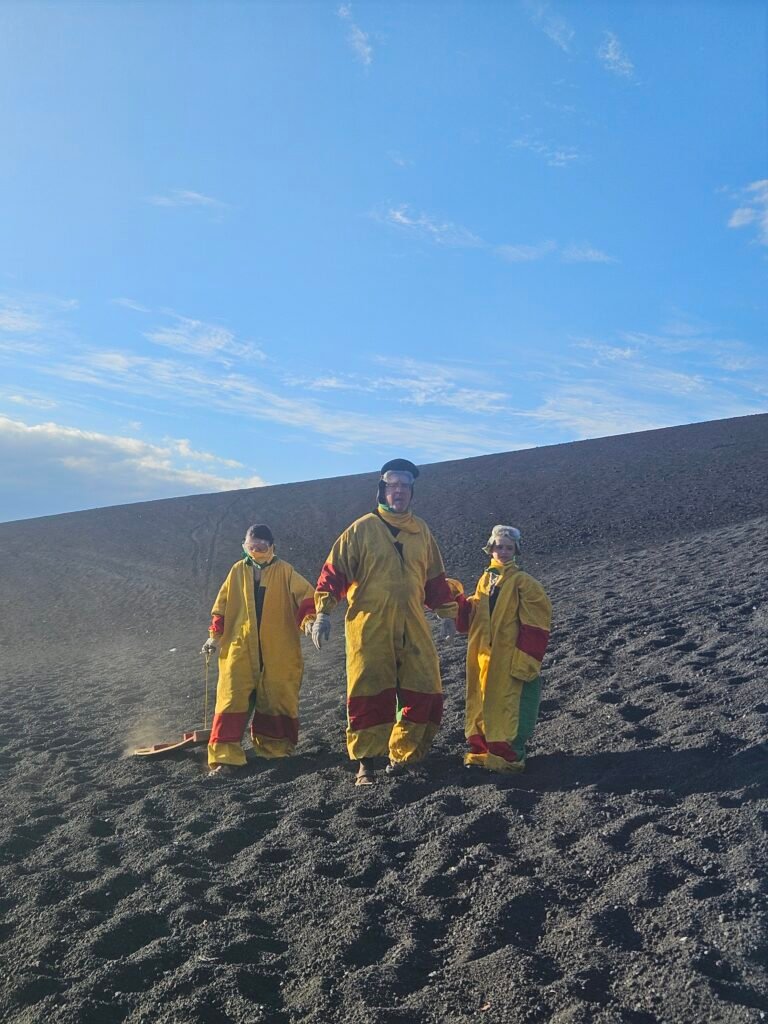
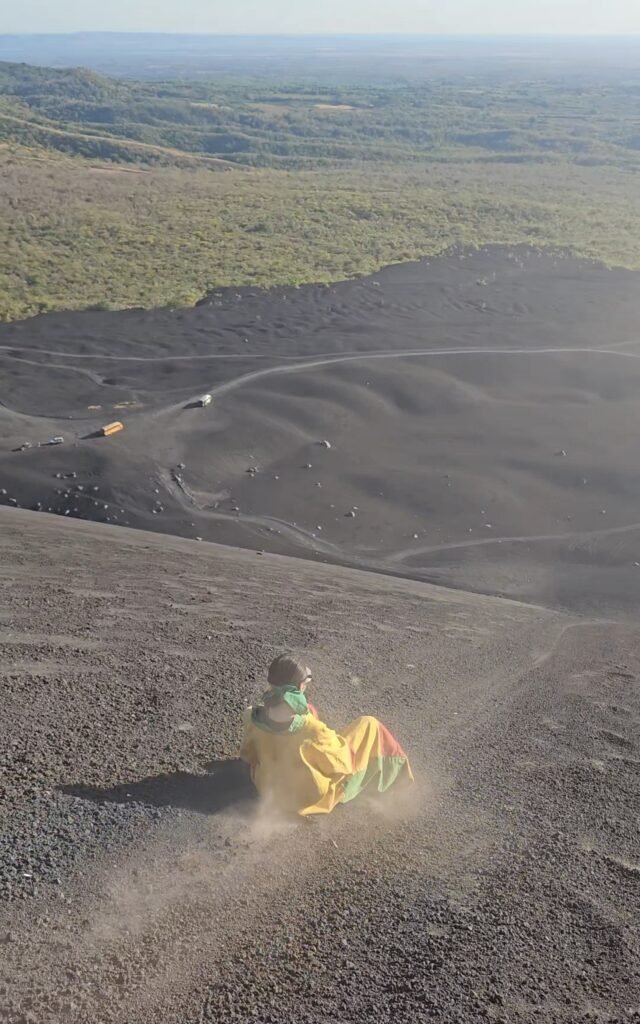
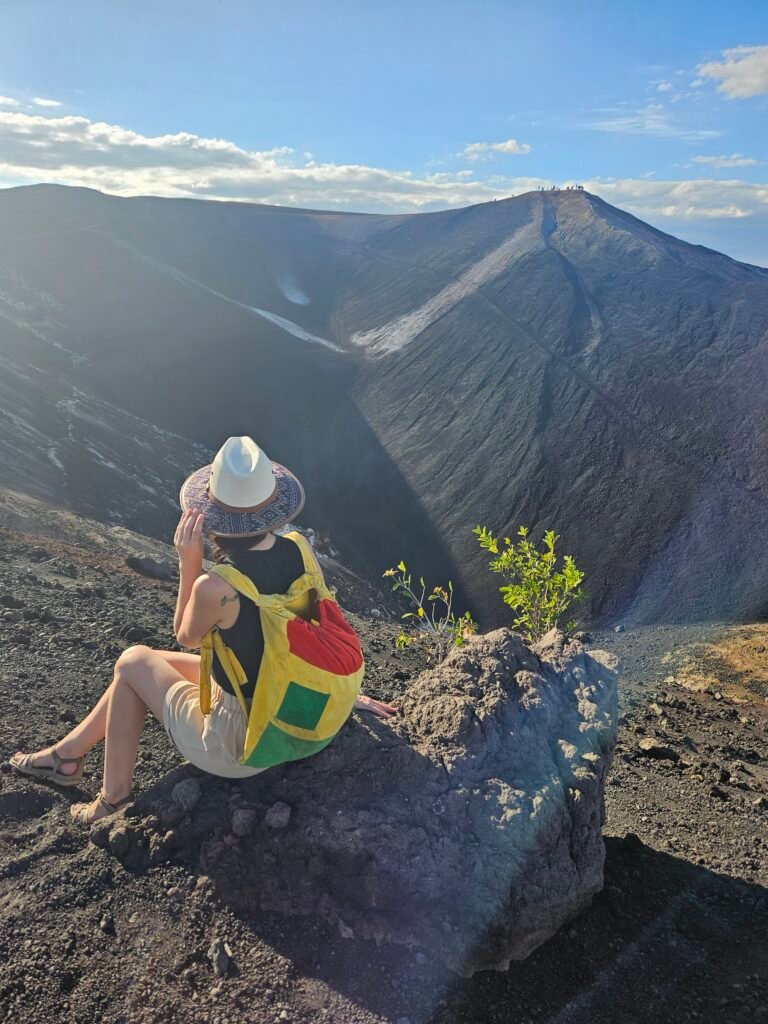
From León, we went to Cerro Negro for one of the most thrilling experiences of the trip: sliding down the side of a volcano.
Cerro Negro is a young, black volcanic cone, and its slopes are covered in loose volcanic gravel. The idea of volcano boarding is simple: you climb up carrying your board, then sit on it and slide back down. Standing at the top and looking down makes it feel considerably more thrilling than that description suggests.
Our son decided it was a little too scary for him and opted out, which was completely fine. Our guide ended up carrying him all the way down the volcano instead, while we went ahead with the boarding. It turned into a funny family memory rather than one of those situations where everyone has to do exactly the same thing.
After so many archaeological sites and historic towns, the black volcanic landscape, the climb and the sheer novelty of sliding down a volcano made Cerro Negro one of the standout experiences of our time in Nicaragua.

Ometepe
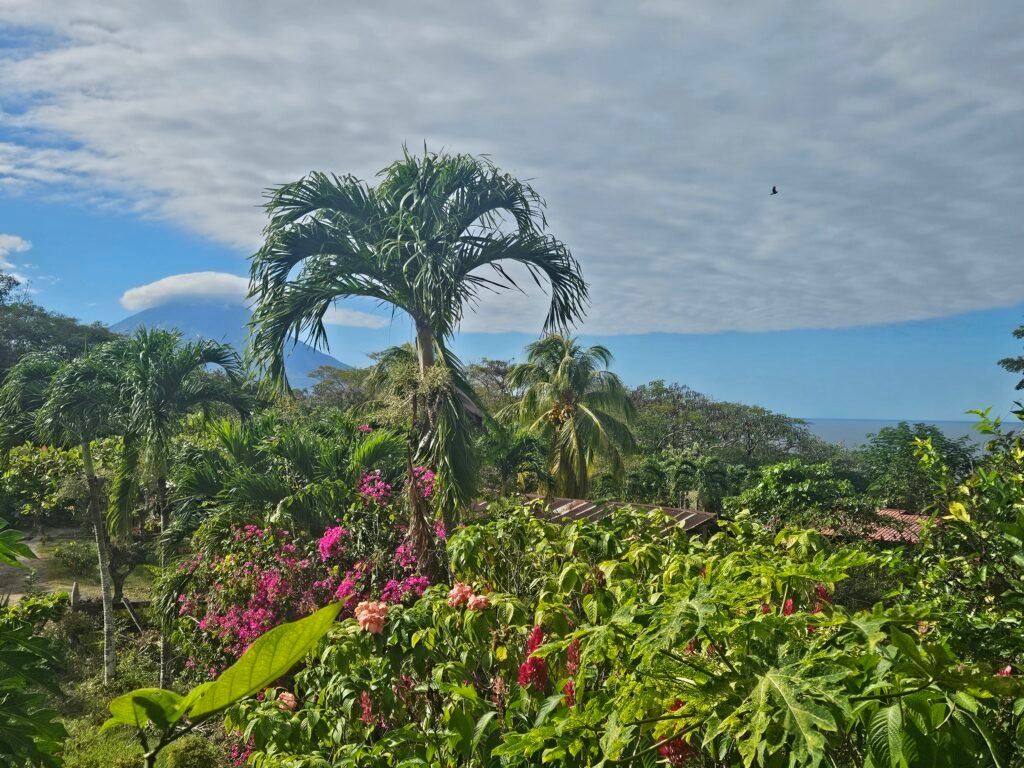
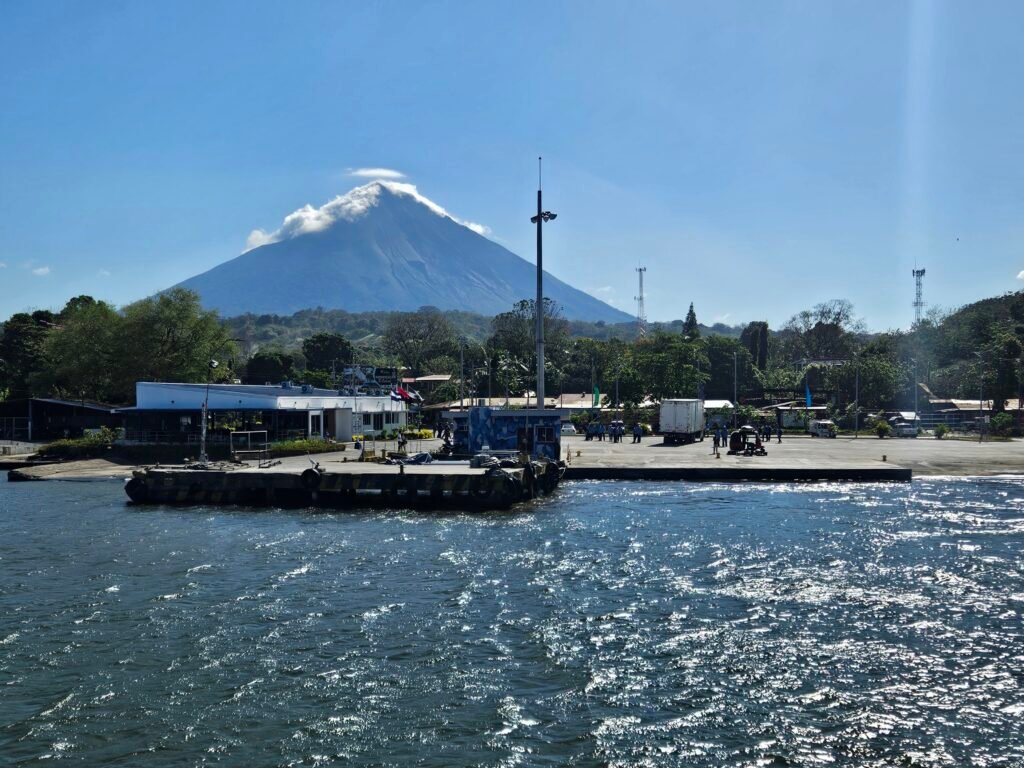
From there, we travelled to Ometepe by public ferry, which takes about an hour each way. The island itself is beautiful, and its setting is what makes it so distinctive: Ometepe sits in Lake Nicaragua and is formed by two volcanoes, Concepción and Maderas, rising dramatically from the water. Even arriving by ferry gives you a completely different perspective of Nicaragua, with the two volcanic peaks dominating the landscape as you approach the island.
While we were there, we did a cooking class with the women’s cooperative and visited a coffee farm, which gave us a chance to experience a very different side of the island beyond simply seeing the scenery.
We only stayed one night, which in hindsight was far too short. There was more we would have liked to do and see on Ometepe, and if we were planning the same route again, this is definitely somewhere we’d add another night or two. It felt like the kind of place where slowing down would have been worthwhile rather than trying to squeeze it into such a tight schedule.

Where We Stayed on Ometepe: Xalli Beach Hotel Ometepe
We stayed one night at Xalli Beach Hotel Ometepe, where the accommodation is made up of individual private cottages. Having your own cottage gives you a bit more space and privacy, which worked particularly well for us as a family. It’s a beautiful property located right on the beach. We had breakfast and dinner at the hotel and both were good. The only thing to keep in mind is that the kitchen was a little slow, so if you’re eating there, allow plenty of time rather than expecting a quick meal.
Granada and Las Isletas
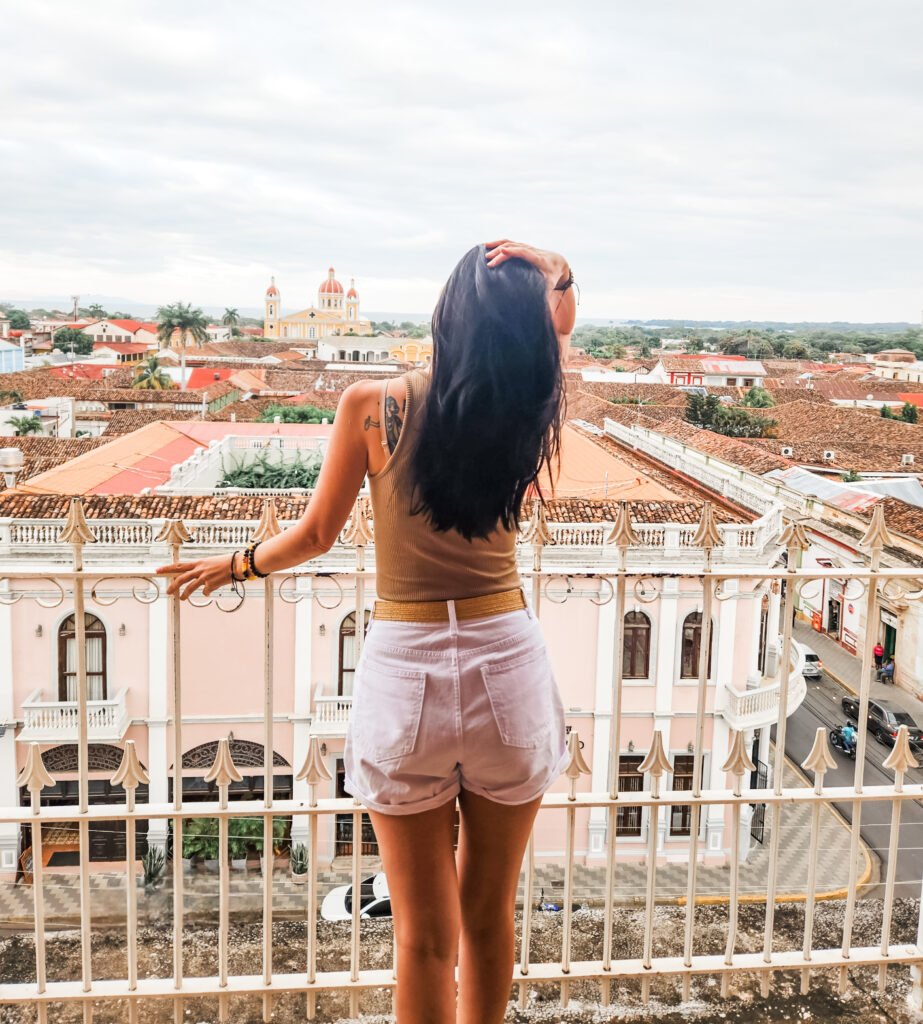
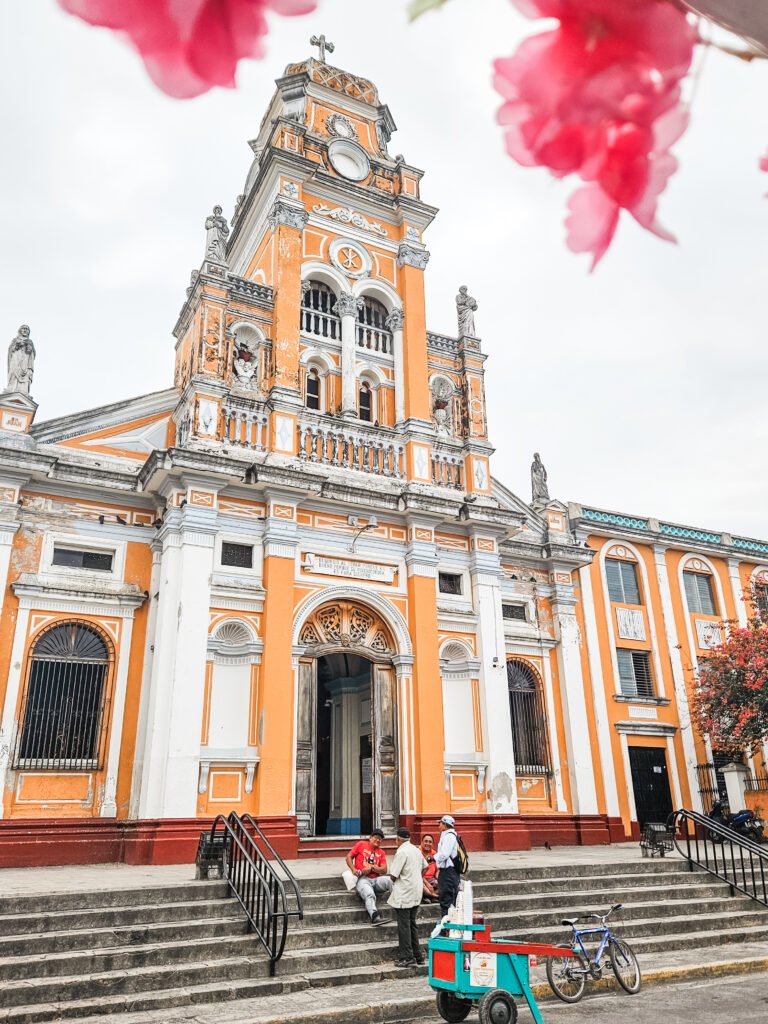
Our final stop in Nicaragua was Granada. After the volcanic landscapes around Cerro Negro and the rural feel of Ometepe, we were back in a historic city, with colourful colonial buildings, old churches and streets that were good to explore on foot.
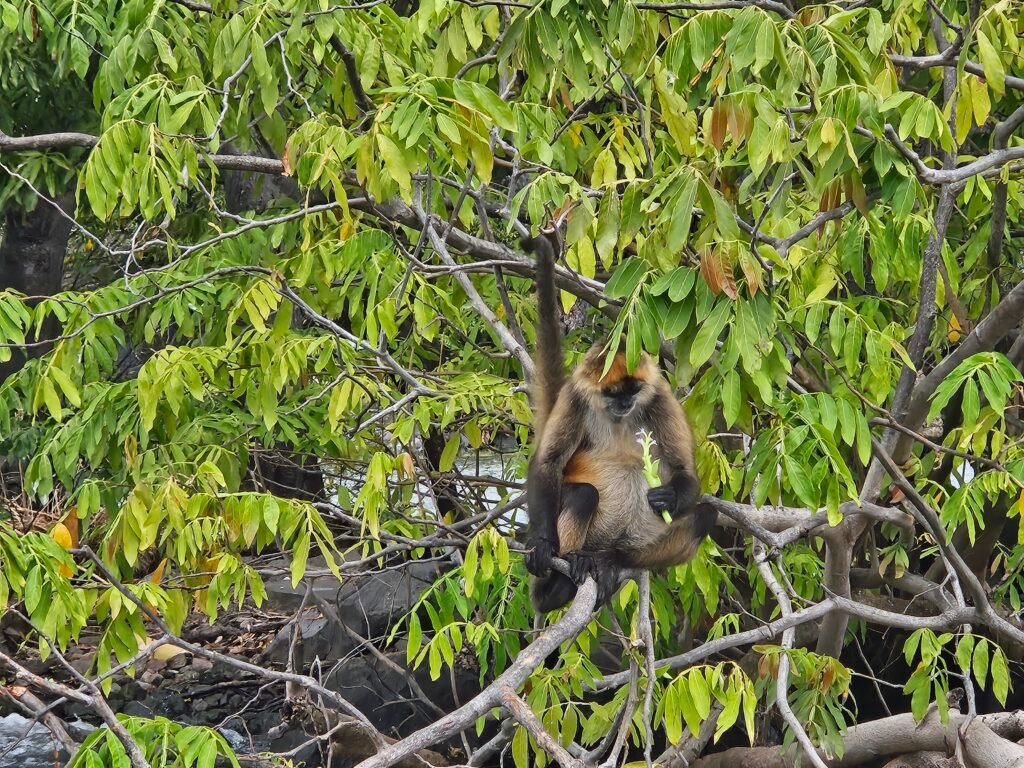
We also visited Las Isletas, the hundreds of small islands scattered across Lake Nicaragua just outside Granada. They were formed by volcanic activity from nearby Mombacho Volcano, and exploring them by boat showed us yet another side of Nicaragua. Within a short distance, you go from the historic centre to being out on the water among small islands and tropical vegetation.
After two nights in Granada, we returned to Managua and flew back to Guatemala City, connecting through San Salvador on the way.
Where We Stayed in Granada: Hotel Plaza Colón
We spent two nights at Hotel Plaza Colón, a beautiful colonial building right on Granada’s main square. The location was fantastic, and one of the nicest things about staying there was having a terrace overlooking the square. We could sit outside and watch everyday life happening below, including people coming and going and the horse-drawn carriages passing through. For us, that made the hotel feel like part of the Granada experience rather than simply somewhere to sleep.
After Nicaragua: Flores, Tikal and Belize
Our journey wasn’t quite finished. Back in Guatemala, we drove from Antigua to Guatemala City and flew to Flores, where we based ourselves for the next part of the trip. From Flores, we visited Tikal on a private tour and made a day trip across the border into Belize to visit Xunantunich, before eventually continuing to Mexico.
I’d treat these as an extension rather than trying to squeeze them into the main two-week itinerary.
Central America With Our Son
Our son was nine on this trip, and despite the long drives, he really enjoyed it.
He handled the road days much better than we expected. He had his headphones and his music, and that carried him through most of the long stretches in the car.
The toughest day for him was the first one, the drive to Copán. Seven hours on the road, a border queue and no chance to stop for lunch is a lot for a nine-year-old, and we then went straight into a rushed visit to a huge archaeological site. If you’re doing this drive with kids, pack a proper lunch rather than just snacks.
His favourite stop was Café Albania in El Salvador. After days of ruins and history, a day of the rainbow slide, the maze and the ziplines was exactly what he needed, and he ended up being a bit braver than he’d planned.
The other highlight for him was Cinquera, where we sat down with a former guerrilla who fought in El Salvador’s civil war and listened to his story. He really enjoyed that conversation. It’s one thing to read about a civil war, and quite another to hear about it from someone who lived through it and then walk through the forest where it happened.
That was the best part of the trip for us as parents too. Without turning it into a formal lesson, he got Maya history at Copán and San Andrés, modern history at Cinquera, volcanoes at Cerro Verde and Cerro Negro, coffee farming on the Ruta de las Flores and Ometepe, and an island reached by ferry. And at Cerro Negro, he learned that it’s fine to sit something out and still come away with a great story.
Do You Need a Car Seat in Central America?
At nine, our son was above the legal car seat age in all four countries on this route. The rules are very different from Europe or North America:
- Guatemala: no child car seat law.
- Honduras: children under five must ride in the back seat. There is no car seat requirement.
- El Salvador: a car seat is required for children under two or under 15 kg.
- Nicaragua: the strictest of the four. Children under seven must use a child seat and can’t ride in the front.
If you’re travelling with younger children, or you’d simply prefer your child in a booster, bring your own compact travel booster. Don’t assume a shuttle or private driver will have one; ask the operator when you book.


Was Two Weeks Enough?
It depends on what you want from the trip.
In roughly two weeks, we travelled through Honduras, El Salvador and Nicaragua, crossed several international borders, visited major archaeological sites, explored colonial cities, went volcano boarding, travelled to an island and spent time on the Pacific coast.
But it was not slow travel. There were long driving days, border crossings and a lot of moving from place to place. Some days were more about travelling than sightseeing, and some destinations only got a short amount of time.
The private driver and organised tour made a big difference. We weren’t spending hours finding transport or working out how to get from one country to the next, which made the pace much more manageable.
So two weeks is enough for a fast-paced version of this route, particularly with organised transport and a family that’s comfortable moving frequently. This isn’t an itinerary for anyone who wants to unpack once and stay put. For us, the variety made it worthwhile: in a short time, we went from ancient Maya sites to colonial cities, volcanoes, coffee country, an island and the coast. If you’d rather travel slowly, cut some stops and spend longer in the places you keep. It’s also worth reading our tips on avoiding burnout when travelling with kids.
What We’d Change
If we did this route again, we’d change two things.
Two nights in Copán Ruinas instead of one. After a seven-hour drive, we had less than two hours at one of the most important Maya sites in Central America. A second night would mean arriving, resting, and giving the site a full morning.
At least one more night on Ometepe. One night was simply too rushed. We fitted in the cooking class and the coffee farm, but had no time to experience the island without watching the clock. Ometepe is the first place where I’d add time.
If you want that extra time but don’t have extra days, take them from somewhere else rather than trying to add even more stops.
How Safe Did It Feel?
Safety varies a lot by country, and even from town to town, so this is simply how it felt for our family on this route.
Honduras
We only spent one night in Honduras, so we can’t really speak for it. But it’s probably the country on this route where you need to take the most precautions. We were told not to walk around on our own, even in a small town like Copán Ruinas.
El Salvador
We felt very safe in El Salvador, even walking around in the evening in smaller places like Suchitoto, El Tunco and Ataco. We can’t speak for bigger cities like San Salvador, as we didn’t spend time there.
Nicaragua
We mostly felt safe walking around after dark in León and Granada. But of all the Central American countries (and we’ve been to all of them), Nicaragua is where I felt the most uncomfortable, mainly from being stared at by men. I was fine because I was with my family, but I probably wouldn’t feel comfortable there travelling as a solo female.
Wherever you go on this route, avoid driving between cities at night and follow local advice about where to walk.
How Much Did Our 2 Weeks in Central America Cost?
Here’s roughly what this trip cost our family of three, in US dollars.
- Tour with Mayan Gateway: $8,700. This covered all our accommodation with breakfast, lunches in Nicaragua, all ground transport from our pickup in Guatemala City, and all tours and entrance fees. It didn’t include flights.
- Night in Guatemala City before the tour: about $210. The hotel was $115, the car from Antigua about $50 and dinner about $45.
- Flights: about $1,900. San Salvador to Managua, and Managua back to Guatemala City via San Salvador, with Avianca, for three people with one piece of luggage.
- Food: about $820. Around $50 in Honduras, $500 in El Salvador and $270 in Nicaragua, where lunches were included in the tour.
- eSIM: about $22. We used one eSIM that works across Central America.
- Extras: about $100. Things like entrance fee to Café Albania, a sherpa to carry the board up Cerro Negro, and coffee we bought to take home.
- Border fees, tips and other small costs: about $100.
Total: about $11,850 for the three of us, or roughly $990 a day over 12 days, counting the night in Guatemala City.
The tour was by far the biggest cost, and private drivers and guides are a large part of that. You could do a similar route for much less with shared shuttles, simpler guesthouses and fewer private tours, but with a child and this pace, having everything organised made the trip far easier. For the bigger picture, see our full-time family travel budget.

Visas and Border Crossings
Guatemala, Honduras, El Salvador and Nicaragua are part of the CA-4 agreement. For tourists, this means one shared 90-day allowance across all four countries. Moving from one CA-4 country to another doesn’t reset your time; the clock only resets once you leave the region, for example to Mexico, Belize or Costa Rica.
This matters if, like us, you’ve already spent time in Guatemala. Our two months in Antigua counted towards the same 90 days as the rest of this trip.
We travelled on Canadian and Irish passports. Canadian, US, UK and EU passport holders don’t need a visa for any of the four countries. As of September 2026:
- Nicaragua charges a tourist card fee of about US$10 to $12 on arrival, payable in cash. Since February 2026, more than 120 nationalities need prior authorisation before travelling to Nicaragua. Canada, the US, the UK and EU countries remain exempt.
- Land borders come with small cash fees. Honduras charges around US$3 to $5 per person on entry, for example.
- Carry US dollars in small bills. El Salvador uses the US dollar, and the border and tourist card fees on this route are quoted in dollars.
Best Time to Visit
The best time for this route is the dry season, roughly November to April. That’s the easiest time for ruins, volcano hikes, mountain towns and long road days. In Honduras, the driest months are December to February.
The rainy season runs from about May to October. It doesn’t mean constant rain, and the early months can still be good for travel, but the heaviest rain usually falls in September and October, which can affect roads and trails. The Atlantic hurricane season runs from June to November.
We travelled in February, and the weather was warm and sunny. The higher areas, like Copán and Ataco, get chilly in the evening, so pack a layer.
Doing This Route Without a Tour: Shuttles and Flights
We used a private driver, but you can follow a similar route independently with shared tourist shuttles. These run hotel to hotel, handle the border crossings with you, and are far easier with kids than public buses. Prices below are from Gekko Explorer, one of the main shuttle operators in the region, at the time of writing:
- Antigua to Copán Ruinas: daily, about 7 hours, from about US$53 per person. Departs 3:30 am and crosses at El Florido.
- Copán Ruinas to San Salvador: Monday, Wednesday and Friday, about 7 hours, from about US$71. The route passes through Guatemala, the same way we went.
- El Tunco to León by land: daily, about 12 hours through Honduras, from about US$60 plus roughly US$23 per person in cash for border fees.
- San Salvador to León by shuttle and boat: four days a week, about 13 hours with a boat crossing of the Gulf of Fonseca, from about US$100.
With a child, the San Salvador to Managua flight is the better option for the El Salvador to Nicaragua leg. It took us about an hour, compared with 12 or 13 hours overland. Within Nicaragua, shuttles connect Managua, León and Granada, and the public ferry to Ometepe leaves from San Jorge and takes about an hour. Our Nicaragua with kids itinerary has fares and times for each leg by public bus and shuttle.
Frequently Asked Questions
Two weeks is enough for a fast-paced trip through three or four countries, but not for slow travel. In about two weeks we covered Honduras, El Salvador and Nicaragua with a private driver, with some long driving days and several border crossings.
Our trip cost about $11,850 for three people, or roughly $990 a day. That included an $8,700 private tour covering accommodation, ground transport, guides and entrance fees, about $1,900 in flights and about $820 on food. Shared shuttles and simpler accommodation would cost much less.
Canadian, US, UK and EU passport holders don’t need a visa for any of the four. They share one 90-day tourist allowance under the CA-4 agreement, so crossing between them doesn’t reset your time. Nicaragua charges a tourist card fee of about US$10 to $12 in cash on arrival.
It took us about seven hours, including the border crossing at El Florido. Shared shuttles from Antigua take about the same time.
Yes. Land borders on this route charge small fees in cash, and Nicaragua’s tourist card is paid in cash on arrival. Carry US dollars in small bills.
Only young children. Nicaragua requires a child seat for children under seven, El Salvador for children under two or under 15 kg, and Guatemala has no car seat law. If you want one, bring your own travel booster, and don’t assume the vehicle will have one.
The dry season, roughly November to April, is the easiest time for this route. We travelled in February and had warm, sunny weather, with chilly evenings in the highlands.
It varies by country. We felt very safe in El Salvador’s smaller towns and mostly safe in León and Granada in Nicaragua, while Honduras is where we were advised to take the most precautions. See our section on how safe it felt for the details.
Older kids can, but it’s steep and fast. Our nine-year-old decided it was too scary, and our guide carried him down while we boarded. Ask the operator about their minimum age when booking.
For a fast route with a child, a private driver made a huge difference, as someone else handled borders and transfers. We booked through Mayan Gateway, which used local operators in each country. Travelling independently with shared shuttles is cheaper, but expect early departures and longer days.
Take the public ferry from San Jorge, near Rivas, which takes about an hour each way. We were driven to San Jorge by our private driver.
Final Thoughts on Our Two Weeks in Central America
This itinerary shows what two weeks in Central America with kids can actually look like. It can definitely be done, but it’s fast-paced travel.
We started from two slow months in Antigua, then things sped up: one night in Copán, five days in El Salvador and six in Nicaragua, with everything from Maya ruins to volcano boarding in between. The route worked for us, largely because a private driver and organised guides took the logistical pressure out of moving between countries.
Use our itinerary as a framework rather than a checklist. The route is possible, but the pace is real. Sometimes the best itinerary isn’t the one that fits in the most countries. It’s the one that gives you enough time to enjoy the places you came to see.


2 Comments