How Do You Keep Up With Academics While Worldschooling?
Some of the links below are affiliate links. If you buy through them we may earn a small commission at no extra cost to you. We only recommend the apps, tutors and resources we’ve genuinely used with our son.
One of the most reasonable questions people ask us about worldschooling academics is also one of the hardest to answer with just a few words:
But how do you know your child isn’t falling behind?
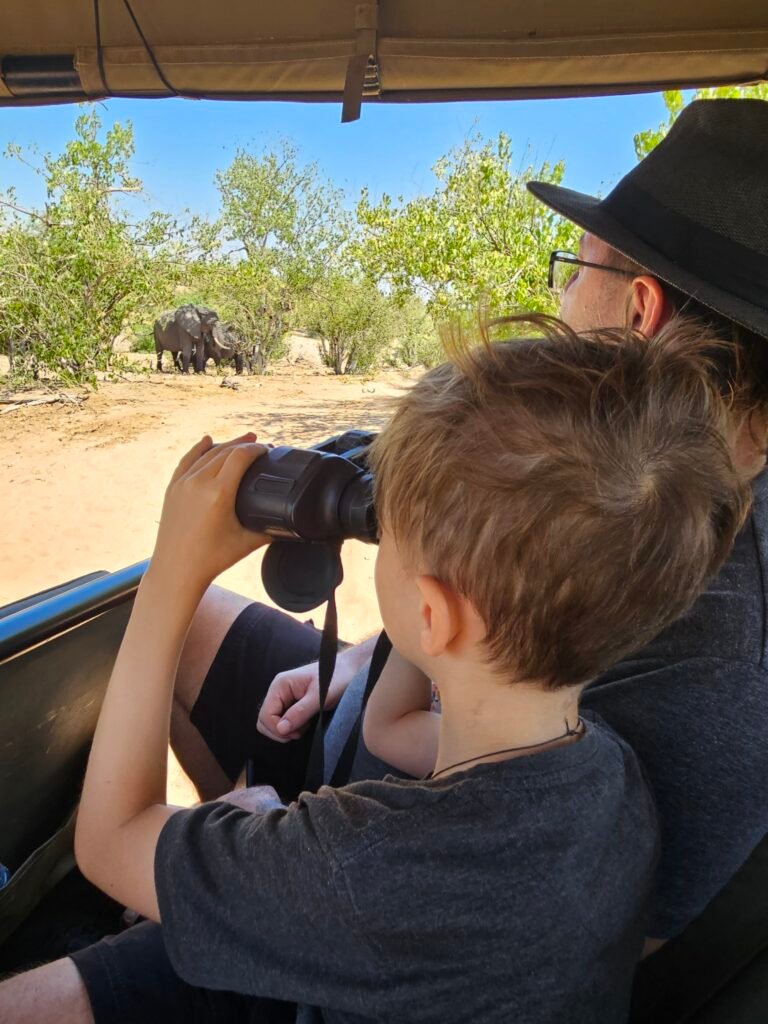
Because yes, travelling is educational. Our son has learned about ancient civilisations while standing in the places where they actually existed. He has heard different languages around him and visited museums across the world. He has experienced cultures that would be difficult to understand quite as vividly from a textbook.
But none of that means he is going to mysteriously learn fractions by walking through an archaeological site. And I think this is where conversations about worldschooling sometimes become a little too simplistic. You don’t necessarily have to choose between formal academics and learning through life. We don’t.
For our family, worldschooling academics are a combination of deliberate study in the areas that need progression and practice. There’s also the enormous amount of learning that happens simply because we travel.
Some things happen naturally through life. Some things need deliberate practice.
After years of travelling through more than 90 countries with our son, that distinction has become increasingly important to how we think about his education.
The Short Answer: You Don’t Have to Choose Between Worldschooling Academics and Travel
We started travelling with our son when he was almost four.
At that point, he was only just beginning to learn how to read. He is nine now, and reads at approximately an seventh or eighth-grade level. He’s also the sort of child who will voluntarily disappear into a book for hours.
Worldschooling academics for a four-year-old and for a nine-year-old look almost nothing alike, and that is exactly the point. What counts as academic progress has to flex with age rather than stay fixed to one static idea of what a school day should look like.
That is our experience. It is not evidence that worldschooling makes children advanced readers. I would never suggest that every child who travels will follow the same trajectory.
What it does show is that conventional school is not the only environment in which sustained academic development can happen. However, it is important not to overlook the academic side of your child’s education. It’s also worth not assuming that those skills will simply develop on their own.
Throughout our years of full time travel, we have used a combination of educational apps and websites and books. Real life experiences have done just as much to educate our son.
Worldschooling Academic Progress Tracker
One of the biggest questions we had when we started worldschooling was: How do we make sure our son is actually keeping up academically?
After years of travelling and learning on the road, we’ve found that we don’t need to recreate a traditional school day — but we do need to keep an eye on academic progress.
This is the simple tracker we’ve been using to help us stay on track.
It helps you take a quick look at reading, writing, maths and science, identify possible gaps, and choose a few priorities for the next 90 days. No complicated curriculum. No trying to do everything. Just a simple way to pause, check in and make sure the academics aren’t getting lost along the way.
Download the free Worldschooling Academic Progress Tracker and give yourself a quick academic check-in.
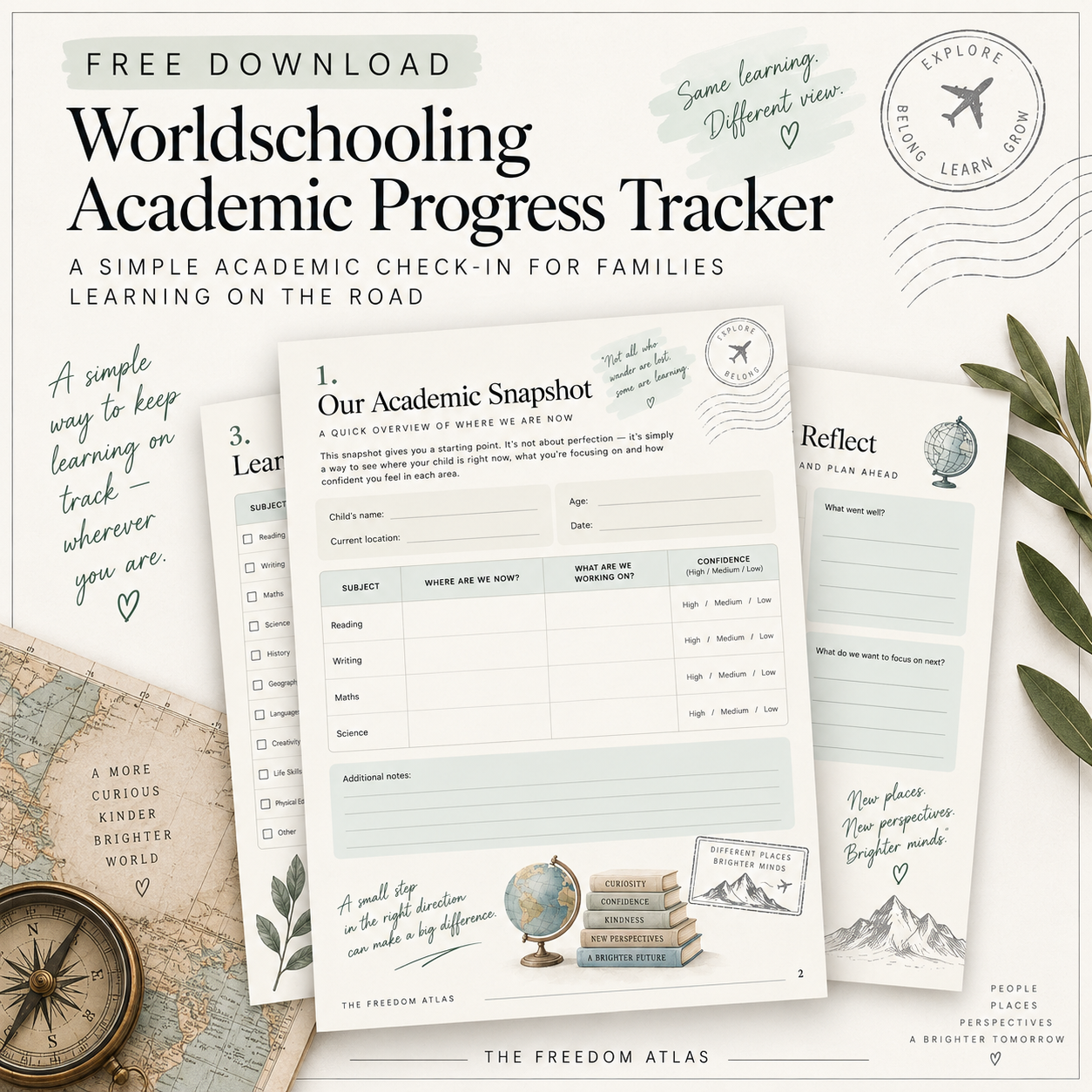
Free PDF, delivered straight to your inbox.
If you love these free planner pages and want the full version, we’ve expanded them into a 20-page Worldschooling Learning & Travel Planner. It gives you everything you need to keep track of academic progress while also capturing all the wonderful learning that happens through travel, experiences and your child’s own interests. You can find the full planner in our Etsy shop here.
Maths
There are certainly opportunities to use maths while travelling. Kids deal with currencies, distances, time zones, measurements, budgets and percentages.
Useful? Absolutely.
A complete maths education? No.
There is a sequence to mathematics. Addition supports multiplication. Multiplication matters when fractions appear. Fractions become relevant to ratios, percentages and later algebra. If an important concept is shaky, the next one can become much harder.
This concern comes up repeatedly in current homeschooling discussions. Parents talk specifically about small maths gaps accumulating over time. They also talk about children who appear generally capable but struggle later because an earlier foundation wasn’t secure.
That is why maths is one of the subjects where we have always been comfortable using structured programmes. It is also the clearest example of why worldschooling academics still need some sequence and structure behind them.
When our son was younger, that included ABCmouse and Khan Academy Kids. We have also used Prodigy, and as he got older we moved into Beast Academy.
We aren’t loyal to one programme for one reason or another. The programme is a tool. What matters is that there is progression. The work should become appropriately more difficult while previous knowledge is actually being used.
Currently we are using private tutoring on Preply, and it works really well for us. We use it for math and languages, but there are many other tutors for various subjects. The tutors are able to identify any gaps our son might have had, and build his curriculum based on that.
Reading
Reading has followed a much more organic path for us, and it is one of the easier parts of worldschooling academics to keep flexible.
When we started travelling, our son was almost four and only beginning to read. We used Bob Books and HOMER during those early stages, but we also simply read to him — a lot.
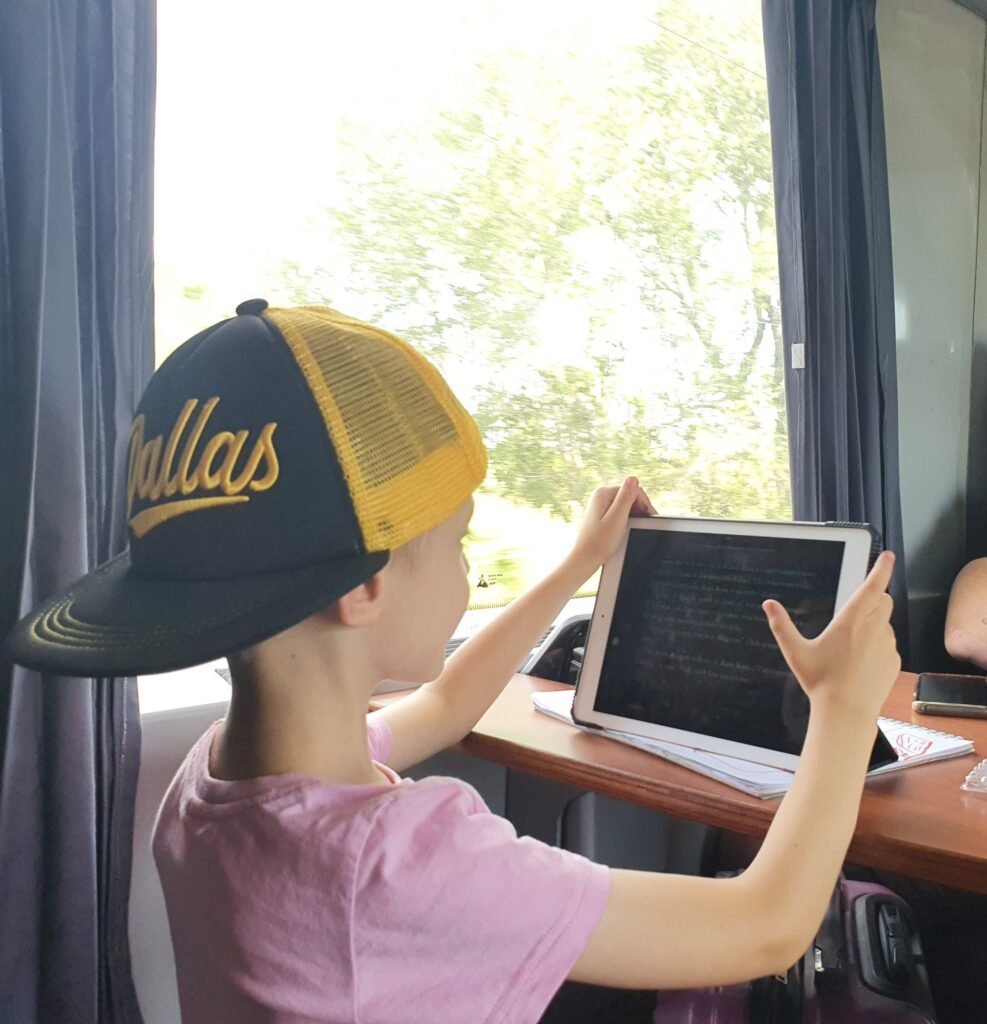
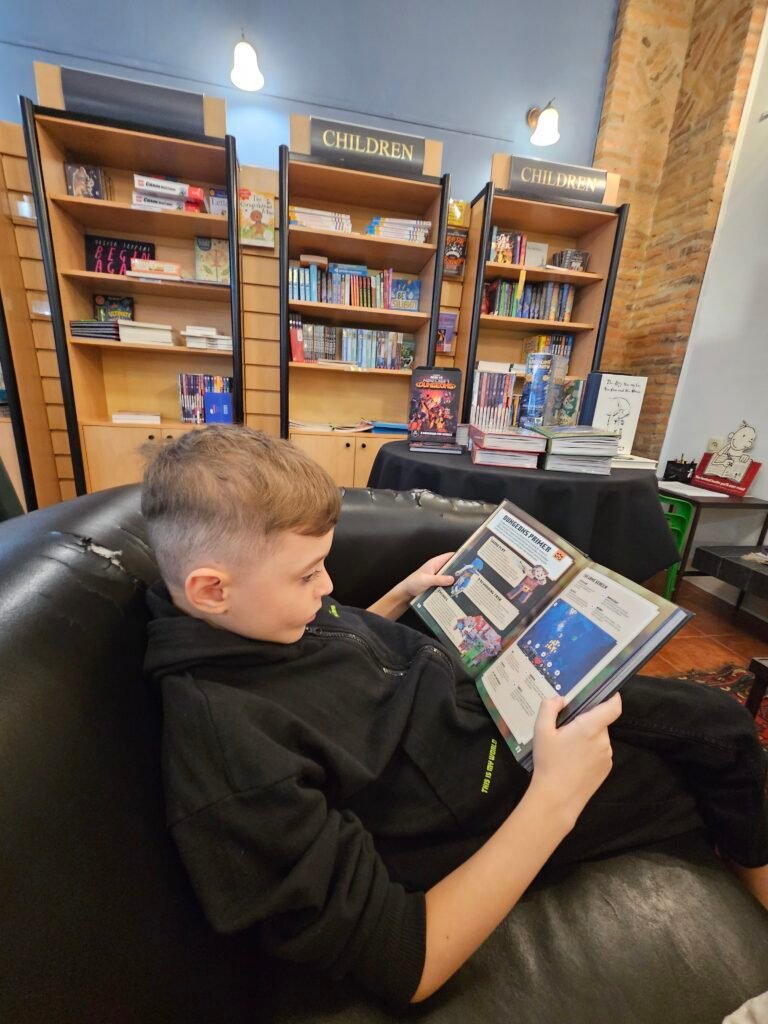
Eventually reading stopped being primarily something we did with him and became something he chose to do himself. Now at nine, he is an avid reader and currently reads at around an seventh or eighth-grade level. Due to his love of reading, we always travel with the kindle e-reader. He has hundreds of kindle books in his library. Travelling with this many physical books simply would not be sustainable for us!
Audiobooks have also been an absolute lifesaver for us when we have long drives and reading isn’t possible. If your kids enjoy audiobooks, Audible is an option worth trying. You can download audiobooks before you travel. That makes them particularly useful for flights, road trips and other situations where you may not have reliable internet access. Audible currently offers a free trial, so it’s an easy way to see whether it works for your family before committing to a membership.
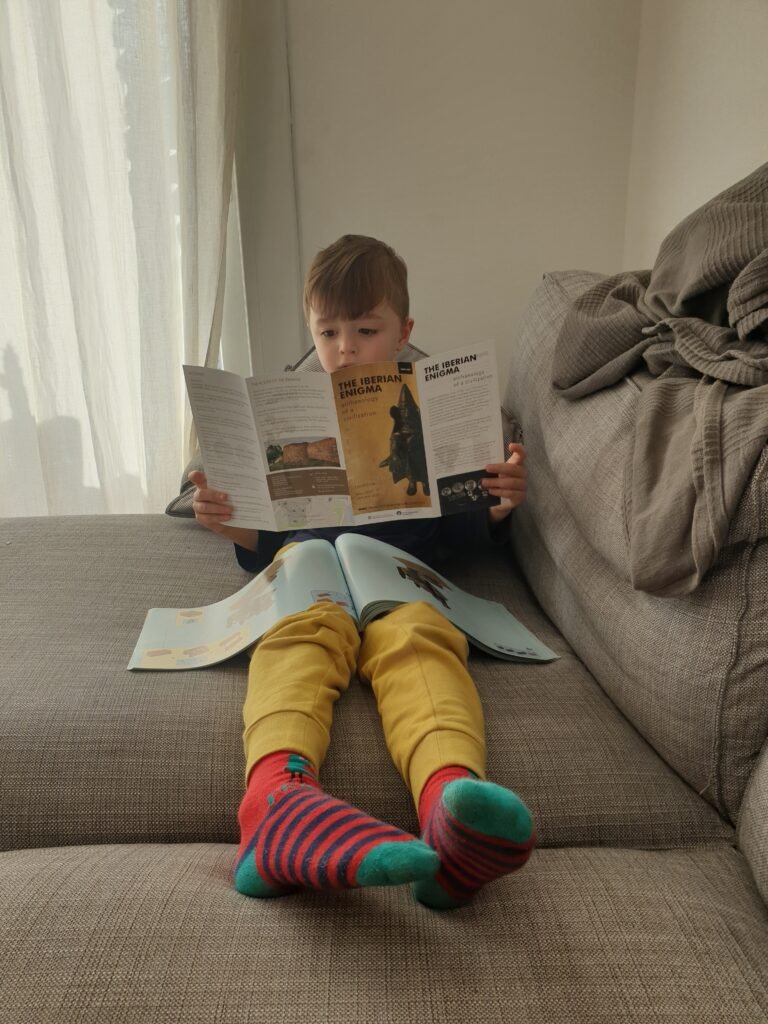
For us, the bigger lesson has been that reading doesn’t have to happen in a traditional school setting. Books have become part of our everyday travel experience. That might mean reading independently in the airport or listening to an audiobook while driving through a new country. It might also mean picking up a book after a day of exploring. That has made reading feel much more like a natural part of life than a subject that needs to be “covered.”
Writing
Writing is an area where I think worldschooling parents need to make the same distinction. It’s often the trickiest piece of worldschooling academics to keep consistent.
A child may write naturally during everyday life through journals, stories, emails, notes, research projects or travel writing. All of those are useful. But being able to write creatively is not exactly the same skill as organising an argument or structuring a paragraph. Using grammar correctly, revising a piece of writing and explaining an idea clearly all matter too.
So writing is one of the areas worth looking at deliberately as kids get older. That doesn’t have to mean pages of repetitive exercises. You can use subjects they genuinely care about. They can research something they encountered while travelling, write a story, explain an opinion or produce a longer project.
But occasionally the goal should be the writing itself, not just the interesting topic around it. Keep samples over time. Look at whether ideas are becoming clearer, sentences more sophisticated, spelling more accurate and structure more organised.
Night Zookeeper is another resource we’ve used with our son for creative writing, and it’s one we’ve genuinely enjoyed. It makes writing feel more like an adventure than an assignment, with creative prompts, characters and stories that encourage kids to use their imagination while developing their writing skills.
Science
Science sits somewhere between maths and history for us, and it’s a good example of how worldschooling academics can combine real experiences with real concepts.
Travel provides incredible raw material. You encounter geology, ecosystems, weather, animals, engineering, agriculture and environmental issues constantly. Museums can make scientific ideas visible. Nature gives children things to observe. Experiments allow them to test ideas rather than merely read about them.
But seeing interesting things isn’t exactly the same as developing scientific understanding.
Kids also need concepts. They need to understand why something happened, not merely that it happened. As they get older, that includes learning to ask questions, interpret evidence, recognise variables, understand cause and effect and connect observations to broader scientific ideas.
This is where some structure still matters. The experience can start the question. Structured learning can help answer it properly.
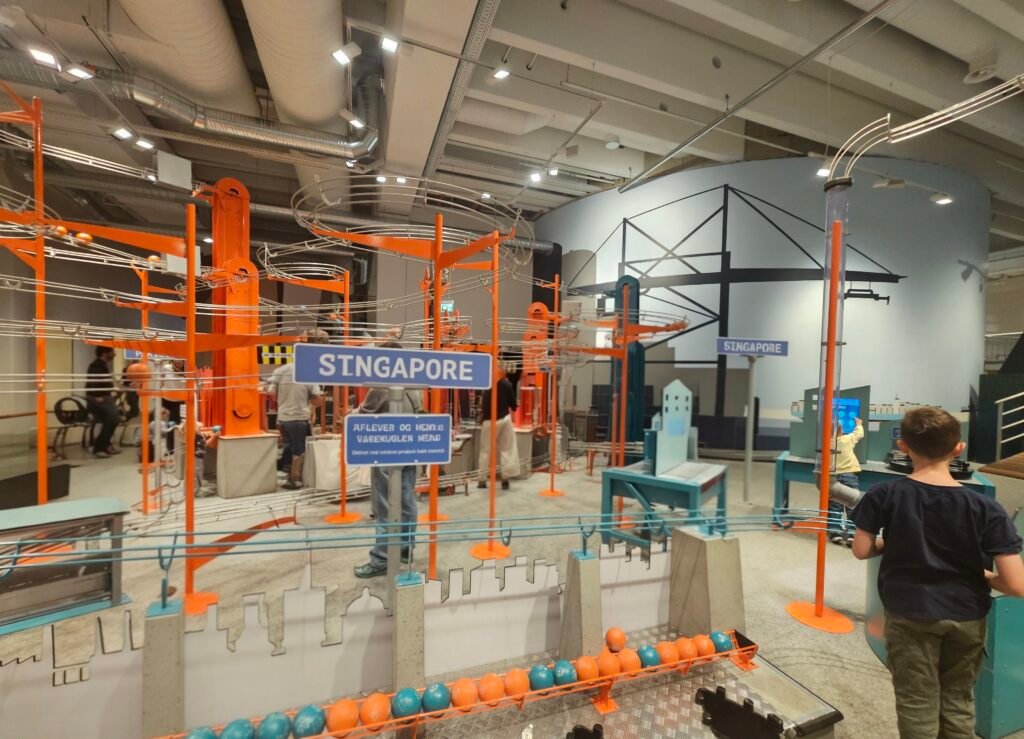
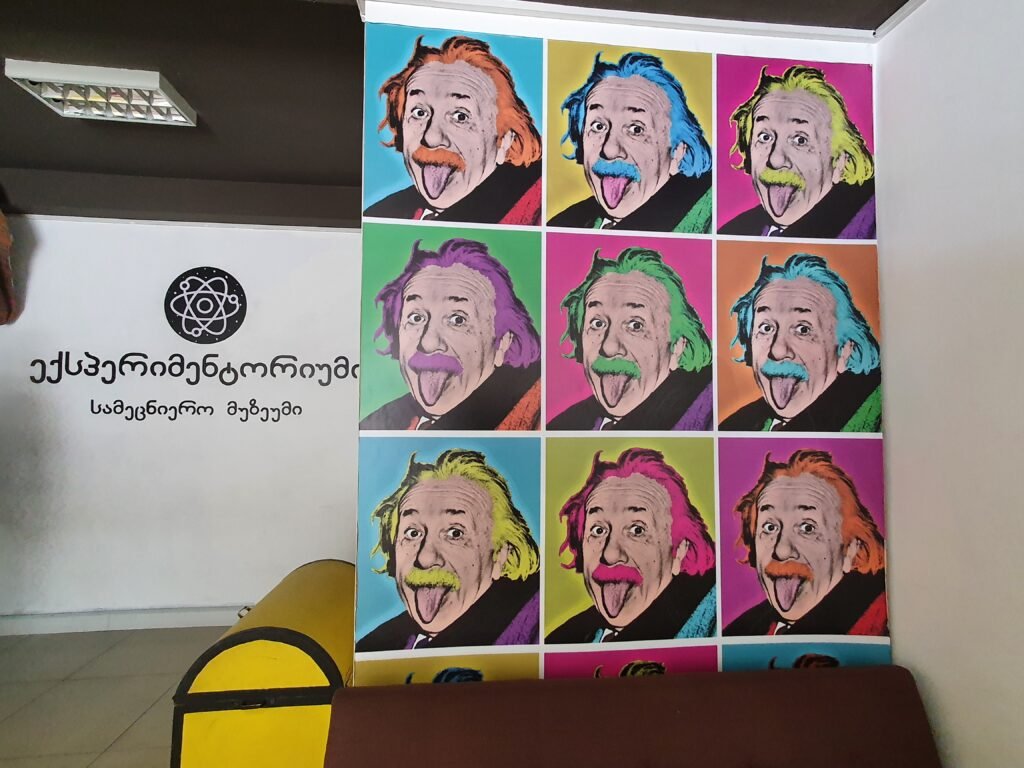
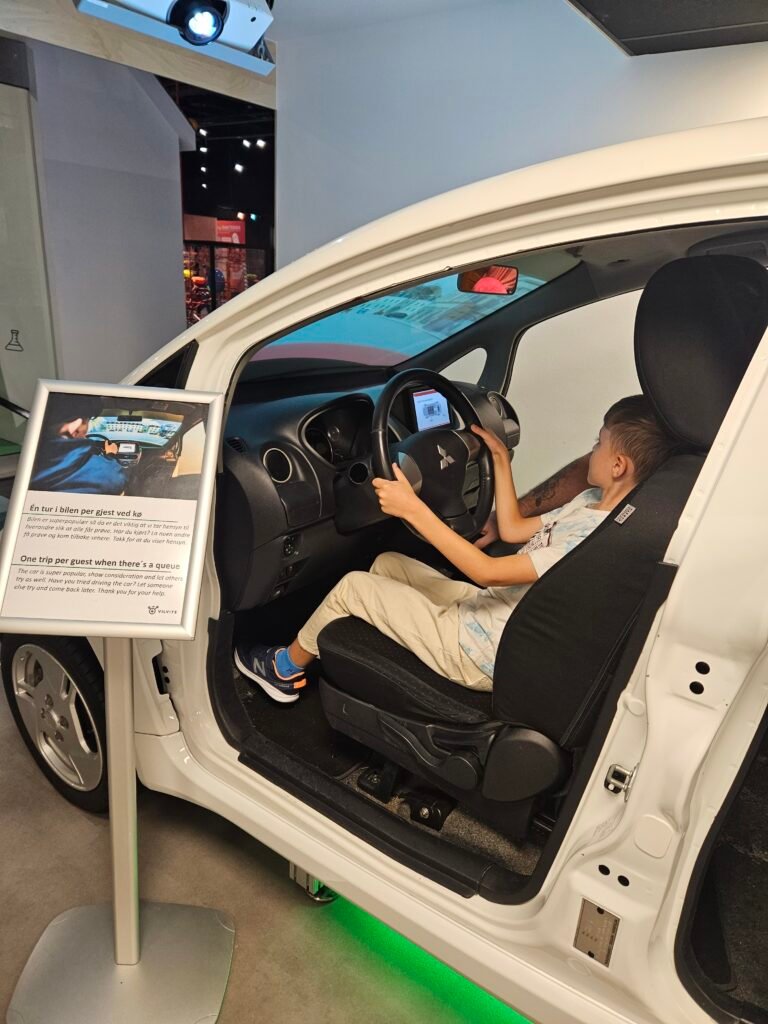
We travel with a handful of age appropriate science books (either physical or kindle). We use combination of books, YouTube videos (such as Crash Course, Sci Show kids, etc.), and hands on experiences such as Science museums (like Experimentarium in Copenhagen, for example).
Languages
Languages are one of the few parts of worldschooling academics where formal practice and real life reinforce each other from day one.
For daily practice, we use Duolingo. It is short enough to fit into odd pockets of travel time, such as a bus ride or a wait at a border crossing, and simple enough that our son can do it independently. When he got older and started building a foundation in a new language, we also used Rosetta Stone, which is stronger on vocabulary and pronunciation through repetition, though it is less entertaining for kids.
The piece that actually moves the needle is Preply tutoring, the same platform we use for maths. A real tutor corrects mistakes as they happen and can hold an actual conversation, which no app manages yet.
None of that replaces immersion, though. Needing a language to order food, ask directions or talk to other kids does more for fluency and confidence than any app or tutoring session on its own. It just isn’t a substitute for the structured practice either, it’s what gives that practice somewhere to go.
What We Leave More to Real-World Learning
Other subjects lend themselves much more naturally to travelling, and not every part of worldschooling academics needs a workbook to count.
History is probably the strongest example in our family.
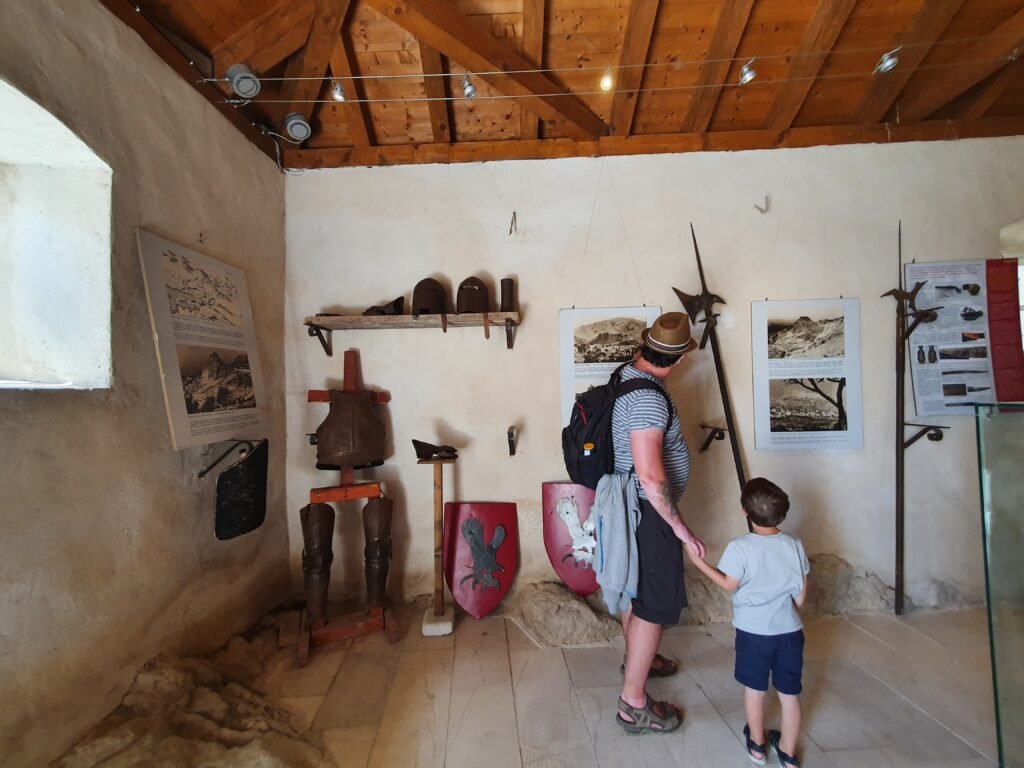
When we arrive in a country, we try to read a book about its history. Then we visit museums, historical and archaeological sites and landmarks, and connect what we’ve read to what we’re seeing.
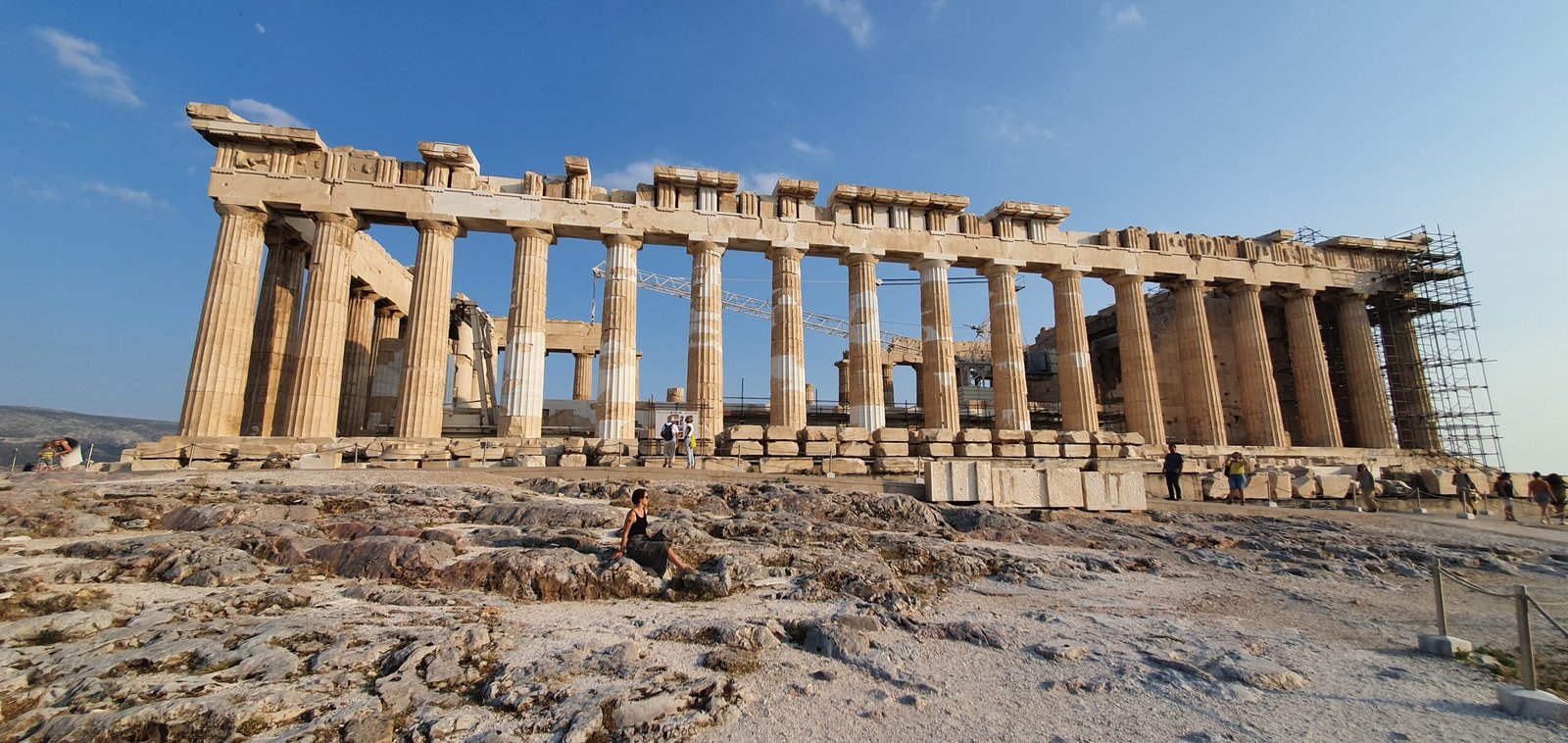
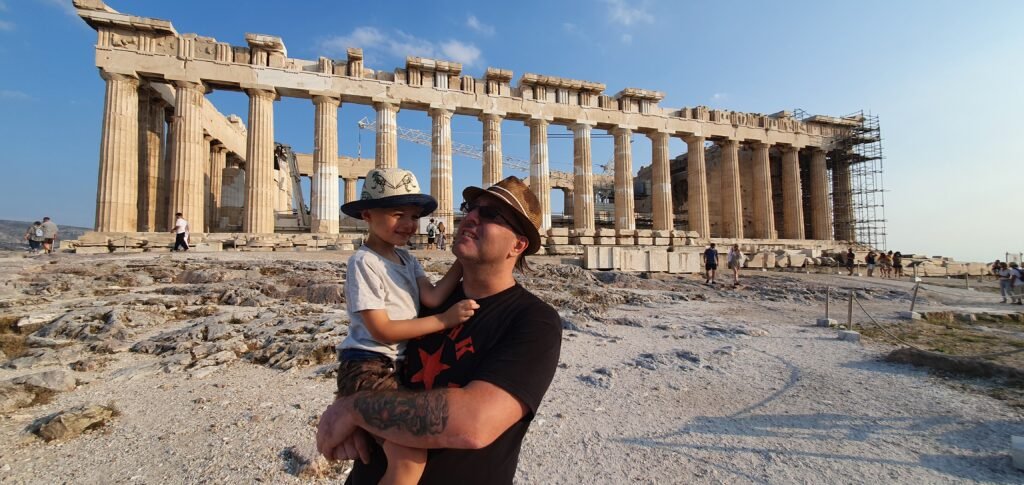
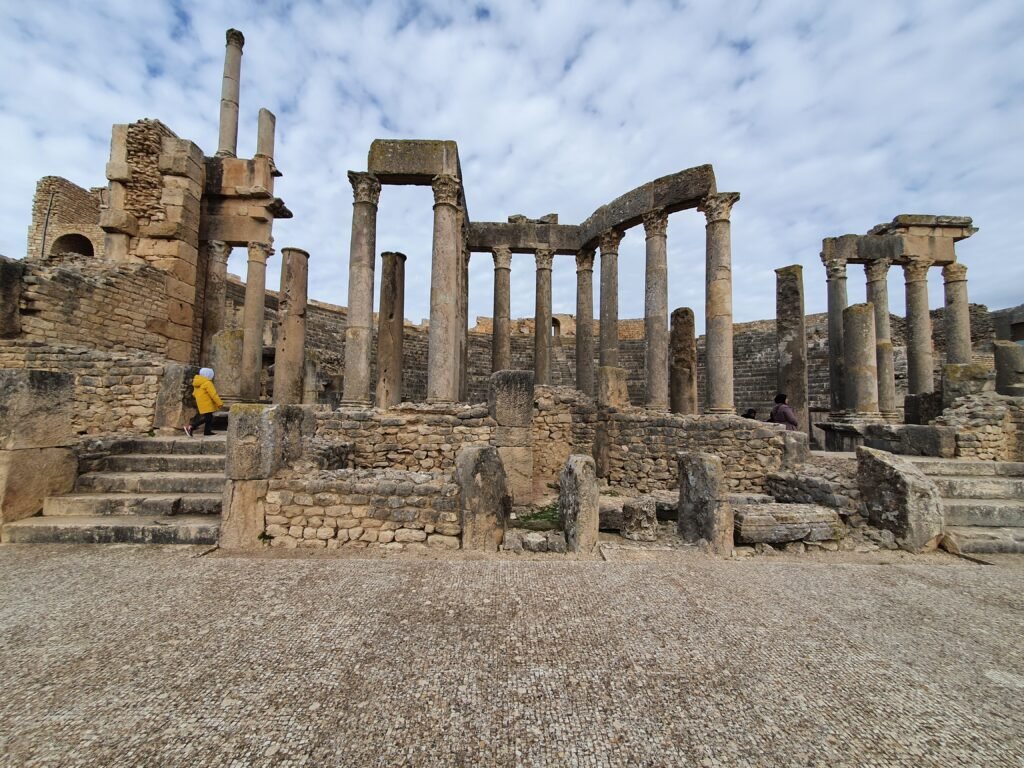
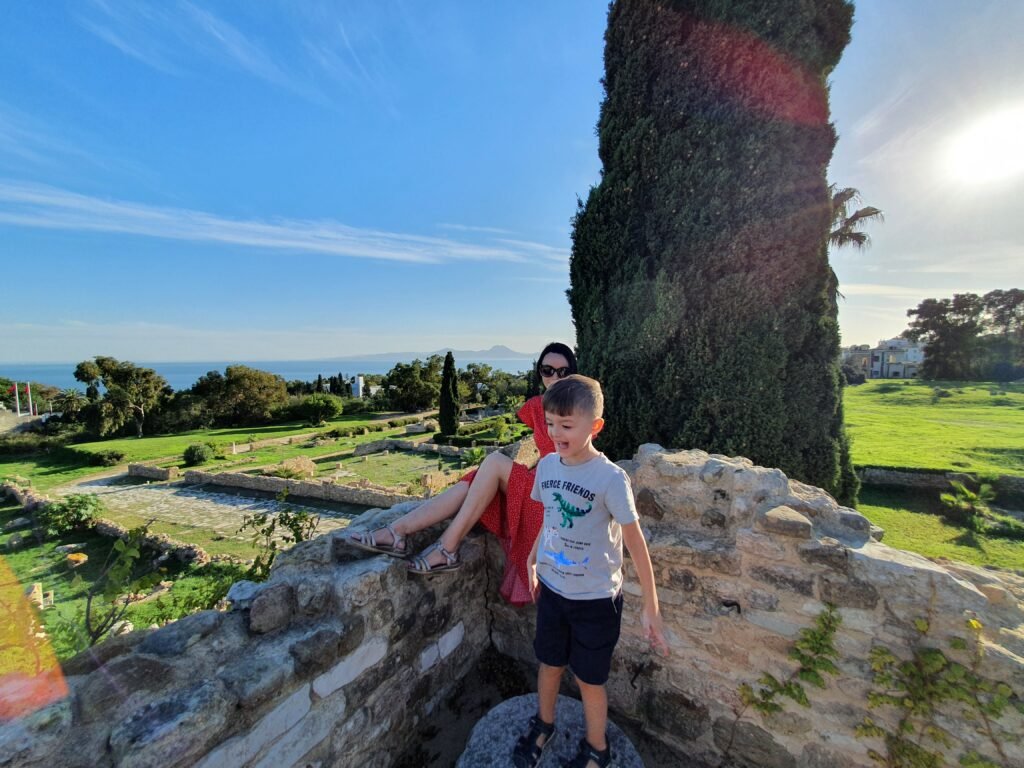
Greece and Egypt gave us an extraordinary amount of ancient history. Travelling through places such as Croatia, Tunisia and Bulgaria helped bring Roman history to life because Roman sites and remains suddenly weren’t isolated pictures in a book. There is something very different about understanding that the Roman Empire stretched across huge parts of Europe and North Africa after you have encountered its remains in country after country.
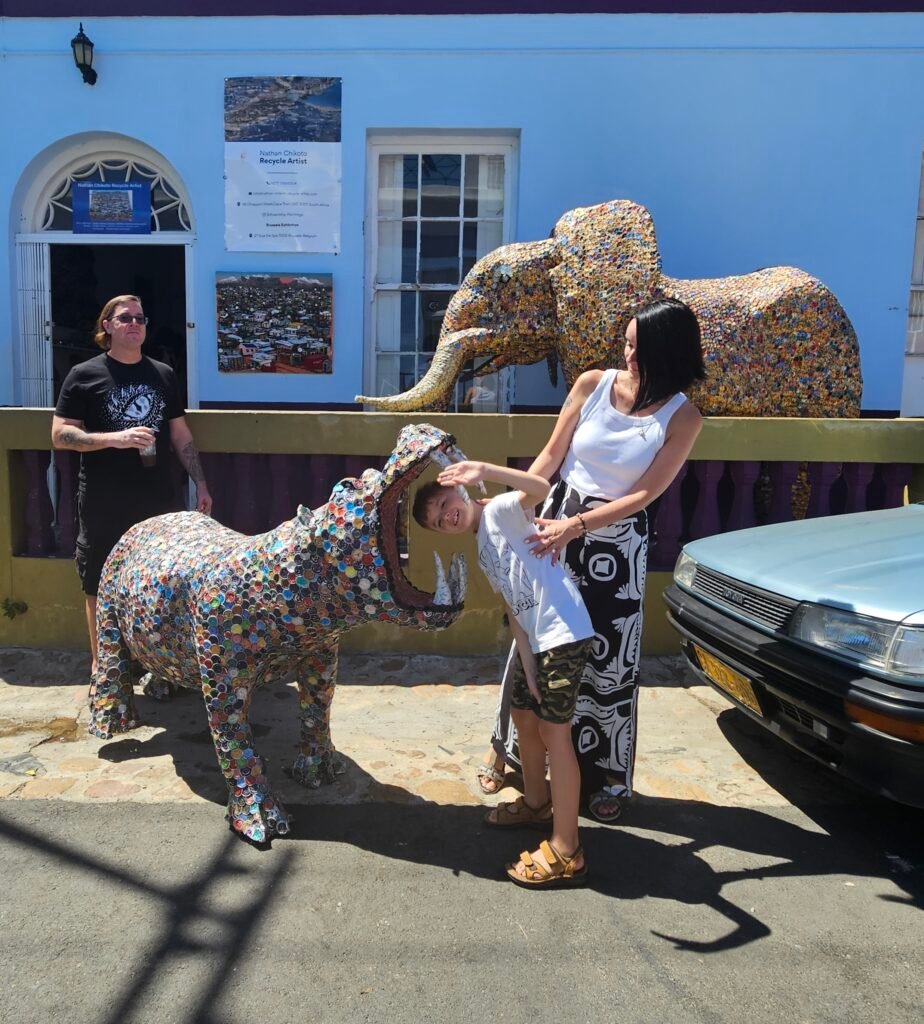
We actively look for educational opportunities wherever we stay. Our son has done children’s art classes in India, robotics in Riga, and a worldschooling hub in Guatemala where he learned about local culture. And when we spend a few months somewhere, we try to learn at least a little of the local language.
Cultural education often happens just by hands on experiences.
Some of the amazing things we have done with our son so far are:
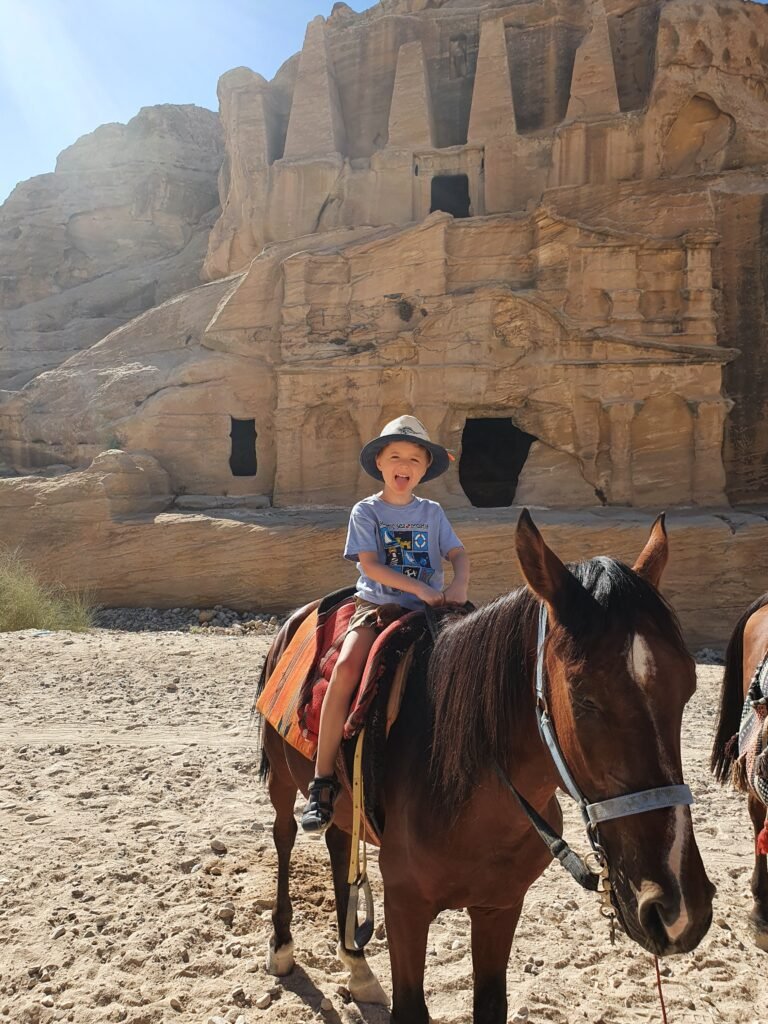
- Riding donkeys in Petra and learning about the Nabataean culture
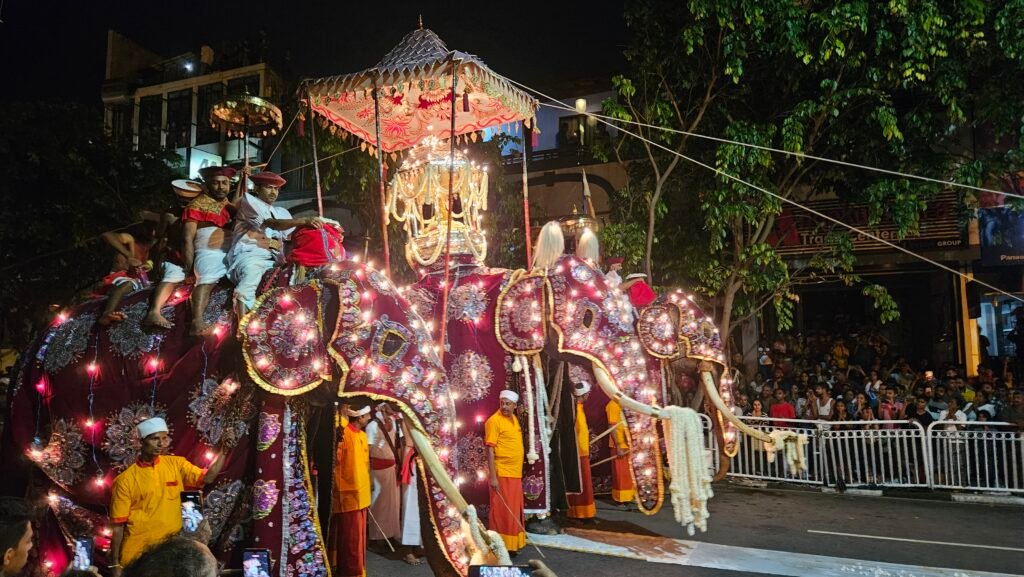
- Seeing Esala Perahera festival in Kandy, Sri Lanka and learning about the important buddhist traditions
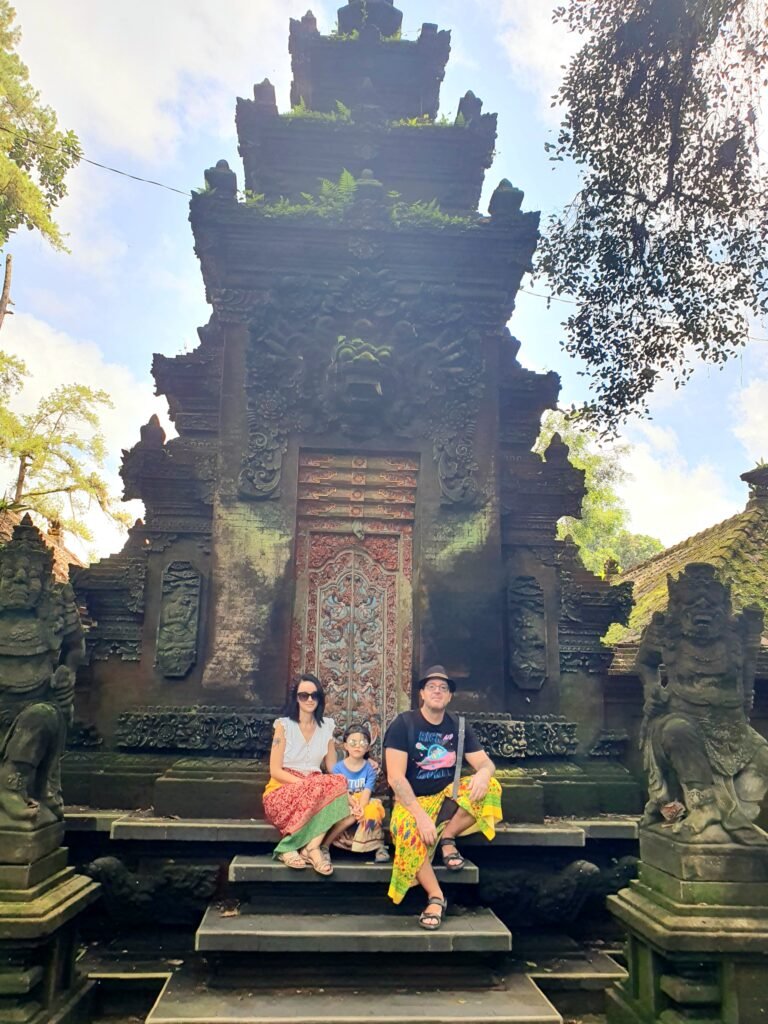
- Watching Kecak and other dances in Bali
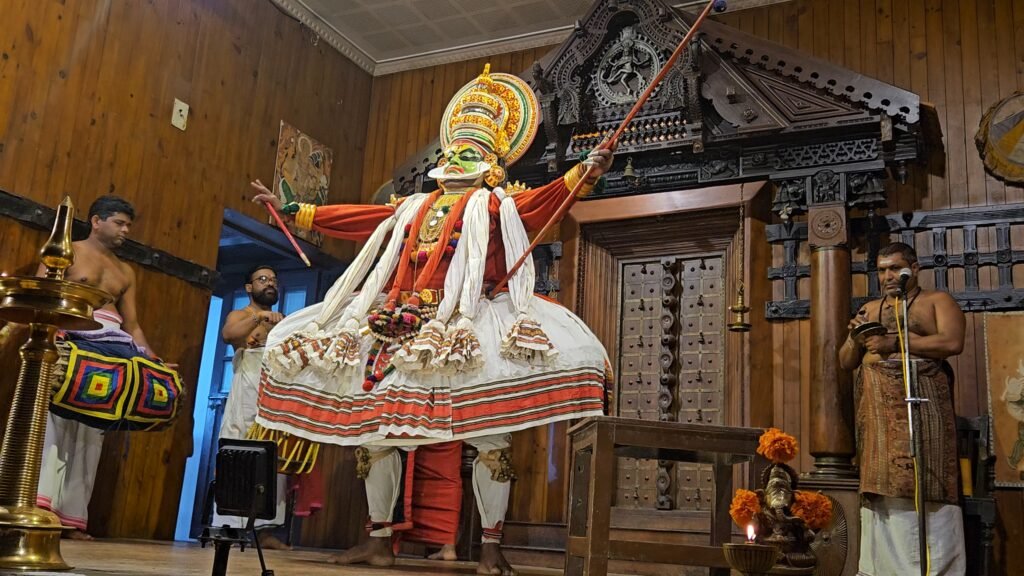
- Seeing Kathakali performance in Kochi, India
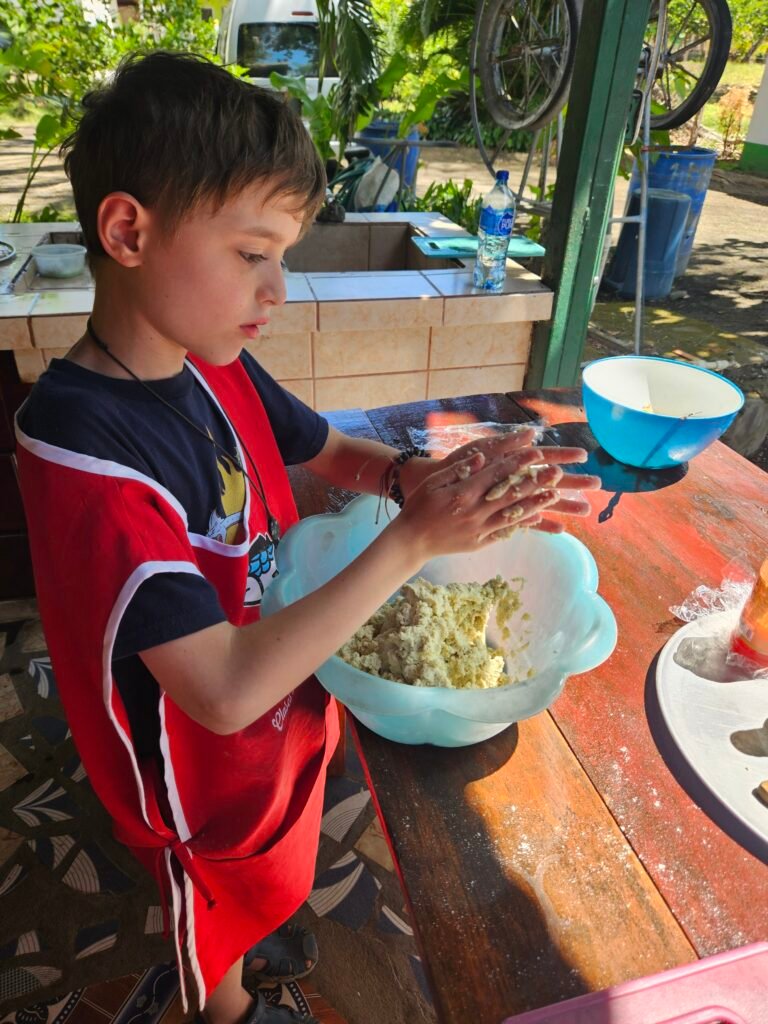
- Cooking class in Ometepe Island, Nicaragua with the ladies’ cooperative
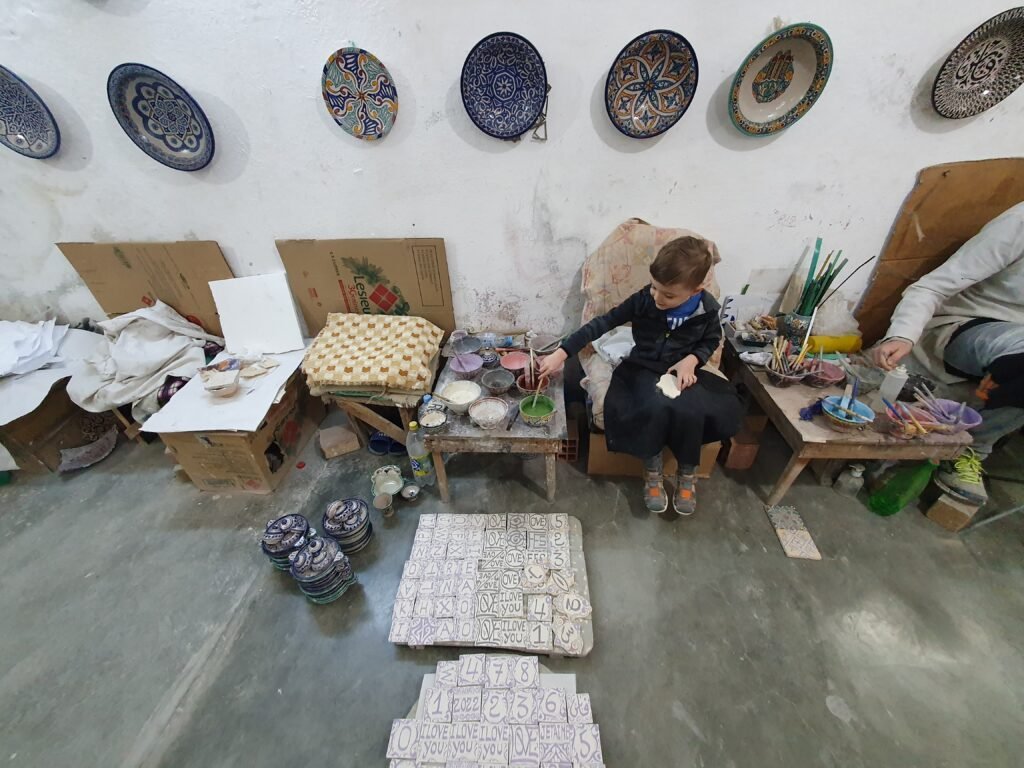
- Making pottery in Fez, Morocco and learning about this important craft
- Taking part in chocolate making class in Antigua, Guatemala and learning about the cacao industry
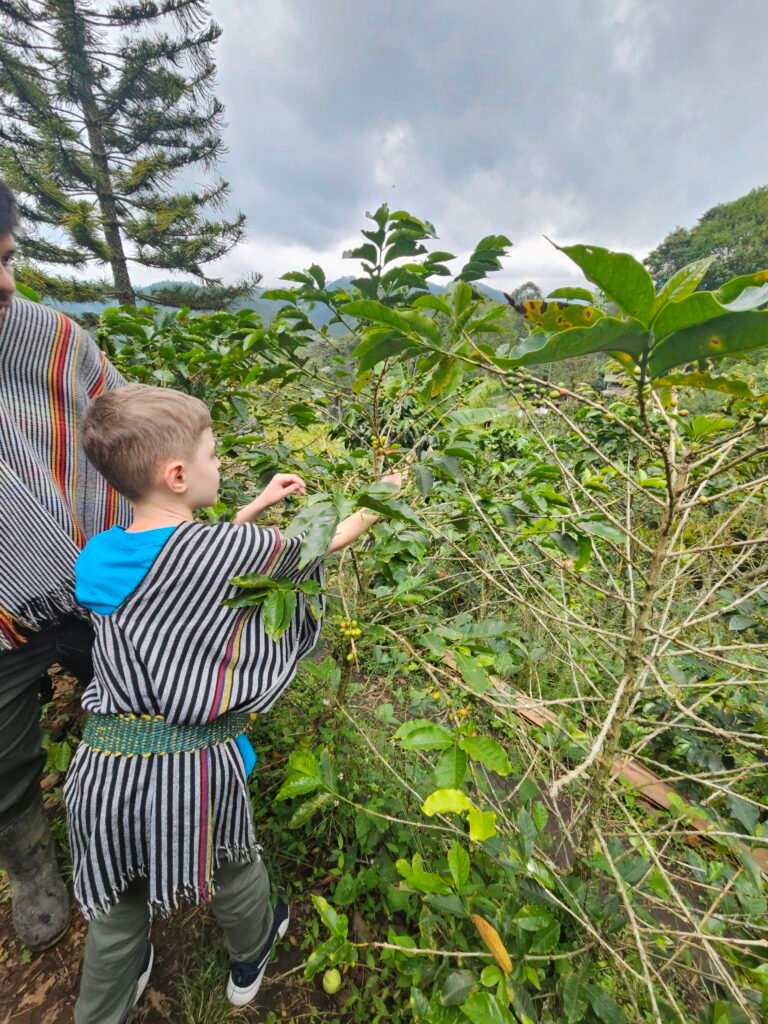
- Visiting a coffee finca in Colombia and taking part in the whole process from picking to roasting
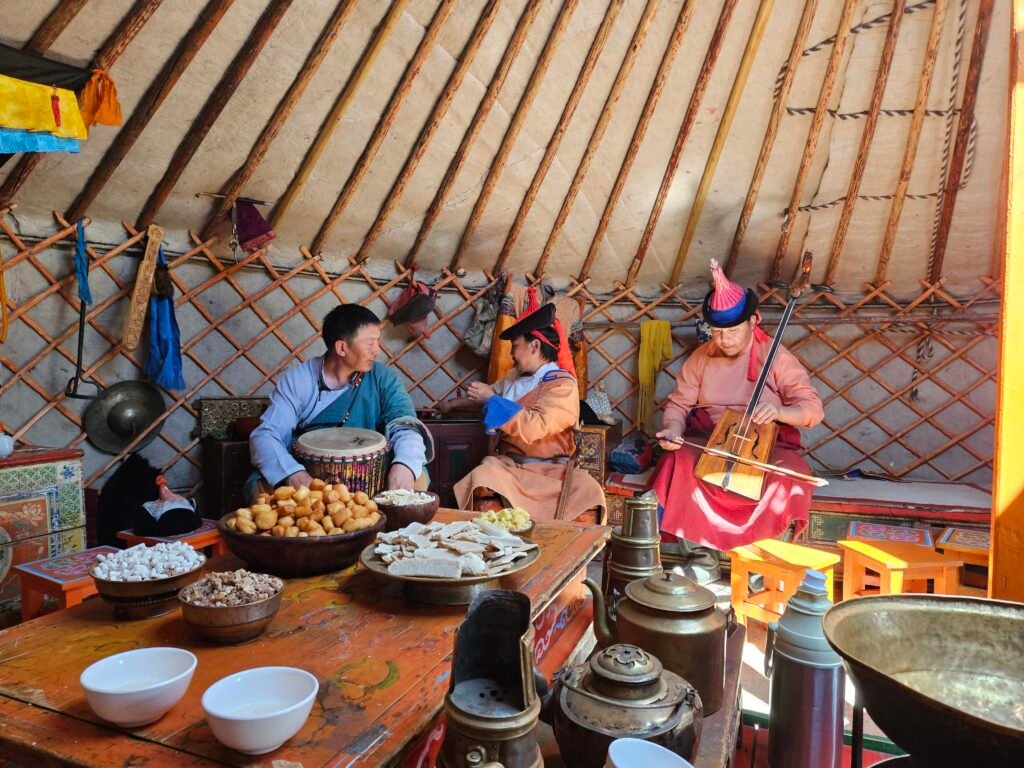
- Listening to the famous throat singing in Mongolia
- Riding the camels deep into Sahara desert, and staying in the desert camp overnight
Those experiences have educational value that would be difficult to recreate through a screen.
How Much Formal Schoolwork Do You Actually Need?
This is one of the most common questions in homeschooling communities, and there isn’t really a magic number for how many hours worldschooling academics should take each week.
Personally, we have never spent too much time per day on academics. That was the whole point of choosing this lifestyle – so that our son is not stuck at the desk for half a day, but instead can be outside, playing or doing something creative. At the most, we spend 1 or 2 hours per day, 2-3 times per week on subjects such as math or science. The rest of the learning happens while exploring.
I don’t think counting hours is particularly useful without looking at what happens during those hours. Three hours sitting in front of unfinished worksheets is not automatically superior to 45 minutes of concentrated maths where a child genuinely understands the material.
How much formal work you need depends on the child’s age, attention span, curriculum, academic goals, future educational plans and how much independent work they can do.
What matters more to me is:
Are they progressing?
Is the maths becoming more difficult over time?
Are they reading increasingly challenging material?
Is their writing improving?
Are they retaining what they’ve learned?
Can they explain concepts rather than simply complete familiar exercises?
That tells you far more than whether you successfully reproduced a six-hour school day inside an Airbnb.
How Do You Know If Your Child Is Falling Behind With Worldschooling Academics?
This is the part of worldschooling that requires a little honesty.
You need some way of checking.
You don’t have to recreate conventional school, but simply assuming that everything is going beautifully because your child is curious and you’re visiting interesting places isn’t enough.
For a worldschooling family, that could include several things.
You might use placement tests or curriculum benchmarks periodically. Look at the level your child is reaching in a structured maths programme. Keep writing samples. Notice whether reading comprehension matches the complexity of the books being read. Ask tutors where they see strengths or gaps. Keep projects or examples of work in a portfolio.
And sometimes just ask your child to explain something. There is a big difference between recognising the right answer and being able to explain why it is right.
It’s also possible for gaps to go unnoticed for a while. A child might be completing their maths work successfully, for example, but still have a shaky understanding of an underlying concept.
That’s why it’s useful to look beyond whether a child is simply completing their work. Pay attention to what they can actually explain, where they consistently struggle, and whether they can apply what they’ve learned in a new situation. Regularly checking understanding gives you a much clearer picture of progress than completion alone.
You don’t need to obsess over grade level every month (we don’t!)
But you do need enough information to know whether learning is actually moving forward.
The Tests and Diagnostics We Actually Use for Worldschooling Academics
If you want a more concrete way to check where your child stands, a few options are worth knowing about.
For a quick, ongoing check, the diagnostic built into IXL is worth a look. It isn’t a formal standardized test, but it pinpoints which skills a child has and hasn’t mastered in maths and language arts, and it adjusts automatically as they improve. It works well as a temperature check a couple of times a year rather than a curriculum in its own right.
For something closer to a real benchmark, a CAT (TerraNova/CAT6) or Iowa Assessments-style standardized test is another option. These are the same nationally normed tests used in many US schools, and they exist specifically because so many homeschooling and worldschooling families need a way to compare their child’s level to grade-level peers without enrolling them anywhere. Seton Testing Services, one of the providers HSLDA recommends for homeschoolers, offers the Iowa Assessments and TerraNova/CAT6 online, so it can be administered from wherever a family happens to be that year.
None of this needs to happen constantly. Once or twice a year is enough to catch a real gap before it becomes a bigger one, and it gives you something more concrete than “they seem fine” to work from.
It’s also worth remembering: if worldschooling academics ever stopped working for a family, your child could go back into a traditional classroom. Kids who come out of homeschooling and worldschooling generally slot back into a regular school without major issues, especially with a few years of test results and work samples showing where they stand. That safety net takes real pressure off the day-to-day decisions, because none of this is permanent or irreversible.
Do You Need a Worldschooling Curriculum?
Not necessarily one single curriculum. A single programme isn’t required to keep worldschooling academics on track.
We’ve never felt that we needed to follow one curriculum or use the same programme for every subject. Different things have worked at different stages.
We’ve changed maths programmes (at times our son got bored with the one we were using at the time, or outgrew it). Reading evolved from learning-to-read resources into independent reading. History is heavily connected to wherever we happen to be living or travelling.
Other learning comes from tutors, online classes, local activities and experiences. A worldschooling curriculum can therefore be a patchwork rather than one giant package.
The important question isn’t:
“Which curriculum are you using?”
It is:
“Do you have a general sense of where your child is academically, and are they continuing to make progress?”
You don’t necessarily need to know exactly what your child will be learning six months from now. Plans change, interests change, and sometimes a child needs to spend longer on one concept or move ahead more quickly in another.
What matters is having enough structure to recognise whether they are moving forward, whether important foundations are being missed, and where they may need additional support.
What If Your Child Is Ahead?
Kids do not develop at exactly the same pace across every subject. If a child is capable of more advanced work, let them move forward — worldschooling academics should flex upward too, not just catch up.
That might mean more complex books, higher-level maths or deeper projects in a subject they love.
The main consideration, particularly with reading, is that reading ability and emotional maturity are not necessarily identical. A nine-year-old may technically be able to read books written for much older students while still being nine in terms of the themes or content that are appropriate for them. This has been our biggest struggle so far – finding books that are long enough to last him for more than 1 day, but still appropriate in content.
So the goal isn’t simply “higher grade = better.” It is finding material that is intellectually challenging without being inappropriate or unnecessarily frustrating.
What Happens to Schoolwork When You’re Travelling?
Sometimes absolutely nothing. There are times when we are travelling non stop for a week or two, so there is no math for the time being. Worldschooling academics don’t have to stop completely during those stretches, but they do slow down.
Trying to insist that every single day follow an identical academic schedule is one way to make an already complicated travel day considerably more annoying. What matters more is consistency, and picking up where we left off after taking a break. Afterall, kids in traditional schools take regular breaks too: summer and spring vacations, christmas holidays, etc.
We think more broadly than that. A week matters more than one Tuesday. A month matters more than one missed morning.
If we are actively travelling, the routine changes. When we stop somewhere for longer, there is more room for structured learning again.
That flexibility isn’t the same thing as abandoning consistency. Consistency means returning to the work. It doesn’t mean mathematics must happen at precisely 9:03 a.m. regardless of whether you’re currently sitting in an airport.
How Staying Longer in One Place Makes Worldschooling Academics Easier
There is an enormous difference between relocating every few days and staying somewhere for a month or several months.
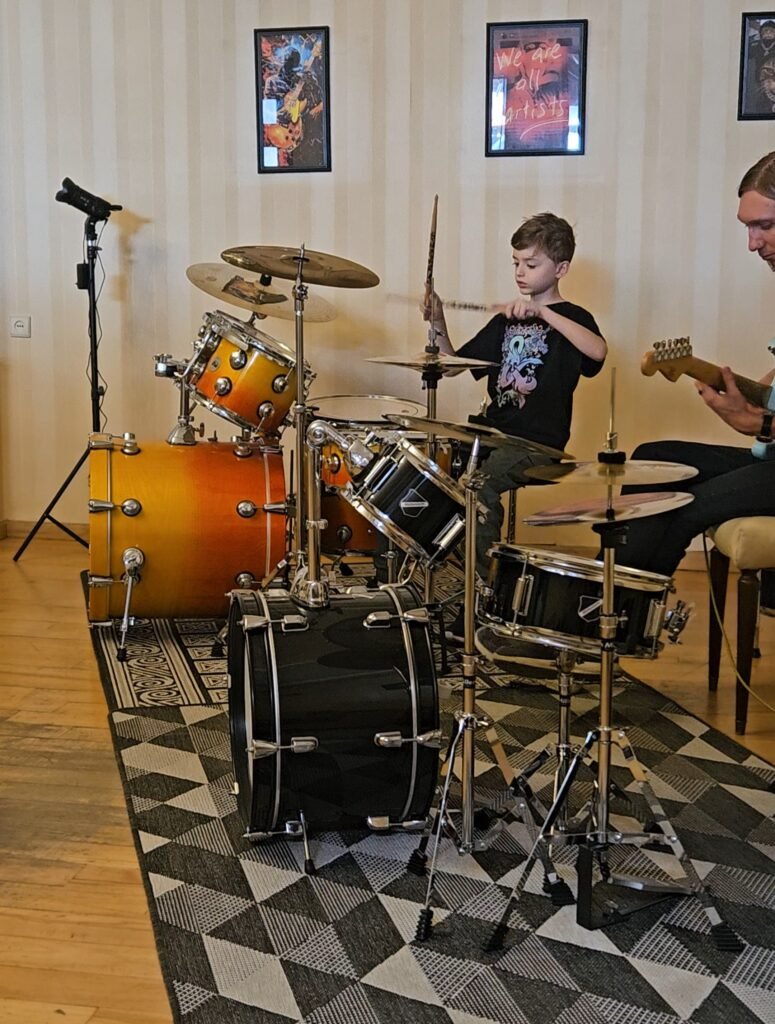
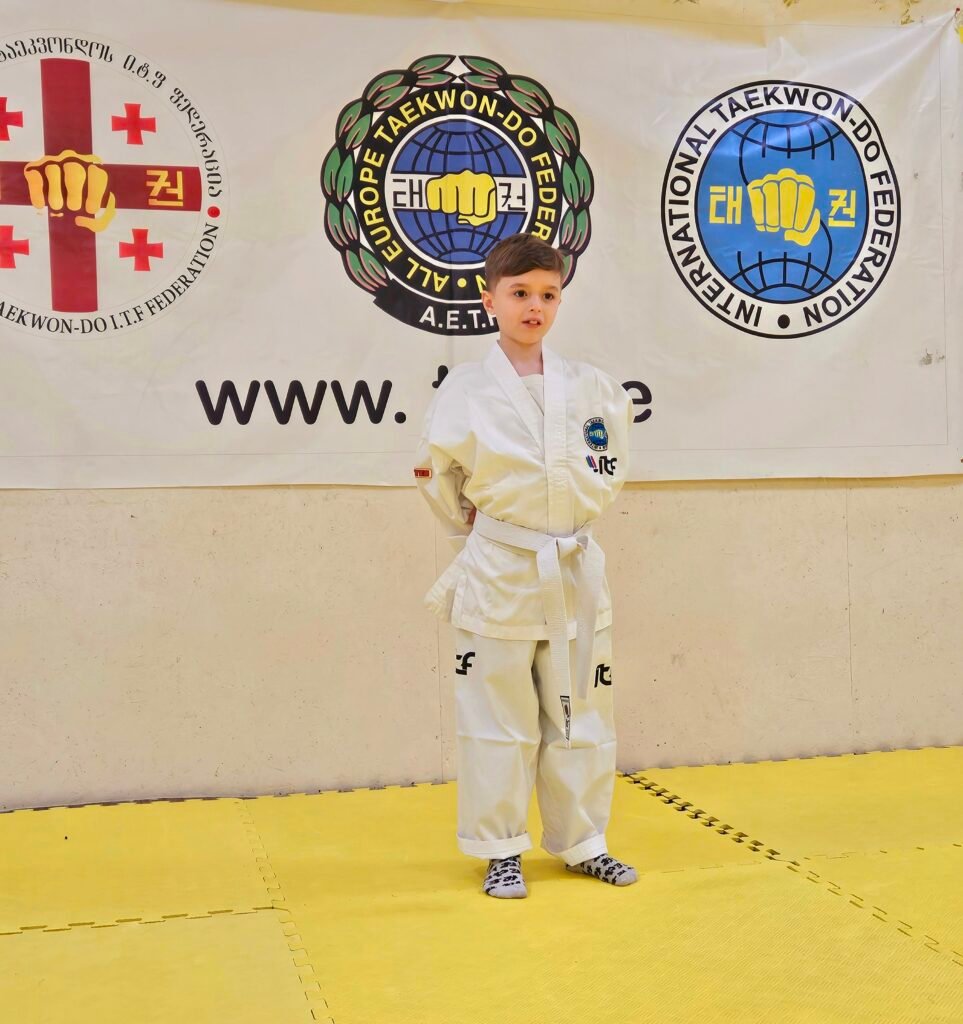
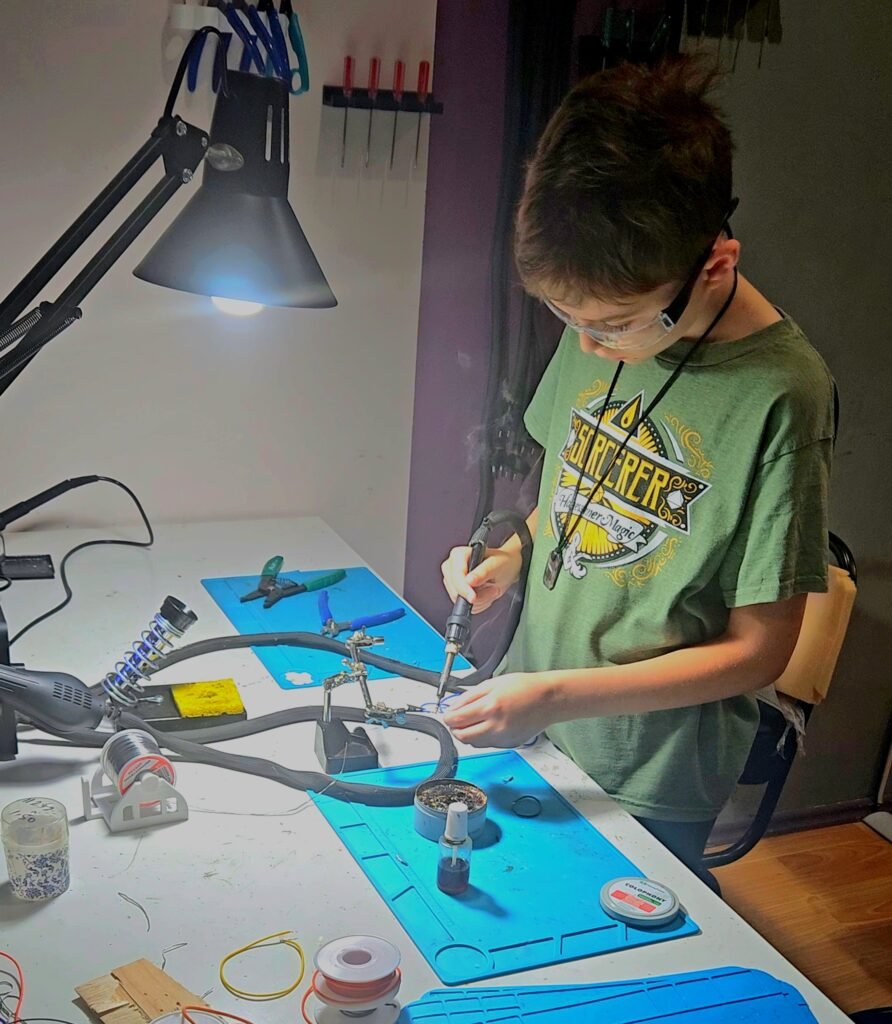
When you slow down, ordinary life comes back. Our son has been able to do things such as robotics classes, art classes, swimming, taekwondo, singing and drumming. It is also why slow travel works particularly well with maintaining academics.
We have written much more about this practical side of travelling slowly in our guide to Long Term Travel With Kids. The relevant point academically is simple: continuity is considerably easier when your physical location has some continuity too.
What We’ve Learned About Worldschooling Academics After Years on the Road
After years of doing this, I think the biggest lesson is that there isn’t one right way to balance academics and travel.
Some years, some subjects, or even some weeks need more structure than others. Sometimes we follow a programme closely; sometimes learning happens almost entirely through what we’re doing and where we are.
We’ve also become much less concerned with whether our son’s education looks like a traditional school day. What matters is whether he’s learning, progressing and staying curious.
And perhaps most importantly, we’ve learned that flexibility doesn’t mean having no structure. It means being willing to adjust the structure when your child needs something different.
That is probably the part of worldschooling that has taken us the longest to understand — you don’t have to choose between freedom and academic progress. You just have to keep paying attention to both, but you don’t need to obsess over it.
The Biggest Mistake We Think Parents Can Make
Ironically, after spending so much of this article talking about academic progress, I think one of the biggest mistakes a worldschooling parent can make is worrying about academics so much that they forget why they chose this life in the first place.
Of course we want our children to learn maths, read well, write confidently and have a solid academic foundation. We don’t believe those things should simply be left to chance, and that’s the whole reason worldschooling academics matter to us.
What Worldschooling Is Really About
But worldschooling was never supposed to be about recreating a traditional classroom in different countries.
It is also about giving children the chance to discover what genuinely interests them. To follow a question down a rabbit hole because they can’t stop wondering about it. To find passions they might never have encountered otherwise.
It’s about learning to navigate unfamiliar places and adapt when plans change. Being comfortable with uncertainty matters too, along with realising there isn’t one single “normal” way to live.
Meeting people whose languages, traditions, beliefs and everyday lives are completely different from your own teaches something else entirely. That difference isn’t something to fear. It’s something to understand and appreciate.
And perhaps most importantly, it’s about raising children who are curious about the world rather than simply prepared to pass tests about it.
So yes, keep an eye on the maths.
Make sure the reading is progressing.
Work on the gaps when you find them.
But don’t become so focused on whether your child is keeping up with everyone else that you miss the extraordinary education happening right in front of you.
That’s the real balance of worldschooling academics: enough structure to keep progressing, and enough freedom to keep exploring. Academic progress matters, but so does everything else we’re hoping to teach them by giving them the world.