

How to Start Worldschooling: A Step-by-Step Guide From Our Family
Some of the links below are affiliate links. If you buy through them we may earn a small commission at no extra cost to you. We only recommend things we’ve used ourselves.
How to start worldschooling, in short: sort out an income that isn’t tied to one place, get clear on why you want to do it, and check the education rules in your home country. Then choose a style that suits your family and a first stop that’s easy to love. The rest is admin you can work through in a few months. You don’t need a perfect plan to begin.
We’ve been worldschooling our son since August 2020, when we left Cork, Ireland. He was almost four. We travelled full time for four years, visited more than 90 countries, and in 2024 made Tbilisi, Georgia our home base. He’s 10 now and still worldschooled. This guide is the order we’d follow if we were starting again, with what we actually did at each step.

How to Start Worldschooling: The 14 Steps at a Glance
- Decide why you want to worldschool: your reason shapes every other choice.
- Choose your worldschooling style: constant travel, a home base, hubs or online school.
- Check the legal side: education rules start in your home country.
- Plan your budget: know your monthly number before you go.
- Sort out income, visas and banking: income comes first.
- Decide what to do with your home and belongings: sell, donate or store.
- Choose your first destination: easy, close and exciting.
- Set up your education plan: a few core subjects, plus the world.
- Get insurance and paperwork ready: check the rules for children.
- Find accommodation that works for a family: could you actually live there?
- Pack light: everything has to earn its place.
- Build community and friendships: plan for it from day one.
- Start with a trial run: a set period takes the pressure off.
- Pace yourselves: slow travel beats burnout.
Our Timeline: From Deciding to Leaving
Worldschooling wasn’t a spur-of-the-moment decision for us. We planned it and worked towards it for at least two years before we left. The goal was always the same: a location-independent income for both of us.
- At least two years before: we decided we wanted to leave and set our sights on remote work.
- Early 2020: my husband already worked remotely. In April 2020 I got a remote job at the same company. We could both work from anywhere.
- The next six months: we waited out the COVID lockdowns in Ireland, and sold, donated and closed things down.
- August 2020: as soon as restrictions lifted, we left for Nice, France.
Without the lockdowns, the practical side would have taken far less time. Once the income was in place, everything else moved quickly.
Step 1: Decide Why You Want to Worldschool
This is the step most guides skip, and it’s the one we’d put first. Your reason decides how fast you move, how much you spend and what education looks like. It also keeps you going when things get hard.
Our reasons were simple. We loved Ireland, but not the rain or the rising cost of living. Most of all, we wanted more time together as a family. Travel gave us all three.
Ask yourselves a few honest questions:
- Do we want to travel, or do we mostly want something different from our current life?
- Is this about education, family time, adventure, or all three?
- How long do we imagine doing it: a year, several years, or open-ended?
Then turn your why into a goal, and start working towards it. Ours was two remote incomes. Yours might be a savings target or a departure date. If you’re not sure travel is even the answer, read what four years of full-time family travel taught us first.


Step 2: Choose Your Worldschooling Style
There’s no single way to worldschool. These are the main options:
- Constant travel: no permanent home, moving every few weeks or months. This was us for four years.
- A home base with slow travel: you live in one place and travel for weeks or months at a time. This is us now. Read how to choose a home base.
- Worldschooling hubs: learning communities for travelling children, usually for a few weeks at a time. See our hubs directory with prices.
- Online school: a set timetable and a recognised record, wherever you are. We haven’t used one ourselves.
- A gap year: six months or a year away, then back to school and work. That was our original plan.
Your style can change, and it probably will. Our son was too young to be part of the decision when we left. As he grew, his voice mattered more. Eventually he told us he didn’t want to travel full time any more, so we settled in Tbilisi. We explain the differences between each model in what is worldschooling.
Step 3: Check the Legal Side in Your Home Country
Worldschooling is a way of learning, not a legal category. Governments look at the arrangement behind it: independent homeschooling, an online school, or a child still enrolled in school at home. The rules depend on your home country, and sometimes your state or province.
Before you leave, find out:
- Whether you need to withdraw your child from school formally.
- Whether you need to register as a homeschooler, notify anyone or complete assessments.
- Whether the rules still apply to you once you no longer live there.
Remember that a long stay somewhere new can bring that country’s rules into play too. A visa lets you stay; it doesn’t confirm that your homeschooling meets local law. We compare the rules in popular countries, with official sources, in is worldschooling legal? We’re parents, not lawyers, so treat this as a starting point and check with the authorities in your own country.
Step 4: Plan Your Budget
Worldschooling can cost less than life at home, or a great deal more. It depends on where you go, how often you move and how you like to travel.
For a sense of scale, our family of three spent $80,824 USD on full-time travel in 2024, a deliberately bigger year across 14 countries. In 2023, a slower year mostly in Southeast Asia, we spent about $50,700 USD. Accommodation was our largest cost both times.
To build your own number, work out:
- Your monthly living costs in the region you want to start in.
- Flights and transport between places. Moving less often saves the most.
- Fixed costs that follow you: insurance, tutors, phone plans and subscriptions.
- A separate pot for the big experiences you’ll regret skipping.
That last line matters more than it looks. We explain why in the mistakes section below. Every category we spent on is broken down in our real one-year family travel budget.
🧳 Free download: our Family Relocation Checklist
Not sure where to go first, or what it would really cost? Our free Family Relocation Checklist helps you set your family’s must-haves, compare up to five destinations side by side and see what a move would cost. It works in Excel or Google Sheets.
Enter your email below and we’ll send it straight to your inbox.
Step 5: Sort Out Income, Visas and Banking
If you only take one thing from this guide, make it this: get your income sorted first. It could be a remote job, an online business, rental income or another source that doesn’t depend on where you live. Everything else is easier once that’s in place. We both had remote jobs at the same company before we left.
Visas
Many families travel on ordinary visitor stays and move on before they run out. For longer stays, a digital nomad visa can let the whole family live somewhere legally while you work remotely. Some countries are generous anyway: Georgia lets citizens of many countries stay a full year without a visa. We list 22 family-friendly schemes in digital nomad visas for families.
Banking and tax
We closed our Bank of Ireland accounts and switched to online banks: Revolut, Wise and N26. They’re easy to manage from anywhere and handle multiple currencies well. Check each bank’s terms for people who don’t live in its home country.
We also closed our tax residency in Ireland. Tax is the area where families most need proper advice. The rules depend entirely on your home country and your circumstances, so speak to a qualified tax adviser before you go.

Step 6: Decide What to Do With Your Home and Belongings
This step felt bigger in our heads than it was in practice. We rented our home in Cork, so we didn’t have a house to sell or let. That made leaving much simpler.
Here’s what we did with everything else:
- Sold: electronics and anything bulky we didn’t need.
- Donated: most of our clothes and books.
- Mail: most of it was already digital, so there was very little to redirect.
If you own your home, you’ll need to decide whether to sell, rent it out or keep it empty. Renting it out can fund part of your travels, but it adds a property to manage from abroad. For belongings, ask the same question we ask when packing: would we actually miss this? Storage costs add up month after month, so keep it for things you’d genuinely want back.
Give yourselves time for this part. Selling and donating takes longer than you expect, even in a rented flat.
Step 7: Choose Your First Destination
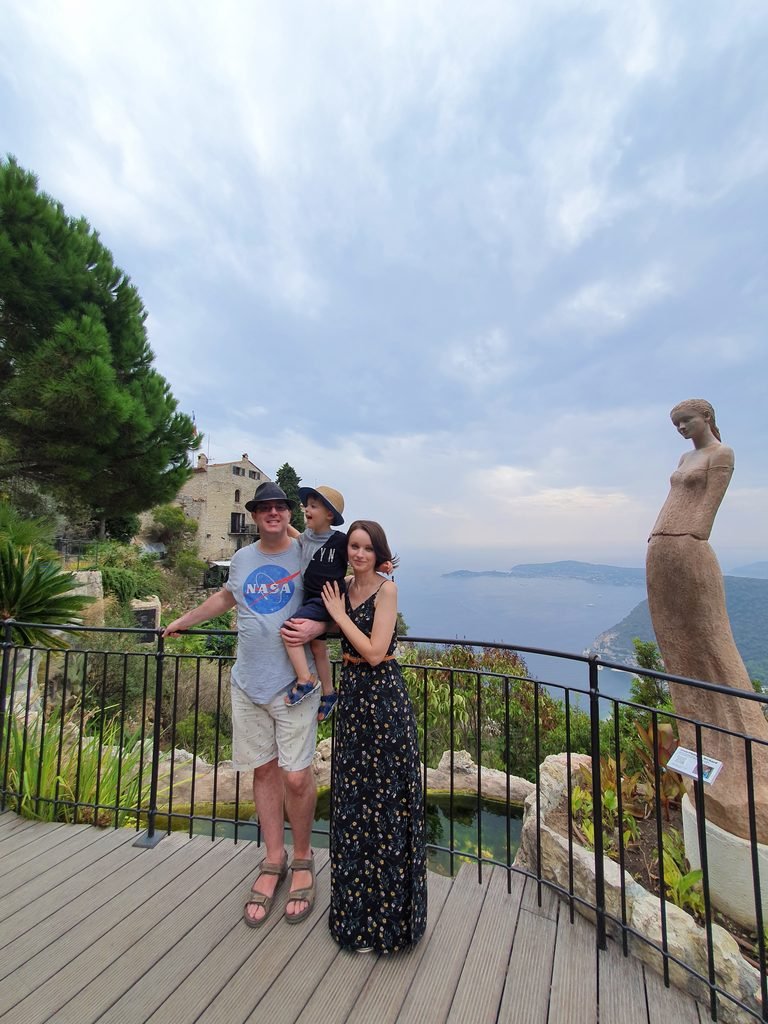
Our first stop was Nice, France, and we’d choose it again. It was open during COVID, it was close to Ireland, and we’d planned to go there right before the pandemic hit. We stayed a month and explored the coast.
Nice is a very family-friendly city, with some of the most amazing playgrounds I’ve ever seen. That mattered more than we expected. Our son had barely been around other children during six months of lockdown. In Nice, he could finally go out whenever he wanted and play with other kids. He loved it from the very first day.
What makes a good first stop for a family:
- Easy entry: no complicated visa and a short flight from home.
- Family-friendly basics: playgrounds, parks, safe walking streets and good supermarkets.
- Somewhere you’re excited about: your first weeks set the tone.
- Enough time: a month lets you settle before you judge the lifestyle.


Step 8: Set Up Your Education Plan
Our honest advice: don’t worry so much about academics. Children don’t fall behind just because they’re not in a classroom, and you don’t need to be obsessive about it. At 10, our son does seventh-grade maths and reads at a seventh- or eighth-grade level. That’s our experience, not a promise, but it’s given us confidence.
What works for us is a light structure:
- A few core subjects on a steady track. For us that has always been maths, plus languages now.
- The world for everything else. History, culture, geography and plenty of science come from the places we visit.
- Tutors for the subjects that need a teacher. Our son has online lessons on Preply, which come with us wherever we go.

For the detail, read how we keep up with academics, our list of worldschooling apps and websites and our Preply for kids review. For younger children, our free kids travel journal is an easy way to start.
📒 Plan the learning in one place
When you start worldschooling, it’s hard to see the learning that happens away from the books. We made our Worldschooling Learning & Travel Planner to bring both sides together: an academic snapshot, a gap finder and a 90-day plan, a weekly planner, and pages for the history, culture, language and nature of every place you visit.
It’s 20 pages, and comes as an instant download in A4 and US Letter, so you can print it wherever you are.
Step 9: Get Insurance and Paperwork Ready
Ordinary holiday insurance usually won’t cover months away from home. You need a policy built for long-term travel, and you need to read the rules for children carefully. They vary a lot between insurers.
Two options we compare in detail:
- SafetyWing Nomad Insurance: up to two young children are covered free, and you pay every four weeks.
- Genki: high medical limits and most sports included, but it’s health cover only and every child pays.
Our travel insurance guide for nomad families has real quotes for two adults and a child.
For paperwork, check that every passport has plenty of validity left. Many countries want at least six months. Keep digital copies of passports, birth certificates and insurance documents somewhere you can reach from any device. If a country needs vaccinations, sort those out well before you leave.
Step 10: Find Accommodation That Works for a Family
A place that’s lovely for three nights can be hard work for a month. The question isn’t “Is this nice?” It’s “Could we actually live here?”
When we book somewhere for a month or two, we check:
- Wi-Fi that really works. We always message the host and ask for the speed before booking.
- A proper workspace, separate from where our son plays or learns.
- A kitchen you can cook in, not one saucepan and two forks.
- The neighbourhood: parks, shops and transport within easy reach.
Always have a backup connection too. We use eSIMs from Airalo and Nomad, so a dropped router never cancels a work call or a lesson. New Airalo customers get 15% off with code NEWTOAIRALO15 (valid until December 31, 2026). Our full checklist is in how to find long-term accommodation for a family.
Step 11: Pack Light
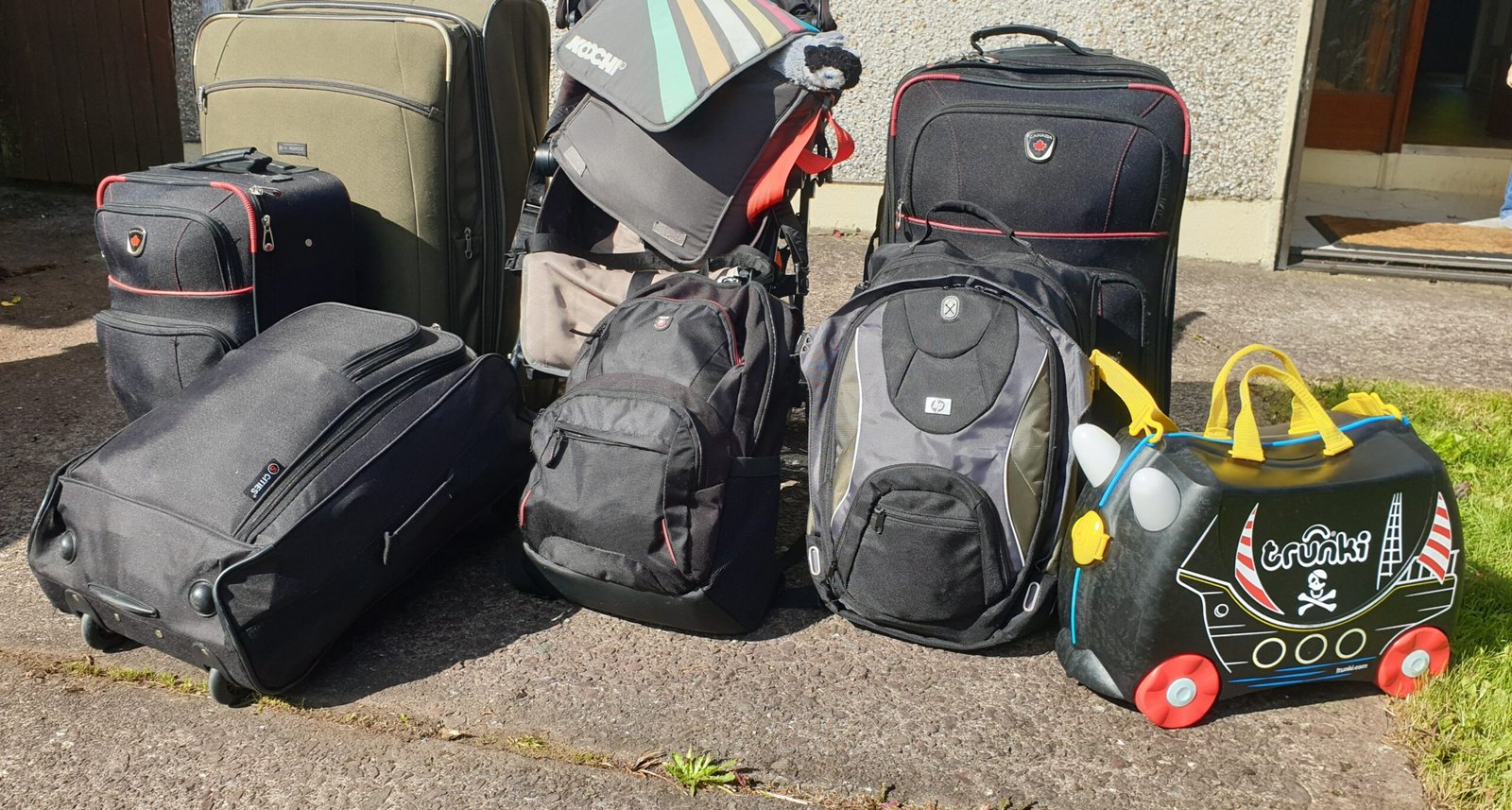
We packed too much at the start. At one point we had so many bags that a standard taxi couldn’t fit us all. That meant two taxis, or paying more for a bigger car. Eventually we cut down to two large suitcases and two backpacks, and travel got much easier.
The trick is to change the question. At home you ask, “Could this be useful?” On the road, ask, “Is this useful enough to carry for months?” You can buy most things where you’re going. You’ll need fewer clothes than you think. Let each child choose a few favourite things to bring, and keep the rest for later. See exactly what made the cut in how we pack for long-term family travel.
Step 12: Build Community and Friendships
When our son was small, friendship was easy. He’d meet a child at a playground, play for an afternoon and move on happily. We looked for other travelling families, arranged playdates and joined local expat groups.
Around the age of seven, that changed. He wanted friends he could see again and again, not just for a day. Meeting children isn’t the same as keeping friends, and continuity became the hard part.
Plan for community from the start, especially with older children:
- Worldschooling hubs give children a group and a routine. Our son spent four weeks at one in Guatemala in January 2026. Read our Antigua Global Explorers review.
- Longer stays make classes and clubs possible.
- Travelling with other families gives children friends going the same way.
We share what worked, and what didn’t, in how worldschooling kids make friends.
Step 13: Start With a Trial Run
You don’t have to commit to forever. Our own plan was to travel for about a year and then find somewhere to settle. One year turned into four, but giving ourselves a set period took a lot of pressure off at the start.
A trial can be as simple as:
- A month or two abroad while you keep working remotely.
- A summer of slow travel before you give up your home.
- A gap year with a clear review point halfway through.
Use it to test the things you can’t plan for: how your family works in a small flat, how your child copes with change, and whether your work fits a new time zone. Then decide what comes next with real information instead of guesses.
Step 14: Pace Yourselves to Avoid Burnout
Long-term travel isn’t a holiday. You still work, do the laundry, buy groceries and keep your child learning. On top of that, you plan every next move. When you move often, all those small jobs add up quickly.
In our experience, staying two to three months in one place beats moving every three or four weeks. Ordinary days at home are part of the lifestyle, not a waste of a new country. A loose daily routine also helps children feel secure while everything around them changes.
Watch for the signs: short tempers, no interest in going out, or a child who keeps asking to stay home. They usually mean it’s time to slow down. Read how to avoid burning out on long-term travel with kids for what helped us.

Mistakes We Made When We Started Worldschooling
We worried too much about money
This is the big one. In our first months, we skipped some places because we were worried about the cost. Looking back, that was a mistake. You can always make more money, but you might never get the time or the chance to go back to that area again. Budget carefully, but leave room for the experiences that matter.
We tried to do something every day
At the start, staying home in a new country felt almost wrong. So we went out exploring every day. It isn’t sustainable, and it took us a while to accept that rest days are fine.
We carried far too much
Too many bags made every move harder and more expensive. Two suitcases and two backpacks are plenty for our family of three.
We underestimated friendships for older children
Playground friends were enough at four. They weren’t enough at seven. If we started again, we’d slow down sooner and look for community earlier.
Worldschooling for Beginners: FAQ
How much money do you need to start worldschooling?
There’s no fixed figure. What matters most is a steady income that isn’t tied to one place, plus some savings for emergencies. Our family of three spent between about $50,700 and $80,824 USD a year while travelling full time. The full budget breakdown shows where it went.
How long does it take to start worldschooling?
It depends mostly on your income. We worked towards remote jobs for at least two years. Once we both had them, it took six months to leave, mainly because of COVID lockdowns. Without those, the practical steps could take a few weeks to a few months.
What age is best to start worldschooling?
There’s no perfect age. We started when our son was almost four, and young children adapt very easily. Older children often need more continuity and lasting friendships, so expect to adapt your style as they grow.
Is worldschooling legal?
For most families, yes, but it depends on your home country and how you educate your child. A few countries restrict homeschooling heavily. Check the rules before you leave, starting with our guide to homeschooling laws for travelling families.
Can you worldschool without travelling full time?
Yes. Worldschooling is about how a child learns, not how often you move. Plenty of families worldschool from a home base, through long trips, school holidays or local museums and nature. We live in Tbilisi now and still worldschool our son.
Do worldschooled children fall behind?
Not in our experience. Keeping a few core subjects, especially maths, on a steady track has been enough for our son to stay ahead in maths and reading. Every child is different, though, so keep an eye on progress and adjust.
Final Thoughts: Our Best Advice for Getting Started
If you’re starting now, these are the things we’d tell you over a coffee:
- Understand your why. Turn it into a goal, and start working towards it.
- Get your income sorted first. Everything else gets easier once it’s in place.
- Don’t overthink it. A lot won’t go to plan, and that’s fine. You don’t need to control everything.
- Relax about academics. Children don’t fall behind just because they’re learning in the world.
Worldschooling has changed shape for us more than once, from four years on the move to a home base in Tbilisi. It has never been perfect, and we’d still do it all again. When you’re ready to plan the details, our worldschooling resources guide has every tool and service we use.