


How to Choose a Home Base as a Travelling Family
Choosing somewhere to visit and choosing somewhere to live are two completely different decisions. When you’re travelling, you can put up with a lot for a week or two. Maybe the apartment is a little noisy, or the supermarket is a 20-minute taxi ride away. Maybe the weather is unbearably hot in the afternoon, but the beaches are beautiful. Or maybe you don’t love the neighbourhood, but you’re only there until next weekend. When you’re choosing a home base for family travel, those little things become your actual life.
After years of full-time travel, the question eventually starts to change. Instead of constantly asking, “Where should we go next?”, you may find yourself asking, “Where could we actually build a life for a while?”
That doesn’t necessarily mean settling down permanently. A home base can be somewhere you return to between trips, somewhere you spend most of the year, or simply somewhere you decide to call home for the next year or two.
After around four years of travelling full-time, that’s the model we eventually moved towards. We established a home base in Georgia (the country), where we now spend six to seven months out of the year, while still travelling for a few months at a time, several times a year.
It didn’t mean we stopped being a travelling family. It meant we stopped needing every part of our lives to move every time we did.
So how do you work out whether somewhere could actually work as a home base for your family?
The answer isn’t finding the “best” country or the most popular digital nomad destination. It’s working out what your family needs, then testing whether a particular place can provide it.
First, Decide What “Home Base” Actually Means to You
Before looking at maps, rental prices or visa requirements, decide what you actually mean by having a home base.
There isn’t one model that works for every travelling family.
For some people, a home base means a permanent home that they return to after every trip. For others, it means spending eight or nine months of the year in one place and travelling during the rest. You might want a seasonal base, a one-year rental, or a country where you return regularly without ever intending to settle there permanently.
You could even have a home base for a particular stage of your family’s life. Perhaps you want somewhere to return to while your children are young, somewhere that works particularly well for your current work situation, or somewhere that gives you a reliable starting point for exploring a particular region.
The important thing is not to assume that choosing a home base means giving up the lifestyle that made you want to travel in the first place.
For some families, it is actually the opposite. Having somewhere to return to can make it easier to travel because you no longer have to rethink your entire life every time you leave.
Start With Your Family, Not the Destination
It’s tempting to start with a question like, “Which country is best for digital nomads?”
We think that’s backwards.
The better question is:
What does our family actually need from the place where we live?
That answer will be different for every family.
Parents might need reliable working conditions, a manageable cost of living and access to the things they enjoy doing in their free time. Children might need particular activities, educational opportunities, friends or simply enough freedom to spend time outdoors. Your family might need a walkable neighbourhood, a beach, mountains, good public transport or a large international community.
The point isn’t to create an enormous list of requirements. It’s to work out which things genuinely affect whether your family will be happy there.
And those requirements can change.
A location that works brilliantly when your child is four might not work nearly as well when they’re nine. A place that suited you while building a business might not suit you once your work changes. You might become less tolerant of long journeys, start caring more about extracurricular activities, or discover that being close to other families has become much more important.
Your ideal home base is therefore not necessarily your ideal destination for life. It’s the place that fits the particular version of your family that exists now.



Ask Yourself What Everyday Life Would Actually Feel Like
This is probably the most useful question we ask when considering somewhere for a longer stay:
Could we enjoy an ordinary Tuesday here?
Not a Saturday spent exploring, or a day at the beach. Not the afternoon you spend visiting the city’s most famous attraction.
A Tuesday.
You wake up. Someone needs breakfast. You have work to do. Your child has somewhere to be. You need groceries. Perhaps you want to exercise. You need to pick something up. It’s raining. You’re tired. Nobody particularly feels like sightseeing.
What does that day look like?
Can you walk to a supermarket? Is there somewhere nearby for coffee? How difficult is it to get around? Are there parks or places to spend time outside? Can you get to the activities you want without spending half your day in traffic? Are there restaurants you would actually want to eat at regularly, rather than simply once while you’re visiting? How is the quality of food?
This is where a destination can look very different once the novelty wears off.
A place doesn’t need endless attractions to be a good home base. In fact, you may eventually care much more about having a good supermarket five minutes away than having twenty museums within an hour.
Convenience isn’t particularly exciting when you’re planning a holiday. It becomes extremely valuable when you’re living somewhere.


Community Matters More When You Stop Moving
One of the biggest differences between constantly travelling and having a home base is what happens to relationships.
When you’re moving frequently, you can meet an extraordinary number of people. But meeting people isn’t necessarily the same as building relationships with them.
We wrote about this in much more detail in our article about how worldschooling children make friends, because this became a real issue for our family as our son got older.
When he was younger, meeting another child and playing together for an afternoon could be enough. As he got older, he wanted something different. He wanted to know the same children, spend time with them repeatedly and build friendships that didn’t automatically disappear when somebody boarded a plane.
Having a home base changed that.
Our son now has people he sees regularly, recurring activities and friendships that don’t reset every time we travel somewhere new. When we leave Georgia, he’s still leaving friends behind rather than leaving his entire social life behind.
That distinction matters for adults too.
Think about the kind of community you would actually want around you. That might mean other travelling families, worldschoolers, local families, expats, people from your own country, or simply neighbours you gradually get to know.
A large expat community isn’t automatically better. Nor is a destination with lots of digital nomads. What matters is whether there are realistic opportunities to build relationships for you and your kids that fit the life you want.


Think About the Language Barrier
When you’re visiting somewhere for a week, you can usually get by with a few phrases, a translation app and a lot of pointing.
Living somewhere is different. You’ll be dealing with landlords, doctors, teachers, repair people, delivery drivers and government offices. Sooner or later, you’ll need to explain something much more complicated than a coffee order.
Find out how widely English (or another language your family speaks) is used in daily life, not just in tourist areas. Is it spoken at the clinic? Are rental contracts and official documents available in a language you understand? Can your child join activities before they speak the local language?
A language barrier isn’t necessarily a deal breaker. For many worldschooling families, it’s part of the appeal. Children often pick up a new language far faster than their parents, and learning it can become one of the most valuable parts of living somewhere.
But be realistic about the effort involved. If the local language uses a different alphabet or has few learning resources, it may take much longer to feel independent. Decide whether you’re happy relying on translation apps and helpful friends, or whether you actually want to learn.
Education Should Fit the Life You Actually Want
For travelling families, education is another area where “good schools” isn’t necessarily the right measure.
If you’re worldschooling or homeschooling, you might care more about libraries, museums, language or theatre classes, sports, music, art, tutors, nature and access to educational resources than whether the local school system has a good reputation.
If you’re planning to use an international school, the criteria will be completely different.
And if your children will attend a local school, language, curriculum, admissions requirements and school calendars may become major considerations.
The useful question is:
Does this place support the way we actually want our child to learn?
That’s a much more relevant question than whether someone online considers a particular city “family friendly.”
A home base can also give you options that are difficult to maintain while constantly moving. A child can attend the same swimming class, continue with a language teacher, join a sports team or return to the same library or activity centre week after week.
For a worldschooling family, that doesn’t mean replacing travel-based learning. It can simply provide a more consistent framework around it.



Look at the Cost of Living, Not Just the Rent
A cheap apartment doesn’t necessarily create a cheap home base.
The number that matters is the cost of the life you actually want to live.
Rent is only one part of it. You’ll also need to consider utilities, groceries, restaurants, transport, activities, children’s classes, healthcare, insurance, schooling if applicable, visa expenses and the cost of travelling in and out.
A place where rent is inexpensive can become considerably less affordable if you need a car, rely on taxis, eat out frequently because the kitchen doesn’t work for your family, or have to fly long distances every time you want to leave.
Flights deserve particular attention for travelling families. If you’re planning to take several trips a year, the cost of getting to and from your base can become a meaningful part of your annual budget.
There is an important distinction between cheap to live in and affordable for the lifestyle your family actually wants.
The second one is what matters.
Before committing to a place, work out what your real monthly spending would look like rather than relying on a generic “cost of living” figure designed for a single digital nomad.
A family of three with children attending activities, eating out regularly and travelling several times a year has a very different budget from a solo traveller living in a studio apartment and working from a coworking space.
What Our Family of Three Actually Spends in Georgia
As a family of three, our everyday living costs in Tbilisi come to about $4,263 a month, including $1,450 in rent and $900 for our son’s classes and activities. We’ve shared the full line-by-line breakdown, and why our numbers are probably higher than average, in our article on living in Tbilisi with kids.
The Cost of Keeping a Base While You Travel
There’s one cost that’s easy to overlook: your home doesn’t stop costing money when you leave it.
We’re usually away for anywhere between one and four months at a time, and we keep paying rent on our apartment the whole time. Because we’re also paying for accommodation wherever we are, that sometimes means paying double rent. It’s one of the real trade-offs of having a base.
While we’re away, our fixed costs at home are about $1,500 a month: $1,450 for rent, plus around $50 for internet and utilities, which we keep paying even though we’re barely using anything. Our phones are on month-to-month plans rather than annual contracts, so we don’t pay for them while we’re travelling.
That means a four-month trip adds around $6,000 in costs at home before we’ve booked a single night elsewhere. If you’re comparing a home base with full-time travel, make sure this is part of the calculation.
Tip: when you’re setting up a base, check whether services like your phone, internet and subscriptions can be paid month to month. The more you can pause while you’re away, the less your base costs you when you’re not in it.
Climate Can Make or Break a Home Base
A destination can have perfect weather during the month you visit and still be a terrible fit for the rest of the year.
When you’re evaluating somewhere as a home base, look at the entire annual climate.
What are the summer temperatures actually like? What happens in winter? Is there a long rainy season? How humid does it become? Will you need heating? Air conditioning? Both?
Air quality may matter too, particularly if you have children who spend a lot of time outdoors. It can also change throughout the year (as an example, Chiang Mai becomes unbearable during the burning season, although it’s perfectly fine the rest of the year).
Think about how the climate affects normal life rather than just whether you personally enjoy it. Can your child comfortably spend time outside? Can you exercise outdoors? Will you be hiding indoors for several months of the year? Does the rainy season coincide with the time when you expect to spend most of your year there?
A pleasant week in November tells you very little about what living somewhere through August feels like.

Healthcare Becomes More Important When You Actually Live Somewhere
Healthcare is one of those things that’s easy to overlook when you’re planning a short trip.
When you’re choosing a home base, it deserves much more attention.
Find out what private healthcare is available locally, where the main hospitals are, whether there are English-speaking doctors if that’s important to your family, and how easy it is to make an appointment.
If you have children, look specifically at paediatric care and dental care rather than assuming general healthcare will cover everything you need.
It’s also worth knowing what would happen in an emergency. How far away is an appropriate hospital? Would you need to travel to another city for specialist care? Does your insurance work there, and what does it actually cover?
And, of course, healthcare costs can form part of the overall cost-of-living calculation.
You don’t need to become an expert in another country’s healthcare system before choosing a home base. You do need to understand enough to know whether the system meets your family’s requirements.
Feel Safe in Everyday Life, Not Just on Paper
Safety rankings and travel advisories are a useful starting point, but they rarely tell you what daily life feels like for a family.
The questions that matter are more practical. Can your child walk to a friend’s house or the corner shop once they’re old enough? Do you feel comfortable walking home after dark? Are the pavements and roads manageable with children, or is every walk a negotiation with traffic?
Look at the things that affect families specifically: road safety, the condition of playgrounds, whether drivers actually stop at pedestrian crossings and whether children are generally welcome in public spaces. Petty crime, common scams and natural hazards such as earthquakes, flooding or extreme heat are worth understanding too.
It’s also worth asking how safe a place feels for every member of your family. A city can feel very different to a parent with a pushchair, a woman walking alone in the evening or a teenager gaining more independence.
The best information usually comes from families who already live there. Ask what they let their children do on their own, and what they still worry about.
If You Work Online, Test the Infrastructure Before You Commit
For a remote-working family, internet access is not a luxury.
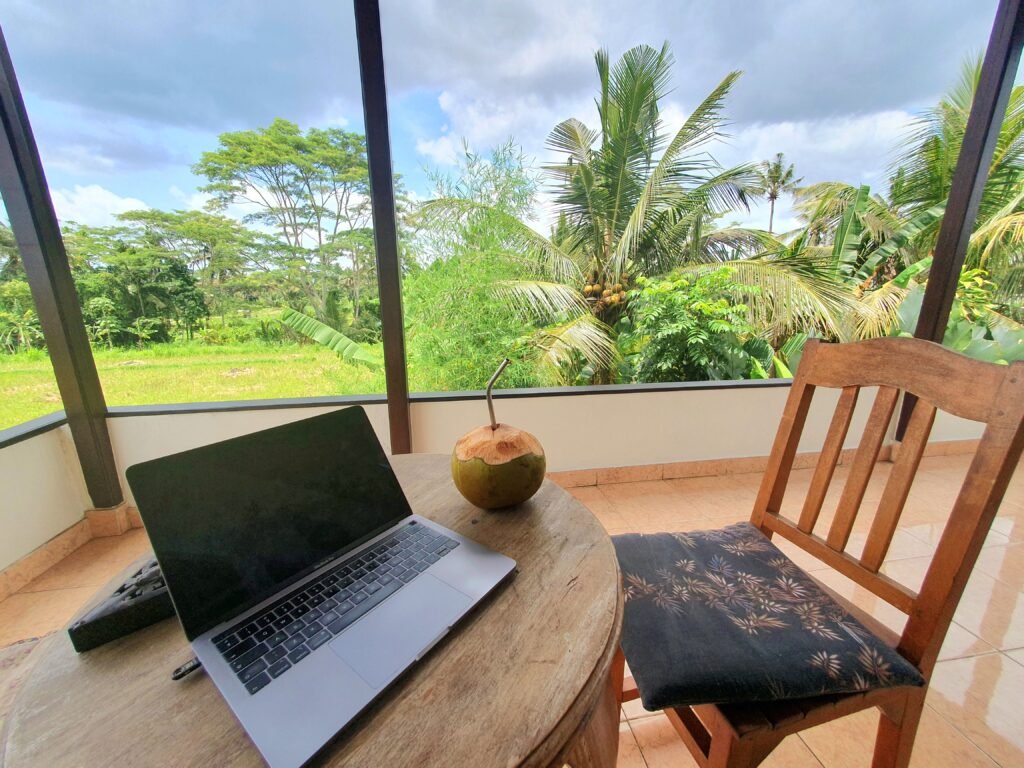
Before signing a long-term lease, test the actual connection in the actual apartment if possible. Don’t rely solely on an accommodation listing saying “fast Wi-Fi.”
Think about mobile data as well. A local SIM or eSIM can be a useful backup if your primary connection fails.
Then consider electricity reliability, noise levels, your workspace and whether you have somewhere suitable for video calls. A beautiful apartment with a desk beside a busy road may not be particularly useful if you spend half your working day on calls.
Coworking spaces can be useful, but don’t assume you’ll use one simply because a city has plenty of them. If you work from home, the quality of your actual home workspace may matter much more.
Time zone is another practical consideration. If your clients or team are elsewhere, check what your working hours would really look like. A location can look fantastic on paper until you realise your important calls happen late at night.
Think About How Easy It Is to Leave
One of the advantages of having a home base is that you don’t have to move your entire life every time you want to travel.
That makes travel connectivity surprisingly important.
Look at the nearest international airport, but don’t stop there. Check where you can actually fly, how often those flights operate, whether connections are required and how long it takes to reach the airport from your home. Check the usual departure times too. In some countries, most international flights leave at 3:00 or 4:00am, which can turn a quick weekend trip into an ordeal for the whole family.
Regional rail and bus connections can matter too, particularly if you expect to travel overland. A base doesn’t necessarily need to be beside a major airport. It does need to make sense for the way your family travels. If every trip starts with a complicated 12-hour journey just to reach an airport, you’ll probably notice that eventually.
One of the things we like about having a base is that travel now feels more deliberate. We’re not constantly relocating because our accommodation is expiring. We can leave for a longer trip, enjoy it, and then come back to a place that is already ours.
Check the Legal Reality Before Falling in Love With a Place
This is the part that can turn a great idea into an impossible one.
Being able to visit somewhere for 90 days does not automatically mean you can live there comfortably for years.
Before treating somewhere as a serious home-base option, find out what legal route would actually allow your family to stay for the period you’re considering.
Depending on the country, that might involve visa-free stays, a digital nomad visa, a residence permit, family or dependent visas, employment or business requirements, or another residence route.
Look at renewal rules too. A visa that technically allows you to stay for a year isn’t necessarily useful if the renewal process is complicated or your family doesn’t meet the requirements.
Tax residency needs separate attention. Living and working across borders can create tax questions for individuals and, in some circumstances, businesses. The rules depend on the countries involved and your personal circumstances, so this is one area where current official information and professional advice are much more useful than an old blog post.
The key is to check the legal reality before you become emotionally attached to the idea.


Don’t Underestimate Everyday Admin
Visas get most of the attention, but they’re only one part of the paperwork involved in living somewhere.
Once you settle in, you may need to open a local bank account, register your address, set up utilities and internet, get a local phone number, sign a rental contract, find a doctor, enrol your child in activities and get documents translated or notarised.
In some countries, all of this takes an afternoon. In others, it takes weeks, multiple visits and a stack of paperwork.
Check the things that commonly trip up foreigners. Can non-residents open a bank account? Do you need a local ID number for basic things like a phone contract or online shopping? Are bills paid online or in person? How reliable are deliveries and the postal service?
Don’t forget the admin you’ll still have back home either: tax returns, post, banking, and renewing passports and driving licences. A home base abroad doesn’t make any of that disappear.
None of this is a reason to rule a place out. But somewhere with straightforward everyday admin makes life much easier, especially when you’re leaving and returning several times a year.
Finding a Home Is Different From Booking Accommodation
We’ve written before about finding long-term accommodation for family travel, because what works for three nights can be completely unsuitable for three months.
Once accommodation becomes your home, the details matter.
You might want two bedrooms (or even three) rather than one. A proper kitchen becomes much more important. So does a washing machine, storage, natural light and somewhere comfortable to work. Heating and air conditioning can matter enormously depending on the climate.
Noise matters. So do the neighbourhood and the distance to the supermarket. And the reliability of the landlord matters a lot more when you’re not checking out in four days.
We’ve found that the question gradually changes from:
“Is this apartment nice?”
to:
“Could we comfortably live here?”
That second question will probably eliminate some beautiful apartments.
That’s okay.
You’re not booking somewhere to sleep between sightseeing trips. You’re looking for a temporary home.

Use Non-Negotiables, Preferences and Deal Breakers
Once you’ve researched a few possible places, resist the temptation to create a complicated scorecard where every destination gets a number out of ten.
Instead, divide your criteria into three groups.
Non-Negotiables
These are the things the place genuinely needs to provide.
If reliable internet is essential for your income, it belongs here. If your child needs access to particular educational opportunities, that might belong here too.
Preferences
These would make a place more attractive but aren’t essential.
Perhaps you would love to live near the sea, have lots of restaurants within walking distance or find a particularly strong international community.
Wonderful if you get them. Not necessarily a reason to reject somewhere without them.
Deal Breakers
These are the things that eliminate a destination regardless of what else it offers.
Maybe the climate is completely wrong for your family, the legal route doesn’t work, the cost is beyond your budget, or the infrastructure doesn’t support your work.
Once you have these categories, decisions often become much clearer.
And importantly, your list should belong to your family.
The things that matter to another digital nomad family may have almost nothing to do with the things that matter to yours.
Test the Lifestyle Before You Commit
If you’re serious about a place, try to experience it as a resident rather than a visitor.
A useful approach is to make the decision in stages.
Stage 1: Visit and explore.
Use a first trip to get a feel for the place. Explore different neighbourhoods rather than judging it by the tourist centre.
Stage 2: Stay for several weeks and live normally.
Stay long enough for the novelty to wear off. Work your normal hours, let your child follow something resembling their usual routine, and have a few completely ordinary Tuesdays: rain, traffic, laundry and all.
Stage 3: Test the practical things and talk to people who live there.
Check internet speeds, visit supermarkets, try public transport, look at healthcare options and attend an activity. Figure out how the rubbish works and what happens when something breaks. Then ask families who live there what they love, what annoys them and what they wish they’d known before moving.
Stage 4: Then consider a longer commitment.
If the place still works after all of that, you have considerably more information than you would have had from a holiday.
How Having a Home Base Changed the Way We Travel
For us, the decision to establish a home base wasn’t really about deciding that full-time travel was bad.
We had spent around four years travelling full-time, and we loved a lot about it. We still do.
But our family changed.
As our son got older, his social needs changed too. The friendships section of this article isn’t theoretical for us. We eventually realised that constantly moving wasn’t giving him the continuity he was beginning to want.
So we changed the structure rather than abandoning the lifestyle. We move less frequently. Our son has friendships and activities that continue between trips. We have a familiar place to return to. And travelling feels more intentional because we’re leaving home to go somewhere rather than constantly searching for the next place to live.
It also changes the way you approach travelling. When you know you’re coming home again, you don’t feel the same pressure of unpacking or repacking your entire life every couple of months.
We’re still a travelling family. We still worldschool. We’ve just stopped requiring our entire life to be portable all of the time.
That balance works for us now. It may not have worked for us five years ago, and it may not work for us five years from now. That’s an important part of choosing a home base that is easy to forget.


Why We Chose Georgia
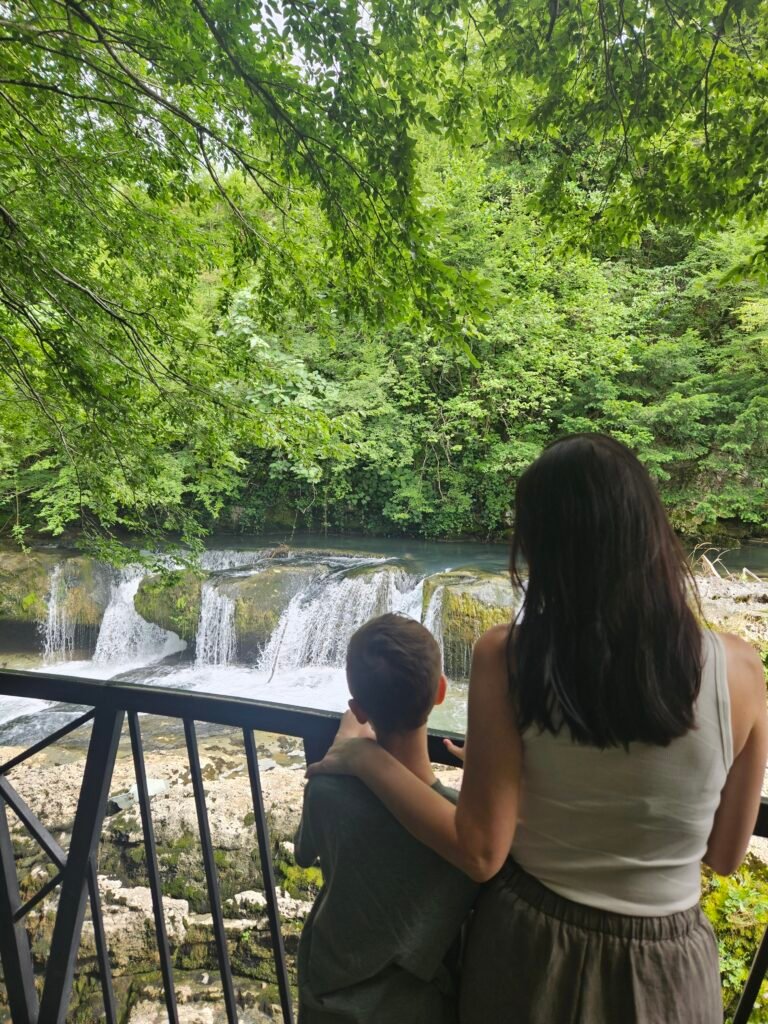
We’ve written about our decision in much more detail in why we chose Tbilisi as our home base, but in short, Georgia ticked the boxes that mattered most to us.
- Easy to stay long term. Citizens of around 95 countries, including Canada, the US, the UK and every EU country, can stay for up to a year without a visa. No visa applications and no extensions to worry about.
- Simple, low taxes. Setting up your taxes here is straightforward, and if you qualify for Small Business Status as an individual entrepreneur, you pay just 1% tax on turnover (up to GEL 500,000 a year). Eligibility depends on your type of work and personal circumstances, and you may still have tax obligations in your home country, so get professional advice before relying on it.
- Easy admin. You don’t need permanent residency to open a bank account, which makes everyday life much simpler than in many other countries.
- A friend for our son from day one. A friend of ours was already living here with her family, so our son had a potential friend waiting for him before we even arrived.
Home Base vs Full-Time Travel: The Pros and Cons
Having a home base isn’t better or worse than travelling full time. It’s a trade-off, and it’s worth being honest about both sides before you commit.
The Pros of Having a Base
- Lasting friendships and community. Both parents and children get to build relationships with people they see regularly, rather than starting from scratch in every new place.
- Continuity of learning. Children can keep taking the same classes with the same teachers, who already know them, how they learn and where they left off. Progress builds instead of restarting every few months.
- Familiar routines and places. Knowing the playground, the shop and the way to class can give children a real sense of security, especially after years of constant change.
- Not packing up your entire life. When you leave, you pack for a trip rather than a move. Everything else stays at home, waiting for you to come back.
The Cons of Having a Base
- Paying for a home you’re not living in. If you rent in your base country, the rent doesn’t stop when you leave. Long trips can mean paying for an empty apartment on top of your travel accommodation.
- Fewer adventures. Full-time travel means something new almost every week. With a base, more of your weeks look like ordinary life.
- Adjusting to “normal” life. When you’re used to constantly seeing new places and going on crazy adventures almost every weekend, settling into a routine can be harder than you expect. Ordinary life can feel a little flat at first.
For our family right now, the pluses win. But knowing what you’re giving up makes it much easier to decide whether a base is the right move for yours.
Your Home Base Doesn’t Have to Be Forever
Choosing a home base for family travel can sound like a much bigger decision than it actually is.
You don’t necessarily need to know where you want to live for the rest of your life.
You might choose somewhere for a year.
Or several years.
It might work particularly well during one stage of your child’s childhood. It might suit a particular phase of your career. You might eventually decide you want more space, a different climate, better travel connections or a completely different kind of lifestyle.
That’s normal. Your children will grow, work will change, your priorities will shift. The places you once loved may stop fitting the life you’re living. A home base is simply another way of structuring a travelling life. For us, it wasn’t the end of travel. It was a response to what our family needed at that point.
The important thing is not to find a place that works forever.
It’s to find somewhere that works now.
Our Home Base Checklist
Before committing to a new home base, work through the questions below.
Family
- Does this place fit what our family needs at this stage of life?
- What are our genuine non-negotiables?
- What would make us leave?
Everyday Life
- Could we enjoy an ordinary Tuesday here?
- Are groceries, errands and transport manageable?
- Is the neighbourhood convenient for our normal routine?
Education
- Does the local environment support the way our child learns?
- Are there suitable classes, activities and educational resources?
- If we use a school, does it fit our requirements?
Community
- Could we realistically build relationships here?
- Are there opportunities for our child to find kids of similar age, with similar interests and see them regularly?
- Would we have opportunities to meet other adults and families?
Language
- Can we handle healthcare, housing and admin in a language we understand?
- Can our child join activities before speaking the local language?
- Do we want to learn the language, and is that realistic?
Work
- Is the internet reliable?
- Is there a backup connection?
- Does the time zone work?
- Is the home suitable for working?
Healthcare
- Can we access appropriate healthcare?
- Is there suitable paediatric and dental care?
- Does our insurance work here?
- What would happen in an emergency?
Safety
- Do we feel safe here during the day and after dark?
- Are the roads, pavements and public spaces safe for our child?
- What natural hazards or common scams should we know about?
Cost
- What will our actual monthly lifestyle cost?
- What additional expenses will we have because of the location?
- How much will travelling in and out cost?
Climate
- What is the weather like throughout the year?
- Can our family comfortably live there during the hottest, coldest and wettest periods?
- Will heating, cooling or humidity become an issue?
Travel Access
- How easy is it to leave?
- What are the airport and regional transport options?
- Does this location make the rest of our travel easier or harder?
Legal Requirements
- How long can we legally stay?
- What residence options are available?
- What are the renewal requirements?
- Could living and working there create tax obligations?
Admin
- Can we open a bank account and set up utilities as foreigners?
- Do we need a local ID number for everyday services?
- How much admin will we still have back home?
Housing
- Could we actually live comfortably in the available homes?
- Is there enough space?
- Is there a proper kitchen and laundry?
- Is the neighbourhood right for our family?
- Can we find suitable longer-term rental options?
And finally, come back to the questions that matter most:
Could we enjoy an ordinary Tuesday here?
Would our child have a life here, rather than simply a place to stay?
Does this place make the rest of our travel easier or harder?
If the answer to those questions is yes, you may have found something much more useful than a great destination.
You may have found somewhere you can actually come home to.
Choosing a Home Base: Frequently Asked Questions
Start with what your family actually needs rather than which destination is popular. Look at everyday life, community, education, cost of living, climate, healthcare, safety, internet, travel connections and your legal right to stay. Sort your criteria into non-negotiables, preferences and deal breakers, then test a shortlisted place by living there normally for several weeks before committing.
Long enough for the novelty to wear off. A few weeks of working normal hours, following your child’s usual routine and dealing with ordinary errands will tell you far more than a holiday. If the place still works after that, consider a longer commitment.
It depends on how long you are away. A base keeps costing money while you travel, so long trips can mean paying rent twice. Our fixed costs at home are about $1,500 a month even when we are not there, so a four-month trip adds around $6,000 on top of the cost of the trip itself.
Yes. We spend six to seven months a year at our base in Georgia and travel for one to four months at a time, several times a year. A base with good flight connections and reasonable departure times makes this much easier.
It has worked well for us. Citizens of around 95 countries can stay for up to a year without a visa, opening a bank account does not require residency, and qualifying individual entrepreneurs can pay 1% tax on turnover. Check the current rules and get professional tax advice for your own situation.
Our family of three spends about $4,263 a month, including $1,450 in rent, $1,200 on groceries and $900 on our son’s classes and activities. We live in a more expensive neighbourhood and spend more than most families on extracurriculars, so it is possible to spend considerably less.





5 Comments