

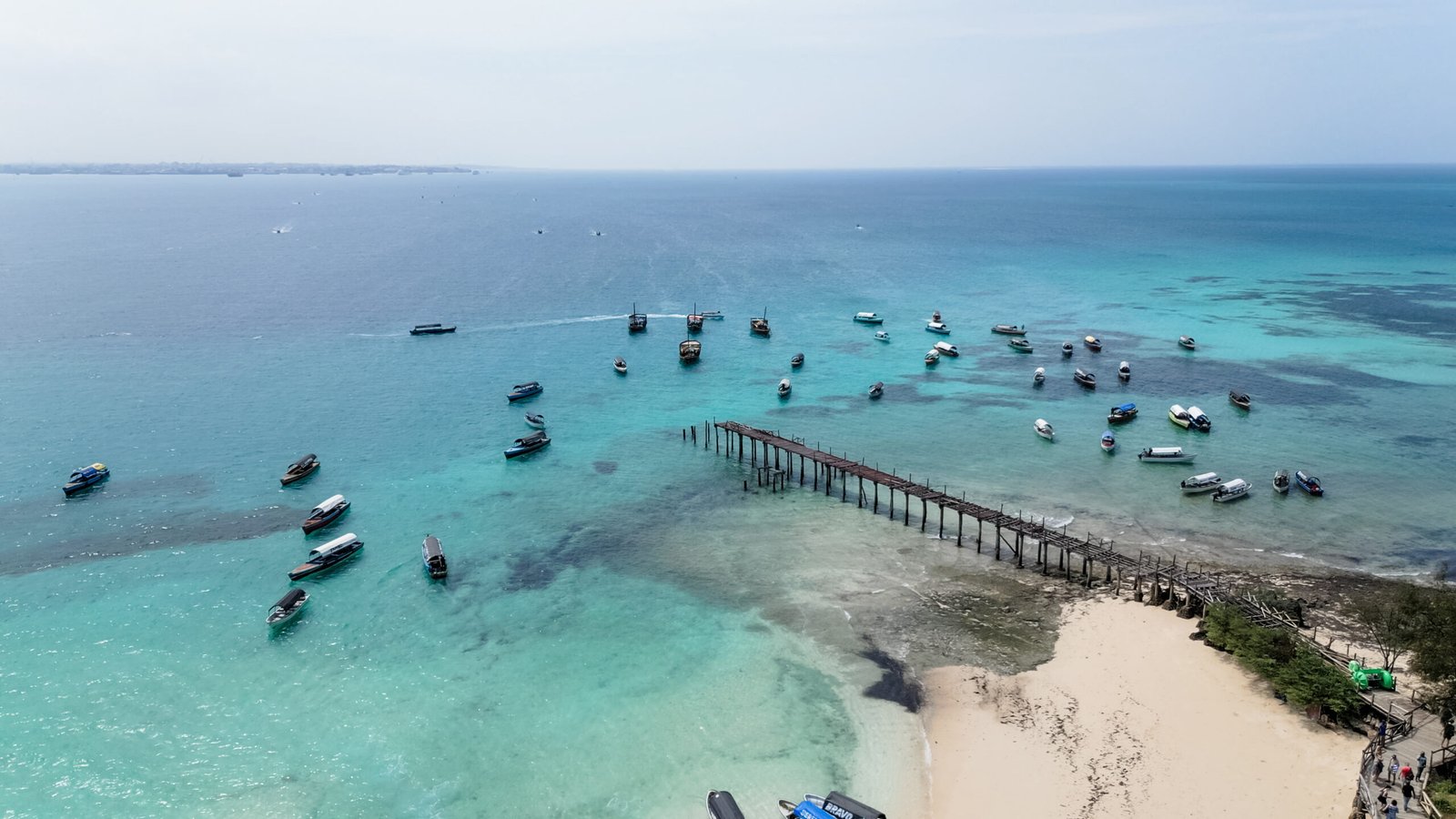
Zanzibar With Kids: What We Loved, What We Got Wrong & What We’d Do Differently
We spent about a month on the island with our son, and this is our honest guide to Zanzibar with kids. A month gave us a very different perspective from a typical week-long beach holiday. We had researched the island carefully, we knew roughly where we wanted to stay, and there were plenty of things we loved. But after living there for four weeks, there is one decision we would definitely make differently.
Some of the links below are affiliate links. If you book through them we may earn a small commission at no extra cost to you. We only recommend tours we have done ourselves.
For us, the biggest lesson was simple: the best place to visit isn’t necessarily the best place to live for a month.
Planning a trip to Zanzibar soon?
🏨 Family-friendly hotels we recommend:
- Zanzibar Coffee House (Stone Town, rated 8.9 on Booking.com) 🏠 Where We Stayed
- Ananda Beach Hotel (Paje, beachfront, pool, apartments and villas) 👍 Top Pick
- Mahali Zanzibar (Paje, beachfront, pool, family rooms)
- Riu Jambo (Nungwi, all-inclusive, beachfront, kids’ club and children’s pool)
- Babalao Bungalows (Nungwi, pool, family rooms, short walk to the beach)
🗺️ Tours & Experiences:
- Prison Island & Nakupenda Sandbank Boat Tour with BBQ (giant tortoises and the sandbank in one day) 🐢 Top Pick
- Stone Town Private Tour (2 to 3 hours with a local guide)
- Spice Tour, Cooking Class & Stone Town with Lunch (spice farm, Swahili cooking and Stone Town) 🌶️
📱 eSIM: Airalo or Nomad (compare them in our Airalo vs Nomad guide)
🏷️ Airalo discount: New customers get 15% off with code NEWTOAIRALO15 (valid until December 31, 2026)
🩺 Travel Insurance: Genki Traveler or SafetyWing Nomad Insurance (compare them in our insurance guide)
Why We Chose Zanzibar
Zanzibar was an easy fit with our Tanzania safari. We based ourselves on the island for the month and flew from Zanzibar to Arusha in the middle of our stay for three days in the Serengeti and Ngorongoro Crater, then flew back to the beach.
We also wanted time to slow down and not spend every day on organised excursions. As we like going to warmer places for winter, we wanted a base where we could have normal days, work when necessary, explore when we felt like it and give our son some downtime. After years of full-time family travel, we’ve learned that slowing down is what stops us burning out, and that a pool, a good restaurant nearby and somewhere pleasant to walk can be just as valuable as another excursion.

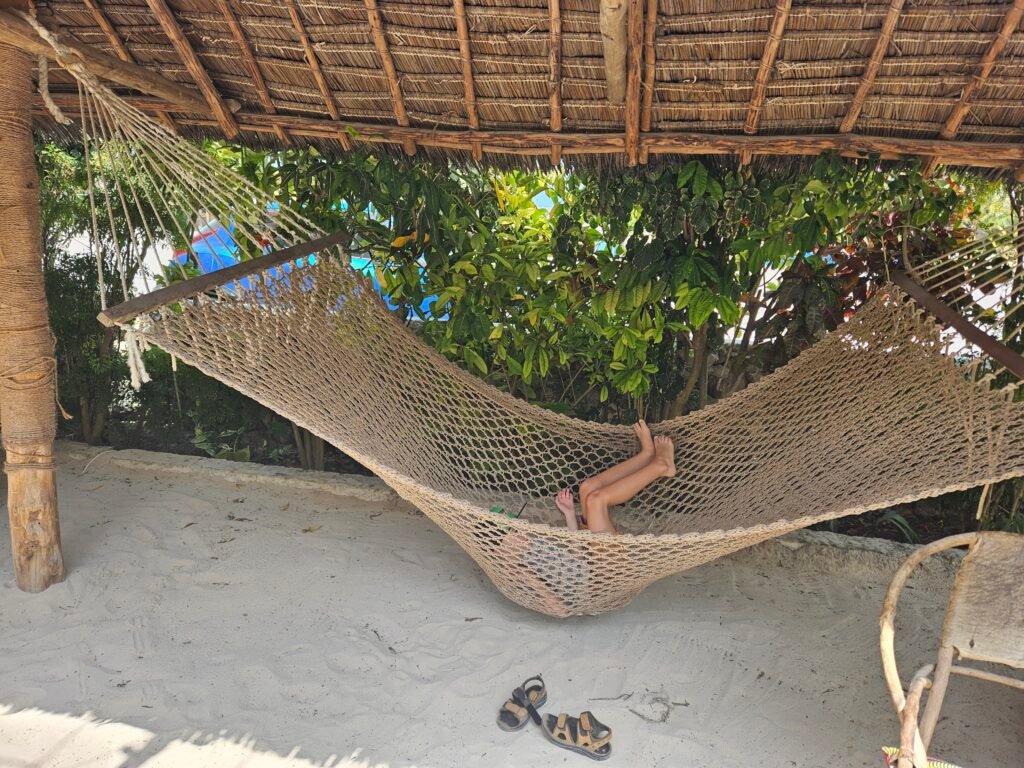

Our Biggest Mistake: Choosing Jambiani
We spent a lot of time researching where to stay and eventually settled on Jambiani Beach on the east coast. It had the beautiful beach we were looking for, a quieter atmosphere and a more local feel than the busier parts of the island. On paper, it looked perfect.
Looking back, it was the biggest mistake we made in Zanzibar. Not because Jambiani is bad. The beach is beautiful, the atmosphere is relaxed and there are some lovely places to eat. If you want somewhere quiet, you may love it. It just wasn’t what we wanted for a month.
There weren’t as many restaurants, cafés and shops as we would have liked, so we regularly took tuk-tuks to other areas when we wanted more choice. Tuk-tuks are a normal way to get around Zanzibar, and on a five-night holiday a couple of rides is no big deal. Over a month, it started to feel like we were working around our location rather than enjoying it. We had underestimated how much we value being able to wander out and choose somewhere to eat or have a coffee without thinking about transport.
That is the most useful lesson we took away. When you’re choosing a long-stay base, don’t just ask whether the beach is beautiful. Ask yourself what an ordinary day is going to look like.
- Where will you eat, and will you still have options after three weeks?
- Where will you get groceries?
- Can you walk somewhere for coffee?
- How easily can you get a tuk-tuk when you need one?
- What will you do when you don’t feel like spending the day at the beach?
We’ve written more about this in our guide to choosing a home base as a travelling family.
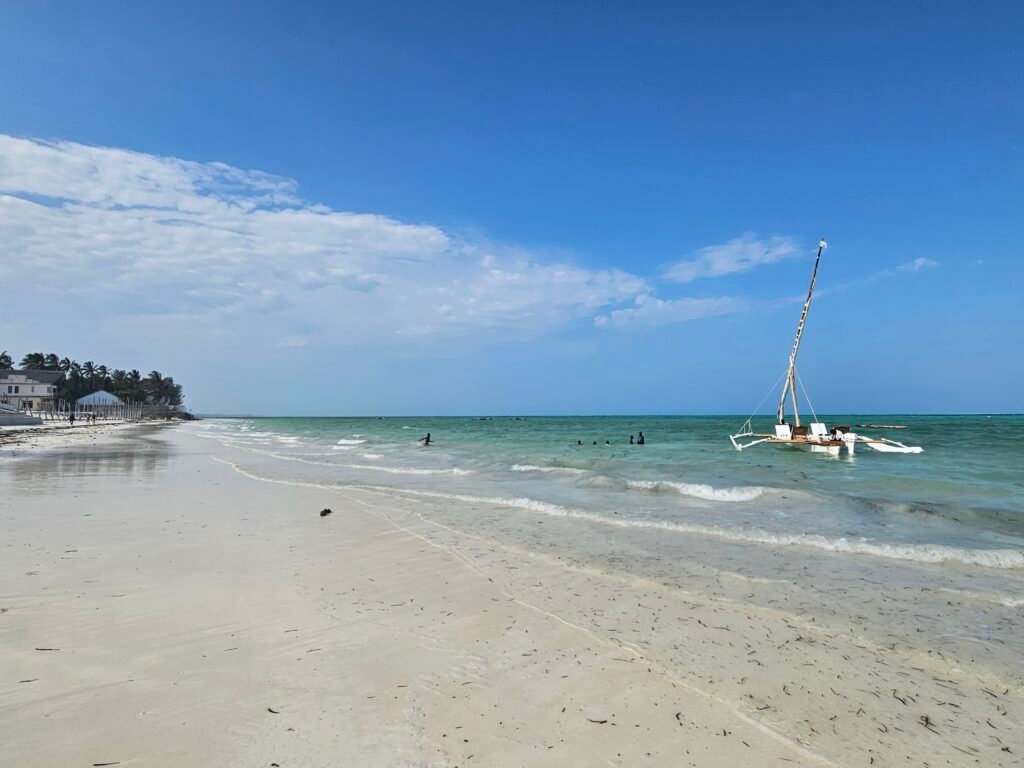

Jambiani vs Paje vs Nungwi: Where to Stay in Zanzibar With Kids
If we went back to Zanzibar, we’d choose Paje.
Paje is just up the east coast from Jambiani, but it has much more going on, with more restaurants, cafés, shops and a busy kitesurfing scene. We preferred the feel of it when we visited. It felt like somewhere we could settle in and have options on our doorstep, while still being far from the busiest parts of the island.
Keep in mind, however, that the Paje beach is a lot busier and has a lot more people constantly trying to sell you stuff. Jambiani still had that too, but a bit less, though it also was getting a bit tiring by the end of our stay.
We also wish we’d made it to Nungwi, in the north. It is one of the more developed areas of Zanzibar, with a much wider choice of restaurants, hotels and activities, and the north coast is far less affected by the tides (more on that below). The trade-off is that it is busier and more touristy, which is exactly why we didn’t choose it in the first place.
That was another lesson for us: sometimes you’re so focused on avoiding somewhere that feels too touristy that you choose somewhere without enough infrastructure for the way you actually travel. We still like a quieter base. We just discovered that there is a point where quiet becomes inconvenient, especially over several weeks.
In short:
- Jambiani: best if you want somewhere quiet and plan to spend most of your time at your accommodation.
- Paje: our choice next time, for a family that wants more going on within walking distance without being in the busiest area.
- Nungwi: worth considering if you want the most restaurants and activities, and swimming that depends less on the tide.


The Zanzibar Tides: What We Didn’t Think About Enough
The other thing we underestimated was the tides.
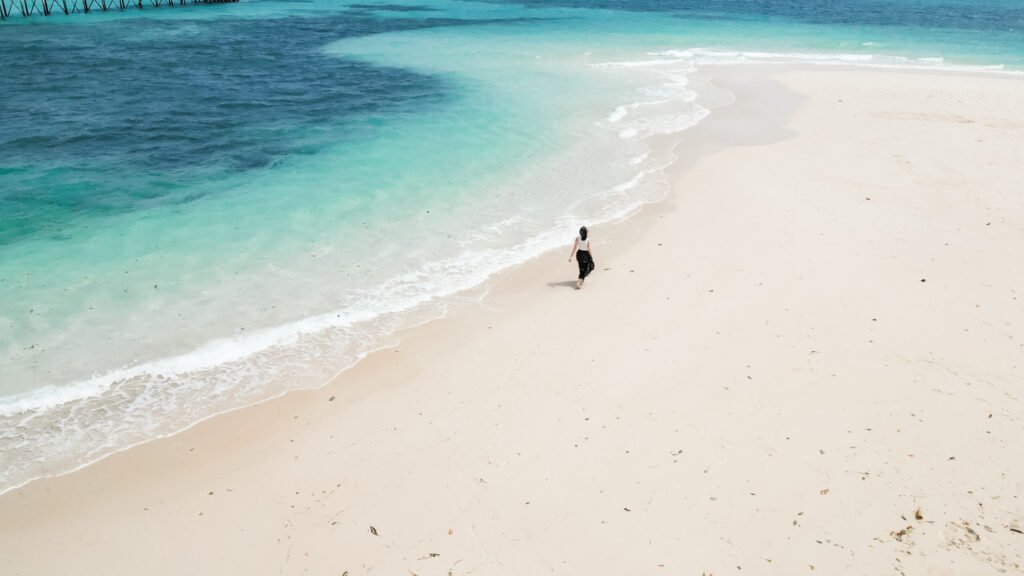
The east coast of Zanzibar has a dramatic tidal range. In Jambiani and Paje, the sea can retreat a very long way at low tide, exposing huge areas of reef and sand. It is fascinating to see, but it also means the beach doesn’t look or work the same way throughout the day. There were plenty of times we went down expecting to swim and found the water far out in the distance.
Low tide has its own appeal. Older children can find it fascinating to walk across the exposed reef and look for marine life, and water shoes make that much easier. But it wasn’t what we had pictured when we imagined a month on a tropical beach.
This isn’t a Jambiani problem. Paje has the same tides, as does the rest of the east coast. The north coast around Nungwi and Kendwa has much more predictable swimming throughout the day.
So the question isn’t “Which beach is prettier?” It is “What do we actually want to do at the beach?” If you want to swim whenever you feel like it, check the tides before choosing where to stay. If you’re happy to explore the reef flats, watch the kitesurfers or use a pool at low tide, the east coast can still be a great choice.
What We Got Right: Where We Stayed
Jambiani Residence, Simba House
While we wouldn’t choose Jambiani again, we were very happy with the house itself. We stayed at Jambiani Residence, Simba House, which we booked through Airbnb, and paid approximately $2,394 USD for four weeks. That was the price at the time, so check current rates.
The house was nice and clean, and the pool was well maintained. The most useful feature turned out to be the generator. We were working remotely, so power cuts could have been a real problem, but thanks to the generator we were able to keep working when the power went out.
For a longer stay, things like a generator, reliable internet, a decent workspace and somewhere comfortable to spend an afternoon matter just as much as how a property looks in photographs. Our guide to finding long-term family accommodation covers what we look for.
In short, we chose the right kind of accommodation in the wrong location for us.

Zanzibar Coffee House, Stone Town
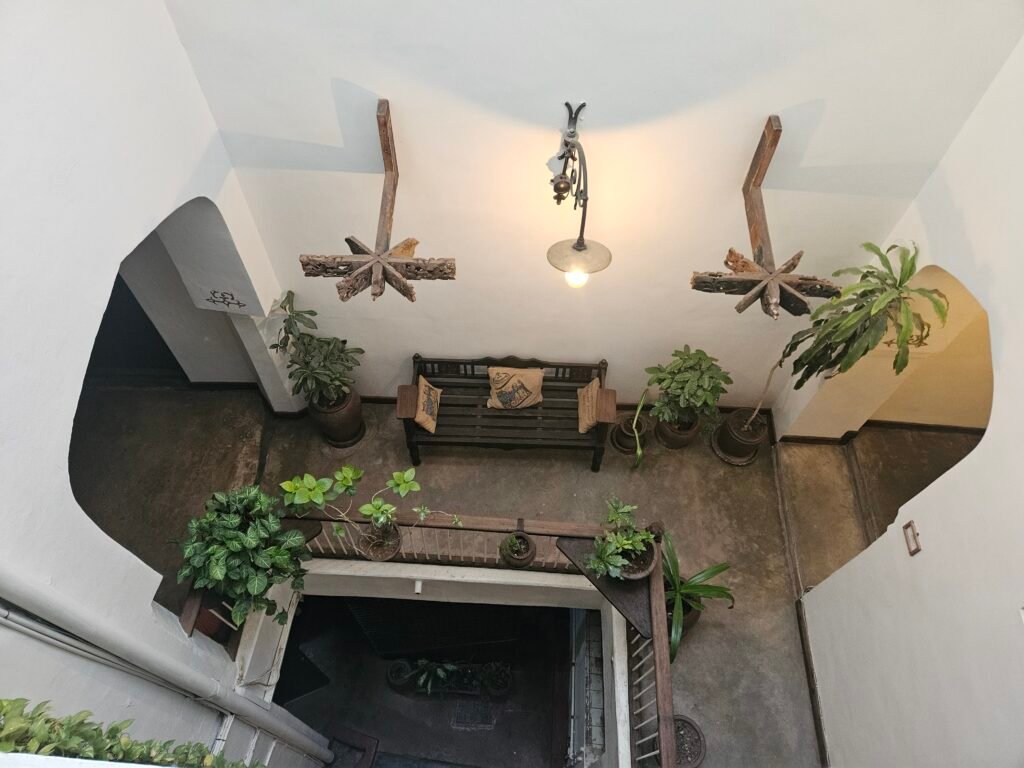
We spent our first two nights in Zanzibar at Zanzibar Coffee House in Stone Town, and it was wonderful. It is right in the middle of everything, so we could step straight out into the old town’s streets, and the rooms were beautiful. We paid $432 for two nights, including breakfast. If you are spending a night or two in Stone Town, we would happily recommend it.

Things We Did in Zanzibar With Kids
We didn’t spend the month ticking off attractions, but we did several excursions that were well worth it. Each one gave us something different: history, food, culture, wildlife and time on the water.
Stone Town: Doors, Markets and a Hard History Lesson
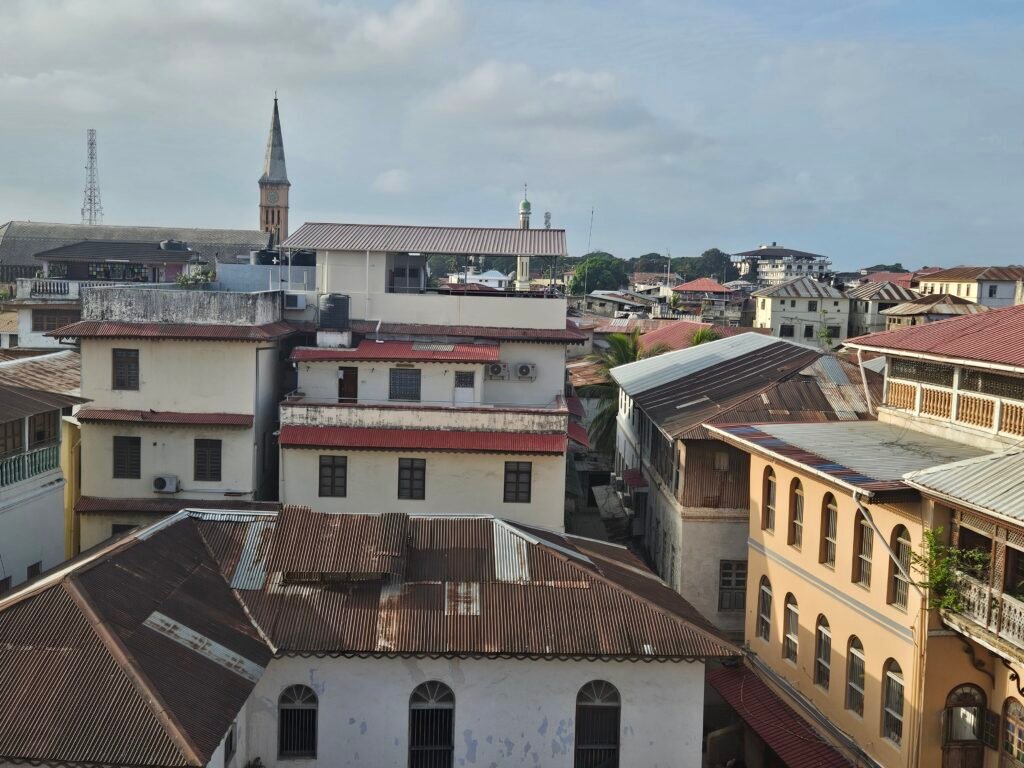
Stone Town was our first stop when we arrived in Zanzibar, and it is a bit of a shock to the senses at first. The sights, the sounds, the smells, the hustle and the busy narrow streets all hit you at once. It takes a little while to adjust, but it is also what makes the old town so memorable.
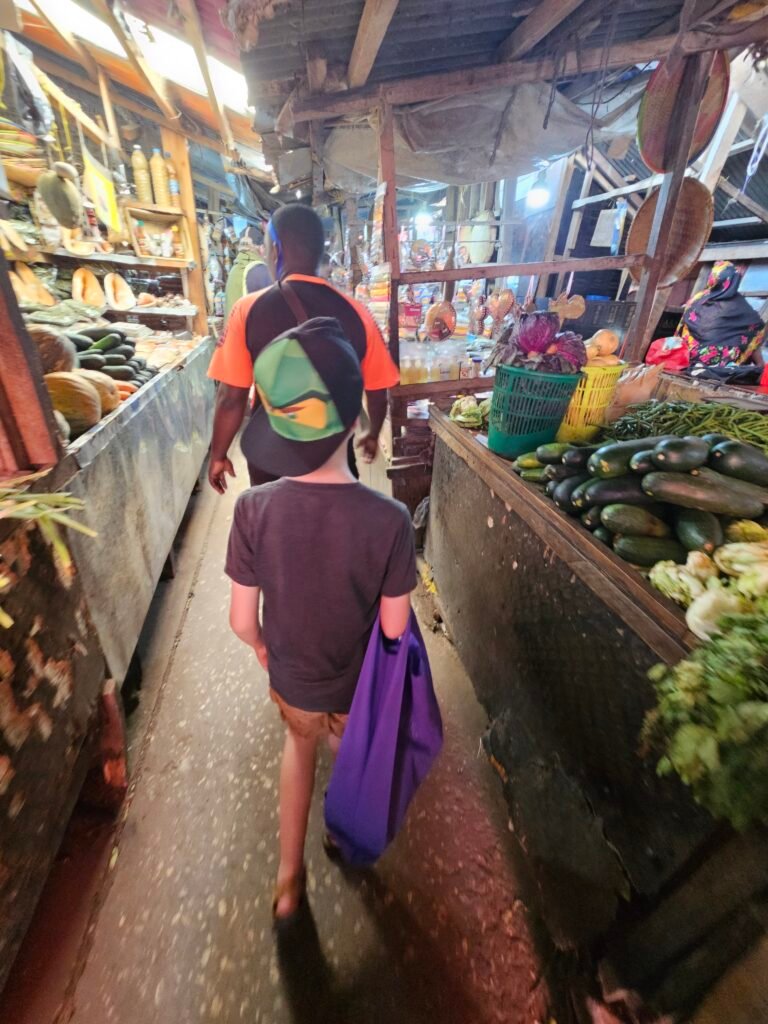
Stone Town is a UNESCO World Heritage Site, and its architecture reflects the African, Arab, Indian, Persian and European influences that shaped the city. We explored it on a guided walking tour, and having a guide made it far more interesting than wandering on our own. He showed us the famous carved wooden doors and explained what they meant, and pointed out how a mosque and a church stand right next to each other, which says a lot about the town’s history. We also walked through Darajani Market, the busy main market, with its stalls of fish, fruit and spices.
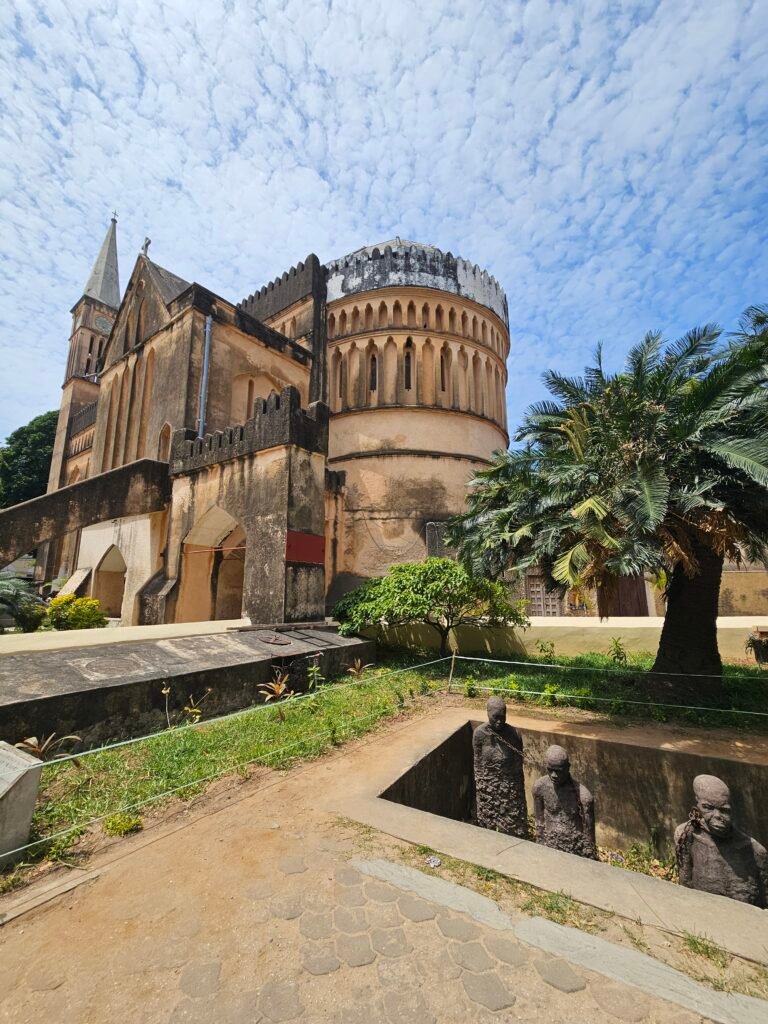
The part that stayed with us most was the visit to the slave market museum. Stone Town was the site of East Africa’s last open slave market, which closed in 1873, and the Anglican cathedral now stands on the spot. Learning about this awful part of history was hard, especially for a child, but it was necessary, and it probably had the most profound effect on our son of anything we did on the island. We were glad we had a guide to explain it, and time afterwards to talk it through with him.
On our own, we also visited Forodhani Gardens, the seafront park in the heart of Stone Town, which is known for its evening food stalls selling Zanzibar pizza and grilled seafood.
A Spice Farm and a Cooking Class
The same tour then took us out to a spice farm, where we learned how the different spices are grown and used. Zanzibar’s history is deeply connected to the spice trade, so it helped make sense of the flavours we noticed in the food all over the island.
The best part was the cooking class. Instead of just being shown the spices, we got to use them and learn how the food was prepared. It was hands-on and worked really well as a family activity, and exactly the kind of day we love as a worldschooling family.
Book a Stone Town, Spice Farm & Cooking Class Tour

Prison Island and the Giant Tortoises
Changuu Island, better known as Prison Island, sits about 5.6 km off Stone Town. Its history is surprisingly interesting. The prison buildings were completed in 1894 but never actually held prisoners. The island later became a quarantine station for yellow fever, and was officially renamed Quarantine Island in 1923.
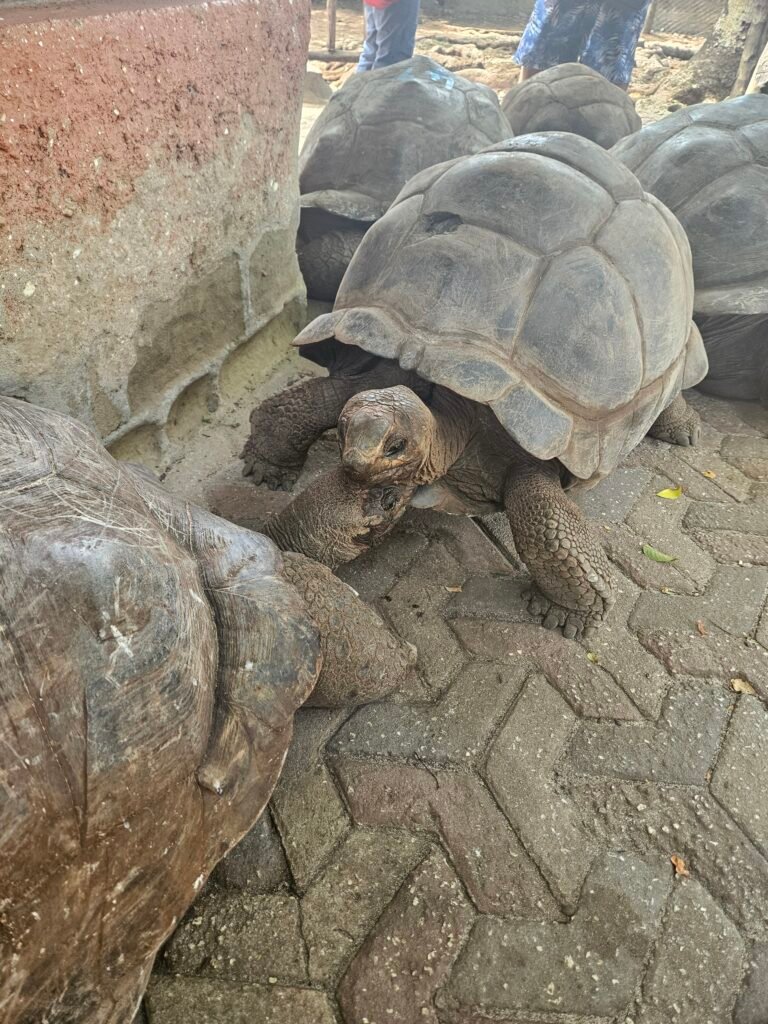
Today it is best known for its giant Aldabra tortoises. The first four were a gift from the British governor of the Seychelles in 1919, and the island now has a sanctuary where you can see them up close. We were all able to touch and feed the tortoises, our son included, and that was easily the highlight for him. Some of them are enormous.
One thing to be ready for is the boat ride. On the way out it was very rough and bumpy, and honestly a bit scary. The way back was much calmer, but if your child gets seasick or anxious on boats, it is worth preparing them for it. Most tours, including the one below, don’t include the island’s entrance fee, so bring some cash for that.
See current Prison Island tour options


Nakupenda Sandbank
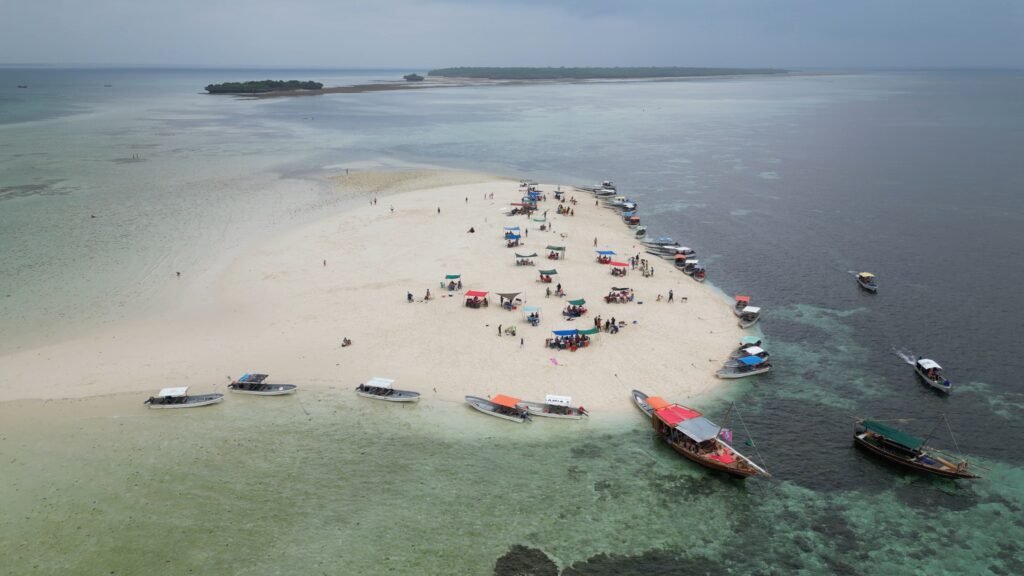
We also took a trip to Nakupenda Sandbank from the Paje area. This day was simply about getting out on the water: swimming, enjoying the sandbank as the tide shaped it, and a seafood lunch. During a longer stay, it was a great change of scene without turning the trip into a complicated itinerary.
Book a Nakupenda Sandbank tour with seafood lunch


Food in Zanzibar: What to Try
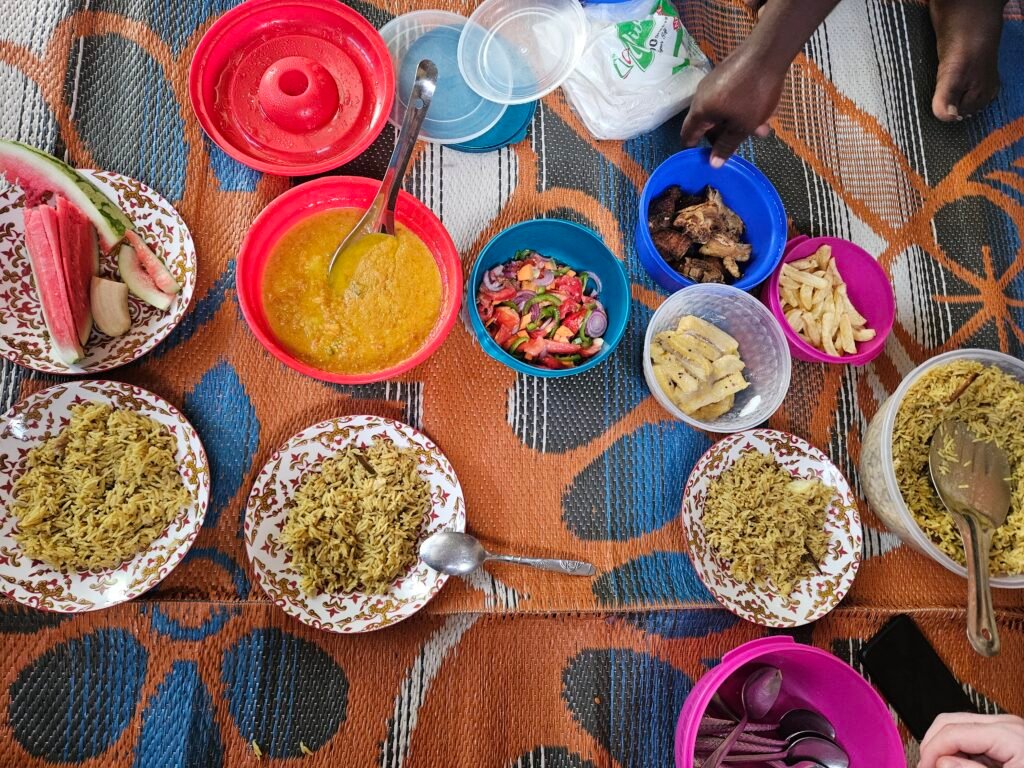
Zanzibar’s food reflects its place on the old Indian Ocean trade routes, mixing East African, Arab, Indian and Persian flavours, with lots of spices, coconut, rice and seafood.
- Pilau: spiced rice, often served with meat or vegetables.
- Zanzibar biryani: a richer, more elaborate rice dish.
- Urojo (Zanzibar Mix): a thick soup topped with things like potatoes, bhajias and chutneys.
- Zanzibar pizza: not really pizza at all, but a filled dough parcel cooked on a hot plate, in savoury and sweet versions.
- Seafood: fresh fish, prawns, octopus, calamari and lobster, often with rice, chips or coconut sauces.
Our Favourite Restaurants in Jambiani
These were the places we kept going back to, as part of everyday life rather than from a “best restaurants” list.
Rosa’s Mexican Kitchen: one of our favourites. The tacos were amazing, and really good Mexican food was a welcome change after a while.
Rafiki’s Chickies: as the name suggests, chicken is the speciality, and it was really good. Exactly the kind of casual, reliable place you want nearby.
Pompetti: our choice for Italian food, especially pizza. It is in Jambiani Plaza, which also has a small mall selling imported products. On a month-long stay, being able to find things you can’t get in small local shops is surprisingly useful.
Swahili Food Organic Restaurant: our favourite for proper Swahili cooking, with a more local feel.
Mpishi Cafe and Restaurant: one of our favourites for grilled seafood and local food.
We could find good food in Jambiani. What we couldn’t find was enough variety to keep discovering new places for a whole month, which is exactly why we’d stay in Paje next time.

How Much Does a Month in Zanzibar With Kids Cost?
Zanzibar isn’t as cheap as many people expect, especially if you eat at the trendier or more western restaurants rather than local places. Here is roughly what we spent as a family of three over the month, in US dollars, not counting our flights or the safari.
- Accommodation in Jambiani: $2,394 for four weeks at Simba House.
- Accommodation in Stone Town: $432 for two nights at Zanzibar Coffee House, including breakfast.
- Food: about $1,550. We ate out for lunch and dinner almost every day and bought a few groceries for breakfast and snacks. At the trendier or western-style places, expect around $7 to $10 per dish. Local restaurants are cheaper.
- Tuk-tuks: about $100. A tuk-tuk is around $5 each way, so a trip from Jambiani to Paje and back cost us about $10. We did that two or three times a week.
- Private transfers: about $120. A private transfer between Stone Town and Jambiani cost $30 each way. We needed four: arriving in Jambiani, leaving and returning for our safari flights to Arusha, and leaving at the end.
- Stone Town, spice farm and cooking class tour: about $465 for three, based on the current price of about $155 per person, including lunch and entrance fees.
- Prison Island tour: about $240 for three, based on the current price of about $80 per person, plus the island entrance fee.
- Nakupenda Sandbank tour: about $90 for all three of us, including the seafood lunch.
That comes to roughly $5,400 for the month. The two tour prices are what the Stone Town tour and Prison Island tour are listed at the time of writing, rather than exactly what we paid, so check the current rates when you book.
If you want to see how a month like this fits into a wider budget, here is our real one-year full-time family travel budget.
Combining Zanzibar With a Tanzania Safari
Zanzibar and a safari make a great combination for families. A safari is intense: early starts, long hours in a vehicle and an enormous amount to take in. It is an incredible experience for a child, but it is also tiring. Beaches, swimming, good food and a slower routine on either side made our whole trip feel much more balanced.
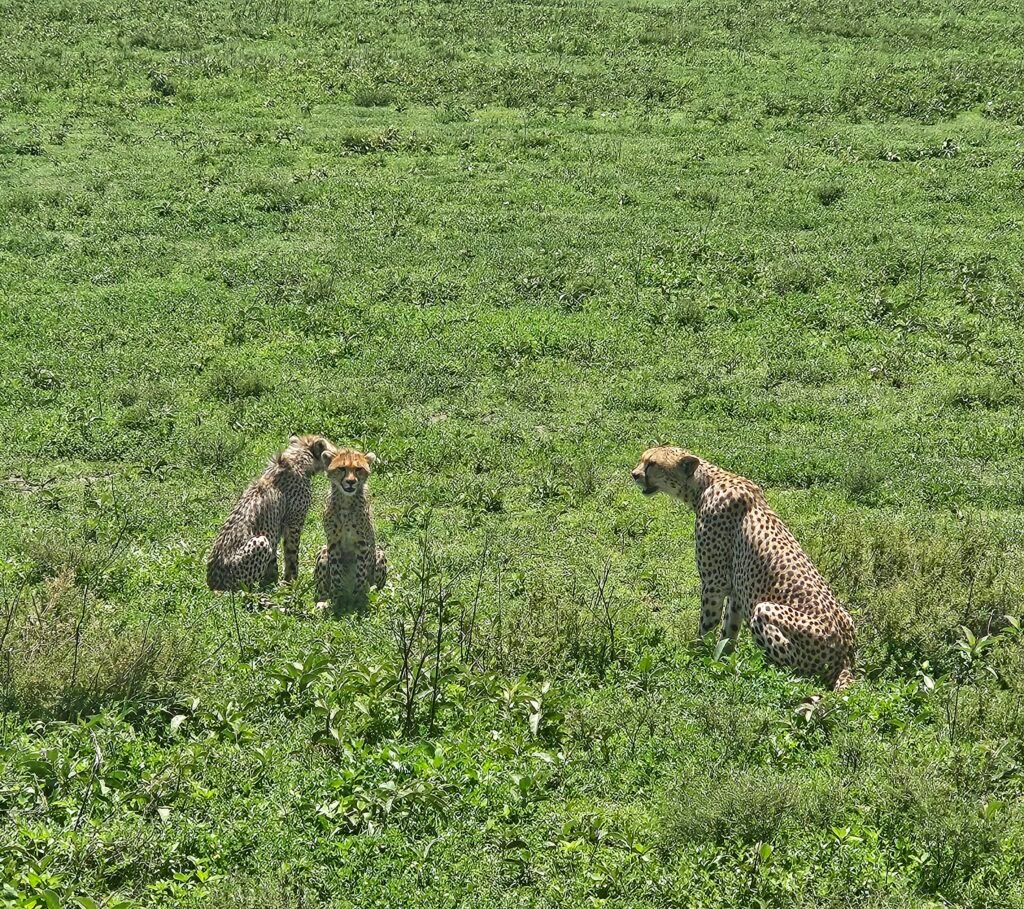
There isn’t one perfect order. We flew from Zanzibar to Arusha and back in the middle of our stay, but if you’re flying into Tanzania specifically for safari, let your international flights decide whether to do the safari or the beach first. You can read about our safari with kids in the Serengeti and Ngorongoro, including what it cost.


How Long Do You Need in Zanzibar With Kids?
You certainly don’t need a month. A week gives you beach time and a couple of good excursions without feeling rushed. Two weeks gives you room to explore different parts of the island or slow down between activities.
A month is a different proposition. At that point you’re not planning a holiday anymore, you’re temporarily living somewhere. That is when your location matters most. Choose somewhere with enough restaurants and cafés if you want variety, look closely at the tides if swimming is a priority, and make sure the accommodation has what you need for daily life: a pool, reliable internet, a comfortable living space and backup power.
If you’re weighing up Indian Ocean islands for a longer family stay, we also spent two months in Mauritius with kids.
Best Time to Visit Zanzibar With Kids
We were in Zanzibar in January and February, and the weather was good, with hardly any rain. It was hot, so a pool and some shade during the middle of the day made a real difference.
Zanzibar’s main dry season runs from around June to October, and there is a second drier, hotter spell from roughly December to February, which is when we went. The long rains usually fall from around March to May, so that is the period we would avoid with kids if you want reliable beach weather.


Health and Safety in Zanzibar With Kids
Malaria: The CDC lists malaria risk in all areas of Tanzania below 1,800 metres, which includes Zanzibar. We didn’t take malaria medication during our month and none of us got sick, but that is a decision to make with a travel health professional, not one to copy from us. Whatever you decide, use insect repellent, especially in the evenings. We cover this in more detail in our safari with kids article.
Food: We ate out a lot during our month, both local and international food, and didn’t have any food poisoning.
Sun and the reef at low tide: The sun is very strong, and there is no shade out on the reef flats. Wear hats and sun protection if you walk out at low tide, and wear water shoes, because the exposed reef can have sharp coral and sea urchins. Keep an eye on the time too, as the tide can come back in faster than you expect.
Dress modestly away from the beach: Zanzibar is a predominantly Muslim island. Beachwear is fine at the beach and around your accommodation, but in Stone Town and in villages, cover your shoulders and knees.
Staying connected: If you’re working remotely like we were, it helps to have a backup to your accommodation’s Wi-Fi. Our guide to the best eSIMs for international travel covers the options.
Is Zanzibar Worth Visiting With Kids?
Absolutely. Stone Town was fascinating, the spice farm and cooking class were a great combination, Prison Island was interesting and our day at Nakupenda Sandbank was a lot of fun. We found restaurants we loved, and our accommodation worked very well for us.
We’d happily return. We just wouldn’t stay where we stayed last time. We’d compare Paje, Nungwi and other areas not only on photographs and beaches, but on restaurants, cafés, shops, tides, transport and what a normal family day would actually look like.
When you’re travelling for a week, you can work around almost anything. When you’re living somewhere for a month, the little things become the big things. So if you’re planning Zanzibar with kids, don’t just choose the place that looks best in the photographs. Choose the place that will still work for your family on an ordinary Wednesday, three weeks after you arrive.
Zanzibar With Kids: Frequently Asked Questions
Is Zanzibar good for kids?
Yes. There are beaches, boat trips, giant tortoises on Prison Island, and hands-on experiences like spice farms and cooking classes. The key is choosing the right area for how your family likes to spend its days.
Where is the best place to stay in Zanzibar with kids?
It depends on what you want. We stayed in Jambiani, which is quiet but has limited restaurants and shops. Next time we would choose Paje, which has more going on within walking distance. Nungwi in the north has the most restaurants and activities, and swimming that depends less on the tide, but it is busier. For a night or two in Stone Town, we loved Zanzibar Coffee House.
How much does a month in Zanzibar cost for a family?
For our family of three, a month cost roughly $5,400. That covered accommodation ($2,394 in Jambiani and $432 for two nights in Stone Town), food (about $1,550), tuk-tuks and transfers (about $220) and three tours (about $795). Western-style restaurant dishes were around $7 to $10 each.
Can you swim all day on Zanzibar’s beaches?
Not on the east coast. In places like Jambiani and Paje, the sea retreats a long way at low tide, so swimming depends on the tide. The north coast around Nungwi and Kendwa is much more reliable for swimming throughout the day.
Is Prison Island worth visiting with kids?
Yes. Our son loved touching and feeding the giant Aldabra tortoises, and the island’s history as a prison that never held prisoners and later a quarantine station makes it more than just a photo stop. Be ready for a potentially rough boat ride, and bring cash for the entrance fee.
When is the best time to visit Zanzibar with kids?
We visited in January and February and had good weather with hardly any rain. The main dry season is roughly June to October, and the long rains usually fall from around March to May.
Do you need malaria tablets for Zanzibar?
The CDC lists malaria risk across Tanzania below 1,800 metres, including Zanzibar. We didn’t take malaria medication and didn’t get sick, but you should decide with a travel health professional, and use insect repellent either way.
How long should you spend in Zanzibar with kids?
A week is enough for beach time and a couple of excursions, and two weeks lets you explore more of the island at a slower pace. We stayed a month, which felt more like living there than holidaying.
Can you combine Zanzibar with a safari?
Yes, easily. We flew from Zanzibar to Arusha for a three-day safari in the Serengeti and Ngorongoro, then flew back. The beach is a great way to recover after the early starts and long drives of a safari.



One Comment