
Safari With Kids: What We Learned From Botswana, Tanzania & Sri Lanka
We have travelled to more than 90 countries as a family, and some of the experiences that have stayed with us most strongly have involved animals. This is our honest take on going on safari with kids, based on what we learned in Botswana, Tanzania and Sri Lanka.
Some of the links below are affiliate links. If you book or buy through them we may earn a small commission at no extra cost to you. We only recommend tours and gear we would use ourselves.
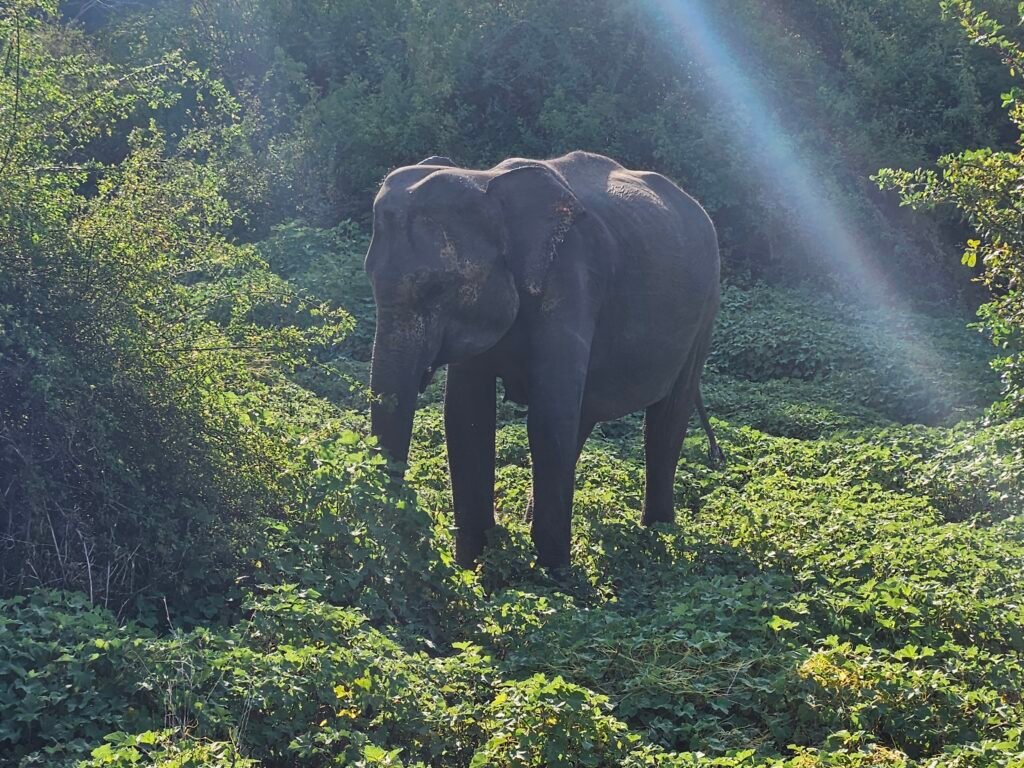
All three safaris were very different experiences. One involved a motorboat, an angry crocodile and getting spectacularly stuck in the reeds. Another involved three days of driving through the Serengeti and Ngorongoro Crater in a 4×4, surrounded by an extraordinary amount of wildlife. In Sri Lanka, we turned what would otherwise have been a fairly boring travel day between two cities into an elephant safari.
Our son has been with us for all of these experiences. And yes, we would absolutely do it again.
Our Safaris With Kids at a Glance
| Chobe, Botswana | Serengeti and Ngorongoro, Tanzania | Kaudulla, Sri Lanka | |
|---|---|---|---|
| When | March | February | August |
| Our son’s age | 7 | 8 | 6 |
| Format | Group day trip from Victoria Falls, by vehicle and boat | Private 4×4 safari from Arusha | Jeep safari added to a transfer day |
| Length | 1 day | 3 days, 3 nights | About 3 hours in the park |
| Cost for 3 people | $470, lunch included | About $4,150, including flights from Zanzibar | $195, including the transfer |
| Highlight | Stuck in the reeds next to a crocodile | Lion and cheetah cubs, and wildebeest calving season | Herds of wild elephants |
🦁 For the quiet stretches between sightings
Safari days involve a lot of waiting, and that’s usually when kids start to drift. We made our African Safari Explorer printable to give them something to look for in those moments: a scavenger hunt for animals, tracks, nests and termite mounds, Big Five facts, a food chain activity, a “Who Am I?” animal puzzle and an observation journal for recording what they spot.
It’s 14 pages for ages 7 to 11, and comes as an instant PDF download in A4 and US Letter. It works just as well for getting excited before the trip as it does in the vehicle. Print it at home, pack a pencil, and let them keep their own record of the safari.
Is a Safari With Kids Actually a Good Idea?
The honest answer is that it depends on the child.
Safari is not a theme park where something is happening every five minutes. There can be long periods of driving, waiting and looking at what initially appears to be an empty landscape. There may be early starts, heat, dust, bumpy roads and several hours spent sitting in a vehicle.
Then suddenly everything changes. A herd of elephants appears around the corner. A lion is lying beside the road. You spot a cheetah with cubs. A rhino emerges in the distance. Something moves in the grass and everyone in the vehicle becomes completely focused on trying to work out what it is.
That unpredictability is a big part of what makes a safari with kids work. The quiet periods are real, but the exciting sightings can arrive without warning.
Our son has generally handled the long drives remarkably well. That does not mean every child would react the same way. A child who struggles with sitting still, gets frustrated when there is nothing happening, or dislikes long car journeys may find parts of safari difficult. A child who loves animals, vehicles, exploring and looking for things may find the whole experience fascinating.
Age matters, but personality probably matters just as much. So don’t ask only, “How old does my child need to be?”
Ask, “How does my child cope with this kind of day?”
Our Family Safari Experiences
Chobe National Park, Botswana
When: March. Our son’s age: 7. Format: group day trip from Victoria Falls, by vehicle and boat.
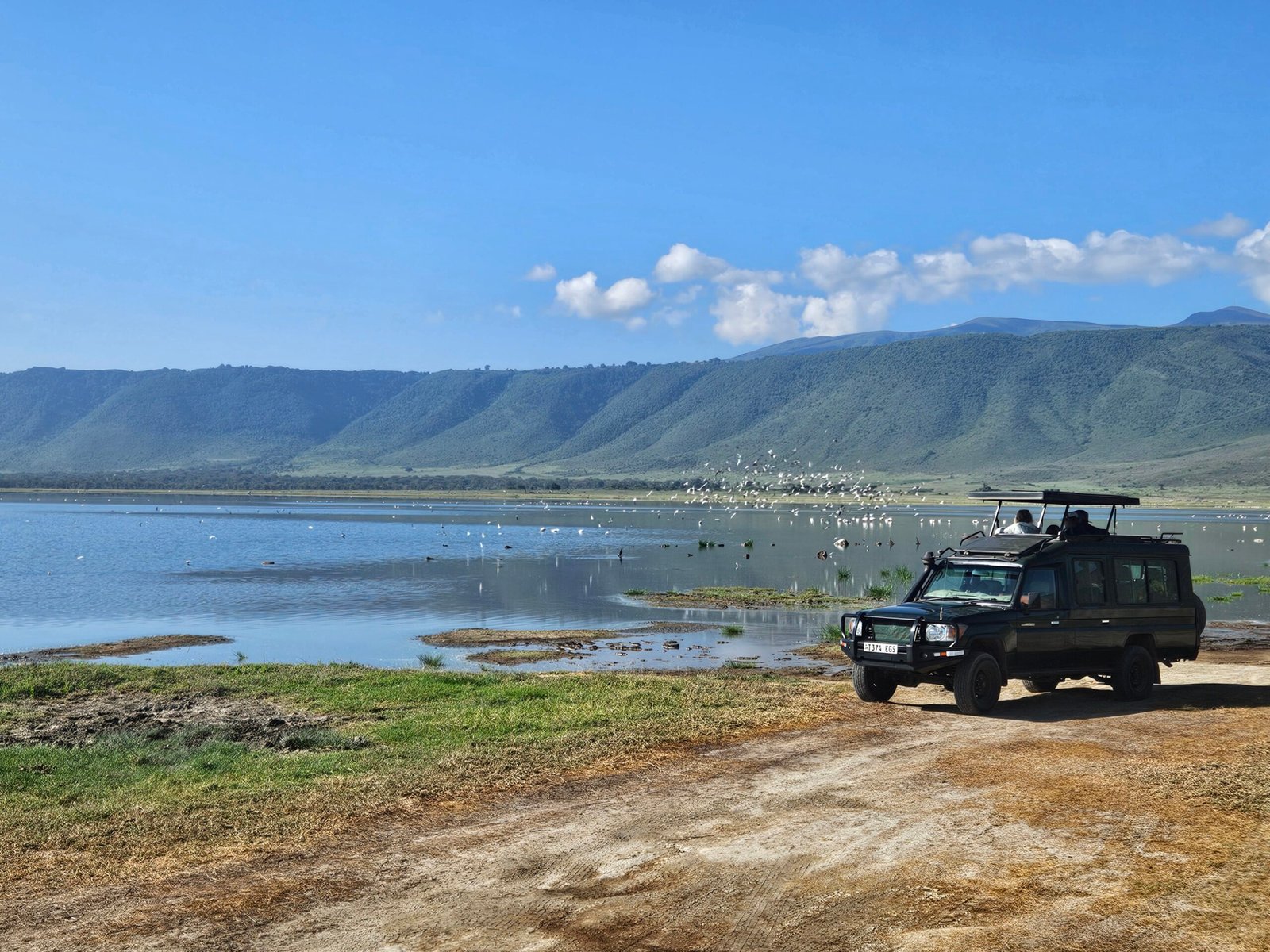
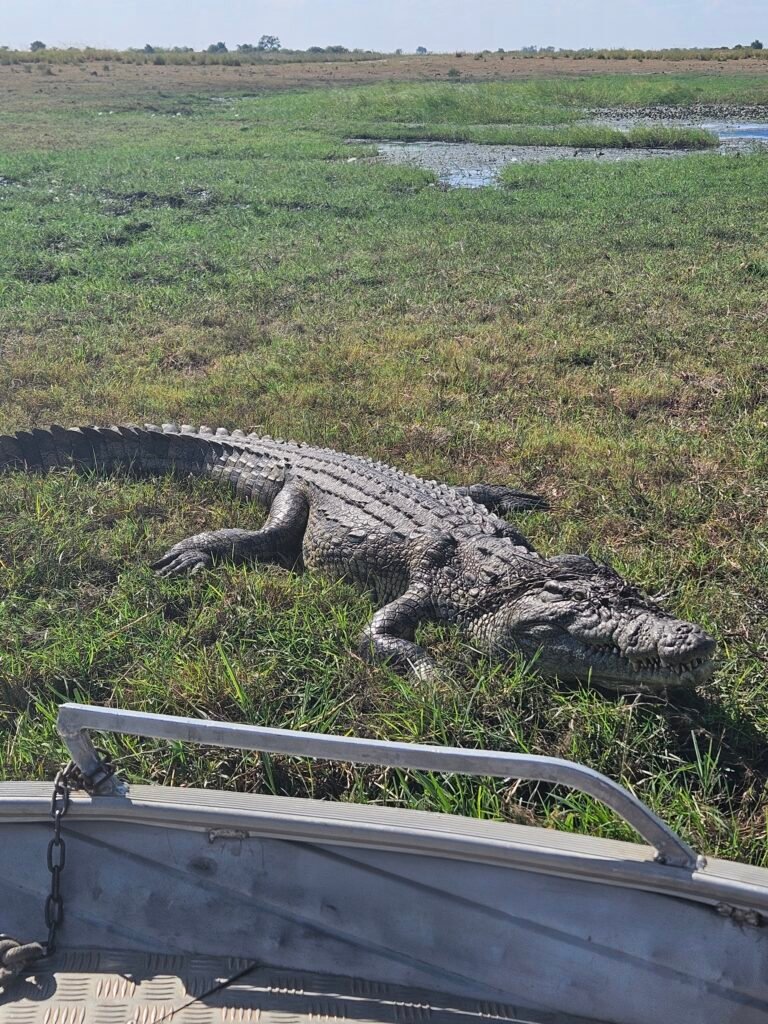
Our Botswana safari was a day trip rather than a multi-day safari. We booked a Chobe day trip from Victoria Falls that picked us up from our accommodation in Victoria Falls and drove us across the border into Botswana. All the logistics, from the border crossing to where we stopped for lunch, were handled by the tour, which made it very easy with a child.
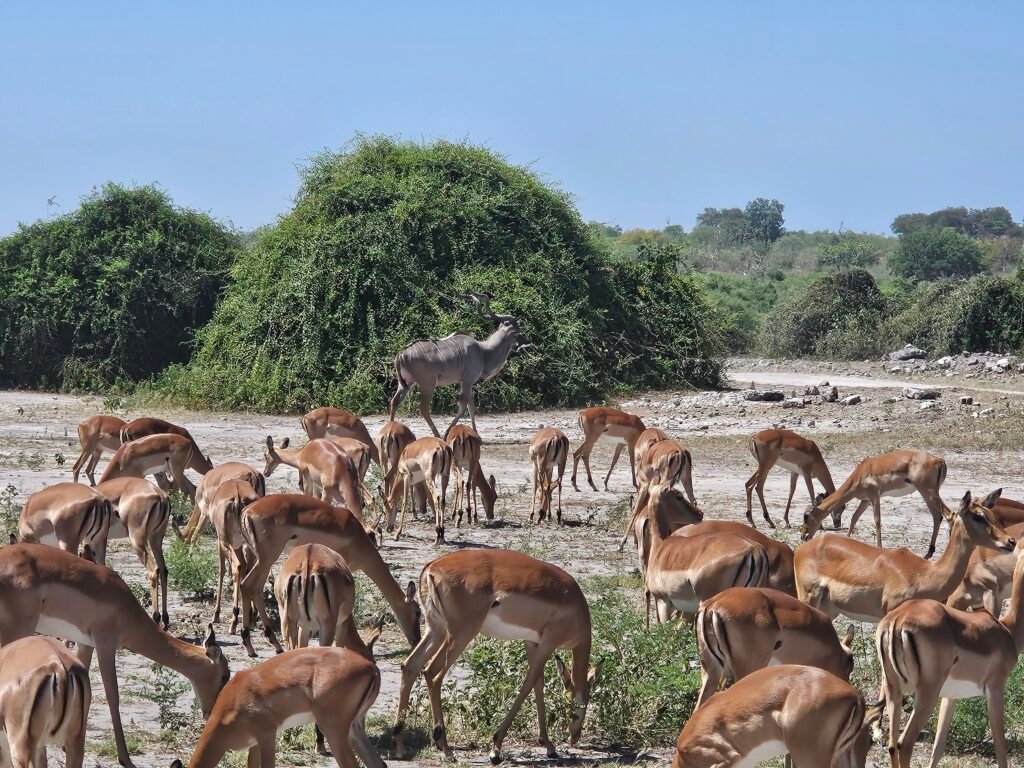
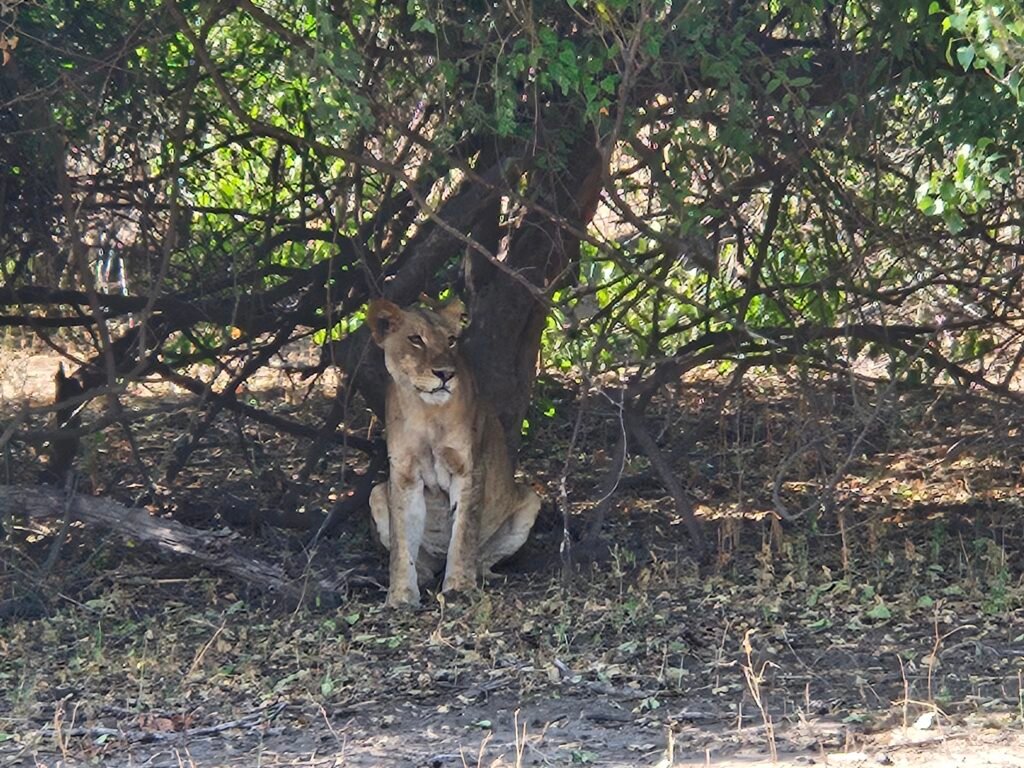
We saw a huge variety of wildlife: elephants, buffalo, lions, loads of impala, hippos and crocodiles, among other animals. Part of the day was spent in a vehicle and part on a boat on the river. Read more about our time in Chobe in this article.

Serengeti, Tanzania
When: February. Our son’s age: 8. Format: private three-day safari by 4×4 from Arusha.
Our Tanzania safari was a much more traditional safari through the Serengeti and Ngorongoro Crater.
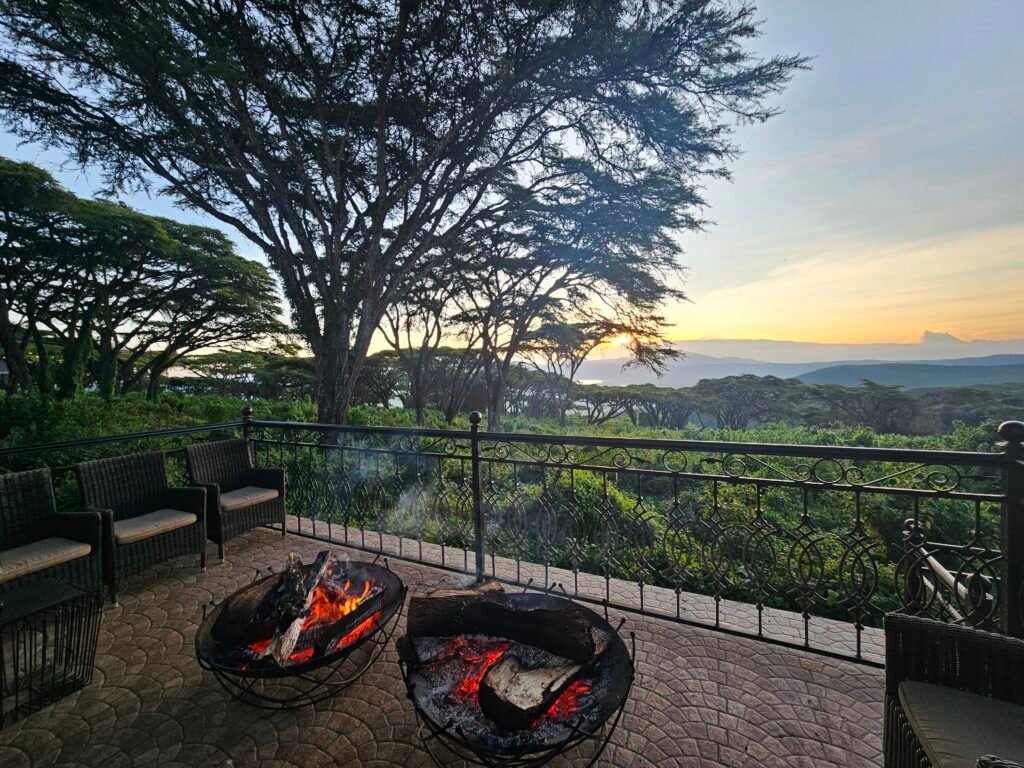
We were spending a month on Zanzibar, so we booked a private safari with Serengeti Smile, a local operator based in Arusha. We flew from Zanzibar to Arusha, where the safari started, and the package included one night in a hotel in Arusha. From Arusha we drove to Lake Ndutu, on the southern edge of the Serengeti, and stayed overnight at Lake Ndutu Luxury Tented Lodge. The next day we drove to Ngorongoro and stayed at Lion’s Paw, before driving back to Arusha and flying back to Zanzibar.
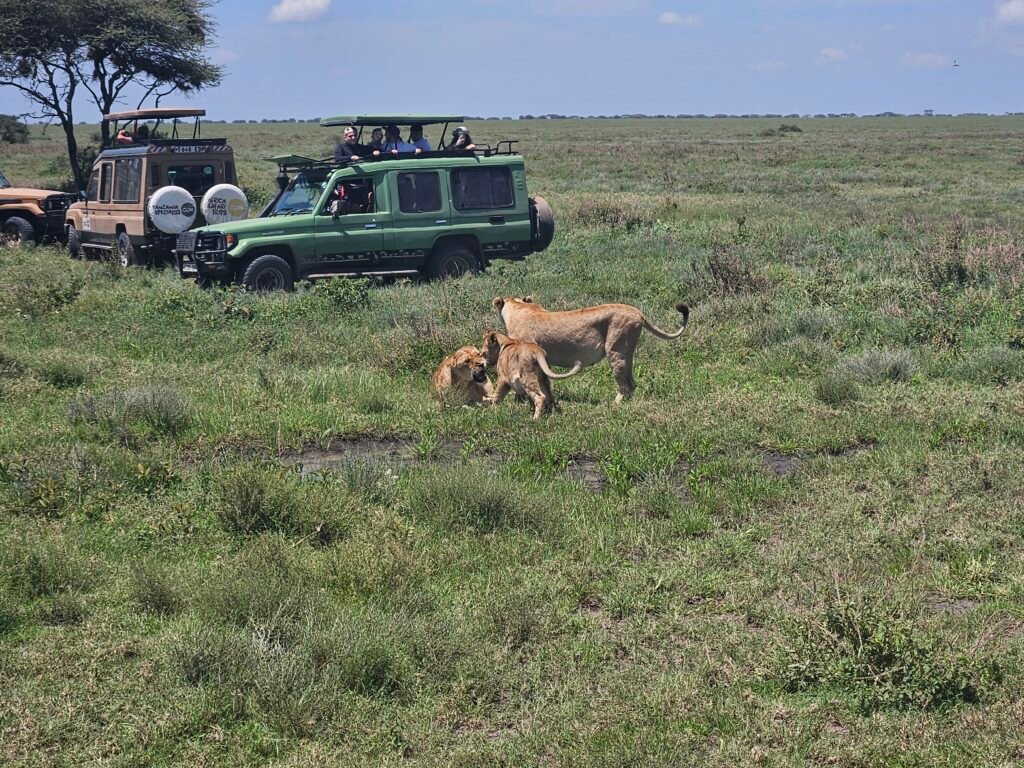
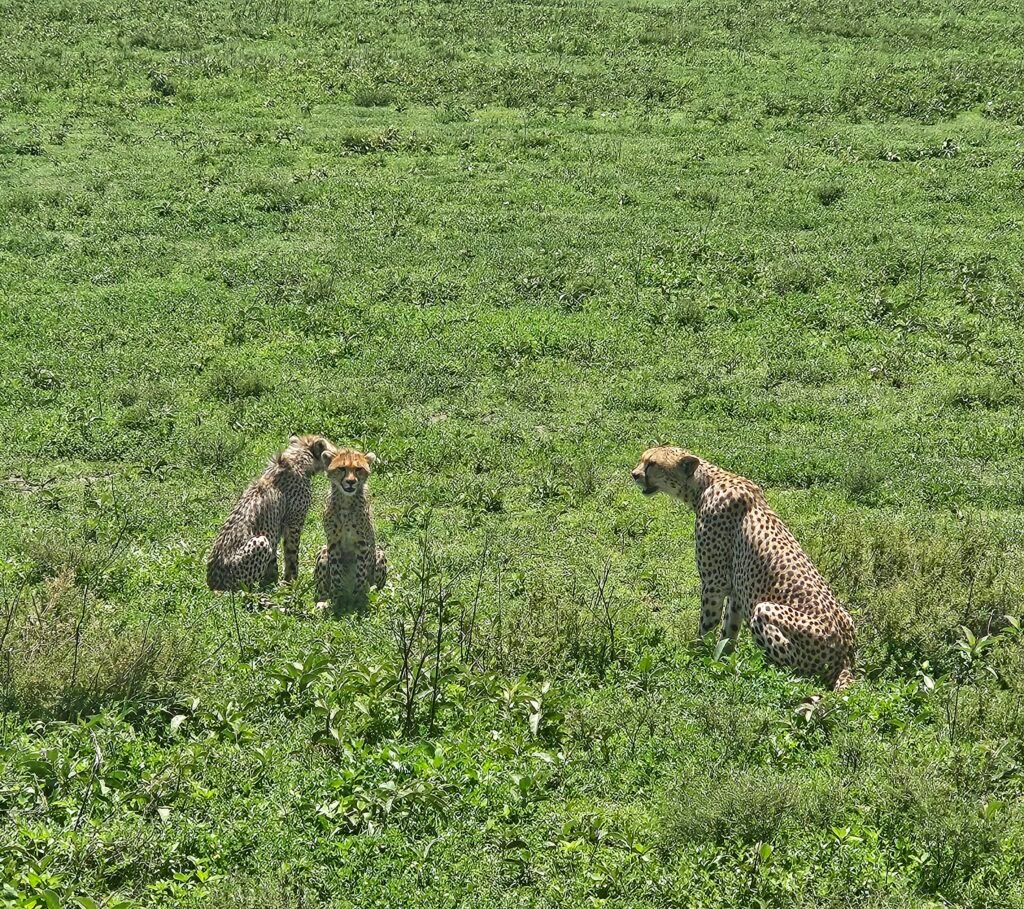
This was our strongest experience in terms of the sheer amount and variety of wildlife. There were elephants, monkeys, lions and cheetahs including cubs, buffalo, giraffes, zebras, wildebeest, hyenas and a rhino. There was so much to look at that the long drives never became a major issue for our son.
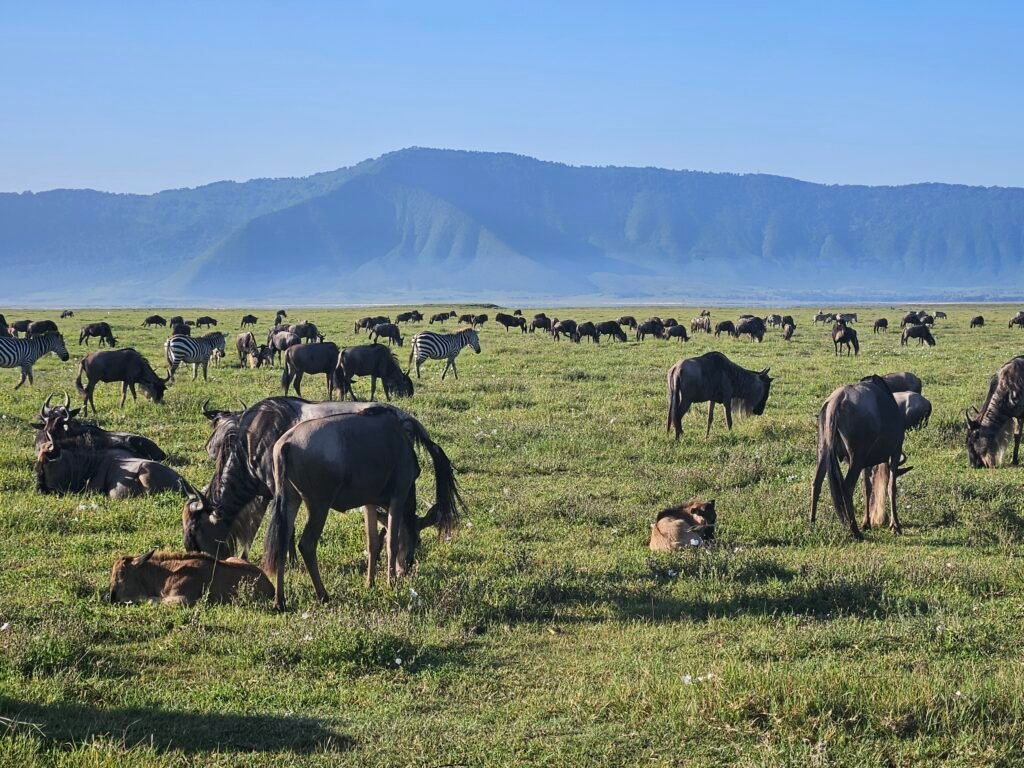
February also turned out to be calving season around Ndutu, when the wildebeest herds of the Great Migration gather in the southern Serengeti to give birth, and we saw huge numbers of wildebeest, including lots of newborn calves. For our son, though, the real highlight was seeing baby cheetahs and lion cubs.
The safari was a private tour, so it was just the three of us in a huge 4×4 with a pop-up roof. Our son loved driving around in it, and standing up through the roof to look out over the plains was a highlight in itself. It helped make the longer stretches between sightings feel like part of the adventure rather than simply transportation.


Where we stayed in Tanzania
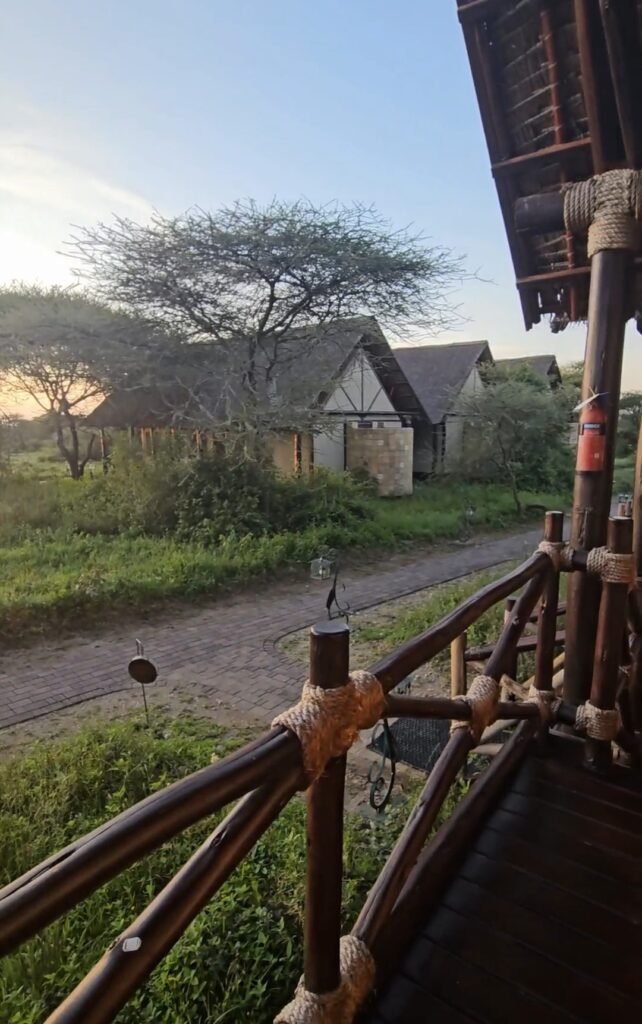
The other thing we particularly loved about Tanzania was the accommodation. Both Lake Ndutu Luxury Tented Lodge and Lion’s Paw were beautiful. The rooms were big, with en suite bathrooms and a separate bed for our son, and both breakfast and dinner were amazing. This is easy to overlook when you are concentrating on the animals, but a safari is not just “drive around looking for animals all day.” The accommodation, the surroundings, the downtime and the overall pace all become part of the trip.
Be ready for the temperature swings: it gets quite cold at night and early in the morning, even though the days are warm. Warmer clothes are a must (more on that in the packing section below).

Ngorongoro Crater, Tanzania
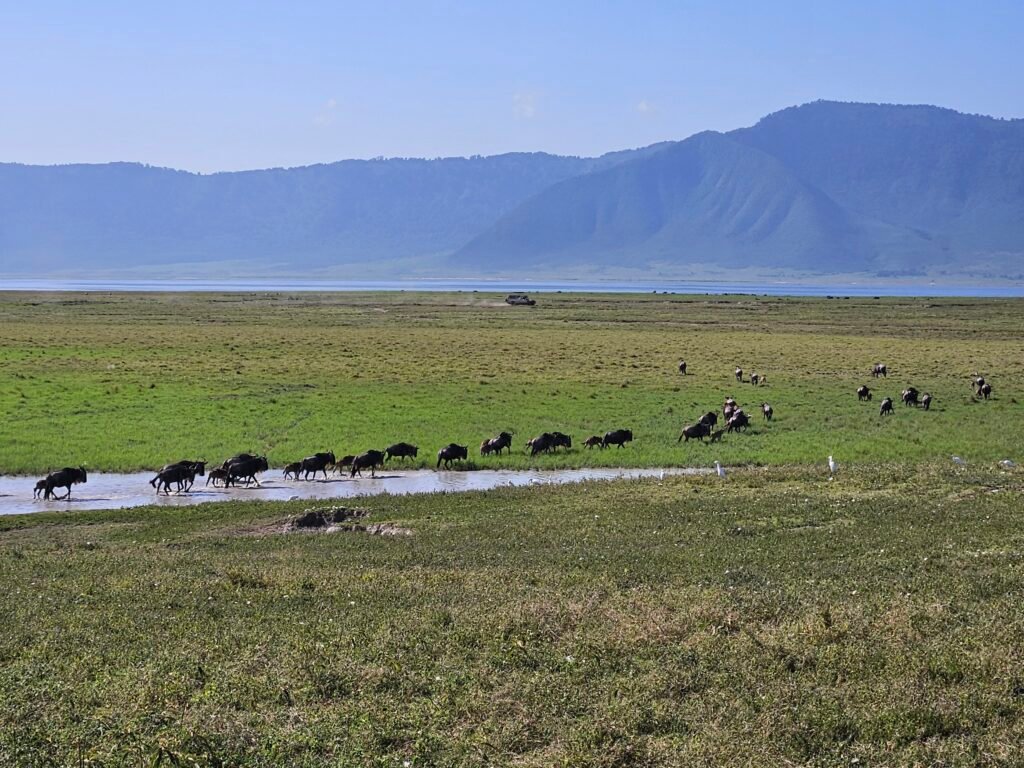
Ngorongoro was particularly incredible because of the sheer concentration of wildlife in a relatively small area.
There was an enormous amount to see without feeling like you were constantly driving for hours just to find the next animal. For a child, that density makes a difference because there is a much greater sense that something might appear at any moment.
It was also one of those places where you could appreciate how unusual the environment was without needing to turn the experience into a formal lesson. You are simply sitting in a vehicle looking out at an extraordinary landscape with animals moving through it.

Kaudulla National Park, Sri Lanka
When: August. Our son’s age: 6. Format: jeep safari added to a transfer day.
Our Sri Lankan safari was different again.
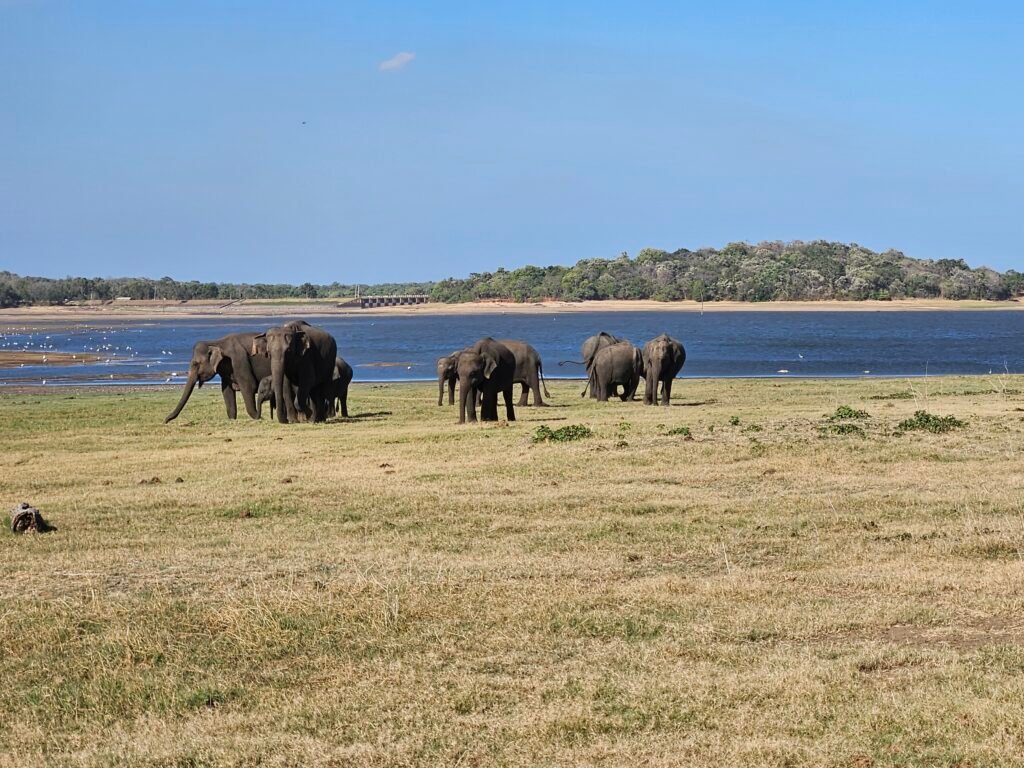
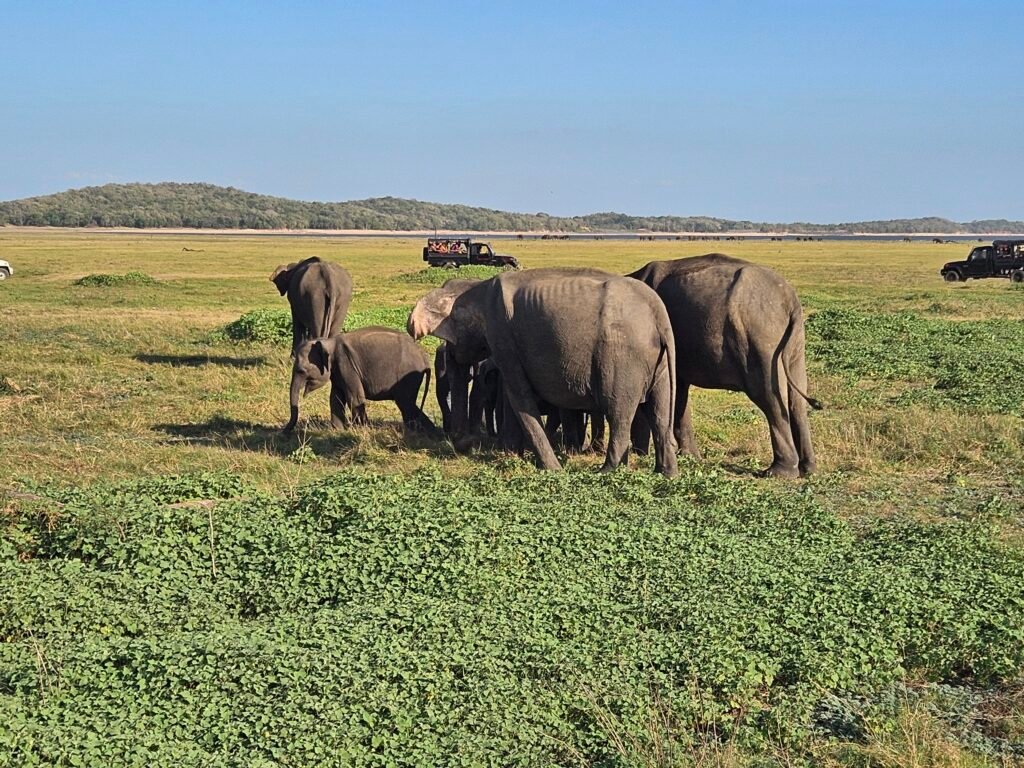
We were travelling from Trincomalee to Kandy and could have simply made the journey between the two. Instead, we arranged the whole day with a local tour company: they picked us up in Trincomalee, drove us to Kaudulla National Park, took us on a jeep safari inside the park, and then continued on to Kandy. If you only want the safari itself, this 3-hour Kaudulla jeep safari covers that part.
To be clear, this was a jeep safari watching wild elephants in the national park. There was no elephant riding, and we wouldn’t recommend any experience that offers it.
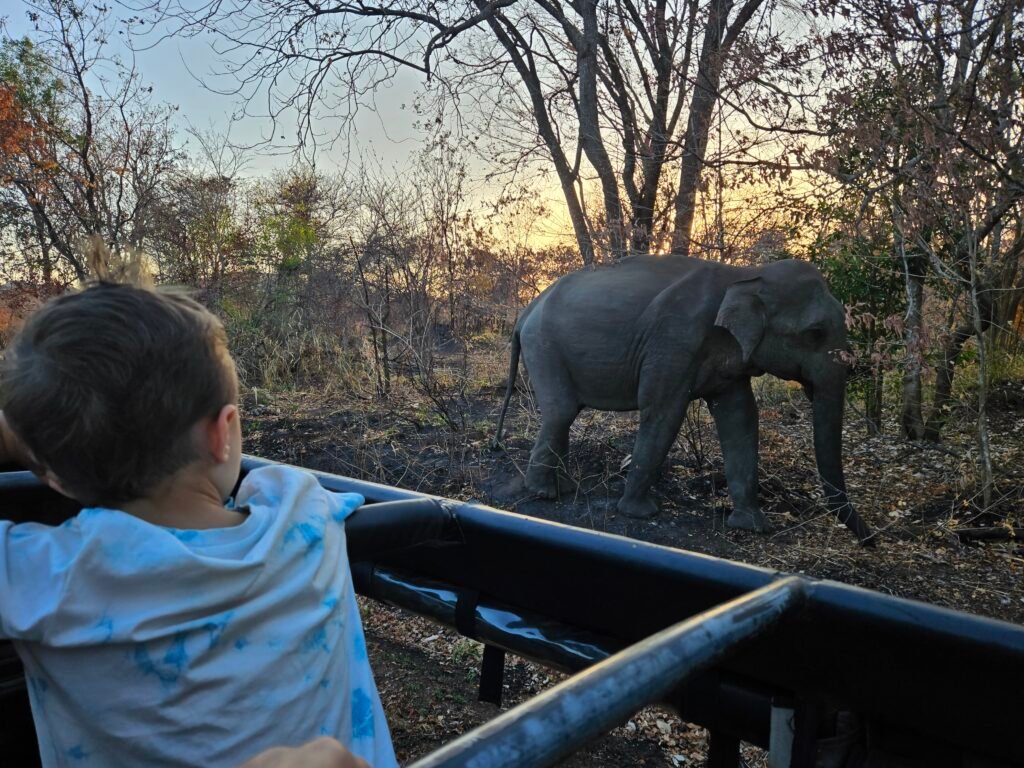
We saw plenty of elephants. It made the travel day longer, but it was completely worth it. Our son never complained about being bored, and instead of spending the day simply moving from one place to another, we had an actual wildlife adventure in the middle of it.
This is something I would encourage families to think about. A safari with kids does not necessarily have to mean booking a week-long African safari. Wildlife experiences can often be built into a broader itinerary and can turn an otherwise tedious travel day into one of the highlights.
Wondering which park to pick? We compare the two in our guide to Kaudulla vs Minneriya with kids, including current park fees and how to fit a safari into a travel day.

What Safari Taught Our Son
As a worldschooling family, we are always looking for experiences that teach more than a textbook can. Safari turned out to be one of the most powerful learning experiences our son has ever had.
He had read about lions, elephants and the Great Migration, and seen them in books and documentaries. Seeing them in their natural habitat was something else entirely. He watched lion and cheetah cubs staying close to their mothers, newborn wildebeest calves in the middle of the migration herds, and elephant families moving together. Animals stopped being pictures on a page and became real lives, with families and routines of their own.
The biggest change, though, wasn’t about facts. We really believe our safaris changed something in him, almost at the level of brain chemistry. He has become far more empathetic towards animals since then. Having seen them living freely in the wild, he now can’t stand zoos, or any place where animals are mistreated or kept in poor conditions.
That is not something we planned to teach him. It is something he learned for himself, by being there.
Botswana vs Tanzania: What Felt Different to Us
The biggest difference was the format: a group day trip in Botswana versus a private, multi-day safari in Tanzania. That means it would not be fair to conclude that one destination is “better,” because we experienced them in very different ways.
Tanzania gave us more time to settle into the rhythm of safari, and the private 4×4 made it feel particularly comfortable as a family. Botswana showed us just how much wildlife you can encounter in a single day, and how much a river adds to the experience. Both are memories we still talk about.
What Is a Game Drive Like on a Safari With Kids?
The phrase “game drive” can make it sound as though you spend several hours continuously spotting animals.
You don’t.
There is driving, there is waiting, and there are stretches where you are looking at the landscape and wondering when something will appear. There are animals that are so far away that you need binoculars to appreciate them. Then there are moments when everyone suddenly becomes completely alert because something incredible has appeared beside the road.
With a child, the question is not whether every minute will be exciting. It won’t. The question is whether the child can cope with the quieter parts in exchange for the exciting ones.
For our son, the answer was yes. For younger children, I would think carefully about the length of individual drives rather than simply counting the total number of safari days. A longer safari with sensible breaks may be much easier than trying to cram enormous drives into a shorter itinerary.
The pop-up roof
Every safari vehicle we have been in had a pop-up roof, and for kids it makes a huge difference. Instead of peering through a window, they can stand up, see over the grass and feel properly part of the action. If you are booking a safari, it is worth asking whether the vehicle has one.

Motion sickness
Our son and I both get motion sickness pretty badly on bumpy roads, so this was something we were wary of. In practice, we never felt nauseous at all on any of our safaris. Game drives are usually slow, because the whole point is to look for animals, and that slow pace made all the difference for us.
Toilet stops
This is a common worry for parents, and in our experience it was mostly manageable. There were bathrooms at the national park entrances and designated picnic areas where you can stop. In Ngorongoro, which is relatively small and easy to get around, we stopped for lunch. The only place it was really an issue was the Serengeti, where the distances are much bigger and you can drive for a long time between stops. Make sure everyone goes whenever there is a chance.
What Age Is Best for a Safari With Kids?
There isn’t one magic age.
Tanzania’s national parks allow children on standard game drives, but individual lodges and camps can set their own minimum ages, and walking safaris usually have much higher minimum ages than vehicle-based game drives. “Children are allowed” does not mean every activity or every property is available to every child, so check the actual itinerary and accommodation before you become attached to a particular camp.
I would think about five things:
- How well does your child cope with long car journeys?
- How interested are they in animals and nature?
- Can they sit relatively quietly when necessary?
- How well do they cope with heat, early mornings and disrupted routines?
- Will they enjoy the accommodation and downtime as much as the game drives?
A child who already loves wildlife may get much more out of safari at a younger age than a child who has little interest in animals. Our son was 6, 7 and 8 on these trips, and all three ages worked for him.
How Long Should a Safari With Kids Be?
More isn’t automatically better.
It can be tempting to look at a map and try to visit as many parks as possible. With children, however, every additional park adds another journey, another packing session and another change of accommodation.
Our Tanzania safari was only three days, and it worked well for us because it sat inside a longer, slower stay on Zanzibar. We have learned that travelling slowly is what keeps us from burning out, and the same applies to safari. For some families, a short safari combined with a beach stay may be ideal. For others, particularly families with older children who are fascinated by wildlife, a longer safari may be exactly what they want.
Think about your child’s tolerance as much as your own desire to see another park. There is no prize for visiting the greatest number of parks.
Private vs Shared Safari With Kids
Our Botswana experience was a group tour, while our Tanzania safari was private, so we have experienced both formats.
The private Tanzania vehicle meant our son could enjoy the experience without us worrying about whether he was bothering other passengers. With a private vehicle, you also have more ability to structure the day around your family. If your child needs a break, that matters.
That doesn’t mean a shared safari is a bad choice for families. It can be significantly less expensive, and for some children the social aspect may make the experience more enjoyable. If budget is a major consideration, don’t assume you have to book private simply because you are travelling with children. But if the difference in price is manageable, the flexibility is valuable on a family safari.


What to Think About Before Booking a Safari With Kids
Before paying a deposit, I would look beyond the headline question of which country has the best wildlife and think about the whole experience.
Your child’s personality: A patient animal lover and a restless four-year-old are going to experience the same safari very differently.
The length of drives: Find out how long you are realistically going to spend in the vehicle each day rather than simply looking at the number of nights.
The accommodation: Check minimum ages, whether family rooms are available and whether there are restrictions on children joining particular activities.
The vehicle: Ask what type of vehicle you will use, whether it has a pop-up roof, and whether the safari is private or shared.
The itinerary: Look at the amount of time spent moving between destinations. More locations do not necessarily mean a better family holiday.
The food: Is your child a picky eater? How will they handle long days with potentially very limited options for lunch?
The season: Weather, wildlife patterns and road conditions can all affect the experience. In Tanzania, the timing of the Great Migration makes a big difference to what you see.
Paperwork: Check visas for every border you will cross, and carry your child’s birth certificate if you are crossing into Botswana.
Health considerations: Look at malaria risk, vaccinations and access to medical care for the specific itinerary rather than treating “Africa” as one health category. Check your travel insurance’s evacuation limit and whether it covers search and rescue, because remote lodges can be hours from a good hospital (our family travel insurance comparison sets out the limits for SafetyWing, Genki and World Nomads).
Downtime: A pool, a comfortable lodge or simply an afternoon without another activity can make a surprisingly big difference.
Your budget: Safari costs include far more than the room itself: park fees, guides, vehicles, transfers, internal flights and activities.
Safari With Kids: Staying Safe
The animals are wild, and that is precisely why the experience is so impressive.
Children need to understand that they cannot simply get out of the vehicle, walk toward an animal, feed anything or wander around a lodge without following the property’s rules. Parents need to listen carefully to guides and respect instructions about when it is safe to leave a vehicle and where children can walk.
We were never planning to spend an hour sitting beside an angry crocodile in Botswana. It happened because circumstances changed, and that is exactly why having an experienced guide and following instructions matters.
Walking activities deserve particular attention, because age restrictions are usually much stricter than for game drives. Always check the specific activity rather than assuming that because your child can join the safari, they can join every part of it.
Malaria, Vaccinations and Health Considerations
Health recommendations change, and the risks vary considerably depending on where you are going, so always check current information.
For Tanzania, the CDC’s Tanzania travel health page lists malaria risk in all areas below 1,800 metres and advises travellers to discuss vaccines and medicines with a healthcare professional well before departure. That is particularly important on a safari with kids, because medication and vaccination decisions can depend on age, weight, itinerary and individual circumstances.
The same page covers yellow fever. Tanzania requires proof of vaccination for travellers arriving from countries with a risk of yellow fever, so requirements can depend not only on your destination but also on where you have travelled immediately beforehand.
We would treat travel health as part of the safari planning process, not something to sort out a few days before departure.
What to Pack for a Safari With Kids
You don’t need to pack your entire house. Think in terms of comfort, sun protection, health and keeping everyone reasonably happy during the quieter periods. If you want the bigger picture, we have also written about how we pack for long-term family travel and the family travel gear we actually use.
- A warm, packable jacket for cold mornings and evenings
- Lightweight layers for changing temperatures
- Sun protection and a hat
- Comfortable shoes
- Insect repellent appropriate for the destination
- Plenty of snacks your child will actually eat
- Binoculars
- A camera with a good zoom
- Any required medications
- Your child’s birth certificate if you are crossing borders
- Basic entertainment for downtime, like a few of our favourite travel games for kids
- A few familiar comfort items for younger children
A warm, packable jacket
Safari mornings can be very different from safari afternoons. In Tanzania it got quite cold at night and early in the morning, while the days were warm. A lightweight puffer jacket that squashes down into its own pocket is ideal: warm in the morning, tiny in the daypack by lunchtime. Something like the Amazon Essentials lightweight packable puffer jacket, which comes in adult and kids’ sizes, does the job without taking up luggage space.
A camera with a real zoom
Phones are great for landscapes and anything close to the vehicle, but they struggle with distant wildlife. We now travel with a Nikon Coolpix P1100, a bridge camera with a 24-3000mm equivalent (125x) optical zoom. It is bigger than a compact camera, but for safari that zoom is the whole point: it lets you photograph animals that are far too distant for a phone.
Binoculars
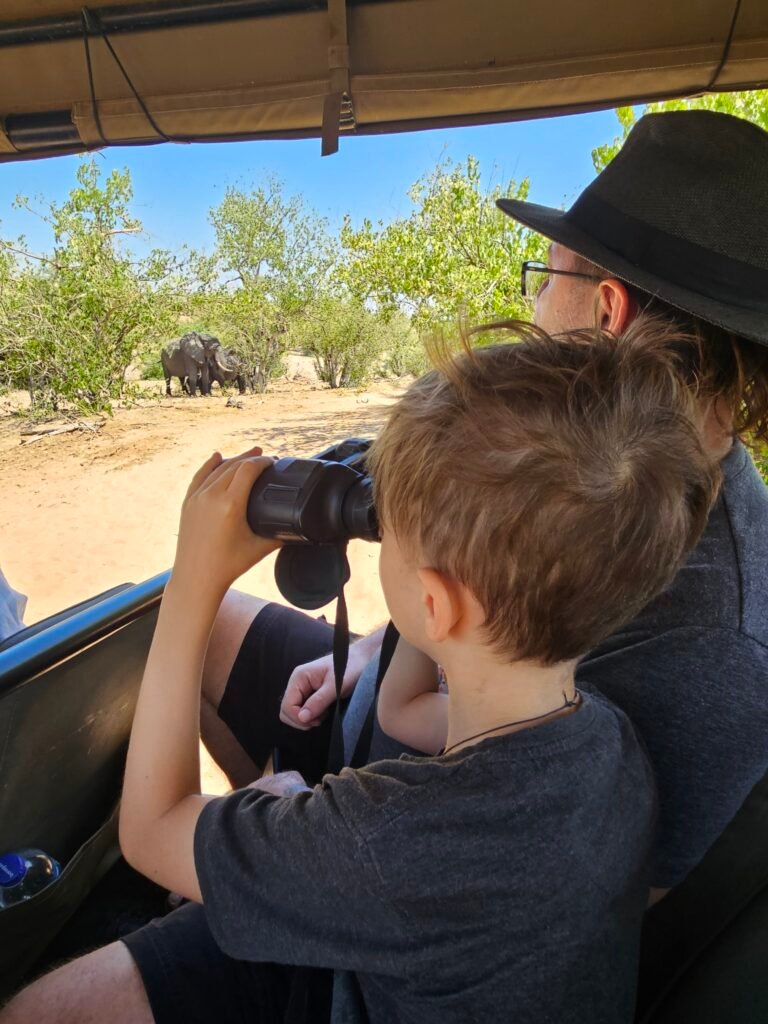
Some animals will be right beside the vehicle, but many will be far away, and binoculars turn “a brown dot on the hill” into a lion. If you can, bring a pair your child can use themselves, so they are not waiting for their turn while the animal walks off. Having their own binoculars also gives a child a job to do during the quieter stretches: being the first to spot something.
What We Would Do Differently Next Time
Bring much more food
There aren’t always places to stop for lunch on safari, and when there are, they can be very basic or serve unfamiliar food that kids might not want to eat. In Tanzania there were no restaurants on our route through the Serengeti, so our driver picked up a packed lunch in Arusha before we left in the morning. Unfortunately our picky eater did not like it, so he went mostly hungry that day, surviving on whatever snacks we had with us.
Next time we would pack far more food and snacks that we know he will eat, rather than relying on the packed lunch. A child who is hungry, hot and tired is considerably less likely to appreciate the distant antelope you are excitedly pointing toward.
Time it for the river crossings
We saw one part of the Great Migration: calving season around Ndutu, which runs roughly from January to March. What we didn’t see is the part most people picture when they think of the migration: the river crossings, when massive herds of wildebeest plunge across crocodile-filled rivers.
The most famous of these are the Mara River crossings in the northern Serengeti, which usually happen from around July to September. There are also Grumeti River crossings in the Serengeti’s Western Corridor, usually around June. The exact timing depends on the rains and the herds, so it is never guaranteed, but next time we would plan our trip around the crossings.
Which African Safari Destination Is Best for Families?
We can only speak for the places we have been, and they suited different kinds of trips.
Tanzania gave us the classic safari: the Serengeti, Ngorongoro, and part of the Great Migration, with more animals than we could keep count of. The trade-off is distance, so expect long hours in the vehicle. Chobe in Botswana showed us how much a river adds, and it is an easy day trip if you are already visiting Victoria Falls. Higher-end camps elsewhere in Botswana can have stricter minimum ages, so check before you book.
Kenya, South Africa, Namibia, Zimbabwe and Zambia are all popular for family safaris too, but we haven’t been on safari in those countries yet, so we will leave those recommendations to people who have.
How Much Does a Safari With Kids Cost? What We Paid
Here is what we actually paid, from cheapest to most expensive. All prices are in US dollars for the three of us. If you are curious how safari fits into a wider travel budget, here is our real one-year full-time family travel budget.
Kaudulla, Sri Lanka: $195
The jeep safari itself cost $30 per person. The whole day, including the safari and the drive from Trincomalee to Kandy, came to $195 for the three of us. For a day that would otherwise have been nothing more than a transfer, that was excellent value.
Chobe, Botswana: $470
The day trip to Chobe from Victoria Falls cost $470 for the three of us, including lunch, the border crossing logistics, the game drive and the boat trip.
Serengeti and Ngorongoro, Tanzania: about $4,150
Our private three-day safari with Serengeti Smile cost $3,400 for the three of us. That included three nights of accommodation (one night in a hotel in Arusha, one at Lake Ndutu Luxury Tented Lodge and one at Lion’s Paw in Ngorongoro), all meals, our private 4×4 and driver, and national park entrance fees.
The safari price did not include our return flights between Zanzibar and Arusha, which cost roughly $250 per person, or about $750 for the three of us. That brought the total for the trip to around $4,150.
Is it worth the cost?
Safari can be expensive, particularly once you are travelling as a family rather than as a couple. A private vehicle can make the price higher, but the cost is spread across everyone in your family, and the additional flexibility may be valuable.
Park fees vary by park, and children get reduced rates. In Tanzania, children under five enter national parks free and children aged 5 to 15 pay a child rate. Fees change regularly, so check the current tariffs with the Tanzania National Parks Authority or your operator when planning.
When comparing safari prices, look at the total cost rather than the nightly rate of different lodges. A cheaper-looking safari can become much less cheap once transfers, park fees and other extras are added. Our Tanzania package covered almost everything on the ground, which made it easy to compare, but don’t forget to budget for getting to the starting point. For us, the flights added more than 20% to the cost.
At the same time, you don’t need the most expensive possible safari to have an incredible experience. Kaudulla cost us less than $200 for the whole day, and it is still one of the most memorable wildlife experiences we’ve had as a family.
Would We Do Safari With Kids Again?
Absolutely.
Our experiences in Botswana, Tanzania and Sri Lanka have all been different, and that is one of the things we like most about them. The biggest lesson we would take from all three is that safari with kids does not have to look one particular way.
It can be a multi-day trip through the Serengeti, or a day trip from another destination. It can even be a few hours added to a travel day because you happen to be passing a national park.
What matters is matching the experience to your child, allowing enough time for the trip to breathe, and understanding what safari actually involves before you book it.
For us, the long drives, waiting and occasional chaos have been more than worth it.
Safari With Kids: Frequently Asked Questions
What is the best age for a safari with kids?
There is no single best age. It depends more on how your child copes with long drives, early starts and quiet stretches than on their age. Our son was 6, 7 and 8 on our safaris, and all three worked well. Check lodge minimum ages before booking, and note that walking safaris usually have much higher minimum ages than game drives.
Is a safari safe for kids?
Yes, as long as you use an experienced guide and follow their instructions. Children need to stay in the vehicle unless the guide says otherwise, and follow the rules at the lodge. Wildlife is unpredictable, which is exactly why the guide’s judgement matters.
How much does a safari with kids cost?
It varies hugely. For our family of three, a jeep safari in Kaudulla, Sri Lanka, cost $195 including the transfer, a Chobe day trip from Victoria Falls cost $470, and a private three-day safari in Tanzania cost about $4,150 including flights from Zanzibar.
Do kids get bored on safari?
There are quiet stretches on every game drive, but our son was never bored. A pop-up roof to stand up in, his own binoculars and plenty of snacks all helped, and the exciting sightings tend to arrive without warning.
Is a private or shared safari better with kids?
A private safari gives you more flexibility to plan the day around your child, which we found valuable in Tanzania. A shared safari is cheaper and can still work well, as our group day trip in Botswana did.
Do children need a birth certificate to enter Botswana?
Botswana officials can ask to see a child’s unabridged birth certificate at the border, to help prevent child trafficking. We weren’t asked for ours on our Chobe day trip, but it can happen, so bring the original or a certified copy.



2 Comments