


Thinking About Full-Time Family Travel? What 4 Years of Travelling the World With Our Son Taught Us
Taking your children away for a few weeks is one thing. Committing to full-time family travel is something else entirely. When we first started travelling full time with our son, we weren’t simply taking an extended holiday. We were changing the way our family lived. That meant figuring out how to earn money while travelling, how to educate our child, where we would live, how often we wanted to move, how we would maintain friendships and routines, and eventually, what we even wanted “home” to mean.
What experience do we have with full time travel?
We have travelled full time with our son for four years, and now have visited 90 countries together. However, when we first hit the road, our intention was not to travel indefinitely. Rather, it was to travel for a year or so, and find a country where we would want to move to. But, we completely fell in love with this lifestyle, the adventures, the constant newness, and a year passed very quickly. One year became two, then three, and before we knew it, we were travelling full time for four years.
And yet, that isn’t how we travel today. We now have a base in Georgia (the country), and travel for several months at a time before coming back to the same place again.
That change is actually one of the biggest lessons we’ve learned. When people imagine becoming a full-time travelling family, they often picture a permanent lifestyle choice. You leave home, start travelling, and that’s simply what your family does from then on. It doesn’t have to work that way.
Your children grow, priorities change, your work changes. You discover what you enjoy and, perhaps more importantly, what you don’t enjoy. A travel style that works brilliantly for your family for several years can eventually stop working.
So if you’re seriously considering full-time family travel, we wouldn’t start with a list of countries.
We’d start by thinking about how you actually want your family to live.


1. Do You Actually Want to Do Full-Time Family Travel?
Before you start researching visas, accommodation and flight routes, it’s worth being honest about what is motivating the decision.
Sometimes when people say they want to travel full-time, what they really mean is that they want something different from the life they currently have. They might want more family time, more flexibility around education, a change of scenery, the opportunity to live abroad, a break from a traditional school system, or simply the chance to spend a year doing something completely different.
Those things don’t necessarily require permanent nomadism.
You might discover that what you really want is to live abroad. Or perhaps you want to spend several months travelling each year while keeping a home base. Maybe you want to take a family gap year and then decide what comes next.
That distinction matters because there is a tendency to jump from “we don’t want our current lifestyle” straight to “therefore we need to become a full-time travelling family.”
There are actually a lot of options in between.
When we started travelling, we did genuinely want travel to be a major part of our everyday lives, and it became exactly that. But our own experience has also taught us that you don’t need to make a decision that locks your family into one particular lifestyle indefinitely.
You can try something and then change it.


2. Choose Your Pace: How Fast Should Full-Time Family Travel Be?
This is something we learned through experience rather than planning.
When we first started travelling full-time, we were moving roughly every two to four weeks. At the time, that seemed perfectly manageable. Two to four weeks sounds like a reasonable amount of time to explore somewhere, and when you’re excited about seeing the world, there is always another destination that looks tempting.
But after doing it for a while, we realised that it was simply too fast for us.
There was always something to organise. We were packing, unpacking, figuring out the next place, settling in, learning how everything worked and then doing it all over again. We weren’t necessarily miserable doing it, but we eventually realised that we enjoyed travelling much more when we weren’t constantly preparing to leave.
Slowing Down
So instead we started staying in places for two or three months, and sometimes even four months, and that felt dramatically better for our family. We could actually settle into a place. Our son had time to get comfortable. We could establish routines, find activities, meet people and return to places we’d already discovered instead of constantly starting from scratch.
This is one of the reasons we’d strongly recommend thinking about pace before you plan an itinerary.
There is no prize for changing countries every two weeks. In fact, if you’re travelling with children, staying longer can give you something that a fast itinerary can’t: the opportunity to actually experience what everyday life feels like somewhere.
You still get to explore, but you’re not spending your entire life in transit. And if you initially think you want to move quickly, that’s fine too. You may discover that you love it. The important thing is to allow yourselves to change your minds once you’ve actually experienced it.
If you’re worried about burning out, our guide to long term travel with kids covers how we keep the pace sustainable.

3. Full-Time Family Travel Is About Your Child, Not Just Your Destinations
When you’re excited about full-time travel, it is very easy to focus on where you’re going.
You start making lists of countries, researching amazing experiences and imagining all the things your children are going to see. But your child isn’t going to experience your itinerary in the same way you do.
They will experience the actual day-to-day reality of it: the long travel days, the unfamiliar beds, the days when they’re tired, the time spent doing schoolwork, the new activities, the new people and the periods when absolutely nothing particularly exciting happens.
Some children thrive on constant change. Others need more predictability. Some love meeting new people immediately, while others need time before they feel comfortable. Some are perfectly happy moving regularly, while others become much happier once they know where their favourite playground is and recognise the people at their weekly activity.
And kids change as they grow. A lifestyle that works beautifully for a four-year-old may look very different once that child is nine, thirteen or sixteen.
This doesn’t mean you need to design your entire travel life around preventing your child from ever being uncomfortable. Travel inevitably involves some discomfort, and learning to cope with change can itself be valuable.
It does mean that your child’s experience needs to be part of the decision. Our own experience has made us increasingly aware of the importance of continuity, particularly as our son has got older. Having opportunities to see the same people again, return to places and maintain some familiar routines has become more valuable than simply moving on to the next destination. That is one reason our travel style has evolved.

4. How to Fund Full-Time Family Travel: Making Money While Travelling
When we decided to travel full-time, one of the things we knew we needed was reliable income. Before we left, we set ourselves the goal of both finding fully remote, location-independent jobs.
And we did. My husband got a remote job in 2018, and then I also found one in 2020. Once the remote income was secured, we set off travelling in September of 2020. Importantly, neither of us works in tech or IT. There’s a persistent idea that if you want to work remotely while travelling, you need to be a software developer, programmer, designer or some other kind of tech specialist.
That’s simply not the case. Our jobs were in customer service and compliance-related roles. They were completely location-independent, and that allowed us to take them with us when we travelled. We did have previous experiences in the similar roles, so it was just a matter of finding fully remote jobs for what we already knew.
If you’re looking for specific information around remote work and online income, our Worldschooling Resources guide covers that in much more detail.
The flexibility of our schedules was particularly important because we had a young child. We could take turns looking after our son rather than automatically needing full-time childcare. One of us could work while the other took care of him, and then we’d switch.
That arrangement wouldn’t work for every family, and we’re very aware that having genuinely flexible schedules was something we were fortunate to have. But it made a huge difference to us.
Then, after working remotely for over 5 years, I was able to leave my job and focus on my online business. That’s now a significant part of how I create income, and it gives me a different kind of flexibility around our travel.
So even the way you fund the lifestyle doesn’t have to stay the same forever. You can start with employment, move into self-employment, build a business alongside a job, or change direction completely.
Remote Work
If you’re considering this lifestyle and currently work in a field that you assume can’t be done remotely, it is worth researching what actually exists rather than assuming that location independence is only available to programmers.
Look at your existing skills.
Could your current role be done remotely?
Could you move into a remote version of your profession?
Can you work for a company in another country?
Are you able to freelance?
And, importantly, does the job give you enough flexibility to actually enjoy the lifestyle?
A remote job that requires you to sit in meetings from 9am to 6pm every day may technically allow you to work from another country, but that doesn’t necessarily make it a particularly enjoyable travelling-family lifestyle. For us, the combination of reliable remote employment and flexible schedules made full-time family travel possible without immediately having to build an online business from scratch.
5. What Full-Time Family Travel Costs (and Whether the Numbers Make Sense)
Once you know how you’re going to earn money, you need to work out what your life is likely to cost.
This doesn’t mean creating a perfect monthly budget before you leave. Long-term travel is too variable for that to be particularly useful.
Instead, think about the major categories: accommodation, food, transport, flights, healthcare, insurance, activities, education, internet, visas and unexpected expenses. Then think about what you won’t be paying for anymore.
A useful starting point is your current monthly spending, which you can compare against what each category is likely to cost in the places you’re considering. Your pace matters as much as your destination here. Every move means another flight or long journey, and short stays rarely qualify for the discounts that many landlords and hosts offer on monthly rentals, so travelling more slowly is often one of the easiest ways to bring costs down. It’s also worth keeping a cash buffer for the unexpected, because the things that go wrong on the road tend to arrive with a price tag.
Depending on your circumstances, leaving your current home could remove or reduce some significant expenses. On the other hand, travel introduces costs that you may not currently have, particularly transport and accommodation.
When we left Ireland and started travelling full time, our expenses actually went down. Even though we were travelling full time and doing amazing things every weekend, we were spending less, because Ireland is so expensive.
You don’t need to know exactly what your family will spend in every country. You need to know that your income, savings and expected expenses make the lifestyle viable.
Curious what full-time family travel actually costs? Our real one-year family travel budget breaks down exactly what we spent, country by country.


6. Decide What You’re Doing About Your Home
One of the less glamorous parts of becoming a travelling family is deciding what happens to the life you’ve already built. Are you keeping your home, renting it out, putting your belongings into storage, or getting rid of most of what you own?
When we left Ireland, we were renting rather than owning a house, so we didn’t have a property to decide what to do with. We did, however, have years’ worth of belongings, and we made the decision to sell or donate pretty much everything we owned. For us, there didn’t seem to be much point in paying for storage for furniture, household items and things we weren’t even sure we’d want again. We’d rather put that money towards travelling than spend it every month storing a version of our old life somewhere.
That doesn’t mean selling everything is the right decision for every family. If you own a home, renting it out can provide an income and give you somewhere to return to later. For others, keeping a property provides a sense of security while they work out whether full-time travel is actually going to suit them. Even if you don’t own a home, you might decide to keep some belongings if you expect to return to a particular country or settle somewhere again in the future.
If you’re working out what to bring with you, here is how we pack for long-term family travel, including what we take and what we leave behind.



7. Don’t Plan Three Years of Your Life Before You Leave
There is a particular kind of planning that happens when you’re preparing for long-term travel.
You start with the first destination, then the next one, then the next one. Before you know it, you’ve planned where your family will be eighteen months from now, despite having no idea whether you’ll even enjoy travelling at the pace you’ve chosen.
You don’t need to know. What you need is a solid beginning. You need enough money to support the plan, appropriate documentation, an education approach, somewhere to stay when you arrive, insurance and a sensible idea of where you’re going first. After that, give yourselves room to learn.
Visas
Documentation is the one area where you can’t improvise. Passport validity rules, tourist visa limits and entry requirements vary widely between countries: some allow stays of a few weeks, some allow a year or more, and others require a visa arranged in advance.
If you’re planning to stay somewhere for several months, check the rules for your passports before you book, because how long you’re legally allowed to stay will often shape your pace. It’s also worth checking whether you can work remotely on a tourist visa, since some countries offer digital nomad visas specifically for that, and whether spending long periods somewhere (usually more than 180 days in a year) could make you a tax resident.
If you’re not sure how to find somewhere that works for a family for more than a few nights, see our guide to finding long-term accommodation for a family.
Your first few months will tell you things that no amount of online research can tell you.
Maybe you’ll discover that you hate moving every month. Or maybe you’ll love it. Perhaps your child wants more routine. Maybe you find that you work much better in one type of environment than another.
8. Plan Your Child’s Education for Full-Time Family Travel
Education obviously needs to be considered before you leave, but you don’t need to turn this particular decision into a ten-year academic masterplan.
Families travelling long-term might choose homeschooling, worldschooling, online school, local school, a hybrid approach, unschooling (a child-led approach with no set curriculum) or, in some circumstances, a temporary educational break. What matters is that the approach fits the lifestyle you’re actually creating.
A highly structured school-at-home schedule may be difficult if you’re changing location every few days. On the other hand, a family spending three months in one place may have completely different opportunities for local classes, activities, museums, projects and community involvement. And again, this can change.
You don’t have to decide at the beginning what education will look like all the way through your child’s schooling.
What worked for us was a combination of structured learning for maths and reading, plus real-world experiences. If you’re trying to work out what education could look like on the road, our guide to keeping up with academics while worldschooling goes into that in much more detail. We’ve also put together a guide to the best worldschooling apps and websites if you’re looking for tools and resources to make things easier.
For now, the main thing to consider is simply whether the education approach you’ve chosen actually fits the way you want to travel. A family moving every few weeks may need a very different setup from one spending several months in each place.



9. Build a Social Life, Not Just a Collection of Encounters
One of the challenges of long-term travel is that meeting people is relatively easy.
Building lasting relationships is harder. You can meet another family at a playground, spend an afternoon together and have a wonderful time. But if you’re leaving the next morning, that’s unlikely to become an ongoing friendship.
This is another reason our decision to slow down our travel pace made such a difference.
When you stay somewhere for a few months, there is time for relationships to develop naturally. You can join a recurring activity rather than constantly doing one-off experiences. Your child can see the same kids repeatedly. You can make plans for next week rather than exchanging Instagram accounts and hoping you’ll somehow meet again.
We’ve also learned that having opportunities to return to the same places can be valuable.
That’s part of what we mean by creating a sense of continuity while travelling. You don’t necessarily need one permanent local community, but having places and people you can return to can make a very mobile lifestyle feel considerably more grounded.
If this is something you’re worried about, read our more detailed article on worldschooling friendships.
10. Have a Safety Net
You don’t need to plan for every possible disaster, but you should know what you’d do if things didn’t go according to plan.
That might mean having emergency savings, more than one way to access your money, copies of important documents, appropriate insurance, emergency contacts, backup internet and a realistic way of getting home.
General rule is that you should have at least three months worth of living expenses saved before starting your full time travelling journey.
Health and Insurance
Insurance deserves particular attention. A standard holiday policy is usually designed for trips of a few weeks and often limits how long you can be away, so it may not cover you while you’re abroad for months at a time. Look for a long-term travel or expat-style policy that includes medical cover, emergency medical evacuation and cover for children, and read carefully what it excludes, such as pre-existing conditions or adventure activities. Our travel insurance comparison for nomad families covers the policies we’ve looked at in detail. It’s also worth checking whether your health insurance at home continues once you leave.
Our family has been using Safety Wing Nomad Insurance and it has been great to have the knowledge that if something happens, we are covered.
Vaccinations
Check the vaccine and health guidance for each destination well before you arrive; the CDC’s Travelers’ Health pages are a good place to start.
The details will depend on your family and the type of travel you’re doing. Our Worldschooling Resources guide covers the practical travel and safety side in much more depth, and for backup internet we’ve compared the best eSIMs for international travel.
The bigger point is psychological. Knowing that you have options makes it much easier to experiment with a new lifestyle. An exit plan doesn’t mean you expect to fail. It means you’re not trapped. If you discover after six months that your family isn’t enjoying the lifestyle, you can change it. And if your child’s needs change, you can change it.
That flexibility is one of the advantages of not treating the decision as irreversible.


11. Test Full-Time Family Travel Before Making It Permanent
If you can, we think this is one of the most valuable things you can do.
A two-week holiday doesn’t necessarily tell you whether you’ll enjoy full-time travel. On holiday, you’re generally doing holiday things. You’re sightseeing, eating out, visiting attractions and exploring somewhere new.
Real life is different. If you’re considering full-time family travel, try spending several weeks or months somewhere and deliberately live as normally as possible. Work, do schoolwork, buy groceries, cook, do laundry. Have a day when someone is tired and doesn’t want to go anywhere.
If possible, don’t change location every few days just to make the trial more exciting. You’re not testing whether you enjoy travelling. You’re testing whether you enjoy living while travelling. That distinction is huge.
One of the most useful questions you can ask afterwards is:
Did we enjoy living this way, or did we simply enjoy being on holiday?
You may discover that you love it. You may discover that you want to slow down. Or you may discover that a few months of travel followed by a few months at home is exactly what you need. All of that information is useful.
12. Eventually, Full-Time Family Travel Just Becomes Life
This is something people don’t always realise before they leave.
At the beginning, everything feels like an experience. The new country is exciting. The supermarket is interesting. Even figuring out public transport can feel like part of the adventure. But eventually, you stop noticing.
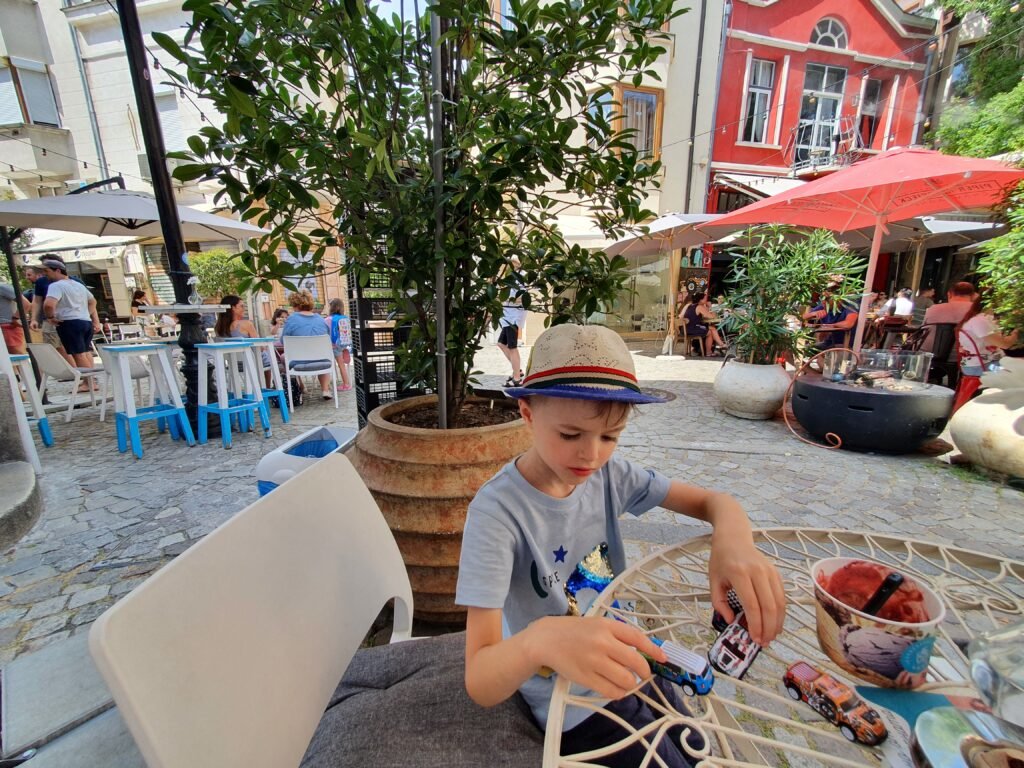
For us, this was one of the biggest conceptual shifts in long-term travel. We weren’t constantly having amazing travel experiences. We were raising our child, working, learning and doing all the ordinary things families do, just in a lot of different places.
And there is something quite liberating about that. You don’t need every day to be exciting for a travelling lifestyle to be working (although there are plenty of exciting experiences too!)


13. Give Yourselves a First 90 Days
You don’t need a five-year itinerary, but having a framework for your first few months of full-time family travel can help you avoid making major decisions based on the excitement or stress of the first couple of weeks.
Before you leave
Get the foundations in place.
Decide what kind of travel you’re initially going to try. Make sure your income is workable. Understand your expected spending. Decide on your education approach. Work out what you’re doing with your home and belongings. Organise the practical travel requirements and choose somewhere sensible to start.
During the first month
Give yourselves time to settle.
Don’t immediately conclude that your entire lifestyle is wrong because the first few weeks feel chaotic. You’re learning how to live differently, and there will inevitably be a lot of practical things to figure out.
Find your basic routines. Work out where to shop. Find activities for your child. Establish your working rhythm. Get a sense of the neighbourhood.
By months two and three
By this point, you should have enough real-life experience to start seeing what is and isn’t working for your family. Perhaps you’re finding that moving every few weeks is more tiring than expected, or that you’re spending more than you had budgeted for. You might realise that your work schedule is leaving less family time than you’d hoped, or that your child is happier with a little more continuity. You may also discover that you really enjoy a particular type of destination and would rather stay for three months than try to squeeze three countries into the same period.
This is when it makes sense to start adjusting the plan based on what you’ve actually learned. The first few months aren’t there to prove that your original plan was perfect; they’re an opportunity to work out what your family genuinely needs and make the lifestyle fit around that.
14. What We Would Do Differently Now
If we could go back to the beginning, one of the biggest things we’d change about our full-time family travel would be our assumptions about pace and continuity.
We became increasingly aware of the importance of repeat connections. When you’re travelling with a child, there is something very different about meeting someone once and knowing you’ll probably never see them again compared with seeing the same family every week for several months. That has influenced how we think about destinations. We now value places where we can create some continuity rather than simply choosing the next interesting country.
And our biggest change of all has been moving away from full-time nomadism. We travelled full-time for around four years. Eventually, that model stopped working for our family in the way it once had. That didn’t mean we wanted to stop travelling.
In some ways, we now get the best of both worlds. We still have the freedom to spend extended periods in other countries, but we also have somewhere familiar to come back to. Our son has a community. We have a place where we know how things work. And travel becomes something we can build into our lives rather than something that has to be our entire lifestyle.
We’re not saying this is the model other families should choose. Quite the opposite. If you want to travel completely nomadically for ten years and it works beautifully for your family, that’s great. The lesson for us is simply that you’re allowed to change your mind.


15. You Don’t Have to Decide on Full-Time Family Travel Forever
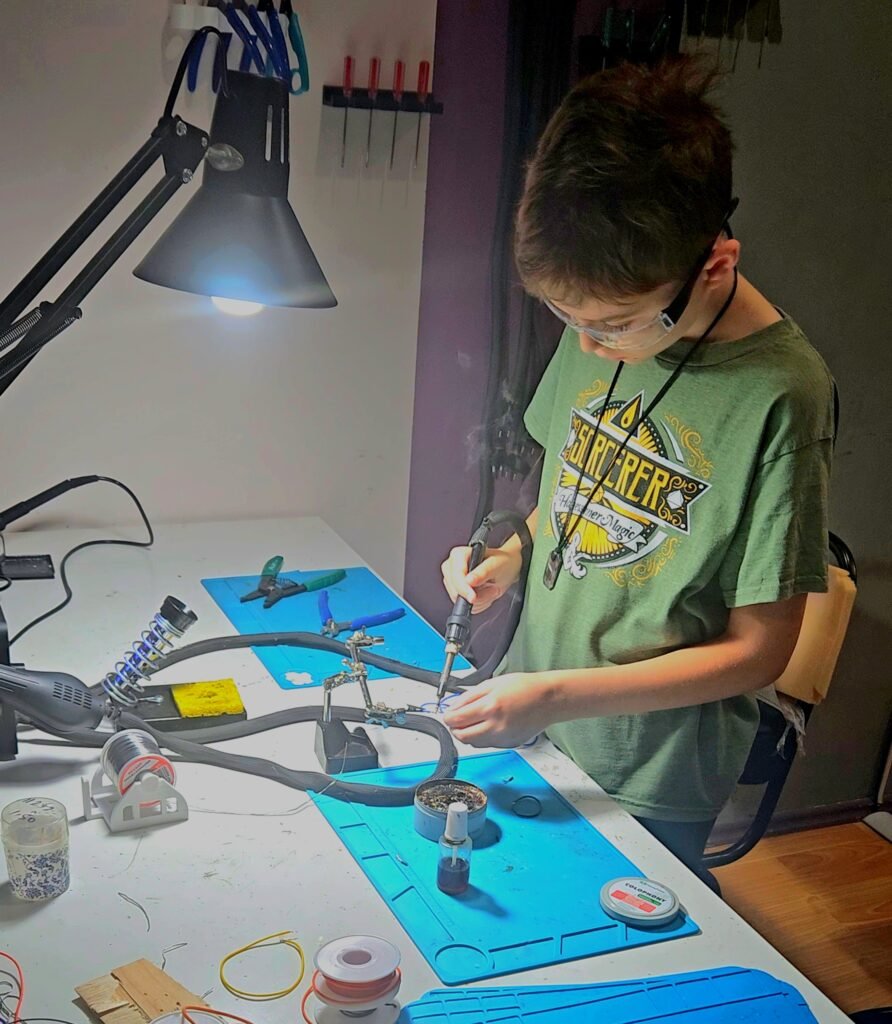
If you’re wondering whether your family could make full-time family travel work, try not to turn it into a decision about the next ten years of your life. You don’t need to know how long you’ll want to travel, or whether you’ll still be doing it when your children are teenagers. The more useful question is whether you’re ready to try it now, and what version of travelling might fit your family at this particular stage.
For some families, that could mean taking a month to test the lifestyle. For others, it might be a family gap year, a year living abroad, several years of full-time nomadic travel, or a few months of travel followed by time at home. There isn’t a requirement to choose one model and stick with it indefinitely.
Our own experience is a good example. We travelled full-time for four years, gradually slowed our pace as we realised we preferred staying in places for longer, and eventually changed the whole structure of our travel by establishing a home base.
Looking back, none of those changes meant that the previous version of our life had been a mistake. Each one simply reflected what worked for our family at that point in time. What suited us when our son was younger isn’t necessarily what suits us now, and there’s no reason to expect that our current setup will have to remain the same forever either.
So instead of asking, “Can we become a full-time travelling family forever?”, it may be more useful to ask:
“What kind of family life do we want right now, and how much travel fits into it?”
Once you start with that question, there’s a lot more flexibility in the answer.
Full-Time Family Travel FAQ
How much does full-time family travel cost?
It depends on your destinations, your pace and how you choose to live, so there isn’t one figure that fits every family. The main categories are accommodation, food, transport, flights, healthcare, insurance, activities, education, internet and visas. Travelling more slowly usually brings costs down, because you take fewer flights and can find better rates on longer stays. For us, expenses actually went down after we left Ireland, because Ireland is so expensive. As a general rule, aim to have at least three months of living expenses saved before you leave.
How do you make money while doing full-time family travel?
Most families rely on remote employment, freelancing or an online business. Remote work is much broader than the tech industry: we both had customer service and compliance-related jobs that were completely location-independent. Flexible schedules matter as much as location, because they let you take turns looking after your child while the other person works.
How do you educate your child while travelling full-time?
Families choose homeschooling, worldschooling, online school, local school, a hybrid approach or unschooling. What worked for us was structured learning for maths and reading, combined with real-world experiences. You don’t have to decide on an approach for your child’s whole education in advance, and it can change as your travel style does. Our guide to keeping up with academics while worldschooling covers this in more detail.
How long should you stay in each place?
We started out moving every two to four weeks and found it too fast, because we were always packing, unpacking and organising the next move. Staying two or three months, and sometimes four, worked much better for our family. Our son could settle in, we could build routines and we had time to meet people. Your child’s temperament matters too, since some children thrive on constant change and others need more predictability.
Do you need to sell your home and belongings to travel full-time?
No. If you own a home, you can rent it out and keep somewhere to return to. Some families keep a property or put belongings into storage while they find out whether the lifestyle suits them. We were renting when we left Ireland, so we sold or donated almost everything, because paying for storage didn’t make sense for us.
What insurance and visas do you need?
A standard holiday policy is usually designed for trips of a few weeks, so look for long-term travel insurance that includes medical cover, emergency medical evacuation and cover for children. Our family uses Safety Wing Nomad Insurance. Visa rules vary widely between countries, so check tourist visa limits and entry requirements for your passports before you book, because how long you’re legally allowed to stay will often shape your pace.
Can you try full-time family travel before committing?
Yes, and we’d recommend it. Spend several weeks or months somewhere and live as normally as possible: work, do schoolwork, buy groceries and cook, rather than sightseeing every day. You’re testing whether you enjoy living while travelling, not whether you enjoy being on holiday. And you can always change your mind later. We travelled full-time for four years and now have a base in Georgia.
How do children make friends while travelling full-time?
Meeting people is easy, but building lasting friendships is harder if you’re leaving the next morning. Staying somewhere for a few months lets your child join recurring activities and see the same kids repeatedly. Our article on how worldschooling kids make friends goes into more detail.






8 Comments